

REVIEW · CANADA AUDIO TOURS
The Sights of Banff: a Smartphone Audio Walking Tour
Banff rewards a slow stroll. This self-guided audio walk turns the town into an open-air history lesson, with GPS commentary at 27 points around a roughly 5-kilometre return route. I like the low $8.22 price and the freedom to begin whenever you wish. I also like that you can download the tour on Wi-Fi and walk without using mobile data.
The main caution is the app. Some walkers found the directions and interface confusing, while others felt parts of the commentary were dated or repetitive. Bring a charged phone, download the route before leaving, and allow extra time to check the map at street crossings.
Five things to know before you walk

- The route covers 27 points of interest: You pass heritage buildings, gardens, sculptures, churches, museums, and river views.
- The audio works offline: Download it before you start, then follow your position on the live GPS map.
- The route is flexible: You can stop, restart, and finish whenever you like. The tour remains available for future use.
- The best section is the historic core: Cascade Gardens, the Administration Building, old homes, Banff Avenue, and Central Park provide the strongest mix of sights.
- Museum admission costs extra: The Luxton Home Museum, Whyte Museum, Banff Park Museum, and Buffalo Nations Museum are not included.
- Cold weather changes the experience: At minus 19 degrees Celsius, walking can become a chore. Summer or a mild-weather day makes much more sense.
What this Banff audio walk actually offers
This is not a live tour with a person walking beside you. Instead, you use the Tripvia Tours app on your own smartphone or tablet. A GPS map shows your position, and commentary plays as you approach each marked stop.
That setup gives you privacy and control. You do not need to arrive at a fixed departure time, and you will not spend the walk waiting for a large group. If you want to pause at a garden, take photos on Banff Avenue, or stop for lunch, you can do so without losing the tour.
The route begins at 12 Banff Avenue and returns to the same general starting point. The listed walking time is about one to one and a half hours, though you will need longer if you enter museums, pause for photographs, or stop often to study the buildings.
The commentary comes from a professional guide, with some light humour built into the narration. At one point, the guide Don offers a playful impersonation of Reverend Robert Rundle. A location-based quiz follows many audio segments, giving you a small reason to look down at your phone after the narration ends.
The quiz is a nice touch, but the phone remains both your guide and your map. That can be useful in a quiet park. It can also be awkward on a busy sidewalk, especially if you are trying to follow directions while watching traffic and sightseeing at the same time.
More Audio Walking Tours in Canada
- Halifax Churches, Gardens & Graveyards: a Smartphone Audio Walking Tour
★ 4.5 · 25 reviews - Halifax Boardwalk & Seaport: a Smartphone Audio Walking Tour
★ 4.0 · 19 reviews - Explore Halifax with 3 Unique Smartphone Audio Walking Tours
★ 4.0 · 16 reviews
Buffalo Nations Museum and the first garden views

The walk opens near the Buffalo Nations Museum, an important reminder that Banff’s story did not begin with hotels, railways, or national park tourism. The museum itself requires a separate admission ticket, so treat this as an optional first stop rather than a cost included in the walk.
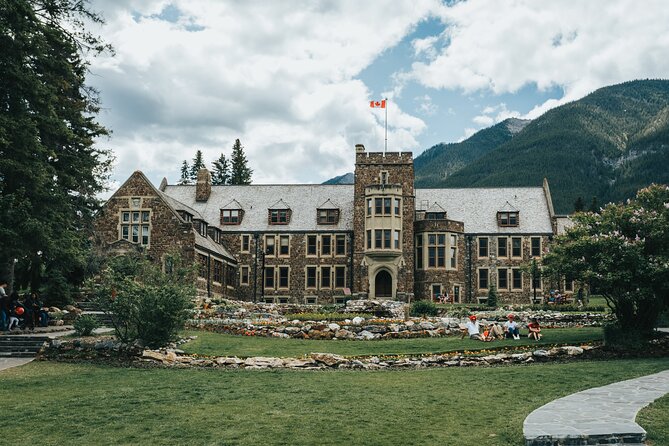
From there, the route moves toward the Banff National Park Administration Building. This is one of the more impressive early sights, and the audio explains why the building matters rather than asking you to admire it without context.
The strongest early section comes at Cascade Gardens. This four-acre park was created in the 1930s, with planted terraces running up the hillside. The Cambrian and Devonian pavilions add architectural interest, while the gardens provide a welcome break from Banff Avenue’s shops and traffic.
I would give Cascade Gardens more than the suggested 15 minutes if the weather is pleasant. The tour allows you to pause, but the narration itself is short. You can listen, then wander at your own speed rather than treating the garden as a quick photo stop.
The Bow River and Banff’s early residents
The Banff Pedestrian Bridge brings you to a different side of town. Looking out over the Bow River, you hear about the person known as Mr. Banff. The bridge is also a useful place to pause and get your bearings before the route turns back into the streets.
At Buffalo Street and Muskrat Street, look for the elevation marker set into the sidewalk. It resembles a coin and is easy to miss if you are walking quickly. This kind of small detail is where the audio format works best. You might pass it without noticing, but the narration gives you a reason to search.
The Crandell Peck Cabin at 514 Buffalo Street is another worthwhile stop. Built in 1907 by Edward Henry Crandell, it used mostly locally sourced materials. You do not need a museum ticket to appreciate the outside, and the short commentary connects the modest cabin to Banff’s early settlement period.
The next stops introduce an inukshuk and the old Banff Powerstation. The powerstation helped supply streetlights and homes in 1905, giving you a practical detail about how the young town functioned. These are not grand attractions, but they make the walk feel more grounded.
The route then follows Ken Madsen Path. Here, the commentary shifts back toward Banff’s wider past while you walk through a quieter stretch. This change of pace helps break up the succession of street corners.
Mary Schaffer Warren and the Luxton family home
At 117 Grizzly Street, the tour points out Tarry-a-while, a designated historic place associated with Mary Schaffer Warren. She was known for exploring, writing, and painting the Canadian Rockies.
The stop works best if you enjoy linking a building to a person. The audio gives the house a human story, rather than treating it as another old structure. You see the exterior only, unless you arrange a separate visit where access is available.
The Luxton Home Museum follows. This historic home offers a look at one pioneer family and changes in Banff over nine decades. Admission is not part of the audio tour, so check the museum’s operating status before counting on an interior visit.
This is an important planning point. The walk can still function when a museum is closed, but the experience becomes an outside tour at several stops. The provider also warns that recommended attractions may be closed or inaccessible because of the season or other circumstances.
More Smartphone Audio Tours in Canada
- Cabot Trail: a Smartphone Audio Driving Tour
★ 4.5 · 118 reviews - Icefields Parkway: a Smartphone Audio Driving Tour
★ 4.0 · 118 reviews - Smartphone Audio Driving Tour between Banff and Calgary
★ 4.0 · 25 reviews - Smartphone Audio Driving Tour between Lake Louise and Calgary
★ 4.0 · 15 reviews
Banff Avenue, sculptures, and local history

The route reaches Caribou Corner, where you learn about the Brewster family’s arrival in Banff in 1886 and their early business here. This section helps explain why Banff Avenue became the commercial center of town.
On Banff Avenue, you pass the Four Sentries sculpture and a large mural depicting the Cave and Basin site. The mural offers a convenient introduction to one of Banff’s defining places, even though Cave and Basin itself is not a formal stop on this walk.
The Banff Visitor Information Centre appears next. It is a practical place to collect additional information about the area, but the audio tour does not replace current local advice. If you need details about closures, weather, or other activities, this is a sensible place to ask.
St. Paul’s Presbyterian Church brings a little more depth to the route. The church was built in 1930, but its story reaches back to the congregation’s founding in 1887. The stop is brief, yet it shows how much of Banff’s identity is tied to institutions that predate modern resort tourism.
Near Banff Avenue and Elk Street, you encounter the stone fire monument. You cannot sit around an actual fire, despite the shape of the memorial, but the commentary explains its purpose. It is a small stop with a touch of local character.
Old lodges, museums, and Central Park

The old Cascade Lodge, now associated with the Banff Freemasons, appears near Caribou and Bear Streets. The building adds another piece to the town’s architectural story.
The Whyte Museum of the Canadian Rockies is one of the more useful optional stops for anyone interested in art, local culture, and mountain communities. The museum works to preserve and share the history and culture of the Rockies. Admission is separate, and you should allow extra time if you want to go inside.
Central Park gives you another chance to slow down. The audio points out a large pile of rocks in the middle of the park, an amusing detail that might otherwise seem too ordinary to notice. This is a good example of the tour’s tone: factual, informal, and occasionally playful.
Nearby, the Banff Park Museum traces back to 1895. It was created to display mounted specimens of animals, plants, and minerals connected with the park. The museum requires its own admission, but even an exterior look helps explain Banff’s early efforts to present the natural world to the public.
If your main goal is wildlife or mountain scenery, this museum stop may not be your top priority. If you want to understand how Banff was presented to early visitors, it adds useful context.
Final stops on Banff’s historic streets
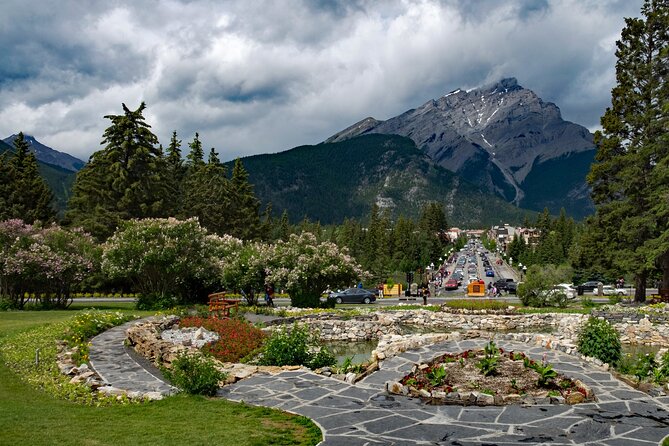
The Dave Whyte Block is one of the oldest largely intact commercial buildings in Banff. Its location near Banff Avenue and Buffalo Street makes it easy to compare older commercial design with the newer shops around it.
At 107 Banff Avenue, Harmony Lane offers another architectural stop. Its river-stone pillars reflect the rustic National Park style associated with Banff’s public buildings and commercial structures.
Rundle United, also called Ralph Connor Memorial United Church, brings the audio back to the town’s religious history. The narration includes Don’s Mr. Rundle impersonation, which keeps the stop from feeling too formal.
The Superintendent’s Residence explains the role of the person responsible for managing the national park. This stop is valuable because it shifts attention away from famous buildings and toward the people who administered Banff.
The final listed stop is the Royal Canadian Legion Col. Moore Branch 26, with a cenotaph built in 1920. It gives the walk a quiet closing note and reminds you that Banff’s story includes military service and remembrance, not only tourism and architecture.
How the app performs on the street
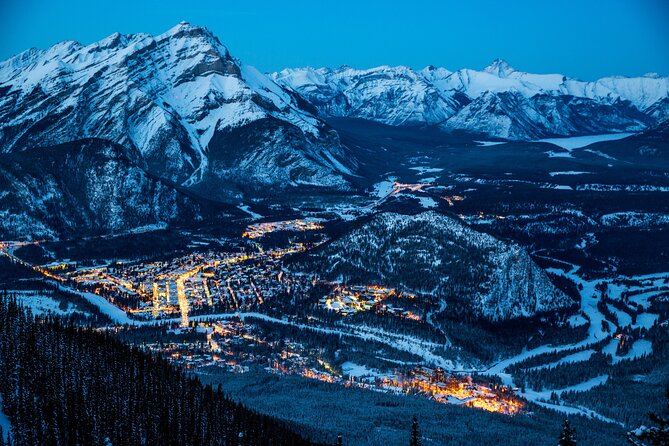
The offline feature is a real advantage. Banff’s mountain setting can make mobile service uncertain, and downloading the content beforehand means you are not depending on a signal or using data as you walk.
The GPS map shows where you are and where to go next. In practice, you should still look at the street names and stop markers carefully. The route includes many short segments, and some directions can feel less clear than they should.
The app has also had performance trouble. It has been known to jump from the map to a slogan page, and one software problem was later fixed. That does not mean you will have the same issue, but it is sensible to download the tour before leaving and test the audio while you still have Wi-Fi.
The audio itself is generally more dependable than the interface. The descriptions provide worthwhile background, though some sections may feel long or repetitive. If you already know Banff well, the pace may be slower than you need. If this is your first visit, the steady narration can make the town easier to read.
Price, timing, and who gets the best value
At $8.22 per person, this is inexpensive for a private activity. The number of people you select equals the number of devices that can download the tour, so one phone may be enough for a couple or family willing to listen together.
You do not pay for a guide, transport, or attraction entry. That keeps the price low, but it also means you handle navigation and decide which museums deserve extra money.
The tour is best for:
- First-time visitors who want a basic introduction to Banff
- Independent walkers who dislike fixed schedules
- Couples or families who want a private activity
- History-minded visitors who enjoy buildings and small local details
- Budget-conscious visitors who want more context than a simple town stroll
It is less suitable if you want a live guide, a polished museum experience, or a route designed for severe winter weather. At minus 19 degrees Celsius, even an interesting audio walk can lose its charm. I would choose a mild day and keep the museum stops in reserve as indoor breaks.
Free cancellation is available up to 24 hours before the local start time. After that, the booking is not refundable, and changes are not accepted.
Should you book this Banff walk?
I would book it if you want a low-cost, flexible introduction to Banff’s buildings, parks, and local stories. The strongest parts are Cascade Gardens, the heritage homes, Banff Avenue, Central Park, and the small details such as the sidewalk elevation marker and the old powerstation.
I would not book it as your only source of information if you dislike phone navigation or expect every stop to be perfectly current. Download the route early, carry headphones if you prefer private listening, and allow time to stop, restart, or retrace your steps.
For a modest price, you get a useful framework for seeing Banff. Just remember that the app is part of the experience, not merely a delivery tool. If it behaves well, the walk gives you more meaning than sightseeing alone. If it does not, your patience may be tested before you reach the next historic building.
FAQ
How long does the Sights of Banff audio walk take?
The estimated duration is about one hour to one and a half hours. You can take longer because the tour has no time limit and allows you to pause whenever you wish.
How far is the walking route?
The route covers about 5 kilometres as a return walk.
Where does the tour begin?
It begins at 12 Banff Avenue, Banff, Alberta, T1L 1A1, Canada.
Where does the tour finish?
The activity ends back at the meeting point.
Is the tour available in languages other than English?
The tour is offered in English.
Do I need mobile data during the walk?
No. You can download the tour over Wi-Fi before starting, then use it without a signal or mobile data.
Do I need headphones?
Headphones are optional. The audio can also play through your smartphone or tablet speaker.
Are attraction admission fees included?
No. Admission is not included for the Buffalo Nations Museum, Luxton Home Museum, Whyte Museum, or Banff Park Museum.
Can I start the tour at any time?
Yes. The tour has flexible start times and is available from midnight to 11:30 p.m. daily during the stated operating period.
Can I cancel for a refund?
Yes, if you cancel at least 24 hours before the experience start time. Cancellations within 24 hours are not refundable.
Just added around Canada
- Queen Street West: An audio tour exploring Toronto’s coolest street★ 3.5 · 2 reviews
- Toronto’s Waterfront: a Smartphone Audio Walking Tour★ 5.0 · 5 reviews
- St. John’s Audio Walking Tour★ 4.0 · 4 reviews
- Irish Loop Smartphone Audio Driving Tour★ 4.5 · 7 reviews
- Fruit alcohol tasting + Velvet Orchards audio tour★ 5.0 · 2 reviews
- APP Self-Guided Tours Quebec with Audioguide★ 3.0 · 2 reviews
- Quebec City Self-Guided Driving Audio Tour★ 4.0 · 7 reviews
- Smartphone Audio Driving Tour between Wasaga Beach and Toronto★ 4.5 · 3 reviews
Smartphone Audio Tours, compared.

Colosseum & Forum with Audio Guide App -Optional Arena
Read our review →
Timed Entry to Michelangelo’s David + Audio App
Read our review →
Cathedral & Brunelleschi’s Dome Ticket & Audio App
Read our review →
Michelangelo’s David Priority Ticket & Audio App
Read our review →
Uffizi Priority Ticket & Masterpieces Audio App
Read our review →
Castel Sant’Angelo Entry Ticket & Digital Audioguide
Read our review →
Pantheon Priority Entry Ticket & Audio Guide App
Read our review →Browse the lists this tour appears in