
REVIEW · ROME AUDIO TOURS
Rome: Castel Sant’Angelo Entry Ticket & Audio App
Rome keeps its best stories behind thick walls. Castel Sant’Angelo packs nearly 1,900 years of them into one remarkable building, from Emperor Hadrian’s mausoleum to a papal fortress, prison, art-filled residence, and lookout over the city. I like the freedom to explore the castle at your own pace, and I especially like the upper terraces facing St. Peter’s Basilica. The smartphone audio guide adds useful context without tying you to a group.
The main drawback is the ticket process. The online entry can save you from a long ticket-office queue, but the entrance instructions and audio-app setup are not always as clear as they should be. At $23 per person, you are paying for convenience as much as admission, so check the official ticket price before booking.
Key things to know before you go
- Hadrian’s mausoleum became a papal fortress: The building began as a tomb for Emperor Hadrian between 135 and 139 AD, then changed roles dramatically under the Papal state.
- Five floors reward a slow visit: You will pass military displays, historic corridors, decorated papal rooms, prison spaces, and terraces as you work upward.
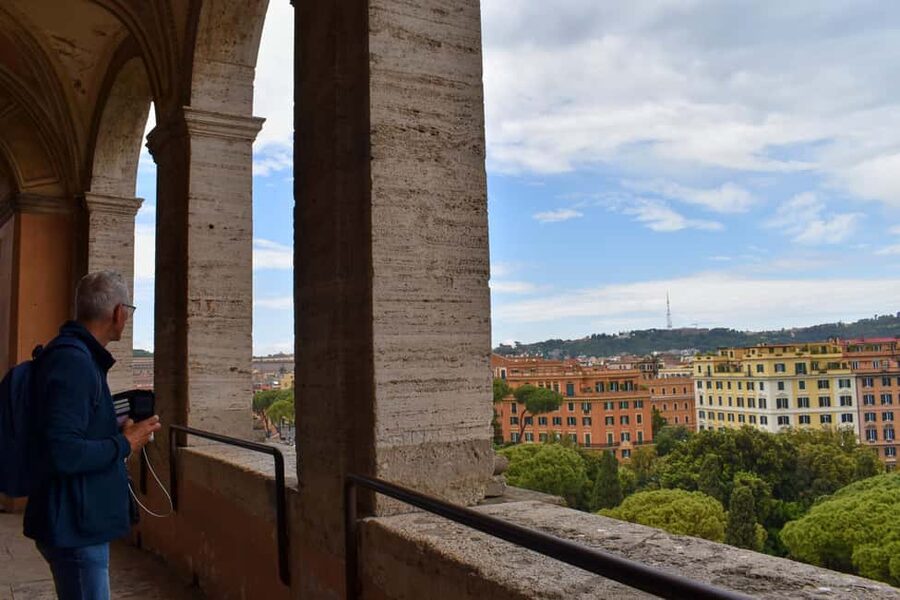
- The rooftop view is the main prize: St. Peter’s Basilica, Rome’s rooftops, and the surrounding city come into view from the upper terrace.
- The audio guide runs on your phone: Download the app and its content before arrival, preferably on Wi-Fi, and bring charged headphones.
- Skip-the-line value depends on the day: Some visitors report walking straight in, while others found a long ticket queue. The benefit is greatest during busy periods.
- Allow two to three hours if you like history: You can move faster, but the castle rewards time, especially if you stop for the rooms, weapons, views, and audio commentary.
Why Castel Sant’Angelo is unlike Rome’s other monuments
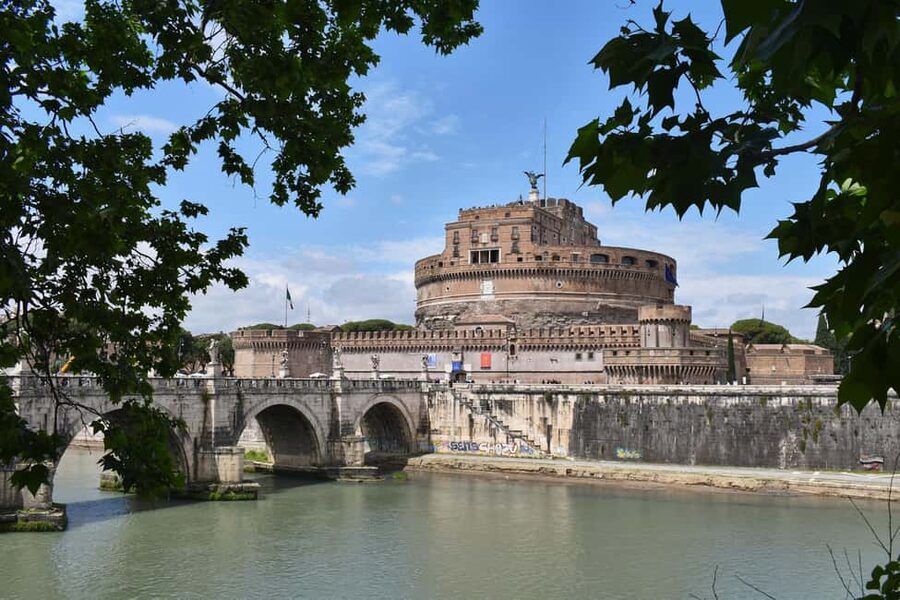
From the outside, Castel Sant’Angelo looks like a fortress. That is only the latest chapter in its story. The core structure began as the Mausoleum of Hadrian, commissioned by the emperor and built between 135 and 139 AD. Its original purpose was funerary, not military.
Over the centuries, the building changed with Rome itself. The Papal state turned it into a defensive stronghold from the 14th century onward. Popes used it as a refuge when Rome was threatened, and its thick walls, elevated position, and secure passages gave it real military value.
That mix of tomb, castle, palace, prison, and museum makes the visit unusually varied. You are not simply walking through a single period. A Roman imperial monument sits beneath medieval defenses, Renaissance rooms, later military displays, and modern museum interpretation.
I find that the building’s changing purpose is more interesting than any one room. A grand papal bath can sit only a short distance from a dark prison cell or a weapons collection. The contrast gives the visit its character.
More Smartphone Audio Tours in Italy
- Rome: Colosseum & Forum with Audio Guide App -Optional Arena
★ 4.2 · 24,770 reviews - Rome: Castel Sant’Angelo Entry Ticket & Digital Audioguide
★ 4.7 · 5,347 reviews - Rome: Pantheon Priority Entry Ticket & Audio Guide App
★ 4.1 · 3,234 reviews
Starting at Lungotevere Castello
The meeting point is the main entrance at Lungotevere Castello, 50. Castel Sant’Angelo is in Parco Adriano, beside the Tiber and close to the Vatican area. The approach is easy to recognize because the fortress is so imposing, but the ticket lanes can be less obvious.
Your official ticket arrives after booking. At the entrance, look carefully for the reservation or prepaid-ticket line rather than automatically joining the ticket-buying queue. Several visitors found that advance tickets let them enter in about a minute, even when the regular line was longer.
The system is not always staffed in an obvious way. Some people found only a sign with a QR code and had to work through the instructions themselves. Give yourself extra time, especially if you need to download the audio app or sort out the correct entrance lane.
The ticket allows entry during the selected available timeslot and use for one day. It is not a guided group tour, so you are free to move at your own speed once inside.
The lower levels reveal a Roman beginning
The first part of the visit helps explain why the castle looks so different from a normal palace. The original mausoleum was designed as a monumental tomb for Hadrian and members of his family. The later fortress grew around and above that earlier structure.
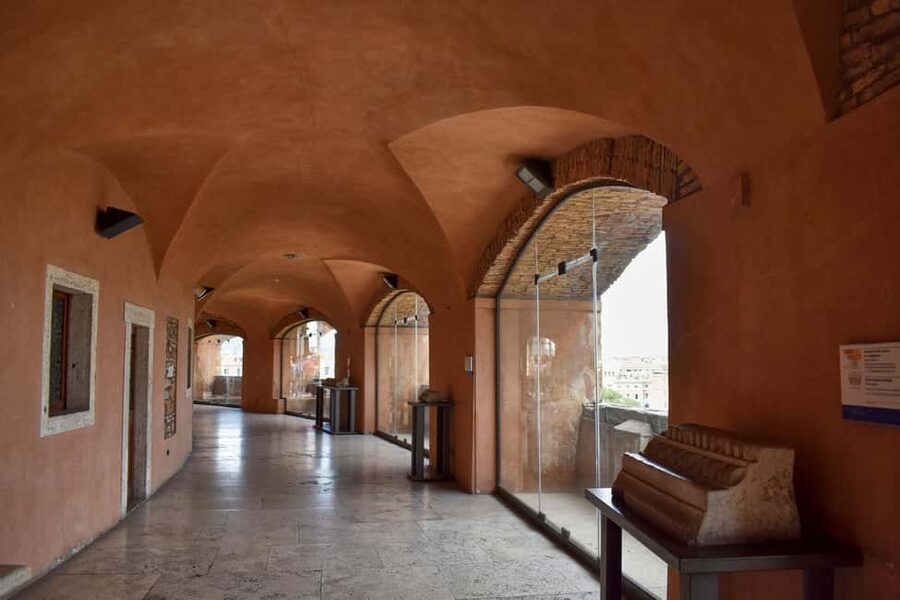
You will notice the building’s heavy, defensive character as you move through its interior. Thick masonry, ramps, narrow passages, and changing levels make the architecture feel practical rather than decorative. The route is part of the story: this was a place built to control movement and protect important people.
The audio app is useful here because the structure can be hard to read on its own. Without context, a curved passage may look like an ordinary corridor. With an explanation of the mausoleum and its later military role, the same space becomes evidence of Rome’s long reinvention.
The audio guide is not perfect. The content can feel disorganized, and the correct track is not always obvious until you find the room signs. Some sections have little or no audio content. Still, it gives you a basic framework and helps connect the separate parts of the building.
Weapons and the castle’s defensive purpose
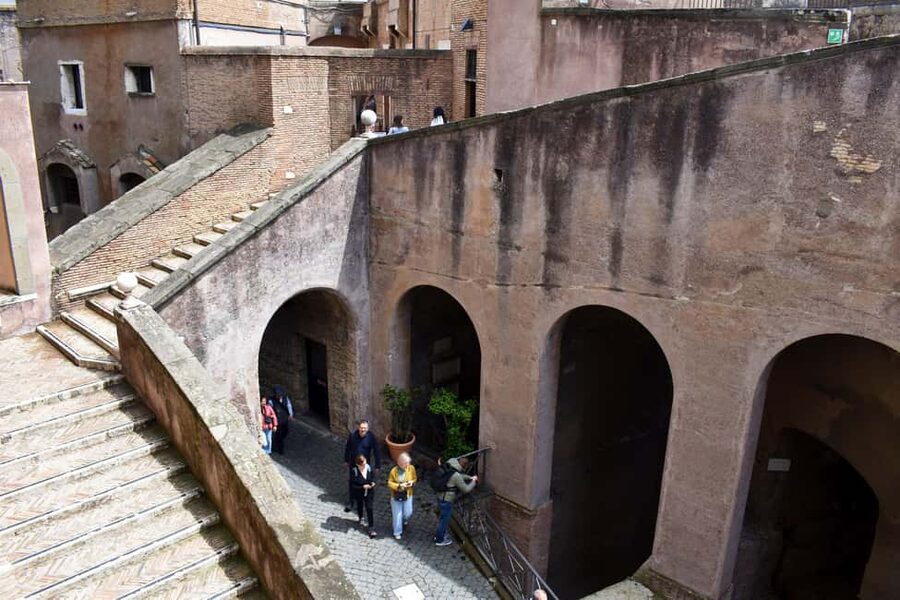
The weapons displays are among the clearest reminders that Castel Sant’Angelo was not just a papal residence. The collection shows the practical side of the fortress, where defense mattered as much as ceremony.
I recommend slowing down in these rooms instead of treating them as a quick museum stop. The weapons make more sense once you understand the castle’s role as a refuge. Popes were not living in an ornamental country house. They needed a secure stronghold during periods of danger.
The displays also help younger visitors stay interested. The building’s walls and corridors can be abstract for children, but armor and weapons make the military story easier to grasp. Families can use the audio guide selectively, stopping for the sections that hold their attention.
Do not expect a vast weapons museum with a long explanation for every object. The collection supports the larger story rather than replacing it. The architecture remains the main exhibit.
More Smartphone Audio Tours in Rome
- St. Peter’s Basilica, Optional Dome Access & Rome Audio App
★ 3.8 · 2,052 reviews - Rome: Colosseum Express Entry with Audio Guide App
★ 4.0 · 1,507 reviews - Rome: Roman Forum Super Pass Entry with Audio Guide App
★ 4.2 · 750 reviews - Pantheon Full Experience With Host & Interactive Audio App
★ 4.3 · 587 reviews
Papal apartments, frescoes, and decorated baths
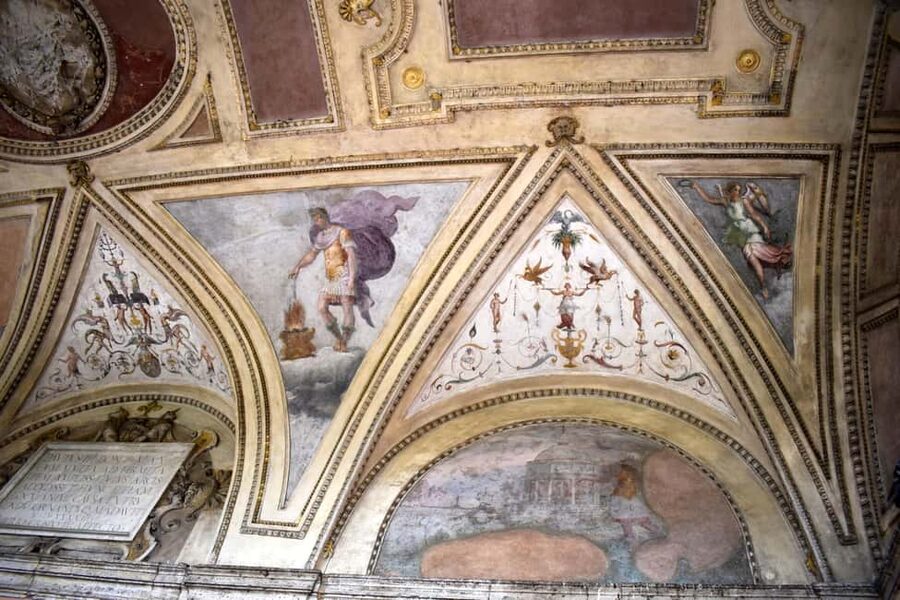
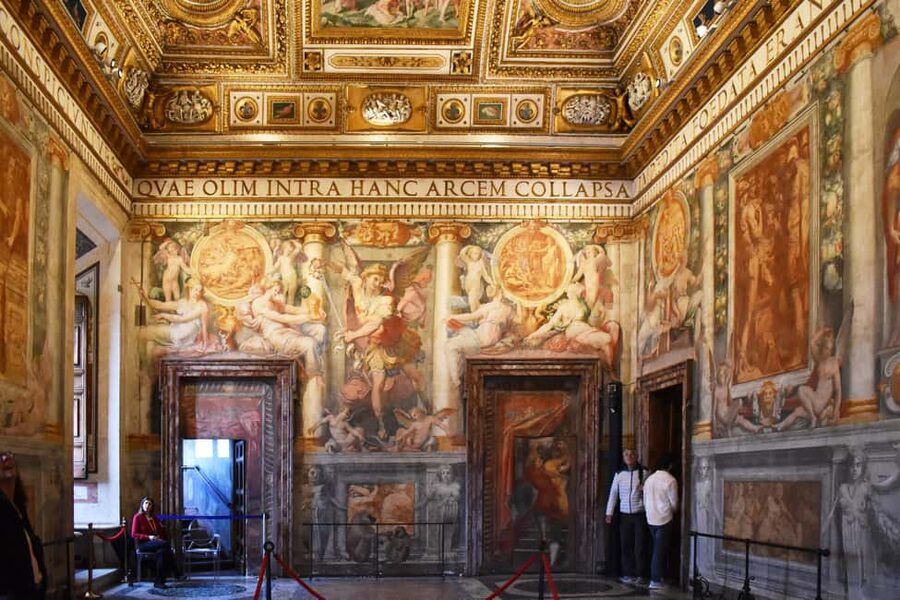
The upper floors shift the mood. Here, the severe fortress gives way to more comfortable and richly decorated papal spaces. Renaissance frescoes, painted rooms, and the papal baths of Leo X and Clemente VII show how the building served as a residence as well as a defensive refuge.
These rooms are easy to underestimate if you arrive mainly for the view. I would not rush through them. The decorated interiors show how the popes tried to maintain courtly life inside a military building.
The baths are a particularly memorable stop. Their decoration feels almost surprising after the rougher passages and defensive spaces below. They remind you that Castel Sant’Angelo had two identities: a place of protection and a place where papal life continued with ceremony and comfort.
The art deserves close attention, but the audio coverage can be uneven. Some rooms have clear commentary, while others may leave you looking at a fresco without much explanation. If you want a formal art-history experience, a live guide or a more detailed guidebook may serve you better.
For most visitors, though, the combination of the app and the building is enough to make the rooms meaningful. You can pause when something catches your eye and skip material that does not interest you.
Prison cells and the darker side of the fortress

Castel Sant’Angelo also held prisoners, and their stories add a grim edge to the visit. The fortress was not simply a safe haven for popes. Its secure rooms and controlled access made it suitable for confinement too.
The prison history is important because it prevents the castle from becoming just another grand viewpoint. Behind the decorated rooms and panoramic terraces was a place where people could face tragic fates.
The audio guide can help you understand this side of the monument, but the amount of detail varies from room to room. If you are interested in political history, pay close attention to the prison sections and the explanations of how the Papal state used the building.
This part may not suit very young children, especially if they are expecting only art and rooftop scenery. Older children and teenagers, however, often respond well to the castle’s mix of power, danger, and secretive corridors.
The terrace and rooftop view of St. Peter’s
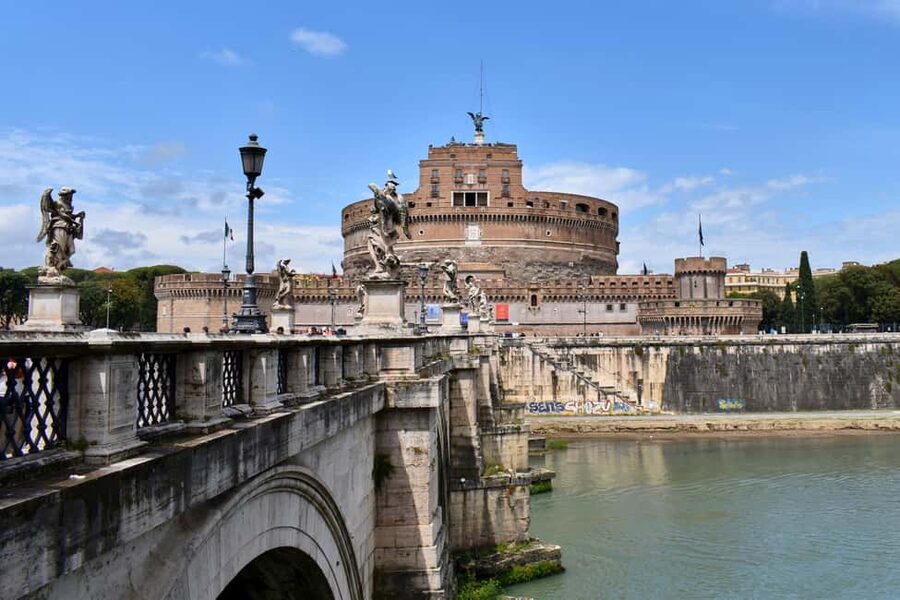
The upper terrace is the reward for the climb. From here, you get broad views across Rome, with St. Peter’s Basilica as the most striking focal point. The relationship between the castle and the basilica is especially clear from above.
The view changes with the hour. Late afternoon can give you warm light over the city, while an evening visit may show St. Peter’s illuminated. One visitor arrived around 5 p.m. and timed the visit for sunset behind the basilica. That is a smart use of the flexible schedule, although sunset times change with the season.
You may also find rooftop markers or skyline maps identifying important buildings. These are useful when Rome’s jumble of domes and rooftops becomes difficult to sort out.
The terrace is the most praised part of the experience, and I understand why. You get a view that is both scenic and meaningful. You are looking across the same city whose political and religious struggles shaped the castle.
Bring patience for the final climb. Several people describe a good number of steps before reaching the best viewpoints. The climb is manageable for many visitors, but it is not a flat museum visit. A small café has provided a welcome break for some visitors, although facilities such as the café and bookshop may not always be open.
Using the audio app without frustration
The digital audio guide is included on your smartphone, not as a standard handheld device. Download the app and any required audio files before you arrive. One visitor forgot to download it on Wi-Fi and could not use it properly at the castle.
Bring headphones, since sharing one pair between two people can work but is not ideal. You should also start with a charged phone. The app is described as easy to navigate by some visitors, while others found the room order confusing.
Look for the signs identifying rooms and match them carefully with the audio tracks. Do not assume the tracks follow the exact route you are walking. Some content may appear out of sequence, and a few rooms may not have an audio segment.
The app is best treated as a helpful layer, not a complete private tour. It gives you background while leaving you free to linger, take photographs, or move on. If you prefer a person who can answer questions and keep the story in order, this ticket does not provide that. It is self-guided.
Is the $23 price good value?

The listed price is $23 per person. That is higher than the stated adult admission of €16 at the castle, so the difference pays for the booking service, online convenience, and audio-app arrangement rather than for a private guide.
That price can make sense when the regular ticket line is long. Advance entry has allowed some visitors to go directly to the entrance and avoid waiting. In a busy Roman season, that saved time may be worth more than the price difference.
On a quiet day, the calculation changes. Some visitors found almost no line, and one person specifically felt the official website was cheaper. If you are watching every euro, compare the current official price with this ticket before buying.
The ticket becomes better value if you spend two or three hours inside and use the audio guide. It is weaker value if you only want a quick rooftop photograph. The castle has enough history and art to justify a longer visit, but you need to take advantage of what is included.
The activity is non-refundable, so check your date and timeslot carefully before purchase. Free admission is available for children under 18 and eligible persons, while EU citizens aged 18 to 25 may qualify for the reduced €2 rate. Those categories can make the $23 option poor value if you are eligible for official reduced admission.
Who should book this experience?
I would recommend it to first-time visitors who want a major Roman monument with room to set their own pace. It suits people who enjoy architecture, military history, papal history, Renaissance decoration, and city views in one stop.
Families can make good use of the flexible format. Children may prefer the weapons, fortress passages, and rooftop, while adults can spend longer with the papal rooms and historical explanations.
It also works well for repeat visitors. You may have walked past Castel Sant’Angelo many times without entering, and the interior offers far more than the exterior suggests.
I would hesitate if you dislike stairs, need a polished live explanation, or are mainly interested in Renaissance painting. The site is marked wheelchair accessible, but the climb to the highest areas can be demanding, so ask staff about access to the specific levels and terraces you want to reach.
My practical plan for visiting
I would choose an available late-afternoon timeslot if the weather is good. That gives you time to explore the interior first and reach the terrace as the light softens. For evening views, confirm the day’s opening hours and available entry time before booking.
Download the audio app before leaving your hotel. Keep the ticket easy to open on your phone, arrive early enough to find the correct queue, and do not rely on a visible representative being waiting at the entrance.
Inside, follow this order:
- Start with the Roman mausoleum and lower fortress spaces.
- Spend time with the weapons and defensive displays.
- Continue through the papal rooms, frescoes, and baths.
- Look for the prison areas and their historical explanations.
- Finish at the terrace and rooftop viewpoints.
You can complete the visit more quickly, but this order lets the building’s changing role unfold naturally. The fortress becomes easier to understand after you have seen the tomb, military spaces, papal interiors, and views together.
Should you book Castel Sant’Angelo with the audio app?
Book it if you value flexible entry and panoramic views, especially during a busy period when avoiding the ticket queue matters. The castle offers an unusually broad look at Rome’s past, and the terrace view of St. Peter’s alone can justify the visit.
Before paying $23, compare the current official admission price and check if you qualify for reduced or free entry. If you do book this option, download the audio app in advance and allow at least two hours.
The ticket is not a guided tour, and the app has some organizational weak spots. But for an independent visit that combines Roman engineering, papal power, prison stories, Renaissance rooms, weapons, and one of Rome’s best viewpoints, it is a strong choice.
FAQ
Where is Castel Sant’Angelo located?
The main entrance is at Lungotevere Castello, 50, in Parco Adriano, Rome.
How long is the ticket valid?
The ticket is valid for one day, with entry available during the selected timeslot.
Is a guided tour included?
No. The ticket includes entry and a digital audio guide on your smartphone, but not a live guided tour.
What does the audio guide require?
You use the audio guide on your own smartphone. Download the app and its content before arrival, preferably while connected to Wi-Fi.
Is Castel Sant’Angelo wheelchair accessible?
The activity is listed as wheelchair accessible. However, reaching the upper areas involves climbs and steps, so ask staff about access to the specific sections you want to visit.
How much is standard adult admission?
The stated adult ticket price is €16. EU citizens aged 18 to 25 may qualify for a €2 reduced ticket.
Are children admitted free?
Children under 18 and other eligible persons can enter free of charge under the stated admission rules.
Is the ticket refundable?
No. This activity is non-refundable, so check your date and timeslot before booking.
Just added around Rome
- Pantheon Skip the Line Entry Tickets with Digital Audio Guide★ 3.5 · 52 reviews
- Trastevere: A Self-guided Audio Tour of Rome’s Medieval Village★ 4.5 · 3 reviews
- St. Peter’s Basilica: Dome Climb with Lift & Audioguide★ 4.5 · 13 reviews
- Audio guide in Vatican Museums and Sistine Chapel★ 4.5 · 12 reviews
- Navova square underground with audioguide★ 4.5 · 17 reviews
- The Roman Jewish Ghetto: A Self-Guided Audio Tour★ 4.0 · 8 reviews
- Experience: The Pantheon Audio Tour★ 4.5 · 4 reviews
- St. Mary’s Basilica, Pope Francis Tomb Audio Tour with Crypt★ 4.0 · 3 reviews
Smartphone Audio Tours, compared.

Colosseum & Forum with Audio Guide App -Optional Arena
Read our review →
Timed Entry to Michelangelo’s David + Audio App
Read our review →
Cathedral & Brunelleschi’s Dome Ticket & Audio App
Read our review →
Michelangelo’s David Priority Ticket & Audio App
Read our review →
Uffizi Priority Ticket & Masterpieces Audio App
Read our review →
Castel Sant’Angelo Entry Ticket & Digital Audioguide
Read our review →
Pantheon Priority Entry Ticket & Audio Guide App
Read our review →
Orsay Museum Entry Ticket and Digital Audio Guide App
Read our review →Browse the lists this tour appears in