

REVIEW · CANADA AUDIO TOURS
Irish Loop Smartphone Audio Driving Tour
Start where the sea meets the road. The Irish Loop Smartphone Audio Driving Tour gives you coastal scenery and local storytelling at a very low group price. I like its flexible pace and the way it connects fishing villages, shipwrecks, pirates, wildlife, and Irish heritage. The main drawback is that you drive yourself, and some suggested stops may be closed or inaccessible.
You begin at Fort Amherst near St. John’s and follow GPS-guided audio through the Avalon Peninsula. I also like that one booking covers up to 15 people in one vehicle, while the downloaded tour works without a signal or mobile data. Plan carefully, though: the full route can take four to eight hours, and one couple found two days better for enjoying the walks and views.
Key points to know before you go

- Cape Spear and Ferryland anchor the route: You get two of the area’s most memorable coastal stops, with Atlantic views, military stories, and colonial characters.
- One booking covers the whole car: At $11.20 per group of up to 15, the value improves sharply when shared with family or friends.
- The audio adds context to ordinary roads: Place names such as Witless Bay, Renews, Aquaforte, and Chance Cove become part of the story rather than just points on a map.
- You can take the tour over two days: There is no fixed completion time, making it useful for travelers who want walks, viewpoints, and photo stops.
- The app needs a first download: You need a good WiFi or mobile connection before setting out, but no signal or data is needed afterward.
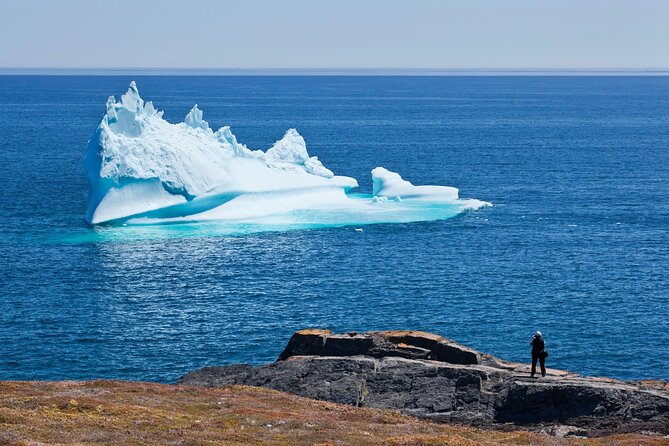
- Wildlife is possible, not promised: Puffins, whales, eagles, and icebergs are all part of the coastal story, so keep watch without treating sightings as guaranteed.
Why this self-guided Irish Loop tour is worth considering
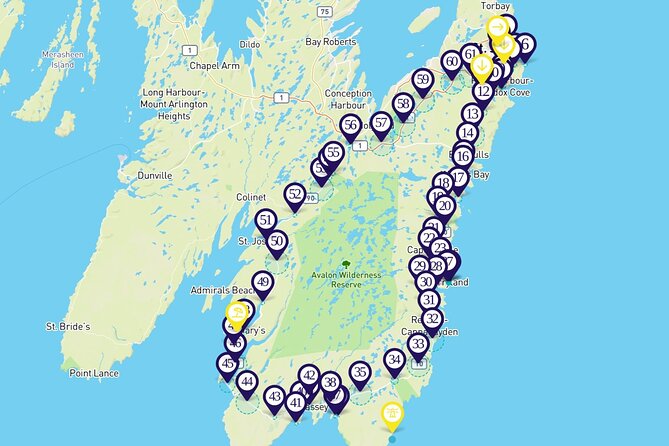
The Irish Loop is best enjoyed as a road trip, not a quick transfer from one attraction to another. The route passes through exposed headlands, quiet harbours, ponds, fishing settlements, and open Atlantic viewpoints. The audio gives each place a reason to matter.
That is the big strength here. A sign for a small village can be easy to pass without thought. With the narration, you hear about storms, cod fishing, piracy, military defense, folklore, archaeological work, and the people who stayed when life became difficult.
You are not joining a bus group or following a guide on foot. You use your own car, your own schedule, and your own judgment about when to stop. That makes this especially useful for couples, families, and small groups who dislike being rushed.
The price is unusually friendly. At $11.20 for an entire vehicle of up to 15 people, it costs less than many paid attractions for one person. The value is strongest if you have several people in the car. For a solo driver, the price is still modest, but the real benefit is the narration spread across a long coastal route.
More Driving Audio Tours in Canada
- Cabot Trail: a Smartphone Audio Driving Tour
★ 4.5 · 118 reviews - Icefields Parkway: a Smartphone Audio Driving Tour
★ 4.0 · 118 reviews - Smartphone Audio Driving Tour between Banff and Calgary
★ 4.0 · 25 reviews
Starting at Fort Amherst and heading toward Cape Spear
The tour starts at 3 Fort Amherst Road in St. John’s. From there, the audio guides you through the southeastern side of the Avalon Peninsula, with St. John’s also serving as the endpoint.
Cape Spear is one of the route’s essential stops. Here, the land reaches toward the Atlantic, and the commentary focuses on courage, survival, and exploration. The setting does much of the work: you are looking out from the eastern edge of North America, with open water in front of you and the force of the Atlantic easy to imagine.
Blackhead adds a smaller-scale view of coastal life. This traditional fishing village brings seafaring history and ocean scenery together. It is the kind of stop where the audio matters because the settlement itself may not come with a long explanation on every corner.
At Deadman’s Bay, Captain Morgan introduces stories of pirates, danger, and Atlantic voyages. The ominous name gives the stop a natural hook, while the storytelling keeps the drive from becoming a string of unnamed viewpoints.
Maddox Cove offers another change of tone. The narration covers raids, powerful storms, early local inventions, and folklore. The point is not only to admire the water. You begin to see how exposed coastal communities had to adapt to weather, isolation, and threats from the sea.
Petty Harbour and the ponds of the Avalon Peninsula
Petty Harbour is one of the more characterful stops along the route. Its colorful shoreline and fishing identity have also attracted filmmakers. The audio uses a local skipper’s voice to explain why the harbour has such a strong pull.
This is a good place to pause if you want a closer look at the working character of the coast. The tour’s suggested walks add value here and elsewhere. One practical lesson from the route is that you should not measure the experience only by driving time. The scenery deserves time outside the car.
The sequence of First Pond, Second Pond, and Third Pond is a small but memorable bit of local explanation. The audio explores why so many bodies of water are called ponds, regardless of their size. It is the sort of detail that makes a place feel specific rather than interchangeable.
James Doyle then contributes a firsthand perspective to the story. The itinerary does not give a full description of his role, so I would treat this as one of the tour’s character-based audio moments rather than expect a formal historical lecture. That variety is useful. You hear from named personalities, local legends, and historical figures instead of one constant narrator explaining everything in the same voice.
Bay Bulls, Witless Bay, and coastal wildlife
Bay Bulls packs several themes into a small community: pirate raids, fairy stories, and puffins. The combination reflects Newfoundland’s storytelling style, where hard facts and old tales can sit comfortably beside one another.
Witless Bay gives the audio another chance to explain an unusual place name. The name itself becomes a prompt for local context, and the route keeps showing how much personality is held in small settlements.
Mobile Bay is one of the better places to pay attention to the water. In summer, you might see whales, puffins, or eagles. The wording matters: these are possible sightings, not a wildlife guarantee. Keep your expectations sensible, and keep your eyes open.
Steve, an Australian wildlife enthusiast, provides commentary about animals on the Avalon Peninsula. That personal voice should appeal to families and anyone who enjoys nature notes mixed into a road trip. You may also appreciate the practical warning to keep snacks close, since the narration adds a playful sense that something may be watching.
Tors Cove brings a darker historical story involving a stormy night, fear, cannons, and conflict. La Manche follows with coastal views, hidden beaches, and one of Newfoundland’s most dramatic suspension bridges. The route does not depend on a single headline attraction. It builds interest through a steady run of unusual places.
More Smartphone Audio Tours in Canada
- Halifax Churches, Gardens & Graveyards: a Smartphone Audio Walking Tour
★ 4.5 · 25 reviews - Halifax Boardwalk & Seaport: a Smartphone Audio Walking Tour
★ 4.0 · 19 reviews - Explore Halifax with 3 Unique Smartphone Audio Walking Tours
★ 4.0 · 16 reviews - Smartphone Audio Driving Tour between Lake Louise and Calgary
★ 4.0 · 15 reviews
La Manche, Calvert, and the stories beneath quiet villages

La Manche has a particularly sobering chapter. In late January 1966, the small fishing village faced a devastating fate, and the audio explains what happened. This is where the tour moves beyond pretty scenery and shows the risks that shaped life along the coast.
Another section deals with ponds that appear and vanish, fairies that trouble travelers, and place names linked to stories passed down through the woods. The tone can be playful, but it also reflects how folklore helps communities explain strange places and difficult events.
A cemetery with flickering lights brings another ghost story. The narration covers glowing graves and the way old legends gained a modern twist. If you prefer strictly factual commentary, this part may feel theatrical. If you enjoy local folklore, it adds welcome variety.
Calvert has its own name story, along with references to silver fish and unusual rock formations. The lesson is simple: do not rush through a village because it looks small. In this part of Newfoundland, a short stretch of road may carry several layers of story.
Ferryland Lighthouse and the Avalon archaeological site
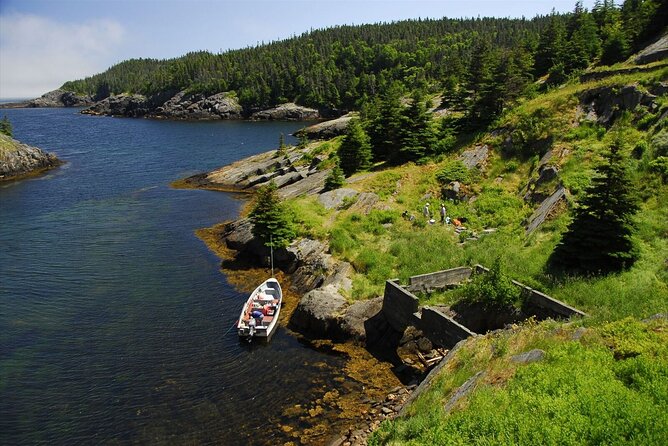
Ferryland Lighthouse offers one of the route’s strongest scenic pauses. The Atlantic views are the main draw, but the audio also introduces Lady Sara Kirke, a historical figure connected with the area. This gives the stop a human focus rather than leaving you with scenery alone.
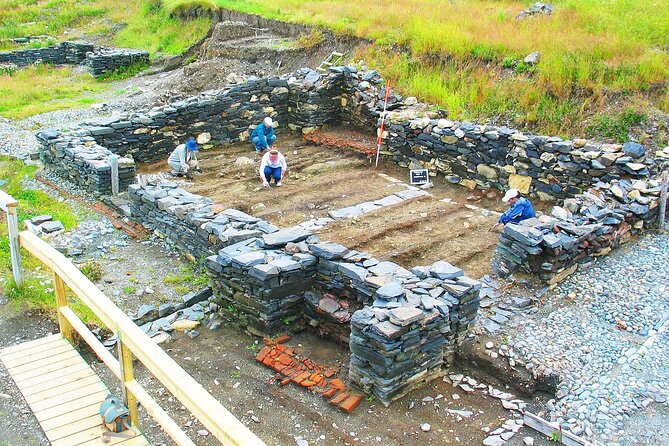
Nearby Avalon is described as one of North America’s important archaeological sites. The story concerns a seventeenth-century colony and the way its discoveries challenged older assumptions about early settlement. For anyone interested in archaeology, this is more than a quick photo stop. It provides a reason to look closely at the place and consider what excavation can reveal.
The route also includes a pirate hideaway story, followed by Aquaforte. The name means strong water, not strong drink, and the commentary explains the harbour’s connection to pirates and an early Canadian first. The exact achievement is not specified in the tour details, so you should listen for that part rather than arrive expecting a particular landmark.
A waterfall nearby gives you a chance to get out of the car and see the feature connected with Aquaforte’s name. Tommy Brophy, described as a local legend and master storyteller, adds another local voice. These named voices help break up the standard audio-tour format.
Renews, Chance Cove, and the route toward Cape Race
Renews comes with an explanation of its unusual name. Chance Cove is optional in the practical sense: you do not have to stop to hear its story, but the shipwreck history and coastal views make the detour worthwhile if you have time.
This is where the tour rewards a slow approach. A four-hour schedule may work if you listen while driving and make only brief stops. If you want to walk, photograph the shore, inspect viewpoints, and pause for food, the route can easily stretch longer.
Cape Race brings a direct link to the Titanic. The audio explains the connection, giving this remote point on the coast a place in a much larger Atlantic story. Another stop explores a rocky cliff that changed ideas about evolution. The supplied details do not name the exact site, so the narration itself will provide the key explanation when you reach it.
A fishing boat overturned beside the road becomes a symbol of the cod collapse, the end of old traditions, and a community’s effort to endure. This is one of the more useful interpretive moments on the tour. It connects scenery and local memory to the economic changes that affected fishing communities.
You will also hear about Biscayan fishers, burning ships, and the pirate Black Bart. Later, Trepassey enters the story as a place that made aviation history twice in the twentieth century. The variety is a strength. You move from fishing to piracy to early aviation without losing the sense that the ocean links everything.
Saint Vincent’s, St. Mary’s, and the return route

Saint Vincent’s is framed by the ocean on one side and a calm pond on the other. That contrast gives the stop a memorable visual identity. The audio also discusses an unusually strange and valuable pond, though the supplied tour details do not identify it more precisely.
Point La Haye brings together Irish roots, ice age geology, and Newfoundland customs such as mummering. This is one of the clearest examples of the tour’s range. You are not hearing only about famous dates or famous people. You are getting language, custom, geology, and settlement patterns in the same journey.
In St. Mary’s, a British soldier stationed during the American Revolution tells the story. Cannons protected fishing wealth and were used in battle, adding a military layer to a town better known for its coastal setting.
The names around St. Catherine’s, Salmonier, Mount Carmel, and Mitchell’s Brook can be confusing. The audio helps sort them out, which is exactly the kind of practical local orientation a self-guided route needs.
Butter Pot closes the rural portion with stories of fugitives, forest fires, freedom, wild blueberries, and ancient rocks. The mention of men with cap guns adds a strange, humorous note. It is a reminder that this tour does not present Newfoundland as solemn at every turn.
The route finishes back in St. John’s, described as North America’s oldest city, with salt air, music, and legend. Ending there gives the drive a clear sense of return rather than leaving you at an unrelated roadside point.
Timing, app use, and practical value
You need a smartphone or tablet of your own, plus a good mobile or WiFi connection for the initial download. Once downloaded, the tour does not require a signal and does not use mobile data during the drive.
The audio is offered in English. It is a private activity for your group, with no strangers sharing your vehicle and no fixed guide schedule to meet. You control the stops, but you also carry responsibility for safe driving, parking, and deciding which suggested attractions to visit.
The stated duration is approximately four to eight hours. That is a wide range, and it makes sense. A fast scenic drive is one experience. A slower route with walks and viewpoints is another. One useful approach is to reserve two days, especially if you want to enjoy the scenery instead of racing through it.
The tour can be used on flexible dates and remains available in the Tripvia Tours app. The operating dates listed are April 19, 2024, through February 16, 2027, with hours shown as 8:00 a.m. to 8:00 p.m. daily. Recommended attractions may close or become inaccessible because of the season or other conditions, so treat the audio route as dependable but individual stops as subject to change.
Free cancellation is available if you cancel at least 24 hours before the start time. Cancellations inside that window are not refunded.
Who should book the Irish Loop audio tour?
I would recommend it to anyone with a rental car or private vehicle who wants more than a scenic drive. Families can share the cost, couples can set their own pace, and history fans will find plenty of subjects beyond the usual postcard views.
It is also a good fit if you dislike large guided groups. You get GPS-led commentary and suggested walks without a bus timetable or a guide calling everyone back to the vehicle.
I would be more cautious if you want guaranteed wildlife sightings, a live guide, or a tightly organized day with every attraction open. The tour cannot control weather, seasonal closures, road conditions, or whether a whale appears. You also need to stay alert behind the wheel, since the narration is there to support the drive, not replace attention to the road.
At $11.20 per vehicle, the risk is small. The bigger question is time. If you can give the Irish Loop a full day, or better yet two, the audio has room to turn a long drive into a connected story about coast, community, and survival.
FAQ
Where does the Irish Loop Smartphone Audio Driving Tour start?
It starts at 3 Fort Amherst Road in St. John’s, Newfoundland and Labrador.
Where does the tour end?
The activity ends back at the meeting point in St. John’s.
How long does the tour take?
The approximate duration is four to eight hours. You can also spread it over two days because there is no time limit for completing the tour.
How much does the tour cost?
The price is $11.20 per group, with up to 15 people covered by one booking.
Do I need a mobile signal during the tour?
You need a good mobile or WiFi connection to download the tour initially. After that, no signal is required and the tour does not use mobile data.
Is transportation included?
No. You need to provide your own vehicle, as well as your own smartphone or tablet.
What language is the audio tour offered in?
The audio tour is offered in English.
Can I cancel for a refund?
Yes. You can receive a full refund if you cancel at least 24 hours before the experience start time. Cancellations within 24 hours are not refunded.
Just added around Canada
- Queen Street West: An audio tour exploring Toronto’s coolest street★ 3.5 · 2 reviews
- Toronto’s Waterfront: a Smartphone Audio Walking Tour★ 5.0 · 5 reviews
- St. John’s Audio Walking Tour★ 4.0 · 4 reviews
- Fruit alcohol tasting + Velvet Orchards audio tour★ 5.0 · 2 reviews
- APP Self-Guided Tours Quebec with Audioguide★ 3.0 · 2 reviews
- Quebec City Self-Guided Driving Audio Tour★ 4.0 · 7 reviews
- Smartphone Audio Driving Tour between Wasaga Beach and Toronto★ 4.5 · 3 reviews
- Layers of Natural History: Picton Nature Self-Guided Audio Tour★ 5.0 · 4 reviews
Driving Audio Tours, compared.



Ultimate Acadia National Park Self-Guided Driving Audio Tour
Read our review →



Browse the lists this tour appears in