
REVIEW · CANADA AUDIO TOURS
Halifax Explosion Smartphone Audio Walking Tour
The past still speaks here. This self-guided Halifax Explosion walk follows a five-kilometre route through North End Halifax, linking memorials, old neighbourhood sites, and stories of survival from December 6, 1917. I like the automatic GPS commentary, which lets you walk at your own pace, and I like the human stories, including Ashpan Annie, Billy Wells, and firefighter Patricia’s crew. The main drawback is simple: one person found the audio difficult to follow, so good headphones, a charged phone, and careful attention to the map matter.
At $8.96 per person, this is a low-cost way to add serious historical context to a visit to Halifax. You can stop and restart the tour, use it on a flexible date, and even listen away from the route if weather turns sour. Still, this is not a polished live tour with a guide beside you. You must manage the route, timing, phone, and listening yourself.
Key points to know before you go
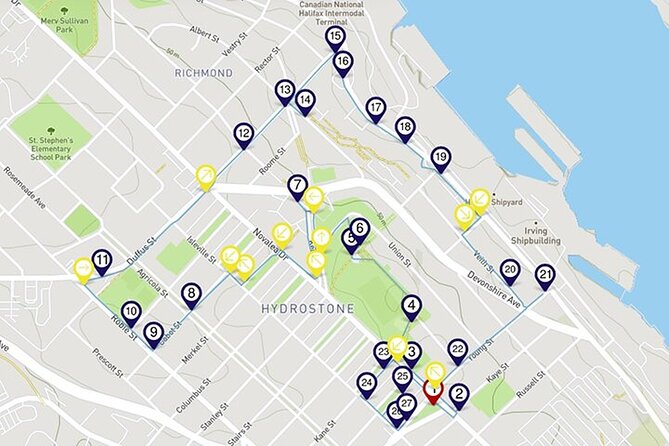
- Five kilometres through Halifax’s North End: The route connects Hydrostone Park, Fort Needham Memorial Park, old Richmond sites, and the Hydrostone District.
- Twenty-seven audio stops: Commentary covers the SS Mont-Blanc, SS Imo, Vincent Coleman, the tsunami, Ashpan Annie, Billy Wells, and much more.
- GPS-triggered storytelling: Audio plays as you approach each location, with a live map showing where you are and where to go next.
- A good value at $8.96: You receive a private experience for your own group without the cost or schedule of a live guided walk.
- Bring your own device: You need a smartphone or tablet. Download the tour over Wi-Fi before starting, and bring headphones if you prefer quiet listening.
- Weather affects the experience: The tour can be heard indoors or away from the route, but the physical walk is best attempted in reasonable weather.
Why the Halifax Explosion deserves a walking tour

The Halifax Explosion was not just one dramatic blast. It was a chain of human events involving ships, fire, weather, rescue work, damaged homes, public buildings, and a city forced to rebuild.
This tour helps you connect those pieces on foot. Instead of hearing one long account in a museum or reading a plaque, you move through the places tied to the disaster. The route gives you a sense of how the story spread across the neighbourhood.
The focus is also firmly on people. You hear about those who died, those who acted quickly, those who were trapped, and those who helped Halifax recover. The result should suit you if you want history with a human scale rather than a list of dates.
The tone is serious, but the stories include moments of courage and hope. Ashpan Annie’s story concerns a baby’s miraculous survival. Billy Wells has an extraordinary adventure. Vincent Coleman is remembered for actions that may have saved hundreds of lives. These details give the walk emotional variety.
More Audio Walking Tours in Canada
- Halifax Churches, Gardens & Graveyards: a Smartphone Audio Walking Tour
★ 4.5 · 25 reviews - Halifax Boardwalk & Seaport: a Smartphone Audio Walking Tour
★ 4.0 · 19 reviews - Explore Halifax with 3 Unique Smartphone Audio Walking Tours
★ 4.0 · 16 reviews
Starting at Hydrostone Park and St. Joseph’s Square
The tour begins at Hydrostone Park, at 5547 Young Street. This is also the ending point, so you return to where you started after following the full loop.
The first stop introduces the disaster and the people affected by it. The opening audio sets up the route, which later moves through memorials, former military land, damaged districts, and the rebuilt Hydrostone neighbourhood.
At St. Joseph’s Square, you hear about three moments in the life of the Catholic parish and the memorial connected with it. This is a short stop, but it helps show that the explosion affected established communities, not just port facilities and industrial buildings.
Next comes Novalea Drive and Hennessey Place. Here, the story shifts to land that began as military grounds and later became a neighbourhood park and memorial. The stop gives you a useful reminder that the city you see today has changed greatly since 1917.
Each point is planned for about five minutes. That does not mean the entire outing lasts only 135 minutes. Walking between points, pausing for the map, taking photographs, and finding the next location can bring the full experience to roughly one hour 30 minutes to two hours 20 minutes.
Ships, warning, and the Bell Tower
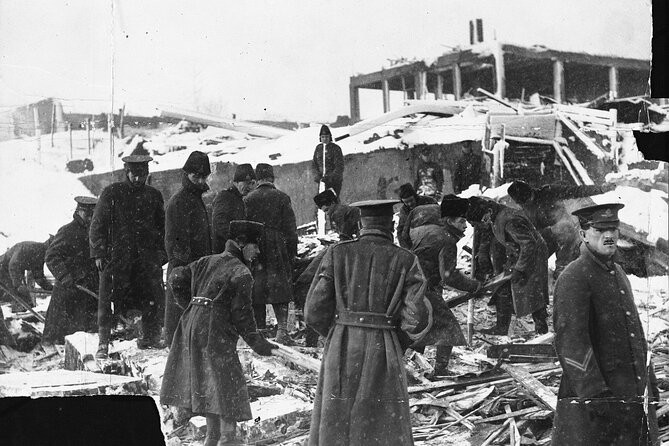
At the location marked MC72+M7, the audio covers the SS Mont-Blanc, the SS Imo, and the events leading up to the explosion. This is one of the essential stops because it gives you the basic sequence behind the disaster.
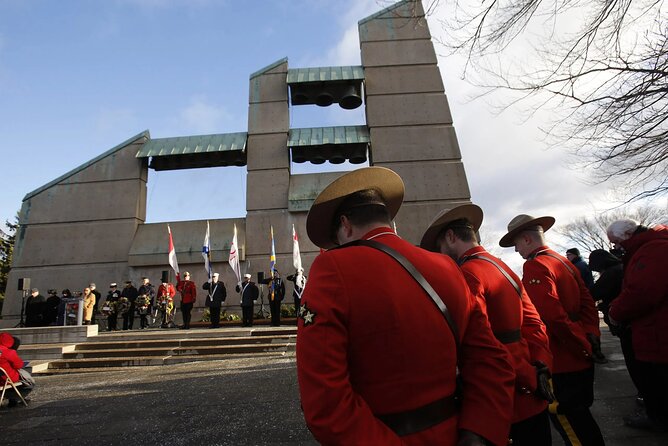
You then reach the Halifax Explosion Memorial Bell Tower at Fort Needham Memorial Park. The tower honours people in Halifax and Dartmouth who experienced the destruction first-hand. It is one of the route’s major memorial sites, so allow yourself time to pause rather than rushing on when the audio ends.
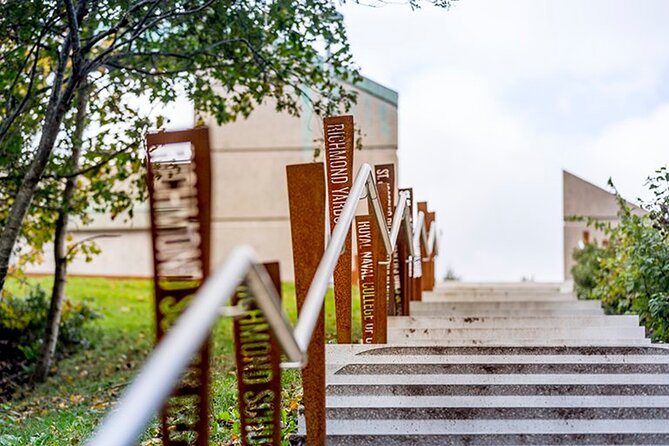
The Richmond Staircase follows. Its symbolism and railings, which include the names of businesses destroyed in the blast, connect the memorial to the commercial life of the former community.
At Richmond School, now associated with the Canada Family Court site, you hear how the building was constructed immediately after the explosion. The stop also tells the tragic story of the Roome School. Together, these points show both the city’s emergency response and the human cost behind the need to rebuild quickly.
Trees, water, and the people behind the names
At the Secret of the Trees stop, the commentary explains why these trees became infamous in lumber mills from Canada to the southern United States. It is an unusual subject, and that is part of its appeal. Not every stop is another memorial or ruined structure.
At 3365 Robie Street, the focus turns to Francis Mackey, the pilot aboard the Mont-Blanc. You hear how the explosion profoundly changed his life. This personal account adds another angle to the events surrounding the ships.
The Robie Street water reservoir, built in 1913, is next. The audio explains how it survived and why it received a special designation. This is a practical piece of the story: infrastructure mattered during the disaster, and some structures endured when homes and businesses did not.
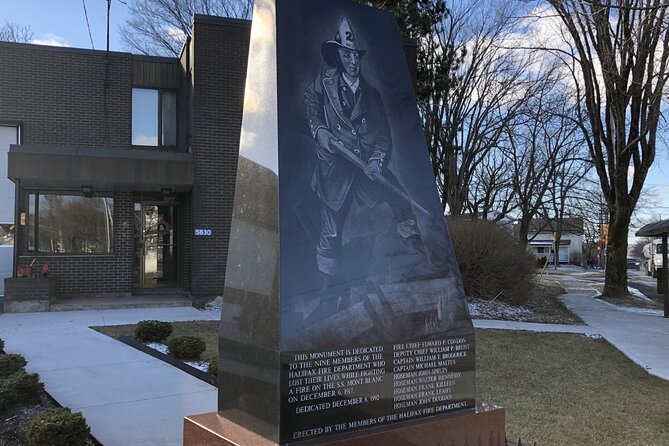
At another memorial, you learn about Patricia and her crew, firefighters who lost their lives that day. The stop also explains the Patricia itself. This section gives proper attention to emergency workers, who can easily disappear behind the larger story of the blast.
More Smartphone Audio Tours in Canada
- Cabot Trail: a Smartphone Audio Driving Tour
★ 4.5 · 118 reviews - Icefields Parkway: a Smartphone Audio Driving Tour
★ 4.0 · 118 reviews - Smartphone Audio Driving Tour between Banff and Calgary
★ 4.0 · 25 reviews - Smartphone Audio Driving Tour between Lake Louise and Calgary
★ 4.0 · 15 reviews
Fire, ice, black rain, and the tsunami
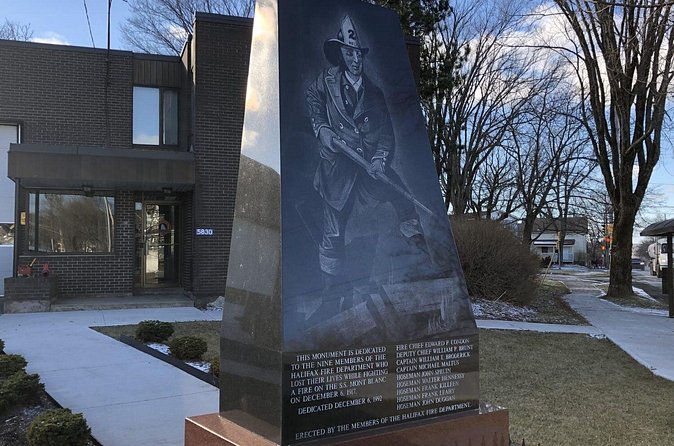
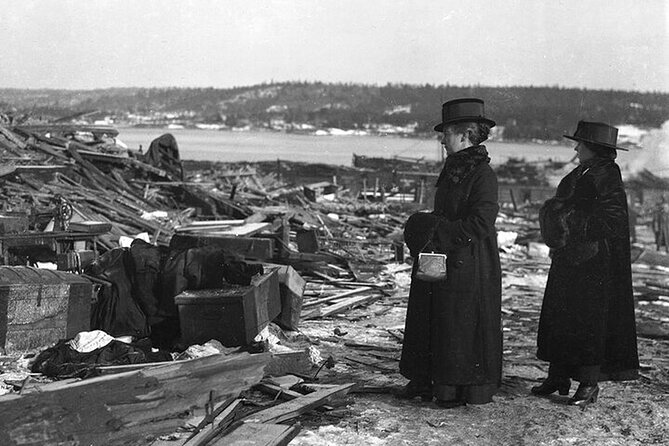
As you walk onward, the Fire and Ice and Black Rain stop deals with the conditions survivors faced after the explosion. The disaster did not happen in isolation. Fire, winter weather, and falling debris made an already terrible situation worse.
The tsunami stop gives you a physical sense of how far the water swept up the hillside. The narration explains that the water would have reached your feet had you been standing there at the time. That kind of location-based detail is where a walking tour can work better than a written account.
At House Holes and the Razing of Richmond, you see changes in the ground around you and hear about ghostly markers showing where people once lived and died. This is one of the more sobering parts of the route. The name of the stop may sound unusual, but it points to the absence left behind when Richmond was destroyed and cleared.
The walking format matters here. You are not simply told that a neighbourhood vanished. You are moving through the area while the audio points to traces, gaps, and memorial markers connected with that loss.
Vincent Coleman, Campbell Road, and Ashpan Annie

The Vincent Coleman stop explains why Haligonians remember him as a hero. The story credits him with potentially saving hundreds of lives. It is one of the clearest examples of individual action within a much larger disaster.
At Barrington Street and Duffus Street, the tour recalls Campbell Road as a wide dirt road lined with homes and shops. The present setting may not look much like that earlier scene, which makes the historical narration useful.
Then comes Ashpan Annie, one of the tour’s more hopeful moments. The audio reveals a baby’s miraculous survival, offering a welcome change after the destruction described earlier.
If you are walking with children or younger family members, the trivia game may help keep them involved. After each commentary segment, you can look at the device and choose an answer. The game is optional, so adults who want a quiet historical walk can ignore it.
Shipbuilding, Billy Wells, and the orphanage
The Irving Shipbuilding stop deals with the controversy surrounding the structure and why it ended up in that location. This gives the route a modern connection and shows that the physical setting around the tour has continued to raise questions.
At the next point, you hear the amazing adventure of Billy Wells. The description promises an unusual personal story, and it adds another memorable character to the walk.
Veith House marks the former Halifax Protestant Orphanage. A colourful memorial on the white picket fence, painted by children from Veith House, brings the route into the present. It is a modest but meaningful reminder that children continue to shape how the past is remembered.
Across the road, the tour points out where the Royal Navy College once stood. The story focuses on the efficiency of its co-commanders and how that helped people survive. Again, the tour moves from buildings to decisions and human behaviour.
Help from around the world and the rebuilt Hydrostone
The To the Rescue stop explains the help Halifax received from around the world and a tradition that continues today. This broadens the story beyond local suffering. Halifax was not left to handle the emergency alone.
The route then enters the Hydrostone District. You hear about the town planner who brought the idea of English garden cities to Halifax. This area is important because it represents deliberate rebuilding after the catastrophe.
The Hydrostone’s back lanes reveal a quieter form of design. The commentary explains the reason for the back-lane business, or the practical function behind those service areas. It is a good example of how the tour asks you to look at ordinary urban details with new eyes.
At Hennessey Place, the Tudor Revival stop covers a block of rowhouse cottages built in an English style for surviving families. The buildings are not just attractive streetscape. They are tied to the housing response after the explosion.
The Halifax Relief Commission Building completes the rebuilding section. The audio explains the committee formed to manage the emergency in this building, now designated a cultural historic site. This stop connects administration, housing, and long-term recovery.
Ending at Hydrostone Market
The tour ends at Hydrostone Market, close to the starting point in Hydrostone Park. That makes the route practical for a self-guided outing because you do not need to arrange transport back from a distant endpoint.
The closing message returns to the central idea: this is a story about people who endured a terrible day and those who hurried to help. The buildings and memorials matter, but the voices and personal accounts give the route its purpose.
You may want to pause at the market after finishing, though the supplied details do not promise any particular shops, meals, or opening hours there. Treat it as the endpoint, not as a guaranteed extra attraction.
What the app does well, and where it may frustrate you
The strongest feature is the GPS system. A live map shows your position and the next stop, while commentary starts automatically near points of interest. That reduces the need to keep checking a printed route.
The flexible format is also valuable. You can stop and start anywhere along the route, and the tour remains yours to use after the booking date. If rain arrives, you can listen to the material away from the walk, then return outside when conditions improve.
The main concern is navigation. One person found the audio walking tour difficult to follow, and that is fair criticism of any self-guided route. Automatic playback is useful, but it does not replace a person pointing down the correct street or adjusting the plan when you pause.
Download everything over Wi-Fi before leaving. The tour does not require a signal or use data during the walk. Bring a charged smartphone or tablet, and consider headphones even though the audio can play through the device speaker.
The tour is private to your group, not a crowded shared outing. That gives you control over pace, but it also means you handle the route yourself. The required fitness level is moderate, and the walk takes place outdoors over several kilometres.
Price, timing, and who will get the most from it
At $8.96 per person, the value is strong if you want a focused historical introduction without paying for a live guide. The cost is especially reasonable when you use the flexible access, optional trivia, and ability to listen again away from the route.
The price is less attractive if you want personal questions answered on the spot or need help staying oriented. A live tour costs more, but it also removes much of the navigation work.
Plan on at least 90 minutes, and allow up to two hours 20 minutes if you walk slowly, stop for photos, or take time at the memorials. The route is available daily from 6:00 AM to 10:00 PM during the stated operating period, December 20, 2024 through February 22, 2027.
You can cancel for a full refund up to 24 hours before the start time. Changes or cancellations made within 24 hours are not refundable.
Is the Halifax Explosion audio walk worth booking?
I would recommend it to you if you like self-guided history, want a private experience, and are comfortable using a phone map. The strongest parts are the personal stories, the wide range of stops, and the way the route links the explosion with rebuilding in the Hydrostone.
You should think twice if you dislike audio tours or often struggle with GPS directions. In that case, the difficult-to-follow format could overshadow the history.
For the best chance of enjoying it, download the tour at home, charge your device, bring headphones, check the weather, and leave enough time to stop at Fort Needham Memorial Park and the Hydrostone District. If you want a low-cost, flexible way to understand Halifax’s most devastating day, this tour is a sensible choice.
FAQ
Where does the Halifax Explosion Smartphone Audio Walking Tour start?
It starts at Hydrostone Park, 5547 Young Street, Halifax, Nova Scotia. The tour also ends back at the meeting point.
How long is the walking tour?
The estimated duration is about one hour 30 minutes to two hours 20 minutes. Walking time, stops, and your pace affect the total.
How far do you walk?
The route covers approximately five kilometres.
Is the tour guided in person?
No. It is a smartphone audio tour with GPS-triggered commentary. Only your own group participates.
Do I need mobile data during the walk?
No. You should download the tour over Wi-Fi before starting. No signal or data is required during the tour.
What device do I need?
You need a smartphone or tablet. The number of people selected during booking equals the number of devices allowed to download the tour.
Is the tour available in languages other than English?
The tour is offered in English.
Can I cancel for a refund?
Yes. You can receive a full refund if you cancel at least 24 hours before the experience start time. Cancellations within 24 hours are not refunded.
Just added around Canada
- Queen Street West: An audio tour exploring Toronto’s coolest street★ 3.5 · 2 reviews
- Toronto’s Waterfront: a Smartphone Audio Walking Tour★ 5.0 · 5 reviews
- St. John’s Audio Walking Tour★ 4.0 · 4 reviews
- Irish Loop Smartphone Audio Driving Tour★ 4.5 · 7 reviews
- Fruit alcohol tasting + Velvet Orchards audio tour★ 5.0 · 2 reviews
- APP Self-Guided Tours Quebec with Audioguide★ 3.0 · 2 reviews
- Quebec City Self-Guided Driving Audio Tour★ 4.0 · 7 reviews
- Smartphone Audio Driving Tour between Wasaga Beach and Toronto★ 4.5 · 3 reviews
Smartphone Audio Tours, compared.

Colosseum & Forum with Audio Guide App -Optional Arena
Read our review →
Timed Entry to Michelangelo’s David + Audio App
Read our review →
Cathedral & Brunelleschi’s Dome Ticket & Audio App
Read our review →
Michelangelo’s David Priority Ticket & Audio App
Read our review →
Uffizi Priority Ticket & Masterpieces Audio App
Read our review →
Castel Sant’Angelo Entry Ticket & Digital Audioguide
Read our review →
Pantheon Priority Entry Ticket & Audio Guide App
Read our review →Browse the lists this tour appears in