
REVIEW · CANADA AUDIO TOURS
Self-Guided Audio Tours for the Canadian Rockies
The Rockies reward curious drivers. This audio tour turns a long Canadian road trip into a guided outing, with location-triggered stories, directions, and nature notes playing from your phone as you move between Banff, Lake Louise, Jasper, and the Icefields Parkway. I especially like the one-time $39.99 price for an entire vehicle, and the freedom to skip, repeat, or rearrange stops. The main drawback is that attraction tickets, hot springs, park passes, and some seasonal roads require separate planning.
The app works offline after you download it, which matters in the mountains. I also like how it fills quiet stretches with useful context instead of leaving you to guess what you are seeing. You will need to set it up before leaving reliable Wi-Fi, keep your phone charged, and remember that one purchase is tied to the Apple or Google account used to redeem it.
Key points to know before you go
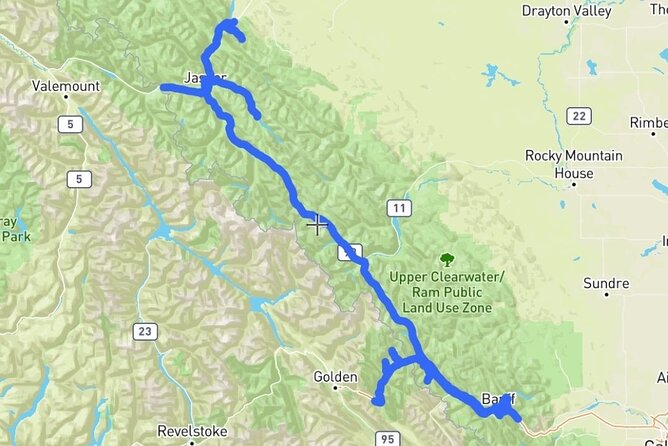
- 520 GPS-triggered audio points cover Banff, Lake Louise, Yoho, the Icefields Parkway, and Jasper.
- One purchase covers up to eight people in one vehicle, making the price especially good for families and groups.
- Offline playback works without cell service, a major advantage along remote mountain roads.
- The route is flexible, so you can follow suggested plans or build your own day around hikes, weather, and attraction bookings.
- Commentary includes directions, geology, wildlife, history, and local stories, not just names of viewpoints.
- Paid attractions are separate, including the Banff Gondola, Cave and Basin, Banff Upper Hot Springs, Jasper SkyTram, and glacier activities.
A GPS guide for a very large road trip
This is not a short walking tour around Banff. It is a set of connected driving routes covering the Canadian Rockies from Banff to Jasper, with side roads into Yoho National Park, Lake Louise, Maligne Lake, Mount Edith Cavell, and Miette Hot Springs.
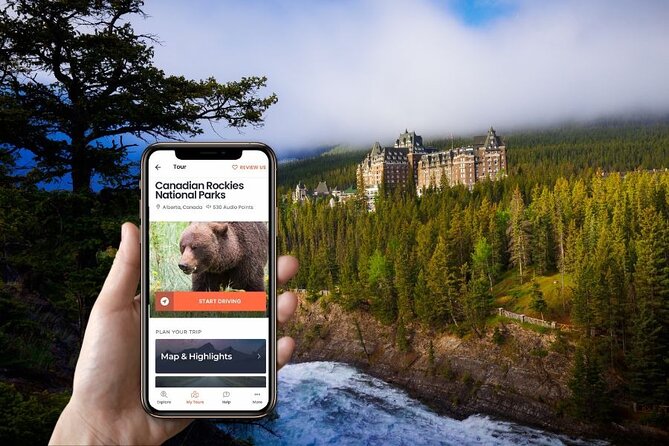
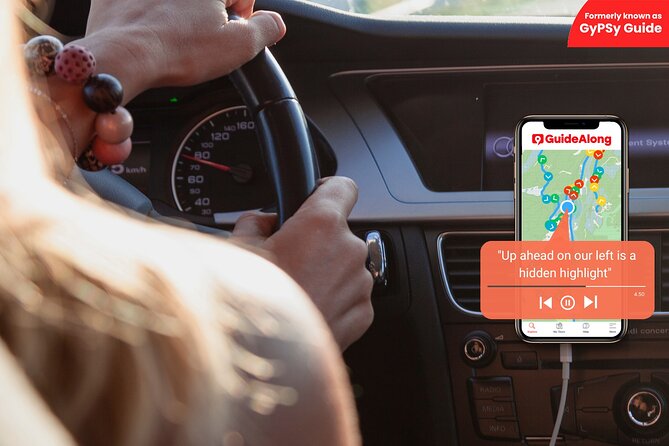
The GuideAlong app uses your phone’s GPS to start commentary at the right places. You do not need to stare at a map or keep checking your phone. The audio may tell you about a mountain, turn your attention toward a viewpoint, explain a local story, or suggest a side trip before you pass it.
I like that the narration is useful between major stops. The Rockies can involve long stretches of driving, and a good voice in the car helps connect the scenery into a story. Some families even give the narrator a nickname, with one particularly enthusiastic user calling him Tom. That says something about how easily the guide becomes part of the drive.
You can also open points manually if weather, wildfire closures, or road restrictions prevent you from reaching a location. That will not replace seeing the place, but it can help you understand what you missed and plan a later visit.
More Self-Guided Audio Tours in Canada
- Self Guided Audio Driving Tour of the North Shore of PEI
★ 4.0 · 24 reviews - Self-Guided Audio Driving Tour in Icefields Parkway
★ 5.0 · 24 reviews - Icefields Parkway Self-Guided Driving Audio Tour
★ 4.5 · 16 reviews
Banff’s classic sights in one flexible loop
Begin around Banff with the Banff Gondola, which climbs Sulphur Mountain for broad views across six mountain ranges. At the top, boardwalks lead toward the Sulphur Mountain Cosmic Ray Station. Bighorn sheep may appear near the path, and the mountaintop dining options give you a place to pause around sunset.
The gondola ticket is not included, and 30 minutes is only enough for a quick look. If you ride up, allow extra time for the boardwalk and views.
Next, Bow Falls gives you a short, easy stop beside the Bow River. Water flow changes sharply during spring thaw, so the falls may look quite different depending on the season. The viewpoint also helps explain why the Banff Springs Hotel was built where it is.
At Surprise Corner, you look back toward the hotel, Bow Falls, Sulphur Mountain, and Rundle Mountain. The stop is brief, but take care crossing or standing near the road because the viewpoint sits at a blind corner.
Cave and Basin National Historic Site connects the scenery to the creation of Banff National Park. First Nations people used the area before three railway workers found the cave and mineral springs in 1883. The interpretive centre, underground cave, boardwalks, and tiny endangered Banff Springs snail make this more than a quick photo stop.
Admission costs extra. The suggested 30 minutes works for a brisk visit, but you will want longer if you read the displays.
At Banff Upper Hot Springs, you can experience the old tradition of taking the waters. The mineral water stays between 37 and 40 C, or 98 and 104 F. It is the only hot spring in Banff National Park where you can bathe, and the pools sit above the gondola base station.
The listed admission fee is $17.50 per booking. This is an easy addition after a day of driving, but it can take more than the suggested 20 minutes once changing and soaking are included.
Lakes, hoodoos, and the Bow Valley Parkway
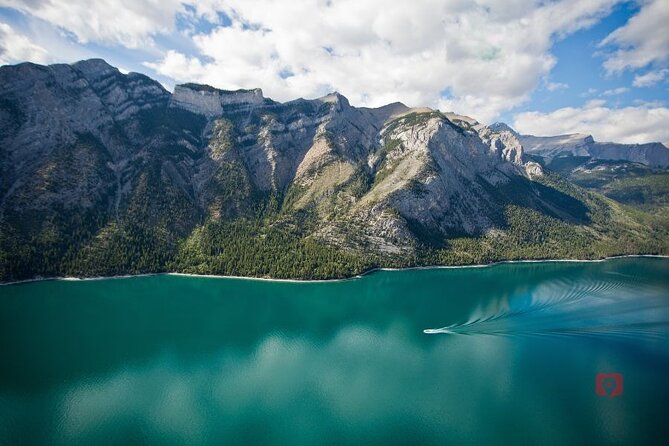
Lake Minnewanka is the largest lake near Banff and carries the Nakoda name meaning water of the spirits. Three small dams expanded the glacial lake, and cruise boats travel along much of its 21-kilometre length. If you have time, the 6.4-kilometre return hike to Stewart Canyon gives you a more active way to enjoy the area.
The Hoodoos Trail offers a different kind of scenery. Rain, wind, and ice have worn away softer rock, leaving thin spires above the Bow River. The trail is flat and easy, with views toward Rundle Mountain.
Vermilion Lakes sit close to town and are good for a slow walk, bike ride, canoe outing, or wildlife watch. Birds are common, and coyotes, bears, and moose are possible. Do not treat wildlife as guaranteed, but the wetland setting gives you a fine change from the high mountain viewpoints.
The old Highway 1A, known as the Bow Valley Parkway, provides a slower route between Banff and Lake Louise than the main Trans-Canada Highway. It includes Castle Mountain, Morant’s Curve, and Johnston Canyon, with more chances to look for wildlife.
At Johnston Canyon, a 1.1-kilometre trail follows steel walkways attached to the canyon walls. The Lower Falls includes a short tunnel to a final viewing platform. Continue farther for the Upper Falls if you want a steeper walk.
This stop changes with the season. Summer brings cool air and spray in the canyon. Winter turns the waterfalls into frozen shapes, though snow and ice require more care. The suggested 30 minutes suits only the Lower Falls at a brisk pace.
Lake Louise, Moraine Lake, and Yoho National Park
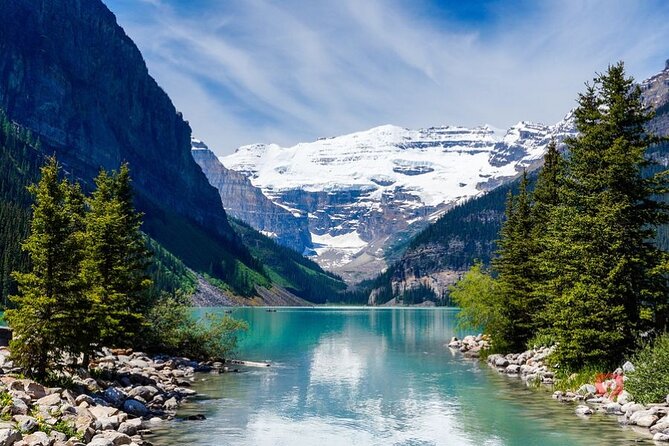
Lake Louise is the famous turquoise lake framed by Victoria Glacier and surrounding peaks. You can simply enjoy the foreshore, rent a canoe, or take on the Plain of Six Glaciers or Lake Agnes Tea House hikes.
The tea houses do not accept debit or credit cards, so bring cash if you plan to hike there. The nearby sightseeing gondola offers another way to see the area without committing to a long trail.
Moraine Lake sits in the Valley of the Ten Peaks and is one of the most recognizable views in Canada. A short walk to the Rockpile Viewpoint gives you the classic scene, while canoeing, the Consolation Lake trail, and Moraine Lake Lodge provide longer options.
Moraine Lake is typically thawed from June through October. The tour can explain the route, but it cannot solve access limits or guarantee an open road. Check conditions before building your whole day around this stop.
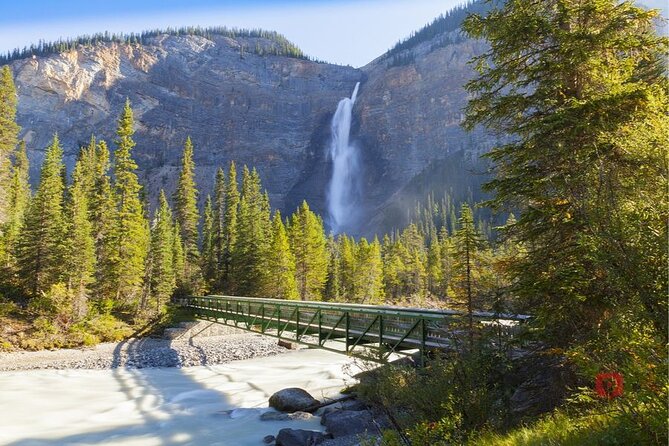
West of Lake Louise, Yoho National Park brings three worthwhile stops into the same outing. Takakkaw Falls is the biggest and most forceful of them, fed by glacial water and sending spray into the air. The access road usually stays closed until June because of avalanche danger.
Emerald Lake rewards an easy stroll around the shore or a canoe ride on its clear blue water. Emerald Lake Lodge offers dining beside the lake, and Natural Bridge makes a quick extra stop on the access road.
At the Lower Spiral Tunnels Viewpoint, you can watch trains manage the steep grade through two looping tunnels. From above, the railway appears to pass over itself. The stop is short, but the audio explanation gives this engineering feat useful context.
Same place, a different route to walk:
- Cabot Trail: a Smartphone Audio Driving Tour
★ 4.5 · 118 reviews - Icefields Parkway: a Smartphone Audio Driving Tour
★ 4.0 · 118 reviews - Niagara: Behind The Falls, Skylon Tower Ticket & Tesla Audio Tour
★ 3.5 · 69 reviews - A 7th-Gen Local’s View of Downtown Charlottetown: An Audio Tour
★ 4.5 · 27 reviews
The Icefields Parkway, from turquoise lakes to glaciers
The Icefields Parkway is the central event of this tour. The road links Banff and Jasper through a succession of lakes, glaciers, waterfalls, and mountain passes. You can drive it in either direction, but do not mistake the listed one-hour stop for the time needed to complete the road.
Allow a full day if you want to stop often. Parker Ridge alone may take 1.5 to 2 hours. The trail climbs to views of Saskatchewan Glacier, but its roughly 6,000-foot elevation can make the walk feel harder than expected. Snow may remain on the trail all year.
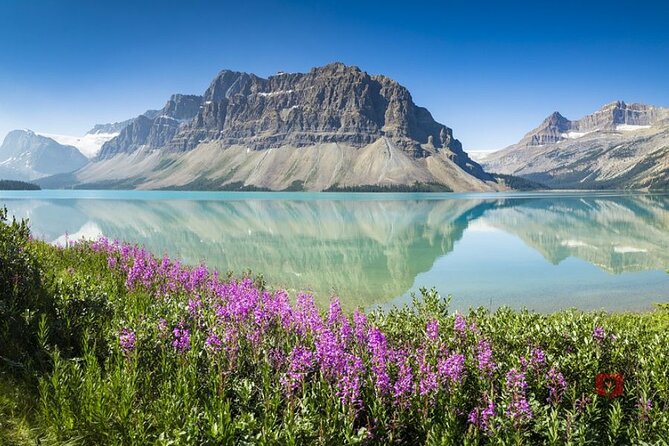
Crowfoot Glacier hangs above Bow Lake and once looked like a crow’s foot with three toes. Retreat has reduced it to two visible toes. Bow Lake itself feeds the Bow River, and the historic Num Ti Jah Lodge sits beside the water.
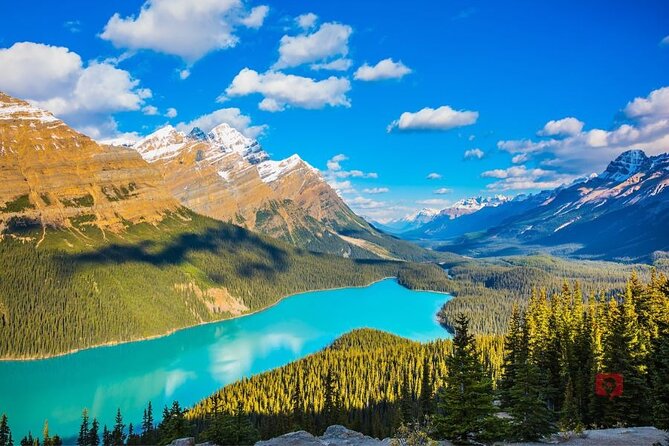
The Icefields Parkway also includes Peyto Lake at Bow Summit, the route’s highest point. Its glacier-fed colour is brightest in sunshine, and the raised viewing area gives you a strong view over the lake and surrounding peaks.
The Weeping Wall is a quick roadside stop where snowmelt trickles down a high cliff. In winter, the water freezes into ice routes used by climbers.
At Athabasca Glacier, you can see one of the world’s more accessible glaciers from the road and notice markers showing its retreat over time. The Columbia Icefield Discovery Centre is the base for the Icefield Adventure, which uses a large all-terrain vehicle to reach the glacier.
That paid experience also includes a bus ride to the glass-bottomed SkyWalk and requires at least three hours. The audio tour helps you decide if you have enough time, but the ticket is separate.
Jasper’s lakes, canyons, and mountain viewpoints
North of the Icefields Parkway, Sunwapta Falls offers quick views close to the car park. A three-kilometre loop leads farther into the canyon and takes about an hour at an easy pace.
Athabasca Falls is another short stop, where powerful water cuts through hard, quartz-rich rock. Spring snowmelt can make the falls especially forceful.
Near Jasper, Pyramid and Patricia Lakes provide an easy scenic drive. A small footbridge leads to an island viewpoint at Pyramid Lake, while Patricia Lake connects to a secret Second World War project described by the audio guide.
Maligne Canyon cuts through limestone into a narrow, deep channel. Several viewpoints sit close to the main parking area, while the fifth bridge offers access to a longer trail along the canyon.
Maligne Lake lies at the end of the road beyond the canyon and Medicine Lake. The main reason to continue is the famous cruise toward Spirit Island. You need to reserve a cruise time ahead if you want to take it. The tour itself does not include the boat ticket, and shoreline hiking options are limited.
Old Fort Point gives you a short stair climb and wider trails with views toward Jasper and the surrounding valleys. Bighorn sheep often spend time here, so keep your eyes open rather than racing to the viewpoint.
Mount Edith Cavell is a worthwhile side trip if you have at least two extra hours. The Path of the Glacier trail reaches Cavell Pond, where small icebergs may float below the glacier. The longer Cavell Meadows Trail offers mountain flowers, Angel Glacier views, and possible sightings of pikas and ground squirrels.
The Jasper SkyTram climbs Whistlers Mountain to about 2,200 metres, or 7,200 feet. From the upper station, you can walk higher above the trees or eat at the mountaintop. Its ticket is separate, and the suggested 30 minutes does not include much hiking.
Miette Hot Springs sits about 50 minutes from Jasper on the eastern side of the park. These are the hottest thermal pools in the Rockies, with mountain views and wildlife viewing possibilities along Highway 16 and the Athabasca River.
What $39.99 really buys you
At $39.99 per group of up to eight, the price is hard to compare with a conventional private guide. Split among four people, it is about $10 per person. With eight people in one vehicle, it costs about $5 each.
You pay once and keep the tour without an expiry date. Free updates are included, and the same purchase can cover a trip spread across several days. That matters because trying to see Banff, Lake Louise, the Icefields Parkway, Yoho, and Jasper in one day would be exhausting and unrealistic.
The value comes from the combination of directions and interpretation. A standard navigation app may get you from point A to point B, but it will not explain the Spiral Tunnels, point out the shape of Crowfoot Glacier, or suggest why you should stop at a particular viewpoint.
The price does not include national park passes, attraction tickets, hot springs, gondolas, SkyTram rides, cruises, or glacier activities. Budget for those separately. The tour is strongest as a road companion, not as a package that covers every cost.
Setup, sound, and practical limits
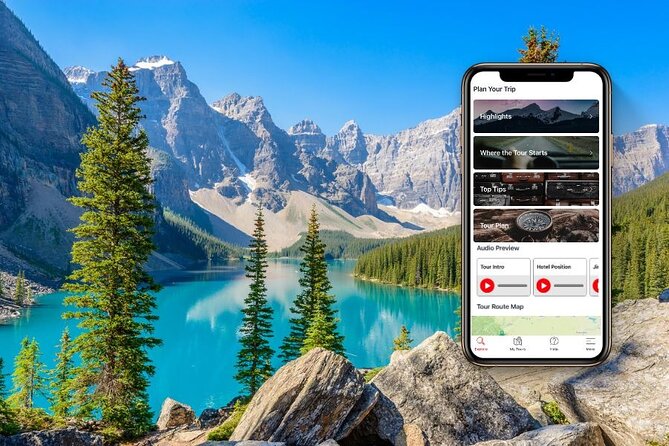
After booking, you receive instructions by email and text. Redeem the voucher through your Apple or Google account, download the free GuideAlong app, and save the entire tour over Wi-Fi or cellular data before setting off.
Bring a USB car charger. Bluetooth connection to a rental car works well when available, and earbuds let you keep listening during walks or while using a bus. One phone is enough for a vehicle, but the purchase is connected to the account used to redeem it.
The offline function is essential. Mountain roads can have weak or absent cell service, yet the GPS-triggered commentary can still play after the tour is downloaded. Daily phone, chat, and email support are available if the setup gives you trouble.
The guide is offered in English only. The tour is private in the sense that only your group uses the vehicle and controls the schedule. It does not provide a driver, vehicle, attraction reservations, or a substitute for checking road and weather conditions.
If plans change, the purchase has no fixed date or time. Cancellation is free up to 24 hours before the booked start time. Within 24 hours, the amount is not refunded.
Who should book this Rockies audio tour?
I would choose it for a first visit, a family road trip, or anyone who wants more than scenery but less structure than a group coach tour. It is especially useful for a long drive where you want history, geology, wildlife tips, and directions without handing over control of the day.
Families may appreciate that the narration can keep children interested between viewpoints. Independent drivers will like the ability to skip an attraction, pause for a hike, or follow a different route without losing the commentary.
I would hesitate if you dislike listening while driving, already know every road and sight in the region, or want a live guide who can answer questions in person. You also need to enjoy planning. The app gives you many choices, but you still need to decide how much time to allow for hikes, seasonal closures, meals, and paid activities.
For most self-driving visitors, I would book it. The offline audio, broad route coverage, and group pricing solve real problems in the Rockies. Download it before you leave, pack a charger, keep your schedule flexible, and treat the suggested stop times as starting points rather than strict limits.
FAQ
How much does the Canadian Rockies audio tour cost?
The tour costs $39.99 per group, covering up to eight people in one vehicle.
What areas does the tour cover?
It covers Banff and its surrounding sights, Lake Louise, Yoho National Park, the Icefields Parkway, and Jasper National Park. The package includes four connected tours in one app.
Does the tour work without cell service?
Yes. Download the tour before departure, and the audio can play offline using your phone’s GPS.
What language is available?
The audio tour is offered in English.
Are attraction tickets included?
No. National park passes and attraction admission are separate. This includes the Banff Gondola, Cave and Basin, Banff Upper Hot Springs, Jasper SkyTram, glacier activities, and other paid experiences.
Does the tour have a fixed start and end point?
No. You can begin and finish anywhere along the tour routes. Commentary plays based on your location and direction.
When does the road to Takakkaw Falls usually open?
The road usually does not open until June because of avalanche hazards.
Can I cancel the tour for a refund?
Yes. You can receive a full refund if you cancel at least 24 hours before the experience start time. Cancellations within 24 hours are not refunded.
Just added around Canada
- Queen Street West: An audio tour exploring Toronto’s coolest street★ 3.5 · 2 reviews
- Toronto’s Waterfront: a Smartphone Audio Walking Tour★ 5.0 · 5 reviews
- Irish Loop Smartphone Audio Driving Tour★ 4.5 · 7 reviews
- St. John’s Audio Walking Tour★ 4.0 · 4 reviews
- Fruit alcohol tasting + Velvet Orchards audio tour★ 5.0 · 2 reviews
- APP Self-Guided Tours Quebec with Audioguide★ 3.0 · 2 reviews
- Quebec City Self-Guided Driving Audio Tour★ 4.0 · 7 reviews
- Smartphone Audio Driving Tour between Wasaga Beach and Toronto★ 4.5 · 3 reviews
Self-Guided Tours, compared.

Acropolis Ticket & Optional Self-Guided Audio Tours
Read our review →
Ultimate Acadia National Park Self-Guided Driving Audio Tour
Read our review →

Santorini: Akrotiri Ticket with Optional Self-Guided Audios
Read our review →
Browse the lists this tour appears in