

REVIEW · ROME AUDIO TOURS
Self-Guided Audio Tour – The gods of the Palatine
Ancient Rome begins on this hill. This 40-minute audio walk gives you a myth-filled way to explore the Palatine, with offline chapters, maps, and tips that help bring Romulus, Remus, Augustus, and the Roman emperors into focus. I like the low $10 price and the freedom to move at your own pace. I also like that the app can be downloaded and replayed, which is handy when a dramatic ruin needs a second explanation.
The main drawback is practical, not historical: admission to the Palatine is not included. You need your own smartphone and headphones, and the access instructions may take care to follow. A photo ID may also be required by the venue, so carry one. If you want a guide waiting at the gate, this is not the right choice.
Key points to know before you go
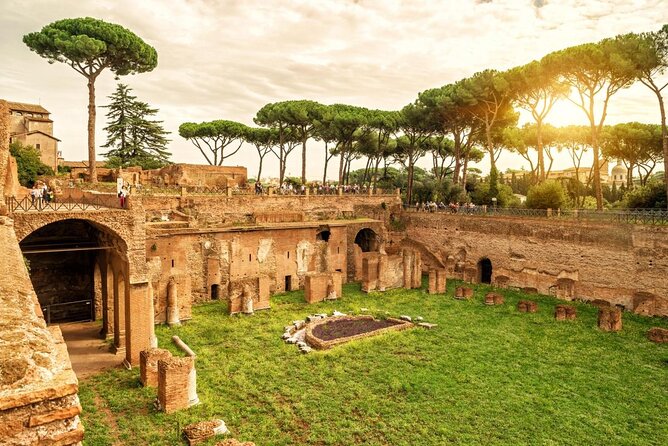
- The audio lasts about 40 minutes, making it a focused introduction rather than a full day at the Roman Forum and Palatine.
- The $10 fee covers the audio content only, not entry to the archaeological site, a phone, or headphones.
- Offline use is a real advantage, since you can download the chapters before walking.
- The route connects myth and imperial power, from the founding of Rome to the palaces of Augustus and Domitian.
- The start and end information needs attention, with the meeting details pointing to the Domus Tiberiana and the finish listed at the Palatine near the Domus Augustana.
- A photo ID may be needed for entry, so bring identification even though the audio tour itself is self-guided.
Why the Palatine works so well for an audio tour
The Palatine is one of Rome’s best places to hear the city’s origin story. According to Roman legend, Romulus founded Rome here after the conflict with his brother Remus. The hill later became the preferred address of emperors, turning a legendary birthplace into an imperial neighborhood.
That change gives the audio walk a useful shape. You begin with myth, move through public monuments and military triumphs, then reach the private and ceremonial world of the emperors. I like this approach because the Palatine can otherwise feel like a spread of broken walls with grand names. A good audio track gives those walls a role.
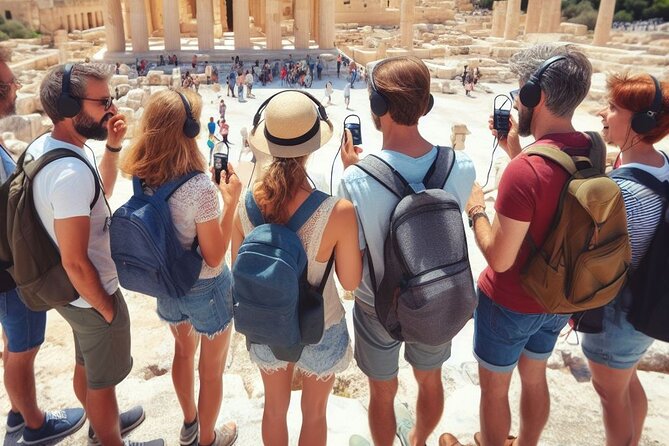
This is not a live tour. No guide walks beside you, answers questions, or points out a detail in real time. Instead, you listen while standing among the remains. That makes the experience quiet and flexible, but it also means you need to stay alert to your position and follow the route information carefully.
The mobile format is simple. You receive a phone-based ticket and access to chapters, maps, and tips for exploring Rome. The content can be used offline, which matters in an archaeological area where your connection may not be reliable. Download everything before you enter, and bring headphones that work with your phone.
More Self-Guided Audio Tours in Italy
- Self Guided Audio Tour-Coliseum & the Gladiator’s Legends
★ 3.5 · 49 reviews - The Roman Jewish Ghetto: A Self-Guided Audio Tour
★ 4.0 · 8 reviews - Self Guided Audio Tour with 100 Captivating Stories in Rome
★ 4.5 · 7 reviews
Starting near the Domus Tiberiana
The listed starting point is the Domus Tiberiana, also described as the Orti Farnesiani sul Palatino on Via della Salara Vecchia. The location is connected with the large imperial complex on the Palatine, so the opening setting fits the theme well.
The access details deserve care. The audio ticket does not include admission to the archaeological area, and the audio provider cannot substitute for the site’s ticket office. One person spent a long time trying to locate the correct access point, so I would check the location instructions before arriving rather than assuming that a nearby information desk or ticket counter will direct you.
The supplied meeting information also lists the end at Palatine Hill, with instructions to locate yourself in front of the Domus Augustana. That means you should treat the start and finish points as route markers, not as a staffed meeting with a representative. This is a private activity for your group, but self-guided means there is no person waiting to organize you.
Once you are in the proper area, the audio format should be at its best. You can pause beside a wall, replay a chapter, or move on if a section is crowded or difficult to hear. The app is described as stable, and the ability to repeat the material is especially useful for names such as Domus Flavia, Domus Augustana, and Domus Tiberiana.
Circus Maximus and the early Roman setting
The route begins with the Circus Maximus, the huge ancient venue built for chariot racing. Its development is linked here to Lucius Tarquinius Priscus, traditionally counted as the fifth king of Rome.
This is a strong opening because the Circus Maximus shows Rome as a public city, not just a collection of palace ruins. The site recalls mass entertainment, royal power, and the ability of Roman leaders to organize enormous public works. An audio explanation can help you picture the scale, even when the visible remains do not tell the full story on their own.
The stop also prepares you for the Palatine’s larger theme: power was always on display. Kings, emperors, soldiers, and crowds all appear in the story. I would not expect a long technical account of the circus during this 40-minute walk, but it provides useful context before the route turns toward the hill and its palaces.
Domus Flavia, the ceremonial palace of Domitian
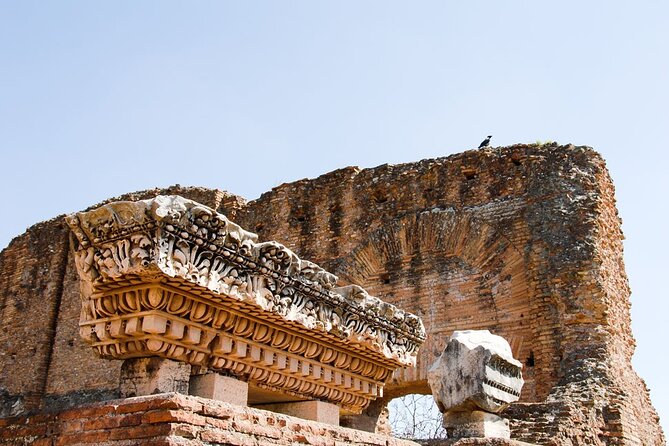
One named stop is the Palace of Domitian, often called the Domus Flavia. This was part of the large residential complex built on the Palatine during the rule of Domitian.
The audio gives this stop about five minutes in the stated itinerary. That is enough time for a clear introduction, but not enough for a detailed study of every room, wall, or building phase. You should think of it as a guided orientation to the palace rather than a full archaeological lecture.
The Domus Flavia is important because it shows the Palatine at its most formal. This was not simply a comfortable house. The complex included areas intended for imperial ceremony and public business, linking the emperor’s residence with his role as ruler of the Roman world.
You will also encounter references to public areas and a central courtyard belonging to an ancient palace. These spaces help explain how imperial life combined private residence, official audiences, ritual, and political theater. I like hearing these functions explained because the ruins can otherwise look too open and abstract.
The drawback is that the tour may leave you wanting more. Domitian’s palace complex is large, and a short audio route can only select a few ideas. If architecture is your main reason for visiting, allow extra time to look around beyond the 40-minute recording.
More Self-Guided Audio Tours in Rome:
- Trastevere: A Self-guided Audio Tour of Rome’s Medieval Village
★ 4.5 · 3 reviews - Discover Marvellous Rome: Self-Guided Audio Tour
★ 5.0 · 2 reviews - Athens: Acropolis Ticket & Optional Self-Guided Audio Tours
★ 4.1 · 2,542 reviews - Gettysburg Battlefield Self-Guided Driving Audio Tour
★ 4.5 · 910 reviews
Titus’s triumphal arch and the language of victory
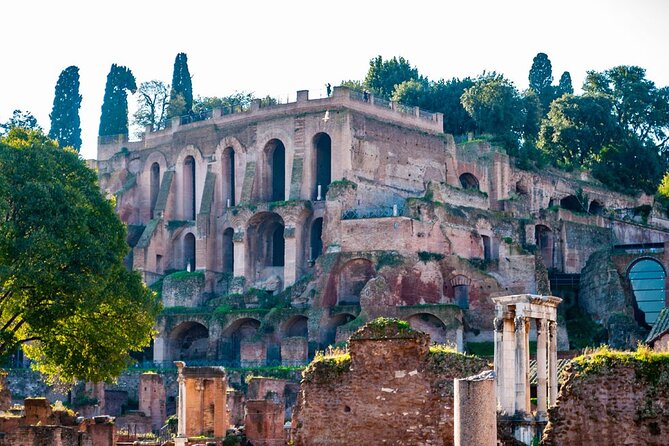
Another stop brings you to a triumphal arch with inscriptions and sculptures honoring the military victories of Emperor Titus. This is where the audio shifts from residence to public messaging.
Roman triumphal arches were not quiet memorials. They told a political story in stone. Inscriptions named the ruler, while carved scenes and symbols presented military success as proof of imperial strength. The audio’s mythological tone should work well here, since Roman power was often wrapped in stories of destiny, divine favor, and victory.
I would pay close attention to the connection between the arch and the palace district. The emperor’s home was not separated from the public image of the state. Military triumph, sacred tradition, and imperial residence formed part of one message: Rome’s rulers claimed authority through both history and conquest.
The route description calls this a stop rather than assigning it a set duration. That gives you flexibility, but it also means the walk may feel less tightly timed than a live tour. Pause if the sculpture or inscription catches your attention, then resume the audio when you are ready.
Romulus, Remus, and the legendary founding place
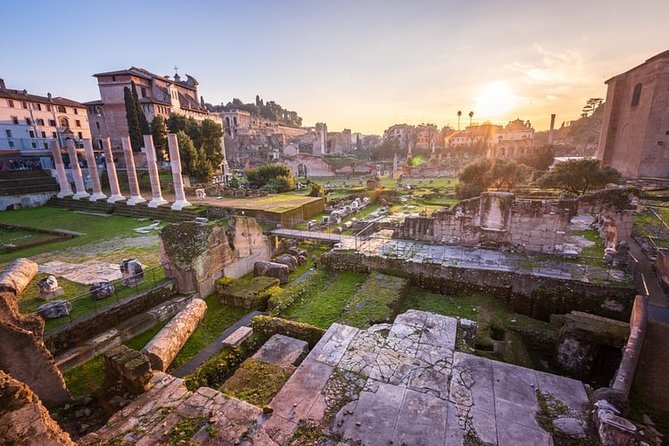
The most emotional part of the route is the legendary founding site of Rome. This is the setting associated with Romulus and Remus and with the story of Rome’s birth.
The audio presents the Palatine as the place where Romulus founded Rome and established his residence. That does not turn legend into proven fact, and you should hear it as part of Rome’s traditional founding story. Still, the story matters. Ancient Romans used it to explain who they were, where their city began, and why the Palatine carried such status.
I like the way an audio tour can handle this kind of material. You can stand among the remains while a narrator connects the physical hill to a story known for centuries. One Spanish-language comment praised the feeling of imagining Rome at its foundation and described the experience as a different way to encounter the city’s beginnings.
This section will suit you best if you enjoy history with a strong mythological thread. If you prefer only documented dates and archaeological evidence, you may find the tone less precise than a specialist lecture. The experience is designed to make the past easier to picture, not to settle every question about the foundation legends.
Augustus and the first imperial residence
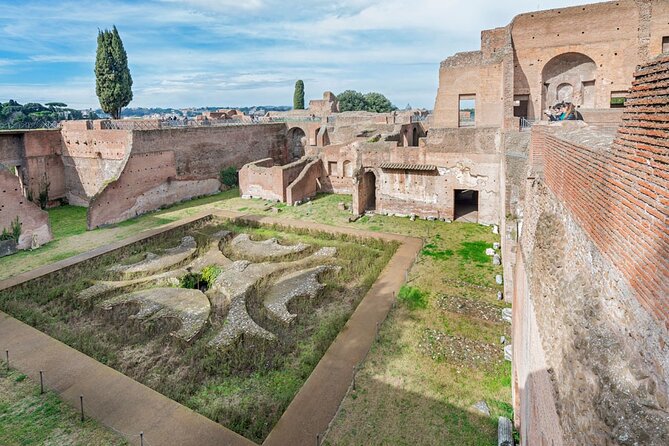
The route also reaches the former home of Emperor Augustus. Augustus matters because he transformed Rome while presenting himself as a restorer of tradition. His residence on the Palatine helped establish the hill as the imperial address.
This stop gives the route a useful human scale. Instead of hearing only about a vast palace complex, you are introduced to the home of the man who became Rome’s first emperor. The site connects domestic space with political change, since Augustus’s household and public authority were closely linked.
The supplied route information does not give a long stop time here, so expect a concise explanation. You will likely gain a broad sense of why Augustus belongs on this hill rather than a room-by-room tour of his house.
The Domus Augustana appears in the meeting instructions as a point where you should locate yourself. That detail may help you orient yourself at the end of the walk, but do not mistake it for a staffed meeting place. The product is built for independent use.
Public courtyards and the imperial way of life
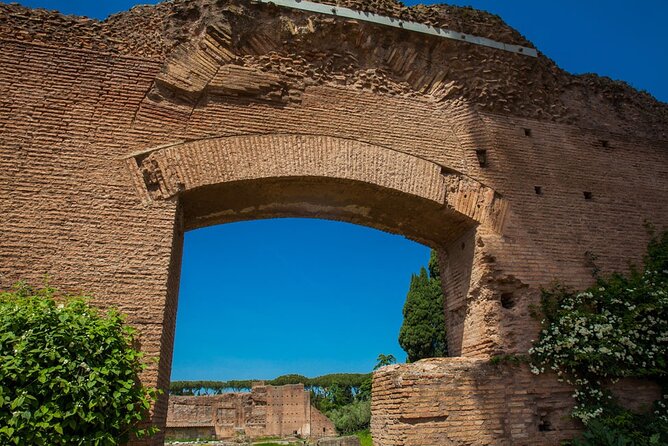
The final palace-related sections focus on public areas and a central courtyard. These spaces reveal how an imperial residence worked as more than a private home.
A courtyard could organize movement, ceremony, and access. Public rooms allowed the emperor to receive officials and conduct business, while the wider complex supported an image of order and grandeur. The audio’s value here is its ability to connect bare foundations with the functions they once served.
I would listen for the difference between public and private space. The Palatine was home, workplace, stage, and political symbol at once. That mix explains why later emperors continued to build here and why the word palace became linked to the hill itself.
The route ends at Palatine Hill in the archaeological park, with the Domus Augustana given as the visual point for finding yourself. Since the walk lasts around 40 minutes, you can then continue exploring on your own if your admission allows it. The audio does not promise a full explanation of every Palatine structure, so use it as a framework for further looking rather than as the entire visit.
What $10 really gets you
At $10 per person, the tour is inexpensive for Rome, but the price needs to be understood correctly. You are paying for the audio chapters, offline access, maps, and exploration tips. You are not paying for admission to the Palatine, a live guide, snacks, a smartphone, or headphones.
That can be good value if you already plan to enter the site and want a little structure without joining a group. The ability to download the content and replay it gives the purchase more use than a one-time spoken explanation. You can stop, repeat, and listen again later.
It is poor value if you buy it before checking entry requirements and then cannot get inside. One customer had no photo ID and was unable to enter after paying for the audio. The provider explains that the venue controls admission rules, but the practical lesson is simple: carry photo identification and confirm how you will obtain your site ticket before setting off.
The product is booked an average of 24 days ahead, which suggests that you should not leave every detail until the last hour. That does not change the self-guided nature of the activity, but it is a useful sign to plan the date, ticket, route, and phone setup together.
Who should choose this audio walk
I would recommend it to independent visitors who like to explore without a fixed group. It suits solo visitors, couples, and small private groups who want a short introduction to the Palatine’s myths and imperial residences.
It is also a good match if you like listening in your own language, want offline access, or find that historical sites make more sense with a narrative thread. The positive comments specifically praise the app’s stability, downloadable content, and the ability to replay the material.
I would be more cautious if you need hands-on help. The access confusion reported by one customer is important, and there is no promise of an on-site representative. You should also skip it if you expect admission to be bundled into the price or if you do not have a working smartphone and headset.
Most participants can take part, and service animals are allowed. The location is near public transportation, though the supplied information does not give a specific bus or metro route. The listed opening window runs from midnight to 11:59 p.m. every day for the stated operating period, but that does not remove the need to check the archaeological site’s own admission arrangements.
Should you book The Gods of the Palatine?
Book it if you already have, or plan to secure, admission to the Palatine and want a short, flexible audio introduction to Rome’s founding legends and imperial palaces. At $10, it is a sensible add-on, especially because you can download and replay the chapters.
Skip it if you want a live expert, a tightly managed entrance, or a complete tour of every ruin. The best way to use it is to prepare first: bring photo ID, download the audio, pack headphones, confirm your entry ticket, and study the start point near the Domus Tiberiana. Do that, and the Palatine’s broken stones have a much better chance of becoming a story rather than just another set of ruins.
FAQ
How long does the self-guided audio tour last?
The audio tour lasts approximately 40 minutes.
What is included in the $10 price?
The price includes all audio chapters, offline use, maps, and tips for exploring Rome.
Is admission to the Palatine included?
No. Admission to the archaeological site is not included in the audio tour price.
Do I need to bring my own phone and headphones?
Yes. A smartphone and headsets are not included, so you need to bring your own working equipment.
Where does the tour start?
The listed start point is the Domus Tiberiana, at Orti Farnesiani sul Palatino on Via della Salara Vecchia in Rome.
Where does the tour finish?
The listed end point is Palatine Hill in the Parco archeologico del Colosseo. The instructions say to locate yourself in front of the Domus Augustana.
Can I cancel for a full refund?
Yes. You can cancel at least 24 hours before the experience start time for a full refund. Cancellations or changes made less than 24 hours before the start time are not accepted or refunded.
Just added around Rome
- Pantheon Skip the Line Entry Tickets with Digital Audio Guide★ 3.5 · 52 reviews
- Audio guide in Vatican Museums and Sistine Chapel★ 4.5 · 12 reviews
- Trastevere: A Self-guided Audio Tour of Rome’s Medieval Village★ 4.5 · 3 reviews
- St. Peter’s Basilica: Dome Climb with Lift & Audioguide★ 4.5 · 13 reviews
- Navova square underground with audioguide★ 4.5 · 17 reviews
- The Roman Jewish Ghetto: A Self-Guided Audio Tour★ 4.0 · 8 reviews
- Experience: The Pantheon Audio Tour★ 4.5 · 4 reviews
- St. Mary’s Basilica, Pope Francis Tomb Audio Tour with Crypt★ 4.0 · 3 reviews
Self-Guided Tours, compared.

Acropolis Ticket & Optional Self-Guided Audio Tours
Read our review →


Ultimate Acadia National Park Self-Guided Driving Audio Tour
Read our review →

Santorini: Akrotiri Ticket with Optional Self-Guided Audios
Read our review →
Browse the lists this tour appears in