
REVIEW · ROME AUDIO TOURS
Discover Marvellous Rome: Self-Guided Audio Tour
Rome rewards walkers. This self-guided audio tour links fountains, temples, churches, and ancient ruins in one flexible route, with stories about emperors, popes, architects, and political plots. I like that you set the pace, and I like the low price of $16.56, especially for a family or small group.
The audio files and GPS map let you explore without meeting a guide or keeping up with a group. The narration is also praised for being informative, funny, and full of personality, which matters when you are listening for nearly two hours.
The catch is simple: admission fees are not included, and you must download everything before you begin. You also need your own phone, headphones, and a little patience with navigation.
Key points at a glance
- Seven major Rome stops: Follow a route from the Trevi Fountain through the Pantheon, Piazza Navona, Largo Argentina, Gesù, the Campidoglio, and the Roman Forum.
- A flexible two-hour walk: The audio takes about two hours, but you can pause for food, shopping, photographs, or a closer look.
- A budget-friendly choice: At $16.56 per person, it costs far less than hiring a private guide, though tickets to sights are extra.
- A lively audio style: The narration brings in emperors, popes, sacred rites, ancient mysteries, and famous political violence.
- English and Dutch options: You can choose either language before setting out.
- No physical guide or device supplied: Download the files in advance and bring your own phone and headphones.
Rome told through fountains, ruins, and grand squares
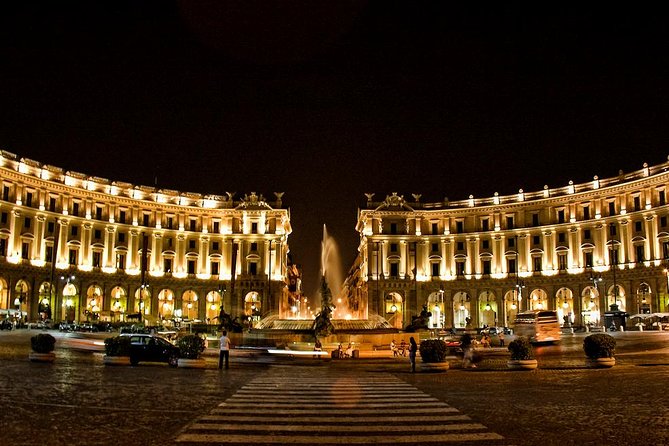
I like this tour because it gives Rome a clear shape. Instead of treating the city as a collection of unrelated photo stops, it connects the Trevi Fountain to the Pantheon, the public squares to ancient political power, and Michelangelo’s Campidoglio to the Roman Forum.
That connection is useful. Rome can feel confusing at first. One street may lead to a Baroque church, another to a temple ruin, and the next to a busy shopping lane. A GPS map and a fixed sequence give you a thread to follow without forcing you into a rigid group schedule.
The route takes about two hours in normal use, though the advertised duration ranges from one to three hours. That difference makes sense for a self-guided walk. You may listen straight through, or stop often for photographs and food. The audio can be paused whenever you need.
The tour begins at the Trevi Fountain and ends at the Colosseum area, but you are not locked into those points. Since this is a self-guided experience, you can choose your own start and finish according to your day. The stated start time is 9:00 a.m., yet the flexible format gives you more control than a conventional escorted tour.
More Self-Guided Audio Tours in Italy
- Self Guided Audio Tour-Coliseum & the Gladiator’s Legends
★ 3.5 · 49 reviews - The Roman Jewish Ghetto: A Self-Guided Audio Tour
★ 4.0 · 8 reviews - Self Guided Audio Tour with 100 Captivating Stories in Rome
★ 4.5 · 7 reviews
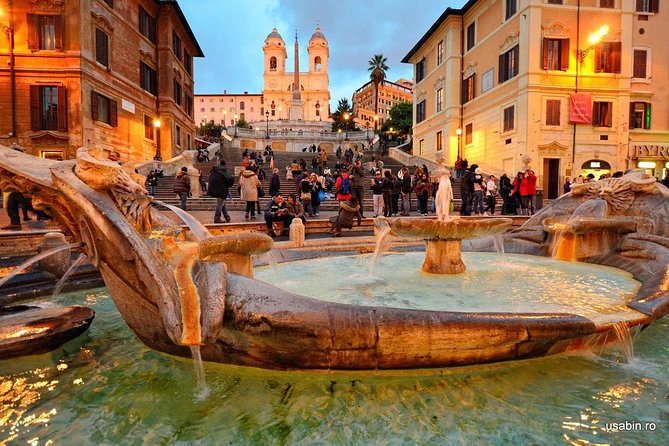
The Trevi Fountain starts the walk with Baroque drama
The Fontana di Trevi is a strong opening stop. It is Rome’s largest and most famous Baroque fountain, and its scale gives the tour an immediate sense of theater.
Plan around 15 minutes here for the audio segment. You may need longer if you want to look carefully, take photos, or simply watch the square change as people come and go. Admission is not required for this outdoor stop, but the tour does not include any paid entry elsewhere.
Starting here also gives you a practical reason to arrive prepared. The fountain is popular, so finding the correct point on the map and having the first audio file ready will save time. Do not wait until you reach the square to begin downloading.
The Pantheon explains Rome’s long memory
From the fountain, the route leads to the Pantheon, one of Rome’s most important surviving ancient buildings. A version of the structure has occupied this site for more than 2,000 years.
The first Pantheon was built in 27 B.C. by Marcus Agrippa, the same Roman general linked to the Aqua Virgo aqueduct. That small detail gives the stop more depth. You are not just looking at an old building. You are hearing how engineering, religion, and political power came together in ancient Rome.
Allow about 15 minutes for the audio portion. The experience does not include admission, so check the current entry arrangements separately if you want to go inside. The guide can introduce the site, but it cannot replace time spent exploring the building itself.
The main limitation here is that the audio may leave you wanting more. The Pantheon has enough architectural and religious detail for a full visit on its own. Still, as one part of a broader walk, it gives you an essential piece of Rome’s story without taking over the whole day.
Piazza Navona turns an ancient arena into a public square
Piazza Navona is one of the route’s best examples of Rome’s habit of building the present on top of the past. In the first century A.D., this was the site of the Circus Agonalis, a competition arena built by Emperor Domitian for sporting events and chariot races.
The ancient arena was even larger than the Colosseum. That comparison helps you picture the square differently. Its present shape is not random. It follows the footprint of a place once designed for public spectacle.
The name is also part of the story. Agonalis is believed to have changed over time into N’Agona and eventually Navona. The audio’s job here is to make that transformation visible in your mind while you stand in the modern square.
This is another 15-minute stop, but it is easy to linger. You might pause the recording and take in the fountains, façades, and open space. The tour does not provide food or drinks, but this is a sensible point to stop if you need a break.
More Self-Guided Audio Tours in Rome:
- Self-Guided Audio Tour – The gods of the Palatine
★ 3.5 · 5 reviews - Trastevere: A Self-guided Audio Tour of Rome’s Medieval Village
★ 4.5 · 3 reviews - Athens: Acropolis Ticket & Optional Self-Guided Audio Tours
★ 4.1 · 2,542 reviews - Gettysburg Battlefield Self-Guided Driving Audio Tour
★ 4.5 · 910 reviews
Largo Argentina brings politics and archaeology together
Area Sacra di Largo Argentina has a different mood. The site contains the ruins of four ancient temples, but it is also tied to one of history’s most notorious assassinations.
That combination gives the stop unusual force. You are looking at broken columns and ancient foundations while hearing about a political act that changed Rome. The contrast between quiet ruins and violent history is exactly the kind of pairing that makes a walking tour memorable.
The audio segment lasts about 15 minutes. Since the tour does not include a physical guide, the recording carries the full burden of explaining what you are seeing. Pay attention to the map and the narration here, because ancient ruins can be difficult to read without context.
I find this stop especially useful for people who have already seen the headline monuments. It offers a less polished side of Rome, where archaeology is part of the everyday city rather than isolated inside a grand museum.
Gesù shows Rome’s theatrical church interior
The Church of the Most Holy Name of Jesus is usually called Gesù. The tour includes about 15 minutes here, introducing a church that reflects the power and style of Catholic Rome.
This stop changes the rhythm of the walk. You move from open-air ruins and public squares into a sacred interior with a very different atmosphere. The broader tour promises stories about sacred rites, popes, architects, and kings, and Gesù is a natural place for those themes to come together.
The church is included as a stop, but admission is not included in the tour price. The supplied information does not promise a guaranteed interior visit, so check access conditions before relying on it as a full church tour.
For you, the practical point is timing. A 15-minute audio segment may be enough for an introduction, but you can pause if the setting deserves longer. Self-guided audio works best when you treat the suggested time as a guide, not a deadline.
Michelangelo’s Campidoglio adds Renaissance Rome
Piazza del Campidoglio is one of the route’s most elegant stops. Michelangelo designed the trapezoidal plaza in the mid-1500s, while the hill itself reaches back to Ancient Rome.
This is where the audio can help you read the space as both architecture and history. The plaza is not simply a pretty square. Its design reflects Renaissance ideas about order, ceremony, and the presentation of power.
The 15-minute stop should give you a useful introduction, but the Campidoglio rewards a slow look. Notice the unusual shape of the piazza and the way it directs your attention. You do not need a long lecture to appreciate it, yet the historical context makes the design more meaningful.
Admission fees are not part of the tour. If you decide to enter any nearby museum or paid site, that will be an additional expense. The tour itself remains an outdoor walking experience with audio commentary.
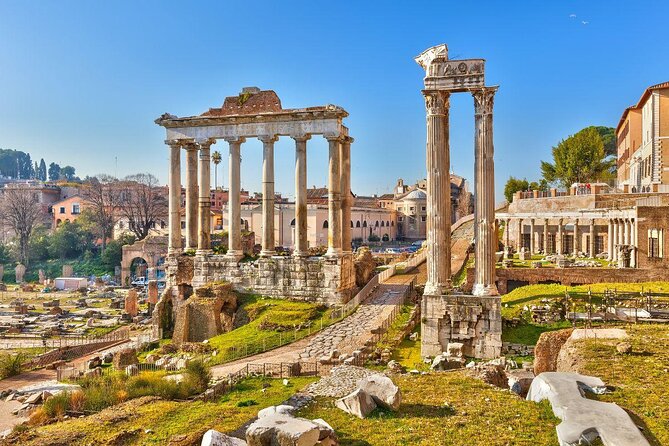
The Roman Forum closes the historical arc
The Foro Romano sits in the valley between Capitoline and Velian Hill. According to the tour’s historical introduction, this area began as a deserted marshland before becoming one of the central spaces of ancient Rome.
That transformation is a fitting finale. The route has moved from fountains and churches to the political center of the Roman world. Stories of emperors, public life, sacred practice, and ambition come together here.
The Roman Forum is the final listed stop, while the stated end point is the Colosseum at Piazza del Colosseo. The information provided does not promise entry to either the Forum or the Colosseum. Think of the audio as an orientation to the area, not as a ticket or an inside tour.
This distinction matters when you budget your day. At $16.56, the experience can introduce you to several major places for less than the cost of a private guide. But if you want to enter the paid archaeological sites, you must arrange and pay for those separately.
What $16.56 gets you
The price is the strongest practical argument for this tour. A family can use one low-cost format to learn about seven important places without paying for a private escort. One direct piece of feedback described it as a cheaper option than taking a guide for a family, while still offering good information.
That is the right way to judge the value. You are paying for prepared audio files, a GPS map, and the freedom to pause. You are not paying for entry tickets, transport, food, a listening device, or a person walking beside you.
The savings are real, but the responsibilities shift to you. You must download the audio before starting, keep your phone charged, bring headphones, follow the map, and decide when to pause. If you prefer asking questions as you go, a live guide will suit you better.
The audio itself appears to be one of the stronger features. It has been described as funny and fully engaged with the subject, while still teaching a great deal. That tone can make a long historical walk easier to follow than a dry list of dates.
How to prepare before you leave
Download the audio files and make sure they are ready before you reach the Trevi Fountain. The instructions are provided in the Before You Go section of your ticket, so read them in advance rather than treating the download as a last-minute task.
Bring:
- Your phone with the audio files ready
- Headphones
- The included GPS map
- Comfortable walking shoes
- Water and money for food or drinks
- Extra time for photographs and unplanned stops
The tour requires a moderate level of physical fitness. No transport is provided, so you should expect to move between all the listed points on foot. Public transportation is nearby, but it is not part of the experience.
The maximum group size is 10 people, though the self-guided format means you are not depending on a guide to keep a group together. Service animals are allowed.
The audio is available in English and Dutch. Choose the language that lets you follow historical names and details without strain. A language choice can make a bigger difference than a few extra dollars spent on another tour.
Who will enjoy this Rome walk most
I would choose this experience for independent visitors who want historical context but dislike fixed schedules. It also suits families looking for a lower-cost alternative to a private guide, especially if different people in the group may want to stop at different times.
It works well for a first look at central Rome because the route touches major landmarks and gives you a usable introduction to each. It can also suit returning visitors who want a structured walk through familiar places.
I would think twice if you want inside access included, detailed archaeological guidance, or immediate answers to questions. You may also find the audio format less satisfying if you dislike using your phone while walking.
The best approach is to use the tour as a flexible backbone. Listen at each stop, pause when something catches your attention, and allow time for food or shopping. Rome is too good to rush simply because the next audio segment is waiting.
Should you book Discover Marvellous Rome?
Book it if you want an affordable, self-paced introduction to central Rome and are happy to handle your own phone, map, timing, and admission arrangements. The strong points are clear: seven major stops, lively storytelling, English or Dutch narration, and a price that makes sense for a family.
Skip it if you need a live expert, guaranteed entry to the Pantheon or Roman Forum, or a fully managed day. For everyone else, $16.56 buys a useful historical thread through some of Rome’s most important streets and squares, with enough freedom to make the walk your own.
FAQ
How long does the self-guided Rome tour take?
The audio tour takes about two hours. The stated duration is approximately one to three hours because you can pause for food, shopping, photographs, or extra sightseeing.
Where does the tour start and end?
The suggested start is the Trevi Fountain at Piazza di Trevi. The suggested end is the Colosseum at Piazza del Colosseo, but you can choose your own starting and ending points because the experience is self-guided.
What is included in the price?
The price includes audio files and a GPS map. The tour is self-paced.
Are admission fees included?
No. Admission fees are not included, and the experience does not provide entry tickets for the Pantheon, Roman Forum, Colosseum, or other paid sites.
What do I need to bring?
You need your own phone, headphones, and the downloaded audio files. Download the files before starting the walk, and have the map ready.
Is the tour available in languages other than English?
Yes. The audio tour is available in English and Dutch.
Just added around Rome
- Pantheon Skip the Line Entry Tickets with Digital Audio Guide★ 3.5 · 52 reviews
- Trastevere: A Self-guided Audio Tour of Rome’s Medieval Village★ 4.5 · 3 reviews
- St. Peter’s Basilica: Dome Climb with Lift & Audioguide★ 4.5 · 13 reviews
- Audio guide in Vatican Museums and Sistine Chapel★ 4.5 · 12 reviews
- Navova square underground with audioguide★ 4.5 · 17 reviews
- The Roman Jewish Ghetto: A Self-Guided Audio Tour★ 4.0 · 8 reviews
- Experience: The Pantheon Audio Tour★ 4.5 · 4 reviews
- St. Mary’s Basilica, Pope Francis Tomb Audio Tour with Crypt★ 4.0 · 3 reviews
Self-Guided Tours, compared.
Acropolis Ticket & Optional Self-Guided Audio Tours
Read our review →


Ultimate Acadia National Park Self-Guided Driving Audio Tour
Read our review →

Santorini: Akrotiri Ticket with Optional Self-Guided Audios
Read our review →
Browse the lists this tour appears in