
REVIEW · SPAIN AUDIO TOURS
Salamanca: Convent of Las Claras with Free Audioguide
Medieval color survives above Salamanca. I like the way the Convent of Las Claras combines a small museum visit with access to spaces that still feel tied to convent life, especially the high choir and its old wooden ceiling. I also like the tower, which gives you a useful view over Salamanca’s historic center for only $7. The main drawback is that the audio guide may feel slow or dull if you prefer to look around at your own pace.
The visit is best for anyone who enjoys art, religious history, and quiet architectural details. You can see murals hidden for centuries, works once used by the nuns, and a polychrome roof from the late 14th century. One practical caution: the published information lists the site as wheelchair accessible, but also says it is not suitable for people with mobility impairments. If that matters to you, confirm which parts of the visit are accessible before booking.
Key points to know before you go
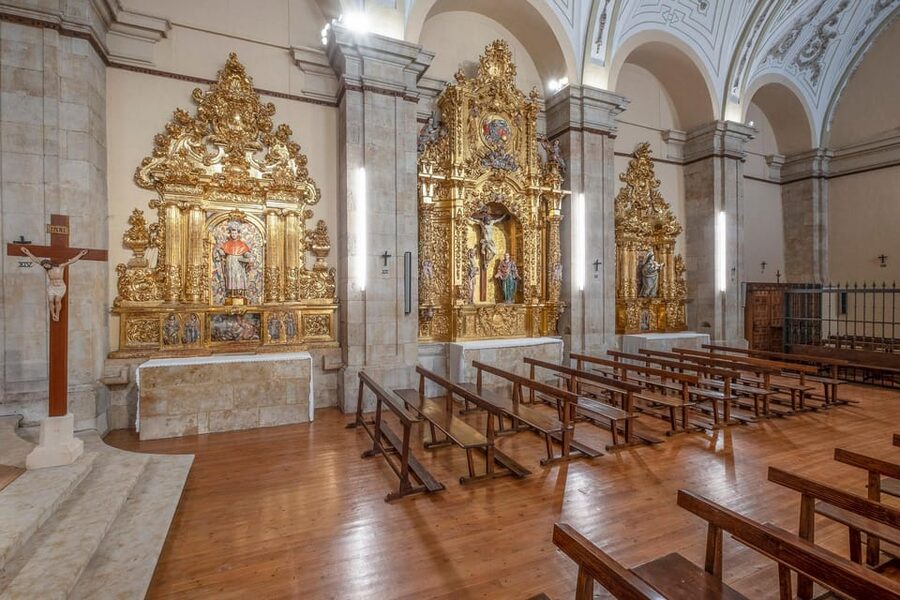
- The medieval roof is the star attraction: Walk through the high choir for a close view of the wooden coffered ceiling.
- The church murals were rediscovered: A series of paintings, found near the end of the 20th century, now forms part of the museum display.
- The tower adds real value: Your ticket includes views toward Salamanca’s main historic buildings.
- This is more than a church visit: The former convent now displays paintings, devotional objects, and rooms connected with the nuns.
- The audio guide is available in three languages: Choose English, Spanish, or French, though some people find the narration less engaging than the art itself.
- The $7 price is modest: For access to the choirs, tower, museum rooms, and medieval decoration, this is a good low-cost stop.
Why Las Claras is worth your time
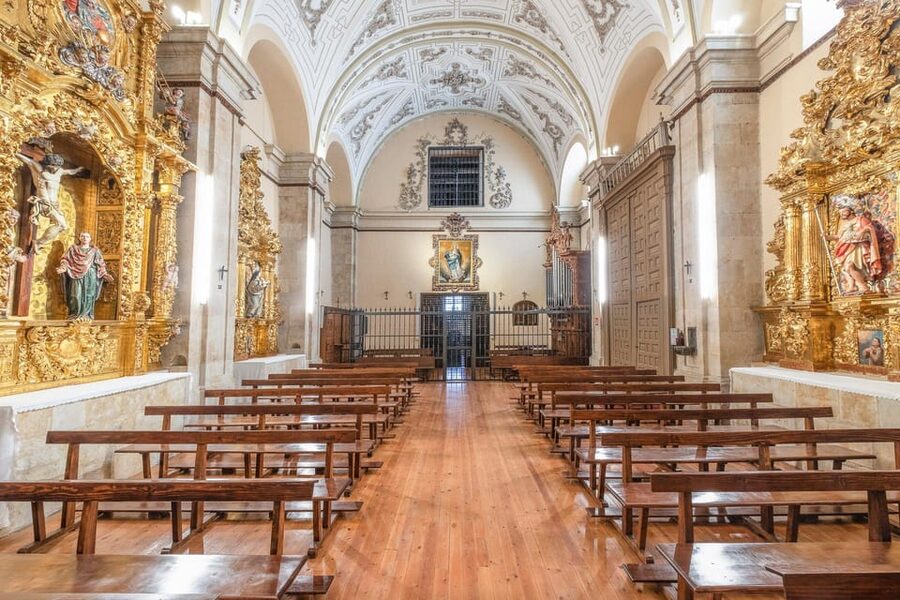
Salamanca is famous for its grand university buildings, golden stone, and busy central squares. Las Claras gives you a different view of the city. It is quieter and more intimate, with the focus placed on painted surfaces, timber work, religious objects, and the spaces where the Poor Clare nuns once lived and worshipped.
The building has been changed into a Museum of Medieval Painting after important work by the Ages of Man Foundation. That change matters. You are not simply walking through an old convent with a few objects placed inside. The building itself is part of the display, and the paintings and roof help explain how the church looked in the late 14th century.
I especially like that the visit connects several layers of history. You see the convent as an institution, the church as a decorated medieval space, and the museum as a place where fragile art has been preserved. The result is more rewarding than a quick look at an ordinary chapel.
A few more audio tours around Spain worth a look
- Barcelona: Sagrada Familia Entry Ticket with Audio Guide
★ 4.6 · 105,312 reviews - Barcelona: Casa Batlló Entry with Self-Audioguide Tour
★ 4.7 · 25,359 reviews - Granada: Alhambra Entry Ticket with Audio Guide
★ 4.1 · 5,950 reviews
Entering the former convent and museum
The tour begins with the former convent, now arranged as a museum. You move through its notable rooms and see art and devotional objects that belonged to the nuns. These pieces give the visit a personal side. They are not just anonymous museum holdings. They relate to the daily religious life of the women who lived here.
The objects also help you read the building. A convent church can seem bare once its community has gone, but devotional items restore some sense of purpose. You can picture how religious objects shaped prayer, ceremony, and private devotion, even though the available information does not provide detailed labels for every item.
The reception has earned praise for its friendly welcome, and the site has been described as clean, even down to the restroom. That may sound minor, but it matters in a small historic attraction. Good care makes the visit feel easier from the moment you arrive.
Do not expect a large museum complex. The pleasure comes from a handful of rooms and architectural details rather than from a full day of galleries. The listed duration is one day, meaning your ticket is valid for that day, not that you need to spend an entire day inside. Most people will likely treat Las Claras as one stop within a Salamanca sightseeing plan.
The high choir and its medieval wooden ceiling
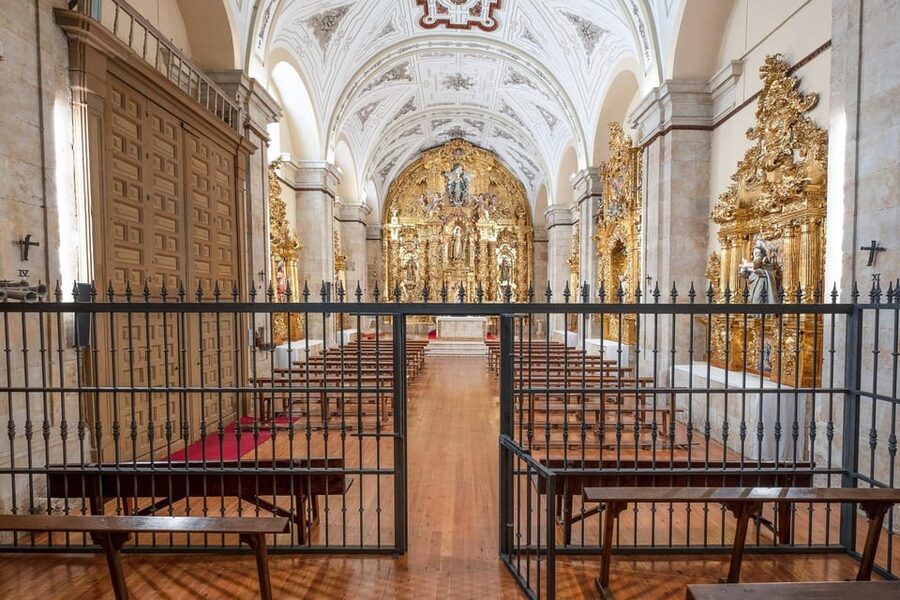
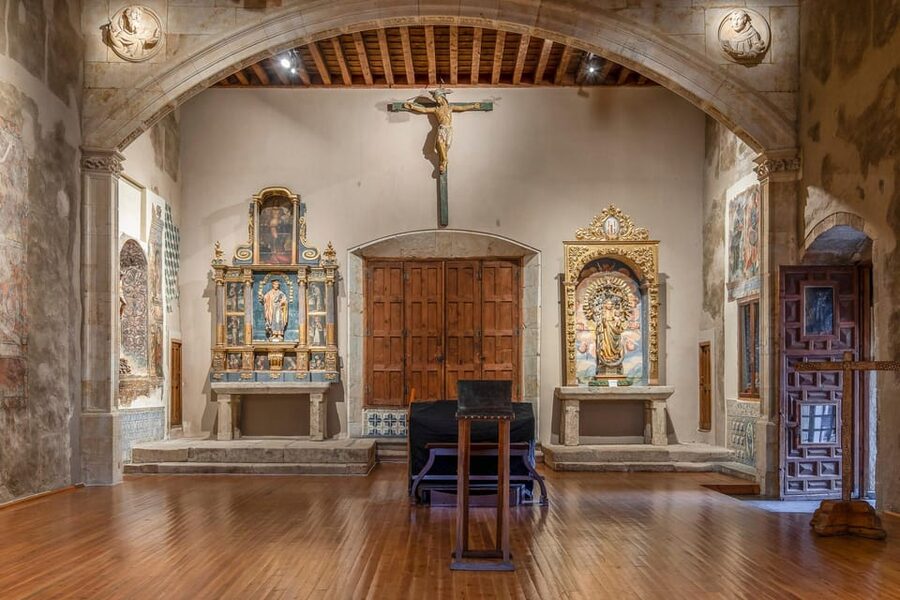
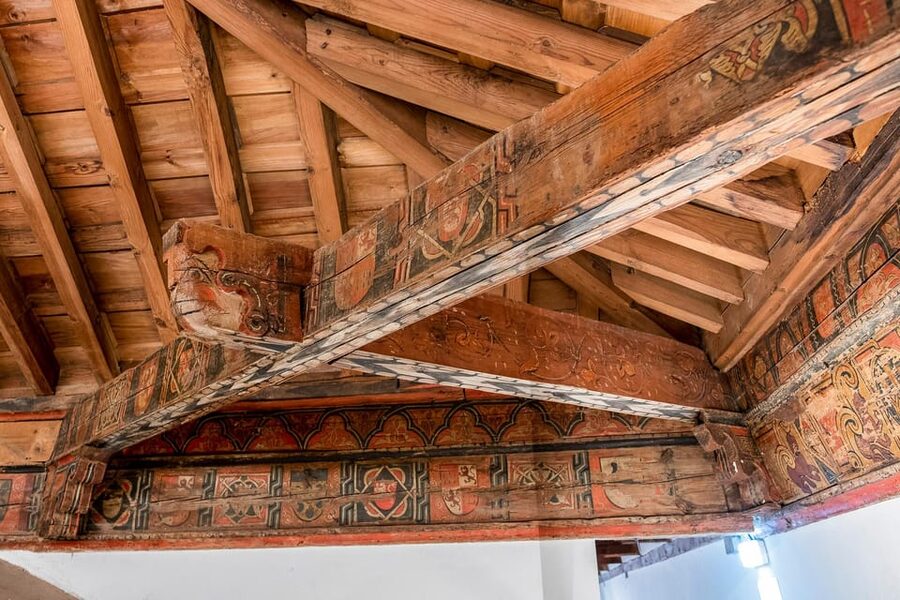
The high choir is the strongest part of the visit for many art and architecture lovers. You can walk through this upper choir and see the wooden coffered ceiling from close range. That access changes the experience. From the floor, a ceiling can seem like a distant pattern. From the choir, you can study the timber structure and decoration more directly.
The ceiling belongs to the medieval church and helps you imagine the original interior above the worship space. It is one of those features that rewards a slower look. Check the repeated shapes, the painted colors, and the way the roof fills the upper part of the room.
The high choir is paired with a lower choir, and both are included. This gives you two different positions within the church. The lower choir keeps you closer to the main worship area, while the high choir lets you examine the roof and the upper structure.
The roof is worth making the center of your visit. One French visitor called it something you should see without fail, and that advice is sound. If you have limited time, do not rush past the upper choir in order to reach the tower.
Murals rediscovered beneath later layers
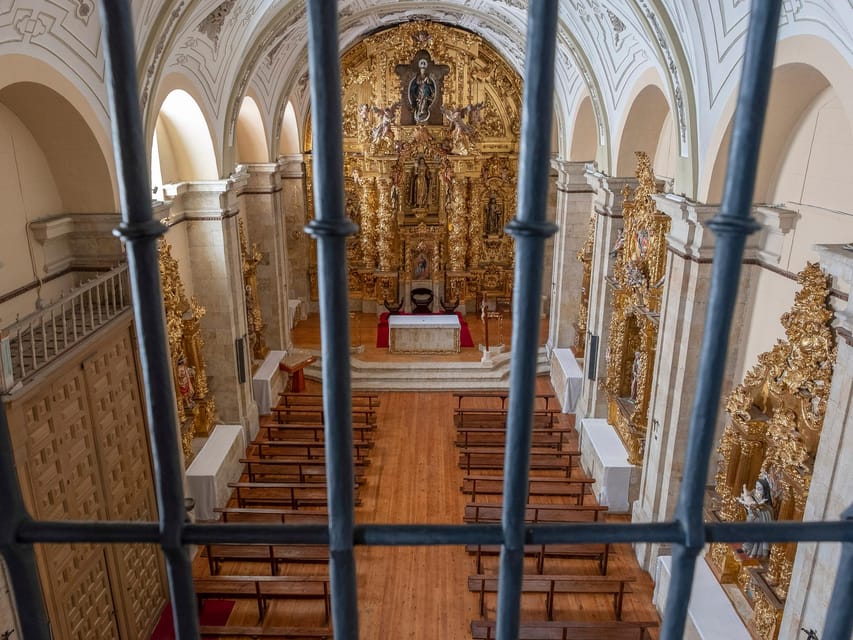
The convent’s murals are another major reason to come. The paintings were discovered at the end of the last century, then incorporated into the restored museum setting. Their survival gives you a glimpse of the church’s medieval decorative program.
The murals and polychrome roof both date from the late 14th century. Together, they show that the church was not meant to be plain. Color covered the interior, and religious scenes would have shaped the visual world of the nuns and worshippers.
Paintings in a former convent can be difficult to read at first. Some may be worn, incomplete, or less immediately dramatic than a bright modern artwork. I find that the setting makes them more interesting. You are looking at decoration that belonged to the building, not a picture moved into a neutral white room.
The conservation work by the Ages of Man Foundation is important here. Without the intervention, the murals and roof might be much harder to see or understand. The museum now lets you compare the painted walls with the timber ceiling and consider how the whole church once worked as a single visual space.
Same place, a different route to walk:
- Casa Batllo Admission Ticket with Intelligent Audio Guide
★ 4.5 · 3,168 reviews - Madrid: Las Ventas Bullring Tour with Audio Guide
★ 4.6 · 3,154 reviews - Cordoba: Mosque-Cathedral E-Ticket with Audio Guide
★ 4.1 · 2,895 reviews - Nerja: Caves of Nerja Entry Ticket with Audio Guide
★ 4.6 · 1,616 reviews
The chapel altar and devotional details
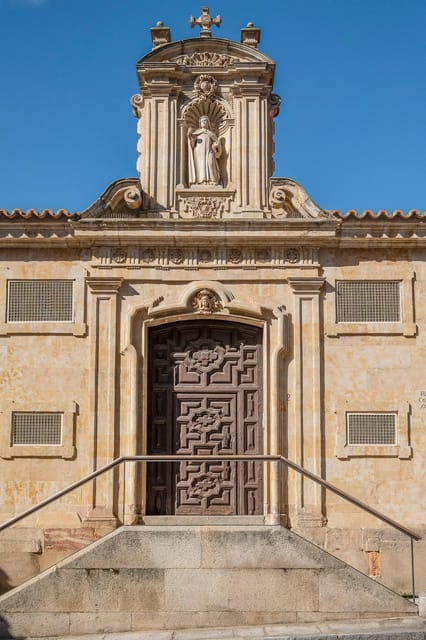
The chapel altar has received especially strong praise, and it is easy to see why it can become a highlight. The available information does not give a full description of its design, so I would not promise a particular style or material. Still, the altar is clearly one of the places where you should pause rather than simply pass through.
Look at it alongside the devotional objects connected with the nuns. The attraction works best when you connect the grand elements, such as the roof and murals, with the smaller items that belonged to everyday religious practice.
This balance keeps Las Claras from becoming only an architecture stop. You get the scale of the church, the color of the medieval decoration, and the more human scale of objects used in convent life.
Climbing for Salamanca views
The tower is included in the ticket and gives you a view over Salamanca and its principal historic buildings. This is a useful finish because it places the convent within the city rather than leaving you focused only on its interior.
From above, you can look back toward Salamanca’s historic center and understand how the convent relates to the city’s famous architecture. The view is not a separate sightseeing experience with a long list of landmarks, but it adds a welcome outdoor moment after the enclosed rooms and choirs.
There is one important qualification. A metal grille at the highest viewpoint has been reported to obstruct part of the view. I would still consider the tower worthwhile, but you should keep expectations realistic. You are getting a framed look over Salamanca, not an entirely open panorama.
The climb and height also explain why the site lists several exclusions, including people with a fear of heights, vertigo, heart problems, epilepsy, and claustrophobia. The information also says the activity is not suitable for pregnant women, people with mobility impairments, people with altitude sickness, people prone to seasickness, or people over 95. Some of those warnings seem broad for a city monument, but they are part of the stated conditions and should be taken seriously.
Is the $7 admission good value?
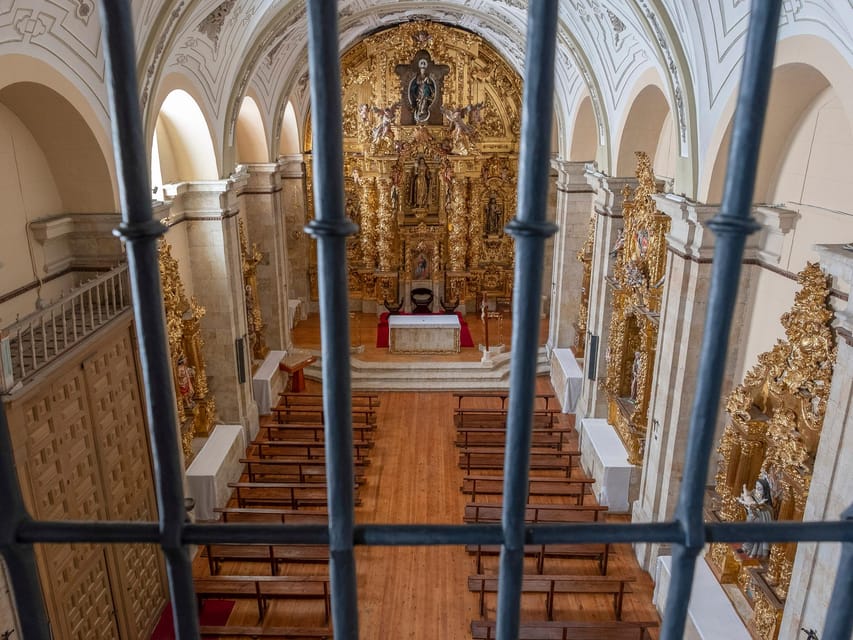
At $7 per person, Las Claras offers good value if you care about historic interiors. The admission includes the audio-guided tour, both choirs, the medieval coffered ceiling, the murals, the tower, notable rooms, and the art and devotional objects connected with the nuns.
That is a lot for the price, especially because the tower adds a second type of experience. You are not paying only to enter a museum. You also get a view over Salamanca and access to architectural areas that are not part of a standard street walk.
The value is strongest for a self-guided visitor who wants a focused stop without paying for a large guided tour. Food, drinks, hotel pickup, drop-off, and personal expenses are not included, but those omissions are not surprising for a small museum visit.
I would be less enthusiastic if you want a lively guide or a fast, highly polished presentation. The audio narration is offered in English, Spanish, and French, but one Portuguese visitor found it boring. That does not make the information useless, but it suggests that the building and artworks may carry the visit more effectively than the recording.
Using the audio guide well
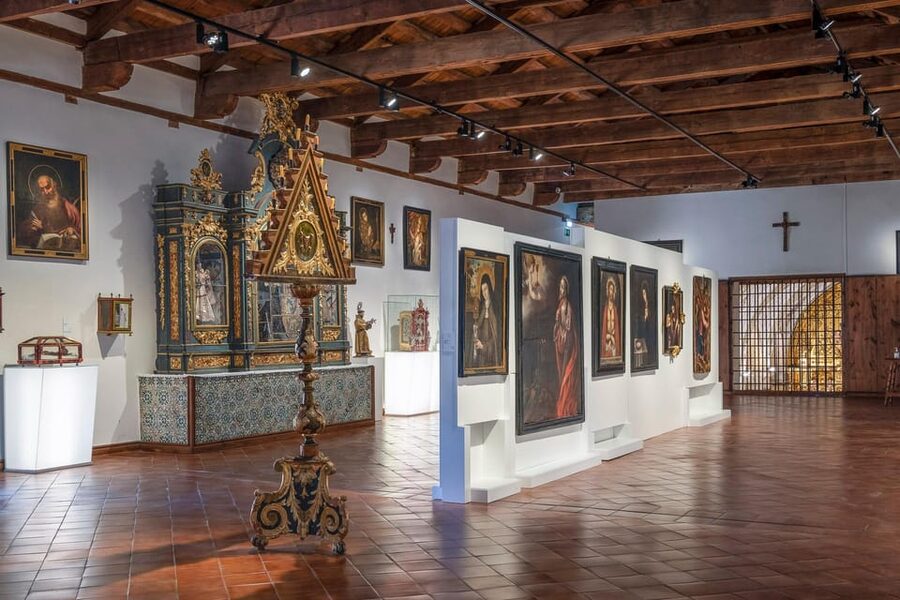
The audio guide gives you structure, which is helpful if you do not already know the story of Las Claras. It explains the former convent, the medieval paintings, the roof, and the objects linked to the nuns.
Still, you do not need to follow every word at the same speed. If the narration feels too long, pause it while you look closely at the roof or murals. The museum’s visual details deserve your attention, and a recording should support that rather than pull your eyes away.
The three language choices are useful for international visitors. English, Spanish, and French cover many common needs, though there is no stated option for Portuguese, Italian, German, or other languages.
I would plan to listen selectively. Use the guide for context, then spend extra time with the ceiling, chapel altar, and murals. That approach gives you the facts without letting a flat narration weaken the visit.
Atmosphere, upkeep, and what may disappoint you
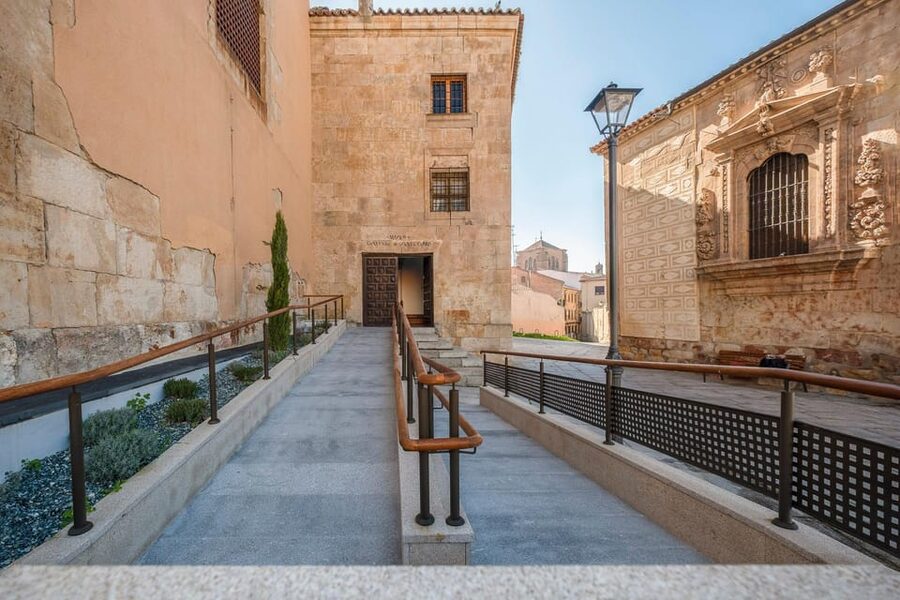
Las Claras appears to be well maintained indoors. The clean facilities and kind reception service make a good first impression, especially when you are visiting a smaller attraction that may not have the crowds or resources of Salamanca’s major monuments.
The cloister garden is a weaker point. It has been described as neglected, which may reduce the pleasure of the outdoor areas. If you expect a beautifully tended convent garden, adjust those expectations. The indoor church and museum displays are the stronger part of the experience.
Crowd levels can vary. A quiet visit may leave you with more time to examine the murals and roof, and a nearly empty day can make the place feel especially peaceful. The downside is that a quiet attraction may have less energy, and the audio guide becomes more important when there is no live explanation.
I would treat the silence as an advantage for close looking. This is not a place where you need a packed schedule or constant activity. Give the art a few extra minutes and let the details build slowly.
Who should visit Las Claras?
I recommend this experience most strongly for:
- People who enjoy medieval painting and church decoration
- Architecture fans interested in timber ceilings and choir spaces
- Visitors looking for a low-cost cultural stop in Salamanca
- Anyone who wants a tower view without committing to a long excursion
- Art lovers who appreciate devotional objects and historic interiors
- Visitors who prefer a self-guided experience in English, Spanish, or French
You may want to skip it if your main goal is a lively guided tour, a large collection, or a broad panoramic viewpoint. The audio may not suit you, the garden is not the main attraction, and the upper viewpoint has a grille that can limit the view.
The site says it is wheelchair accessible, but the same information excludes people with mobility impairments. That is a contradiction worth checking before you reserve. Access to every choir and the tower may not be identical, so ask specifically about the parts you want to visit.
Booking and timing advice
The ticket allows free cancellation up to 24 hours before the visit, and you can reserve now and pay later. That flexibility is useful if your Salamanca plans are still changing.
The experience is valid for one day, with starting times based on availability. Since no fixed visit length is provided, check the available time when booking and leave enough room to examine the roof and murals without rushing.
Food and drinks are not allowed inside, and there is no hotel pickup or drop-off. Plan this as a central sightseeing stop that you reach on your own, then combine it with other Salamanca attractions before or after.
The activity includes an express security check, so entry should be straightforward. It is still wise to arrive with only what you need, since small historic interiors are more pleasant when you are not managing a large bag.
Should you book the Convent of Las Claras?
Yes, if you want a compact, inexpensive look at Salamanca’s medieval art and religious architecture. The late 14th-century murals, polychrome roof, wooden coffered ceiling, chapel altar, and tower view give the visit more substance than its modest price suggests.
I would book it especially on a quieter day, when you can take your time in the high choir and study the roof properly. Just lower your expectations for the cloister garden, treat the audio guide as optional support rather than the main attraction, and confirm access needs if mobility or height is a concern.
FAQ
How much does admission to the Convent of Las Claras cost?
Admission costs $7 per person.
What does the ticket include?
It includes the audio-guided tour, access to the high and low choirs, the medieval wooden coffered ceiling, the murals, the tower view, notable rooms, and the art and devotional objects connected with the nuns.
Which languages are available for the audio guide?
The audio guide is available in English, Spanish, and French.
Is the tower included in the visit?
Yes. The tower is included, with views over Salamanca and its main historic buildings.
Can I see the medieval ceiling up close?
Yes. You can walk through the high choir and view the medieval wooden coffered ceiling.
Are food and drinks allowed inside?
No. Food and drinks are not allowed.
Can I cancel for a full refund?
Yes. You can cancel up to 24 hours in advance for a full refund.
Is the convent wheelchair accessible?
The activity information lists the convent as wheelchair accessible, but it also says the experience is not suitable for people with mobility impairments. Confirm the specific access arrangements before booking.
Just added around Spain
- Tenerife Scavenger Hunt and Highlights Self Guided Audio Tour★ 3.5 · 3 reviews
- Tarragona Scavenger Hunt and Highlights Self Guided Audio Tour★ 4.5 · 15 reviews
- Tarragona Cathedral Entrance + Audio Guide (WebApp)★ 4.5 · 36 reviews
- Seville Maestranza Bullring Tour with Audio Guide★ 3.5 · 6 reviews
- Royal Alcazar of Seville Entry Ticket with Audio Guide★ 4.0 · 42 reviews
- Sevilla Centre: City Walk Audioguide in 7 Languages on your Phone★ 3.0 · 2 reviews
- Seville Cathedral and La Giralda Entry Ticket with Audio Guide★ 3.0 · 9 reviews
- Seville Audio guided walking tour 3h20 and 28 audio commentaries★ 5.0 · 2 reviews
Spain Audio Tours, compared.
Sagrada Familia Entry Ticket with Audio Guide
Read our review →
Casa Batllo Admission Ticket with Intelligent Audio Guide
Read our review →
Nerja: Caves of Nerja Entry Ticket with Audio Guide
Read our review →
La Pedrera-Casa Mila Admission Ticket with Audioguide
Read our review →Browse the lists this tour appears in