
REVIEW · SEVILLE AUDIO TOURS
Seville Audio guided walking tour 3h20 and 28 audio commentaries
Seville rewards walkers who keep looking up. This self-guided route brings together 28 audio commentaries and a strong mix of famous sights, quiet lanes, grand palaces, and neighborhood squares. I like the freedom to begin when it suits you, and I like that one low group price covers up to 15 people. The main tradeoff is simple: you get no live guide to answer questions or adjust the walk on the spot.
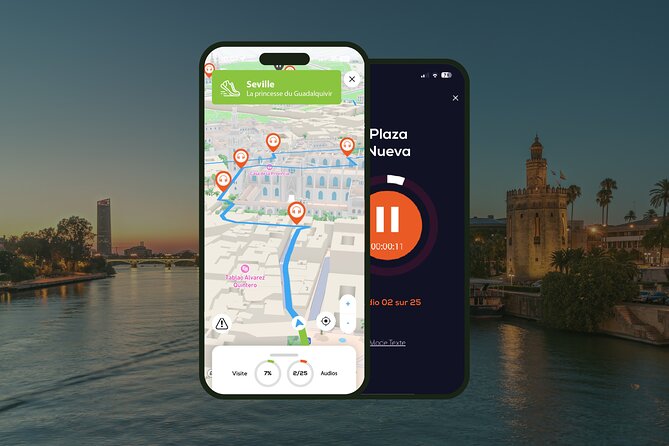
The route takes about 3 hours and 20 minutes, so it is a serious city walk rather than a quick introduction. The audio includes history, anecdotes, transcripts, a 3D map, photo suggestions, and offline use. One small point to note: the commentary may announce a monument before you have fully enjoyed the view, a minor issue if you prefer to discover each stop without advance notice.
Key points at a glance
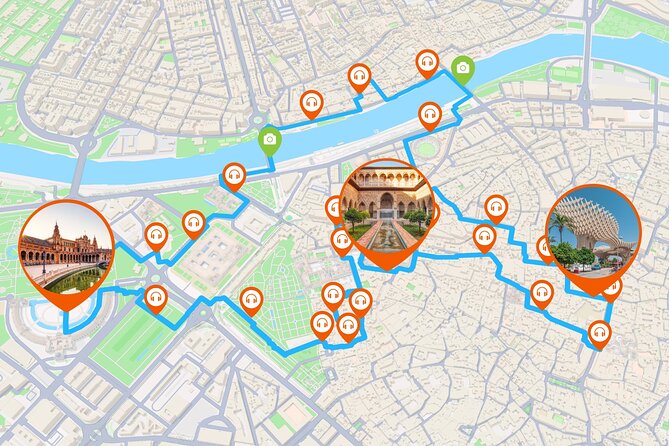
- 28 stops across Seville: The route covers Las Setas, Sierpes Street, the Guadalquivir, Triana, the cathedral area, Santa Cruz, Maria Luisa Park, and Plaza de España.
- A private group price: At $7.14 for up to 15 people, the cost can be excellent value for families or friends traveling together.
- No fixed tour schedule: You can follow the walk at your own pace, with no guide, group departure, or collection point for materials.
- Offline navigation included: Downloaded access means you can follow the route without using mobile data during the walk.
- Major sights and lesser-known corners: The route pairs headline monuments with palace houses, convents, old lanes, and local districts.
- Optional paid entries: Entrance fees are not included, so you can choose which buildings deserve extra time and money.
Why this Seville audio walk is useful
This tour works best as a walking framework for your whole day. It gives you a defined route through central Seville, but it does not force you to keep moving with a group. You can pause for photographs, stop for food, enter a monument, or simply sit in a square before continuing.
I especially like the balance between big attractions and smaller places that are easy to miss. Las Setas is impossible to overlook once you know where to look, but the Palace of the Marquis de la Motilla, the Church of Santa Ana, and the old remains of the Almohad fortifications add texture to the walk. You get more than a parade of postcard sights.
The audio format also suits Seville’s complicated layers. Roman, Islamic, Christian, imperial, and modern influences appear close together. A live guide could explain this well, but a recorded route lets you replay a passage or read the transcript if the street is noisy.
The private format means only your own group participates. That is useful if you are traveling with children, older relatives, or friends who walk at different speeds. Still, you need to manage the timing yourself. The route is not a guided appointment with someone watching the clock or helping you choose which interior to visit.
More Audio Walking Tours in Spain
- Tarragona Walking Tour: An Audio Guide to Tarraco
★ 4.5 · 23 reviews - Ronda Old Town Walking Tour with Audioguide on Your Smartphone
★ 4.0 · 20 reviews - Audioguide City Walk Malaga for cruises (German & English)
★ 4.0 · 17 reviews
Starting at Plaza de España and Maria Luisa Park
The meeting point is Plaza de España on Avenida Isabel la Católica, and the activity ends back at the same meeting point. That makes the walk easier to plan, especially if you do not want to finish in an unfamiliar part of the city.
Plaza de España is one of Seville’s most dramatic public spaces. The audio gives you time to consider the curved building, tiled details, bridges, and the large open square rather than rushing straight through. This is also one of the best places to take photographs, and the included photo recommendations should help you notice the strongest angles.
From here, the route passes through Maria Luisa Park. The gardens once belonged to the Palace of San Telmo and were later given to the city by Princess Marie-Louise. That detail explains why the park feels more formal and carefully shaped than an ordinary city green space.
The walk also reaches the Prado Garden of San Sebastián. Its name comes from the former San Sebastián hermitage, built in the 13th century. You may find this stop less immediately impressive than Plaza de España, but it helps connect the modern city to older religious and civic spaces.
You should allow more than the stated 3 hours and 20 minutes if you plan to linger here. The duration is an approximate walking time, and the route includes several locations where you will naturally want to stop for pictures.
From the Royal Tobacco Factory to the river
The route continues toward the Royal Tobacco Factory, one of Seville’s grandest historic buildings. Its story links the city to the arrival of tobacco from the New World. The building is also a useful reminder that Seville once sat at the center of Spain’s trade with the Americas.
Nearby, the Lope de Vega Theatre adds a later chapter. It was built for the 1929 Ibero-American World’s Fair and was first known as the exhibition theatre. The stop helps show how Seville used major international events to reshape parts of the city.
The Guadalquivir then changes the mood of the walk. Seville’s great river brought wealth and influence, and it remains central to the city’s identity. The route crosses toward Betis Street, named for the Roman term for the Guadalquivir, and enters Triana.
This river section is valuable because it gives you a physical sense of Seville’s geography. The city is not only a collection of palaces and churches. Its waterway helped make those grand buildings possible.
Triana, Santa Ana, and the San Telmo Bridge
Triana has a different feel from the old center. It is known here as a bohemian and flamenco district, and Betis Street gives you a waterside view back toward Seville. The audio commentary provides context as you move through the neighborhood rather than treating it as just another photo stop.
The route reaches the Church of Santa Ana, often called the Cathedral of Triana. Its small square gives you a chance to slow down and see how a local neighborhood organizes itself around a church.
You then cross the San Telmo Bridge. From the bridge, you get an open view of the Torre de Oro, the golden defensive tower beside the river. This is one of the walk’s strongest photo opportunities because the river, bridge, and tower come together in one scene.
The bridge crossing also creates a useful break in the route. If three hours and twenty minutes feels long, Triana or the riverfront is a sensible place to pause. The walk is flexible, so you do not need to treat every audio stop as a quick instruction before moving on.
Same place, a different route to walk:
- Barcelona: Sagrada Familia Entry Ticket with Audio Guide
★ 4.6 · 105,312 reviews - Barcelona: Casa Batlló Entry with Self-Audioguide Tour
★ 4.7 · 25,359 reviews - Granada: Alhambra Entry Ticket with Audio Guide
★ 4.1 · 5,950 reviews - Casa Batllo Admission Ticket with Intelligent Audio Guide
★ 4.5 · 3,168 reviews
Palaces, shopping streets, and city squares
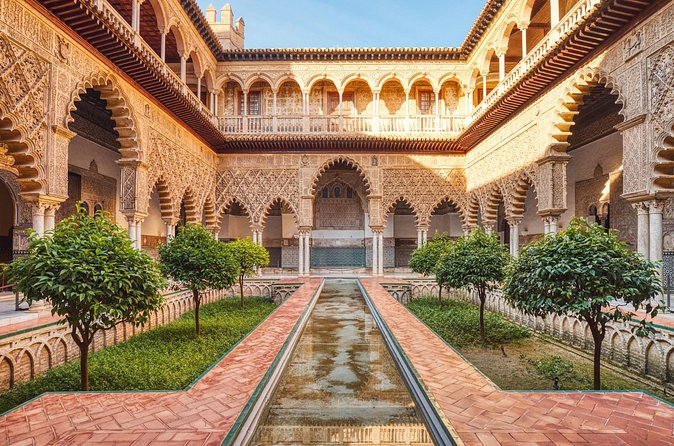
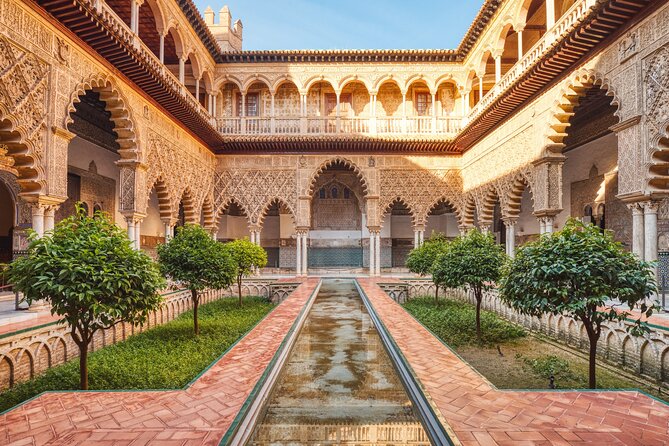
Back in the central area, the route introduces you to Seville’s palace houses. The Palace of the Marquis de la Motilla is a good example of the private architecture that can disappear behind busy streets. The building is more than a decorative facade. It points to the wealth of families who shaped Seville’s urban character.
Sierpes Street offers a sharp change. This narrow pedestrian shopping street remains one of the city’s main commercial routes. You can expect more movement and activity here, but the audio keeps the stop tied to the city’s social life rather than treating it as a simple shopping break.
Plaza Nueva follows. Despite its name, it is an important public square in the center of town. The route uses these stops to move from private palace architecture to everyday urban life.
San Francisco Square adds another historical layer. In the 16th century, it was considered the heart of Seville, a place for major celebrations and the home of important civil authorities. The square may not carry the same instant fame as the cathedral, but this is exactly why an audio walk helps. It tells you why an ordinary-looking space mattered.
The bullring and the Guadalquivir’s wealth
The Plaza de Toros is one of the route’s best-known landmarks. It is described as Spain’s largest and most important bullfighting arena, so the stop carries cultural weight even if you do not plan to attend a bullfight.
The experience does not include entrance fees to paid sites. That gives you control, but it also means you need to decide if you want to visit interiors separately. The audio walk can explain what you are seeing from outside, while an optional visit may require its own ticket and time.
The river commentary adds useful context here. The Guadalquivir was not merely scenery. Its navigable waters helped Seville gain wealth and influence. The route lets you connect the bullring, riverfront, bridges, and historic center as parts of one city rather than isolated attractions.
Santa Cruz, the convent, and the Hospital of the Venerable
The Santa Cruz district is one of the most picturesque parts of Seville. Its narrow cobbled streets and white and yellow houses create a more intimate walking experience than the broad spaces around Plaza de España.
This is a section where the navigation tool matters. Small streets can be confusing, and an interactive 3D map should make it easier to follow the intended path without repeatedly stopping to work out where you are.
The route points out the Church of the Convent of San José del Carmen, also known as Little Thérèse. It was founded in 1586 by Santa Teresa for the Discalced Carmelite order and remains a cloistered Catholic convent. You should think of this as an exterior viewing stop unless you arrange a separate visit, since admission to paid establishments is not part of the tour.
The Hospital of the Venerable is another striking stop. This Baroque building was created in the late 17th century to house elderly churchmen. Its architecture rewards a close look, and the setting in Santa Cruz makes it easy to appreciate how much history is packed into a small area.
The Alcazar, cathedral, and Islamic Seville
The red entrance at the Lions Gate marks the Alcazar, one of Seville’s essential sights. The queue can be long, so the audio walk is useful for orientation even if you decide to return later for a full visit.
Near the Alcazar, you see a surviving tower from the Almohad fortifications built around the old city center in the mid-12th century. It is the sort of structure you could pass without noticing. The commentary gives it a place in the larger story of Seville’s defenses.
The General Archives of the Indies then shifts attention to the city’s connection with the Americas. The name refers to Columbus’s India, meaning the lands Europeans believed they had reached. This is a compact stop with large historical implications.
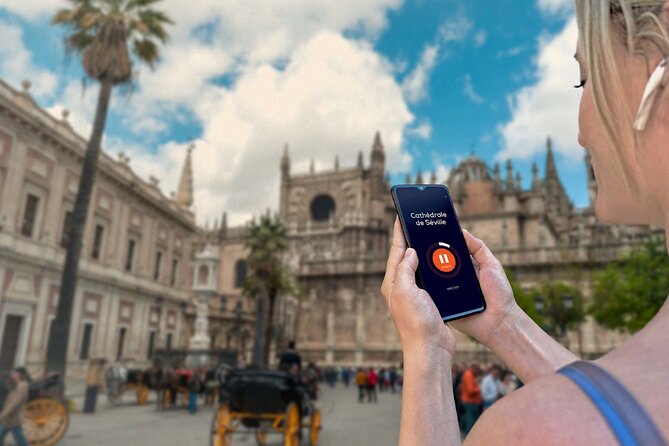
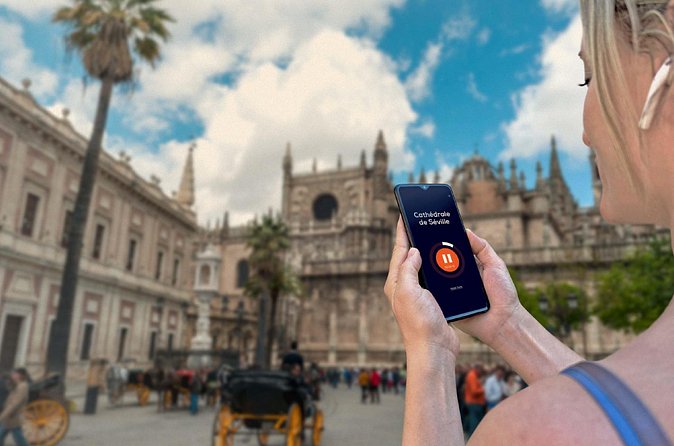
The Cathedral of Seville is the route’s major religious landmark. It is one of the city’s most visited buildings, and the audio helps you approach it with context instead of seeing only a vast Gothic facade.
The nearby Giralda is the famous former minaret. Before the cathedral, the site held a Visigothic church, which was destroyed after the Umayyads took control of the Iberian Peninsula. The Puerta del Perdón gives you a view into the Patio of the Oranges even if you do not buy entry.
This is the densest part of the walk for major sights. You may want to pause the audio often so you can look carefully rather than letting one commentary push you toward the next stop.
Las Setas and Seville’s changing skyline
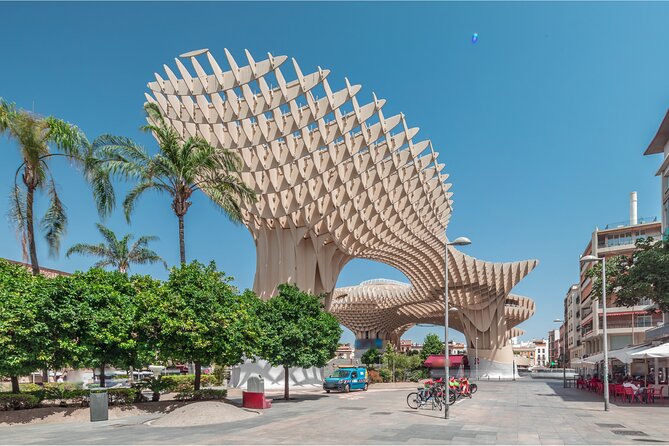
Las Setas de Sevilla, or the Metropol Parasol, is one of the city’s most recognizable modern structures. The unusual mushroom-like form surprises many people who expect Seville to be made only of old stone, tile, and plaster.
The stop is an important contrast with the cathedral, Alcazar, and old fortifications. Seville has not frozen itself in the past. Its modern architecture can be bold, strange, and divisive, but it gives the city another visual layer.
This is also a practical place to think about the route’s overall design. The walk does not stay inside one historic district. It connects old monuments, shopping streets, a modern public structure, a river, a residential quarter, and formal gardens.
Price, pacing, and what you receive
At $7.14 per group for up to 15 people, the value is strongest when several people share the cost. A couple still pays very little, while a larger family or friend group can bring the per-person price down to almost nothing.
You receive immediate access, with no tickets or printed materials to collect. The mobile format includes audio, text transcripts, route navigation, photo recommendations, and offline use. Headphones are optional and not included, so you need to bring your own if you do not want to play the commentary aloud.
The ability to use the route without data is especially useful for visitors with limited mobile service. You can follow the walk without worrying about constant map loading or data charges.
The main value is not a personal guide. It is the structure. You get a ready-made path through several important parts of Seville, plus enough historical explanation to make the streets more meaningful.
You can book in English, and the audio content is also available in French and Spanish. The tour is commonly booked around 12 days ahead, but access is designed to be immediate and has no stated expiration deadline.
Who should choose this walk?
I would recommend it to first-time visitors who want a broad introduction before choosing which monuments deserve a full interior visit. It also suits independent walkers who dislike fixed departure times or large groups.
Families and friend groups should find the private pricing attractive. You can divide the cost, pause when needed, and decide together how much time to spend at each sight.
It is less suitable if you want a human guide, detailed answers to spontaneous questions, or help navigating a paid monument. It is also a demanding walk for anyone who prefers short outings, since the full route takes about 3 hours and 20 minutes.
Most people can participate, and service animals are allowed. The route is near public transportation, which helps with reaching the starting point at Plaza de España.
Final verdict: a good-value introduction to Seville
Book this audio walk if you want freedom, a low price, and a route that reaches well beyond the obvious monuments. I particularly like its mix of Triana, Santa Cruz, the river, Maria Luisa Park, Las Setas, and the cathedral quarter. You get a useful sense of how Seville fits together.
Skip it if your priority is a live historian or a tightly managed tour with included admissions. For everyone else, the combination of 28 commentaries, offline navigation, transcripts, and a return to Plaza de España makes this a practical first look at Seville. Free cancellation is available up to 24 hours before the start time, which gives you some protection when planning ahead.
FAQ
Where does the audio walk start?
It starts at Plaza de España on Avenida Isabel la Católica in Seville, Spain.
Where does the experience end?
The activity ends back at the meeting point, Plaza de España.
How long does the route take?
The estimated duration is about 3 hours and 20 minutes.
How many audio commentaries are included?
The route includes 28 audio commentaries covering history and other information about the stops.
Is the tour private?
Yes. Only your own group participates, with a maximum of 15 people per group.
Are entrance fees included?
No. Admission to paid establishments along the route is optional and must be paid separately.
Can I use the tour without mobile data?
Yes. An offline mode is included, so you can follow the visit without consuming mobile data.
Just added around Spain
- Tenerife Scavenger Hunt and Highlights Self Guided Audio Tour★ 3.5 · 3 reviews
- Tarragona Scavenger Hunt and Highlights Self Guided Audio Tour★ 4.5 · 15 reviews
- Tarragona Cathedral Entrance + Audio Guide (WebApp)★ 4.5 · 36 reviews
- Seville Maestranza Bullring Tour with Audio Guide★ 3.5 · 6 reviews
- Royal Alcazar of Seville Entry Ticket with Audio Guide★ 4.0 · 42 reviews
- Sevilla Centre: City Walk Audioguide in 7 Languages on your Phone★ 3.0 · 2 reviews
- Seville Cathedral and La Giralda Entry Ticket with Audio Guide★ 3.0 · 9 reviews
- Essential Seville’s Ancient History: An Audio Tour★ 5.0 · 9 reviews
Walking Tours, compared.
City Monuments Guided Walking Tour with Audio Guide
Read our review →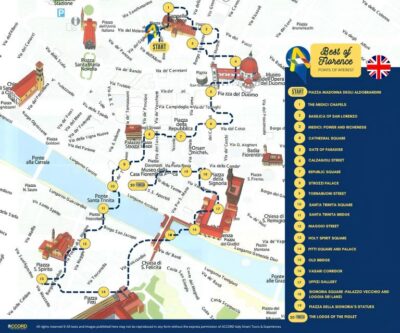

Self Guided Classic Freedom Trail Location Aware (GPS) Walking Audio Tour
Read our review →
Self-Guided Historical Walking Tour (Audio Guide)
Read our review →
Cape Cod & Provincetown Self-Guided Driving & Walking Audio Tour
Read our review →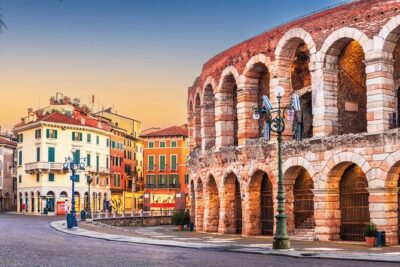
Verona Walking Tour with Audio and Written Guide by a Local
Read our review →
Royal Walking Tour and Buckingham Palace Audio Tour
Read our review →
Bologna Walking Tour with Audio and Written Guide
Read our review →Browse the lists this tour appears in