
REVIEW · ROME AUDIO TOURS
Rome+Jubilee Audioguide – TravelMate app for your smartphone
Rome rewards wandering. This TravelMate app gives you a low-cost way to add context as you move between famous churches, ancient ruins, museums, and Jubilee sites, without joining a group or collecting paper tickets. I like the three-year validity and the option to listen offline, and I like having written text alongside the audio. The main consideration is technical: the details promise 91 audio contents and 271 minutes in one place, but the included description lists 88 contents and 262 minutes, while one 1-star review reports that the product was unusable.
At $4.52 per person, this is priced more like a useful travel tool than a full guided tour. You get no physical guide, transport, admission tickets, or reserved entry. You get a smartphone audio program that you can activate when ready and use again and again during your stay in Lazio.
Five things to know before you activate it

- The app covers 88 listed audio contents and 262 minutes, with another description stating 91 contents and 271 minutes, so check the current app display after activation.
- Rome’s major sights are included, from the Colosseum and Roman Forum to St. Peter’s Basilica, the Vatican Museums, the Trevi Fountain, and the Borghese Gallery.
- You can listen offline, which matters when your phone signal is weak or you want to avoid using mobile data.
- The audio remains valid for 1,095 days after first activation, so you do not need to cram every stop into one holiday.
- A quiz section adds short questions about Rome, giving families and curious adults a simple way to review what they have heard.
How the TravelMate app works in Rome

There is no physical meeting point. You download the TravelMate app, enter the activation code, and begin from wherever you choose. Android users search the Play Store for TravelMate. On an iPhone, search the App Store for TravelMate TM.
The activation code is a 10-digit number found below the barcode in your booking details. In an email, open the activity details or ticket, tap the large barcode, and look beneath it. The same code can be found through the booking app by opening the ticket and tapping the barcode.
That process is simple once you know where to look, but it is worth handling before you are standing outside the Colosseum with a line of people behind you. Download the app and audio files while you have reliable Wi-Fi. Then test one track and check that the text appears correctly before setting out.
You can listen online or offline. I would use offline mode for a full day in central Rome. It saves phone battery and avoids the small but annoying problem of losing a signal inside a thick-walled church or crowded museum area.
Earphones are recommended. That is good advice, especially near busy roads and open piazzas. Your own phone also means you are not sharing a rented audio device with other people. Keep the volume low enough to hear traffic and your surroundings.
More Smartphone Audio Tours in Italy
- Rome: Colosseum & Forum with Audio Guide App -Optional Arena
★ 4.2 · 24,770 reviews - Rome: Castel Sant’Angelo Entry Ticket & Digital Audioguide
★ 4.7 · 5,347 reviews - Rome: Castel Sant’Angelo Entry Ticket & Audio App
★ 4.3 · 4,952 reviews
What the 262 to 271 minutes of audio really means
The audio program gives you roughly four and a half hours of listening, spread across Rome’s principal sights. That does not mean four and a half hours of continuous guided walking. You select the subjects that match your day, listen to a short segment, pause it, and move on.
The written text is useful for a second reason. Audio is easy to miss when a street is noisy, a child needs attention, or you are trying to find the right entrance. Reading lets you skim a section, return to a name, or use the app as a quick reference rather than treating it like a radio program.
The professional narration is intended to make the material easier to follow than a wall plaque or a dense guidebook paragraph. Still, an app cannot answer a question, change the route for you, or point out something you have overlooked. Think of it as a prepared companion, not a live local guide.
There is a small mismatch in the supplied figures. The main description refers to 91 audio contents totaling 271 minutes, while the included section says 88 contents totaling 262 minutes. That difference is not huge, but it is worth noting before purchase. The app itself should be your final source for the current number of tracks.
The ancient center: Colosseum, Forum, and Trajan’s Forum

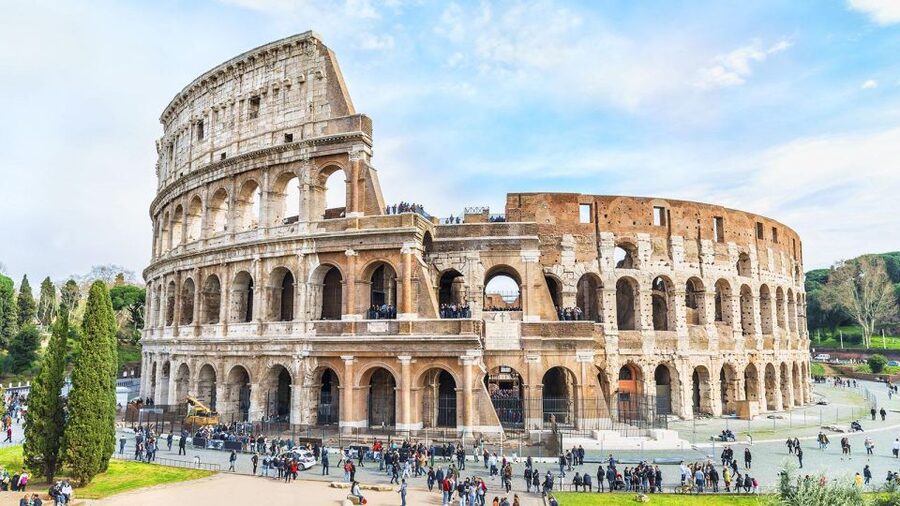
The Colosseum is the obvious place to begin, but the audio guide becomes more useful when you connect it with the Roman Forum and Trajan’s Forum. These sites are often visited in a rush, with attention pulled toward large monuments and photo stops.
Use the Colosseum track before or after your visit to place the amphitheater in its wider setting. The audio can provide background while you look at the structure, but it does not replace an entry ticket or provide access to restricted areas. If you already have a timed admission, keep an eye on the clock rather than wandering with your headphones on.
The Roman Forum needs patience. Much of what you see is open stone, broken columns, and partial walls. A spoken explanation can help you picture the civic center that once occupied this space. The Trajan’s Forum section adds another layer by shifting attention to imperial building projects beyond the Colosseum area.
These ancient sites are not ideal for listening to every word. The paths can be uneven, and you may want to stop often for views or photographs. Download the tracks, listen in short portions, and let the app fill in the gaps.
Capitoline Hill, Aracoeli, and Piazza Venezia

The Capitoline area brings together history, art, and some of Rome’s most important civic spaces. The audio coverage includes the Campidoglio and Capitoline Museums, as well as Vittoriano and Aracoeli.
The Capitoline Museums are not a single quick stop. If you plan to enter, the audio guide can help you decide which parts deserve your attention, but it is not presented as a museum ticket or a dedicated room-by-room system. You will still need to follow the museum’s own admission rules.
Nearby Piazza Venezia can feel like a traffic center rather than a sightseeing stop. That is exactly where a short explanation can help. The Vittoriano is visually hard to miss, while Santa Maria in Aracoeli offers a quieter religious contrast close by. Having these sites grouped in the app makes it easier to understand the area as more than a large monument beside a busy road.
More Smartphone Audio Tours in Rome
- Rome: Pantheon Priority Entry Ticket & Audio Guide App
★ 4.1 · 3,234 reviews - St. Peter’s Basilica, Optional Dome Access & Rome Audio App
★ 3.8 · 2,052 reviews - Rome: Colosseum Express Entry with Audio Guide App
★ 4.0 · 1,507 reviews - Rome: Roman Forum Super Pass Entry with Audio Guide App
★ 4.2 · 750 reviews
Baroque Rome: Piazza Navona, the Trevi Fountain, and the Pantheon

The app covers three of Rome’s best-known central sights: Piazza Navona, the Trevi Fountain, and the Pantheon. These stops are easy to reach on foot from one another, though the squares can be crowded and noisy.
At Piazza Navona, audio is most helpful when you want more than a quick look at the fountains and façades. You can stand near the square, read the text, and then continue without waiting for a group to gather.
The Trevi Fountain is a short visit for many people, but the surrounding area invites lingering. Start the track before you arrive if you want to understand what you are seeing without standing in the busiest spot with your phone in hand.
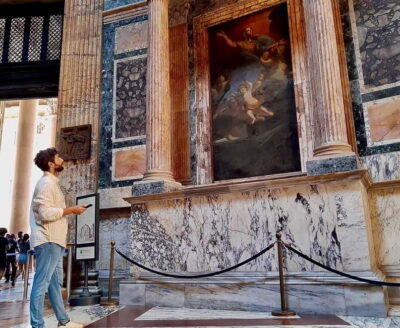
The Pantheon deserves more time than its compact exterior suggests. The audio can give you a framework before entering or while examining the interior. Admission arrangements are separate from this app, so do not assume the audio purchase includes entry.
Spanish Steps, Via del Corso, and Piazza del Popolo

The Spanish Steps, Via del Corso, and Piazza del Popolo form a practical walking cluster. You can use the audio as a self-guided route, but the app does not require you to follow a fixed order.
Via del Corso is useful as a connecting street between major sights. Its track may be most valuable when you are already walking through the area and want a little context without stopping for a formal tour.
Piazza del Popolo opens the route toward the north of the historic center. It is a good place to pause because the square, churches, and surrounding streets give you several possible next moves. The audio guide lets you choose based on your energy and schedule.
The limitation is clear: the app will not tell you where to turn in real time unless its content specifically provides that information. Use a separate map for navigation. TravelMate supplies interpretation, not live directions.
Vatican City: St. Peter’s, the museums, and the Sistine Chapel

The Vatican coverage is one of the strongest reasons to consider this purchase. The app includes St. Peter’s Basilica, the Vatican Museums, the Sistine Chapel, the Vatican Palaces, and Raphael’s Rooms.
These are separate experiences, even though they are often placed together on a Rome itinerary. St. Peter’s Basilica is a church visit. The Vatican Museums are a large museum complex. The Sistine Chapel has its own rules and atmosphere. Raphael’s Rooms add major Renaissance art to the same general area, but you should not expect one audio track to guide you through every room in equal detail.
The app can help you prepare before arrival, especially if you want basic context in your own language. Audio is available in Italian, German, French, Chinese, English, Spanish, and Russian.
Do not confuse the included audio with a museum reservation or skip-the-line service. The description only promises the app and its content. You must arrange any required admission separately.
Castel Sant’Angelo and Rome’s grand religious route

Castel Sant’Angelo gives you a different kind of Roman story, linked to both military power and papal history. Its presence alongside St. Peter’s and the Vatican makes it a natural stop on a Vatican-focused day.
The app also includes San Giovanni in Laterano and Santa Maria Maggiore. These basilicas sit away from the tight Vatican and Pantheon circuit, so the three-year validity is handy. You can spread them across different days rather than forcing every church into one exhausting march.
San Paolo fuori le Mura is farther from the central sightseeing core than many of the listed stops. Its inclusion helps if you are planning a wider Rome visit, but you should check your own transport plan separately. The app does not include transportation.
Santa Maria della Vittoria and San Luigi dei Francesi bring more church art into the program. These are the sort of stops that can be easy to skip when you focus only on famous monuments. A short audio explanation may encourage you to give them the attention they deserve.
Baths, villas, and quieter art stops

The Baths of Caracalla offer a change from Rome’s central streets. Their scale makes more sense when you understand that they were public bathing complexes, not just attractive ruins. Use the audio before walking through the site, then pause frequently as you inspect the remains.
Villa Giulia, Villa Farnesina, and the Borghese Gallery broaden the program beyond the standard first-time route. The Borghese Gallery is especially important to treat as a separate visit, since an audio app does not replace an entry reservation or a museum’s own system.
Villa Farnesina and Villa Giulia appeal to you if you want Renaissance art and ancient collections beyond the Vatican. They may not fit into a short Rome weekend, but the long validity period means you can save them for another trip or a slower return.
The inclusion of these sites gives the app more value than a simple list of headline monuments. It supports both a classic Rome plan and a second visit that moves into less obvious corners.
Jubilee content and the quiz section
Jubilee is included as a specific audio subject, alongside the city’s religious landmarks. The material may be useful if your Rome visit is connected to the Jubilee year or to the city’s major pilgrimage churches.
The quiz section is a small but welcome extra. It uses short questions about Rome, so you can test yourself after listening. I would see it as a learning aid rather than a major feature, but it could work well for families or anyone who enjoys turning sightseeing into a light challenge.
Because the app remains active for 1,095 days after first activation, you can revisit the same subjects later. That is more useful than it sounds. You might listen to a church track before your first visit, then replay it after seeing the building in person.
Price, languages, and who gets the best value
At $4.52 per person, the price is hard to criticize if the app activates properly and the tracks work as described. One low-cost audio guide cannot match a private guide, but it also does not ask you to fit your day around a group or pay again for each museum.
I see the best value for independent visitors who already know how to plan their own routes. Families can share a phone, though each person will not have a separate listening device. Couples and solo visitors may find it easier to control the pace.
The product is less suitable if you want live questions, detailed navigation, or help handling museum entry. It is also not the right choice as a replacement for a specialist art guide inside the Vatican Museums or Borghese Gallery.
The overall rating is 4.2 from 38 reviews, but there is also one severe complaint describing the experience as unusable. That makes preparation important. Install the correct app, enter the code carefully, download the content, and test playback before leaving your hotel or apartment.
Should you book the Rome TravelMate app?
Book it if you want cheap, flexible background information for a self-planned Rome visit. The long activation period, offline listening, text transcripts, seven language choices, and wide range of sights give it practical value well beyond a single walking route.
Skip it if you expect admission tickets, live guidance, turn-by-turn directions, or a fully structured day. Also think twice if you are uncomfortable troubleshooting a smartphone app.
For most independent visitors, $4.52 is a modest gamble. Just resolve the content-count mismatch in the app, prepare the downloads in advance, and treat TravelMate as a helpful layer over your own Rome plans rather than the whole sightseeing plan.
FAQ
Where does the Rome TravelMate audio guide begin?
There is no physical meeting point. You can download and activate the app and start wherever you prefer.
How long does the audio guide remain valid?
It remains valid for 1,095 days from the time you first activate it.
Can I use the audio guide offline?
Yes. The audio content can be used online or offline.
Which languages are available?
The audio guide is available in Italian, German, French, Chinese, English, Spanish, and Russian.
How many audio contents are included?
The included information lists 88 audio contents totaling 262 minutes. Another description gives 91 contents totaling 271 minutes, so check the current number shown in the app after activation.
Which Rome sights are covered?
The program includes the Colosseum, Roman Forum, Trajan’s Forum, Capitoline Museums, Piazza Venezia, Baths of Caracalla, Piazza Navona, Spanish Steps, St. Peter’s, Vatican Museums, Sistine Chapel, Vatican Palaces, Raphael’s Rooms, Castel Sant’Angelo, Trevi Fountain, Pantheon, Borghese Gallery, Piazza del Popolo, major basilicas, Villa Giulia, Villa Farnesina, and other listed sites.
Do I need to collect paper tickets?
No. The experience is organized through the smartphone app and does not require paper tickets for the audio guide.
Is the app wheelchair accessible?
Yes. The activity is listed as wheelchair accessible.
Just added around Rome
- Pantheon Skip the Line Entry Tickets with Digital Audio Guide★ 3.5 · 52 reviews
- Trastevere: A Self-guided Audio Tour of Rome’s Medieval Village★ 4.5 · 3 reviews
- St. Peter’s Basilica: Dome Climb with Lift & Audioguide★ 4.5 · 13 reviews
- Audio guide in Vatican Museums and Sistine Chapel★ 4.5 · 12 reviews
- Navova square underground with audioguide★ 4.5 · 17 reviews
- The Roman Jewish Ghetto: A Self-Guided Audio Tour★ 4.0 · 8 reviews
- Experience: The Pantheon Audio Tour★ 4.5 · 4 reviews
- St. Mary’s Basilica, Pope Francis Tomb Audio Tour with Crypt★ 4.0 · 3 reviews
Smartphone Audio Tours, compared.

Colosseum & Forum with Audio Guide App -Optional Arena
Read our review →
Timed Entry to Michelangelo’s David + Audio App
Read our review →
Cathedral & Brunelleschi’s Dome Ticket & Audio App
Read our review →
Michelangelo’s David Priority Ticket & Audio App
Read our review →
Uffizi Priority Ticket & Masterpieces Audio App
Read our review →
Castel Sant’Angelo Entry Ticket & Digital Audioguide
Read our review →
Pantheon Priority Entry Ticket & Audio Guide App
Read our review →Browse the lists this tour appears in