
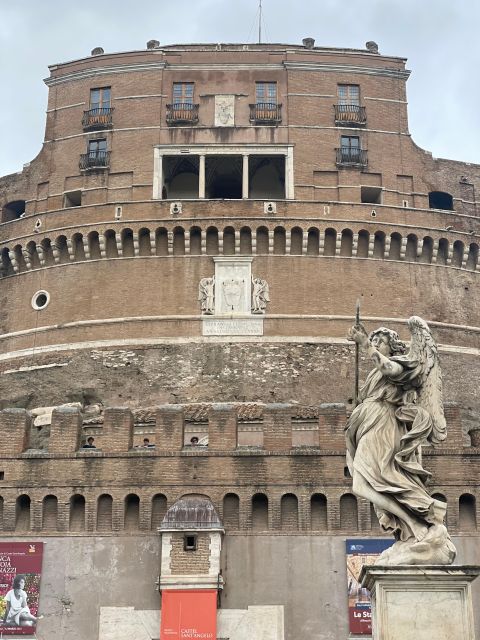
REVIEW · ROME AUDIO TOURS
Rome: Castel Sant’Angelo Entry Ticket with Audio guide
Rome keeps its best surprises behind thick walls. Castel Sant’Angelo gives you nearly 2,000 years of Roman history, sweeping views over the Tiber, and a flexible audio tour you can take at your own pace. I especially like the reserved entry, which can save time when the ticket queue is long, and the chance to explore without being tied to a guide’s schedule. The main drawback is price: at $31 per person, this costs much more than the official €16 basic admission.
The castle is also a physical visit, not an easy stroll. You will climb stairs to reach the terrace, and the experience is not suitable for wheelchair users or people with mobility impairments. Bring comfortable shoes, a charged phone, and your own headphones.
Key points to know before you go

- Hadrian’s tomb is inside the fortress: The building began as the mausoleum of Emperor Hadrian, later taking on military and papal roles.
- The rooftop view is the payoff: From the terrace, you can look over Rome, the Tiber, St. Peter’s, and Ponte Sant’Angelo.
- Reserved entry can matter: Queue savings depend on the day and season, but a few minutes saved can become half an hour during busy periods.
- The audio guide runs on your phone: You need a charged smartphone and headphones. Text is also available in the app.
- Plan for more than two hours: Two hours is the stated duration, but an unhurried visit can take three or four hours.
- The $31 price includes more than admission: The official ticket is €16, with the rest covering the audio guide and booking, distribution, and support costs.
Why Castel Sant’Angelo is worth your time
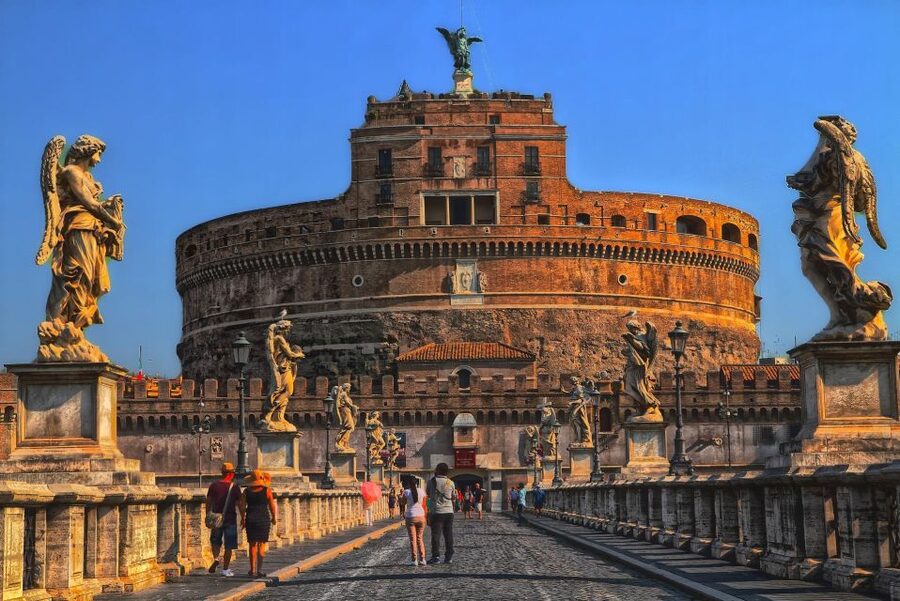
Castel Sant’Angelo is not simply another old building to photograph from the outside. Its unusual appeal comes from the layers packed into one structure. It started as the Mausoleum of Hadrian, also called Hadrian’s Mole, then became a fortress and a papal refuge. You are walking through a building that changed purpose as Rome changed around it.
That makes the visit different from a standard museum tour. Some rooms focus on ancient Roman power. Others show the castle’s defensive role or its connection with the papacy. The building feels more like a journey through Rome than a single finished monument.
I also like its location. Castel Sant’Angelo sits on the right bank of the Tiber, a short walk from Vatican City. You can pair it with a visit to St. Peter’s Square, though you should not treat the two sites as one quick stop. Castel Sant’Angelo has enough rooms, passages, artwork, and viewpoints to deserve its own block of time.
The rating of 4.4 from 3,646 bookings reflects a consistently strong experience, but your enjoyment will depend on how much you like self-guided sightseeing. If you want a tightly led historical tour, choose the live guide option if available. If you prefer to pause, wander, and read at your own speed, the phone audio guide makes more sense.
A few more audio tours around Rome worth a look
- Rome: Colosseum & Forum with Audio Guide App -Optional Arena
★ 4.2 · 24,770 reviews - Rome: City Sightseeing Hop-on Hop-off Bus with Audioguide
★ 4.0 · 16,045 reviews - Rome: St. Peter’s Basilica & Dome Entry Ticket & Audio Tour
★ 4.2 · 7,537 reviews
Entering the castle and getting oriented
Your ticket is sent by WhatsApp or email, usually 24 hours before the visit. That timing matters, so check your messages before leaving your hotel. The meeting point can vary depending on the option you book, and punctuality is essential.
The reserved ticket is meant to make entry quicker, but it does not mean you can ignore the instructions. On some visits, the line to buy tickets has been long, while on quieter days, particularly in February, there may be little or no queue. You are paying for convenience and support as much as for the ticket itself.
Once inside, give yourself a few minutes to get oriented. The castle is not a simple ground-level circuit. You will move through different levels and corridors, with stairs leading toward the main rooms and the panoramic terrace. Wear shoes that are comfortable on stone floors and steps.
The building can feel more impressive as you move through it. From outside, the fortress looks severe and compact. Inside, the rooms open into a more varied story, with ancient foundations, papal spaces, defensive areas, artwork, and views appearing at different points.
Hadrian’s mausoleum and the ancient core
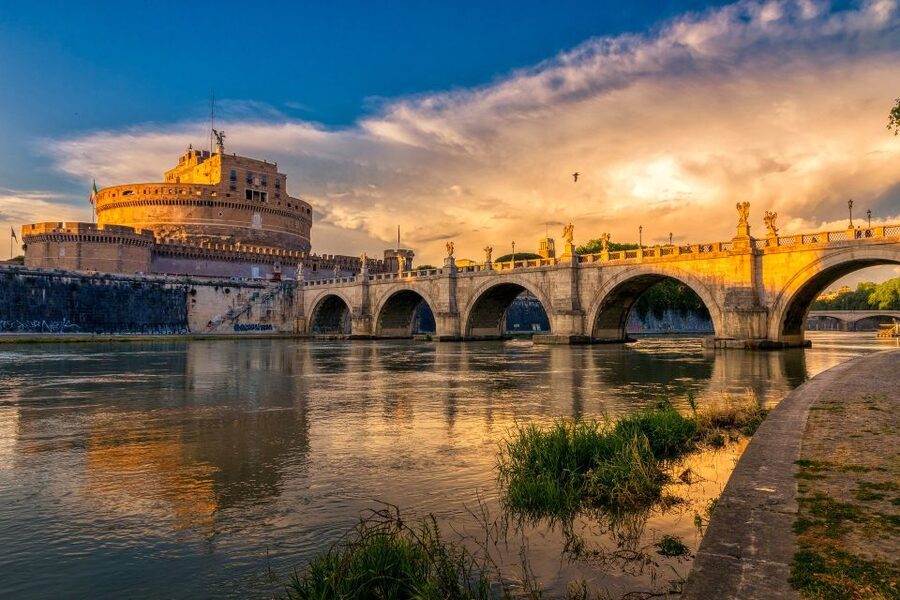
The oldest part of the site is its role as Hadrian’s tomb. The emperor’s mausoleum was built as a monumental burial structure, and the castle’s later uses changed the way the building looked and functioned.
You should pay attention to this change in purpose as you walk. What began as an imperial tomb became a fortified stronghold. The site later gained links to the popes and the Vatican through its protected corridors and strategic position beside the river.
Hadrian’s tomb is one of the main reasons to visit, but it is not the only reason. The building helps you see how Roman structures were reused rather than simply preserved as ruins. The castle’s continued survival gives the visit a strong sense of place that you do not get from a few isolated columns or broken walls.
The audio guide can help here, especially if ancient Roman architecture is unfamiliar to you. The guide is delivered through a smartphone app, and written text is available as well. You can listen to a section, stop it while looking around, and return to it later. That freedom was one of the most praised features of the experience.
If you skip the audio option, the castle still has information panels and signs. Following the marked route can take you through the main areas without much trouble. The audio is most useful if you want extra context rather than basic directions.
Papal corridors and the castle’s later life
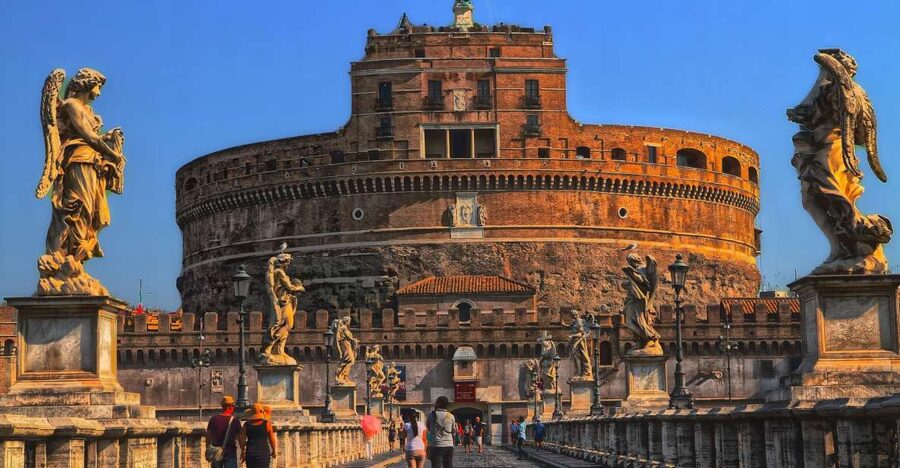
The Papal corridors are another important part of the visit. Castel Sant’Angelo was not just a tomb or military building. It also served as a place of refuge for popes, with protected links toward the Vatican area.
These corridors give the castle a practical, human side. You can picture the building not only as a monument but as a secure place used during periods of danger. The connection with the papacy helps explain why this site remained important long after ancient Rome had changed.
A live guide is available in English or Spanish with the relevant option. A guide can be useful if you want the political and architectural story explained as you move. One particularly praised guide, Dimosthenis, was noted for bringing extra material and using his archaeology background to explain the ancient structure.
Still, a live guide changes the pace. You will need to stay with the group and follow the set route. The app option is better if you want to spend extra time in a room, wait for a clear view, or move ahead when a section does not interest you.
Small group availability is another middle ground. You get more structure than a solo audio visit, but potentially more personal attention than on a large group tour. The exact group arrangement depends on the option selected.
Same place, a different route to walk:
- Colosseum, Roman Forum & Palatine Hill with Audioguide App
★ 4.4 · 6,291 reviews - Vatican & Sistine Chapel Ticket with Optional Audio Guide
★ 4.1 · 5,405 reviews - Rome: Castel Sant’Angelo Entry Ticket & Digital Audioguide
★ 4.7 · 5,347 reviews - Rome: Castel Sant’Angelo Entry Ticket & Audio App
★ 4.3 · 4,952 reviews
The legend of Archangel Michael
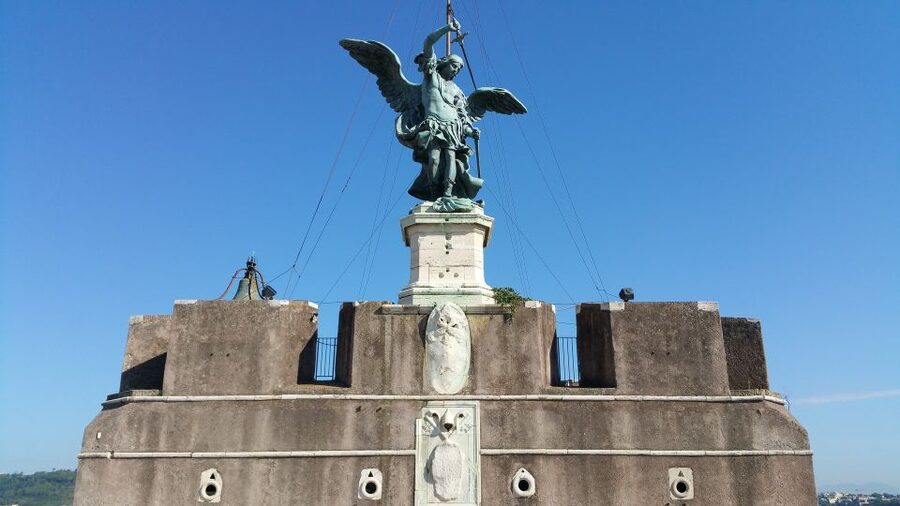
The castle received its present name from a dramatic legend connected with the plague of 590. According to the story, the Archangel Michael appeared above the mausoleum and sheathed his sword, signaling that the plague had ended.
You will learn about this story during the visit, and it adds another layer to the building’s identity. Castel Sant’Angelo is tied to imperial burial, military defense, papal history, and religious tradition. The legend helps explain why a former mausoleum became known as a castle with a powerful Christian association.
This is a good section to hear through the audio guide because the story is brief but important. It helps connect the name Castel Sant’Angelo with the statue and imagery associated with the site. You can also pause to take in how the building’s ancient and religious stories overlap.
The terrace and Rome’s best reward
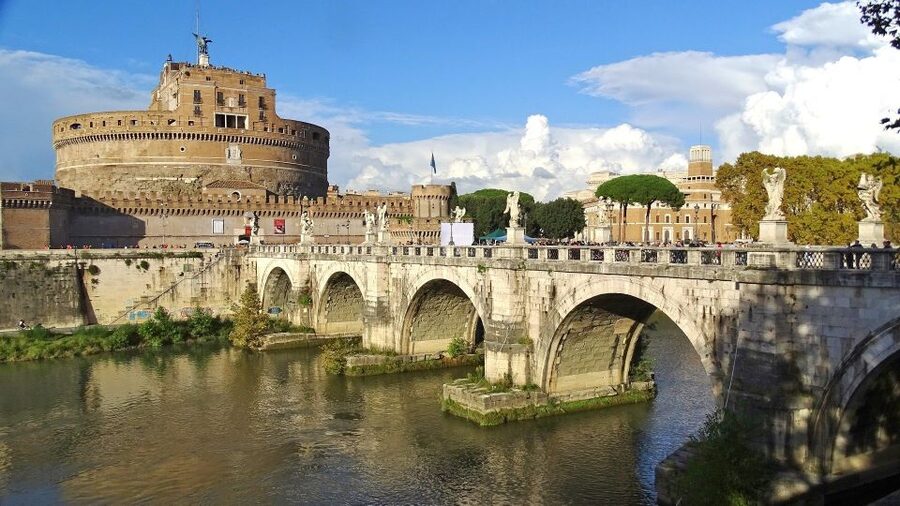
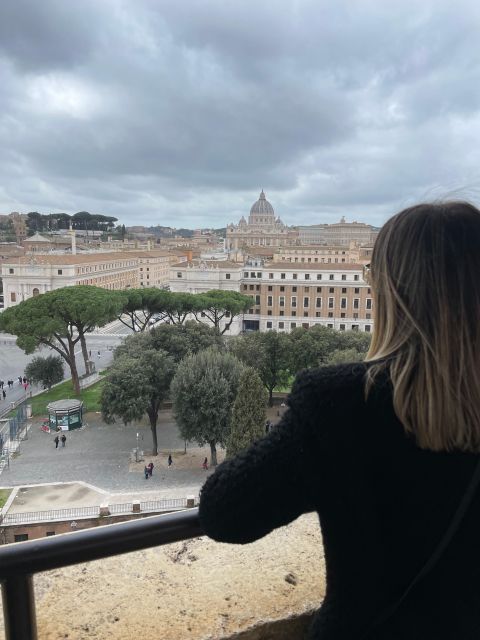
The panoramic terrace is the clear high point of the visit. From the top, you get broad views over Rome and the River Tiber, with St. Peter’s and the Vatican area visible in the distance. The terrace also gives you an excellent angle on Ponte Sant’Angelo, the Bridge of Angels.
This is where your camera will get the most use. The bridge is especially photogenic from above, and the river helps frame the city. The view is not a minor extra at the end of the route. For many people, it is the part they remember best.
You do have to climb stairs to reach the terrace. That restriction is important for anyone with limited mobility. There is no promise that every route will be easy, and the experience is specifically not suitable for wheelchair users or people with mobility impairments.
Give yourself time at the top. Some visitors finish the castle quickly, but the views reward a slower visit. The terrace can also be a useful place to pause after moving through the enclosed rooms.
There is a café inside, with views toward the Vatican. Prices can be steep. A 330-milliliter bottle of Coca-Cola has been reported at €5, so I would not plan on the café as a budget refreshment stop. It can still be a pleasant place for a drink or snack if the view matters more than the bill.
How good is the audio guide?
The audio guide is a practical choice for independent visitors. You use your own smartphone, and the available languages are English, Italian, French, Spanish, German, and Chinese. You will need to download and set up the app before arriving, not while standing at the entrance.
Bring headphones. They are not included, and listening through a phone speaker would be awkward in crowded rooms. A charged phone is just as important because the guide depends on it.
The format suits people who dislike fixed tour schedules. You can pause the narration, read the text, and move around at your own pace. Some people may prefer the castle without audio, since the signs and route are enough to understand the main visit. That is a genuine advantage of this ticket: you are not forced to use the guide after paying for the option.
The audio guide does not replace a live guide for detailed questions. You cannot ask it to explain a particular architectural feature or adjust the route for your interests. It is best for clear background information and a steady structure while you explore alone.
Timing, crowds, and how long to allow
The advertised duration is two hours, but you should treat that as a starting point. A quick visit can fit into two hours, especially if you focus on the main route and terrace. If you listen to every audio section, read the panels, stop for photographs, and visit the café, three hours is more realistic.
One booking was reported to take four hours, and another visitor watched the sunset from the top after spending nearly three hours inside. That does not mean you must stay that long, but it shows why rushing can undercut the experience.
Early morning is a smart choice if you want fewer people. A visit shortly after opening can give you quieter rooms and a clearer path to the terrace. Later in the day, the view may be attractive in changing light, but the castle can feel more crowded.
The last entry is at 6:30 PM. Check the available starting times before booking, and do not arrive late. During the Jubilee period, restoration work may affect some monuments and access routes, so check for updates in your messages before setting out.
Is $31 good value?
The official Castel Sant’Angelo admission price is €16 for basic entry. This experience costs $31 per person, so the difference deserves a clear explanation.
You are paying for reserved entry, the optional smartphone audio guide if selected, and the booking company’s distribution and customer support costs. If the ticket saves you a long wait on a hot day, the extra cost may feel fair. Several visits benefited from entering directly while other people were still waiting for tickets.
The value is weaker during quiet periods. In February, one visit found no queue, which means the reserved entry may not save much time. You can also explore the castle without an audio guide if you are happy reading the information panels.
I would consider this a convenience purchase, not a bargain ticket. It makes the most sense if you are visiting during a busy period, want help in your own language, or value the ease of receiving support through WhatsApp or email. If you are watching every euro and have flexible timing, basic admission may be the better deal.
Free cancellation up to 24 hours before the activity adds useful flexibility. Just remember that tickets are generally sent before the visit, and you should keep the confirmation available on your phone.
Who should book this experience?
I would recommend it to first-time visitors who want a major Roman site near the Vatican without committing to a full guided tour. It is also a good fit for couples, families with older children, and independent sightseers who enjoy moving at their own pace.
History fans will find plenty to hold their attention, from Hadrian’s tomb to the papal corridors and the Archangel Michael legend. Photographers will appreciate the terrace and views of Ponte Sant’Angelo. Anyone who likes city panoramas should put the rooftop high on the list.
I would be more cautious if you dislike stairs, have mobility limitations, or want a short, effortless attraction. The castle is larger and more physical than its exterior suggests. I would also compare the price with basic admission if you are visiting in the quiet season.
FAQ
How long does the Castel Sant’Angelo experience last?
The stated duration is two hours. You can spend longer if you listen to every audio section, read the information, take photographs, or stop at the café. Some visits last three or four hours.
Is an audio guide included?
The smartphone audio guide is included only if you select that option. It is available in English, Italian, French, Spanish, German, and Chinese. Headphones are not included.
Do I need to bring my own headphones?
Yes. The audio guide runs through your smartphone, so bring headphones and make sure your phone is charged before you arrive.
Can wheelchair users visit Castel Sant’Angelo with this ticket?
The experience is not suitable for wheelchair users or people with mobility impairments. You will need to climb stairs to reach the panoramic terrace.
What can I see from the castle terrace?
The terrace offers panoramic views over Rome and the River Tiber. You can also photograph Ponte Sant’Angelo and see toward St. Peter’s and Vatican City.
When is the last entry?
The last entry to Castel Sant’Angelo is at 6:30 PM. Starting times vary, so check availability when booking and arrive punctually.
Should you book Castel Sant’Angelo with the audio guide?
Book it if you want an easy, flexible visit and expect queues, or if you value clear background information in your own language. The castle delivers ancient Rome, papal history, a memorable legend, and one of the better city views in central Rome.
I would choose the audio option for a first visit, provided you bring headphones and set up the app early. If you are visiting in a quiet month and do not mind reading signs, basic admission may offer better value. Either way, do not judge Castel Sant’Angelo from the street. The best parts are inside, above, and around the corners you cannot see from the bridge.
Just added around Rome
- Pantheon Skip the Line Entry Tickets with Digital Audio Guide★ 3.5 · 52 reviews
- Trastevere: A Self-guided Audio Tour of Rome’s Medieval Village★ 4.5 · 3 reviews
- St. Peter’s Basilica: Dome Climb with Lift & Audioguide★ 4.5 · 13 reviews
- Audio guide in Vatican Museums and Sistine Chapel★ 4.5 · 12 reviews
- Navova square underground with audioguide★ 4.5 · 17 reviews
- The Roman Jewish Ghetto: A Self-Guided Audio Tour★ 4.0 · 8 reviews
- Experience: The Pantheon Audio Tour★ 4.5 · 4 reviews
- Self-Guided Audio Tour – The gods of the Palatine★ 3.5 · 5 reviews
Rome Audio Tours, compared.

Colosseum & Forum with Audio Guide App -Optional Arena
Read our review →
St. Peter’s Basilica & Dome Entry Ticket & Audio Tour
Read our review →
Colosseum, Roman Forum & Palatine Hill with Audioguide App
Read our review →
Vatican & Sistine Chapel Ticket with Optional Audio Guide
Read our review →
Castel Sant’Angelo Entry Ticket & Digital Audioguide
Read our review →
Colosseum, Forum, & Palatine Hill with Audio Guide
Read our review →
Borghese Gallery Skip-the-Line Ticket & Audioguide
Read our review →Browse the lists this tour appears in