
REVIEW · SPAIN AUDIO TOURS
Mérida: Roman Theatre E-ticket with Audio Tour
Roman drama still fills Mérida with life. This self-guided visit pairs an adult entry ticket with an English audio tour covering the Roman Theatre and several major monuments, so I like the freedom to set my own pace and the useful directions that come before each explanation. I also like that the audio, maps, and text work offline.
The main drawback is that you must manage the technology yourself. You need a charged Android or iOS phone, headphones, storage space, and the activation link. At $32 per person, the value depends on visiting several sites, not just walking into the theatre.
Key points to know before you go
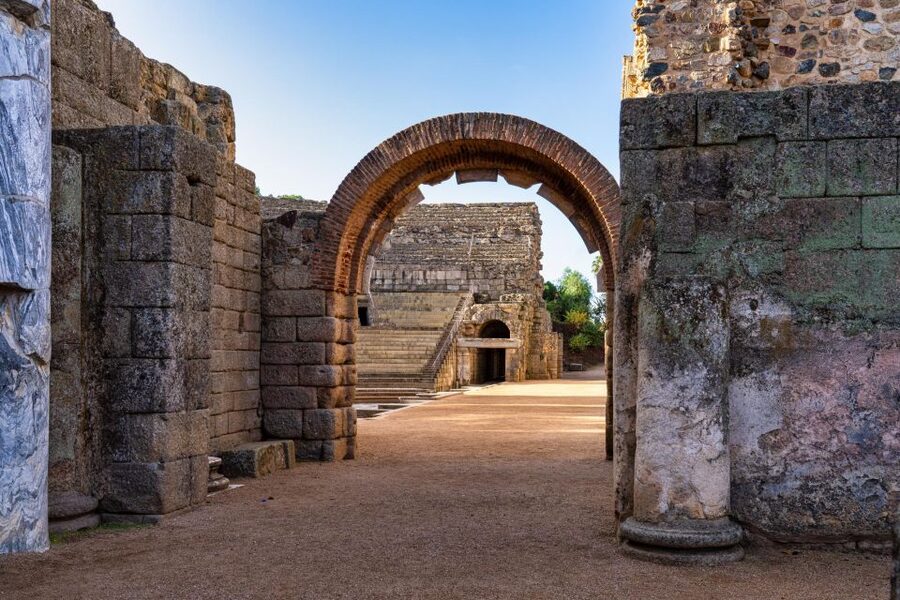
- Roman Theatre first: Begin at Plaza Margarita Xirgu, where the tour starts with Mérida’s most famous ancient monument.
- One route, many eras: The audio covers Roman, Visigoth, and Moorish remains across the city.
- Directions come first: The narration helps you know where to walk before explaining what you are seeing.
- Offline access matters: Download the audio, maps, and text before arrival to avoid roaming charges.
- The route ends at the Roman Circus: Plan for a walk between sites and wear good shoes.
- Technology is part of the admission: The experience has no live guide, and the app does not work with Windows phones.
Why Mérida is such a rewarding Roman stop
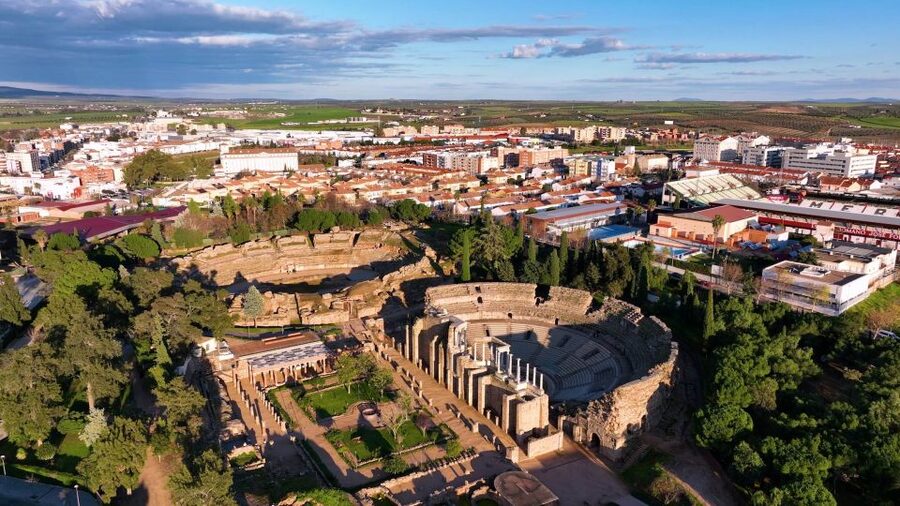
Mérida is one of Spain’s best places to see Roman remains in an actual city rather than inside a single museum complex. The old monuments are spread across the streets, which gives the visit a pleasing sense of discovery. You are not simply moving from one display case to another. You are walking through a modern town shaped by Roman planning and later layers of history.
This experience gives you a way to connect those separate places. The audio explains the Roman Theatre, Amphitheatre, Temple of Diana, House of the Amphitheatre, Morerías archaeological site, Alcazaba, Mithraeum House, Columbarios, Saint Eulalia’s Crypt, and Roman Circus.
That list is the real reason to consider the ticket. If you only want the theatre, $32 may feel high. If you plan to see most of these sites in one day, the ticket and audio guide can save you from arranging each admission separately while giving the route a clear thread.
The tour also points to the meeting of three major cultures: Roman Mérida, Visigoth resilience, and Moorish artistry. You get more than a story about imperial Rome. You get a sense of how the city changed after Rome and how later buildings and communities used the same ground.
More Smartphone Audio Tours in Spain
- Cordoba: Mosque-Cathedral E-Ticket with Audio Guide
★ 4.1 · 2,895 reviews - Palma: Caves of Genova Ticket & Digital Audio Guide
★ 3.9 · 820 reviews - Madrid: Archaeological Museum E-Ticket and Audio Guide
★ 4.3 · 115 reviews
Starting at the Roman Theatre on Plaza Margarita Xirgu
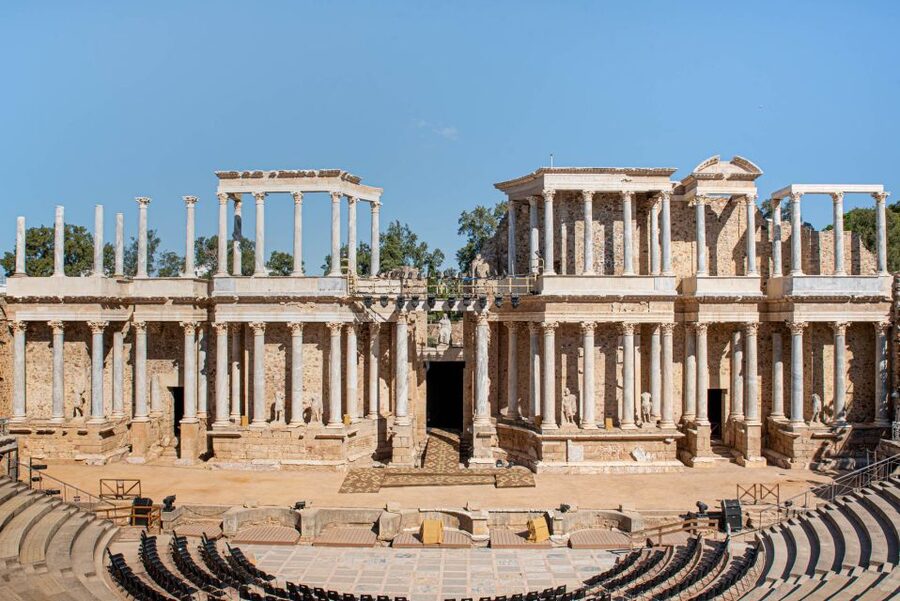
The self-guided route begins at the entrance to the Roman Theatre on Plaza Margarita Xirgu. This is the natural first stop because the theatre offers the clearest image of ancient Mérida’s public life.
You can reach it easily from the Mérida Belloso bus station, followed by a walk of about 550 meters, or six minutes. There is no group meeting point and no guide waiting to gather you into a party. That is convenient if you arrive at a different time from your companions or prefer to avoid a fixed tour schedule.
At the entrance, open the app and start the audio. The narration gives directions before moving into the historical explanation. That small detail makes a real difference. You know where to stand, where to look, and what feature the commentary is discussing instead of trying to follow a story while searching for the right monument.
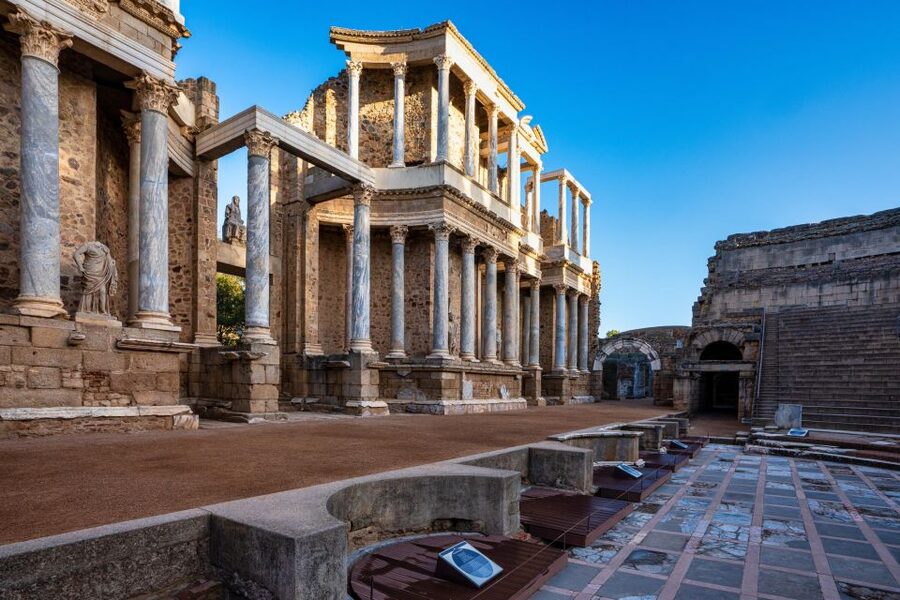
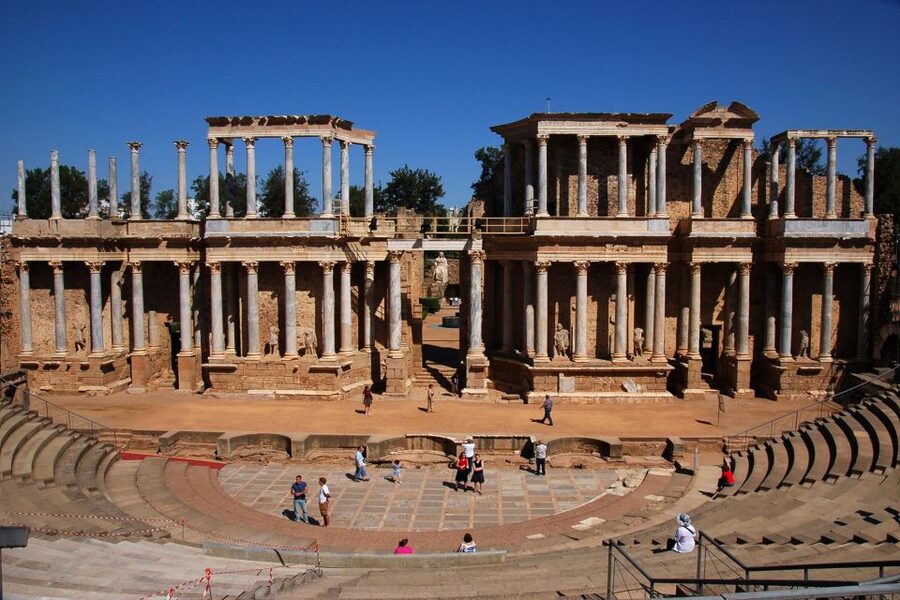
The theatre is the emotional high point of the visit. Its surviving structure helps you picture Roman entertainment on a large public scale. The audio adds context about how the space worked and what it meant to the city, while allowing you to pause when you want a closer look.
Take your time here. The theatre deserves more than a quick photograph, especially if you have arrived in the heat of the day. The provided advice to bring sunscreen, a sun hat, and water-friendly planning is sensible, though food and drinks are not included.
The Amphitheatre and House of the Amphitheatre
The route continues to the Roman Amphitheatre and the House of the Amphitheatre. These stops broaden the picture of Roman public and private life.
The theatre shows the polished side of Roman entertainment. The amphitheatre points toward a different kind of spectacle and public gathering. I find the pairing useful because it prevents the theatre from becoming an isolated ruin. You begin to see Mérida as a city with several large venues, domestic spaces, religious sites, and working areas.
The House of the Amphitheatre adds a more personal scale. Instead of looking only at monumental public architecture, you get a chance to consider how people lived around these grand buildings. The audio content is brief and story-based, which suits a walking route. You are given enough information to notice key details without being trapped in a long lecture.
The drawback is that a self-guided app cannot answer a question on the spot. If you want a specialist to explain construction techniques or help with every fragment, a live guide would serve you better. This product is designed for independent sightseeing, not personal instruction.
Saint Eulalia’s Crypt and Mérida’s later layers
Saint Eulalia’s Crypt takes the route beyond the Roman period. It helps show how Mérida continued to matter after the Roman era and how later religious buildings grew around earlier remains.
This is one of the most useful parts of the route for anyone who wants more than a parade of ancient stones. The city’s story did not stop when Roman power weakened. The crypt brings Christian and later historical layers into the same visit, while the wider route also points toward Visigoth influence.
The audio is especially valuable at a place like this because the remains may not explain themselves at first glance. A short account can help you understand why the site matters and how it fits with the monuments you have already seen.
Access is partly wheelchair friendly across Mérida’s Roman Theatre and other historic sites, but not every part should be assumed to be fully accessible. If mobility is a concern, it is wise to check current site conditions before setting out.
Same place, a different route to walk:
- Barcelona: Sagrada Familia Entry Ticket with Audio Guide
★ 4.6 · 105,312 reviews - Barcelona: Casa Batlló Entry with Self-Audioguide Tour
★ 4.7 · 25,359 reviews - Granada: Alhambra Entry Ticket with Audio Guide
★ 4.1 · 5,950 reviews - Casa Batllo Admission Ticket with Intelligent Audio Guide
★ 4.5 · 3,168 reviews
The Temple of Diana in the middle of modern Mérida
The Temple of Diana is a memorable reminder that ancient Mérida is not sealed away from daily life. The monument sits within the city, where old stone and modern streets meet.
I like this stop because it changes the rhythm of the visit. After larger archaeological areas, the temple gives you a strong architectural focus. Its columns and surviving form make it easier to think about Roman religion and civic display, even if you are not an expert in ancient architecture.
The audio can help you read the monument rather than simply admire it. Listen for the details about its original purpose, later use, and place in Mérida’s changing city plan. The tour’s short stories and unusual anecdotes are intended to make these connections easier to remember.
This is also a good place to pause the tour if you need coffee, food, or a rest. Those costs are not included, and the activity does not provide transportation between stops. You are responsible for moving through the city on foot and managing your own breaks.
Morerías and the Mithraeum House
The Archaeological Site of Morerías shows how layers of occupation can sit one above another. It is a useful counterpoint to the grand theatre and temple because it brings attention to the ordinary structure of urban life.
Morerías helps you look for streets, walls, and building remains rather than only dramatic columns. The audio gives these fragments a purpose and explains how the site fits into the larger city.
The Mithraeum House adds another stop where domestic and religious questions meet. The name points to the ancient Mithraic tradition, and the site gives the audio tour a chance to discuss beliefs and private spaces alongside the more familiar public monuments.
These are places where a written guidebook can become hard to follow. An offline map and spoken directions reduce the chance that you will miss a turn or walk past an entrance. Download everything before you arrive, since the app requires roughly 100 to 150 MB of storage.
The Alcazaba and the Columbarios
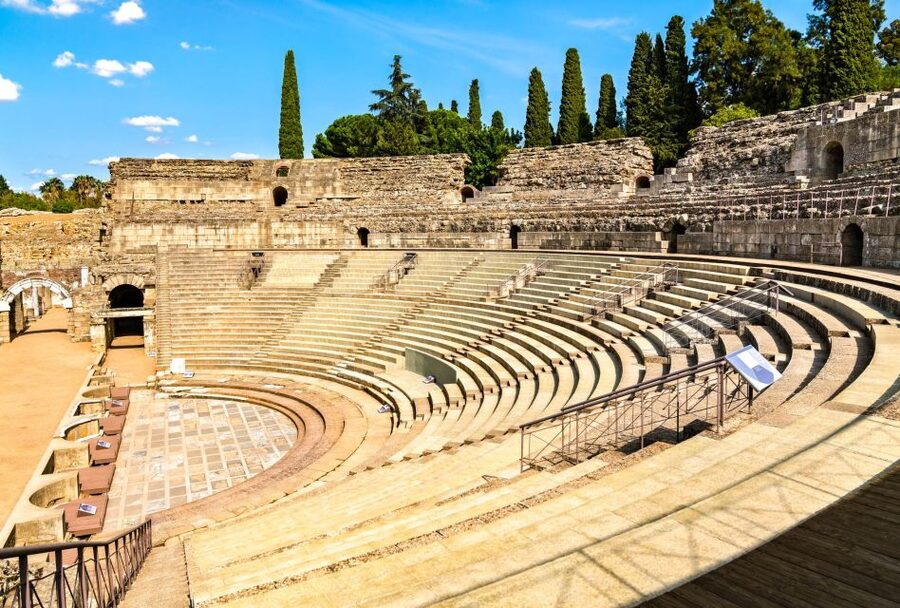
The Alcazaba introduces Mérida’s Moorish period and makes the city’s long sequence of rulers easier to grasp. Here, the route shifts from Roman imperial power to the defensive needs of a later era.
That change is one of the strongest reasons to choose the full audio route. You are not asked to pretend Mérida is only Roman. The Alcazaba shows how later builders and rulers adapted the city and its strategic position.
The Funeral Area of the Columbarios brings the focus back to death, burial, and remembrance. It is quieter in mood than the theatre and amphitheatre, but it adds important balance. Roman society was not only about shows, temples, and public ceremonies. Burial areas reveal ideas about family, status, and how people wanted to be remembered.
You may find the number of stops tiring if you try to rush through all of them in a single morning. The ticket is valid for one day, so spread the visit out. Let the audio guide sit idle while you rest, eat, or look around on your own, then return to it when you are ready.
Finishing at the Roman Circus
The route ends at the Roman Circus on Avenida de Juan Carlos I. This final stop gives you a sense of the scale of Mérida’s entertainment culture. After seeing the theatre and amphitheatre, you can compare their functions with the much larger setting of the circus.
Ending here also means you should plan your day in route order. The experience begins at the theatre and finishes at the circus, so it is not designed as a loop back to the original entrance. That matters if you have a bus departure, hotel check-in, or restaurant reservation.
The Roman Circus can be especially rewarding after the earlier stops because you have already learned how Mérida used monumental spaces. The audio helps pull those ideas together, though you should not expect a closing presentation by a guide. Once you finish, you are on your own to continue into the city or make your way elsewhere.
What the $32 price really buys you
At $32, this is not the cheapest way to see one monument. The price makes more sense if you use the entry for the Roman Theatre and the other included historic sites during the same day.
You are paying for several practical benefits:
- Adult admission to the Roman Theatre and city historic sites
- Skip-the-line service for the paid ticket
- An English self-guided audio tour
- Offline narration, text, and maps
- Freedom to pause and repeat the tour
That last point is easy to overlook. You can use the audio before or after your visit, and the downloaded content can be played again. If you like to read up before seeing a monument, this gives you that option.
The value drops if you do not have a suitable phone or if you only plan a short visit. There is no smartphone or headset supplied, no live guide, no transport, and no food or drink. Free and reduced tickets do not receive skip-the-line privileges and can be obtained on site, while children under 13 receive free admission to the monumental sites. For families with young children, buying this product for everyone may not be the best deal.
Also note that you book according to the number of devices, not the number of participants. One device can be practical for a couple willing to share headphones, but each person will have a better experience with individual audio access.
Avoiding the most common audio problems
The biggest practical risk is not the monuments. It is failing to prepare the phone.
After booking, you receive an email with instructions and an activation link. Check the spam folder if the message does not appear. Download the app, audio, text, and maps before you reach the theatre, then test the content while you still have a reliable internet connection.
Bring:
- A charged Android version 5.0 or later, or an iPhone with a supported iOS version
- Headphones
- At least 100 to 150 MB of free storage
- Sunscreen and a hat
- Comfortable walking shoes
The app does not support Windows phones, iPhone 5 or 5C, older iPod Touch models, iPad 4 or older, or the first-generation iPad Mini. This is important. You do not want to discover an incompatibility at the entrance after paying for a non-refundable activity.
One user had trouble accessing the audio, so I would treat the download step as part of the visit rather than a task for later. Keep the activation email available, and do not delete the app until you have finished the route.
Who will enjoy this Mérida experience most
I would choose this for independent visitors who want structure without a fixed group. It suits you if you enjoy walking, prefer short explanations, and like deciding how long to spend at each monument.
It is also a good fit for first-time visitors who want to cover Mérida’s major Roman and later sites in one day. The directions help with the route, and the English narration gives you a clear thread from the theatre to the circus.
You may prefer another option if you want a live historian, personal questions answered, or a completely hands-off visit. The technology also makes this less suitable for anyone with an unsupported phone or unreliable access to email and downloads.
For families, check the cost carefully. Children under 13 enter the monumental sites free, but the audio arrangement may still require a supported device and headphones. The route is partly wheelchair accessible, though the sites do not promise full access throughout.
Should you book it?
Book this experience if you want to see more than the Roman Theatre and value an offline English audio guide over a live guide. The route covers an impressive range of places, from the Temple of Diana and Saint Eulalia’s Crypt to the Alcazaba, Columbarios, and Roman Circus.
Skip it if you only have time for one quick monument, need personal assistance, or dislike preparing apps before a visit. At $32, it is a fair convenience purchase for a full day of independent sightseeing, but only when you use the included sites and arrive with your phone ready.
FAQ
Where does the audio tour start?
It starts at the entrance to the Roman Theatre at Plaza Margarita Xirgu, s/n, 06800 Mérida, Badajoz, Spain.
Where does the tour end?
The route ends at the Roman Circus of Mérida on Avenida de Juan Carlos I, s/n, 06800 Mérida, Badajoz, Spain.
Is a live guide included?
No. This is a self-guided audio tour accessed through an app on your smartphone.
What language is the audio tour in?
The audio guide is available in English.
Do I need internet access during the visit?
The audio, text, and maps can be downloaded for offline use, helping you avoid roaming charges. You should download the content before your visit.
What phone devices are supported?
The app requires an Android phone version 5.0 or later or a supported iOS device. It is not compatible with Windows phones, iPhone 5 or 5C, older iPod Touch models, iPad 4 or older, or the first-generation iPad Mini.
Are children admitted free?
Minors under 13 receive free admission to the monumental sites. Free and reduced tickets do not include skip-the-line privileges and can be obtained on site.
Just added around Spain
- Tenerife Scavenger Hunt and Highlights Self Guided Audio Tour★ 3.5 · 3 reviews
- Tarragona Scavenger Hunt and Highlights Self Guided Audio Tour★ 4.5 · 15 reviews
- Tarragona Cathedral Entrance + Audio Guide (WebApp)★ 4.5 · 36 reviews
- Seville Maestranza Bullring Tour with Audio Guide★ 3.5 · 6 reviews
- Royal Alcazar of Seville Entry Ticket with Audio Guide★ 4.0 · 42 reviews
- Sevilla Centre: City Walk Audioguide in 7 Languages on your Phone★ 3.0 · 2 reviews
- Seville Cathedral and La Giralda Entry Ticket with Audio Guide★ 3.0 · 9 reviews
- Essential Seville’s Ancient History: An Audio Tour★ 5.0 · 9 reviews
Smartphone Audio Tours, compared.

Colosseum & Forum with Audio Guide App -Optional Arena
Read our review →
Timed Entry to Michelangelo’s David + Audio App
Read our review →
Cathedral & Brunelleschi’s Dome Ticket & Audio App
Read our review →
Michelangelo’s David Priority Ticket & Audio App
Read our review →
Uffizi Priority Ticket & Masterpieces Audio App
Read our review →
Castel Sant’Angelo Entry Ticket & Digital Audioguide
Read our review →
Pantheon Priority Entry Ticket & Audio Guide App
Read our review →Browse the lists this tour appears in