
REVIEW · ROME AUDIO TOURS
Pompeii: Entry Ticket w/ Guide and Transfers or Audio Guide
Pompeii makes the past feel startlingly close. This experience gives you two strong ways to see it: follow a live guide for context and stories, or use an audio guide and set your own pace. I like the chance to walk the Forum and amphitheater in one visit, and the plaster casts add a solemn human touch that no textbook can match. The starting price of $5.55 is appealing, though the final cost and inclusions depend on the option you choose.
The Rome transfer option removes much of the day’s planning, with transport by bus or train and a meeting point arranged for your booking. The tradeoff is time: a Rome to Pompeii outing can take up to 12 hours, and the tour will not wait for late arrivals. The ruins also require plenty of walking, so this is not suitable for wheelchair users or people with limited mobility.
Key points to know before you book
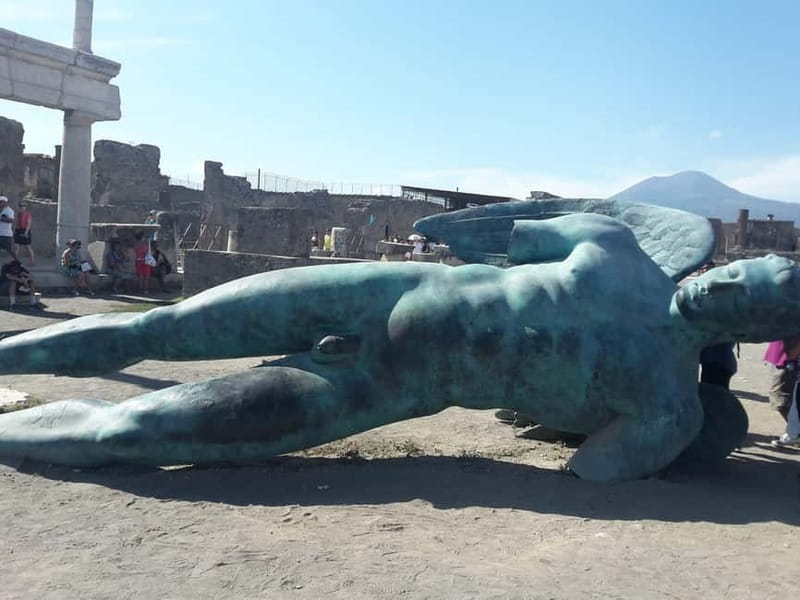
- The Forum gives you Pompeii’s civic center: This is where political, religious, and social life once came together.
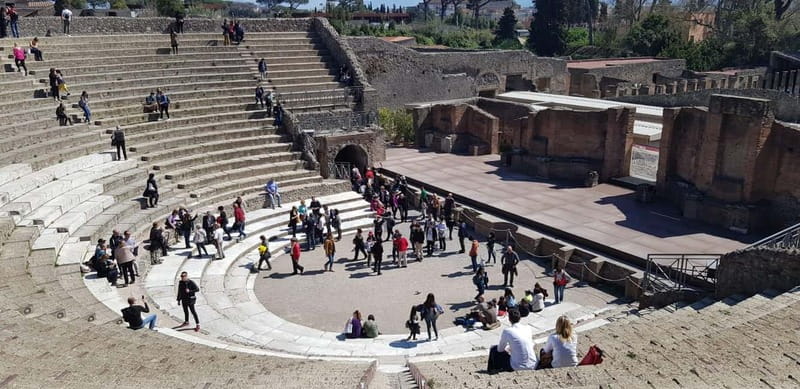
- The amphitheater adds scale and drama: You can picture the crowds and public shows that once filled this ancient arena.
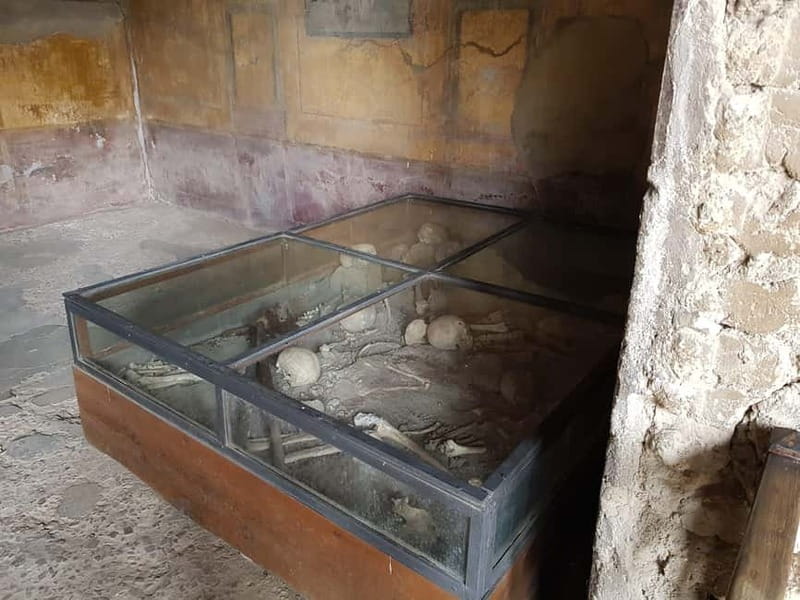
- The plaster casts are the most moving stop: They show the human cost of the eruption in a way that ruins alone cannot.
- You can choose structure or freedom: A guide supplies stories and direction, while the English audio guide lets you explore independently.
- Rome transfers make this an easy day trip: The ride adds time, but it saves you from arranging the journey yourself.
- Expect uneven ground and a firm schedule: Wear practical shoes, pack light, and arrive early at the meeting point.
Why Pompeii is worth the long day
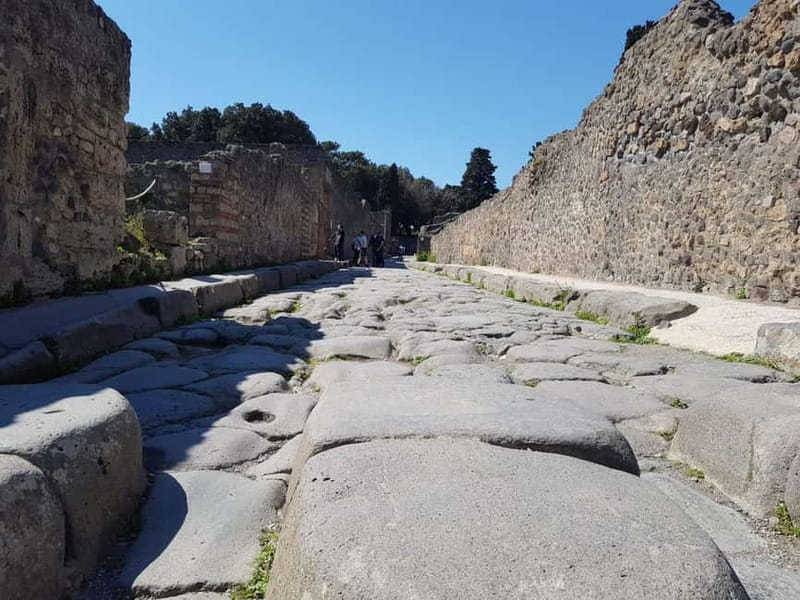
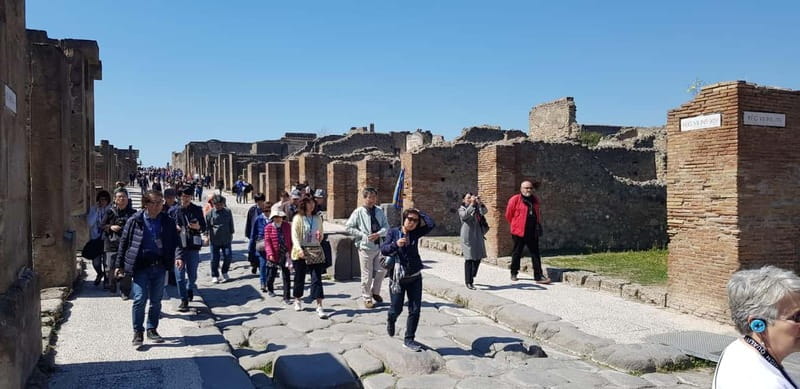
Pompeii is not simply a collection of broken columns. It is a city you can walk through, street by street, with homes, shops, baths, bakeries, public buildings, and open squares still arranged in their original pattern.
That layout is the great strength of this visit. Instead of seeing Roman objects in glass cases, you see where people lived, worked, worshipped, shopped, and gathered. The remains of daily life are often more revealing than the grand monuments.
The eruption of Mount Vesuvius in 79 AD froze that ordinary world in a sudden disaster. You can look at a bakery and imagine its working routine, then turn toward the mountain and remember why the city was preserved in such an unusual way.
I find Pompeii most rewarding when I move between the grand and the humble. The Forum explains public life. A wealthy home reveals private taste. A shop or bath shows how ordinary routines fit into the larger Roman city. The guide or audio commentary helps connect those pieces.
A few more audio tours around Rome worth a look
- Rome: Colosseum & Forum with Audio Guide App -Optional Arena
★ 4.2 · 24,770 reviews - Rome: City Sightseeing Hop-on Hop-off Bus with Audioguide
★ 4.0 · 16,045 reviews - Rome: St. Peter’s Basilica & Dome Entry Ticket & Audio Tour
★ 4.2 · 7,537 reviews
Choosing a guide or an audio guide
The guided option is the better choice if you want the site explained as you walk. Pompeii can feel confusing at first because the ruins are spread across a large area, and many walls look similar until someone points out what they once were.
A live guide can explain the purpose of a building, describe how the streets worked, and put the eruption into context. The available host or greeter languages include English, French, Spanish, and German.
The audio guide option suits you if you prefer independence. You can pause, move ahead, or spend longer at a fresco or courtyard that catches your attention. The listed audio guide language is English, so check that this fits your needs before selecting it.
There is no universally best choice. I would pick the live guide for a first visit, especially if your time is limited. I would choose the audio option if you already know Pompeii well or dislike being tied to a group’s pace.
One useful middle ground is to follow the main route with the guide, then use any free time for your own look around. Several positive comments praised the mix of organized touring and time to explore independently. That balance matters because Pompeii rewards both explanation and quiet observation.
The journey from Rome and what the transfer adds
If you choose the Rome departure, the day includes round-trip transport by bus or train through the Italian countryside. This makes the experience simple for you: one booking covers the journey and entry to Pompeii, rather than leaving you to coordinate separate tickets.
The convenience comes with a time cost. The full experience may last anywhere from two to 12 hours, depending on the option and starting time. A Pompeii trip from Rome is not a quick side visit, so set aside most of the day if you select the transfer package.
The meeting point varies by booking option, and there is no hotel pickup or drop-off. Read the meeting instructions carefully and allow extra time to get there. The tour does not wait for latecomers, so a last-minute arrival can create a real problem.
Keep your luggage small. Oversize luggage, large bags, alcohol, and food or drinks in the vehicle are not allowed. A compact day bag with water for use outside the vehicle, sun protection, and any personal essentials is the sensible approach, subject to the operator’s instructions.
If you are already in the Pompeii area, the entry-only or local option may suit you better. It avoids paying for transport you do not need and gives you more control over your arrival and departure.
Entering the Forum, Pompeii’s public heart
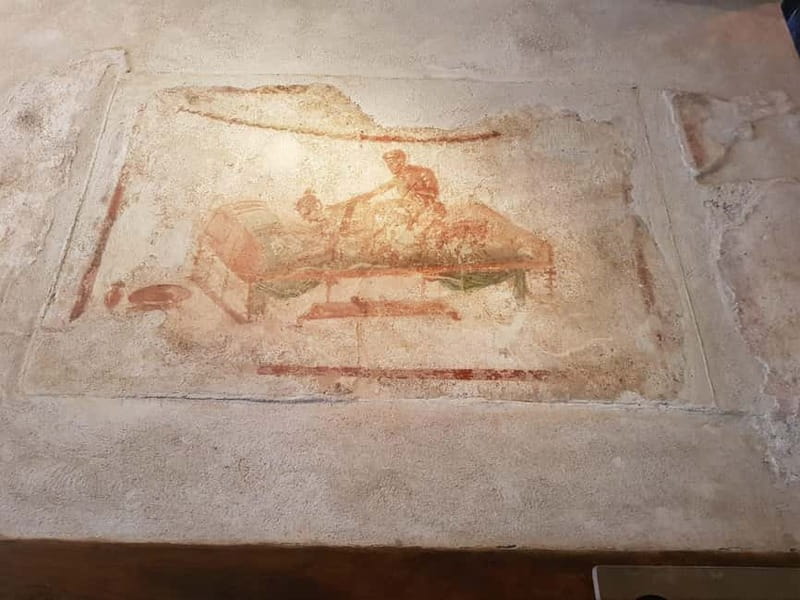
The Forum is the natural anchor for a first visit. This broad public space was the center of civic and social activity, and it helps you understand how the rest of Pompeii fits together.
From here, the city feels less like scattered ruins and more like a functioning Roman community. Public buildings surround the area, and the open space gives you a sense of how people gathered for business, ceremonies, worship, and public life.
A guide can make this stop much clearer by explaining which structures served which purpose. With an audio guide, you can take your time and revisit sections if the first explanation does not stick.
The Forum is also a good reminder that Pompeii is not a polished monument. You will see missing roofs, worn stone, broken walls, and uneven surfaces. That roughness is part of the experience, but it also means you should not expect the ease of a museum visit.
Same place, a different route to walk:
- Colosseum, Roman Forum & Palatine Hill with Audioguide App
★ 4.4 · 6,291 reviews - Vatican & Sistine Chapel Ticket with Optional Audio Guide
★ 4.1 · 5,405 reviews - Rome: Castel Sant’Angelo Entry Ticket & Digital Audioguide
★ 4.7 · 5,347 reviews - Rome: Castel Sant’Angelo Entry Ticket & Audio App
★ 4.3 · 4,952 reviews
The amphitheater and the public side of Roman life
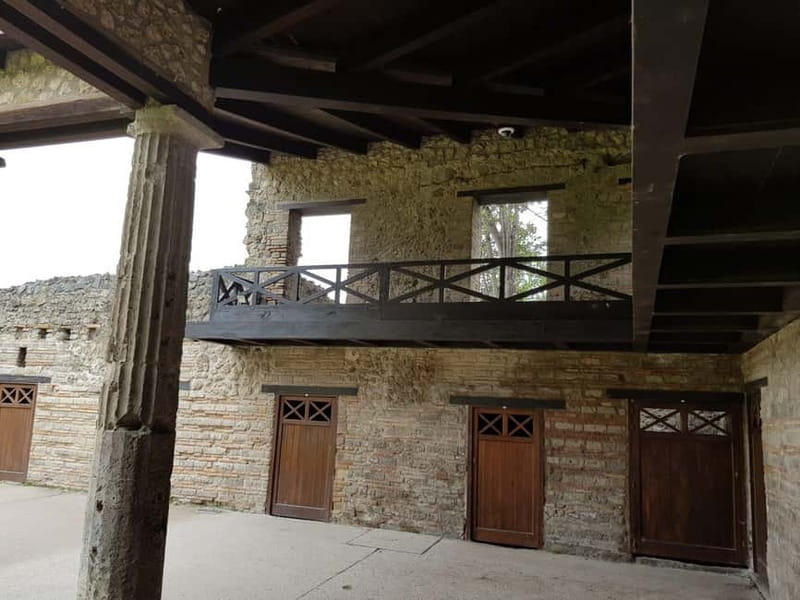
The ancient amphitheater offers a different view of Pompeii. Here, the focus shifts from government and religion to mass entertainment.
The arena helps you picture the size of a Roman crowd and the importance of public spectacles. Even without a modern reconstruction, the shape of the building makes its purpose plain. You can stand within a place designed for noise, excitement, and tightly organized movement.
This is one of the stops that benefits from a guide’s explanation. The stones alone cannot tell you how the audience used the space or how the building fit into Pompeii’s social life.
Take care not to rush through it. The Forum may attract your attention first, but the amphitheater gives the city another layer. Pompeii was not only a place of temples and villas. It was also a city where entertainment played a major public role.
Villas, frescoes, and the House of the Vettii
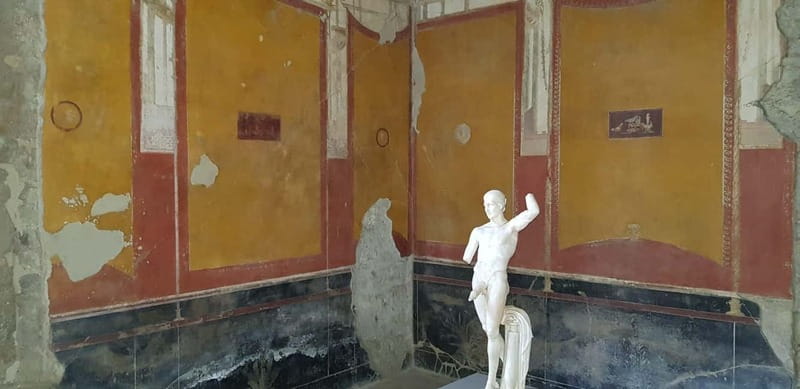
The private houses show how sharply life could differ within Pompeii. Wealthy homes feature courtyards, painted walls, mosaics, and carefully arranged rooms that reveal the taste and status of their owners.
The House of the Vettii is among the key landmarks included in the route. Its value lies in the details: decorative painting, household design, and the way rooms opened around interior spaces.
You may find yourself spending longer here than expected. A grand villa is easy to admire from a distance, but the smaller features explain how its residents used the rooms and how decoration signaled wealth.
The House of the Vettii also helps balance the visit. After walking through public streets and buildings, you get a closer look at private life. The experience becomes less about ruins and more about people making homes in a busy Roman town.
Villa of the Mysteries and Pompeii’s painted interiors
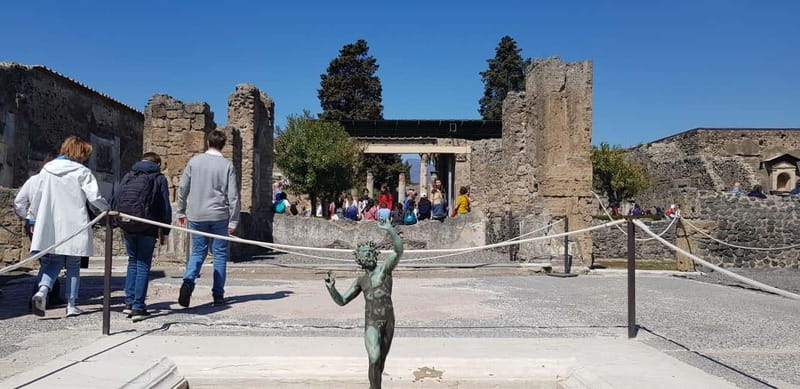
The Villa of the Mysteries is another major stop. It is known for its striking wall paintings, which give you a chance to see how much color and visual storytelling once filled Pompeii’s homes.
The villa broadens your view of Roman culture. Pompeii was not a city of plain stone. Its interiors could be richly decorated, and the paintings tell you something about belief, ceremony, family identity, and social position.
The name can make the site sound more mysterious than it feels in person, but the paintings are the real reason to pay attention. Look closely at the figures, gestures, and use of space. The guide can explain the scenes, while the audio guide allows you to linger without feeling hurried.
Conditions at individual buildings can change, and not every room may be open at every moment. Treat the listed landmarks as planned highlights rather than a guarantee that every interior will look exactly as expected on the day.
Baths, bakeries, shops, and the ordinary city
I often find Pompeii’s everyday places more memorable than its grand monuments. The ancient baths, bakeries, and shops show how the city functioned from morning to night.
A bakery tells you about food production. A shop suggests how goods were sold. The baths reveal a shared public routine that was social as well as practical. These places help you imagine residents as busy people with errands, work, meals, and appointments.
This is where the guided format can add real value. A wall may look plain until you learn what it supported. A counter may seem like a low stone ledge until its use is explained. The audio guide can provide that same context, but you will need to pay attention and match the commentary to the correct building.
Do not measure Pompeii only by its biggest sights. Allow time for the smaller streets and working spaces. They are the parts that make the city feel lived in rather than staged.
The plaster casts and the human cost of 79 AD
The plaster casts are the most emotionally difficult part of the visit. They preserve the outlines and positions of people caught by the eruption, turning a distant historical event into something immediate.
You should give this stop time and respect. The casts are not simply archaeological objects. They represent individuals who were living ordinary lives before the eruption changed everything.
The sight can be upsetting, particularly for children. At the same time, it gives the visit its human focus. After seeing streets, houses, and public buildings, you are reminded that Pompeii was a real community, not an abandoned stage set.
A guide can provide useful context without reducing the moment to a dramatic story. If you use an audio guide, pause before moving on. This is one stop where a quiet minute may say more than a long explanation.
How much value do you get for the price?
The advertised starting price of $5.55 per person is unusually low for an entry experience, but treat it as a starting rate rather than a guaranteed price for every version. The cost depends on whether you select the guided visit, audio guide, and Rome transportation.
The value is strongest when you choose the option that matches your plans. If you are staying in Rome and need transport, a package with round-trip travel and entry can save planning time. If you are already near Pompeii, paying for a Rome transfer would make less sense.
A guide can justify a higher price because Pompeii is easier to understand with context. Without explanation, you may still enjoy the streets and buildings, but you could miss why a particular house, public square, or shop matters.
The rating for this experience is 4.1 out of 5 from 57 reviews, and the most praised features are clear: friendly guides, smooth organization, comfortable transport, and the emotional power of Pompeii itself. One particularly positive account praised a guide named Giuseppe and the chance to explore independently after the organized portion.
There was also a note about a ticket misunderstanding at the start of one visit. That is a useful warning to check your confirmation and meeting instructions before leaving Rome. The historic site may be the star, but clear logistics help protect your day.
Practical preparation for the ruins
Pompeii operates in rain or shine unless officials close the monument for safety. Check the forecast, but do not assume poor weather will cancel the outing.
Wear shoes suited to uneven archaeological streets. Since the experience is not suitable for people with mobility impairments or wheelchair users, you should think honestly about how much walking and rough ground you can manage.
Arrive early at the meeting point. The tour will not wait for latecomers, and the meeting location may differ by option. Keep your confirmation easy to access and avoid bringing large bags.
The day also suits families and solo visitors. Family feedback praised guides who kept both children and adults engaged, while solo visitors appreciated the organized transport and friendly atmosphere. Couples can expect a memorable shared day, but the long schedule may feel tiring if you prefer slow, unstructured sightseeing.
Should you book this Pompeii experience?
Book it if you want Pompeii explained, need transport from Rome, or prefer having entry arrangements handled in one package. The guided option is the strongest pick for a first visit, while the audio guide works well for independent explorers.
Skip the Rome transfer if you are already nearby and can reach the site easily on your own. You should also reconsider it if uneven ground, long walking, or a strict meeting time would make the day uncomfortable.
For most first-time visitors based in Rome, this is a practical way to reach one of Italy’s most powerful archaeological sites. Expect a long day, bring patience, and give the plaster casts and everyday buildings as much attention as the famous Forum. That is where Pompeii becomes more than a set of ruins.
FAQ
What is included in the Pompeii experience?
The package includes entry to Pompeii Archaeological Park. A guided tour is included if you select the guided option, and round-trip transport from Rome is included if you choose the transfer option.
Is transportation from Rome included?
Round-trip transportation from Rome is included only with the option that specifically includes transfers. The journey may be by bus or train.
Is hotel pickup and drop-off provided?
No. Hotel pickup and drop-off are not included. You must reach the assigned meeting point, which can vary by booking option.
Can I choose an audio guide instead of a live guide?
Yes. An optional audio guide is available in English. You can also select a guided tour with a host or greeter in English, French, Spanish, or German.
How long does the experience last?
The listed duration ranges from two to 12 hours. The exact length and starting time depend on the option you select, so check availability before booking.
What happens if I arrive late?
The tour will not wait for latecomers. Arrive early at the meeting point and check the instructions for your chosen option.
Can I bring large luggage?
No. Oversize luggage, large bags, alcohol, and drugs are not allowed. Food and drinks are also not allowed in the vehicle.
Is the visit suitable for wheelchair users?
No. The experience is listed as unsuitable for wheelchair users and people with mobility impairments.
Can I cancel for a refund?
You can cancel up to 24 hours in advance for a full refund. The activity runs in rain or shine unless officials close the site for safety.
Just added around Rome
- Pantheon Skip the Line Entry Tickets with Digital Audio Guide★ 3.5 · 52 reviews
- Trastevere: A Self-guided Audio Tour of Rome’s Medieval Village★ 4.5 · 3 reviews
- St. Peter’s Basilica: Dome Climb with Lift & Audioguide★ 4.5 · 13 reviews
- Audio guide in Vatican Museums and Sistine Chapel★ 4.5 · 12 reviews
- Navova square underground with audioguide★ 4.5 · 17 reviews
- The Roman Jewish Ghetto: A Self-Guided Audio Tour★ 4.0 · 8 reviews
- Experience: The Pantheon Audio Tour★ 4.5 · 4 reviews
- Self-Guided Audio Tour – The gods of the Palatine★ 3.5 · 5 reviews
Rome Audio Tours, compared.

Colosseum & Forum with Audio Guide App -Optional Arena
Read our review →
St. Peter’s Basilica & Dome Entry Ticket & Audio Tour
Read our review →
Colosseum, Roman Forum & Palatine Hill with Audioguide App
Read our review →
Vatican & Sistine Chapel Ticket with Optional Audio Guide
Read our review →
Castel Sant’Angelo Entry Ticket & Digital Audioguide
Read our review →
Colosseum, Forum, & Palatine Hill with Audio Guide
Read our review →
Borghese Gallery Skip-the-Line Ticket & Audioguide
Read our review →Browse the lists this tour appears in