
REVIEW · SEVILLE AUDIO TOURS
Casa de Salinas Entry Ticket with Audio Guide
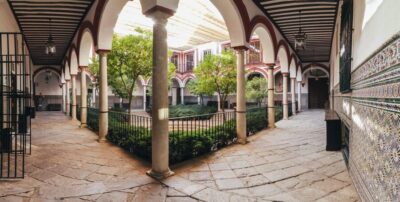
Seville keeps a few surprises behind quiet doors. Casa de Salinas gives you a compact look at the city’s grand domestic architecture, with 16th-century patios, Mudéjar arches, painted wooden ceilings, original tiles, and a Roman mosaic. The 25-minute audio guide adds useful context without turning a short visit into a lecture.
I like the chance to enter a privately owned mansion where the family still lives, and I like its location just steps from the cathedral, Giralda, and Royal Alcázar. The main consideration is size: this is a brief house visit, not a full palace complex, so you should choose it for its intimate details rather than a long sightseeing session.
Key Details Before You Go
- A small-scale alternative to the Alcázar: Casa de Salinas offers ornate courtyards and historic interiors in a much shorter visit.
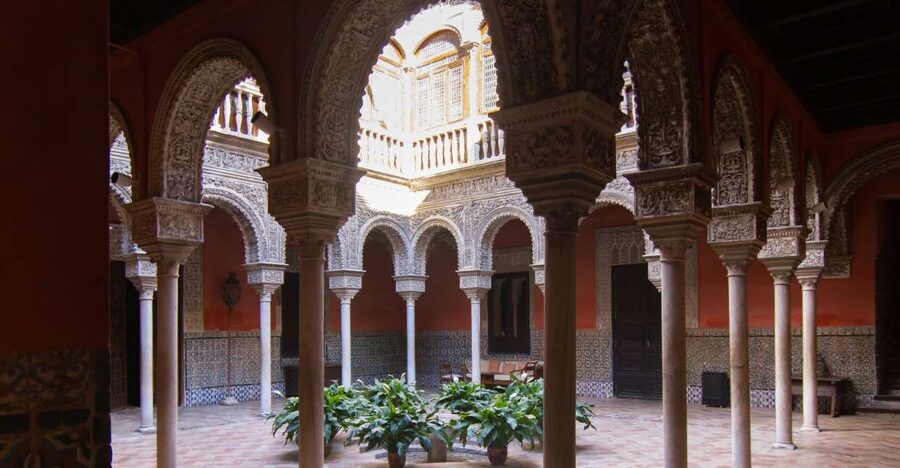
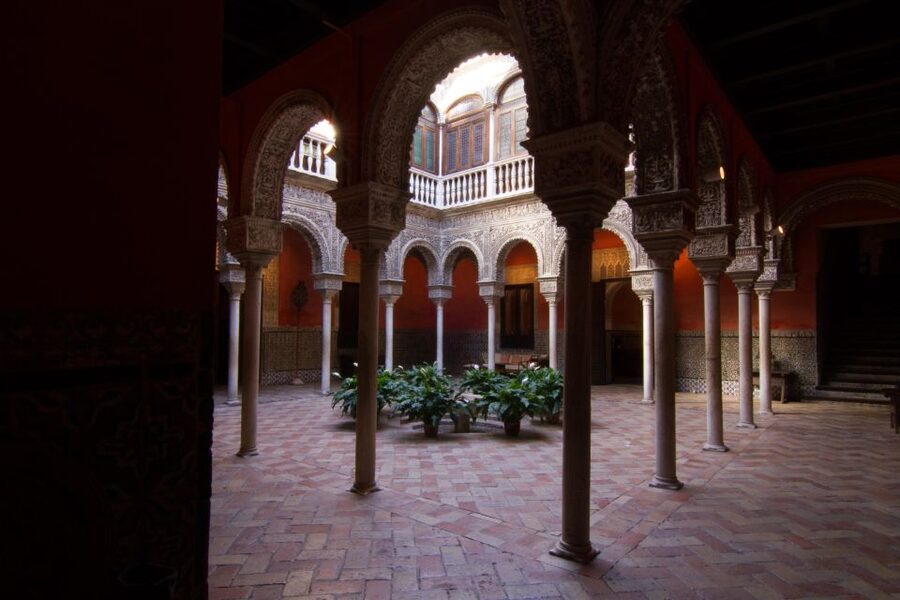
- Mudéjar craftsmanship: Look closely at the plasterwork arches, where Islamic-influenced design meets Renaissance Seville.
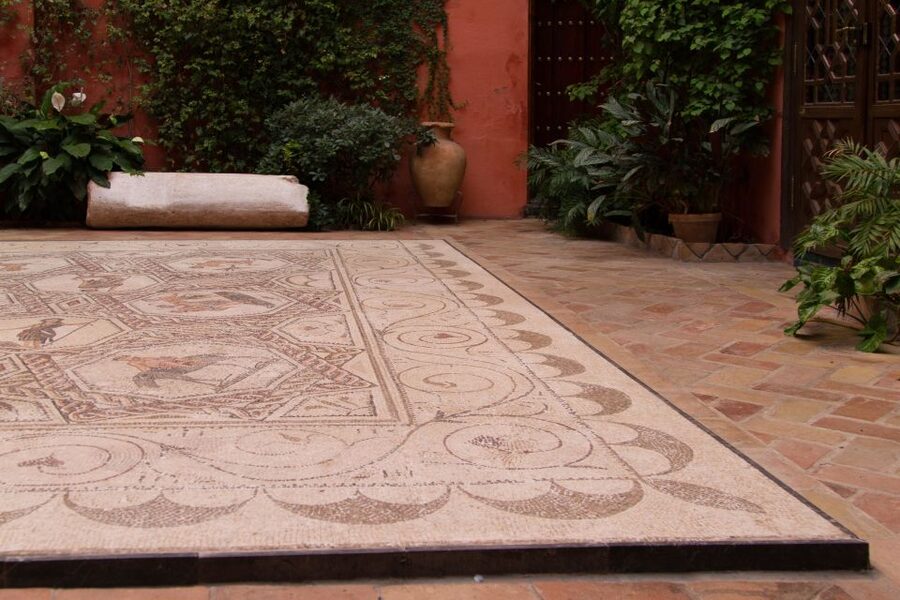
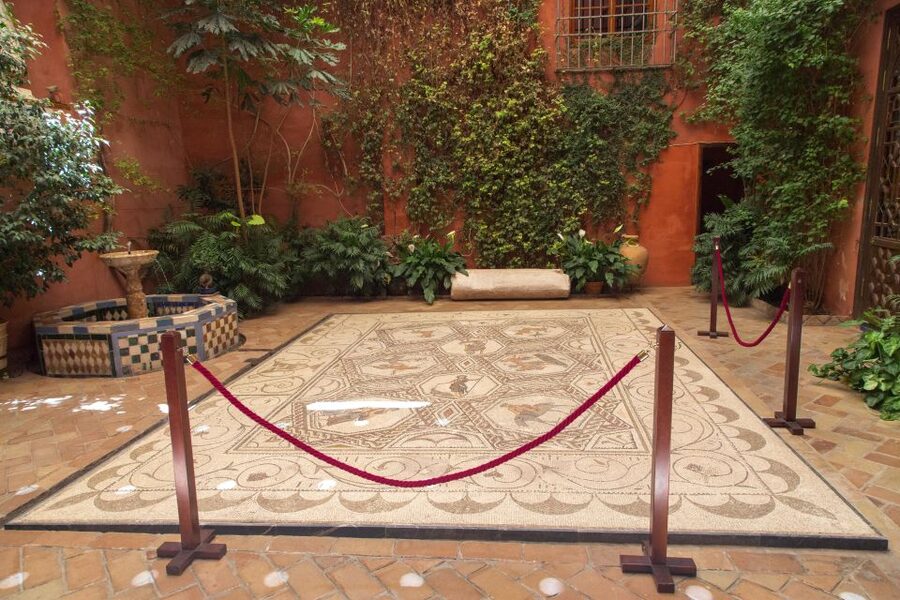
- A Roman mosaic indoors: The Bacchanalian scene adds a striking piece of ancient history to the mansion.
- Still a family home: The private setting gives the visit a different feel from a state-run monument.
- A 25-minute audio tour: You can take in the house at an easy pace, with commentary available in Spanish, English, French, and Italian.
- A modest price: At $14 per person, it works best as a short cultural stop between larger Seville sights.
What Casa de Salinas Adds to a Seville Itinerary
Seville has no shortage of major monuments. The Royal Alcázar spreads across courtyards and gardens, the cathedral fills an enormous Gothic interior, and Casa de Pilatos offers another grand aristocratic residence. Casa de Salinas is smaller and quieter by comparison.
That smaller scale is the point. You are not signing up for a half-day attraction. You are stepping into a historic house, seeing a handful of carefully preserved rooms, and getting a focused look at how Seville’s wealthy families lived.
I find this kind of stop useful after visiting the city’s largest monuments. The Alcázar can feel grand and ceremonial. Casa de Salinas feels more domestic. Its rooms help you picture Seville not only as a city of kings and churches, but also as a place of private courtyards, family rooms, inherited objects, and changing architectural tastes.
The house also gives you a quick lesson in Seville’s mixed design language. Gothic, Renaissance, and Mudéjar elements appear together, reflecting the city’s long contact with different cultures and artistic traditions. That combination is one of the reasons Seville’s historic center feels unlike a neatly sorted architectural museum.
A few more audio tours around Spain worth a look
- Barcelona: Sagrada Familia Entry Ticket with Audio Guide
★ 4.6 · 105,312 reviews - Barcelona: Casa Batlló Entry with Self-Audioguide Tour
★ 4.7 · 25,359 reviews - Granada: Alhambra Entry Ticket with Audio Guide
★ 4.1 · 5,950 reviews
Why Seville’s 16th-Century Setting Matters
Casa de Salinas took shape during a major period in Seville’s development. In the 16th century, the city was Europe’s main gateway for wealth arriving from the New World. Goods and money passed through its port before moving on to other parts of the continent.
That prosperity attracted Italian and Flemish artists. Local building traditions mixed with imported Renaissance ideas, while Gothic and Mudéjar forms remained part of the city’s visual language. Casa de Salinas reflects that meeting of styles in a very concentrated way.
You do not need a long history lesson to appreciate the house, but the setting gives the details more meaning. A plasterwork arch is not simply decorative. It shows how older Iberian design traditions continued within a prosperous Christian city. A painted wooden ceiling is not just a pretty surface. It hints at the care and expense once lavished on private interiors.
The family acquired the property at the beginning of the 20th century. A careful restoration aimed to bring back its earlier appearance after parts of the house had been changed during its roughly 400-year history, especially around 1900. What you see today combines original 16th-century structures with restoration work intended to recover the house’s older character.
Entering the Patios and Mudéjar Arches
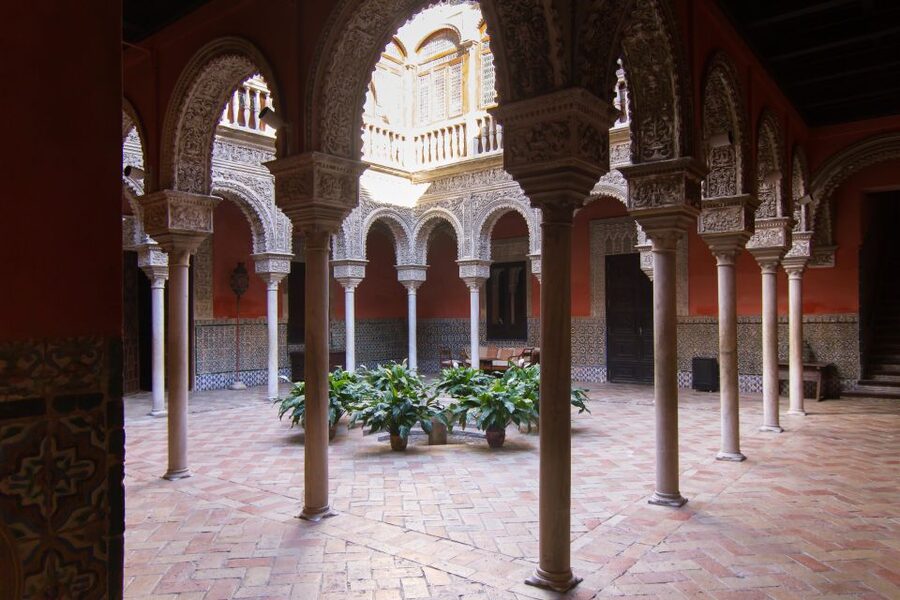
The patios are likely to be the visual center of your visit. These courtyards organize the house and bring light into the surrounding rooms. In Seville, the patio is not an extra feature added for beauty. It is a practical and social part of the home.
At Casa de Salinas, pay attention to the Mudéjar plasterwork arches. Their forms and surface decoration show the lasting influence of Islamic artistic traditions in southern Spain. Against the cleaner lines of Renaissance architecture, the plasterwork adds a softer, more intricate quality.
The visit is short enough that you can look carefully instead of rushing from room to room. Study the edges of the arches, the repeated patterns, and the way the openings frame the courtyard. These details reward a slower pace more than a quick checklist approach.
The patios also help you understand why Seville houses were built inward. The street outside could be hot and noisy, while the interior courtyard offered light, air, and a private center for family life. The house’s design tells you something practical about living in Andalusia, not just something decorative.
The Roman Mosaic and Its Bacchanalian Scene
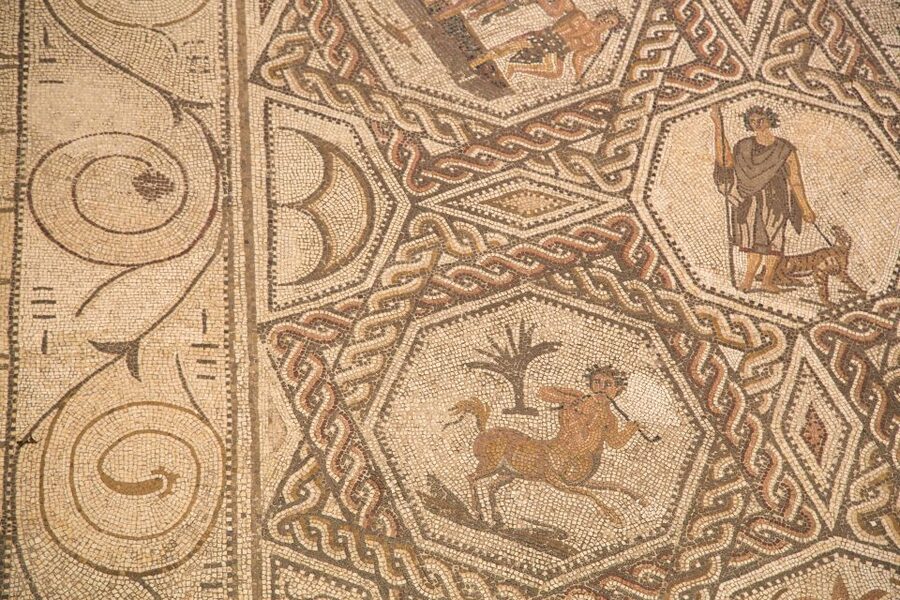
One of Casa de Salinas’s most unusual features is a Roman mosaic showing Bacchanalian activity. The subject brings a much older layer of Mediterranean culture into a 16th-century mansion.
This is the kind of detail that can make a small attraction worthwhile. You may arrive expecting historic rooms and decorative plasterwork, then find yourself looking at an ancient scene connected to Roman culture. It broadens the visit beyond one family and one period.
The mosaic also fits Seville’s wider story. The city has been shaped by successive cultures, and its historic center often places Roman, Islamic, medieval Christian, and Renaissance influences close together. Casa de Salinas gathers several of those time periods under one roof.
Do not expect the mosaic to occupy an enormous gallery. The attraction is compact, and the mosaic is one element within the house. Still, it is a memorable contrast with the painted ceilings, tiled surfaces, and formal rooms nearby.
Same place, a different route to walk:
- Casa Batllo Admission Ticket with Intelligent Audio Guide
★ 4.5 · 3,168 reviews - Madrid: Las Ventas Bullring Tour with Audio Guide
★ 4.6 · 3,154 reviews - Cordoba: Mosque-Cathedral E-Ticket with Audio Guide
★ 4.1 · 2,895 reviews - Nerja: Caves of Nerja Entry Ticket with Audio Guide
★ 4.6 · 1,616 reviews
The Painted Ceilings and Family Drawing Rooms
The mansion includes winter and summer drawing rooms. These rooms show how the house functioned as a private residence rather than simply as a monument.
The painted wooden ceilings are among the details worth seeking out. Look upward. Visitors often focus on walls, furniture, and floor patterns, but ceilings can reveal the ambition of a historic interior just as clearly. Painted wood required time, skill, and money, and it helped turn an ordinary room into a formal space.
The distinction between winter and summer rooms also gives the house a practical dimension. The names suggest rooms arranged for different seasons, an idea that makes sense in Seville’s strong heat and changing weather. The experience does not provide a full account of every domestic routine, but these spaces help you picture the house as a lived-in setting.
Because the family still resides here, the atmosphere differs from a fully emptied palace. That is appealing if you like historic homes with a sense of personal continuity. It also means you should approach the visit with respect. This is not an abandoned building arranged only for public display.
What the 25-Minute Audio Guide Is Like
The audio guide is designed to keep the visit focused. At around 25 minutes, it gives you enough explanation to understand the house without taking over your day.
I see this as a good format for Casa de Salinas. The mansion is not large enough to require a long guided program, but the architectural details benefit from context. Without commentary, the patios and rooms might blur into a pleasant collection of old surfaces. With the guide, you can connect the styles, restoration, family ownership, and historical period.
The audio guide is available in Spanish, English, French, and Italian. That makes the visit easier if you do not speak Spanish, especially since much of the value lies in understanding why the building combines Gothic, Renaissance, and Mudéjar elements.
One recent booking described the welcome as warm and the audio guide as good. Another brief comment focused only on the mosaic room. That tells me something practical: the experience is strongest when you pay attention to the specific features rather than expecting a long, story-heavy tour.
Allow yourself time to look after the audio commentary ends. A 25-minute duration should not mean you must leave as soon as the narration finishes. The architecture works best when you pause, look back at the patios, and compare the rooms.
Location Near the Cathedral and Giralda
Casa de Salinas is at Calle Mateos Gago, 39, in Seville’s monumental Old Town. The address places it close to the cathedral, Giralda, and Royal Alcázar.
This location makes the mansion easy to add to a central walking day. You can combine it with the major sights without creating a separate trip across town. It also makes Casa de Salinas a useful option when the Alcázar schedule does not fit your plans or when you want a shorter indoor stop.
The nearby streets are part of Seville’s historic core, so you should allow a little extra time to orient yourself. The house is central, but central Seville can be busy and visually crowded with churches, shops, restaurants, and narrow streets. Keep the address handy rather than relying only on a general sense of direction.
Its position also makes comparison easy. You can see the grand Royal Alcázar, then visit Casa de Salinas and notice how both use courtyards, decorative surfaces, and layered architectural traditions at very different scales.
Is the $14 Ticket Good Value?
At $14 per person, Casa de Salinas is not the cheapest quick stop in Seville, but it is reasonably priced for access to a private historic residence and an audio guide.
The value depends on your expectations. If you want a large palace with extensive gardens, many rooms, and a long visit, the ticket may feel expensive for the amount of time inside. If you appreciate architecture and want a concise cultural stop near the cathedral, the price is easier to justify.
I especially like the ticket for a day that already includes major monuments. After several hours inside the cathedral or Alcázar, a compact visit can be a welcome change. You get a different type of historic interior without committing another large block of time.
The current rating is 4.5 out of 5 from 202 bookings. That fits the attraction’s appeal: a pleasant welcome, an attractive private house, and enough unusual detail to make the visit memorable. The experience will not suit everyone, particularly if your priority is size or spectacle.
Who Should Visit Casa de Salinas?
I would recommend Casa de Salinas to you if you enjoy historic houses, decorative architecture, and smaller cultural sites. It is also a good choice if you have already visited the Alcázar and want to see another version of Seville’s courtyard tradition.
The mansion suits a short itinerary gap. You can fit it between larger attractions, use it as an indoor break, or choose it when you want something quieter than the main monuments.
It may be less satisfying if you want a full tour lasting several hours. The audio guide is only about 25 minutes, and the house itself is compact. You should arrive expecting quality details rather than quantity.
The visit is also a good match for anyone interested in how old buildings continue to function as homes. The fact that the Salinas family still lives there gives the place a personal quality that a completely institutional museum cannot reproduce.
Practical Details for Planning Your Visit
Your ticket includes entrance and the audio guide. The visit is valid for one day, with availability and starting times shown when you check your date.
You can cancel up to 24 hours in advance for a full refund, and the reserve-now, pay-later option lets you keep your schedule flexible. Wheelchair access is available.
The meeting point is Casa de Salinas itself, at Calle Mateos Gago, 39, 41004 Sevilla. Since the address is near the cathedral and Giralda, it works best as part of a central Old Town route rather than as a standalone outing from another district.
Plan around the audio guide’s 25-minute length, but give yourself a little extra time for looking. The house deserves more than a hurried audio playback, especially in the patios and drawing rooms.
Should You Book Casa de Salinas?
Book it if you want a short, focused look at a private Seville mansion with Mudéjar arches, painted ceilings, original tiles, and a Roman mosaic. At $14, it offers good value when you care about detail and location more than sheer size.
Skip it if you are seeking another major palace experience after the Alcázar. Casa de Salinas is a smaller, quieter stop, and its appeal comes from intimacy, restoration, and domestic character.
For most architecture-minded visitors, I would add it to a Seville day near the cathedral. It gives you a different view of the city’s past, and it takes only a modest amount of time.
FAQ
Where is Casa de Salinas located?
Casa de Salinas is at Calle Mateos Gago, 39, 41004 Sevilla, Spain, near Seville Cathedral, La Giralda, and the Royal Alcázar.
How long does the audio-guided visit take?
The audio-guided tour lasts about 25 minutes.
What does the ticket include?
The ticket includes entrance to Casa de Salinas and an audio guide.
Which languages are available for the audio guide?
The audio guide is available in Spanish, English, French, and Italian.
Is Casa de Salinas wheelchair accessible?
Yes, the experience is wheelchair accessible.
Can I cancel the booking?
Yes. You can cancel up to 24 hours in advance for a full refund.
Can I reserve now and pay later?
Yes. The reserve-now, pay-later option lets you keep your plans flexible.
Just added around Spain
- Tenerife Scavenger Hunt and Highlights Self Guided Audio Tour★ 3.5 · 3 reviews
- Tarragona Scavenger Hunt and Highlights Self Guided Audio Tour★ 4.5 · 15 reviews
- Tarragona Cathedral Entrance + Audio Guide (WebApp)★ 4.5 · 36 reviews
- Seville Maestranza Bullring Tour with Audio Guide★ 3.5 · 6 reviews
- Royal Alcazar of Seville Entry Ticket with Audio Guide★ 4.0 · 42 reviews
- Sevilla Centre: City Walk Audioguide in 7 Languages on your Phone★ 3.0 · 2 reviews
- Seville Cathedral and La Giralda Entry Ticket with Audio Guide★ 3.0 · 9 reviews
- Seville Audio guided walking tour 3h20 and 28 audio commentaries★ 5.0 · 2 reviews
Seville Audio Tours, compared.
Cathedral and Giralda Entry Ticket with Audio Guide
Read our review →
Hospital de los Venerables Ticket with Audio Guide
Read our review →
Seville Cathedral and Giralda Entry Tickets with Audio Guide
Read our review →
Royal Alcazar of Seville Entry Ticket with Audio Guide
Read our review →
Essential Seville’s Ancient History: An Audio Tour
Read our review →
Seville Cathedral and La Giralda Entry Ticket with Audio Guide
Read our review →
Seville Maestranza Bullring Tour with Audio Guide
Read our review →Browse the lists this tour appears in