

REVIEW · ROME AUDIO TOURS
Rome: Pantheon for Families with Tickets & Kids’ Audio Guide
Light enters from the roof. The Pantheon turns that into theater. This family visit gives you an easy way to explore Rome’s ancient temple, with storytelling about Emperor Hadrian, Raphael, kings, queens, and the famous oculus. I especially like the child-friendly audio stories and the fact that children under 18 enter free. The main drawback is practical: you must collect physical tickets away from the Pantheon, and some of the audio content may feel slow or repetitive for older children.
The visit lasts about 90 minutes, which is a sensible length for a family outing in central Rome. You get time to look up at the dome, listen to the stories, and notice the tombs and details inside without asking younger children to survive an all-day museum visit. The price is $17 per person, but that value depends on how much you want the audio experience and how many adults are in your group.
Key points to know before booking
- Pick up tickets at Via dei Bergamaschi 49: You must collect your tickets at the OhMyGuide Roma Museum Store before walking to the Pantheon.
- The oculus is the star of the visit: The round opening in the dome lets in sunlight and, at times, rain.
- Stories feature historical characters: Children hear about Hadrian, Raphael, former rulers, and the Pantheon’s religious past.
- Under-18s enter free: The adult ticket covers the fast-track option when selected, while children and teens who have not yet turned 18 do not pay admission.
- The audio has a few weak spots: Music sometimes fills pauses, the recording may briefly stick, and the children’s version is not completely separate from the adult experience.
- Dress for a basilica: Shorts, short skirts, sleeveless shirts, see-through clothing, and similar attire are not permitted.
What the family experience is really like
This is not a traditional guided walk led continuously by a person inside the Pantheon. It is an audio-led visit supported by a family-focused app or audio guide. That difference matters. You set your own pace, pause when the children need a break, and spend more time under the dome if it catches their attention.
The storytelling uses professional actors and original music. That gives the visit a more playful tone than a standard list of dates and architectural terms. Children are introduced to major figures through stories rather than a dry lecture, which can make the building easier to understand.
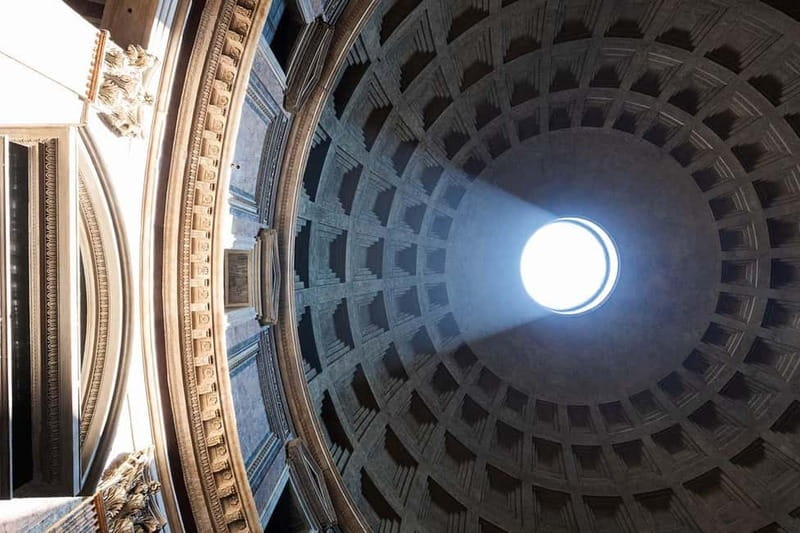
I like that the experience gives children something specific to watch for. The oculus is not just described as an architectural feature. It becomes a mystery: why is there a hole in the roof, how does the light move, and what happens when rain enters? Those questions give young visitors a reason to look up instead of simply walking through a large old building.
The 90-minute duration also works well. You have enough time for the main interior, the audio stops, and family photographs, but the schedule is not so long that the visit becomes a test of endurance. Younger children may still lose interest during quieter sections, so do not feel obliged to play every minute of the recording.
A few more audio tours around Rome worth a look
- Rome: Colosseum & Forum with Audio Guide App -Optional Arena
★ 4.2 · 24,770 reviews - Rome: City Sightseeing Hop-on Hop-off Bus with Audioguide
★ 4.0 · 16,045 reviews - Rome: St. Peter’s Basilica & Dome Entry Ticket & Audio Tour
★ 4.2 · 7,537 reviews
Collecting your tickets before entering
Your first task is not at the Pantheon itself. You must go to the OhMyGuide Roma Museum Store at Via dei Bergamaschi 49 to collect your tickets. The pickup point is a short walk from the monument, but you should build this stop into your schedule.
The instructions say to collect the tickets one hour before the guided tour time. After receiving them, you go to the Pantheon and use the online reservation line or separate entrance associated with the booking. Do not arrive at the monument expecting to show only a phone confirmation.
This is the biggest logistical weakness of the experience. The ticket collection adds an extra stop, and it can be frustrating if you assumed the fast-track benefit meant walking directly to the Pantheon. One important piece of feedback is that the queue may still feel similar to the regular line because you first need to collect a physical ticket outside the building.
I would plan to arrive early, locate the store without rushing, and keep the ticket pickup and entry time clearly in mind. A missed time slot could spoil an otherwise simple visit. Bring a valid passport, identity card, or driver’s license. A valid ID or credit card may also be required as a deposit if you borrow an audio guide device. Photocopies, photographs of documents, student cards, and digital IDs are not accepted for that purpose.
Inside the Pantheon, look up first

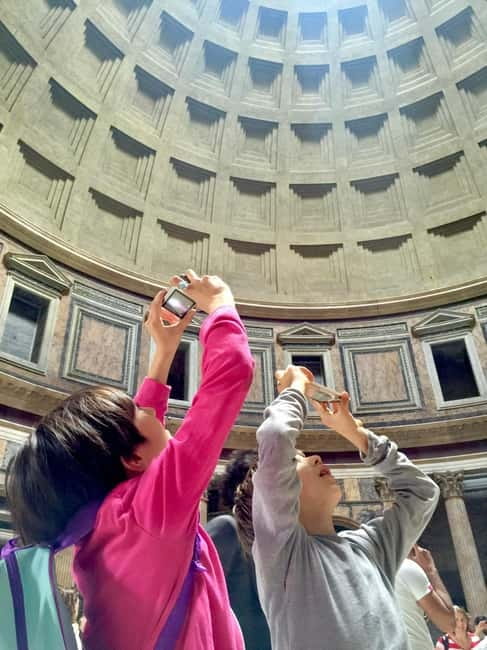
Once inside, give yourself a moment before starting the audio. The Pantheon’s interior is most powerful when you first see it without narration. The dome rises above you, and the oculus creates a direct connection between the room and the sky.
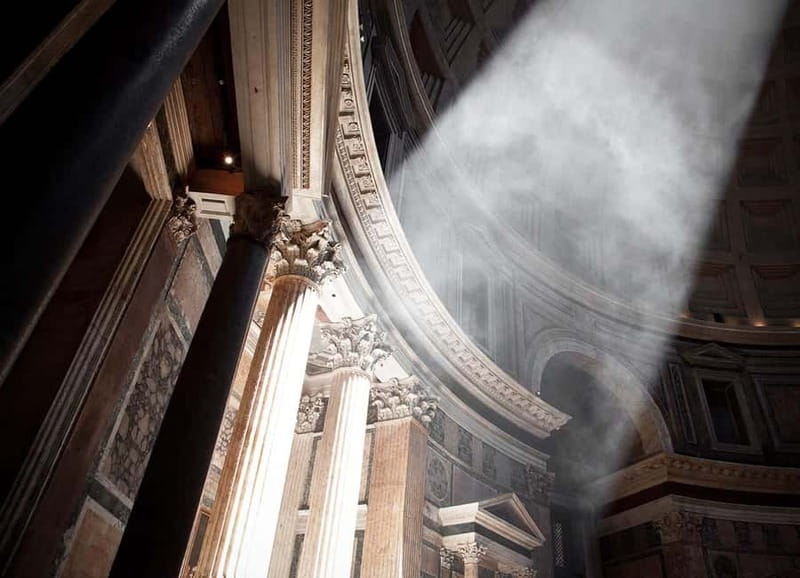
The oculus is the building’s central feature. It is an open circular section at the top of the dome, so sunlight enters directly and weather can enter too. The audio experience uses this unusual detail to hold a child’s attention. If rain happens during your visit, you may see it fall inside, although the supplied information does not promise that weather will cooperate.
The dome is also a useful lesson in Roman engineering. The experience focuses on the monument in an accessible way rather than asking children to remember a long list of dates. That is a good choice for families. You can point toward the ceiling while the story explains why this space was built and how it was connected to the gods.
The Pantheon is now a basilica, so you are entering both an ancient monument and an active religious setting. Dress modestly. Shorts, short skirts, sleeveless tops, vests, see-through clothing, and similar clothing are not allowed. This rule applies to the whole family, including children and teenagers.
Stories about Hadrian, Raphael, and former rulers
The audio content covers several figures who help give the building a human face. Emperor Hadrian is central because the experience explains how he built the Temple of All the Gods. Children are more likely to remember a ruler connected to a building they can see than a detached date on a timeline.
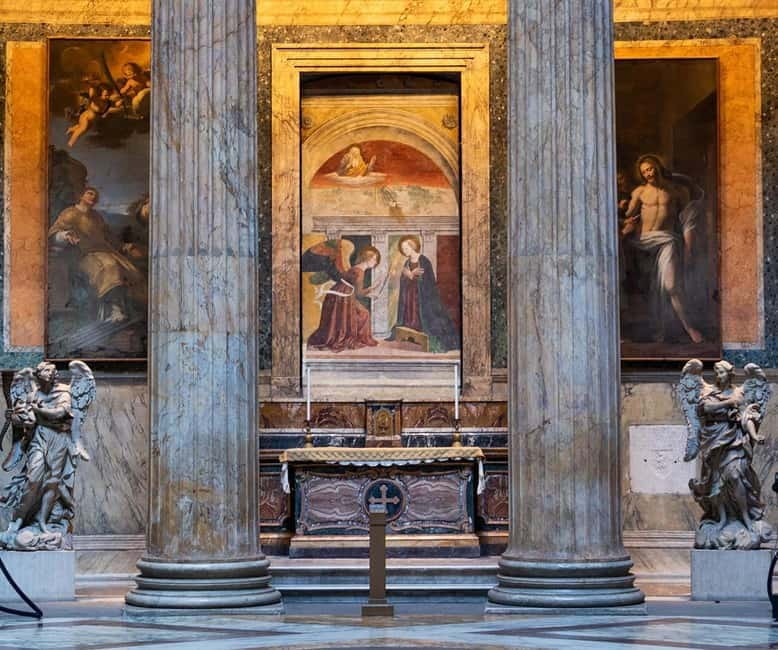
Raphael is another strong part of the visit. The famous Renaissance artist is buried inside the Pantheon, and his tomb gives children a clear connection between ancient Rome and later Italian art. It also helps show that the building continued to matter long after its original purpose changed.
The stories also introduce kings and queens who now rest inside. These tombs can be easy to walk past if you are focused only on the dome. The audio gives them a role in the visit, helping you pause and look at the floor-level details as well as the ceiling.
The tone is gentle and theatrical. Professional voices make the characters easier to follow, especially for younger children. The original music adds atmosphere, though it does not always add information. Some sections leave long spaces filled mainly with music, and older children may wish the narration moved faster.
Same place, a different route to walk:
- Colosseum, Roman Forum & Palatine Hill with Audioguide App
★ 4.4 · 6,291 reviews - Vatican & Sistine Chapel Ticket with Optional Audio Guide
★ 4.1 · 5,405 reviews - Rome: Castel Sant’Angelo Entry Ticket & Digital Audioguide
★ 4.7 · 5,347 reviews - Rome: Castel Sant’Angelo Entry Ticket & Audio App
★ 4.3 · 4,952 reviews
Is the kids’ guide truly different?
The experience is marketed around a guide for young visitors, and it is clearly designed to be accessible to children. Still, you should set your expectations correctly. The audio is not necessarily a completely separate program made only for children. One family found that the child and adult versions were essentially the same.
That does not make the guide useless. The language remains approachable, and the character-based storytelling gives children a way into the monument. But families with older children may expect more interaction, puzzles, or a strongly game-like format than they actually receive.
The app and audio guide are best viewed as a shared family tool. You can listen together, point out the matching feature, and discuss what you have heard. Younger children may enjoy the voices and music. Older children who already like Roman history or architecture may want more detail.
There can also be occasional technical problems. The recording has been known to stick briefly, and empty musical pauses reduce the amount of information you receive for the time spent listening. Before entering, check that the audio is working and ask the host or greeter for help if needed.
What the $17 price buys you
At $17 per person, the price is not simply an admission charge. You are paying for the reserved entry arrangement, the family audio content, and the convenience of having a prepared explanation inside the Pantheon. Children and teens under 18 enter free, which can make the total more reasonable for a family with several minors.
The value is strongest when you have one or two adults who want help keeping children interested. The stories give you a structure and reduce the need to explain every feature yourself. The professional narration is also useful if your family does not want a full live tour.
The value is weaker if you have only adults, older teenagers who prefer detailed history, or a very short schedule. The ticket collection process takes time, and the audio may contain more music and pauses than you expect. If you are comfortable visiting independently, you may prefer to arrange your own entry and read about the Pantheon beforehand.
The adult fast-track option also needs careful interpretation. It does not remove every step. You still collect the physical ticket first, and you may encounter a queue at the monument. The separate entrance or online reservation line can help, but you should not treat it as instant door-to-door access.
Languages, access, and timing

The host or greeter can assist in Italian, English, French, German, and Spanish. The audio experience is also offered in those languages. This makes it useful for families who want the children to listen in a language they understand best.
The activity lasts about 1.5 hours, with starting times based on availability. Strictly follow your reserved time. The Pantheon can have altered hours because of masses, concerts, special events, delayed openings, or early closures.
The site is wheelchair accessible, which is an important practical advantage for families who need step-free access. Still, special events or changes to the basilica’s schedule can affect how the visit operates, so check the timing close to your date.
You can cancel for a full refund up to 24 hours before the activity, and the reserve-now, pay-later option keeps your plans flexible. Those policies are useful in Rome, where weather, train delays, and changing family energy can alter a day quickly.
Who will enjoy this most?
I would recommend this experience most strongly to families with children who respond to stories, voices, and short explanations. The Pantheon can be awe-inspiring, but it can also seem like one more large building in a city packed with monuments. The audio gives children a reason to care about what they are seeing.
It is also a good match for parents who want a little structure without committing to a long private tour. You can stay together, follow the narration, and move at a family pace. The free admission for under-18s improves the value for larger families.
I would be more cautious if you are booking mainly for a dramatic skip-the-line advantage. The required ticket pickup makes the process less direct than the phrase fast-track may suggest. I would also think twice if your children are old enough to want a fully separate, interactive game. The guide is family-friendly, but it may not feel radically different from a standard audio tour.
Practical tips for a smoother visit
- Arrive at Via dei Bergamaschi 49 with plenty of time before your entry slot.
- Bring an accepted physical ID, especially if you need to borrow an audio guide device.
- Dress for basilica rules from the start. It is easier than trying to buy or find a covering nearby.
- Look at the dome and oculus before pressing play, then listen for the explanation of what you have already seen.
- Treat the audio as a guide, not a command. Pause it when your child wants to look, ask questions, or take a photograph.
- Check the equipment early. If the recording sticks, report it promptly.
- Allow for possible schedule changes caused by masses, concerts, or other events.
- Remember that children under 18 are free, but adults need the appropriate ticket option.
Should you book the Pantheon family audio guide?
Book it if you want a short, organized family visit with engaging stories and a clear focus on the oculus, Hadrian, Raphael, and the people buried inside. The free admission for children under 18 is a real benefit, and the complete audio content is the most praised part of the experience.
Skip it if you mainly want a fast entrance with no extra stop. The ticket pickup at Via dei Bergamaschi 49 is the key inconvenience, and the queue may not feel as quick as expected. I would also skip it for older children who want a deep, highly interactive program.
For most families, this is a pleasant way to give the Pantheon some shape and meaning. Just arrive early for the tickets, dress correctly, and expect a good family audio guide rather than a nonstop children’s adventure.
FAQ
How long does the Pantheon family experience last?
The stated duration is 1.5 hours. Starting times depend on availability.
Where do I collect the tickets?
You collect them at the OhMyGuide Roma Museum Store at Via dei Bergamaschi 49 in Rome. The instructions say to collect them one hour before the guided tour time.
Are children under 18 admitted free?
Yes. Children and teens who have not yet turned 18 enter free.
Is fast-track entry included for adults?
Fast-track entry is included for adults when that ticket option is selected. You still need to collect the physical tickets before going to the Pantheon.
What languages are available?
The host or greeter and the audio experience are available in Italian, English, French, German, and Spanish.
What identification should I bring?
Bring a passport, identity card, or driver’s license. A valid ID or credit card may be required as a deposit to borrow an audio guide device. Photocopies, phone images, student cards, and digital IDs are not accepted for that deposit.
What clothing is required?
The Pantheon basilica requires suitable clothing. Shorts, short skirts, sleeveless shirts, vests, see-through clothing, and nudity are not permitted.
Just added around Rome
- Pantheon Skip the Line Entry Tickets with Digital Audio Guide★ 3.5 · 52 reviews
- Trastevere: A Self-guided Audio Tour of Rome’s Medieval Village★ 4.5 · 3 reviews
- St. Peter’s Basilica: Dome Climb with Lift & Audioguide★ 4.5 · 13 reviews
- Audio guide in Vatican Museums and Sistine Chapel★ 4.5 · 12 reviews
- Navova square underground with audioguide★ 4.5 · 17 reviews
- The Roman Jewish Ghetto: A Self-Guided Audio Tour★ 4.0 · 8 reviews
- Experience: The Pantheon Audio Tour★ 4.5 · 4 reviews
- Self-Guided Audio Tour – The gods of the Palatine★ 3.5 · 5 reviews
Rome Audio Tours, compared.

Colosseum & Forum with Audio Guide App -Optional Arena
Read our review →
St. Peter’s Basilica & Dome Entry Ticket & Audio Tour
Read our review →
Colosseum, Roman Forum & Palatine Hill with Audioguide App
Read our review →
Vatican & Sistine Chapel Ticket with Optional Audio Guide
Read our review →
Castel Sant’Angelo Entry Ticket & Digital Audioguide
Read our review →
Colosseum, Forum, & Palatine Hill with Audio Guide
Read our review →
Borghese Gallery Skip-the-Line Ticket & Audioguide
Read our review →Browse the lists this tour appears in