
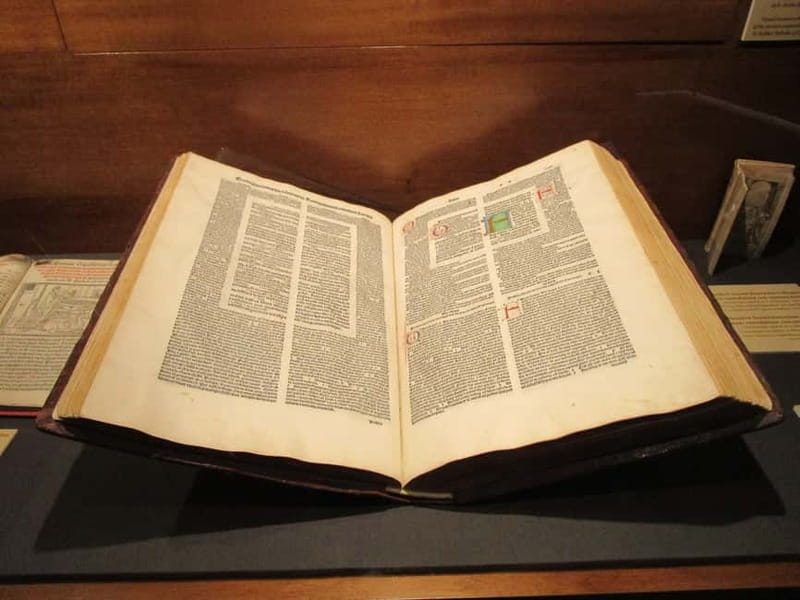
REVIEW · ROME AUDIO TOURS
Rome: Capuchin Crypts Guided Tour with Audio Guide Option
Bones can tell a surprising story. Rome’s Capuchin Crypts offer a quiet, unusual look at faith, mortality, and the Capuchin Order, with bone decorations arranged as symbolic art rather than shock displays. I especially like the thoughtful museum introduction and the small groups of no more than 10 people. The main drawback is the short visit, which can feel a little expensive at $25 if tickets are available more cheaply at the door.
The best version of this experience is the guided option. Guides such as Ava, Luigi, and Slobodan have been praised for clear explanations, good pacing, and well-judged humor. The audio guide is a solid choice too, especially if you prefer to move at your own speed, but the live guide adds details and answers that make the crypts feel less like a strange collection of bones and more like a place of reflection.
Key things to know before you go
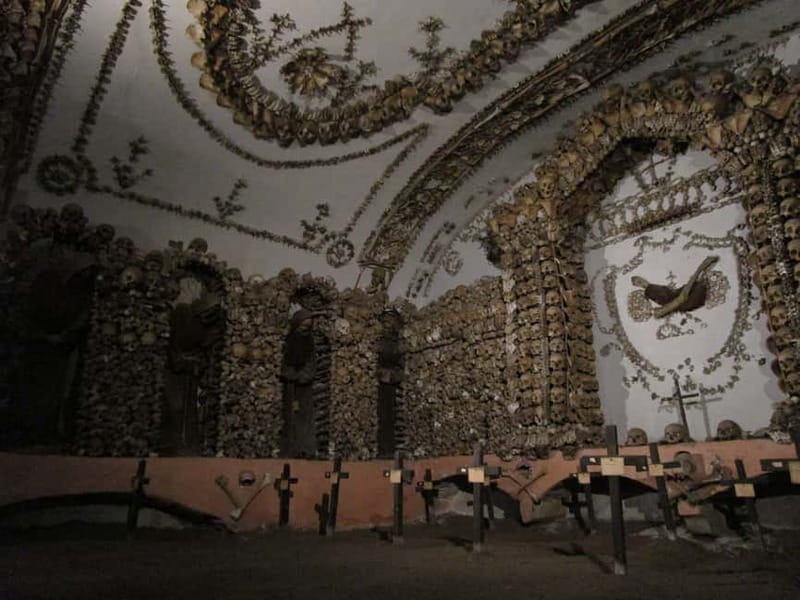
- Five symbolic crypt rooms: See the Crypt of the Three Skeletons, Crypt of the Skulls, Crypt of the Resurrection, and other small chapels decorated with Capuchin bones.
- A museum before the crypts: The visit begins with the Capuchin Museum, which explains the order’s story and gives meaning to what follows underground.
- A genuinely small group: With a maximum of 10 people, the guide can keep the pace personal and make it easier to hear in the compact rooms.
- A short Rome activity: Plan on 50 minutes to one hour, making this easy to add between larger sights around central Rome.
- Dress rules matter: Your shoulders and knees must be covered. Long shorts that reach the knees are acceptable.
- A reflective experience: The setting can feel emotional or unsettling, so this suits curious visitors more than anyone looking for a light sightseeing stop.
What makes the Capuchin Crypts different
Rome has no shortage of grand churches, ancient ruins, and famous paintings. The Capuchin Crypts offer something far more intimate. Beneath the Church of Santa Maria della Concezione dei Cappuccini, a series of small chapels uses the bones of Capuchin monks to form patterns and decorations.
The purpose is not simply to frighten you. The displays point toward familiar religious ideas: time passes, the body is temporary, and humility matters. That message is summed up by the phrase tempus fugit, or time flies, which is difficult to avoid once you enter the crypts.
I find the contrast important. The rooms are visually striking, but the visit is presented as a lesson in faith and mortality, not as a macabre sideshow. The explanations focus on the Capuchin Order, the religious setting, and the meaning behind the arrangements. That framing makes the experience more thoughtful and suitable for older children who can understand the subject.
Still, this is not a conventional museum. Some people may find the sight of human remains uncomfortable, and the emotional reaction can be stronger than expected. You should be ready for a quiet, serious atmosphere, even when the guide uses a little humor to keep the mood from becoming too heavy.
A few more audio tours around Rome worth a look
- Rome: Colosseum & Forum with Audio Guide App -Optional Arena
★ 4.2 · 24,770 reviews - Rome: City Sightseeing Hop-on Hop-off Bus with Audioguide
★ 4.0 · 16,045 reviews - Rome: St. Peter’s Basilica & Dome Entry Ticket & Audio Tour
★ 4.2 · 7,537 reviews
Starting on Via Vittorio Veneto
The meeting point is at Via Vittorio Veneto, 27, one of the most recognizable streets in central Rome. From there, you go directly to the entrance of the Capuchin Crypts rather than waiting in the regular ticket line.
Have the supplied tickets ready to show at the entrance. The skip-the-line access is useful, particularly during busy periods, though it does not turn this into a long guided sightseeing program. You are mainly paying for quicker entry, organized access, and either a live explanation or an audio presentation.
The practical details are simple, but dress correctly before you arrive. Shoulders and knees must be covered. Long shorts reaching the knees are fine, while anyone dressed outside those rules may need to buy one of the site’s paper-like cover-ups. It is much easier to dress appropriately before leaving your hotel.
The crypts are not wheelchair accessible. That is an important limitation for anyone who needs step-free access or has difficulty with underground spaces.
The Capuchin Museum gives the crypts a frame
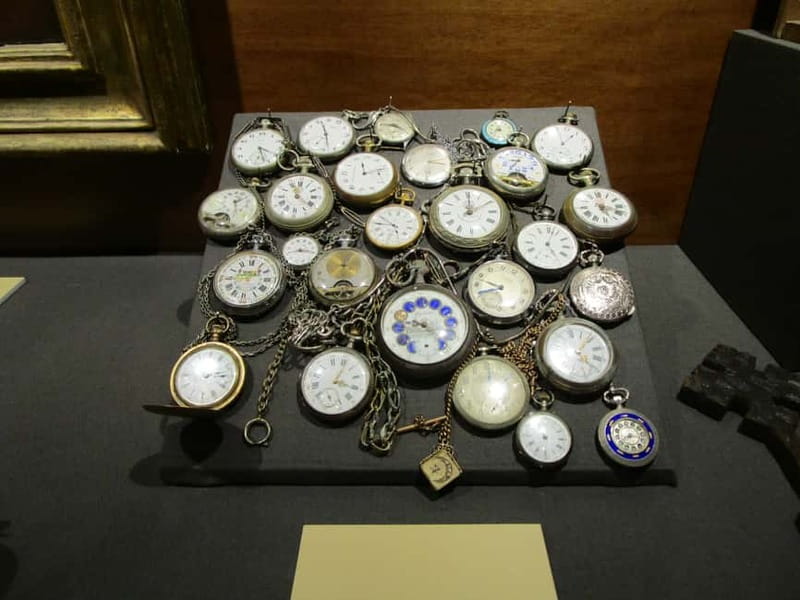
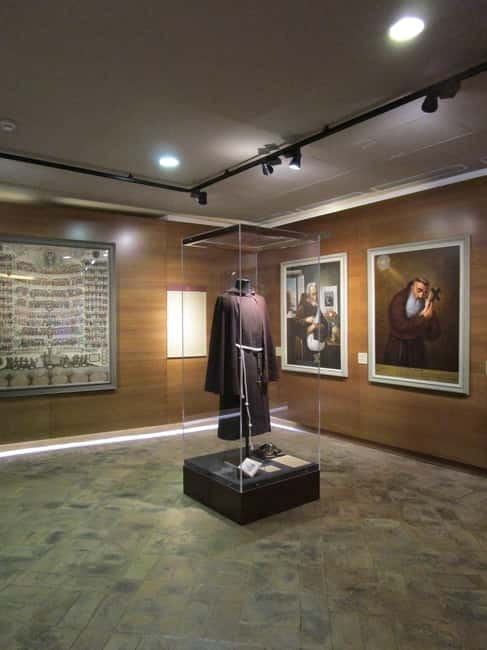
The museum comes before the crypt rooms, and that order matters. Without context, the bone designs could seem like a collection arranged for shock value. The museum helps explain the Capuchin Order, its origins, its religious life, and its continuing story into modern times.
You might find the museum more rewarding than expected because it slows the experience down. It introduces the people and traditions behind the crypts, so the later rooms feel connected to a religious community rather than separated from it.
The museum is also where you receive the audio guide if you book that option. The audio presentation has been described as conversational, using an exchange between an older returning visitor and a younger educated voice. That approach can feel more relaxed than a standard recording packed with dates and formal narration.
The visit moves at a brisk pace. That is helpful in a compact museum, since it keeps you from suffering the usual museum fatigue. On the other hand, anyone who likes to stop for a long time at every object may feel rushed during the one-hour format.
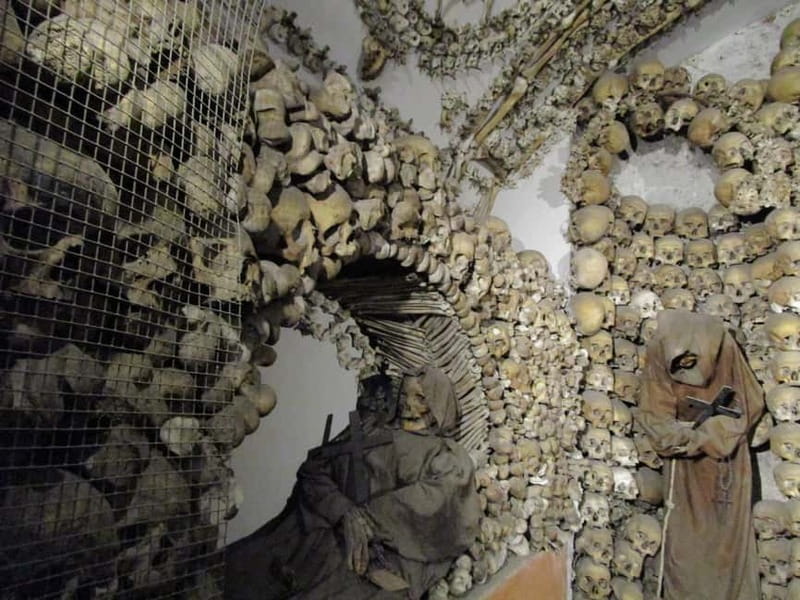
Entering the Crypt of the Three Skeletons
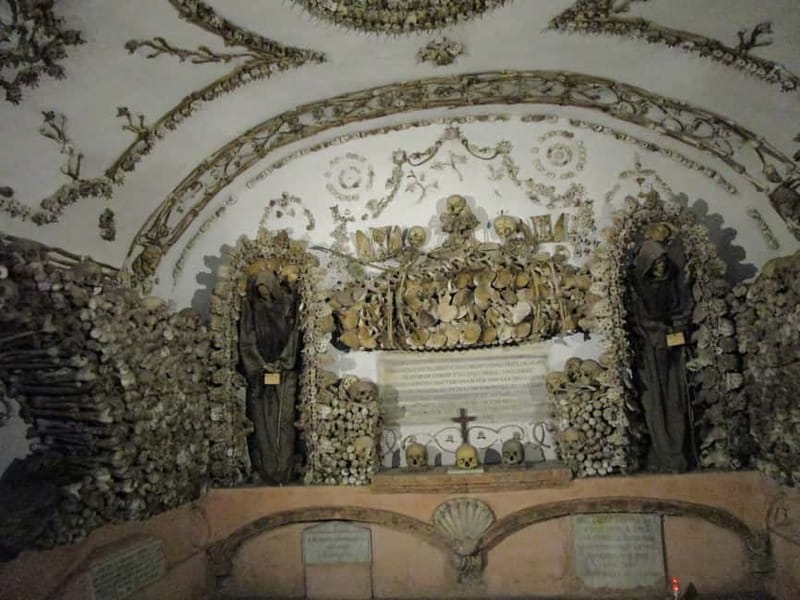
The Crypt of the Three Skeletons is one of the first memorable stops. Its name immediately sets the tone, but the room is meant to encourage reflection rather than offer cheap horror.
Your guide explains what you are seeing and how the bones were arranged. In a small group, it is easier to stay close enough to follow the explanation and ask a question without disrupting the entire visit.
The room also introduces the central idea of the crypts: death is part of the human story, and the body does not last forever. That can sound stark, but the visit handles it in a calm and respectful way.
This is one reason I prefer the live guide. A guide can notice when the group needs a lighter moment, explain a detail that catches your eye, and keep the visit from becoming either too grim or too casual. Several guides have been praised for combining humor with respect, a difficult balance in a place like this.
Same place, a different route to walk:
- Colosseum, Roman Forum & Palatine Hill with Audioguide App
★ 4.4 · 6,291 reviews - Vatican & Sistine Chapel Ticket with Optional Audio Guide
★ 4.1 · 5,405 reviews - Rome: Castel Sant’Angelo Entry Ticket & Digital Audioguide
★ 4.7 · 5,347 reviews - Rome: Castel Sant’Angelo Entry Ticket & Audio App
★ 4.3 · 4,952 reviews
The Crypt of the Skulls and the decorated chapels
The Crypt of the Skulls brings you further into the artistic side of the site. Bones are arranged into patterns and designs, turning the small rooms into symbolic chapels.
You will also see the Crypt of the Resurrection and other decorated spaces. Each room adds another variation on the same themes: life, death, time, humility, and the hope of what comes next.
Do not expect a large complex with endless rooms. The crypts are compact, and the full visit usually takes about 50 minutes to one hour. That brevity is part of the appeal for many people. You get a focused experience without sacrificing half a day that could be used for Rome’s larger sights.
The tradeoff is value. At $25 per person, the price is reasonable if you want a guided introduction and skip-the-line entry, especially when the group stays at 10 or fewer. It may feel high if you only want to walk through quickly, particularly since tickets can sometimes be cheaper when purchased at the door and available there.
The choice depends on what you value. I would pay more for the guide if you want the story and symbolism explained. If you are comfortable reading and listening independently, the audio option gives you a little more control.
The Mass Chapel adds a quieter pause
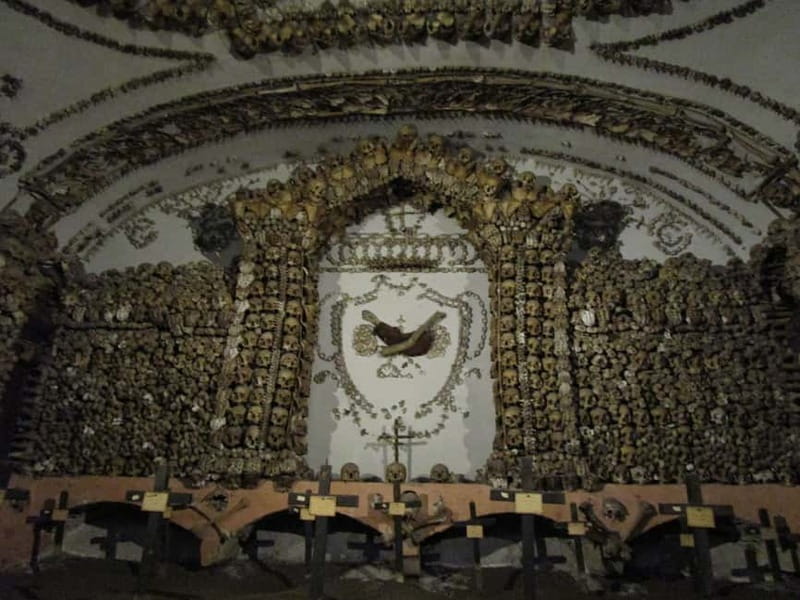
The Mass Chapel offers a change of tone. After the bone decorations, it provides a more traditional religious setting and helps connect the crypts to their purpose as part of a church complex.
This is a good point to pause and take in the atmosphere. The visit is not only about unusual decoration. It is also about how the Capuchin community understood prayer, remembrance, and the physical remains of its members.
That quiet quality is one of the strongest parts of the experience. Some people may feel emotional here, while others may simply appreciate the calm. Either reaction is understandable. You do not need to approach the crypts from a particular religious viewpoint to find the rooms meaningful, but a respectful attitude is essential.
Guided tour or audio guide?
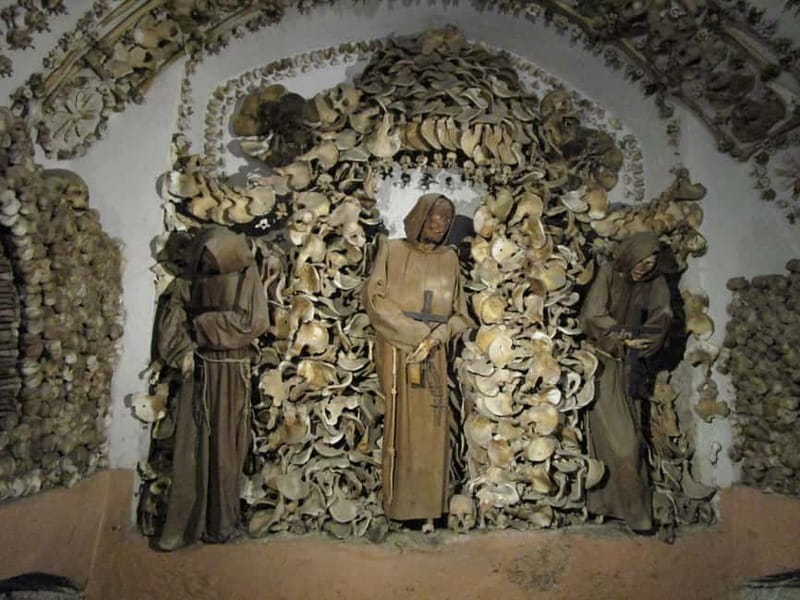
The live English-speaking guide is my first choice. The strongest guides, including Ava and Luigi, have been praised for being friendly, well prepared, and direct. Luigi in particular has been noted for giving enough detail without turning every room into a long speech.
A good guide also makes the short format work. The explanation keeps moving, but it does not feel like a race. You receive the main facts, hear the symbolism behind the designs, and still have a chance to look around.
Humor appears often in the guiding style. That may sound surprising in a crypt, but it can help. Light jokes make the subject easier for families and prevent the visit from becoming oppressively serious. The better guides know when to stop joking and let the space speak for itself.
The audio guide suits independent visitors. It is described as clear, engaging, and family-friendly, with a more human conversation style than a dry lecture. You can listen without staying beside a group, though the exact pace depends on how much time you spend at each display.
If the live guide is only a small extra cost, I would choose it. If you prefer privacy, need flexibility, or find group commentary distracting, the audio version remains a worthwhile option.
Is this suitable for children?
The experience can work well for families, especially with children old enough to understand the basic idea of human remains and religious symbolism. One guide was praised for making the visit enjoyable for an eight-year-old, using humor and clear explanations rather than speaking in a grim or overly formal way.
Parents should still prepare children in advance. Tell them that they will see real bones arranged in artistic designs. Avoid presenting the crypts as a haunted attraction, because that gives the wrong impression and may make a sensitive child more nervous.
The compact duration helps. An hour is long enough to hold a child’s attention, yet short enough to fit between other Roman sights. The pace also prevents the museum portion from dragging.
For very young children or anyone easily upset by death-related displays, I would consider skipping it. The site is respectful, but the subject cannot be softened completely.
Timing, group size, and overall value
The advertised duration is 50 minutes to one hour. That makes this a useful addition to a day around Via Veneto, rather than a major standalone activity.
The maximum group size of 10 is one of the better features. Small groups make it easier to hear the guide and create a calmer mood in the narrow rooms. They also give the guide more room to answer questions and adjust the pace.
The $25 price sits in the middle range for a short Rome attraction. You are not buying a full morning of sightseeing. You are paying for access to a rare site, skip-the-line entry, and interpretation that helps you understand what you are seeing.
I would call it good value for visitors who enjoy unusual cultural sites. It is less compelling for anyone who only wants famous landmarks or prefers to spend money on longer tours. The fact that some tickets may be cheaper at the door also means you should compare prices before booking, if your schedule is flexible.
Free cancellation up to 24 hours in advance and the option to reserve now and pay later add useful flexibility. Keep in mind that availability and starting times should be checked before you commit to a particular day.
Who should book the Capuchin Crypts?
I recommend this visit if you want a side of Rome that is quiet, strange, and culturally meaningful. It is especially well suited to people who enjoy religious art, unusual history, reflective places, and short activities with a clear focus.
Families with older children can do well here, provided everyone understands the subject. The audio guide works for independent visitors, while the live guide is best for anyone who wants the symbolism explained in plain English.
I would not make this a top priority if you dislike enclosed spaces, human remains, or religious sites. The crypts are not gruesome in the usual sense, but they are unmistakably about death. That is the point, and the experience asks you to think about it.
My verdict on the Capuchin Crypts
I would book the guided version if the price fits your Rome budget. The crypts themselves are memorable, but the explanation is what turns the visit into more than a quick look at bones.
The experience is short, well paced, and unlike the city’s better-known sights. You may leave amused by the guide’s jokes, humbled by the rooms, or simply reminded that time moves quickly. At $25, it is not the cheapest hour in Rome, but it offers a rare setting, a small group, and a thoughtful introduction to one of the city’s most unusual religious sites.
FAQ
How long does the Capuchin Crypts tour take?
The experience lasts approximately 50 minutes to one hour. The guided visit through the museum and crypts takes about one hour.
Where does the experience begin?
The starting location is Via Vittorio Veneto, 27. You go directly to the Capuchin Crypts entrance and show the supplied tickets to avoid the regular ticket line.
Is skip-the-line entry included?
Yes. The experience includes a skip-the-line entry ticket for the Capuchin Crypts.
Can I choose between a guide and an audio guide?
Yes. You can book an English-speaking guide or an audio guide, depending on the option selected. With the audio option, you receive the audio guide inside the museum.
What should I wear?
Your shoulders and knees must be covered. Long shorts that reach the knees are allowed. Visitors who do not meet the dress requirements may need to purchase a cover-up at the site.
Is the experience wheelchair accessible?
No. The Capuchin Crypts are not wheelchair accessible.
Can I cancel my booking?
You can cancel up to 24 hours in advance for a full refund. A reserve-now, pay-later option is also available.
Just added around Rome
- Pantheon Skip the Line Entry Tickets with Digital Audio Guide★ 3.5 · 52 reviews
- Trastevere: A Self-guided Audio Tour of Rome’s Medieval Village★ 4.5 · 3 reviews
- St. Peter’s Basilica: Dome Climb with Lift & Audioguide★ 4.5 · 13 reviews
- Audio guide in Vatican Museums and Sistine Chapel★ 4.5 · 12 reviews
- Navova square underground with audioguide★ 4.5 · 17 reviews
- The Roman Jewish Ghetto: A Self-Guided Audio Tour★ 4.0 · 8 reviews
- Experience: The Pantheon Audio Tour★ 4.5 · 4 reviews
- Self-Guided Audio Tour – The gods of the Palatine★ 3.5 · 5 reviews
Rome Audio Tours, compared.

Colosseum & Forum with Audio Guide App -Optional Arena
Read our review →
St. Peter’s Basilica & Dome Entry Ticket & Audio Tour
Read our review →
Colosseum, Roman Forum & Palatine Hill with Audioguide App
Read our review →
Vatican & Sistine Chapel Ticket with Optional Audio Guide
Read our review →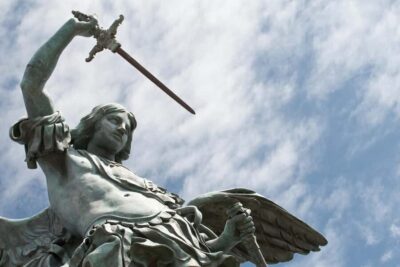
Castel Sant’Angelo Entry Ticket & Digital Audioguide
Read our review →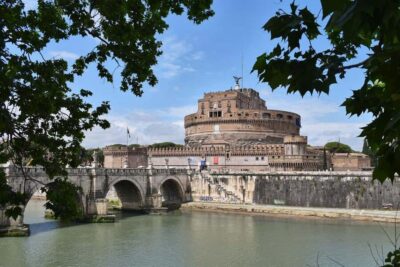
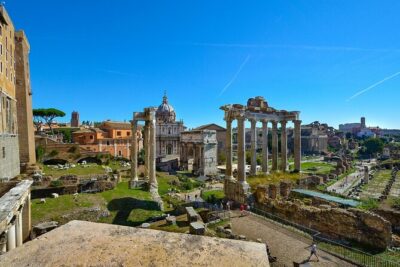
Colosseum, Forum, & Palatine Hill with Audio Guide
Read our review →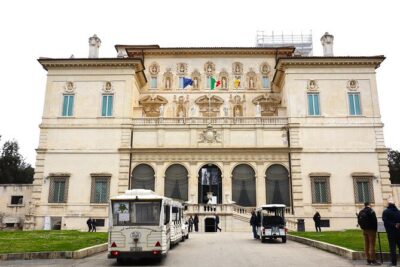
Borghese Gallery Skip-the-Line Ticket & Audioguide
Read our review →Browse the lists this tour appears in