
REVIEW · ROME AUDIO TOURS
Rome: Ancient Baths of Caracalla Ticket & Audio Guide
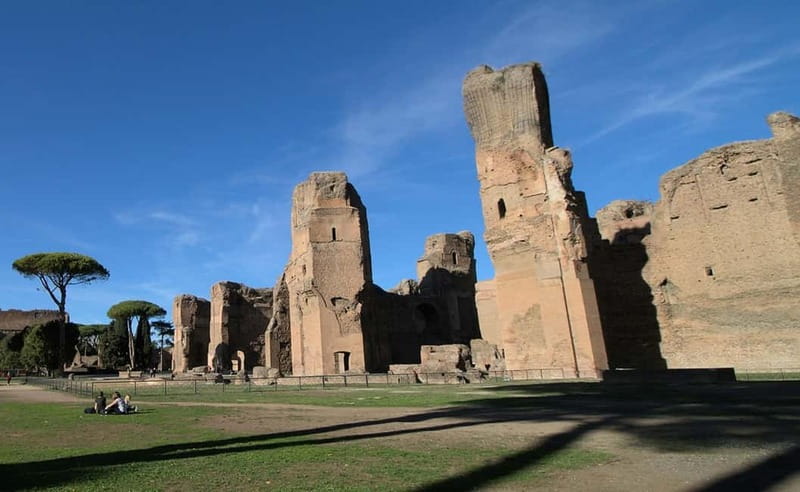
Rome’s ancient leisure center still feels enormous. This self-guided visit lets you walk through the Baths of Caracalla, the second-largest imperial bath complex in Rome, while an audio guide explains the ruins, mosaics, gymnasium, massage rooms, and swimming pool. I like the freedom to set your own pace, and I like that the commentary explains the hypocaust system used to heat the baths. The main catch is that the audio guide runs through your own smartphone, and the route can be hard to follow if the app or QR code does not work properly.
At $20 per person, this is not the cheapest way to enter the site. The price makes better sense if you want detailed commentary in English, French, German, Italian, or Spanish and do not want to read up before you arrive. If you only want a quick look at the ruins, buying entry alone may cost less, but the site is much easier to understand with some explanation.
Key points to know before you go
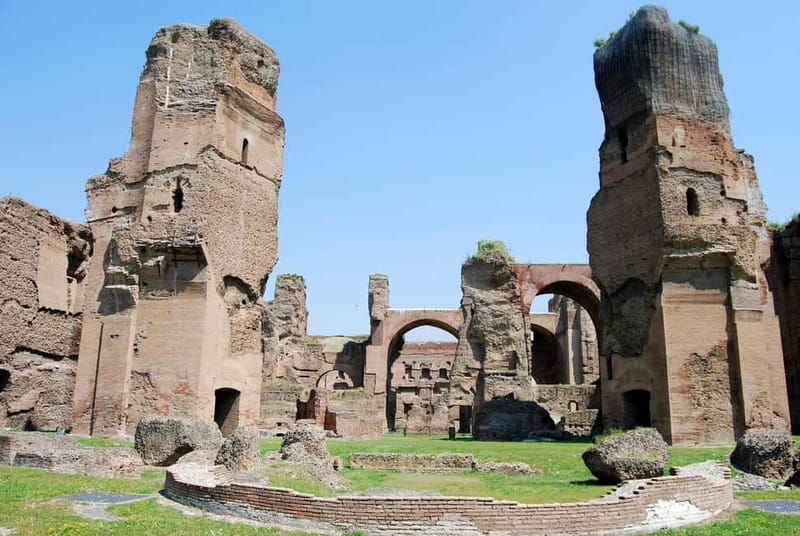
- The baths were heated by a hypocaust: Learn how hot air moved beneath raised floors and through the walls.
- You follow 17 points of interest: The route covers the swimming pool, gymnasium, massage rooms, mosaics, and other major remains.
- The audio guide uses your phone: Bring a charged smartphone, headphones, and enough time to download the guide.
- The ruins need imagination: Large sections survive, but some areas may be closed for restoration or renovation.
- The site is self-guided: There is no live guide or group tour, so you control the pace.
- The entrance is on Viale delle Terme di Caracalla: You go directly to the main gate with your downloaded ticket.
Why the Baths of Caracalla are worth your time
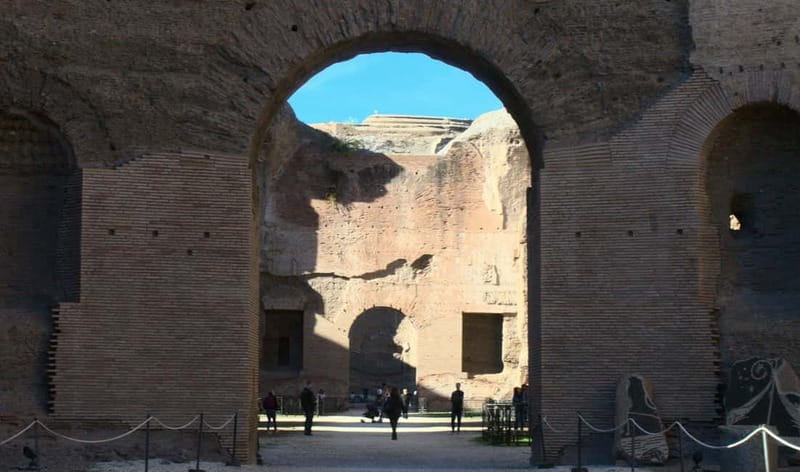
The Baths of Caracalla were not simply places to wash. They were public leisure centers built under Septimius Severus and his son Caracalla, with space for exercise, bathing, massage, and social life. That gives the ruins a useful human angle: ancient Romans came here as part of ordinary city life, not only for a special occasion.
The scale is the first thing you notice. Even in ruin, the walls and foundations show that this was a major public complex. The site was once able to handle large numbers of people, and the surviving brickwork gives you a sense of the engineering and planning needed to keep such a place running.
I like this stop for visitors who have already seen Rome’s famous temples and arenas and want to understand another side of the city. The baths show how public services, architecture, technology, and leisure came together in imperial Rome.
The setting also feels different from a museum. You are walking outdoors among the original remains rather than looking at reconstructed rooms behind glass. That is exciting, but it also means you must bring some imagination. A bare wall or broken floor may have been part of an elaborate room, yet the audio guide has to help you picture it.
More History Audio Tours in Italy
- Colosseum, Roman Forum & Palatine Hill with Audioguide App
★ 4.4 · 6,291 reviews - Rome: Colosseum, Ancient Rome Tour or AudioGuided Tour
★ 4.4 · 2,879 reviews - Colosseum, Roman Forum & Palatine Hill Entry and Audioguide
★ 4.1 · 2,475 reviews
Getting to the entrance and starting the visit
You go directly to the main entrance at Viale delle Terme di Caracalla, 00153 Rome. There is no included transportation, and there is no separate meeting point with a guide. Have the ticket downloaded and ready to show at the gate.
The booking information says the electronic ticket is sent through WhatsApp within 24 hours of your travel date. That timing matters. Do not wait until you are standing at the entrance to search through messages or rely on a weak phone signal. Save the ticket before leaving your accommodation.
The audio guide also needs preparation. Scan the QR code on your voucher and download the guide before arrival. Bring your own headphones, since neither a headset nor a mobile device is supplied.
That phone-based setup is the weakest part of the experience. The audio guide can add much-needed context, but it is only useful if your phone is charged and the application loads correctly. One visitor had trouble getting the guide to work, while another found the route difficult to follow. Give yourself a few minutes before entering to check that the commentary is available.
Comfortable shoes are important. The site is large, and you will spend the visit moving between outdoor remains. Flip-flops and sandals are not allowed, and the stated dress code also prohibits shorts and sleeveless shirts. That is easy to overlook in warm weather, so dress accordingly.
The Baths of Caracalla are wheelchair accessible. The information provided does not describe every surface or route in detail, so if you need specific access arrangements, check before booking.
Following the 17 audio-guide stops
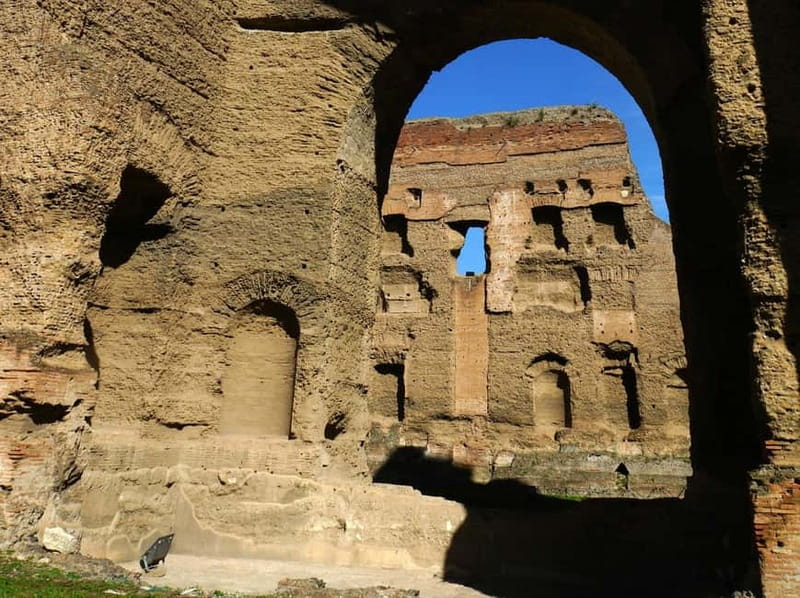
The audio guide covers 17 points of interest, which gives the visit a useful framework. You are not tied to a live group, so you can pause, replay sections, or spend longer at the remains that interest you most.
The route focuses on the complex’s main functions and surviving features. You can expect commentary on the swimming pool, gymnasium, massage rooms, mosaics, artwork, and the wider role of the baths in Roman daily life.
That variety helps prevent the visit from becoming a walk past anonymous walls. The gymnasium, for example, shows that exercise formed part of the bathing routine. The massage rooms point to the social and personal care side of the complex. The swimming pool gives you a clearer picture of the scale and purpose of the baths.
I would not rush the 17 stops. The advertised duration is two hours, which is enough for a solid visit, but you may want more or less time depending on how closely you listen. Two hours works well for a first visit because it gives you enough time to stop for photographs without turning the experience into an entire morning.
The audio commentary is available in English, Spanish, French, German, and Italian. One French-language user found the guide difficult to use, while another found the commentary more complete than the material available at the site. That mixed experience makes preparation especially important. If you are visiting in a language other than English, check the language setting before you begin.
Seeing the swimming pool and public rooms
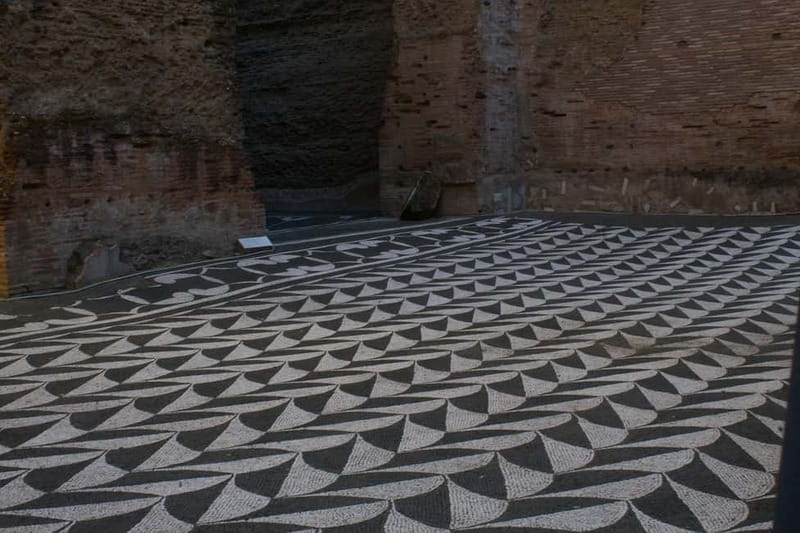
The swimming pool is one of the most useful stops because it helps you picture the baths as a working public building rather than a collection of ruins. The commentary explains how different parts of the complex fit together and why the baths mattered to everyday Roman life.
The gymnasium and massage rooms add another layer. You learn that visitors did not simply arrive, wash, and leave. The baths offered a sequence of activities linked to exercise, relaxation, grooming, and social time.
These rooms are also where the audio guide earns its cost. Without context, a ruined chamber can be difficult to identify. With an explanation of its original function, the remains become easier to read.
Still, you should keep expectations realistic. This is an archaeological site, not a fully restored bathhouse. Some rooms are only partly preserved, and some areas may be closed during restoration or renovation. A winter visit can be especially affected by temporary closures, so check current conditions if seeing every listed stop is important to you.
More History Audio Tours in Rome
- Rome: Colosseum, Roman Forum & Palatine Hill Visit + Audio Guide
★ 3.5 · 1,522 reviews - Rome: Roman Forum Super Pass Entry with Audio Guide App
★ 4.2 · 750 reviews - Colosseum, Roman Forum, Palatine Guided Tour or AudioGuide Option
★ 4.5 · 631 reviews - Colosseum, Roman Forum & Palatine Hill Admission With Audio Guide
★ 4.5 · 586 reviews
Understanding the Roman heating system
The hypocaust is one of the most interesting parts of the visit. This system heated the baths by sending hot air beneath raised floors and through spaces in the walls. It was a clever solution for warming large public rooms and maintaining the bathing complex.
The technology matters because it shows how much planning went into the baths. Heat had to be produced, moved, and controlled across a very large building. The audio guide explains this process in a way that makes the surviving floors and walls easier to interpret.
I especially like this part for families and anyone interested in engineering. Children may not remember every emperor’s name, but the idea of an ancient underfloor heating system is concrete and easy to grasp. It also gives the visit a practical focus beyond art and architecture.
Take your time with the explanations here. The heating system is not always obvious from the ruins alone, so listening before moving on can change how you see the rest of the complex.
Mosaics, marble, and traces of decoration
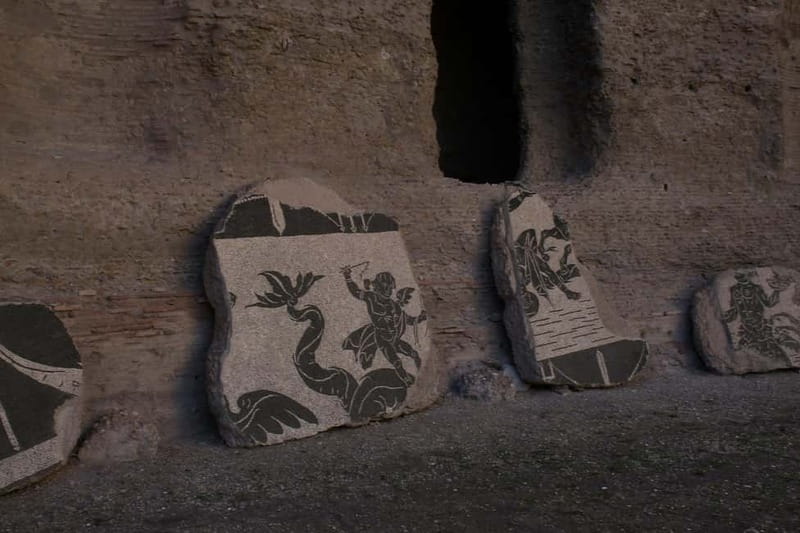
The Baths of Caracalla were not plain brick buildings. The surviving mosaics and marble details show that the complex once had a highly decorated interior. You can take photographs of preserved mosaics and artwork, which are among the most visually rewarding parts of the visit.
The mosaics are particularly useful for imagining the original rooms. Even fragments can suggest the level of care given to floors and public spaces. They also break up the long stretches of brick and stone with color and pattern.
The audio guide adds context to these details, but you should still look closely on your own. Not every interesting fragment will necessarily be the main focus of a recording. Keep an eye on floors, wall sections, and decorative remains as you move between the larger structures.
One striking historical detail is what happened later to stone from the baths. Materials from the complex were eventually reused in the construction of St Peter’s Basilica. That reuse connects the baths to another major Roman sight and shows how ancient buildings continued to shape the city long after their original purpose disappeared.
The limits of a self-guided audio visit
A self-guided format gives you privacy and control, but it also puts more responsibility on you. There is no live guide to point out a hidden detail, explain a confusing section, or help when the app fails.
The route can also be difficult to follow. If the audio guide’s order does not match the physical path clearly, you may spend time checking your phone instead of looking at the ruins. Download the content in advance, keep the map or route visible when needed, and do not assume that the next stop will be obvious.
Bring headphones that are comfortable for two hours. Since the device is your own phone, you can adjust the volume and pause the commentary, but you also need to manage your battery. A charged phone is listed as essential for good reason.
This is not the right choice if you want a lively conversation with a local guide. It is better for independent visitors who enjoy moving at their own speed and hearing information in a chosen language. It also suits anyone who dislikes being hurried from one stop to the next.
Is the $20 price good value?
The listed price is $20 per person and includes entry, taxes, the Baths of Caracalla audio guide, and an audio guide covering Rome landmarks. No transportation or live guide is included.
Value depends on how much help you want. If you buy entry separately and are happy to explore with no commentary, you may spend less. One price comparison from a French visitor put site entry at about €8 per person and the phone audio guide at about €6 per person, though prices can change. That means the package may carry a convenience premium.
I think the extra cost is easier to justify if you want a structured explanation and do not want to research the baths beforehand. The hypocaust, room functions, mosaics, and later reuse of the stone are not always easy to understand from the ruins alone.
The value drops if the audio guide fails or if you are paying for several people but only one phone is needed. The commentary can be shared, and one visitor specifically felt that one guide for two people was enough. If you are traveling as a couple, consider whether you need separate audio access for both of you.
Free cancellation is available up to 24 hours before the visit for a full refund. Starting times vary, so check availability when choosing your date.
Who should book this experience?
I would recommend it to independent visitors who want more than a quick photograph of the ruins. It is also a good fit for history fans, architecture students, families interested in ancient technology, and anyone who wants to explore without a fixed group schedule.
You will get the most from it if you prepare the audio guide before arrival and arrive in comfortable clothing that follows the dress code. The experience is less suitable if you want a fully restored interior, a live guide, or a simple ticket with no technology involved.
If you are visiting Rome in winter, allow for the possibility that parts of the complex may be closed for restoration. The main remains can still be worthwhile, but the full route may not always be available.
Should you book the Baths of Caracalla audio guide?
Book it if you want the freedom of a self-guided visit with enough explanation to make sense of the ruins. The scale, mosaics, swimming pool, and hypocaust system give you plenty to see, and the two-hour format fits well into a day of exploring Rome.
Skip it if you only want entry, prefer a live guide, or do not want to manage an app on your phone. Before paying $20, compare the cost of entry alone and decide how much the multilingual commentary is worth to you.
My practical advice is simple: download the guide early, bring headphones, charge your phone, and wear proper shoes. Do that, and this ancient bath complex becomes far more than a field of broken walls.
FAQ
Where are the Baths of Caracalla located?
The main entrance is at Viale delle Terme di Caracalla, 00153 Rome, in the Lazio region of Italy.
How long does the visit take?
The experience is listed as two hours. You explore independently, so you can adjust your pace within the time you choose to spend there.
Is a live guide included?
No. The experience includes an audio guide, but not a guided tour with a person.
Which audio-guide languages are available?
The audio guide is available in English, Spanish, French, German, and Italian.
Do I need to bring my own headphones?
Yes. Headphones and a mobile device are not supplied, so bring your own headphones and charged smartphone.
How do I access the audio guide?
Scan the QR code on your voucher to download the audio guide before arrival. The electronic ticket is sent through WhatsApp within 24 hours of your travel date.
Is the site wheelchair accessible?
Yes, the experience is listed as wheelchair accessible.
What clothing and footwear are allowed?
You should wear comfortable shoes. Flip-flops, sandals, shorts, and sleeveless shirts are not allowed under the stated dress code.
Just added around Rome
- Pantheon Skip the Line Entry Tickets with Digital Audio Guide★ 3.5 · 52 reviews
- Trastevere: A Self-guided Audio Tour of Rome’s Medieval Village★ 4.5 · 3 reviews
- St. Peter’s Basilica: Dome Climb with Lift & Audioguide★ 4.5 · 13 reviews
- Audio guide in Vatican Museums and Sistine Chapel★ 4.5 · 12 reviews
- Navova square underground with audioguide★ 4.5 · 17 reviews
- The Roman Jewish Ghetto: A Self-Guided Audio Tour★ 4.0 · 8 reviews
- Experience: The Pantheon Audio Tour★ 4.5 · 4 reviews
- St. Mary’s Basilica, Pope Francis Tomb Audio Tour with Crypt★ 4.0 · 3 reviews
Historical Tours, compared.

Colosseum, Roman Forum & Palatine Hill with Audioguide App
Read our review →
St. Mark Basilica Ticket, Audioguide+History Gallery
Read our review →
Colosseum, Ancient Rome Tour or AudioGuided Tour
Read our review →
Colosseum, Roman Forum & Palatine Hill Entry and Audioguide
Read our review →
Taormina: Ancient Theater Skip-the-Line Ticket & Audio Guide
Read our review →
Colosseum, Roman Forum & Palatine Hill Visit + Audio Guide
Read our review →
National Archaeological Museum Ticket & Audio Guide
Read our review →
Roman Forum Super Pass Entry with Audio Guide App
Read our review →Browse the lists this tour appears in