
REVIEW · GERMANY AUDIO TOURS
Trier: City Walk with Audio Guide in 7 Languages on your Phone
Trier rewards curious walkers. I like the 5.5-kilometer route because it links Roman monuments, medieval streets, and modern German history in one walk. I also like the freedom to pause for coffee, enter a museum, or finish the route the next day. The main drawback is that the tour depends on your phone, GPS, internet connection, battery, and headphones, so it is not entirely carefree.
You get 27 audio stories and can begin, stop, and restart at your own pace. At about $9.03 per person, this is a sensible choice for independent visitors who want some historical context without paying for a private human guide. Still, the audio quality and translation may vary, and the duo option may require both phones to stay together.
Key Things to Know Before You Start

- The route covers 5.5 kilometers: Plan on roughly two to three hours of walking, not counting museum visits or long breaks.
- You get 27 stories: The narration aims to include legends, local tales, and fun facts, not only dates and architectural labels.
- You have until the end of the next day: This makes the walk useful in changing weather or when you want to split it into two outings.
- The app uses GPS: You need a charged smartphone, internet access, GPS switched on, and headphones.
- The route is private: Only your own group takes part, with no fixed group pace or meeting-time pressure.
- Admission is separate: The walk takes you past major sights, but entrance fees are not included.
Why This Trier Walk Works Well for Independent Sightseeing
Trier is an excellent city for a self-guided walk because many of its major sights sit within a compact central area. Roman imperial buildings, the cathedral, market squares, and more recent historical sites are close enough to connect on foot. A route of 5.5 kilometers gives you a proper look at the city rather than a quick dash between two famous monuments.
I like the audio format here because Trier has layers that are easy to miss. You can see an enormous Roman gate, a church, a square, and a museum, but the experience improves when you know what each place meant in its own time. The 27 stories give you a steady stream of background as you move through town.
The biggest advantage is control. You can stop the narration when you reach a café, pause for photographs, or spend extra time inside a museum. You are not holding up a guide or waiting for a group to finish. You can also continue until the end of the following day, which is unusually generous for a short city walk.
That flexibility matters in Trier. The central sights deserve more than a glance, especially the cathedral and the Roman buildings. If you try to complete the whole route without stopping, the walk may take about three hours. If you add a museum visit or a long meal, splitting it across two days will make the experience much more pleasant.
More Audio Walking Tours in Germany
- Berlin Cathedral Ticket & Audio Tour with a City Walk
★ 4.1 · 28 reviews - Cologne Walking Tour with Audioguide: City and Cathedral
★ 4.5 · 14 reviews - Dusseldorf: City Walk Audio Guide in 7 Languages on your Phone
★ 4.5 · 11 reviews
Starting With Trier’s Roman Gate, the Porta Nigra
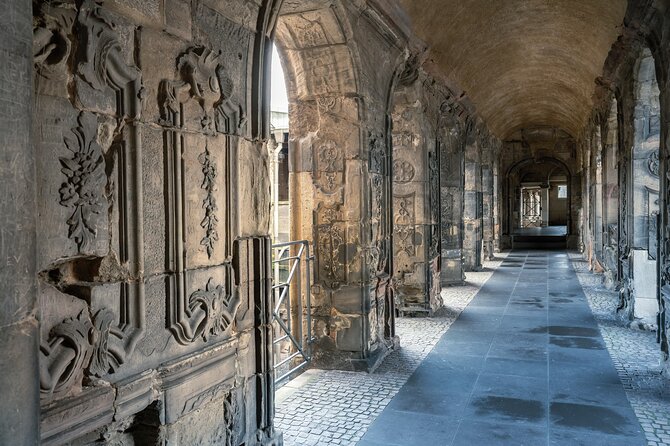
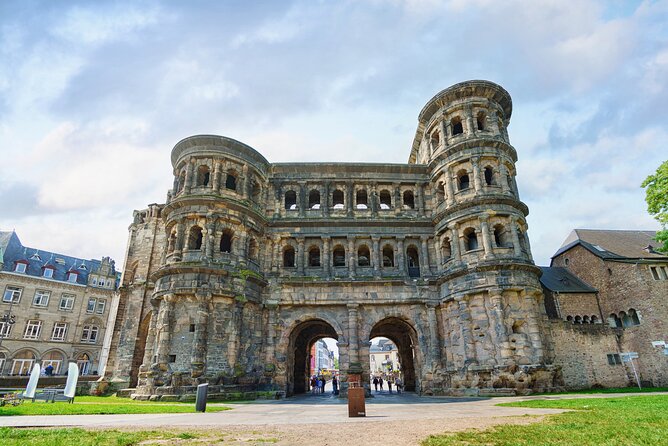
The walk includes the Porta Nigra, Trier’s best-known Roman landmark. This well-preserved city gate was built in the second century AD from massive stone blocks and originally formed part of the city’s defenses.
The gate gives the tour an immediate sense of scale. It is not just a pretty old building. It shows how important Trier was within the Roman world and how much effort went into protecting and shaping the city.
The audio narration can add useful context here, especially if you are not familiar with Roman military architecture. Look closely at the stonework and the structure as you listen. This is one of the stops where a few well-chosen stories can help you understand what you are seeing instead of treating the monument as a photo stop.
The main limitation is simple: the walking tour does not include admission to attractions. If you want to go inside a sight, you pay separately. The route is therefore best understood as a guided outdoor introduction, with optional paid visits along the way.
Reading Trier’s Story at the Hauptmarkt
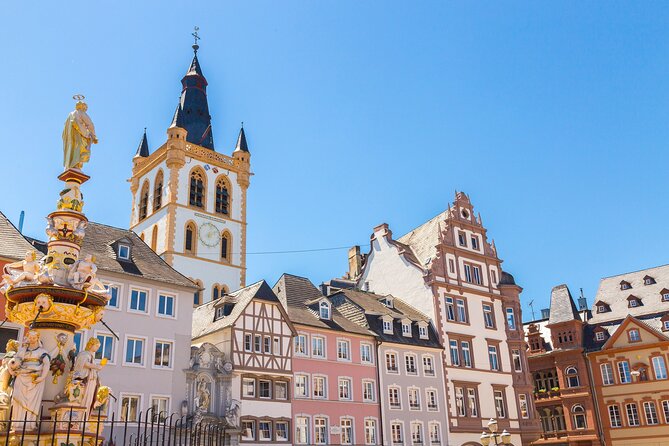
The Hauptmarkt is the city’s central square and one of Germany’s oldest market areas. Historic buildings, colorful half-timbered houses, St. Gangolf Church, and the Roman Fountain give the square a very different feel from the stern stone of the Porta Nigra.
This is a good place to pause the audio. The square has cafés and regular activity, so you can take in the buildings without rushing through the next waypoint. I would use the pause function here rather than trying to listen while crossing the square or finding a place to sit.
The Roman Fountain is one of the details that benefits from narration. Without context, it can blend into the surrounding architecture. The audio stories are designed to explain the landmarks as you encounter them, with local legends and lighter facts alongside the basic history.
The route’s flexibility is especially useful in this part of town. You may want to stop for a drink, browse the square, or simply watch city life for a while. You are not penalized for taking your time.
Trier Cathedral and Its Long Roman Beginning
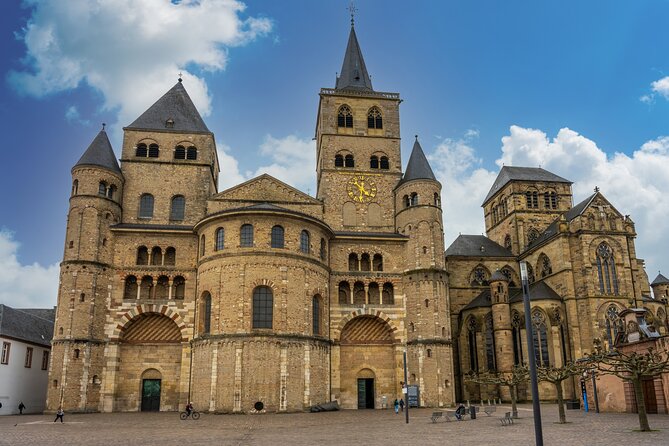
Trier Cathedral is one of the central highlights. Construction began in the fourth century under Emperor Constantine, making it the oldest cathedral in Germany. Centuries of additions and changes left the building with a mix of architectural styles.
The cathedral is also known for its size, interior, and religious relics, including the Holy Robe, believed by Christians to be the tunic worn by Jesus. That relic gives the cathedral an importance beyond its architecture and has made it a major pilgrimage destination.
The audio guide is useful here because the building can feel overwhelming at first. You have Roman beginnings, later renovations, religious history, and a major relic all connected to one place. The narration can help you sort those layers into a story.
Give yourself extra time if you plan to enter. The audio walk only includes admission-free access to the route itself, so any entrance charge is your responsibility. The outdoor narration may also be enough for visitors who mainly want an overview, while those with a strong interest in church history will likely want to look inside and spend longer.
More Smartphone Audio Tours in Germany
- 800 Years of History: A Munich GPS Audio Tour
★ 4.5 · 12 reviews - Berlin Walking Tour with Audioguide on Your Smartphone
★ 4.0 · 11 reviews - Koblenz: City Walk with Audio Guide in 7 Languages on your Phone
★ 4.5 · 5 reviews - Nuremberg Walking Tour with Audioguide on your Smartphone
★ 5.0 · 3 reviews
Karl Marx House and Trier’s Modern Historical Layer
Karl Marx House adds a sharp change of subject. Trier was Marx’s birthplace and childhood home, and the building now contains a museum about his life, ideas, political influence, and the nineteenth-century setting in which he worked.
This stop keeps the walk from becoming only a Roman and religious history tour. You move from emperors and cathedrals to political thought and social change. That contrast is one of the route’s strengths.
The audio story can provide a useful introduction before you decide if the museum deserves your time. If you already have a strong interest in Marx or European political history, you may want to enter and examine the documents, photographs, and displays. If not, the exterior and audio explanation still give you a reason for the building’s place on the route.
Again, admission is not included. The walk helps you decide where to spend your limited sightseeing time, but it does not replace a full museum visit.
The Aula Palatina, a Roman Hall With Surprising Simplicity

The Basilica of Constantine, also called the Aula Palatina, is another major Roman sight. Built in the early fourth century, it served as an imperial audience hall within a larger palace complex.
Its scale is impressive. The rectangular hall has a high, flat wooden ceiling, and its plain design expresses Roman power through size and order rather than ornate decoration. Today, the building is used as a Protestant church.
This is a useful stop for understanding how Trier functioned during Constantine’s reign. The Porta Nigra shows defensive strength, while the Aula Palatina shows imperial ceremony and government. Together, the two buildings help make Roman Trier feel like a real city rather than a collection of isolated ruins.
The audio format works well for a building like this because the outside may not immediately explain its original purpose. Listen before moving on, then take a moment to look at the proportions of the hall. The attraction itself may have separate opening arrangements or admission rules, so check locally if you plan to go inside.
How the Audio App and GPS Actually Shape the Experience
The app is included, along with GPS guidance and narration in seven languages. The booking information also identifies English as the offered language, so check the available language options when you receive the activation instructions. You will get those instructions in a separate email rather than simply starting the tour at the meeting point.
GPS is convenient because it directs you from one story to the next. You do not need to keep unfolding a paper map or search for every landmark yourself. Still, GPS walking tours are only as reliable as your phone connection and battery.
Bring headphones. The tour does not include them, and listening through a phone speaker in a public square is less clear and less considerate. Charge your phone fully, and take a power bank if you have one.
The app also requires an internet connection and GPS function. This is important if you are arriving from another country with limited mobile data. Confirm that your phone can connect before starting. A weak connection, low battery, or disabled location service can interrupt the route.
Translation quality is another point to consider. Some users found the English-to-German translation awkward, with incorrect place names and unnatural wording. Other users found the content interesting and entertaining, so the problem may depend on the language version you select. If precise language matters to you, English may be the safer choice if it is available for your booking.
The Duo Option Needs a Careful Look

The private format is attractive for couples and small groups, but the duo pricing deserves attention. One reported problem was that two people using the couple option could not separate for a few minutes without one phone losing access to the tour.
That means you should not assume that two phones function as two fully independent tours. If you plan to listen together and walk side by side, this may not matter. If one person wants to browse a shop while the other follows the route, or if you prefer different walking speeds, a separate single booking may be less frustrating.
There was also an issue with some waypoints showing only a number without audio or text. This appears to be a technical or content weakness at certain stops. Most of the walk is built around spoken stories, but you should keep expectations realistic: this is an app-based product, not a live guide who can explain every question or adjust the route on the spot.
Price, Pace, and Overall Value at $9.03
At about $9.03 per person, the price is low for a private sightseeing activity. You are paying mainly for the route, app access, GPS guidance, and recorded narration. There is no guide waiting for your group, and no entrance ticket is bundled into the cost.
I see the strongest value for visitors who want an introduction to Trier without committing to a scheduled group tour. You get a planned route through major sights, but you keep control of your time. That combination is useful for a first afternoon in town.
The value is weaker if you want detailed answers, polished storytelling in every language, or guaranteed technical support at each stop. A human guide could respond to questions and adjust the walk to your interests. This app cannot.
The extension until the end of the next day improves the value. You can complete the outdoor route in two sessions, return to a museum, or wait out bad weather. That is better than a rigid two-hour booking that ends the moment you stop for lunch.
The average booking time is five days ahead, but the activity itself is private and flexible. Confirmation arrives at booking, and free cancellation is available up to 24 hours before the start time. Cancellations inside that 24-hour window are not refunded, and changes then are not accepted.
Who Will Like This Walk Most
I would recommend this experience to independent visitors who:
- Want a low-cost introduction to Trier
- Prefer walking without a fixed group schedule
- Like stopping for cafés, photographs, or museums
- Are comfortable using GPS and smartphone apps
- Want Roman, religious, and modern history in one route
- Have enough phone battery and mobile data
- Are happy to pay separately for attraction entry
It is also a good choice for couples and small private groups that plan to stay together. Families may appreciate the ability to pause, though younger children may not want to cover 5.5 kilometers while listening to 27 stories.
I would be more cautious if you dislike phone-based tours, need flawless translations, or want a guide who can answer questions. The route is also less suitable if you are counting on two people using separate phones while moving independently.
Should You Book This Trier Audio Walk?
Book it if you want a flexible, inexpensive way to get oriented in Trier. The route connects the Porta Nigra, Hauptmarkt, Trier Cathedral, Karl Marx House, and the Aula Palatina, giving you a useful overview of the city’s Roman, religious, political, and everyday sides.
Skip it if you expect a polished live tour or if phone reliability is a concern. To get the best value, use headphones, charge your phone fully, carry a power bank, confirm the language, and treat the route as a flexible framework rather than a race.
For about $9.03, the freedom to pause and continue until the next day is the strongest reason to book. The experience works best when you let Trier set the pace.
FAQ
How long does the Trier audio walk take?
The average duration is about two to three hours. You have until the end of the next day to finish it, so you can take breaks or visit a museum along the way.
How far do you walk?
The route covers about 5.5 kilometers and includes 27 audio stories.
What is included in the tour?
The price includes access to the smartphone app, audio guide content in seven languages, and GPS guidance.
Do I need to bring my own phone and headphones?
Yes. A smartphone and headphones are not included. You also need an internet connection and GPS enabled on your phone.
Are entrance fees included?
No. Admission fees for attractions along the route are separate.
Can I cancel for a full refund?
Yes, if you cancel at least 24 hours before the local start time. Cancellations made less than 24 hours in advance are not refunded.
More Multilingual Audio Guides in Germany
- Cologne: City Walk with Audio Guide in 7 Languages on your Phone
★ 3.5 · 3 reviews - Heidelberg: City Walk Audio Guide in 7 Languages on your Phone
★ 3.0 · 2 reviews - Athens: Acropolis Ticket with Multilingual Audio Guide
★ 3.9 · 926 reviews - Geiranger: Bus Tour with Multilingual Audio Guide
★ 4.0 · 317 reviews
Just added around Germany
- Explore Trier a Beautiful City Walk with Audio and GPS Guide★ 3.5 · 2 reviews
- Private audio book city rally around Stuttgart’s old town★ 3.5 · 3 reviews
- Stuttgart Scavenger Hunt and Highlights Self Guided Audio Tour★ 5.0 · 2 reviews
- Private audio book city rally around the Jahrhunderthalle in Bochum★ 5.0 · 12 reviews
- Private audio book city rally around the old town of Essen Kettwig★ 4.0 · 6 reviews
- Beautiful Baroque Potsdam: A Self-Guided Audio Tour★ 4.5 · 4 reviews
- Sanssouci Park: A Self-Guide Audio Tour of the Garden’s Landmarks★ 3.0 · 2 reviews
- Nuremberg Walking Tour with Audioguide on your Smartphone★ 5.0 · 3 reviews
Multilingual Audio Guides, compared.

Geiranger: Bus Tour with Multilingual Audio Guide
Read our review →
Sightseeing Cruise on the Danube with Audio Guide in Budapest
Read our review →

Castel Sant’Angelo E-Ticket & Multilingual Audio Guide
Read our review →
Best Of – with Tour Leader & Multilingual Audio Guide
Read our review →
Chiva Private Cultural Tour with Audio Guide in Buga
Read our review →
Acropolis Museum E-Ticket and Multilingual Audio Guide
Read our review →Browse the lists this tour appears in