
REVIEW · ROME AUDIO TOURS
Rome: Stadium of Domitian Entry and City of Rome Audioguide
Ancient Rome hides beneath modern streets. This experience pairs reserved entry to the Stadium of Domitian with a useful audio walk through central Rome. I like the quiet, well-presented exhibition and the chance to see how Piazza Navona looked in Roman times. I also like the simple phone entry and six-language city guide. The main drawback is that the audio guide depends on your phone, app download, and headphones, and one booking had trouble receiving the Rome portion.
For $17, you get a compact underground archaeology visit plus a self-guided look at Rome’s symbolic churches, squares, monuments, and Roman remains. There is no live guide, and the ticket process has caused confusion for at least one visitor, so you should arrive prepared and keep your booking confirmation handy.
Key points to know before booking
- Piazza Navona’s ancient foundation: The Stadium of Domitian lies beneath today’s famous square, helping you picture its Roman purpose and shape.
- Quiet alternative to Rome’s biggest sights: The exhibition can feel pleasantly calm, with fewer people than at the Colosseum or Vatican Museums.
- Two audio experiences: Your ticket includes audio for the stadium and a separate virtual guide to the Heart of Rome.
- Six languages available: Choose Italian, English, French, Spanish, German, or Portuguese for the city audio guide.
- Phone preparation matters: Download the Vatican&Rome App before your visit and bring a charged phone plus headphones.
- Not suitable for everyone: The site is not recommended for wheelchair users, people with mobility impairments, or people with claustrophobia.
Why the Stadium of Domitian matters beneath Piazza Navona
Piazza Navona looks like an elegant Baroque stage today, lined with fountains, churches, cafés, and palaces. Beneath it sits the Stadium of Domitian, an older Roman structure that gives the square a second identity.
The stadium was built during the Roman Empire and is one of the key archaeological layers beneath the modern city. The visit lets you see surviving remains and understand that Piazza Navona was not designed from scratch as a later public square. Its long, open form follows the outline of the ancient stadium.
That connection is the main reason to choose this experience. You are not simply entering another small museum. You are seeing the older structure that explains one of Rome’s most recognizable public spaces.
The exhibition does a good job of helping the remains make sense. Ancient stonework alone can be hard to read, especially when you are looking at partial walls and foundations. The audio guide adds context, while the presentation and displays help show how the site relates to Roman life.
One of the strongest details from the visitor feedback is how the site feels after the Colosseum and Vatican Museums. Those major attractions can be crowded and exhausting. The Stadium of Domitian offers a smaller, calmer stop with plenty to notice without the same crush of people.
A few more audio tours around Rome worth a look
- Rome: Colosseum & Forum with Audio Guide App -Optional Arena
★ 4.2 · 24,770 reviews - Rome: City Sightseeing Hop-on Hop-off Bus with Audioguide
★ 4.0 · 16,045 reviews - Rome: St. Peter’s Basilica & Dome Entry Ticket & Audio Tour
★ 4.2 · 7,537 reviews
What you will see inside the archaeological site

Your visit begins at Stadio di Domiziano on Via di Tor Sanguigna. The ticket provides reserved entry, and you can show it on your smartphone rather than printing a paper voucher.
Inside, expect an archaeological visit rather than a reconstructed entertainment show. You will see the remains of the stadium and an exhibition designed to explain what once occupied the space below Piazza Navona.
The audio guide for the stadium is included. This matters because the site needs interpretation. A Roman ruin can look like a collection of old walls if you do not know what you are seeing, where the spectators would have been, or how the structure fit into the city.
The supplied information does not promise a live guided tour, and there is no named guide leading the group. A host or greeter may assist in Italian or English, but the main explanation comes through the audio guide.
I would allow enough time to move slowly through the exhibition rather than treating it as a quick ticket scan. One visitor who arrived at 10:00 found no line, and the site is often less crowded than Rome’s headline attractions. Early arrival may therefore help if you prefer a quieter visit, though the activity does not promise a particular crowd level.
A virtual reality experience may be available for an additional €5. It is not part of the $17 package, but one visitor considered the supplement worthwhile. Think of it as an optional add-on, not something you should assume is included.
Seeing ancient Piazza Navona with modern eyes
The most memorable idea here is the contrast between the present square and its Roman predecessor. Above ground, you have fountains, Baroque architecture, and a busy public space. Below ground, the stadium explains the long, narrow shape that still defines Piazza Navona.
The audio and exhibition can help you picture how the area looked in the Roman period. This is especially useful if you have already walked through the square and wondered why it has such an unusual layout.
I like this kind of visit because it improves the rest of your Rome sightseeing. Afterward, Piazza Navona is not just a pretty stop for photographs. You can connect the modern square to the Roman Empire, later Christian traditions, and the layers of art and architecture that followed.
That broader connection is also the purpose of the second audio guide. The Heart of Rome program moves beyond the stadium and points you toward symbolic places around the city. It follows Roman memories, Christian sites, stories connected with martyrs and saints, religious art, and the grand architectural settings that shape central Rome.
The supplied details do not provide a fixed walking route, stop-by-stop map, or exact duration for the city audio guide. You should therefore treat it as a flexible companion for exploring Rome rather than a timed walking tour with a guide waiting at each location.
How the Heart of Rome audio guide works
The city guide is virtual, not a live walking tour. You download the Vatican&Rome App from the App Store or Google Play, then use your own smartphone to listen.
The six language choices are Italian, English, French, Spanish, German, and Portuguese. That makes the package useful for many international visitors, but you should prepare before arriving. A charged phone and headphones are specifically required.
This format gives you freedom. You can listen at your own pace, pause when you want to take photographs, or use the information during a separate walk around central Rome. You are not tied to a group leader or a strict timetable.
The tradeoff is reliability. A phone-based guide is only useful if the app is downloaded properly, your battery lasts, and the audio is available on your device. One booking did not include the Heart of Rome guide as expected, which turned the package into little more than a museum admission ticket.
I would download the app before leaving your hotel, charge your phone fully, and check that you can open the audio content. Bring your own headphones rather than counting on equipment at the site.
Same place, a different route to walk:
- Colosseum, Roman Forum & Palatine Hill with Audioguide App
★ 4.4 · 6,291 reviews - Vatican & Sistine Chapel Ticket with Optional Audio Guide
★ 4.1 · 5,405 reviews - Rome: Castel Sant’Angelo Entry Ticket & Digital Audioguide
★ 4.7 · 5,347 reviews - Rome: Castel Sant’Angelo Entry Ticket & Audio App
★ 4.3 · 4,952 reviews
What the $17 price really gets you
At $17 per person, the package is reasonably priced if you want both the Stadium of Domitian and a Rome audio walk. The ticket includes the stadium admission, the stadium audio guide, and the Heart of Rome audio guide.
The value depends on how you use the second part. If you only visit the archaeological site and ignore the city audio, you might find a direct admission ticket cheaper at the venue. That concern came up after a booking problem, when the visitor felt the missing city guide made the package poor value.
If you use both audio programs, the price makes more sense. You receive an archaeological visit and an independent guide for central Rome without paying for a private guide.
This is not a full-day guided excursion despite the activity being valid for one day. You choose the available starting time, visit the stadium, and then use the city guide according to your own plans. The one-day validity gives you room to fit it around other Rome sightseeing.
There is also a small-group limit of 10 participants. Since the main experience is self-guided, this does not create the same group atmosphere as a conventional walking tour. It mainly limits how many people are handled around the entry process.
Ticket collection and arrival advice
The meeting point is Stadio di Domiziano on Via di Tor Sanguigna. Check the name and street carefully before setting out, since the site is connected with Piazza Navona and the surrounding streets can be confusing.
Reserved access is meant to help you avoid the ticket line. You show the ticket on your phone, and a host or greeter may assist in Italian or English.
Still, do not assume the process will be completely automatic. One serious complaint described arriving early, finding no staff, and being sent between two nearby locations before the ticket counter eventually admitted the visitor. That appears to be an isolated but important warning.
Keep your confirmation accessible, arrive with time to spare, and ask clearly for Stadio di Domiziano rather than only saying Piazza Navona. If the Rome audio guide is part of your purchase, verify that it appears in the Vatican&Rome App before you leave the area.
The free cancellation policy allows cancellation up to 24 hours before the activity for a full refund. You can also reserve now and pay later, which is useful when your Rome plans are still shifting.
Accessibility and comfort underground
This visit is not suitable for wheelchair users or people with mobility impairments. It is also not recommended for people with claustrophobia.
That information should guide your decision before booking. The site is below the modern street level, and the setting may feel enclosed rather than open and airy. The activity does not provide enough detail to promise step-free access or specific mobility accommodations.
Comfortable shoes are required. You are walking through an archaeological site and may continue through Rome with the Heart of Rome audio guide afterward.
Food and drinks are not allowed inside. Baby carriages are also not allowed, so families with very young children should plan around that restriction.
Who will enjoy this Rome combination
I would recommend this experience to you if you enjoy archaeology but do not want another enormous museum. It works well for someone who has already visited Piazza Navona and wants to understand what lies below it.
It also suits independent sightseers. You get audio rather than a live guide, and the city portion can fit around your own route. The language choice is generous, and the $17 price is fair when you make use of both components.
This is a good choice after a crowded Colosseum or Vatican visit. The smaller exhibition offers a change of pace, and the quiet atmosphere may be exactly what you need after Rome’s most demanding sights.
I would be more cautious if you want a fully guided experience, dislike using phone apps, or need guaranteed assistance with mobility. I would also hesitate if you are booking mainly for the Heart of Rome audio guide and cannot confirm that it has loaded correctly.
Should you book the Stadium of Domitian package?
Book it if you want a low-cost archaeological stop beneath Piazza Navona, a calm alternative to Rome’s biggest attractions, and a flexible audio walk through central Rome. The exhibition is the strongest part, especially for understanding how the ancient stadium shaped the modern square.
Before paying, make sure the app is available on your phone, bring headphones, and check that your ticket clearly includes both audio guides. If you want a live expert explaining the site, this is not the right product.
For most independent visitors who can manage an underground site and prepare their phone in advance, the combination offers good value. Just treat the city audio as a useful extra that requires a little homework, not as a staffed walking tour.
FAQ
Where is the Stadium of Domitian?
The meeting point is Stadio di Domiziano on Via di Tor Sanguigna in Rome.
What does the $17 ticket include?
It includes entry to the Stadium of Domitian, the Stadium of Domitian audio guide, and the Heart of Rome audio guide.
Can I show the ticket on my phone?
Yes. Smartphone ticket presentation is accepted.
Is a live guide included?
No live guide is included. A host or greeter may assist in Italian or English, but the main commentary comes through the audio guides.
Which languages are available for the audio guides?
The audio guide is available in Italian, English, French, Spanish, German, and Portuguese.
How do I access the Heart of Rome audio guide?
You need to download the Vatican&Rome App from the App Store or Google Play.
What should I bring?
Bring comfortable shoes, headphones, and a charged smartphone.
Is the experience suitable for wheelchair users?
No. The activity is not suitable for wheelchair users or people with mobility impairments.
Are food, drinks, or baby carriages allowed?
No. Food and drinks are not allowed, and baby carriages are prohibited.
Can I cancel the booking?
Yes. You can cancel up to 24 hours in advance for a full refund. You can also reserve now and pay later.
Just added around Rome
- Pantheon Skip the Line Entry Tickets with Digital Audio Guide★ 3.5 · 52 reviews
- Trastevere: A Self-guided Audio Tour of Rome’s Medieval Village★ 4.5 · 3 reviews
- St. Peter’s Basilica: Dome Climb with Lift & Audioguide★ 4.5 · 13 reviews
- Audio guide in Vatican Museums and Sistine Chapel★ 4.5 · 12 reviews
- The Roman Jewish Ghetto: A Self-Guided Audio Tour★ 4.0 · 8 reviews
- Experience: The Pantheon Audio Tour★ 4.5 · 4 reviews
- Navova square underground with audioguide★ 4.5 · 17 reviews
- St. Mary’s Basilica, Pope Francis Tomb Audio Tour with Crypt★ 4.0 · 3 reviews
Rome Audio Tours, compared.
Colosseum & Forum with Audio Guide App -Optional Arena
Read our review →
St. Peter’s Basilica & Dome Entry Ticket & Audio Tour
Read our review →
Colosseum, Roman Forum & Palatine Hill with Audioguide App
Read our review →
Vatican & Sistine Chapel Ticket with Optional Audio Guide
Read our review →
Castel Sant’Angelo Entry Ticket & Digital Audioguide
Read our review →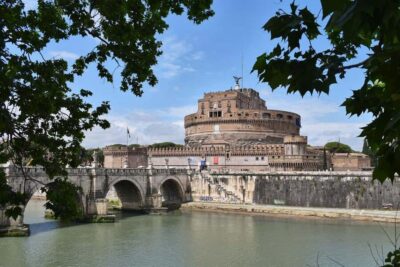
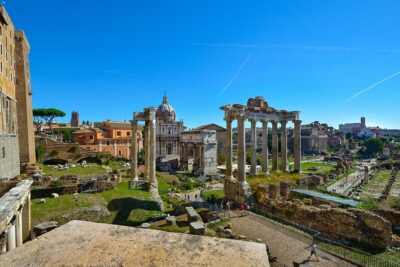
Colosseum, Forum, & Palatine Hill with Audio Guide
Read our review →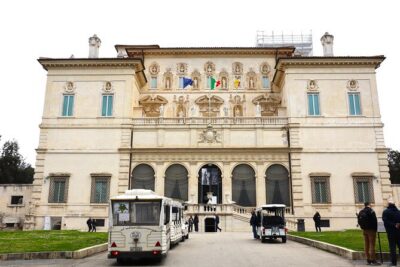
Borghese Gallery Skip-the-Line Ticket & Audioguide
Read our review →Browse the lists this tour appears in