

REVIEW · ROME AUDIO TOURS
Rome: Castel Sant’Angelo Ticket & Audio Guide
Ancient Rome hides inside this fortress. Castel Sant’Angelo gives you a rare chance to walk through nearly 2,000 years of changing purpose, from Hadrian’s mausoleum to papal refuge, prison, and museum. I like the 18 audio-guided stops, which give structure to a large building, and I like the panoramic view from the upper terrace. The main concern is technical: some buyers have been unable to activate the audio guide and had to pay again at the castle.
The experience lasts about two hours and includes entry, a digital audio guide in eight languages, and a separate Vatican-area audio stroll. It is a good fit if you prefer exploring at your own speed, but it is not a guided tour, and you must bring your own phone and headphones.
Key points to know before you go
- The castle began as Hadrian’s mausoleum, built nearly 2,000 years ago and later converted into a fortress.
- Eighteen audio stops cover the building’s Roman, papal, military, prison, and museum chapters.
- The rooftop terrace is the payoff, with broad views over Rome and the Tiber, though rain or special events can close it.
- The ticket includes a second audio experience, a self-guided stroll around the Vatican area.
- You need a phone, headphones, downloaded ticket, and photo ID, since tickets are nominative.
- The audio guide has had activation problems, so download everything before arriving and keep your voucher handy.
Why Castel Sant’Angelo feels different from Rome’s ruins
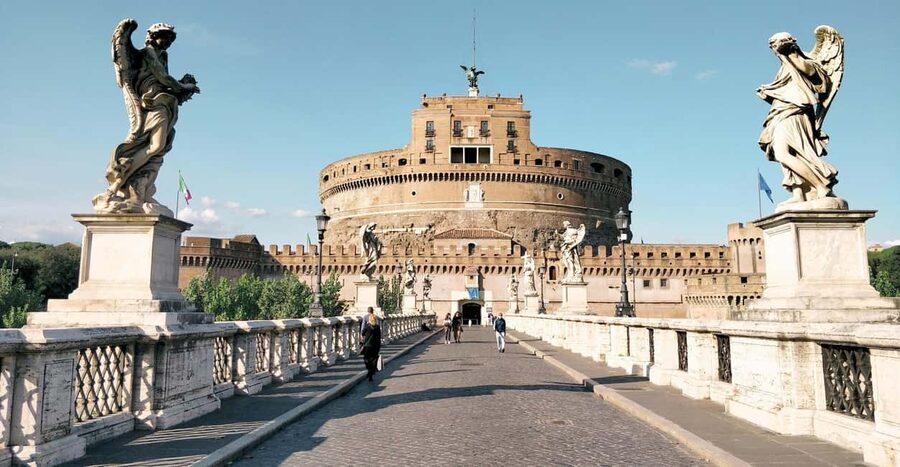
Castel Sant’Angelo is not simply another ancient monument with broken columns. It is a building that kept being reused. You move through a Roman burial monument, a medieval stronghold, papal apartments, grim prison spaces, and a modern museum in one visit.
That changing purpose gives the castle its appeal. The walls are not only old. They show how Rome adapted the same powerful structure to new rulers and new dangers.
The original building was commissioned as the mausoleum of Emperor Hadrian nearly 2,000 years ago. Over time, the mausoleum took on a military role and became a fortress. Popes and noble families used it for protection and residence, while prisoners were held inside.
The audio guide helps connect those chapters. Without it, the building can feel like a series of ramps, courtyards, chambers, and stairways. With it, you have a reason for each section and a clearer sense of how the castle changed.
A few more audio tours around Rome worth a look
- Rome: Colosseum & Forum with Audio Guide App -Optional Arena
★ 4.2 · 24,770 reviews - Rome: City Sightseeing Hop-on Hop-off Bus with Audioguide
★ 4.0 · 16,045 reviews - Rome: St. Peter’s Basilica & Dome Entry Ticket & Audio Tour
★ 4.2 · 7,537 reviews
Starting at Lungotevere Castello, 50
You go directly to Castel Sant’Angelo at Lungotevere Castello, 50. There is no group meeting point and no live guide waiting to lead you inside.
Have your ticket downloaded before you reach the entrance. The ticket is sent through WhatsApp and is available for download within 24 hours of your travel date. You also need to show the nominative ticket with a valid identity document, so make sure the name on the booking matches the person entering.
The experience advertises priority entry, which is useful at a popular Rome sight. Still, priority access does not remove every practical step. Your ticket must display correctly, and the audio guide must be ready on your phone.
The booking instructions tell you to scan the QR code on the voucher before your visit. Do this while you have a reliable internet connection, not while standing at the entrance with a line behind you. Bring headphones, since neither a headset nor a mobile device is supplied.
The mausoleum of Hadrian and the first audio stops
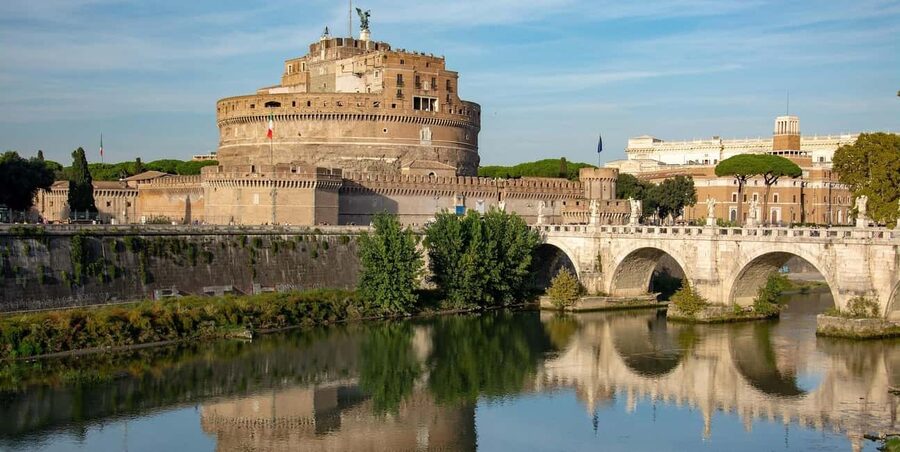
The visit begins with the oldest layer of the building, the mausoleum of Hadrian. Its original purpose was funerary, but the structure’s thick, imposing form later made it useful as a defensive site.
The audio commentary places this first stage in the Roman Empire. That context matters because the castle can otherwise appear to be a medieval fortress from the outside. You learn that the building’s first identity was tied to imperial power and burial, not war.
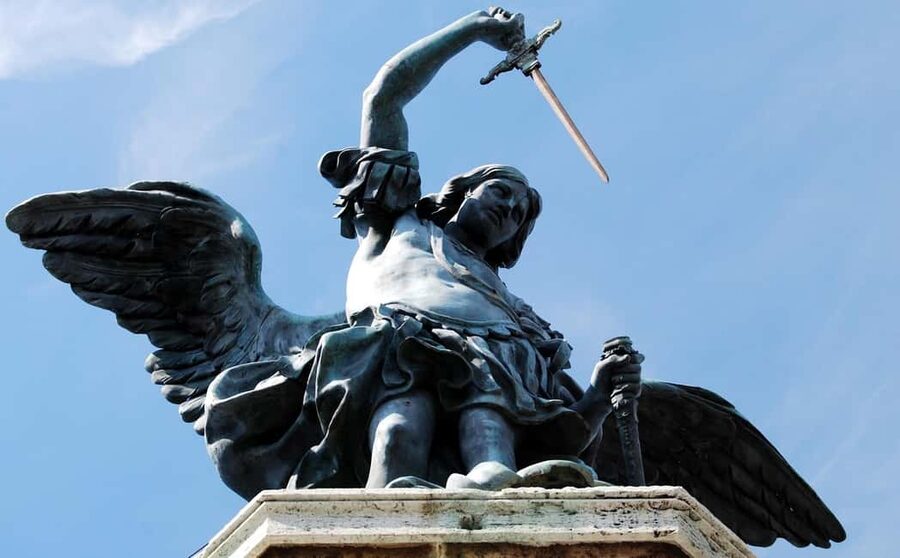
A famous legend is also part of the story. In 590, during a plague in Rome, Archangel Michael was said to have appeared on top of the mausoleum, signaling that the plague had ended. A statue of the archangel now crowns the building, and the story helps explain the castle’s name and enduring religious symbolism.
The audio stops are short enough to keep you moving, but you control the pace. You can pause, replay, or skip sections. That flexibility works well if one period interests you more than another.
From tomb to fortress and papal refuge
The next major shift is the building’s conversion into a castle. Rome’s rulers recognized that the old mausoleum had thick walls and a strong position beside the Tiber. It became part of the city’s defensive system.
Later, popes and noble families used Castel Sant’Angelo as a refuge. The fortress was connected to the Vatican by the Passetto di Borgo, a fortified passage, although the supplied experience does not promise access to that corridor. You should not expect every famous Castel Sant’Angelo feature to be open during this ticketed visit.
What you can expect is a route through the castle’s main areas and its museum displays. The audio guide explains how power shifted from Roman emperors to medieval rulers and then to the papacy.
I like this part because the building’s purpose becomes easy to read. A grand room suggests status, while massive defensive areas point to fear and conflict. The contrast makes the visit more than a collection of attractive interiors.
Same place, a different route to walk:
- Colosseum, Roman Forum & Palatine Hill with Audioguide App
★ 4.4 · 6,291 reviews - Vatican & Sistine Chapel Ticket with Optional Audio Guide
★ 4.1 · 5,405 reviews - Rome: Castel Sant’Angelo Entry Ticket & Digital Audioguide
★ 4.7 · 5,347 reviews - Rome: Castel Sant’Angelo Entry Ticket & Audio App
★ 4.3 · 4,952 reviews
Papal rooms, prison stories, and Tosca
Castel Sant’Angelo also has a darker side. It served as a prison, and the courtyard was used for executions. The audio guide does not treat the fortress as only a palace or viewpoint. It includes the difficult stories that made the site a place of confinement and punishment.
The courtyard is also linked to Puccini’s opera Tosca. In the opera, characters are imprisoned at Castel Sant’Angelo, giving the building a strong place in the story’s final scenes.
You do not need to know the opera to appreciate this connection. It shows how the castle moved from real prison to cultural symbol. If you have seen Tosca, the courtyard and fortress setting may carry extra meaning. If not, the audio explanation provides enough context to make the reference useful.
This is one reason I prefer the audio format to wandering without information. A bare courtyard can look pleasant in daylight. Knowing that executions took place there changes the mood and gives the space weight.
The terrace and angel statues
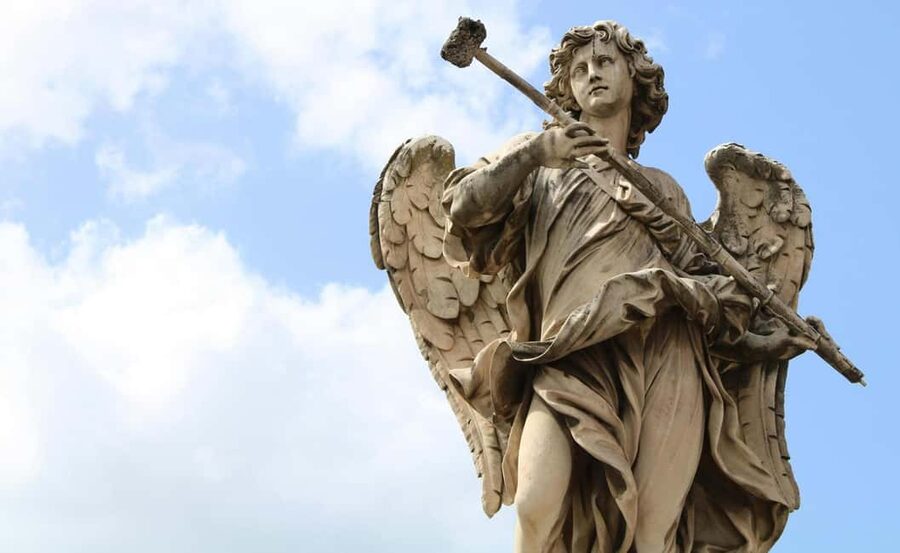
The upper terrace is the visit’s clearest reward. You can photograph the elegant angel statues and take in a panoramic view from the top. The position beside the Tiber makes the rooftop especially useful for understanding the surrounding Vatican area.
The view is not guaranteed. Rain or special events at Castel Sant’Angelo can prevent access to the terrace. Keep that in mind when weighing the $30 price. The rooftop is a major part of the appeal, but the ticket does not promise it in every situation.
The angel statue at the summit also ties the view back to the 590 plague legend. It is not just decoration. It is the visual symbol of the story that helped shape the castle’s identity.
Bring a phone with enough battery for photos and the audio guide. You will be using it for both, and there is no supplied device.
The extra Vatican-area audio stroll
After the castle visit, you receive a digital audio tour of the Vatican area. This is a self-guided stroll, not a second admission ticket to the Vatican Museums or Saint Peter’s Basilica.
The commentary covers sights including the Bridge of Sant’Angelo and Saint Peter’s Basilica. It gives you a way to continue exploring after leaving the castle, especially if you want a little historical background while walking through the area.
This add-on is useful because Castel Sant’Angelo is closely tied to the Vatican district. The bridge leads your eye toward the castle, while Saint Peter’s Basilica helps place the fortress within Rome’s religious center.
Still, keep your expectations in check. The Vatican-area tour is an audio stroll, not a guided visit inside the basilica. It does not replace a basilica entry ticket or a Vatican Museums reservation.
How good is the audio guide?
The audio guide is available in English, Italian, French, German, Portuguese, Polish, Spanish, and Chinese. That range is a real strength, particularly for families or groups who want to listen in different languages.
The main weakness is reliability. Recent booking problems included QR codes or reservation codes that did not work in the provider’s Vox App or Pop Guide App. In those cases, buyers were directed toward purchasing the castle audio guide again on site. One Polish-language booking also lacked the promised Polish commentary.
Those problems do not mean the guide will fail for you, but they make preparation important. Download the guide before you leave for the castle and test that it opens. Keep the voucher and booking confirmation available in case you need help.
The on-site audio guide is priced at €5, while the Vatican stroll audio guide costs €4. The advertised package therefore has a listed component value of €25 before considering currency conversion, though the experience price is $30 per person. That is fair if both digital tours work and you use them. It is poor value if you pay again for the same commentary.
What the $30 price really buys

The $30 price includes Castel Sant’Angelo entry, the digital castle guide, and the Vatican-area audio stroll. Standard castle admission is listed at €16, reduced admission at €2, and complimentary entry is free. The castle audio guide is listed at €5, and the Vatican stroll guide at €4.
For an adult who wants independent sightseeing, the package can make sense. You get the main ticket plus two audio products, and the planned duration of two hours gives you a focused visit rather than an open-ended museum day.
The value is weaker for anyone eligible for reduced or free entry. Since the separate admission prices are much lower in those categories, check your eligibility before booking. The package may still be convenient, but convenience is doing much of the work.
I would also avoid buying this experience solely for priority entry if your schedule is flexible and you already understand the site. The strongest reason to choose it is the combination of ticket and commentary, not simply the act of entering the castle.
Who will enjoy this most?
I would recommend it to independent visitors who want historical context but do not want to join a group. The audio format lets you stop for photos, pause when you need a break, and spend more time on the Roman, papal, prison, or rooftop sections that interest you.
It also suits people who want a compact Rome activity. Two hours is enough to create a clear visit without consuming an entire day. The extra Vatican stroll gives you something useful to do in the surrounding area.
Families may appreciate the freedom to move at different speeds, though younger children may not care about every historical explanation. The prison and execution stories can also be intense for some children.
The experience is not suitable for wheelchair users. You should also think carefully before booking if you dislike smartphone-based tours or do not have headphones.
Practical advice for a smoother visit
- Download the e-ticket from WhatsApp as soon as it becomes available.
- Scan the voucher QR code and activate the audio guide before arriving.
- Bring personal headphones and a fully charged phone.
- Carry valid photo identification because the ticket is nominative.
- Keep the voucher available even after downloading the ticket.
- Allow the full two hours if you want to hear the commentary and visit the terrace.
- Treat the rooftop as weather-dependent, not guaranteed.
- Check that the language you need is actually available in the audio app before leaving.
The cancellation policy is generous enough for changing plans. You can cancel up to 24 hours before the activity for a full refund. The experience has a 4.1 rating from 236 bookings, which fits the overall picture: the attraction itself is strong, while the digital delivery needs care.
Should you book Castel Sant’Angelo with this audio guide?
Book it if you want a self-guided visit with entry arranged in advance, enjoy historical storytelling, and plan to use both audio tours. The castle’s many identities make it far more interesting than a simple viewpoint, and the terrace can provide one of the visit’s best moments.
Think twice if you qualify for reduced or free admission, need guaranteed rooftop access, or dislike troubleshooting apps. The audio guide has received strong praise when it works, but activation and language problems have caused real frustration.
My practical verdict: this is a worthwhile package for independent adults who prepare the ticket and audio guide before arrival. Save the voucher, test the app, bring headphones, and do not count on the terrace in bad weather. Those few steps protect the value of the experience.
FAQ
Where is Castel Sant’Angelo located?
The entrance is at Lungotevere Castello, 50, in Rome’s Lazio region.
How long does the experience last?
The stated duration is two hours.
Is this a guided tour with a live guide?
No. It is a self-guided experience with a digital audio guide.
Which languages are available?
Audio commentary is available in English, Italian, French, German, Portuguese, Polish, Spanish, and Chinese.
What does the ticket include?
It includes entry to Castel Sant’Angelo, a digital audio guide for the castle, and a Vatican-area self-guided audio tour.
Do I need to bring headphones?
Yes. Headphones are listed as something you should bring. A headset and mobile device are not included.
Can I use the ticket without identification?
No. Tickets are nominative, so you must present the ticket with a valid identity document.
Is the rooftop terrace always open?
No. Access to the terrace may not be possible during rain or special events at Castel Sant’Angelo.
Just added around Rome
- Pantheon Skip the Line Entry Tickets with Digital Audio Guide★ 3.5 · 52 reviews
- Trastevere: A Self-guided Audio Tour of Rome’s Medieval Village★ 4.5 · 3 reviews
- St. Peter’s Basilica: Dome Climb with Lift & Audioguide★ 4.5 · 13 reviews
- Audio guide in Vatican Museums and Sistine Chapel★ 4.5 · 12 reviews
- Navova square underground with audioguide★ 4.5 · 17 reviews
- The Roman Jewish Ghetto: A Self-Guided Audio Tour★ 4.0 · 8 reviews
- Experience: The Pantheon Audio Tour★ 4.5 · 4 reviews
- St. Mary’s Basilica, Pope Francis Tomb Audio Tour with Crypt★ 4.0 · 3 reviews
Rome Audio Tours, compared.

Colosseum & Forum with Audio Guide App -Optional Arena
Read our review →
St. Peter’s Basilica & Dome Entry Ticket & Audio Tour
Read our review →
Colosseum, Roman Forum & Palatine Hill with Audioguide App
Read our review →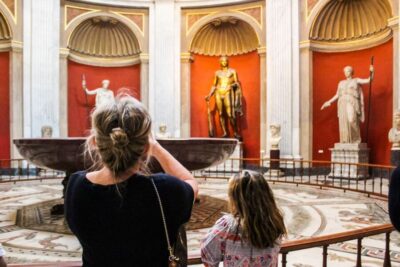
Vatican & Sistine Chapel Ticket with Optional Audio Guide
Read our review →
Castel Sant’Angelo Entry Ticket & Digital Audioguide
Read our review →
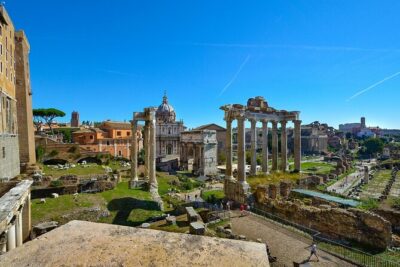
Colosseum, Forum, & Palatine Hill with Audio Guide
Read our review →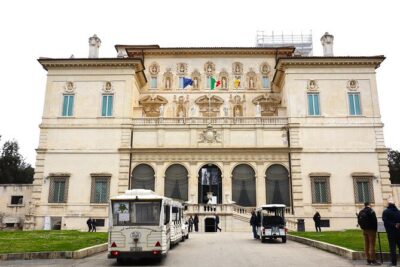
Borghese Gallery Skip-the-Line Ticket & Audioguide
Read our review →Browse the lists this tour appears in