

REVIEW · ROME AUDIO TOURS
Pantheon Ticket with Audio Guide
Rome’s oldest great interior still feels startling. This Pantheon ticket gives you self-guided entry to one of Rome’s most memorable buildings, where a 9-meter-wide oculus sends daylight into the world’s largest unreinforced concrete dome. I like the freedom to explore at my own speed, and I like that the audio guide is available in English, Spanish, French, and German. The main concern is practical: the digital voucher instructions may not be clear, and one booking problem involved a ticket that was not ready at the selected 9:00 AM time.
The visit takes about 30 to 45 minutes, with the main experience centered on the Pantheon itself. There is no live guide, transportation, food, or drink included. At $17.74 per person, the price is higher than the basic admission amount mentioned in one customer complaint, so the audio guide and convenience need to matter to you.
Key points to know before you book
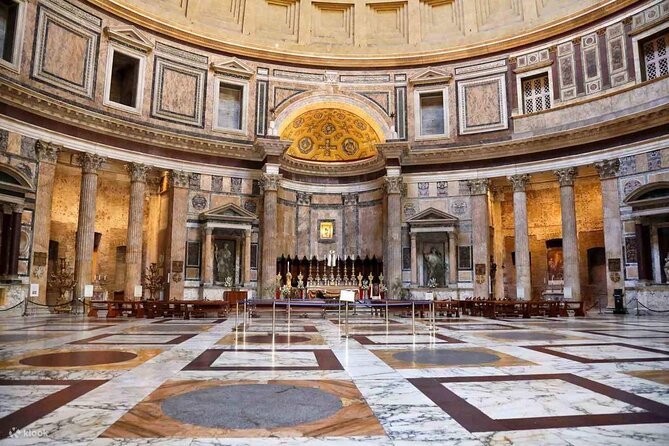
- The 9-meter oculus is the main event: Natural light enters through the open roof, and rain can enter too.
- Sixteen Egyptian granite columns greet you: The grand entrance makes an impression before you even reach the interior.
- You explore independently: The audio guide lets you set your own pace instead of following a fixed group.
- It is still a Catholic church: Chapels, statues, and religious altars share the space with ancient Roman architecture.
- Raphael and Italian kings are buried here: The tombs add a personal and national layer to the visit.
- Check the digital voucher carefully: A customer reported unclear directions and an invalid Apple Wallet ticket, while the provider said the booking time was still being prepared.
Why the Pantheon deserves time on your Rome schedule
The Pantheon is easy to underestimate from the outside. It sits on Piazza della Rotonda, surrounded by the everyday movement of central Rome, but its plain street setting gives way to a remarkably grand entrance.
The first sight is the portico, supported by 16 Corinthian columns made from Egyptian granite. These columns carry a triangular pediment and create a strong contrast with the quieter exterior walls behind them. I like this approach because the building does not reveal its most surprising feature right away. You first pass through a formal, almost ceremonial entrance, then discover the enormous round interior.
This ticket is useful if you want a focused visit rather than a full-day guided tour. The Pantheon is compact enough to see in around 40 minutes, yet it contains several layers of Roman and Christian history. You can look up at the dome, listen to the commentary, examine the chapels, and pause at the tombs without being hurried along by a guide.
The self-guided format also suits you if you prefer silence and personal space. A live guide can add context, but it also means keeping to someone else’s timing. Here, you can spend more time beneath the oculus or move on quickly if your schedule is tight.
A few more audio tours around Rome worth a look
- Rome: Colosseum & Forum with Audio Guide App -Optional Arena
★ 4.2 · 24,770 reviews - Rome: City Sightseeing Hop-on Hop-off Bus with Audioguide
★ 4.0 · 16,045 reviews - Rome: St. Peter’s Basilica & Dome Entry Ticket & Audio Tour
★ 4.2 · 7,537 reviews
The grand entrance and its Egyptian granite columns
Your visit begins at Piazza della Rotonda, the stated meeting point and the place where the activity ends. The ticket covers admission to the Pantheon, so the main task is getting the digital entry details ready and following the instructions supplied with your booking.
Look up before entering. The 16 Corinthian columns are not just decorative supports. Their Egyptian granite gives the portico a heavy, polished appearance, and their scale helps you understand the ambition of the building before you see the dome.
The triangular pediment above them completes the formal Roman design. From this angle, the Pantheon looks like a traditional temple. That first impression matters, because the interior changes the scale of the experience completely.
I would allow a few quiet minutes here before going inside. The portico is the best place to appreciate the contrast between the temple-like front and the vast circular room beyond it. The audio guide can add context, but your first look at the entrance should not be rushed.
The dome and its 9-meter opening
Inside, your attention goes straight upward. The Pantheon’s dome is described as the largest unreinforced concrete dome in the world, and its central oculus measures 9 meters across.
The oculus is an open hole in the roof, not a glass skylight. Daylight comes through it and shifts across the interior as the sun moves. Rain can come through as well. That small fact makes the building feel less like a sealed monument and more like a living space connected to the sky.
I like this part of the visit because it gives you something to watch, not just something to photograph. The light changes the mood of the interior, and the circle of sky provides a clear focal point inside such a large room.
The audio guide is especially useful here because the dome can look simple at first glance. Its smooth curve and geometric design are easy to appreciate, but the engineering achievement is harder to understand without explanation. Since there is no live guide included, the recorded commentary supplies the basic historical and architectural background.
You should also expect the oculus to be the busiest point of attention inside. Even with a self-guided visit, many people will naturally stop beneath it. If you want a longer look, use the audio guide as your reason to pause and listen rather than simply taking a quick photograph.
A Roman building that became a Catholic church
The Pantheon is not only an ancient Roman monument. It is now a Catholic church, and the interior includes decorated chapels, statues, and religious altars.
That combination is one of the building’s most interesting features. You are not walking through a bare archaeological shell. The Christian furnishings remain part of the present-day interior, so the space has both a museum-like importance and an active religious identity.
I recommend giving the chapels and altars proper attention instead of spending the entire visit looking at the ceiling. They provide a human scale beneath the massive dome. The contrast is clear: the dome expresses Roman engineering on a grand scale, while the chapels bring the room back to prayer, art, and individual memory.
The audio guide can help you understand these different roles. It is offered in English, Spanish, French, and German according to the included details. The tour summary lists English as the offered language, so if language choice matters to you, check the available selection when booking.
There is no live tour guide. That is a drawback if you want to ask questions or hear a story adapted to your interests. It is an advantage if you would rather listen privately and move through the church without being tied to a group.
Same place, a different route to walk:
- Colosseum, Roman Forum & Palatine Hill with Audioguide App
★ 4.4 · 6,291 reviews - Vatican & Sistine Chapel Ticket with Optional Audio Guide
★ 4.1 · 5,405 reviews - Rome: Castel Sant’Angelo Entry Ticket & Digital Audioguide
★ 4.7 · 5,347 reviews - Rome: Castel Sant’Angelo Entry Ticket & Audio App
★ 4.3 · 4,952 reviews
Raphael and the Italian royal tombs

The Pantheon also serves as a burial place for major Italian figures. You can see the tomb of Raphael, the great Renaissance artist, along with the tombs of Italian kings Victor Emmanuel II and Umberto I.
These burials give the building a different kind of importance. The dome is the grand architectural subject, but the tombs make the visit more personal. You can connect the space to Renaissance art and modern Italian national history rather than seeing it only as an ancient Roman structure.
Raphael’s presence is particularly notable for anyone interested in art. His tomb links the Pantheon to the Renaissance, when artists and patrons reshaped Rome’s cultural identity. The royal tombs, meanwhile, reflect Italy’s later political history.
I would use the audio guide to make sure you do not pass these details without noticing them. The interior is visually powerful enough to pull your eyes upward, and it would be easy to leave remembering only the oculus. The tombs give you several reasons to look around at ground level.
How the 30 to 45-minute visit works
The expected duration is about 30 to 45 minutes, with approximately 40 minutes listed for the Pantheon stop. That is enough time for a focused visit, but not enough for a slow, highly detailed architectural study.
A practical visit might look like this:
- Begin at Piazza della Rotonda and have your digital ticket ready.
- Take in the 16-column entrance before entering.
- Use the audio guide to understand the dome and oculus.
- Walk through the chapels, statues, and altars.
- Locate the tombs of Raphael, Victor Emmanuel II, and Umberto I.
- Return to the meeting point area when you finish.
The route is simple because there is only one stated stop. You are not being taken across Rome, and there is no transportation to organize. That makes the experience easy to pair with other central Rome plans.
The short duration is both a strength and a limit. I like it for a busy sightseeing day because it gives you a meaningful look at the Pantheon without consuming half a day. If you want a long historical lecture, a private guide, or time for extensive questions, this is not the right format.
The group size is listed as a maximum of 15 people, though the experience itself is self-guided and does not include a live guide. The small maximum may help keep the booking operation limited, but it should not be confused with a private tour.
The audio guide and the value of self-guided entry

The audio guide is the part that separates this package from simply walking up and paying for entry. You receive digital ticket delivery and access to commentary in English, Spanish, French, and German.
I like audio guides when the building itself deserves quiet attention. You can listen while looking at the dome, pause when you want to study a chapel, and continue when you are ready. You do not have to keep up with a guide standing in a particular corner.
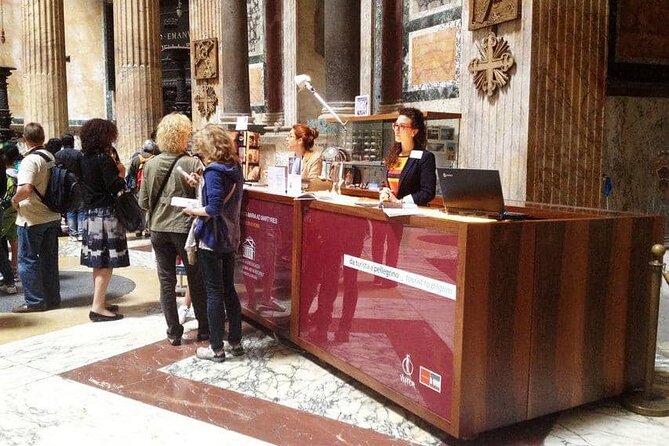
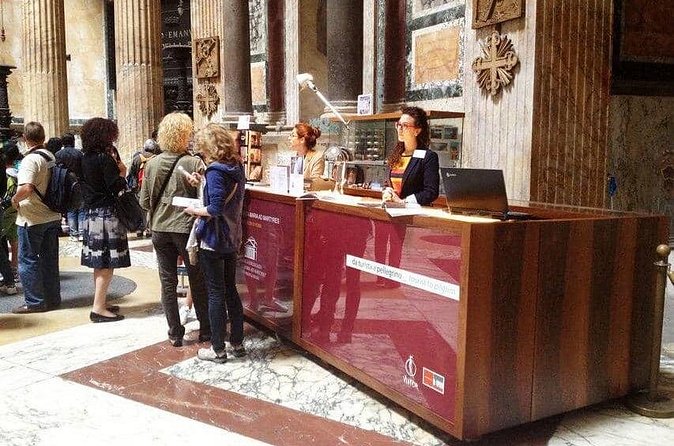
The tradeoff is that the experience depends on your phone, your digital ticket, and clear instructions. One customer found the voucher directions difficult to follow and reported that the PDF ticket in Apple Wallet was not accepted. That is a serious practical concern, even though the provider responded that information had been sent by WhatsApp and that the ticket was being prepared for the correct time.
Another booking was made for 9:00 AM, but the ticket was not available at that moment. The provider suggested 10:00 AM, and the customer requested a refund. The provider said it had been preparing the later ticket and offered a prompt refund after contact.
The lesson is simple: read the entry instructions carefully, check the chosen time, and do not assume that adding a PDF to Apple Wallet guarantees acceptance. Keep the original digital ticket and any WhatsApp instructions available. If the voucher wording is unclear, contact the provider before heading to the entrance.
Is $17.74 a fair price?
The listed price is $17.74 per person. That is reasonable if you place value on a prearranged digital ticket and an audio guide in your chosen language. It is less attractive if your only goal is basic entry.
One complaint compared the package with paying 5 euros at the door and described the actual charged amount as $32 Canadian. Currency differences may explain part of that comparison, but the central point remains useful: you are paying a premium for the booking service and audio commentary.
I would judge the price this way:
- Good value: You want to organize entry ahead of time and prefer an audio guide.
- Fair value: You are visiting at a busy time and want a digital booking rather than handling admission yourself.
- Weak value: You are comfortable buying the lowest-cost admission onsite and do not need recorded commentary.
The overall rating is 4.2 from 9 reviews, so the score gives some positive signal but comes from a small sample. The two detailed complaints focus on ticket handling and instructions, not on the Pantheon itself. That distinction matters. The building is the strong part of the experience; the booking process is where you should pay attention.
The ticket is non-refundable and cannot be changed for any reason. I would only book once your date and time are firm.
Who should book this Pantheon experience?
I would recommend it to you if you want a short, independent visit and appreciate having historical commentary while you look around. It works well for first-time Rome visitors who want the major Pantheon sights without committing to a long guided tour.
It also suits you if English, Spanish, French, or German audio matters. The ability to explore at your own pace is useful for couples, families with different attention spans, and independent sightseers who do not want a fixed lecture.
I would be more cautious if you are highly dependent on perfect mobile-ticket instructions, need flexible cancellation, or want to ask a guide questions in person. The non-refundable policy leaves little room for changes, and the booking details deserve careful checking.
If you are already comfortable handling admissions onsite, you may find the added cost hard to justify. The Pantheon itself remains the reason to go. This particular package is mainly about convenience and audio commentary.
Should you book the Pantheon ticket with audio guide?
Book it if you want a compact, self-guided visit with commentary and a digital ticket arranged in advance. The dome, oculus, Egyptian granite columns, chapels, and famous tombs make the Pantheon an excellent stop, and 40 minutes is enough to see the main features.
Before paying, confirm the time, language, and ticket instructions. Keep the PDF available outside Apple Wallet, since one customer had trouble with a wallet version. If those practical details feel like more trouble than they are worth, onsite admission may be the simpler choice.
FAQ
Where does the Pantheon experience begin?
It begins at Piazza della Rotonda, 00186 Roma RM, Italy.
Where does the experience end?
The activity ends back at the meeting point.
How long does the Pantheon visit take?
The visit takes approximately 30 to 45 minutes, with about 40 minutes listed for the Pantheon stop.
Is a live tour guide included?
No. This is a self-guided experience with an audio guide, not a live guided tour.
Which audio guide languages are available?
The included audio guide is listed as available in English, Spanish, French, and German. The tour details specifically identify English as an offered language.
What is included in the price?
The price includes Pantheon entry, the audio guide, and digital ticket delivery.
Can I cancel or change the booking?
No. The experience is non-refundable and cannot be changed for any reason.
Just added around Rome
- Pantheon Skip the Line Entry Tickets with Digital Audio Guide★ 3.5 · 52 reviews
- Trastevere: A Self-guided Audio Tour of Rome’s Medieval Village★ 4.5 · 3 reviews
- St. Peter’s Basilica: Dome Climb with Lift & Audioguide★ 4.5 · 13 reviews
- Audio guide in Vatican Museums and Sistine Chapel★ 4.5 · 12 reviews
- Navova square underground with audioguide★ 4.5 · 17 reviews
- The Roman Jewish Ghetto: A Self-Guided Audio Tour★ 4.0 · 8 reviews
- Experience: The Pantheon Audio Tour★ 4.5 · 4 reviews
- St. Mary’s Basilica, Pope Francis Tomb Audio Tour with Crypt★ 4.0 · 3 reviews
Rome Audio Tours, compared.

Colosseum & Forum with Audio Guide App -Optional Arena
Read our review →
St. Peter’s Basilica & Dome Entry Ticket & Audio Tour
Read our review →
Colosseum, Roman Forum & Palatine Hill with Audioguide App
Read our review →
Vatican & Sistine Chapel Ticket with Optional Audio Guide
Read our review →
Castel Sant’Angelo Entry Ticket & Digital Audioguide
Read our review →
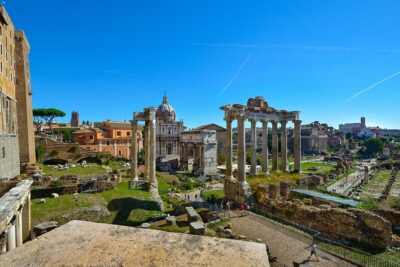
Colosseum, Forum, & Palatine Hill with Audio Guide
Read our review →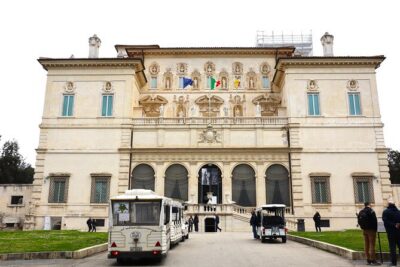
Borghese Gallery Skip-the-Line Ticket & Audioguide
Read our review →Browse the lists this tour appears in