
REVIEW · INDIA AUDIO TOURS
Old Delhi – Hidden Gems Tour on Rickshaws with Guide & Audio Headsets
Old Delhi rewards curious visitors. This private rickshaw tour takes you through its narrow lanes, old markets, temples, mosques, and historic buildings without asking you to find your own way through the maze. I like the wireless headsets, which make the guide easier to hear above the street noise, and I like the mix of famous sights with small places you could easily miss. The food tasting, snacks, and bottled water also add useful comfort during a busy outing.
The main consideration is pace. Stops are short, usually 10 to 15 minutes, so you will get an introduction rather than a long visit at each site. The tour lasts about two to four hours, and the cost is $85 per person, which is a serious price for a short Delhi tour. It makes the most sense if you value a private guide, simple logistics, and access to tucked-away streets more than a long, slow visit at each landmark.
Key points at a glance
- Private rickshaw touring: Only your group takes part, making it easier to ask questions and adjust the conversation.
- Nine carefully chosen stops: The route links the Red Fort, religious sites, markets, a poet’s former home, and Jama Masjid.
- Wireless audio headsets: You can hear live commentary while the rickshaw moves through noisy Old Delhi.
- Food and refreshment included: Food tasting, snacks, and bottled water are part of the experience.
- A useful short visit: The tour covers a lot in two to four hours, which suits a tight Delhi schedule.
- A real local guide matters: Jeswin is named as one guide associated with the tour, and the driver is described as accommodating.
Why a rickshaw works so well in Old Delhi
Old Delhi is not a place where a simple street map tells the whole story. Its lanes twist around markets, religious buildings, old homes, and commercial streets. Several places on this route are difficult to identify online, which is exactly where a guide and driver earn their keep.
A rickshaw lets you cover more ground than walking while still keeping you close to the street. You are not sealed inside a car. You can see shopfronts, people moving through the lanes, and the constant change from one neighborhood to the next. At the same time, you avoid spending the entire visit trying to work out where to turn.
The tour uses a luxury rickshaw, though the supplied information does not define the exact seating or vehicle design. You should think of it as a more comfortable guided rickshaw ride rather than a full private car tour. Old Delhi remains noisy and crowded, so the wireless headset is more than a small extra. It allows you to watch the street instead of leaning toward the guide and trying to catch every sentence.
Because only your group participates, the experience should feel more personal than a large coach outing. You can ask about the religions, buildings, or markets as they appear. The driver and guide also have a practical role: getting you through places where you could lose time or take a wrong turn.
A few more audio tours around the world worth a look
- Barcelona: Sagrada Familia Entry Ticket with Audio Guide
★ 4.6 · 105,312 reviews - Rome: Pantheon Fast-Track Ticket and Official Audioguide
★ 4.5 · 27,353 reviews - Barcelona: Casa Batlló Entry with Self-Audioguide Tour
★ 4.7 · 25,359 reviews
Starting beside the Red Fort
The meeting point is at Charity Birds Hospital, next to Shri Digambar Jain Lal Mandir and opposite the Red Fort in Chandni Chowk. This is a useful location because the Red Fort gives you a clear landmark, although the immediate area can be busy and confusing.
Allow enough time to find the exact meeting point. The tour does not include hotel pickup or drop-off, so you must make your own way there and return to the same place at the end. That arrangement keeps the price focused on the guided experience, but it means you should plan your Delhi transport separately.
The first stop is the Red Fort, a UNESCO World Heritage Site built by Mughal Emperor Shah Jahan. The visit is listed as about 10 minutes, with no admission ticket included because the stop itself is free in this tour format. Do not expect a full exploration of the fort grounds. Instead, this is a quick piece of context before the rickshaw moves into the streets around Chandni Chowk.
That short pause is useful if you are seeing the Red Fort for the first time, but it may feel too brief if the fort is high on your list. If you want to tour the interior at length, set aside separate time.
Jain tradition at Shri Digambar Jain Lal Mandir
Shri Digambar Jain Lal Mandir is next to the meeting point and introduces one of India’s major faiths. The guide explains that Hinduism, Buddhism, Jainism, and Sikhism originated in India, with Buddhism and Jainism sharing some similarities and both tracing their origins to around 599 BC according to the tour material.
The visit lasts about 10 minutes. That is enough to give you a basic sense of Jain tradition and its place in Indian religious life, but not enough for a detailed study of Jain philosophy. The temple is valuable in this route because it begins the religious story early. You are not simply seeing old buildings. You are moving through a part of Delhi where several faiths have lived close together for centuries.
The nearby Charity Birds Hospital is also part of the meeting-point setting. The supplied details do not promise a formal visit inside it, so treat it as a landmark for finding the start rather than a scheduled attraction.
Mirza Ghalib’s haveli in a narrow lane
The stop at Mirza Ghalib Ki Haveli shifts the mood from religious history to literature. Mirza Ghalib was one of the best-known poets of the Mughal period, and this haveli is where he spent many years.
The building is tucked into a narrow lane, which is precisely why a local guide helps. You could pass through the surrounding streets without realizing that a famous poet once lived there. The stop lasts around 10 minutes, giving you time for an introduction and a quick look at the setting.
This is one of the more distinctive parts of the route for anyone interested in writing, poetry, or the cultural life of Mughal Delhi. The limitation is that the visit is brief. You will get a focused glimpse rather than a long literary presentation, so listen closely while the guide explains the connection.
Same place, a different route to walk:
- Rome: Colosseum & Forum with Audio Guide App -Optional Arena
★ 4.2 · 24,770 reviews - Amsterdam: 75 Minute City Canal Cruise with Audio Guide
★ 4.4 · 19,938 reviews - Florence: Timed Entry to Michelangelo’s David + Audio App
★ 4.6 · 19,496 reviews - Amsterdam: City Centre Canal Cruise including Audioguide
★ 4.3 · 16,901 reviews
Naughara and its row of nine houses
Naughara is one of the route’s most appealing small-scale stops. The name means nine houses, and the lane contains a group of nine 18th-century mansions that retain their traditional appearance. It also has an ornate Jain temple.
This is the kind of place that gives the tour its character. The Red Fort and Jama Masjid are major landmarks, but Naughara shows you how older residential streets can survive beside the commercial pressure of Chandni Chowk. The row of houses makes the stop easy to understand: you see a compact historic lane rather than a single isolated monument.
You get about 10 minutes here. That is enough for a quick look and an explanation, though not for a relaxed architectural study. Be ready to keep moving. The route is designed to reveal several small discoveries instead of letting you spend an hour at one site.
Fatehpuri Mosque and the western end of Chandni Chowk
Fatehpuri Mosque marks the western end of Chandni Chowk. It was commissioned by Fatehpuri, one of Shah Jahan’s wives. The mosque was attractive when built, but British troops later damaged it, according to the tour’s historical explanation.
This stop adds another layer to the story of Old Delhi. You have already seen a Jain temple and a place linked with a poet. Here, you encounter Mughal religious architecture and the effects of later political change. The value is in the connection between the building and the larger story of the city.
Again, the scheduled visit is about 10 minutes. The short stop suits a first orientation, but you should not expect extensive time for photography or quiet observation. Religious sites also require respectful behavior, and your guide can help explain what is appropriate.
Gadodia Market and the smell of stored spices
Gadodia Market gives you a practical look at Old Delhi’s commercial life. The site was once a palace belonging to a man called Gadodiya. After his death, with no legal heir, the buildings became spice warehouses.
The interesting part is that the market is not presented as a polished attraction. You walk through open warehouses where spices are stored. That makes the stop feel connected to working Old Delhi rather than separated from it for visitors.
The visit lasts around 15 minutes, the longest scheduled stop before Jama Masjid. That extra time matters because you need a little longer to take in the warehouses and understand how the former palace changed use. The guide’s explanation also helps you notice the difference between an old royal building and its present commercial purpose.
If you are sensitive to strong smells or crowded market conditions, this may be more demanding than the temples and monuments. It is also one of the places where the rickshaw format earns its value, since your guide can lead you directly to the right area.
Gauri Shankar Temple and a long religious tradition
Gauri Shankar Temple is described as one of the important temples of Shivism in India. Shiva is a major Hindu deity associated with destruction or death. Inside is an 800-year-old brown lingam, along with jeweled statues of Gauri.
You get about 10 minutes here. The guide’s role is especially useful because the religious meaning of the objects may not be obvious if you are unfamiliar with Hindu worship. A short explanation can turn a quick temple visit into something more understandable and respectful.
The brief timing is also the main limit. Religious sites can reward patience, but this tour keeps you moving. You will see the central features and hear the key story, then continue to the next tradition.
Gurudwara Sis Ganj Sahib and Sikh history
Gurudwara Sis Ganj Sahib introduces Sikhism, which was established and developed by ten Gurus between 1469 and 1708. The word gurudwara is explained as a gate leading toward spiritual enlightenment.
This stop helps show how close different religious communities are within Old Delhi. In only a short distance, the route takes you from Jain and Hindu places of worship to a Sikh gurudwara and then on to a major mosque. That range gives the tour more depth than a simple market ride.
Plan for about 10 minutes. The tour does not provide a detailed schedule of worship or a formal ceremony, so you should view this as an introduction to the site and Sikh tradition. Follow your guide’s instructions and dress and behave respectfully inside religious places.
Jama Masjid, the grand final stop
The final stop is Jama Masjid, described as India’s largest mosque and one of the world’s ten largest mosques. It is also known for its tall brick minaret and is an important pilgrimage site for Muslims.
You get around 15 minutes, making this the longest monument stop on the route. That gives you a little more time to take in the scale and listen to the explanation. The admission ticket is not included, so you should budget separately for entry if a fee is required at the time of your visit.
Jama Masjid is a strong ending because it gathers together the architectural and religious themes introduced earlier. Still, 15 minutes is a quick visit for such a large site. If you want to climb, explore every section, or spend quiet time taking photographs, you will need a separate visit.
Food tasting, snacks, water, and the audio system
Food tasting and snacks are included, along with bottled water. The information does not specify the dishes or the number of tastings, so you should not book this expecting a full meal. Think of it as a useful sample of local food during a short tour.
That distinction matters. Old Delhi can be tiring, and having water and a small amount of food included means you do not have to stop the sightseeing just to find basic refreshments. If you have allergies, dietary restrictions, or strong food preferences, ask the provider before booking because no specific menu is provided.
The wireless headsets are one of the best practical features. A guide can explain the route, religions, buildings, and market history while the street around you stays noisy. You do not have to choose between watching the road and listening to the commentary.
A complimentary book on Indian history is also included. The details do not identify the title or size of the book, but it is a thoughtful extra for anyone who wants to continue reading after the tour.
Is $85 a fair price?
At $85 per person, this is not the cheapest way to see Old Delhi. The route itself is short, and several stops last only 10 minutes. Jama Masjid admission is extra, and you must arrange your own transport to and from the meeting point.
The value comes from the combination of a private activity, a local guide, a driver, a rickshaw, wireless headsets, food tasting, snacks, water, and a route through places that can be difficult to locate alone. You are paying to reduce confusion and cover a lot of ground in a limited time.
For one person or a couple, the cost may feel high. Group discounts could improve the value, especially since only your own group participates. If you are traveling with family or friends, compare the total price with the cost of arranging separate transport and a guide.
The tour earns its price best when your Delhi schedule is tight. If you have several days and enjoy wandering slowly, you may prefer to explore some of these areas on foot and spend longer inside the monuments. If you have only a morning or afternoon, the organized route is easier to justify.
Who should book this Old Delhi tour?
I would choose this experience if you want a guided introduction without committing to a full-day program. It suits first-time visitors who want a clear route through Old Delhi, people who dislike navigating narrow lanes alone, and anyone interested in seeing several religious traditions in one compact outing.
It is also a good fit for those who want live explanation rather than a silent sightseeing ride. The audio headsets make a real difference, and the private format gives you room to ask questions.
You may want a different plan if you prefer long visits, independent wandering, or a slower pace at each monument. The short stops are the central trade-off. This tour gives you range, context, and convenience, but not much time to linger.
Free cancellation is available if you cancel at least 24 hours before the start time. Confirmation is sent within 48 hours of booking, subject to availability. Most people can participate, but hotel pickup and drop-off are not included.
Should you book it?
Book this Old Delhi rickshaw tour if you want to cover markets, temples, mosques, and historic lanes efficiently, with a guide handling the route. The strongest reasons are the private format, the clear audio system, the unusual stops such as Naughara and Gadodia Market, and the food and water included along the way.
Skip it if $85 feels too high for a two to four-hour outing or if you want to explore the Red Fort and Jama Masjid at length. For a short, structured introduction to Old Delhi, though, it offers a sensible way to get oriented without getting lost.
FAQ
How long does the Old Delhi rickshaw tour last?
The tour lasts approximately two to four hours. The scheduled sightseeing stops range from 10 to 15 minutes, with travel time between locations.
Where does the tour begin?
The meeting point is at Charity Birds Hospital next to Shri Digambar Jain Lal Mandir, opposite the Red Fort in Chandni Chowk, Delhi.
Does the tour include hotel pickup and drop-off?
No. Hotel pickup and drop-off are not included. The activity ends back at the meeting point.
Is the tour private?
Yes. Only your group participates in the activity. Group discounts are also available.
Is food included?
Yes. Food tasting and snacks are included, along with bottled water. The specific food items are not listed.
Is admission to Jama Masjid included?
No. The admission ticket for Jama Masjid is not included. The Red Fort stop is listed with no admission ticket required for this tour.
Just added around the world
- Coba Ruins: Self-Guided Walking Audio Tour in Mexico★ 3.5 · 2 reviews
- Self Guided Driving Audio Tour of Saguaro National Park★ 3.0 · 4 reviews
- Torino Walking Tour with Audio and Written Guide by a Local★ 4.5 · 35 reviews
- Self-Guided Audio Driving Tour of Mount Lemmon★ 5.0 · 4 reviews
- Trondheim’s Inner Circle: A Self-Guided Audio Tour★ 4.0 · 15 reviews
- A Tromsø Introduction: A Self-Guided Audio Tour★ 3.5 · 19 reviews
- Panorama Bus Tour with Audio Guide★ 4.0 · 3 reviews
- Saguaro National Park Self-Guided Audio Tour★ 3.5 · 11 reviews
India Audio Tours, compared.
Old Delhi: Food Tasting Tour On Rickshaws With Audio Headsets
Read our review →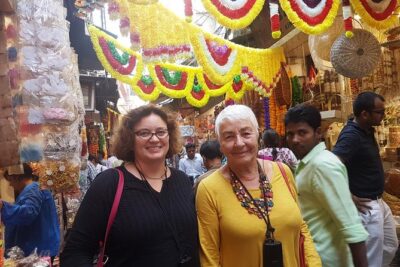
Old Delhi – Walking Tour with wireless audio head sets for live commentary
Read our review →
Audio Guided Tour Of Ellora Buddhist Caves, Aurangabad on HopOn India App
Read our review →
Audio Guided Walking Tour of Qutub Minar & Mehrauli, Delhi
Read our review →
Audio Guided Walking Tour of Ajanta Caves, Aurangabad on HopOn India App
Read our review →
Audio Guided Tour – Mumbai Cricket Walk by HopOn India
Read our review →
Audio Guided Walking Tour on HopOn India App – From Gateway to Fountain, Mumbai
Read our review →
Audio Guided Walk of Humayun’s Tomb & Nizammudin Basti, Delhi on HopOn India App
Read our review →Browse the lists this tour appears in