
REVIEW · INDIA AUDIO TOURS
Audio Guided Tour Of Ellora Buddhist Caves, Aurangabad on HopOn India App
Let the stone tell its own story. This self-guided walk through Ellora’s 12 Buddhist caves pairs historical explanation with music and sound effects, giving you a flexible way to see one of India’s great rock-cut sites. I like the freedom to begin when you choose, and I like that the narration points out small architectural details you could easily miss. The main concern is the app’s dependence on a proper download, since mobile service inside the caves can be unreliable.
At about $5.34 per person, the price is low for an audio tour lasting roughly 83 minutes. I also like that access is available multiple times during its stated validity period, described as three months. Still, admission to Ellora is not included, and you must bring your own headphones or earphones.
Key points to know before you go
- The route covers all 12 Buddhist caves, beginning at the Ellora entrance and ending at Cave 12.
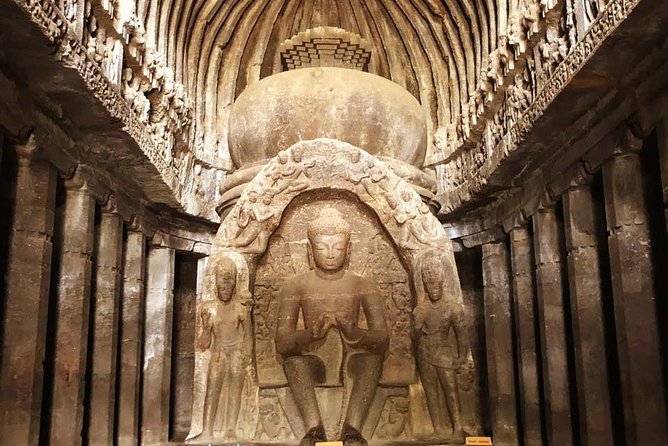
- Cave 10 receives special attention, with its large prayer hall and Buddha image forming one of the main highlights.
- The audio explains Buddhist figures and architecture, rather than simply naming the caves.
- Download everything before arrival, because the cave area may have weak or missing internet service.
- You set the pace, with no guide, fixed departure time, or repeated guide fee.
- Admission, transport, headphones, and hand sanitizer are not included, so plan for those separately.
Why Ellora’s Buddhist section deserves a focused visit
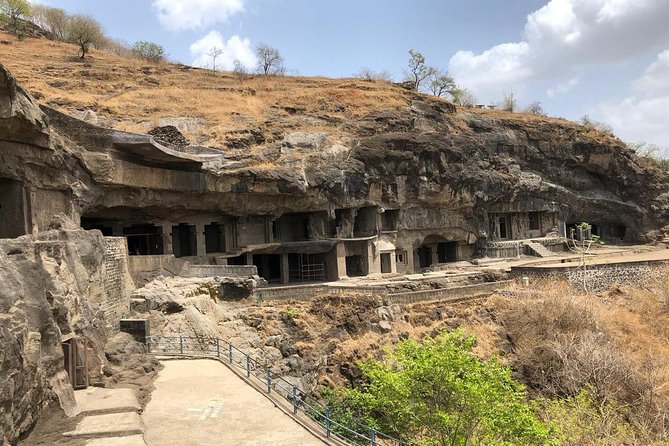
Ellora is known for a long line of Hindu, Buddhist, and Jain monuments cut directly into a cliff. The Buddhist section includes 12 caves, many of them monasteries or prayer spaces rather than simple shrines. That distinction matters. You are not just walking past carved statues. You are seeing places designed for worship, teaching, residence, and quiet reflection.
A short audio tour can be useful here because the caves may look similar at first glance. Pillars, chambers, cells, and Buddha figures repeat from one cave to the next, but their arrangement changes. The narration helps you notice those differences and gives the buildings a human purpose.
I like the idea of handling this section separately from the rest of Ellora. The larger site includes several faith traditions, and it is easy to rush from one monument to another. This walk gives you a clear subject: Buddhist architecture and the figures connected with Buddha.
The tour is not a live performance or a private historian walking beside you. It is a recorded guide on the HopOn India app. That means the quality of your visit depends partly on your phone, your preparation, and your willingness to stop and listen.
A few more audio tours around the world worth a look
- Barcelona: Sagrada Familia Entry Ticket with Audio Guide
★ 4.6 · 105,312 reviews - Rome: Pantheon Fast-Track Ticket and Official Audioguide
★ 4.5 · 27,353 reviews - Barcelona: Casa Batlló Entry with Self-Audioguide Tour
★ 4.7 · 25,359 reviews
Starting at the Ellora entrance
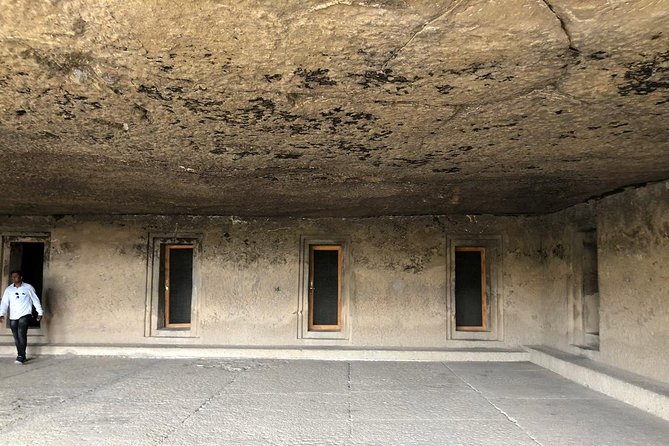
The route begins at Ellora Caves, Verul, in Maharashtra, and finishes at Cave 12. You return to the same general site rather than being taken to another city or hotel. Since private transportation is not included, you need to arrange your own way to Ellora.
At the entrance, the audio introduces Ellora as a major rock-cut complex and UNESCO World Heritage Site. This opening context is useful because it places the Buddhist caves within the larger monument. You can understand that these are part of a wider religious and artistic project, not isolated stone rooms.
The first practical job is getting the app ready. Download the tour content before you arrive. One person found the guide easy to follow after downloading it, while another had trouble with the offline version and its map. That mixed result gives you a clear rule: do not wait until you are standing at the caves with a weak signal.
Bring headphones or earphones. They are not supplied, and listening from your phone speaker may be difficult if other people are nearby. A little hand sanitizer is also suggested, but you need to carry it yourself.
Cave 10 and the first look at Buddhist design
The route lists Cave 10 near the beginning, then returns to Cave 10 later in the sequence. This appears to give the cave special weight, and that makes sense. Cave 10 is often treated as one of the key Buddhist monuments at Ellora.
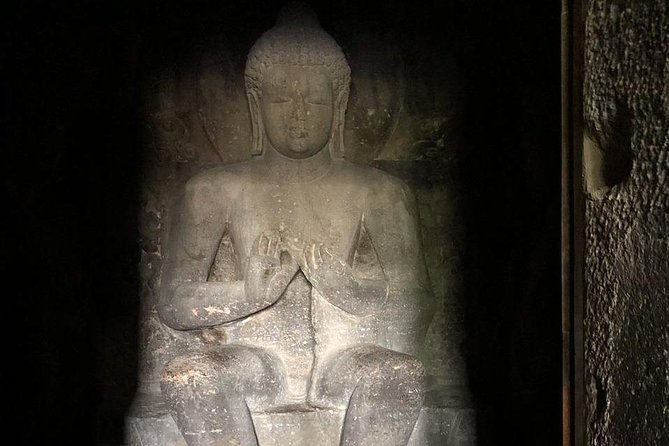
The audio focuses on the cave’s architectural character and its Buddha imagery. You can expect an explanation of how the prayer space is organized and how the sculpted figure relates to the room around it. Rather than seeing a statue as a stand-alone object, you are encouraged to read it as part of a religious setting.
Cave 10 is especially useful as an introduction because it helps you understand the difference between a prayer hall and a monastic residence. Listen for the way the narration connects the building’s shape with its purpose. If you hurry, you may only see a carved interior. If you stop, the room begins to make more sense.
Because the cave is a major point on the route, it may also be where you want to pause the audio and look carefully before moving on. The self-guided format gives you that option. No guide is waiting for you to catch up, and no group schedule forces you forward.
Caves 1 through 4, the quieter opening group
After the initial orientation, the route moves through Caves 1, 2, 3, and 4. These early stops help establish the basic pattern of Buddhist cave architecture at Ellora.
In Cave 1, listen for the explanation of the space as part of the Buddhist monastic complex. The value here is not one dramatic sculpture but the chance to see how rooms and columns work together. I would give this cave time if you want to understand the less theatrical side of Ellora.
Cave 2 brings more attention to Buddhist holy figures and the way images are placed within the cave. The audio is designed to explain who these figures are and why they matter. That is helpful if your knowledge of Buddhist art is limited, since a quick visit can otherwise reduce every seated figure to simply another Buddha.
Cave 3 continues the architectural comparison. Notice how the plan of the cave relates to the earlier stops. The narration can help you compare the arrangement of pillars, chambers, and images instead of viewing each cave as a separate mystery.
Cave 4 adds another stop in the early sequence. The possible drawback of this section is that the caves may begin to feel repetitive if you listen without looking closely. The answer is to use the audio as a prompt. Pause after each explanation and compare the room in front of you with the one you just left.
Same place, a different route to walk:
- Rome: Colosseum & Forum with Audio Guide App -Optional Arena
★ 4.2 · 24,770 reviews - Amsterdam: 75 Minute City Canal Cruise with Audio Guide
★ 4.4 · 19,938 reviews - Florence: Timed Entry to Michelangelo’s David + Audio App
★ 4.6 · 19,496 reviews - Amsterdam: City Centre Canal Cruise including Audioguide
★ 4.3 · 16,901 reviews
Cave 5, a change in scale and purpose
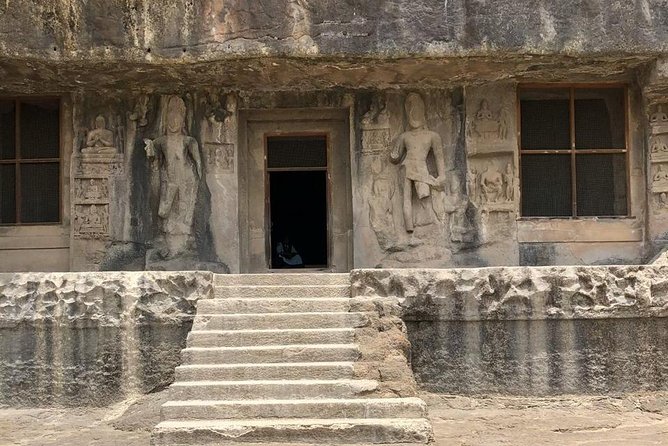
Cave 5 is one of the stops where the audio can help you think about how the caves were used. The tour explains architectural features rather than offering only dates and names. That makes the visit more practical for you, especially if you want to understand how Buddhist communities occupied these rock-cut spaces.
The exact visual impact will depend on where you stand and how crowded the cave is, but you can expect the narration to draw your eye to the layout. Pay attention to whether a room feels built for gathering, teaching, residence, or worship.
I like this part of the walk because it shifts the focus away from the most famous carvings. Ellora is not only a collection of impressive façades. Its value also lies in the evidence of daily religious life, built into the stone.
Caves 6, 7, 8, and 9, details that reward patience
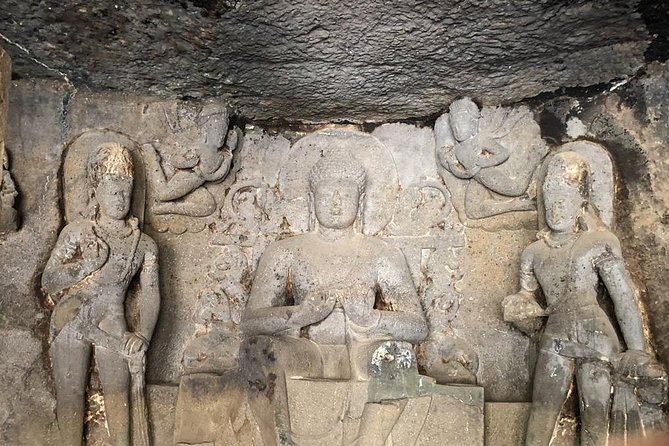
Caves 6 through 9 continue the Buddhist sequence and add more examples of carved rooms and sacred figures. This is where an audio guide can earn its modest price. A guide who knows the site can point out details, but an app lets you replay an explanation and move at your own speed.
Cave 6 gives you another chance to compare architectural features with the earlier caves. The narration also helps connect the images to the life of Buddha and the wider circle of holy figures associated with him.
Cave 7 and Cave 8 are treated together in the route. That pairing can help you notice similarities and differences side by side. If you are moving quickly, these rooms may pass in a blur. Stop long enough to identify the features the audio describes.
Cave 9 is another important link in the sequence before the route returns to Cave 10. This order may feel slightly unusual because Cave 10 appears twice in the listed route. Follow the app’s directions rather than trying to create your own order, and be ready for the possibility that the map or sequence needs extra attention offline.
The strongest practical advice here is simple: keep the volume comfortable, pause when needed, and do not treat the 83-minute estimate as a race. The duration is approximate. Your actual visit may take longer if you stop for photographs, wait for space, or replay sections.
Caves 11 and 12, finishing in the largest numbered cave
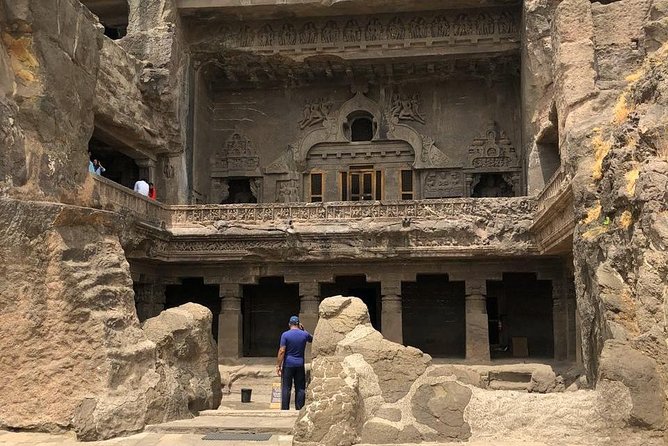
The walk then moves to Cave 11 and Cave 12, ending at Cave 12. These final stops complete the Buddhist section and bring the route to its stated finish.
The audio introduces the architectural features of both caves and continues its explanation of Buddhist figures. Cave 11 and Cave 12 are important because they show the later part of the sequence, allowing you to compare them with the smaller or earlier spaces you have already seen.
Cave 12 is the final point, so it works as a natural place to review what you have learned. You have moved from the basic setting of Ellora to monasteries, prayer spaces, carved figures, and the relationship between architecture and religious practice.
Do not expect a formal closing ceremony or transport back to your accommodation. The experience ends at Ellora Buddhist Cave 12. From there, you are on your own for the next part of your day.
What the audio format gets right
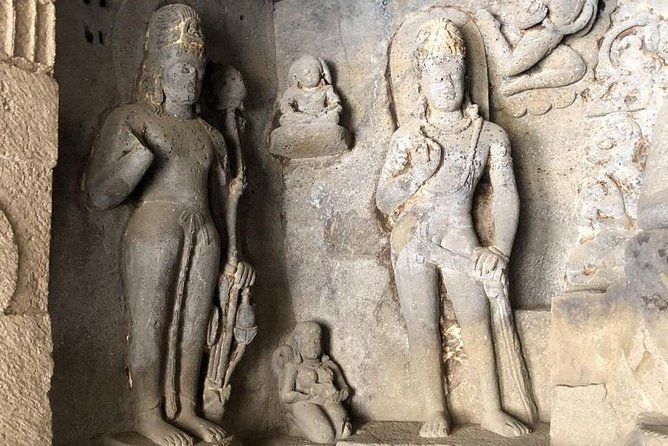
The best feature is control. You can begin when you want, stop when you want, and listen again without paying a guide each time. That suits independent visitors, families with different walking speeds, and anyone who prefers a quiet visit.
The narration is also designed to include more than dry facts. The experience uses professional voice work along with background music, qawwali, and occasional sound effects. Those touches may make the walk feel more atmospheric, although they will not appeal to everyone. If you prefer silent observation, you can simply pause the audio between stops.
Another strength is the attention to details that might otherwise be missed. The guide explains architectural points and Buddhist figures in plain sequence, giving you a reason to look closely. One user found the route easy to follow, which is important at a large site where the caves can blend together.
The weak point is technology. An audio guide is only as useful as the download, map, battery, and headphones supporting it. The supplied feedback includes a serious complaint that the offline map did not work properly. That problem may be isolated, but you should take it seriously.
Before leaving for Ellora, open the downloaded tour and check that the audio and route are available. If possible, carry a charged phone and avoid deleting the app’s stored content. The tour instructions specifically warn about intermittent internet, so preparation is not optional.
Is $5.34 good value?
At $5.34 per person, I consider this a reasonable add-on for anyone who wants more meaning from the Buddhist caves. The cost is far below repeated private guiding, and the access can be used multiple times during the stated three-month validity period.
The value is strongest if you enjoy learning at your own pace. You can pause beside a carving, repeat an explanation, or return to the caves later without buying the audio again during the validity period.
The price is less attractive if you expect transport, admission, or personal help with the route. None of those are included. You also need your own headphones, and a technical problem could reduce the value sharply.
This is not the cheapest possible visit, since you can walk through Ellora without an audio guide. It is a modest fee for structure and explanation. I would pay it if I wanted historical context but did not want to join a fixed group.
Who should choose this Ellora walk?
I would recommend it to independent visitors who want a private experience without hiring a guide. It also suits people who like clear historical explanation but prefer to stop for photos or move slowly.
It can work well for first-time visitors to Ellora because the route gives you a fixed set of points to follow. You do not have to decide which Buddhist caves matter most. The app does that work for you.
It may be less suitable if you have unreliable access to a charged smartphone, dislike listening through headphones, or want live answers to questions. The content is prepared in advance, so it cannot respond to your personal interests.
The route is described as suitable for most people, and the experience is private to your group. Still, you should be prepared for a walking visit through a large rock-cut complex. The supplied details do not promise special accessibility arrangements, so contact the operator before booking if you have specific mobility needs.
Should you book the HopOn India audio tour?
Book it if you want a low-cost, self-guided explanation of Ellora’s Buddhist caves and you are willing to prepare the app before arrival. The strongest reasons are the focused coverage of all 12 caves, the flexible timing, and the explanations of architectural details and Buddhist figures.
Skip it if you want transport, admission included, a live guide, or guaranteed technical support inside the caves. The offline map concern is real enough that you should test the download before you go.
For most independent visitors, the price makes this a sensible option. Just treat the download as part of your preparation, not a last-minute task at the entrance.
FAQ
Where does the audio tour begin?
It begins at Ellora Caves, Verul, Maharashtra 431102, India.
Where does the tour finish?
The walk finishes at Ellora Buddhist Cave 12.
How long does the tour take?
The estimated duration is 1 hour and 23 minutes.
How many caves does the tour cover?
It covers Ellora’s 12 Buddhist caves.
Is admission to Ellora included?
No. The admission ticket is not included in the audio tour price.
Is transportation included?
No. Private transportation is not included.
Do I need headphones or earphones?
Yes. You are asked to bring your own headphones or earphones.
Can I take the tour more than once?
Yes. The tour can be accessed multiple times during its stated validity period, described as three months.
Is the tour private?
Yes. Only your group participates in the activity.
Is internet service reliable inside the caves?
Internet connectivity can be intermittent, so you should download the guide before arriving. One technical problem reported with the offline map means you should check that the downloaded route works before you reach Ellora.
Just added around the world
- Coba Ruins: Self-Guided Walking Audio Tour in Mexico★ 3.5 · 2 reviews
- Self Guided Driving Audio Tour of Saguaro National Park★ 3.0 · 4 reviews
- Torino Walking Tour with Audio and Written Guide by a Local★ 4.5 · 35 reviews
- Self-Guided Audio Driving Tour of Mount Lemmon★ 5.0 · 4 reviews
- Trondheim’s Inner Circle: A Self-Guided Audio Tour★ 4.0 · 15 reviews
- A Tromsø Introduction: A Self-Guided Audio Tour★ 3.5 · 19 reviews
- Panorama Bus Tour with Audio Guide★ 4.0 · 3 reviews
- Saguaro National Park Self-Guided Audio Tour★ 3.5 · 11 reviews
India Audio Tours, compared.
Old Delhi – Hidden Gems Tour on Rickshaws with Guide & Audio Headsets
Read our review →Old Delhi: Food Tasting Tour On Rickshaws With Audio Headsets
Read our review →
Old Delhi – Walking Tour with wireless audio head sets for live commentary
Read our review →
Audio Guided Walking Tour of Qutub Minar & Mehrauli, Delhi
Read our review →
Audio Guided Walking Tour of Ajanta Caves, Aurangabad on HopOn India App
Read our review →
Audio Guided Tour – Mumbai Cricket Walk by HopOn India
Read our review →
Audio Guided Walking Tour on HopOn India App – From Gateway to Fountain, Mumbai
Read our review →
Audio Guided Walk of Humayun’s Tomb & Nizammudin Basti, Delhi on HopOn India App
Read our review →Browse the lists this tour appears in