
REVIEW · INDIA AUDIO TOURS
Old Delhi – Walking Tour with wireless audio head sets for live commentary
Old Delhi rewards curious walkers. This three-hour tour brings you close to Jama Masjid, markets, temples, and food stalls, while wireless headsets let you hear the guide clearly through the city’s constant noise. I especially like the mix of major sights and ordinary street life, plus the chance to taste local snacks rather than simply photograph them.
I also like the small-group format, limited to 15 people, which gives you room to ask questions. The main consideration is physical: this is a walking tour through crowded streets, so it is not a good choice if walking is difficult or if you want a quiet, slow-paced outing.
Five useful things to know before you go
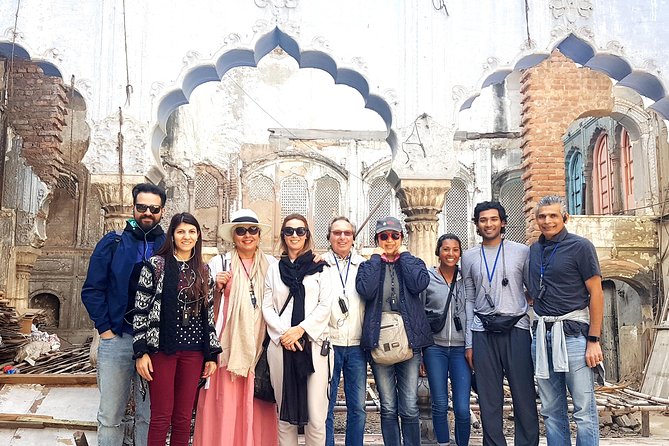
- The headsets matter most in Chandni Chowk: They may seem unnecessary at the starting point, but they help once you enter the noisy market streets.
- Jama Masjid is the opening landmark: The tour begins at India’s largest mosque, then moves through Old Delhi’s religious, commercial, and civic quarters.
- Food is part of the tour: Snacks, traditional food tastings, and bottled water are included in the three-hour experience.
- The route has real variety: You’ll see a mosque, a working Sikh kitchen, old homes, wedding shops, silver merchants, Town Hall, and a spice market.
- Expect a walking-first experience: Hotel pickup and drop-off are not included, and the tour begins and ends at Jama Masjid.
Why this Old Delhi walk is worth your time
Old Delhi can be hard to read on your own. A lane that looks like a simple market may have a religious building, an old mansion, a family business, or a food tradition behind it. A local guide helps connect those pieces while you are standing right in front of them.
That is the real value here. You are not watching Old Delhi from a vehicle window. You are moving at street level, where the details are close enough to see and hear. The tour also keeps the route focused, which matters in a part of Delhi that can quickly feel overwhelming.
The experience costs $56.67 per person. That is not the price of a basic self-guided stroll, but the fee includes a local guide, live commentary, wireless headsets, food tastings, snacks, and bottled water. For a first look at Old Delhi, the combination can make sense, especially if you want cultural context instead of simply wandering through the lanes.
The strongest value comes from the guide’s role. Ritu is described as warm, flexible, and patient with questions, while Saurav is praised for explaining the surroundings consistently as the group moves from mosque to temple, street, and market. The specific guide is not guaranteed, but the experience appears to depend heavily on a guide who can adjust the pace and explain what you are seeing.
More Audio Walking Tours in the world:
- Sofia: City Monuments Guided Walking Tour with Audio Guide
★ 4.5 · 825 reviews - Florence: 2.5 hour Audio Guided Walking Tour led by Host
★ 4.6 · 293 reviews - Self Guided Classic Freedom Trail Location Aware (GPS) Walking Audio Tour
★ 4.5 · 258 reviews
Starting at Jama Masjid in Old Delhi
The tour starts at Jama Masjid, the enormous mosque at the heart of Old Delhi. It is identified as the largest mosque in India, making it a fitting first stop and a useful introduction to the area’s religious importance.
You will meet the guide at Jama Masjid in Old Delhi, Delhi 110006. There is no hotel pickup, so you need to arrange your own way to the meeting point. The activity ends back there after roughly three hours, which makes the start and finish easy to plan around if you are using public transportation.
The mosque is also a practical place to begin because it gives the group a clear landmark before entering the tighter lanes. Dress conservatively because the route includes religious sites. Comfortable shoes are essential, not optional, given the amount of walking and the uneven, crowded feel that can come with an old market district.
The wireless headset may seem like a strange extra at this first stop. In an open space, you can often hear a guide without one. The equipment becomes more useful later, when the route passes into dense commercial streets and the guide may be a few steps ahead.
Hearing the guide through Chandni Chowk
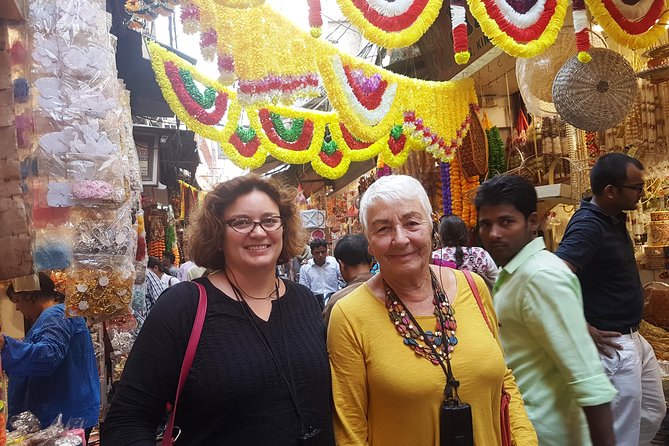
Old Delhi is full of competing sounds. Shopkeepers, traffic, conversations, bells, and market activity can easily swallow a spoken explanation. The headset system allows you to keep looking around while still hearing the guide’s live commentary.
You do not need to cluster tightly around the guide every minute. That gives you a little more freedom to notice signs, shop displays, architecture, and passing activity without losing the thread of the explanation. In a group of up to 15 people, that can make the walk feel more orderly.
The equipment is one of the tour’s more useful features, but it may take a moment to get used to. If you prefer completely informal walks, the headsets can feel slightly technical at first. Once the route reaches the market, though, clear audio becomes a practical advantage rather than a novelty.
The guide’s commentary covers Delhi’s culture, history, architecture, and food. That broad mix is important because Old Delhi is not only a collection of monuments. The point is to understand how worship, trade, food, family businesses, and public life sit side by side.
Entering the religious heart of the route
After Jama Masjid, the walk includes Gurudwara Sis Ganj and its live kitchen. This changes the tone of the route. You move from one major place of worship to another, with the kitchen offering a look at service and daily religious practice rather than only formal architecture.
You should expect to follow the guide’s instructions at religious sites and dress respectfully. The tour information specifically asks for conservative clothing, so plan ahead instead of treating clothing as an afterthought.
The value of this stop is the contrast. Jama Masjid gives you the scale of a major mosque, while Gurudwara Sis Ganj brings attention to community activity and food service. Together, the stops help you see Old Delhi as a place where different religious traditions remain part of daily city life.
The route also includes temples according to the description in the tour feedback, although the named itinerary lists Jama Masjid and Gurudwara Sis Ganj specifically. The guide may explain additional religious sites encountered along the way, but you should not assume every stop will be a formal interior visit.
A few more audio tours around the world worth a look
- Barcelona: Sagrada Familia Entry Ticket with Audio Guide
★ 4.6 · 105,312 reviews - Rome: Pantheon Fast-Track Ticket and Official Audioguide
★ 4.5 · 27,353 reviews - Barcelona: Casa Batlló Entry with Self-Audioguide Tour
★ 4.7 · 25,359 reviews - Rome: Colosseum & Forum with Audio Guide App -Optional Arena
★ 4.2 · 24,770 reviews
Old homes, wedding shops, and silver merchants
The itinerary includes a haveli, a wedding bazaar, and a silver bazaar. These are the sorts of places that give the walk its street-level character.
A haveli offers a look at Old Delhi’s older residential architecture. The word refers to a traditional large house, but the precise building and access details are not specified. Your guide’s explanation is likely to be most useful here, helping you understand how private homes fit into the older city rather than treating the building as a quick photo stop.
The wedding bazaar adds a very different note. Wedding commerce is a major part of Indian city life, and a market devoted to it shows how celebration supports a wide range of shops and crafts. The tour does not promise purchases or a shopping session, so think of this as a guided look at the district rather than a retail excursion.
The silver bazaar brings another working market into view. You may find the market more interesting for its trade and atmosphere than for any single landmark. If you enjoy seeing how a neighborhood earns its living, this section of the walk should be especially useful.
These market stops also explain why the headsets earn their place. The group can continue moving without forcing everyone into a tight circle around the guide. You can glance into side lanes and shopfronts while keeping up with the commentary.
Town Hall and the changing face of Old Delhi
Town Hall adds a civic and architectural layer to the route. After religious buildings and commercial lanes, a public building helps broaden the story of Old Delhi.
The itinerary does not give further details about the building or promise an interior visit. Still, the stop gives the guide a chance to explain how the area functions as more than a market. Old Delhi has civic spaces, public institutions, places of worship, homes, and specialized trade districts packed into a relatively compact area.
This is one reason a guided walk can be more satisfying than a checklist of monuments. You are moving between different parts of city life, and the guide can explain the connections as they appear. Without that context, Town Hall might simply be another building along the way.
Finishing in the spice market
The spice market is a fitting final section because it brings together the senses and the commercial life of the route. You will see the products that help define Indian cooking, while the guide explains the market and its place in Old Delhi.
The information provided does not identify specific spices or promise a cooking demonstration. What you can count on is a guided visit to the spice market, with live commentary and food-related context.
This is also where you should expect the most sensory intensity. Smells, movement, close quarters, and market noise are part of the experience. The tour is not designed to remove you from that activity. It gives you a way to understand it while you are in the middle of it.
For many people, this will be the most memorable part of the walk. It offers something a large monument cannot: a direct view of a working market. You may find the atmosphere tiring if you dislike crowds, but the headset should help you stay connected to the guide.
What the food tastings add
Food tasting is included, along with snacks and bottled water. That makes the tour more than an architecture walk, and it gives you a chance to connect the market scenes with actual local flavors.
The exact dishes and vendors are not specified, so you should not book this expecting a fixed tasting menu. The safest way to think about it is as a selection of traditional street-food tastes woven into the route.
I like this arrangement because the food is tied to the neighborhoods you are visiting. You are not leaving the district for a separate restaurant meal. Instead, the tasting forms part of the guide’s explanation of Old Delhi’s food culture.
If you have dietary restrictions, the supplied information does not explain how they are handled. Ask the provider before booking if that matters to you. The same applies to allergies, since no detailed food list is provided.
The group size, pace, and physical demands
The maximum group size is 15 people. That is small enough for questions and personal attention, while still being a shared tour rather than a fully private outing.
The group format can work well if you want company and structure. It also means the guide must balance different walking speeds and interests. The feedback about Ritu is particularly useful here: she is described as flexible, willing to accommodate requests, and careful not to make the tour feel rushed or restrictive.
That flexibility should not be confused with a completely custom itinerary. The named route includes Jama Masjid, Gurudwara Sis Ganj, a haveli, wedding and silver markets, Town Hall, and the spice market. The guide may respond to questions or interests, but the tour still has a three-hour limit.
The tour is not recommended for anyone with difficulty walking. You should wear comfortable shoes and be ready for a continuous urban walk. The route is near public transportation, and most people can participate, but the absence of hotel pickup means you must manage the journey to Jama Masjid yourself.
Is $56.67 a fair price?
At $56.67 per person, this is best judged as a guided cultural experience rather than a simple walk. The fee includes several items that would otherwise be separate: a local guide, live commentary, wireless headsets, food tastings, snacks, and bottled water.
The price is easier to justify if Old Delhi is new to you or if you want help making sense of the area. A guide can point out details you could easily miss, answer questions, and keep the route moving through a complicated district.
It is less appealing if you already know Old Delhi well, want a private tour, or prefer to explore at your own pace. Hotel transportation is not included, and the cancellation terms are strict: the experience is non-refundable and cannot be changed for any reason.
Group discounts may be available, but no specific discount amount is given. If you are booking for several people, check the current price before paying.
Who should book this walk?
I would recommend it most strongly to first-time visitors who want an organized introduction to Old Delhi without spending half a day on a large bus tour. The route combines major religious sites, working markets, architecture, civic history, and food in a manageable three-hour period.
It also suits people who enjoy asking questions. The small group and live commentary create more room for conversation than a recorded audio tour. Guides such as Ritu and Saurav are described as friendly, responsive, and willing to explain the cultural details behind what you see.
You should think twice if you have limited mobility, dislike close market streets, or want a tour built around shopping. The experience is also not ideal if you need a fully private schedule or guaranteed access to particular interiors.
Should you book the Old Delhi walking tour?
Book it if you want to understand Old Delhi while walking through its real streets, not just viewing its famous buildings from outside. The headsets, food tastings, and small group solve several common problems at once: poor audio, limited context, and a route that feels hard to navigate alone.
The main tradeoff is the fixed, non-refundable booking and the physical effort required. If you can handle three hours on foot, dress respectfully, and meet at Jama Masjid on your own, this offers a useful and lively first look at Old Delhi. If you need a slower pace or a fully private experience, another format may suit you better.
FAQ
How long does the Old Delhi walking tour last?
The tour lasts approximately three hours.
Where does the tour begin?
It begins at Jama Masjid in Old Delhi, Delhi 110006, India.
Where does the tour end?
The activity ends back at the Jama Masjid meeting point.
Is hotel pickup included?
No. Hotel pickup and drop-off are not included.
What is included in the tour price?
The price includes a local guide, live commentary, wireless headsets, food tastings, snacks, and bottled water.
How many people can join the tour?
The tour has a maximum of 15 participants.
Do I need to dress conservatively?
Yes. Conservative clothing is requested because the route visits religious places.
Is the tour suitable for people with walking difficulties?
No. The experience is not recommended for people who have difficulty walking. Comfortable shoes are advised.
Just added around the world
- Coba Ruins: Self-Guided Walking Audio Tour in Mexico★ 3.5 · 2 reviews
- Self Guided Driving Audio Tour of Saguaro National Park★ 3.0 · 4 reviews
- Torino Walking Tour with Audio and Written Guide by a Local★ 4.5 · 35 reviews
- Trondheim’s Inner Circle: A Self-Guided Audio Tour★ 4.0 · 15 reviews
- Self-Guided Audio Driving Tour of Mount Lemmon★ 5.0 · 4 reviews
- A Tromsø Introduction: A Self-Guided Audio Tour★ 3.5 · 19 reviews
- Panorama Bus Tour with Audio Guide★ 4.0 · 3 reviews
- Saguaro National Park Self-Guided Audio Tour★ 3.5 · 11 reviews
Walking Tours, compared.

City Monuments Guided Walking Tour with Audio Guide
Read our review →

Self Guided Classic Freedom Trail Location Aware (GPS) Walking Audio Tour
Read our review →
Self-Guided Historical Walking Tour (Audio Guide)
Read our review →
Cape Cod & Provincetown Self-Guided Driving & Walking Audio Tour
Read our review →
Verona Walking Tour with Audio and Written Guide by a Local
Read our review →
Royal Walking Tour and Buckingham Palace Audio Tour
Read our review →
Bologna Walking Tour with Audio and Written Guide
Read our review →Browse the lists this tour appears in