

REVIEW · NAPLES AUDIO TOURS
Naples: National Archaeological Museum Tour & Digital Guide
Ancient Naples begins indoors. The National Archaeological Museum, known as MANN, brings together grand Farnese sculptures, Egyptian objects, and remarkable finds from Pompeii and Herculaneum. I like the freedom to explore at your own pace, and I like that the digital guide gives the museum some structure without forcing you into a group. The main drawback is that the ticket and app instructions arrive only shortly before the visit, so a technical problem can cause real trouble.
This is a self-guided museum visit, not a walking tour with a live guide. You pay $40 per person for one day of entry and a smartphone guide. I also want to flag a serious detail in the supplied information: references to the Temples of Concordia, Juno, and Zeus, along with panoramic views of a temple valley, do not match a Naples museum visit. Confirm exactly what your ticket covers before you go.
Key points to know before you book
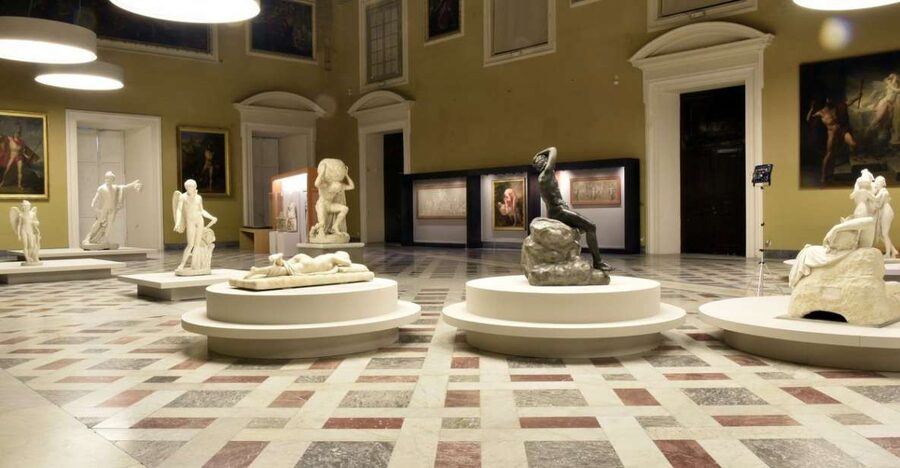
- Farnese masterpieces: See major sculptures inherited by the Bourbon family from the Farnese collection, one of the museum’s central attractions.
- Pompeii and Herculaneum finds: Expect frescoes, mosaics, statues, jewelry, household objects, and other pieces rescued from two buried Roman towns.
- Smartphone guide included: The guide is downloaded to your phone, but earphones are not supplied.
- Download before arrival: Museum Wi-Fi is not guaranteed, and mobile reception may be weak inside.
- Temple information needs checking: The references to Concordia, Juno, and Zeus appear to describe a different archaeological site, not MANN in Naples.
- Nonrefundable booking: At $40, the price can be fair for independent exploration, but you need to be comfortable with a fixed purchase.
Why MANN deserves serious time

MANN is not a small collection you can squeeze between lunch and a train. It is one of Italy’s major archaeological museums, with large rooms, weighty sculptures, ancient household objects, wall paintings, mosaics, and Egyptian material. Even if your main goal is Pompeii, the museum adds context that the ruins alone cannot provide.
I like the way the collection connects several parts of the ancient world. You can move from Greek and Roman sculpture to objects from Pompeii, then into Egyptian material and a room devoted to erotic artifacts. That range makes the visit feel less like a single-theme display and more like a broad introduction to ancient life.
The building itself is imposing, and the scale matters. You are not simply checking off a famous statue. You are walking through a major cultural institution in Naples, a place where the Bourbon collections and archaeological discoveries were brought together over time.
Give yourself a full day if you want to see the museum carefully. The advertised duration is one day, which means you can use the ticket at your own pace, but it does not mean you need to remain inside from opening to closing. Your energy will be better if you choose a sensible route and take breaks.
More History Audio Tours in Italy
- Naples: National Archaeological Museum audio guide
★ 4.0 · 155 reviews - Interactive audio guide for the historic center of Naples
★ 5.0 · 43 reviews - National Archaeological Museum synchronized audioguided tour without QR or app
★ 4.0 · 4 reviews
The Farnese Collection and its oversized stars
Start with the Farnese Collection. These works came into Bourbon hands through inheritance from the Farnese family, and they form one of the museum’s most famous groups of sculpture.
The appeal is scale and ambition. The sculptures are not modest decorative pieces. They show the power, drama, and technical skill associated with ancient Greek and Roman art. You may find that the Farnese rooms give you a strong visual opening, especially if you have already seen smaller objects at archaeological sites.
A digital guide can help here, but do not expect it to replace a specialist standing beside you. A recorded explanation can point out a sculpture’s subject, background, and importance. You still need to look carefully at the work itself, including its size, damage, restoration, and placement in the room.
I recommend using the guide selectively. Listen to the major entries, then walk around the sculpture without audio for a moment. The museum is crowded with information, and hearing every single item can turn a rewarding visit into an endurance test.
Pompeii and Herculaneum beyond the ruins

The finds from Pompeii and Herculaneum are the heart of the visit for many people. At the archaeological sites, you see streets, walls, gardens, and buildings. At MANN, you see the portable and decorative objects that show how those places worked as homes and communities.
Look for the combination of grand and ordinary. Frescoes and mosaics reveal taste and decoration, while everyday objects show the practical side of Roman life. Statues, precious items, and household goods help you picture the people who used these spaces rather than treating the ancient towns as empty shells.
The museum also lets you compare objects from the two sites in one place. That is valuable because the sites themselves can be tiring and spread out. Here, you can study details at close range and take your time with the display.
The digital guide should be most useful in these rooms. If you listen to the background before looking at a fresco or mosaic, you may notice details that would otherwise pass quickly. Download every guide file before entering. The instructions specifically warn that free Wi-Fi is not available and mobile coverage may be unreliable.
Frescoes, mosaics, and small objects
The large works receive the attention, but I would not rush past the smaller displays. A mosaic can tell you about decoration and status. A household object can reveal what people handled every day. A statue can show public ideals, while a simple tool may bring you closer to ordinary routines.
This is where a self-guided visit works well. You can stop when something catches your eye instead of following a fixed group. You can also skip a long audio explanation when you already understand the subject.
The tradeoff is that the experience depends on your own preparation. The supplied guide is a smartphone app, and the package does not include earphones or a live guide. Bring your own earphones if you want to listen privately. Without them, you may need to hold your phone near your ear, use the speaker, or read the material without audio.
Keep your phone charged. A low battery is more than an inconvenience here because your ticket instructions and guide may both be stored digitally. The practical fix is simple: charge fully before leaving, download the content in advance, and carry a small power bank if you have one.
More Museum Audio Tours in Italy
- Florence: Uffizi Priority Ticket & Masterpieces Audio App
★ 4.2 · 6,402 reviews - Venice: St. Mark Basilica Ticket, Audioguide+History Gallery
★ 3.9 · 4,780 reviews - Rome: Borghese Gallery Skip-the-Line Ticket & Audioguide
★ 4.3 · 4,318 reviews - Rome: Borghese Gallery Ticket + Audioguide or Guided Tour
★ 4.6 · 3,219 reviews
The Egyptian Section and Secret Cabinet
The Egyptian Section gives the museum another angle. It is included among the areas you can visit, but the supplied information does not specify which objects or rooms are on display at the time of your visit. Temporary exhibitions can also change during the year, so treat those sections as possible additions rather than guaranteed highlights.
The Secret Cabinet is a distinctive part of MANN. It contains erotic and otherwise obscene finds, offering evidence of ancient attitudes toward sexuality and private life. This is not just a novelty stop. It shows that ancient societies had their own public and private boundaries, and that modern ideas about acceptable display do not always match ancient customs.
The room may not suit every member of a family group. If you are visiting with children, decide in advance whether you want to include it. The information identifies the contents clearly, so you can make that choice without being caught off guard.
What the digital guide really adds
The guide is designed for independent use. You receive instructions by WhatsApp or email, then download the app and its content directly to your phone. That sounds easy, and usually it should be, but the timing matters.
The team is supposed to contact you the day before the visit with the ticket and download instructions. Reservations made after 6 p.m. are processed the next morning after 8 a.m. If you book late in the evening for an early visit, you may not receive everything as quickly as you expect.
There has already been a reported access problem involving a PDF that showed booking information rather than the actual museum ticket. The visitor eventually entered after museum staff worked through the booking document, but the app also lacked a login code, making the guide unusable. That is a useful warning, not a reason to reject the experience outright.
Before you leave your hotel, check three things:
- The ticket file opens and clearly shows the admission information.
- The guide app is installed and the login code works.
- All audio or written content is downloaded for offline use.
Keep the email and WhatsApp message available on your phone. Bring your passport or ID card, since the instructions list one as necessary. If the ticket does not display correctly, you will at least have the reservation details and the supplier’s messages ready to show staff.
The confusing temple references
The description includes the Temples of Concordia, Juno, and Zeus and promises panoramic views across a valley of ancient temples. Those references are not consistent with a visit to the National Archaeological Museum in Naples.
MANN is a museum in Naples. The temple language points to a separate archaeological setting. No transportation, second admission ticket, or itinerary connecting Naples with that temple area is provided here. Do not assume the $40 purchase includes both experiences.
This matters because you could plan your day around outdoor ruins and arrive expecting a second destination that is not part of the museum ticket. Ask the provider to clarify the temple references before booking, especially if those views are a major reason you are interested.
Is $40 a fair price?
At $40 per person, the value depends on how much you want the digital guide and independent access. The museum’s collections are substantial, and a full day gives you time to see the Farnese works, Pompeii and Herculaneum material, the Egyptian Section, and any temporary displays that are open.
The price is less attractive if you already have another admission arrangement or prefer to read room labels on your own. You are not receiving a live guide, earphones, transportation, or a guided group experience. The product is mainly an entry ticket plus a phone-based aid.
I see the value in it for a first-time visitor who wants a little direction without committing to a fixed group schedule. It is also useful if you want to pause, skip sections, or return to a favorite room during the same day.
The nonrefundable rule makes the decision more important. Check your schedule carefully, confirm the temple confusion, and make sure your phone can handle the app before paying.
Access, timing, and practical comfort
The activity is listed as wheelchair accessible. That is helpful, but the supplied details do not explain which entrances, lifts, or routes are involved. If you need specific assistance, contact the provider before the visit rather than relying only on the general accessibility label.
The ticket is valid for one day, with starting times subject to availability. The museum has enough material to occupy a long visit, but you can set your own rhythm. I would plan the rooms you most want to see first, then leave temporary exhibitions or less familiar sections for later.
Pets are not allowed. Bring a charged smartphone, your passport or ID card, and earphones if you want to use the audio content comfortably.
Who should choose this museum visit?
I would recommend it most strongly to:
- Independent visitors who dislike fixed group schedules.
- Art and archaeology fans who want major sculpture and Roman objects in one place.
- People visiting Pompeii or Herculaneum who want more context for what they saw outside.
- Families or couples who prefer to split up and explore at different speeds.
- Visitors comfortable using a smartphone as their guide.
I would be more cautious if you need a live expert to answer questions, dislike app-based tickets, or have a tight schedule with no room for technical delays. The guide problem described above shows why you should prepare carefully.
Should you book the MANN digital guide experience?
Book it if you want a flexible day at a major museum and you are happy to manage the technology yourself. The Farnese Collection and the Pompeii and Herculaneum objects justify serious time, while the Egyptian Section and Secret Cabinet add variety.
Before committing, ask for clarification about the temple references and confirm that your ticket is for MANN in Naples. Then download everything as soon as it arrives, check the login code, and bring your own earphones.
For $40, this can be a useful independent museum day. It is not the right choice for a live guided tour, and the nonrefundable booking plus possible app trouble means you should prepare rather than simply show up and hope your phone cooperates.
FAQ
How long is the National Archaeological Museum visit valid?
The activity is valid for one day. You can explore the museum at your own pace during the available starting time.
What is included in the price?
The package includes museum admission and a smartphone digital guide that you download to your phone.
Are earphones included?
No. Earphones are not included, so bring your own if you want to listen to the guide comfortably.
When will I receive the ticket and app instructions?
The team is expected to contact you by WhatsApp or email the day before the visit with the ticket and instructions for downloading the guide. Reservations made after 6 p.m. are processed the following morning after 8 a.m.
Do I need internet access inside the museum?
You should download all guide content before arriving. The instructions warn that free Wi-Fi is not available and mobile coverage may not always work well.
Is the activity wheelchair accessible?
Yes, the activity is listed as wheelchair accessible. The supplied information does not provide further details about routes or facilities, so contact the provider if you need specific arrangements.
More History Audio Tours in Naples
- Colosseum, Roman Forum & Palatine Hill with Audioguide App
★ 4.4 · 6,291 reviews - Rome: Colosseum, Ancient Rome Tour or AudioGuided Tour
★ 4.4 · 2,879 reviews - Colosseum, Roman Forum & Palatine Hill Entry and Audioguide
★ 4.1 · 2,475 reviews - Taormina: Ancient Theater Skip-the-Line Ticket & Audio Guide
★ 4.5 · 2,412 reviews
More Museum Audio Tours in Naples
- Paris: Louvre Museum Hosted Entry and Mona Lisa Audioguide
★ 4.6 · 5,235 reviews - Paris: Orsay Museum Entry Ticket and Digital Audio Guide App
★ 4.4 · 3,170 reviews - Florence: Uffizi Gallery Timed Entry Ticket & Audio Guide
★ 4.2 · 2,794 reviews - Athens: Acropolis Museum Ticket with optional Audio Guide
★ 4.4 · 2,652 reviews
Just added around Naples
- Mount Vesuvius Skip the Line Ticket + Multilingual Audio Guide★ 4.0 · 32 reviews
- Naples: Royal Palace Entry Ticket with Digital Audio Guide★ 4.0 · 3 reviews
- From Naples Explore Pompeii Freely with Your Personal Audioguide★ 3.5 · 3 reviews
- Pompeii from Naples: Smart Audio Guide with Travel Instructions★ 5.0 · 4 reviews
- Interactive audio guide for the historic center of Naples★ 5.0 · 43 reviews
- Naples from Above: Castel Sant’Elmo Access & Audio Guide★ 3.0 · 2 reviews
- Naples: Herculaneum Entry Ticket with Digital Audio Tour★ 3.5 · 6 reviews
- Audioguided Vespa Tour of Naples (Vespa with driver)★ 5.0 · 9 reviews
Museums, compared.
Uffizi Priority Ticket & Masterpieces Audio App
Read our review →
Louvre Museum Hosted Entry and Mona Lisa Audioguide
Read our review →
St. Mark Basilica Ticket, Audioguide+History Gallery
Read our review →
Borghese Gallery Skip-the-Line Ticket & Audioguide
Read our review →
Borghese Gallery Ticket + Audioguide or Guided Tour
Read our review →
Orsay Museum Entry Ticket and Digital Audio Guide App
Read our review →
Uffizi Gallery Timed Entry Ticket & Audio Guide
Read our review →
Acropolis Museum Ticket with optional Audio Guide
Read our review →Browse the lists this tour appears in