
REVIEW · NAPLES AUDIO TOURS
Naples: National Archaeological Museum audio guide
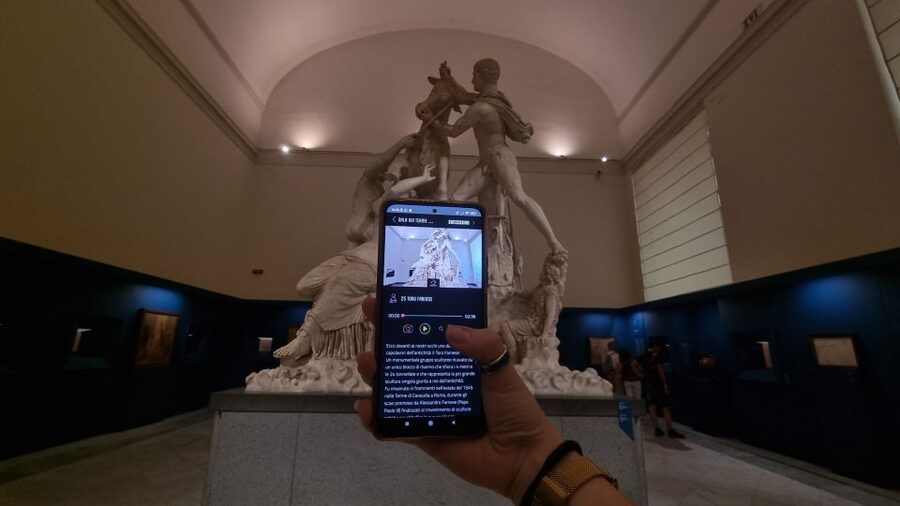
Naples rewards curious museumgoers. This $4.70 audio guide gives you 85 points of interest, with spoken explanations, photos, map references, and written notes inside the Itguides app. I especially like the coverage of the Hercules statue and Venus Callipigia, plus the Egyptian and Magna Grecia collections that may receive little attention from a basic visit.
The low price is another strong point. You can download the material for offline use and listen at your own pace for about three hours. The catch is important: you must activate and download the guide online before entering the museum, and the app can take a little time to understand.
Key points at a glance
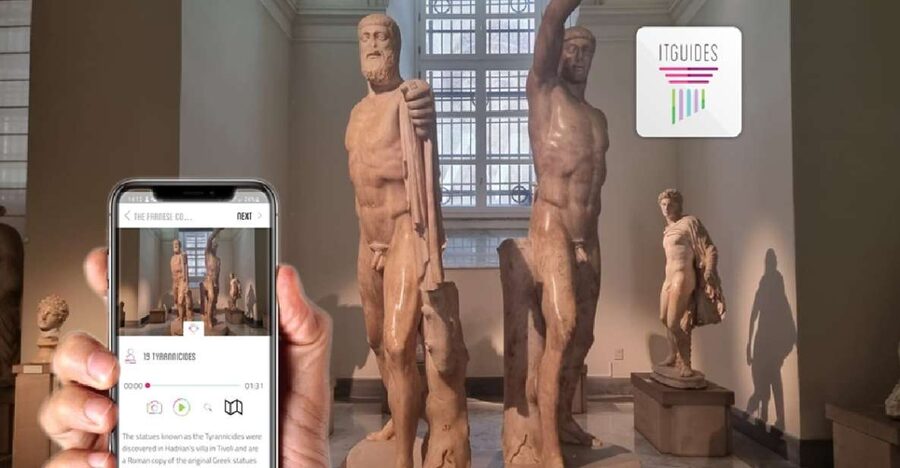
- 85 museum highlights: The guide covers major sculptures, mosaics, collections, and rooms rather than offering only a short introduction.
- Offline listening: Download the content over Wi-Fi or a strong mobile signal before you arrive.
- Five languages: Choose Italian, English, French, German, or Spanish.
- Three-hour visit plan: The suggested duration works well for a focused first visit, though the museum is large enough to justify more time.
- Ticket not included: You buy museum admission separately, so keep the audio guide and entry ticket as two different purchases.
- Bring a full battery: A charged smartphone and, ideally, a power bank are essential.
Why an audio guide helps in this enormous museum
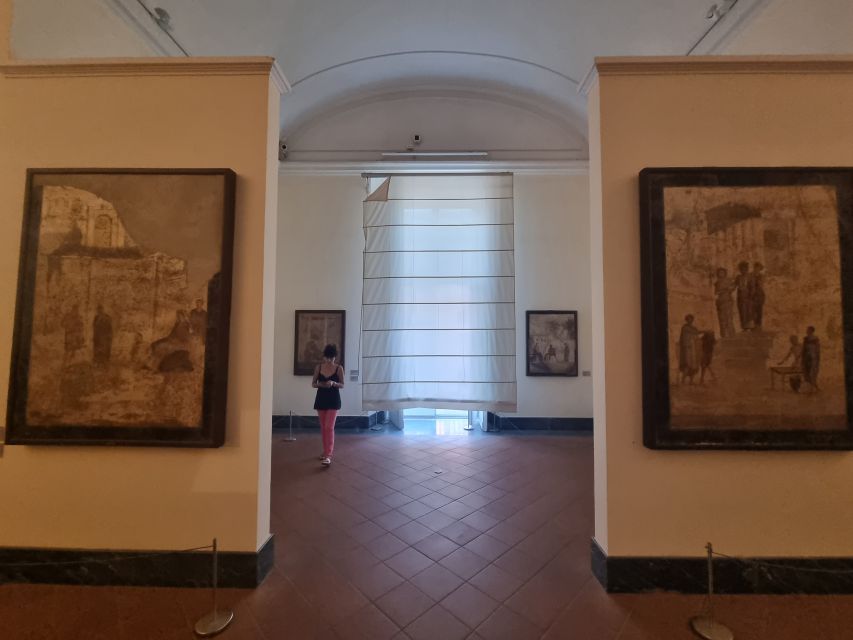
The National Archaeological Museum of Naples is not the kind of place you casually stroll through in half an hour. Its collection covers sculpture, mosaics, Roman houses, Egyptian objects, Magna Grecia material, and other archaeological finds. Without a plan, it is easy to admire beautiful objects without understanding why they matter.
That is where this guide earns its small price. It groups the material by collection and directs your attention to important pieces. You are not forced to follow a live guide or keep pace with a group. Instead, you can pause for a closer look, skip an item that does not interest you, or replay an explanation.
I like that each point combines audio with photos and written information. If a room is crowded or you cannot hear clearly, the text gives you another way to follow along. The photographs also help you identify the right object, which matters in rooms filled with similar statues or fragments.
The three-hour estimate is sensible for a first visit focused on the main works. Still, do not treat it as a strict finish line. The museum is large, and the 85 points are spread among several collections. If you stop often for photographs or read every text section, you may need longer.
More History Audio Tours in Italy
- Naples: National Archaeological Museum Tour & Digital Guide
★ 4.2 · 177 reviews - Interactive audio guide for the historic center of Naples
★ 5.0 · 43 reviews - National Archaeological Museum synchronized audioguided tour without QR or app
★ 4.0 · 4 reviews
Starting with Hercules, Venus, and the museum’s famous Roman art
The guide gives special attention to the three-meter-tall resting Hercules. This is exactly the kind of work that benefits from context. Its scale is immediately impressive, but an explanation helps you look beyond size and notice the pose, physical strain, and idealized treatment of the body.
Venus Callipigia offers a very different experience. The statue is known for its graceful, suggestive pose, and the guide explains why its presentation attracts so much attention. This is a useful stop for anyone who wants more than a quick label beside the sculpture. The audio helps connect the work’s pose and subject to the artistic ideals behind it.
The museum’s Roman sculpture is one of its major draws, and the guide gives you a way to organize what you see. Rather than wandering from one famous statue to another, you can follow the collection structure and keep the larger picture in mind.
One practical limitation is that the app does not always make finding the next work easy. A map is included, but one user found that it was not fully interactive, and another had trouble locating the next stop when not every exhibit was described. If you want a strict room-by-room route, spend a few minutes studying the map before you begin.
The House of the Faun mosaics and Alexander’s battle
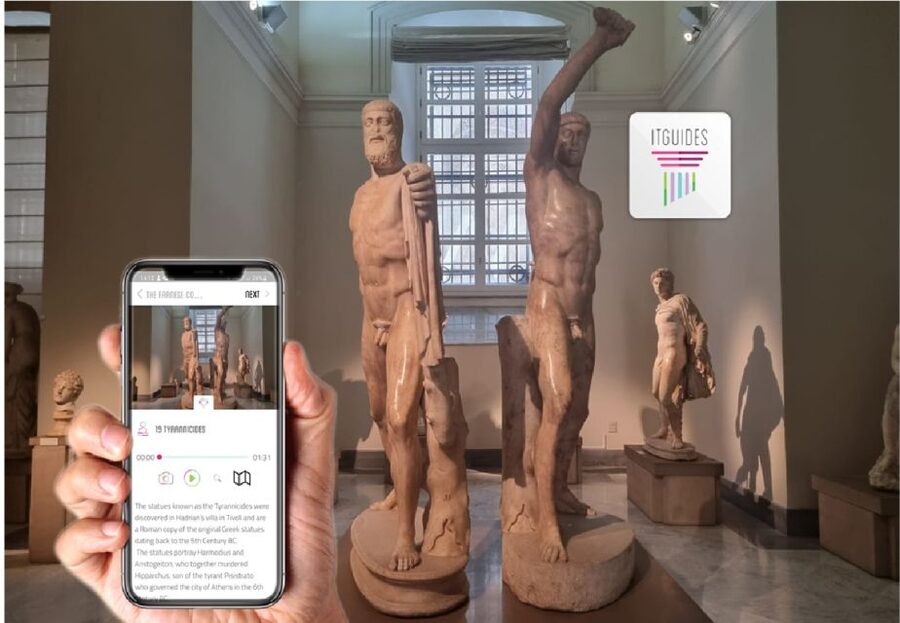
The mosaics from the House of the Faun are among the most memorable pieces connected with Pompeii. The guide points you toward the famous mosaic showing Alexander in battle against the Persian king. It is a scene full of movement, faces, horses, weapons, and expressions, so a good explanation can help you know where to look first.
This is one of the places where photos and text are especially useful. You can compare the image in the app with the mosaic in front of you and then listen for details that might be easy to miss. The guide turns a very large, complicated scene into something you can examine in stages.
I would give this section plenty of time. Even with an audio explanation, you should pause the recording and look closely. The guide is most useful here as a viewing aid, not as a replacement for your own observation.
The same advice applies throughout the museum. Do not feel that you must listen to every second while standing directly in front of an object. You can read ahead, listen from the side of the room, and return your attention to the artwork when a detail is mentioned.
Egyptian and Magna Grecia collections deserve your time
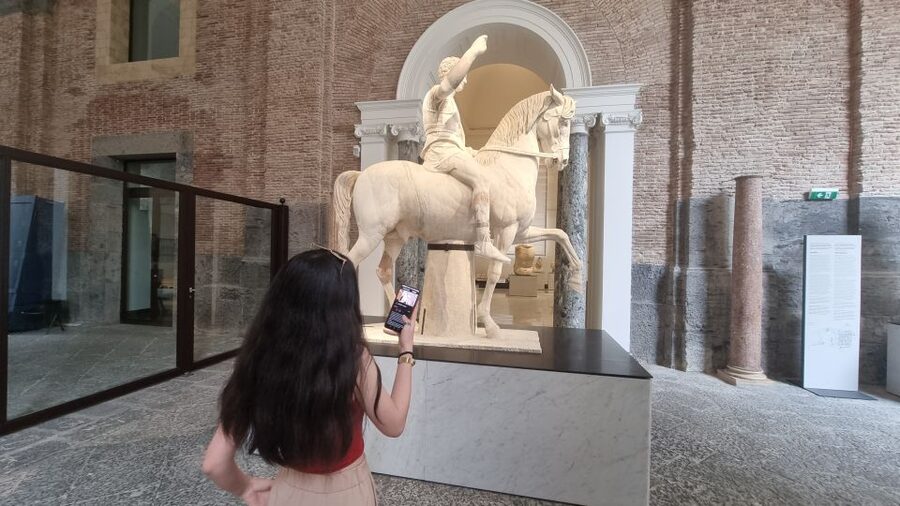
A strong feature of this digital guide is its coverage beyond the best-known Greek and Roman sculptures. It includes the Egyptian collection and Magna Grecia material, along with the recently reopened Campania Romana section noted in the guide information.
That broader coverage may matter more than you expect. Many first-time visitors arrive mainly to see Hercules, Venus, and the Pompeii mosaics. Once inside, you find several other collections competing for your attention. Without explanations, it is easy to hurry past objects that look less familiar.
The Egyptian section is a good example. It may not be the main reason you bought a ticket, but the audio gives you a reason to slow down and look. It also helps if the museum’s own audio devices are unavailable or provide less detail in certain areas.
The inclusion of Magna Grecia and Campania Romana makes the guide more useful for a repeat visit as well. Someone who has already seen the major statues can use those sections to build a less predictable route through the museum.
More Museum Audio Tours in Italy
- Florence: Uffizi Priority Ticket & Masterpieces Audio App
★ 4.2 · 6,402 reviews - Venice: St. Mark Basilica Ticket, Audioguide+History Gallery
★ 3.9 · 4,780 reviews - Rome: Borghese Gallery Skip-the-Line Ticket & Audioguide
★ 4.3 · 4,318 reviews - Rome: Borghese Gallery Ticket + Audioguide or Guided Tour
★ 4.6 · 3,219 reviews
The Gabinetto Segreto is not an ordinary gallery stop
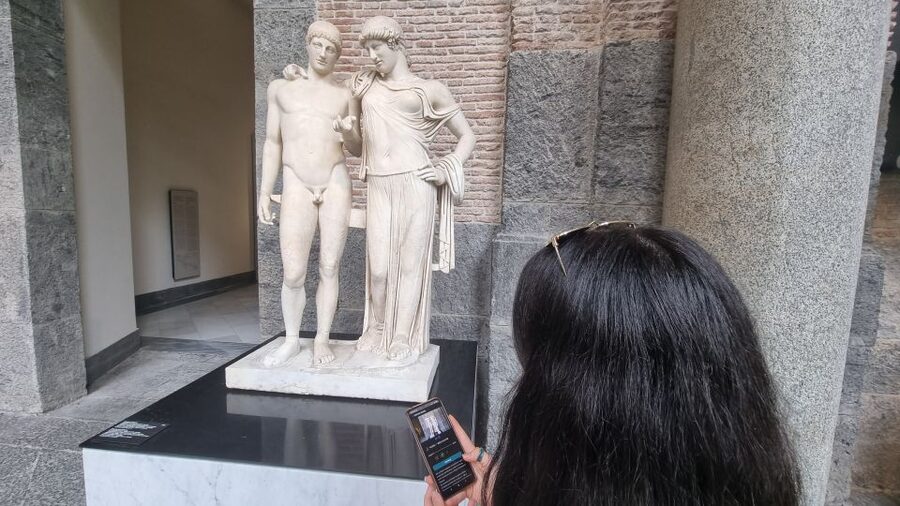
The famous Gabinetto Segreto, or Secret Cabinet, is another listed point of interest. This collection is known for its erotic ancient art, so it may not suit every visitor or every family. The guide gives you a way to approach it with historical context instead of treating it as a collection of isolated curiosities.
The material can be provocative, but it is also part of the museum’s archaeological story. The audio is useful because it frames the objects within the culture that produced and preserved them. You can decide how much time to spend there based on your own interests.
Since the guide is self-guided, you are free to skip this section without affecting the rest of your visit. That flexibility is one of the app’s quiet advantages over a fixed group tour.
How the Itguides app works in practice
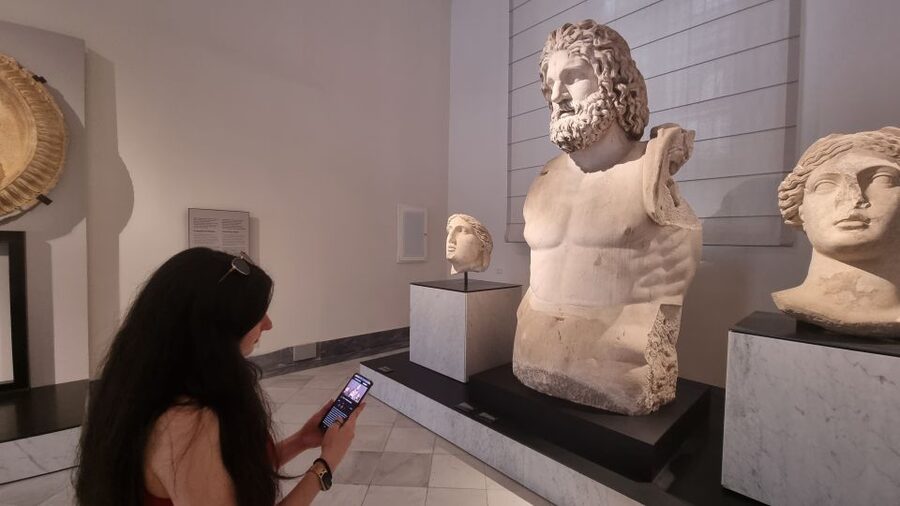
This is a fully digital product. After purchase, you receive instructions for downloading the Itguides app and accessing the museum content. Support is available through WhatsApp, and the information provided says the support team can help with downloading and setup.
Do not leave this process until you are standing at the museum entrance. The guide can only be activated online, and you need to download its contents with Wi-Fi or a strong cellular signal. Once the material is stored locally, you can use it without relying on a live connection inside the building.
I recommend this simple preparation:
- Install the Itguides app before your visit.
- Try the free demo so you understand the controls.
- Purchase and activate the museum guide at least the day before.
- Download all audio, images, and text over Wi-Fi.
- Charge your phone fully.
- Carry a power bank if you have one.
- Review the map and collection headings before entering.
The preparation takes a little effort, but it prevents the most common problems. One person downloaded the guide at the museum and found it informative, yet wished they had studied how it worked beforehand. That is fair advice. The app is not difficult once you understand it, but it is not as simple as picking up a device at the ticket desk.
You can also share the audio between two people using Bluetooth headphones. That can make the $4.70 cost even better value, although you should consider whether sharing one listening device will be comfortable for your visit.
A closer look at the map and navigation
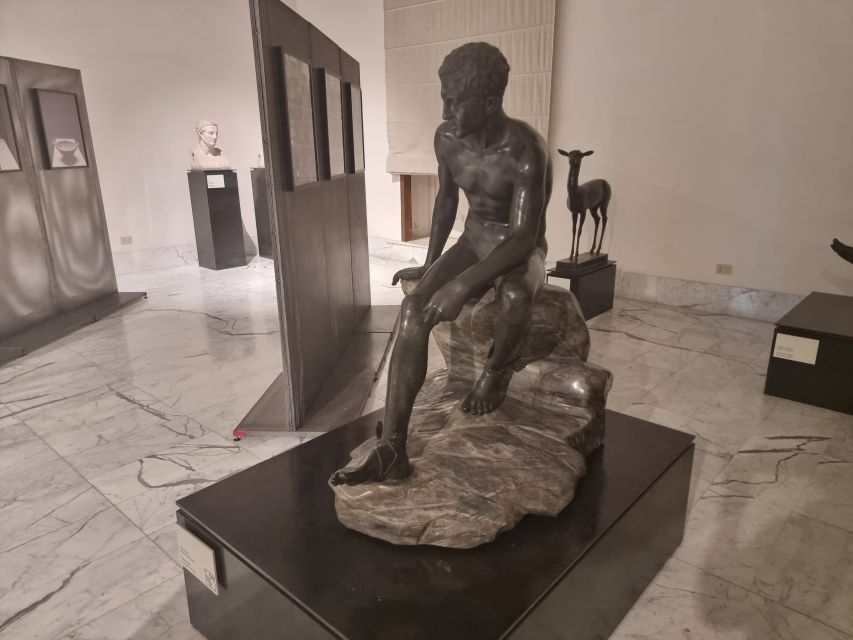
The included map is useful because the museum has many rooms and collections. It helps you identify where the main groups of works are located and gives the visit some structure.
Still, I would not describe it as a turn-by-turn navigation system. The map may show where points of interest belong, but it does not always guide you automatically from one object to the next. You may need to match the app’s photo with the room in front of you.
Another limitation is that the guide does not describe every exhibit. That is normal for a focused audio guide, but it can create a gap if you are following the museum physically and cannot immediately find the next numbered work.
My method would be to choose a collection, listen to its main points, and then move on rather than attempting to visit all 85 stops in numerical order. Use the map as a planning tool, not as a promise of perfect navigation.
Three hours, or longer if you want the full museum
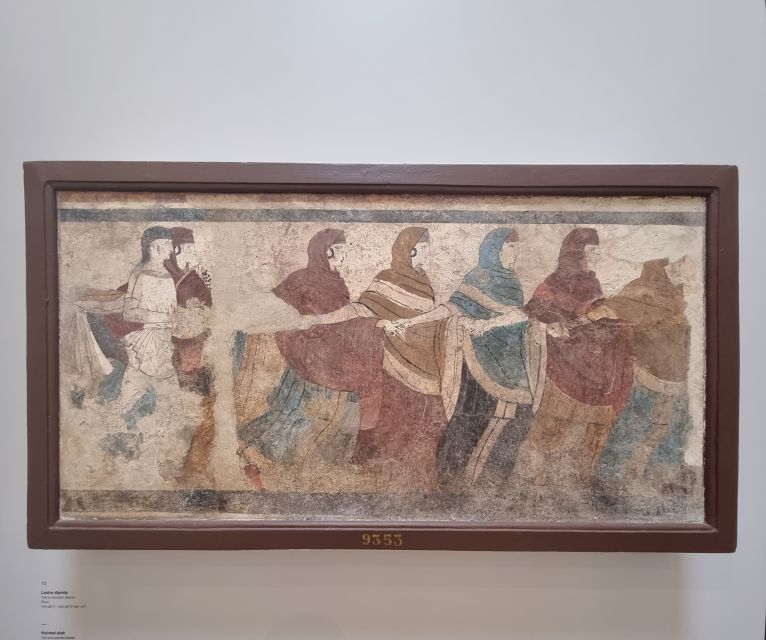
The stated duration is three hours. That gives you enough time for a well-planned visit focused on the major works, but the actual pace depends on how closely you study the objects.
For a quick first visit, you might listen to the main sculpture, mosaic, Egyptian, and Secret Cabinet sections. If you want to cover all 85 points with photographs and written descriptions, allow yourself more flexibility. The guide is not a timed group experience, so there is no penalty for taking longer.
Comfortable shoes matter. You will spend a long period walking and standing, and the museum’s scale can make a rushed visit tiring. Comfortable clothes also help, especially if you plan to stay for several hours.
The lack of a meeting point is a benefit here. You can enter whenever your museum ticket allows and begin the guide on your own schedule. Just remember that the audio guide does not include admission, so you must arrange the museum entry separately.
Is $4.70 good value?
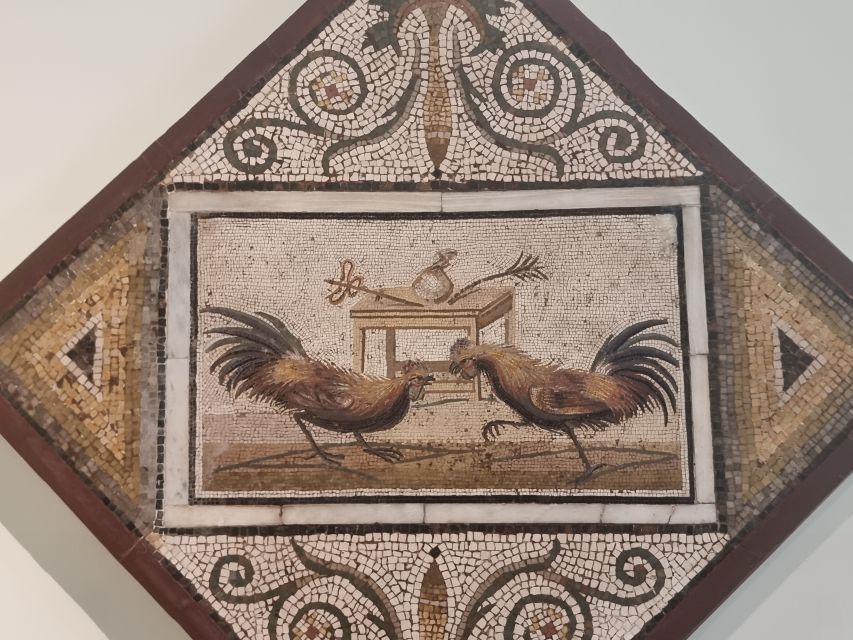
At $4.70 per person, this is an inexpensive way to add structure and explanation to a major museum visit. The value is strongest if you want more information than the room labels provide but do not want to pay for a private guide.
It also compares well with the practical problems of relying only on the museum’s own audio devices. The supplied information includes several cases where visitors found the digital guide more complete, more current, or easier to use than the device available at the ticket office. One person also chose it when museum audio guides had sold out.
That does not make the app perfect. There are occasional description errors, and the navigation can feel awkward at first. Some visitors may prefer a printed guidebook or a live expert who can answer questions immediately.
Still, the price leaves room for those weaknesses. You receive audio, text, photos, a map, and access in five languages. For a museum this large, even a handful of useful explanations can justify the cost.
Who should buy this guide?
I would recommend it most strongly if you fit one of these descriptions:
- You want to visit independently and set your own pace.
- You prefer listening in English, Italian, French, German, or Spanish.
- You want Egyptian, Magna Grecia, and Campania Romana coverage.
- You are visiting when museum audio devices may be sold out.
- You like to prepare before entering a museum.
- You want to share the cost with another person using Bluetooth headphones.
- You need an offline guide rather than a live internet service.
It is less suitable if you want a polished automatic route with instant object-number searches. It may also frustrate you if you dislike setting up apps or if your phone battery is unreliable.
Final verdict: buy it before you arrive
I would book this audio guide if I were planning a self-guided visit to the National Archaeological Museum of Naples. The strongest reasons are its low price, 85 points of interest, useful collection structure, offline access, and coverage of sections that are easy to overlook.
Buy it at least a day before your visit, download everything, and study the map. If you do that small amount of preparation, the guide can turn a huge collection into a manageable three-hour plan. If you want every exhibit explained or need flawless navigation, choose another solution. For most independent visitors, though, this is a practical and good-value companion.
FAQ
Is the museum admission ticket included?
No. The audio guide is sold separately, and you must purchase the National Archaeological Museum entry ticket on its own.
How long is the audio-guided visit?
The suggested duration is three hours. You can spend more or less time because the experience is self-guided.
Is there a meeting point?
No. There is no meeting point because you use the guide independently.
Which languages are available?
The audio guide is available in Italian, English, French, German, and Spanish.
Can I use the guide without internet inside the museum?
Yes, if you download all the content in advance. The guide is designed to work offline after the material has been stored on your phone.
When should I download the guide?
Download and activate it before going to the museum. The guide can only be unlocked online, so using Wi-Fi or a strong cellular signal before your visit is recommended.
Does the guide include a map?
Yes. A museum map is included to help you locate the collections and points of interest.
How many points of interest are included?
The guide includes 85 points of interest, with audio, photos, and written information.
Can I share the audio with another person?
Yes. One person used Bluetooth headphones to listen with a companion. Sharing may help reduce the cost, though both people need to be comfortable listening together.
What should I bring?
Bring comfortable shoes, comfortable clothes, and a fully charged smartphone. A power bank is also useful because the guide uses your phone during the visit.
More History Audio Tours in Naples
- Colosseum, Roman Forum & Palatine Hill with Audioguide App
★ 4.4 · 6,291 reviews - Rome: Colosseum, Ancient Rome Tour or AudioGuided Tour
★ 4.4 · 2,879 reviews - Colosseum, Roman Forum & Palatine Hill Entry and Audioguide
★ 4.1 · 2,475 reviews - Taormina: Ancient Theater Skip-the-Line Ticket & Audio Guide
★ 4.5 · 2,412 reviews
More Museum Audio Tours in Naples
- Paris: Louvre Museum Hosted Entry and Mona Lisa Audioguide
★ 4.6 · 5,235 reviews - Paris: Orsay Museum Entry Ticket and Digital Audio Guide App
★ 4.4 · 3,170 reviews - Florence: Uffizi Gallery Timed Entry Ticket & Audio Guide
★ 4.2 · 2,794 reviews - Athens: Acropolis Museum Ticket with optional Audio Guide
★ 4.4 · 2,652 reviews
Just added around Naples
- Mount Vesuvius Skip the Line Ticket + Multilingual Audio Guide★ 4.0 · 32 reviews
- Naples: Royal Palace Entry Ticket with Digital Audio Guide★ 4.0 · 3 reviews
- From Naples Explore Pompeii Freely with Your Personal Audioguide★ 3.5 · 3 reviews
- Pompeii from Naples: Smart Audio Guide with Travel Instructions★ 5.0 · 4 reviews
- Interactive audio guide for the historic center of Naples★ 5.0 · 43 reviews
- Naples from Above: Castel Sant’Elmo Access & Audio Guide★ 3.0 · 2 reviews
- Naples: Herculaneum Entry Ticket with Digital Audio Tour★ 3.5 · 6 reviews
- Audioguided Vespa Tour of Naples (Vespa with driver)★ 5.0 · 9 reviews
Museums, compared.
Uffizi Priority Ticket & Masterpieces Audio App
Read our review →
Louvre Museum Hosted Entry and Mona Lisa Audioguide
Read our review →
St. Mark Basilica Ticket, Audioguide+History Gallery
Read our review →
Borghese Gallery Skip-the-Line Ticket & Audioguide
Read our review →
Borghese Gallery Ticket + Audioguide or Guided Tour
Read our review →
Orsay Museum Entry Ticket and Digital Audio Guide App
Read our review →
Uffizi Gallery Timed Entry Ticket & Audio Guide
Read our review →
Acropolis Museum Ticket with optional Audio Guide
Read our review →Browse the lists this tour appears in