
REVIEW · USA AUDIO TOURS
Austin’s Famous Ghosts Smartphone Guided Audio App Walking Tour
Ghost stories make Austin’s history feel close. This one-hour audio walk leads you through downtown, from the Bremond House to the Governor’s Mansion, pairing old buildings with tales of fire, tragedy, spirits, and strange happenings. I like the freedom to start and stop whenever you wish, and I like the low $9.75 price, which makes this an easy add-on to an Austin visit.
The narration, voiced by Greg, has the calm, fitting tone you want for an evening ghost walk. Starting near sunset should add a little atmosphere, too. The main drawback is simple: there is no human guide, so you must use your phone, follow the route, and manage your own timing.
Key details before you go
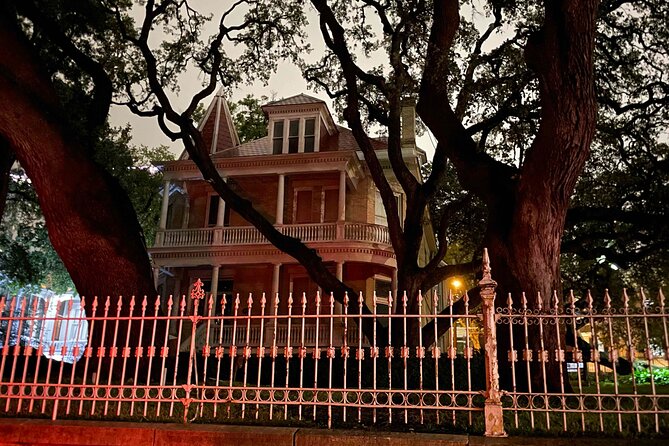
- Starts at the Bremond House: Begin at 700 Guadalupe Street and hear the opening story about Pierre and the spirits connected with the house.
- Ends at the Governor’s Mansion: The final stop is one of Austin’s most historic buildings, with connections to Sam Houston and its own ghost stories.
- Covers central Austin on foot: The route takes about 60 to 75 minutes and includes Republic Square, the old railroad depot site, the Paramount, the Driskill Hotel, a church, and a fire-related haunting.
- Works on your schedule: You can begin anytime, pause when needed, and return to the tour later because it never expires.
- All attractions are viewed from outside: Admission tickets are not included, and you are not required to enter the buildings.
- Best value for independent explorers: At $9.75 per person, the tour costs less than most live activities, though you give up the questions and local banter of a guide.
Starting at the Bremond House on Guadalupe Street
The tour begins outside the Bremond House at 700 Guadalupe Street. That location matters because the walk does not open with a generic introduction. You start with a particular house, a particular story about Pierre, and the ghosts said to remain connected to the property.
From there, the audio app guides you step by step through downtown. I like this format for Austin because the center of town is easy to explore on foot, but a self-guided route gives you a reason to notice buildings you might otherwise pass without a second look.
You do not need to enter the Bremond House or any other attraction. The stories are designed to be heard from public streets and sidewalks, which keeps the price low and lets you continue at your own pace.
The instructions describe a route lasting about one hour to one hour and 15 minutes. One portion is listed as about 10 minutes at Republic Square, while the downtown section takes around 50 minutes. Allowing extra time for crossing streets, finding each stop, and pausing the narration is sensible.
More Audio Walking Tours in the USA
- Self Guided Classic Freedom Trail Location Aware (GPS) Walking Audio Tour
★ 4.5 · 258 reviews - Cape Cod & Provincetown Self-Guided Driving & Walking Audio Tour
★ 4.0 · 207 reviews - Santa Fe Historic Downtown Smart Phone Audio App Self Guided GPS Walking Tour
★ 4.5 · 112 reviews
Republic Square and Austin’s public past

Republic Square is one of Austin’s four remaining public squares. It was built in 1888 and now includes signs explaining its Mexican and Mexican American connections.
That cultural context gives the tour more substance than a chain of unrelated ghost tales. You get a look at how Austin remembers its past while also hearing why the square is considered haunted. The combination is useful: the location is not just a stage for a spooky story, but a place tied to the city’s public life and heritage.
The stop is free, and the listed visit lasts about 10 minutes. You can pause here without worrying about an admission time or a timed entry. If you prefer a slower pace, Republic Square is a natural place to stop the audio, look around, and then continue.
The app format also helps at a place like this. A live group may move on before you are ready, while this tour lets you spend a little longer with the signs and surroundings.
The former railroad depot and Austin’s growth
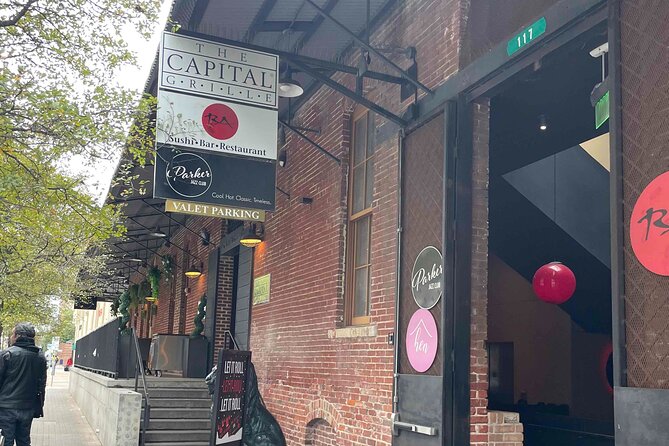
The route continues toward the site now occupied by Capital Grille. The land once held Austin’s original railroad depot, built in 1871.
The railroad helped bring building supplies, raw materials, clothing, food, visitors, and new residents into the capital. That basic fact gives the ghost story a useful setting. Rail depots were places of arrivals, departures, opportunity, and often trouble. The narration connects that busy past with the mayhem said to have taken place there.
I appreciate stops like this because they explain how Austin developed instead of treating every location as a haunted backdrop. You hear about transportation and city growth, then get the darker side of the same story.
The drawback is that the depot itself is gone. You are hearing about a former site rather than entering a preserved railroad building. For some people, that makes the stop less visually dramatic, though the historical connection remains clear.
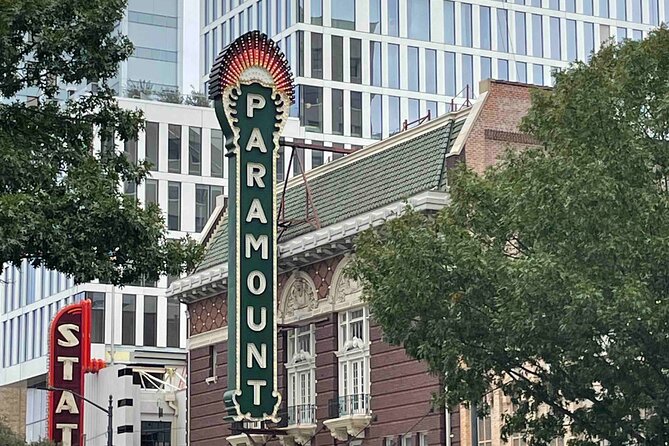
The Paramount Theatre and a century of spirits
The Paramount Theatre brings show business into the route. It has hosted major performers, including Orson Welles, Harry Houdini, Mae West, and Katherine Hepburn, and it has more than 100 years of history behind it.
That list gives you a sense of the building’s importance before the ghost story begins. The Paramount is not simply an old theater with a spooky reputation. It has been part of Austin’s performance life for generations, and the audio connects that long public history with the spirits associated with the building.
You should not expect a theater admission with this experience. The attraction tickets are not included, and the tour does not require you to go inside. You can still appreciate the exterior and hear the story without adding another charge.
This is one place where an evening start may help. The narration by Greg was specifically praised for having a voice suited to the subject, and the fading light can make an old theater feel more atmospheric without turning the walk into a theatrical production.
More Smartphone Audio Tours in the USA
- Self-Guided GPS Audio E-Bike Tour Hawaii Volcanoes National Park
★ 4.5 · 131 reviews - Ultimate Portland Self-Guided Driving GPS Audio Tour
★ 4.0 · 56 reviews - Birmingham Civil Rights Walk of Freedom Smartphone Audio App Tour
★ 5.0 · 40 reviews - Self Guided GPS Audio Driving Tour Acadia NP From Hulls Cove VC
★ 4.0 · 25 reviews
The Driskill Hotel and Jesse Driskill’s gamble

The Driskill Hotel is one of the route’s strongest historical stops. Built in 1886 in the Romanesque Revival style, the grand hotel was created by Jesse Driskill, a cattle rancher and Confederate colonel.
The story says Driskill used money made during the Civil War to finance the building. He had made his fortune through cattle ranching and Civil War profits, then spent nearly all of it on the hotel. He eventually lived there, which gives the property a more personal edge than a simple business venture.
The ghost stories connected with the Driskill are familiar to many people who know Austin’s spooky side, but the app still earns its place by setting those stories within the hotel’s history. You learn about ambition, wealth, risk, and financial ruin before focusing on the supernatural claims.
A practical tip: you can stop at the Driskill for a drink, though that cost is separate from the tour. This is not required, and the audio walk does not include food, drinks, or hotel admission. Still, a short pause there could make a pleasant break, especially if you begin in the early evening.
The church and Reverend Charles Gillette
Another stop centers on a church and the story of Reverend Charles Gillette, who served as rector during the late 19th century.
Gillette is described as an important figure in the church’s development and as someone devoted to his congregation. His role gives the story a human center. Instead of presenting only a vague haunting, the narration ties the ghost story to a real religious leader and a specific period in the church’s history.
As with the other locations, you hear the story from outside. The tour is not a church visit, a service, or an interior history tour. If you want to study the architecture or read exterior signs, pause the app and take your time.
This stop may appeal most to people who enjoy the overlap between local history and folklore. It is less about a dramatic shock and more about how a person’s life and reputation can remain attached to a building long after his time.
The 1983 fire and the handprints on the window
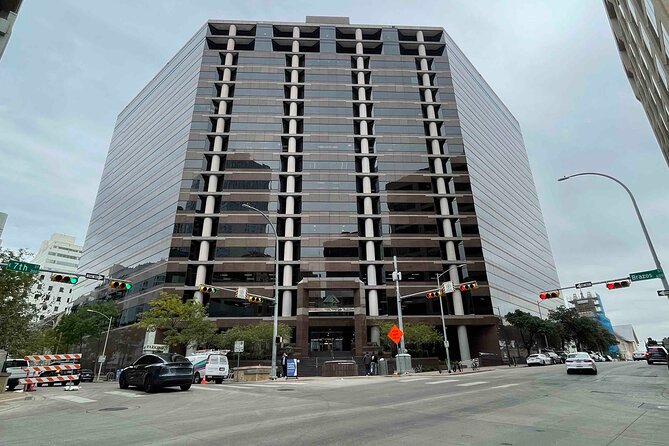
The most disturbing story on the route concerns a fire in 1983. Several people died, including a 23-year-old intern who was trapped inside.
According to the story, firefighters could not break through the window, which was their only way into the room. They had to watch as the young man died. The window survived even though the rest of the room was badly burned.
The haunting claim is that handprints appear on the window during cold or rainy weather, despite repeated cleaning. Replacing the glass supposedly did not stop them from appearing.
This story is darker than the tales of a restless hotel resident or a spectral church figure. If you are sensitive to stories about tragic deaths, you may find this section more unsettling than entertaining. The app gives you control, though. You can pause, skip ahead, or stop the tour entirely.
The story also shows the general tone of this experience. It is not only playful Halloween material. Some stops deal with grief, death, and the way traumatic events become part of a city’s folklore.
Finishing at the Governor’s Mansion
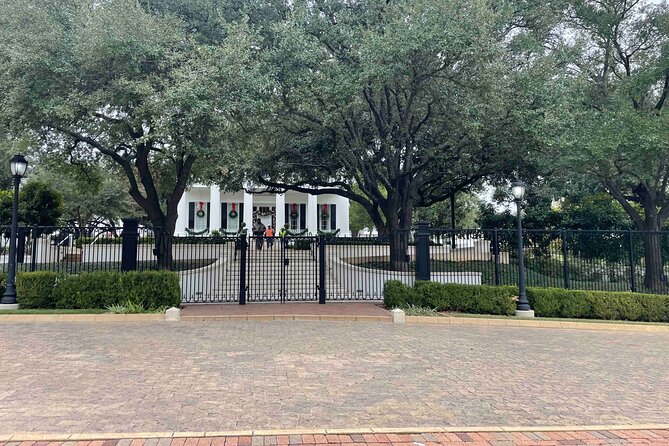
The tour ends at the Texas Governor’s Mansion at 1010 Colorado Street. The building is one of Austin’s most historic, and it was once home to Sam Houston.
It is also considered one of the city’s most haunted places. Ending here gives the route a fitting final stop: a major civic building with political history, famous occupants, and ghost stories of its own.
You should think of the Governor’s Mansion as the endpoint rather than a scheduled house visit. The tour does not include entry, and tickets are not required for the experience. The listed operating window runs every day from midnight to 11:30 p.m., which reflects the flexibility of the audio app rather than a promise of interior access.
The finish is convenient if you are already exploring central Austin. You can stop listening when you reach the mansion, or spend a little time nearby before continuing with your evening.
How the app format changes the experience
The biggest selling point is control. You can start when you want, pause for a meal or drink, stop to read a historic sign, and pick up the route again later. The tour never expires, so you are not forced to finish in one outing.
That flexibility suits solo visitors especially well. One person can explore without waiting for a group, and a business visitor with a free hour can fit the walk around other plans. Couples, families, and small groups can also use it, but everyone needs access to the audio and route instructions.
The tradeoff is the lack of a human guide. No one is there to answer a question, adjust the pace for your group, or point out something unexpected. You need a charged phone, a working connection to the tour app, and enough attention to follow the route.
The experience is offered in English only. Most participants can take part, service animals are allowed, and the route is near public transportation. The information provided does not give detailed notes about sidewalk conditions or the exact accessibility of every stop, so anyone needing specific mobility information should check before booking.
Price, timing, and who gets the best value
At $9.75 per person, this is inexpensive for a central Austin activity. You are paying for a narrated route and access to the stories, not a meal, attraction admission, or live performance.
I see the best value for someone who wants a little structure without committing to a fixed group schedule. The tour gives you a clear path through downtown and enough historical background to make the buildings more meaningful. It also costs little enough to pair with another Austin activity.
The value is less obvious if you want a full historical tour with detailed questions and conversation. A live guide would offer more personality and can respond to your interests. Here, the value comes from independence, low cost, and the ability to reuse the tour whenever you like.
The tour is private in the sense that only your group participates. That does not mean a private human guide accompanies you. It means you use the app with your own party rather than joining a shared walking group.
Free cancellation is available if you cancel at least 24 hours before the start time. Cancellations within 24 hours are not refunded, and changes during that period are not accepted.
My recommendation for an evening in downtown Austin
I would choose this tour if I wanted a low-cost introduction to Austin’s haunted sites and preferred to explore independently. The route has enough real history to keep it from feeling like a string of random ghost claims, and the stops include some of the city’s most recognizable buildings.
I would start near dusk for the best atmosphere, as long as you are comfortable with the darker stories. I would also plan a pause at the Driskill, perhaps for a drink, while remembering that any food, drinks, or entry fees are extra.
You should skip it if you want an expert guide beside you or a tour built around interior visits. But for a solo explorer, a couple, a family, or a small private group with one free hour, the combination of flexibility, memorable stories, and a $9.75 price makes this an easy choice.
FAQ
How much does the Austin ghost walking tour cost?
The tour costs $9.75 per person.
How long does the tour take?
The walking tour takes approximately one hour to one hour and 15 minutes.
Where does the tour begin?
It begins outside the Bremond House at 700 Guadalupe Street, Austin, Texas 78701.
Where does the tour end?
It ends at the Texas Governor’s Mansion at 1010 Colorado Street in Austin.
Is a human guide included?
No. The experience is provided through a smartphone walking tour app and does not include a human guide.
What language is available?
The tour is offered in English.
Do I need admission tickets for the stops?
No. Admission tickets are not included, but you are not required to enter the attractions to take the tour.
Can I take the tour at any time?
Yes. You can go at your own pace and start anytime during the listed operating period. The tour never expires.
Can I cancel for a full refund?
Yes, if you cancel at least 24 hours before the experience start time. Cancellations made within 24 hours are not refunded.
Just added around the USA
- Self Guided Driving Audio Tour of Saguaro National Park★ 3.0 · 4 reviews
- Self-Guided Audio Driving Tour of Mount Lemmon★ 5.0 · 4 reviews
- Saguaro National Park Self-Guided Audio Tour★ 3.5 · 11 reviews
- A Self Guided Audio Tour in Tombstone★ 4.0 · 11 reviews
- Catskills Scenic Byway Self-Guided Driving Audio Tour★ 4.0 · 9 reviews
- Big Bend National Park Self Guided Audio Tour Guide★ 5.0 · 12 reviews
- Self-Guided Audio Driving Tour in Catskills Scenic Byway★ 4.5 · 7 reviews
- Black Canyon of the Gunnison NP Self-Guided Driving Audio Tour★ 3.5 · 7 reviews
Smartphone Audio Tours, compared.

Colosseum & Forum with Audio Guide App -Optional Arena
Read our review →
Timed Entry to Michelangelo’s David + Audio App
Read our review →
Cathedral & Brunelleschi’s Dome Ticket & Audio App
Read our review →
Michelangelo’s David Priority Ticket & Audio App
Read our review →
Uffizi Priority Ticket & Masterpieces Audio App
Read our review →
Castel Sant’Angelo Entry Ticket & Digital Audioguide
Read our review →
Pantheon Priority Entry Ticket & Audio Guide App
Read our review →Browse the lists this tour appears in