

REVIEW · JAPAN AUDIO TOURS
Audio Guide App Japan Tokyo Kyoto Takayama Kanazawa Nikko and others
Japan rewards curiosity. This eight-day audio guide app gives you a large collection of self-guided routes across Tokyo, Kyoto, Takayama, Kanazawa, Nikko, and other Japanese destinations, with walking and driving options linked to Google Maps. I especially like the six language choices, including English, Spanish, Portuguese, German, Italian, and French, plus the short audio stops that can work well for families and independent visitors.
I also like the mix of famous sights and neighborhood-level routes. You can plan around Senso-ji, Kinkaku-ji, Fushimi Inari, Shibuya, Gion, Tokyo Tower, and other major sights, then use food routes or smaller temple walks to add local flavor. The main concern is the app experience: one buyer could not use the product because the access code did not arrive, and found the app difficult to understand. The overall score is 2.8 from four ratings, so you should treat the technology as a useful aid, not a guaranteed substitute for a live guide.
Key points before you buy
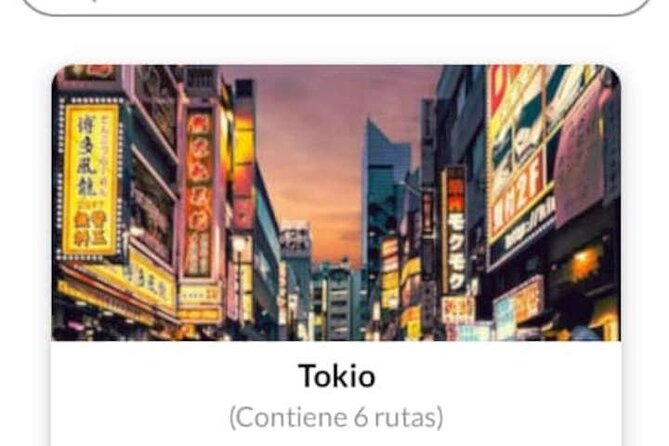
- 18 audio stops around Tokyo Bay and Odaiba: See the Rainbow Bridge, Gundam, Daiba Park, Miraikan, and more with a mix of walking and car routes.
- 29 points in Shibuya: Combine Meiji Shrine, Omotesando, Takeshita Street, Hachiko, and other central Tokyo sights.
- Kyoto coverage is especially broad: Routes include northern Kyoto, Higashiyama, Arashiyama, Gion, Fushimi, and the city’s best-known temples.
- Short audio segments suit families: One rating praised the concise explanations in Takayama, noting that teenagers liked getting just enough information at each stop.
- Six languages are available: English, Spanish, Portuguese, German, Italian, and French make the product useful for mixed-language groups.
- The $87 price buys access for about eight days: Its value depends on how many routes you actually use and whether the access system works smoothly.
What the $87 package really gives you
This is not a single guided excursion with a guide waiting at a meeting point. It is a digital sightseeing library for an eight-day period, built around audio commentary, written information, maps, and suggested routes.
You can choose a neighborhood, open a point of interest, and listen while standing nearby. Google Maps links and geolocation are intended to help you find each stop. The web panel also lets you adjust your own route and keep travel documents in one place.
That flexibility is the best reason to consider it. Japan’s major cities can overwhelm you with choices. A route through one district gives your day some shape without forcing you to follow a guide’s schedule. You can skip a museum, linger at a shrine, or stop for lunch when you feel like it.
At $87, the value is not automatic. If you use the app for several days across Tokyo and Kyoto, the price can make sense compared with booking several private tours. If you only listen to a handful of stops, it becomes an expensive collection of facts. I would buy it only if you expect to use multiple routes.
The package is described as an eight-day experience, but the supplied details do not set out a precise schedule for every destination. Days three through eight contain many generic audio-guide points without named stops. That means you should see the product as broad in coverage, but not assume every day has a fully mapped program like the Tokyo and Kyoto sections.
More Smartphone Audio Tours in the world:
- Rome: Colosseum & Forum with Audio Guide App -Optional Arena
★ 4.2 · 24,770 reviews - Florence: Timed Entry to Michelangelo’s David + Audio App
★ 4.6 · 19,496 reviews - Florence: Cathedral & Brunelleschi’s Dome Ticket & Audio App
★ 4.4 · 6,973 reviews
Tokyo Bay, Odaiba, and the city’s modern face
The first Tokyo collection focuses on Odaiba and nearby waterfront sights. It includes 18 points of interest, among them Tokyo Tower, the Fuji TV Headquarters, Odaiba, Daiba Park, Rainbow Bridge, the Statue of Liberty replica, Gundam, DiverCity, Miraikan, Aqua City, Decks, and Sumida Cruise.
This is a useful introduction to Tokyo’s modern side. Daiba Park gives you a different view of the bay, while the giant Gundam and Fuji TV building make clear that Tokyo is as much about pop culture and technology as old shrines. Miraikan adds a science focus, and Rainbow Bridge ties the district together visually.
You can follow the area on foot or by car. That choice matters because Odaiba is spread out, with shopping centers and attractions separated by broad roads and open spaces. The driving route may suit a group with access to a car, while the walking route lets you take your time between the waterfront points.
The same collection also includes Roppongi Hills, the Nezu Museum, Shibakoen, Sengaku-ji Temple, the Ako Gishi Museum, the Mori Art Museum, and Sumida Cruise. This gives you a useful contrast between contemporary Tokyo, art, gardens, and samurai-era memory.
The main limitation is scale. This is too much for one relaxed day. I would select three or four stops, then use the map to build a manageable route rather than trying to complete every point.
Central Tokyo, Shibuya, and Shinjuku
The Central Tokyo section covers Nezu Shrine, Shinobazu Avenue, Rikugien, Koishikawa Korakuen Gardens, Akihabara, Ginza, the Imperial Palace’s East Gardens, Kitanomaru Park, and other points in Bunkyo, Chiyoda, and Chuo.
These neighborhoods offer very different experiences. Akihabara is tied to electronics and popular culture, Ginza to polished shopping streets, and the gardens provide quieter breaks. Rikugien and Koishikawa Korakuen are especially useful choices when you need an hour away from crowds and traffic.
The route is described as a car route, so check the actual directions in the app before setting out. Tokyo’s rail system is often the more practical way to connect districts, and the product description does not promise transportation tickets or a vehicle. The audio guide can tell you what you are seeing, but it does not replace a transit plan.
Shibuya receives the largest treatment, with 29 audio points and two walking routes. The route includes Meiji Shrine, Omotesando Avenue, the Imperial Garden, Hachiko Statue, Shibuya 109, Nezu Museum, and Takeshita Street.
I like this combination because it links Tokyo’s ceremonial spaces with its youth culture. Meiji Shrine offers a calmer setting, while Takeshita Street and Shibuya 109 show the city’s fashion-driven side. Hachiko is a quick stop, but the audio context can make it more meaningful than a simple photograph.
Shinjuku has 13 audio points, including Shinjuku Gyoen National Garden, the Tokyo Metropolitan Government Viewpoint, and Toho cinemas. The car route is meant to help you cover the district, but Shinjuku is another place where you should avoid packing in too much. Choose the garden or viewpoint, then leave time to wander.
Asakusa, Ueno, and eastern Tokyo
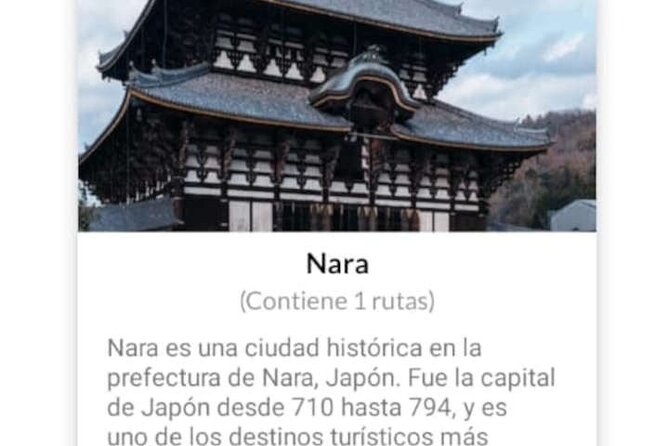
Another Tokyo route focuses on temples, shrines, markets, museums, and the Tokyo Skytree. The named stops include Senso-ji, Kiyomizu Kannon-do, Bentendo Temple, Ameya-Yokocho Market, the Edo-Tokyo Museum, and Skytree Tower.
This is one of the strongest combinations in the package because the stops show several sides of old and modern Tokyo in a compact part of the city. Senso-ji gives you a major temple experience, while Ameya-Yokocho brings food stalls and market energy. Bentendo and Kiyomizu Kannon-do add smaller religious sites that are easy to miss without some direction.
The eastern Tokyo section adds 14 points across Edogawa and Koto. It includes Tokyo Big Sight, teamLab Planets, the Edo Museum, Kiyosumi Garden, Funabori Tower Hall, and routes for Tokyo Disneyland and Tokyo DisneySea.
This is a wide spread of attractions. The audio guide may help you decide what deserves your time, but the app cannot remove the distances between them. Treat the area as a menu, not one continuous walk. Also note that the named museums overlap slightly with other Tokyo sections, so check the route details to avoid repeating the same stop.
A few more audio tours around the world worth a look
- Barcelona: Sagrada Familia Entry Ticket with Audio Guide
★ 4.6 · 105,312 reviews - Rome: Pantheon Fast-Track Ticket and Official Audioguide
★ 4.5 · 27,353 reviews - Barcelona: Casa Batlló Entry with Self-Audioguide Tour
★ 4.7 · 25,359 reviews - Amsterdam: 75 Minute City Canal Cruise with Audio Guide
★ 4.4 · 19,938 reviews
Kyoto’s northern temples and eastern districts
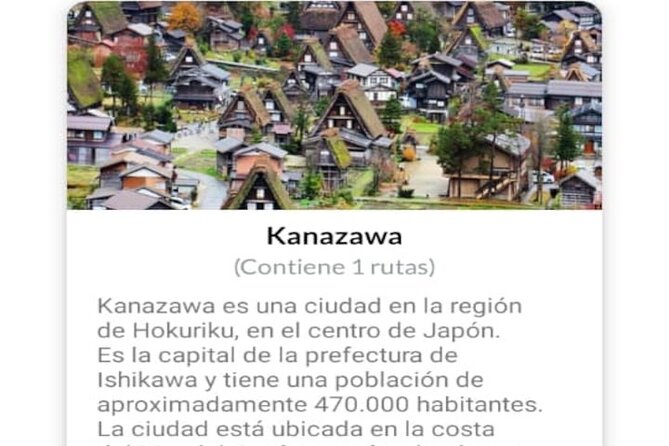
Kyoto receives the most detailed treatment. Northern Kyoto has 19 points, including Kinkaku-ji, Ryoan-ji and its stone garden, Shimogamo Shrine, Daikaku-ji, Myoshin-ji, Mount Kurama, Kamigamo Shrine, and Kitano Tenmangu Shrine.
This route is valuable because northern Kyoto is not one compact attraction zone. The sights are spread out, and a suggested route can help you group them sensibly. Kinkaku-ji is the famous golden temple, while Ryoan-ji is better known for its spare stone garden. Shimogamo and Kamigamo offer a different mood, with long-standing shrine settings and more space around the main buildings.
A car route is included, but the information provided does not specify transport arrangements. You should confirm the route before relying on it, especially if you plan to use public transportation instead.
The southern Kyoto section covers Fushimi Inari Taisha, Daigo-ji, Ninna-ji, Jonangu Shrine, and other points. Fushimi Inari is the headline stop, but the inclusion of Daigo-ji and Jonangu Shrine gives you alternatives when you want something beyond the best-known torii gates.
Higashiyama has 27 points, including Heian Shrine, Kyoto National Museum, Sanjusangen-do, Eikan-do, the Kyoto Art Museum, Nijo Castle, Chion-in, and the Kyoto Railway Museum. This is a large set, and it could support several days rather than one rushed outing.
I would use the audio explanations selectively. Pick a temple, listen before entering, then put the phone away for a while. Kyoto rewards attention to small details, and constant headphone use can make the city feel like a checklist.
Arashiyama, Gion, and Kyoto’s essentials
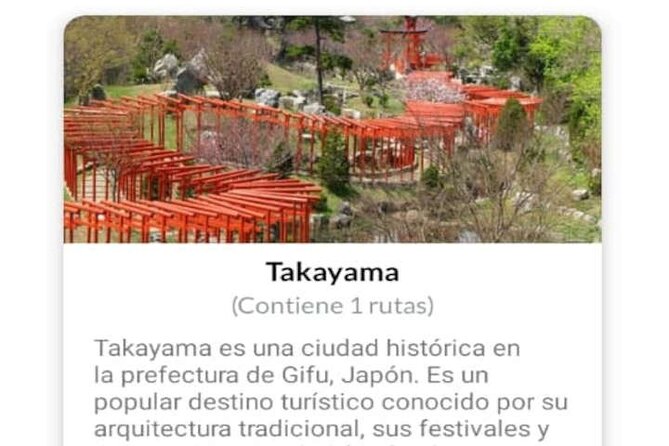
Arashiyama includes the Bamboo Forest, Daikaku-ji, Tenryu-ji, Saiho-ji, and other points linked by a walking route. The route can give structure to a district that is easy to visit in the wrong order.
The Bamboo Forest is a short experience, not a full-day attraction. Pairing it with Tenryu-ji or Daikaku-ji gives you more substance. The audio guide may be most useful here as a way to understand why each temple belongs on your route, rather than simply directing you from one photo stop to the next.
The Gion section covers the geisha district, Yasui Sanctuary, Pontocho Street, and other nearby points. This is a good place to slow down. You can use the route for orientation, but remember that Gion is a working neighborhood, not a stage set. Keep your distance from residents and avoid treating private doorways or people as photo props.
The Kyoto essentials route brings together Kiyomizu-dera, Ryoan-ji, Higashiyama Street, Heian Shrine, Kinkaku-ji, Nijo Castle, and the Philosopher’s Path. It is useful for a first visit, though it also repeats several sights from the more focused routes.
That repetition is not necessarily a flaw. It lets you choose between a broad overview and a neighborhood route. Still, at $87, you should compare the route lists before your trip so you know how much new material you are getting.
Takayama, Kanazawa, Nikko, and the less detailed days
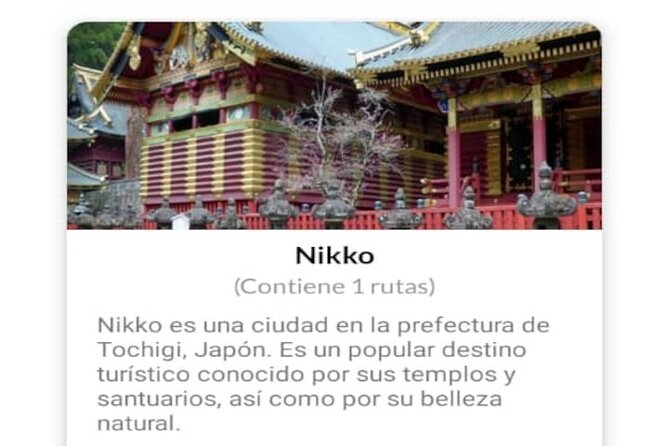
The product title includes Takayama, Kanazawa, Nikko, and other Japanese destinations, but the supplied stop details do not name their individual points in the same way as Tokyo and Kyoto. You should not assume that every attraction in those cities has equal depth.
The clearest evidence about Takayama is encouraging. The audio stops were short, and a family found the format useful because teenagers could listen to a brief explanation at each point. They also skipped stops to suit their own pace, which is exactly how this kind of product should work.
That short format is a strength when you are walking through a town with many small sights. You can pause, hear the essentials, and move on without committing to a 20-minute lecture. It is less satisfying if you want detailed cultural interpretation or lively conversation.
Days three through eight contain numerous generic points described as having detailed audio guidance, but the available information does not identify them. I would consider this a warning to check the destination lists inside the app before purchase. The Tokyo and Kyoto material is clearly named; the later days are harder to evaluate from the information provided.
Languages, maps, and the app’s weak spot
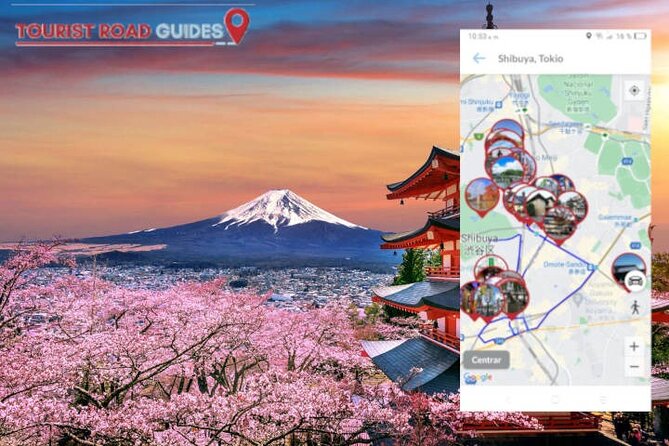
English, Spanish, Portuguese, German, Italian, and French are available. That is a real benefit for families or friends who prefer different languages, and it removes the need to share one live guide’s language choice.
Google Maps links and geolocation should make individual stops easier to find. The web panel lets you customize a route and store travel documents, which can reduce the number of separate notes and screenshots you carry.
The weak spot is access and ease of use. One rating gave the product one star after the access code did not arrive and the app instructions proved unclear. Since this is a non-refundable purchase, that issue matters more than it would with a flexible booking.
You should confirm that you receive the access information at booking and keep the confirmation details available. Also bring a charged phone and consider saving key route information where possible. The product depends on your device, your connection, and a working login.
Who should use this Japan audio guide?
I would recommend it most for independent visitors who enjoy setting their own pace but want more context than a bare map provides. Families may like the short audio format, especially with teenagers who are unlikely to listen to long talks.
It can also suit repeat visitors who already know how to get around and want themed routes through temples, markets, food areas, gardens, and neighborhoods. The private format means only your group uses the experience, but there is no live guide to answer questions or adjust the explanation.
I would be cautious if you want a polished, fully planned eight-day itinerary. The named Tokyo and Kyoto sections are substantial, but the later days are not described in enough detail to confirm equal coverage. I would also avoid buying it if you are uncomfortable troubleshooting an app.
Should you book it?
Book this audio guide if you want a flexible digital companion and expect to use many routes across Tokyo and Kyoto. The six languages, Google Maps links, walking options, and short Takayama-style audio stops give it practical value, especially for families and self-guided visitors.
Skip it if you need guaranteed technical support, a live human guide, or a clearly defined schedule for all eight days. The $87 price is fair only when you use the breadth of material. Because the purchase cannot be refunded or changed, check the destination coverage and access instructions before committing.
FAQ
How long is the audio guide experience?
The package is designed for approximately eight days of access.
Which languages are available?
Audio guides are available in English, Spanish, Portuguese, German, Italian, and French.
Which Japanese destinations are covered?
The experience covers Tokyo, Kyoto, Takayama, Kanazawa, Nikko, and other destinations in Japan. The named route details are most extensive for Tokyo and Kyoto.
Does the experience include walking routes?
Yes. It includes walking routes through neighborhoods, temple areas, Arashiyama, Gion, Shibuya, and other locations.
Can I create my own route?
Yes. The web panel allows you to customize your own route and store travel documents.
Can I cancel for a refund?
No. The experience is non-refundable and cannot be changed after purchase.
Just added around the world
- Coba Ruins: Self-Guided Walking Audio Tour in Mexico★ 3.5 · 2 reviews
- Self Guided Driving Audio Tour of Saguaro National Park★ 3.0 · 4 reviews
- Torino Walking Tour with Audio and Written Guide by a Local★ 4.5 · 35 reviews
- Trondheim’s Inner Circle: A Self-Guided Audio Tour★ 4.0 · 15 reviews
- Self-Guided Audio Driving Tour of Mount Lemmon★ 5.0 · 4 reviews
- A Tromsø Introduction: A Self-Guided Audio Tour★ 3.5 · 19 reviews
- Panorama Bus Tour with Audio Guide★ 4.0 · 3 reviews
- Saguaro National Park Self-Guided Audio Tour★ 3.5 · 11 reviews
Smartphone Audio Tours, compared.

Colosseum & Forum with Audio Guide App -Optional Arena
Read our review →
Timed Entry to Michelangelo’s David + Audio App
Read our review →
Cathedral & Brunelleschi’s Dome Ticket & Audio App
Read our review →
Michelangelo’s David Priority Ticket & Audio App
Read our review →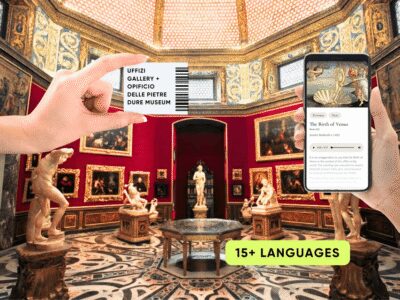
Uffizi Priority Ticket & Masterpieces Audio App
Read our review →
Castel Sant’Angelo Entry Ticket & Digital Audioguide
Read our review →
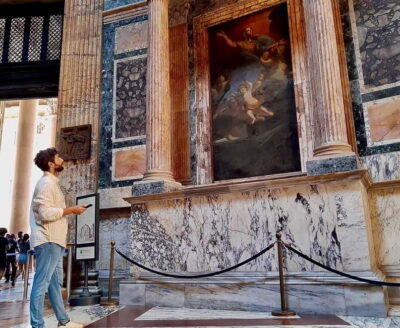
Pantheon Priority Entry Ticket & Audio Guide App
Read our review →Browse the lists this tour appears in