REVIEW · ATHENS AUDIO TOURS
Athens: Roman Agora & Ancient Agora E-ticket & 2 Audio Tours
Ancient Athens rewards curious walkers. This one-day ticket pairs the Roman Agora and Ancient Agora with offline smartphone audio tours, letting you visit at your own pace without joining a group. I like the fixed two-hour spacing between suggested entries, and I like having maps, narration, and text stored on your phone for use without roaming charges. The main caution is that the audio quality may not suit everyone, and current construction changes the Ancient Agora entrance.
At $51 per person, the package makes the most sense when you want both archaeological sites and plan to use the audio content. It is less attractive for children and other visitors eligible for free or reduced admission, since those tickets must be obtained at the site and the booking is non-refundable. Bring comfortable shoes, headphones, a charged phone, and patience for Athens sunshine.
Key points to know before you book
- The Roman Agora comes first in every suggested schedule: Choose an 8, 10, 1, or 2 pm Roman Agora entry, followed two hours later by the Ancient Agora.
- The Ancient Agora entrance has changed: Construction has closed the main entrance, so you must use the temporary entrance on Apostolou Pavlou Street at Akamantos Street.
- The audio tours work offline: Download the app and content before arriving. The package includes text, audio narration, and maps.
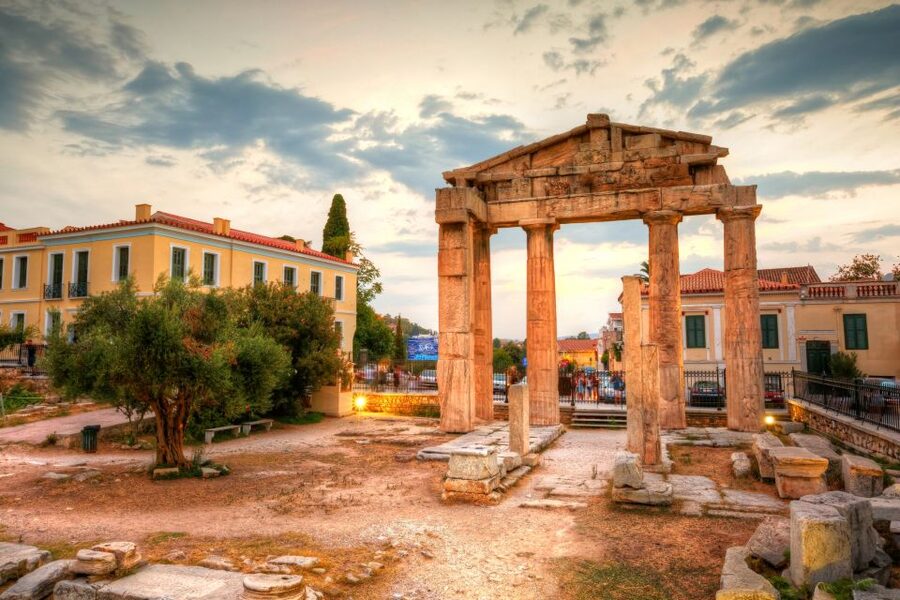
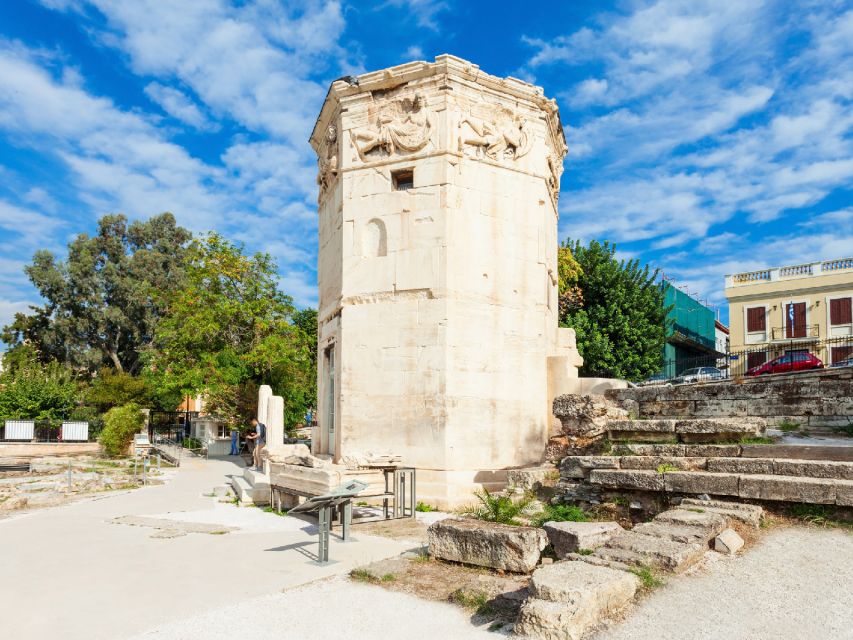
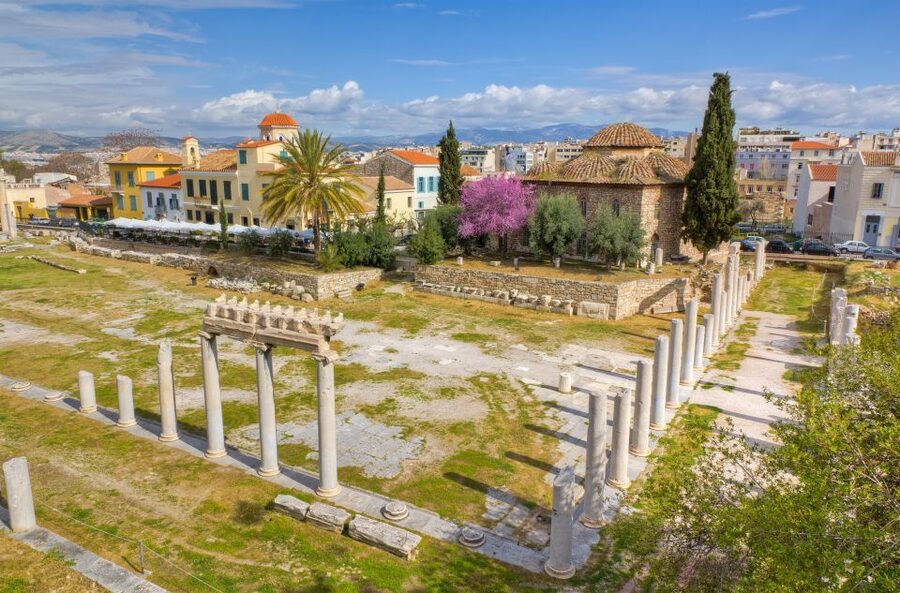
- The Roman Agora is compact but visually strong: Look for the Gate of Athena Archegetis, the Tower of the Winds, and the Mosque of the Conqueror.
- The Ancient Agora offers more to explore: Its archaeological remains and the museum in the Stoa of Attalos make it the fuller visit.
- Discount tickets are a weak point: Free and reduced admission tickets are not supplied through this booking and do not include skip-the-line privileges.
Two Agoras, two different views of Athens
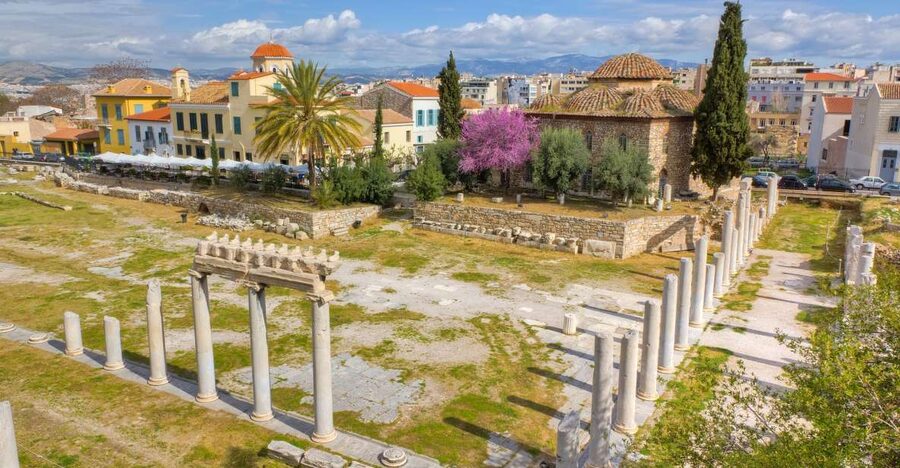
The word agora means a public gathering place, but these two sites tell different chapters of the city. The Roman Agora presents Athens under Roman influence. The Ancient Agora takes you closer to the civic center of classical Athens, where public life, trade, politics, and religious activity met.
You should think of the pair as a useful contrast rather than two similar ruins. The Roman Agora is smaller and easier to see quickly. The Ancient Agora takes more time and has a museum, larger grounds, and more viewpoints.
The ticket is valid for one day only. That makes the timing important. You are not buying a flexible pass for several days. You are arranging two visits that work best as a single walking day in central Athens.
I like that the suggested schedules give you a two-hour gap between sites. That is enough time to see the Roman Agora without racing, walk toward the Ancient Agora, and allow for a short pause. The schedule still requires attention, though. Arrive late or lose track of time, and the neat plan can become awkward.
More History Audio Tours in Athens
- Athens: National Archaeological Museum Ticket w/ Opt. Audio
★ 4.4 · 713 reviews - Athens: Ancient Agora E-Ticket and Audio Tour
★ 3.9 · 413 reviews - Half Day Ancient Corinth and Canal VR Audio Guided Tour
★ 5.0 · 104 reviews
Starting at the Roman Agora near Monastiraki
The Roman Agora audio tour is designed to begin at the entrance on Epaminonda 6 to 22. The simplest route is to reach Monastiraki Metro Station, served by lines 1 and 3, then walk along Areos Street for about 230 meters toward the site.
This is a handy starting point for a day in central Athens. Monastiraki is easy to reach by metro, and the short walk keeps the first stage simple. You do not meet a guide or group at a set gathering point. Instead, you go directly to the entrance and start the audio tour there.
The Roman Agora itself is compact, which suits the first stop. The Gate of Athena Archegetis is one of the key sights, and the Tower of the Winds gives the site much of its character. The audio commentary is meant to explain the buildings and place them within Athens’ shift from classical Greek city to Roman-era center.
The tour ends inside the archaeological site at the Mosque of the Conqueror. That endpoint matters because you should not expect to finish exactly where you began. Follow the site route and allow a little time to orient yourself before leaving.
I would begin here even if you are not using the suggested timetable. One French-language review specifically found it better to start with the smaller Roman Agora, then continue to the Ancient Agora. That is sensible: you get a manageable first stop before reaching the larger and more demanding site.
What the Roman Agora gives you, and what it does not
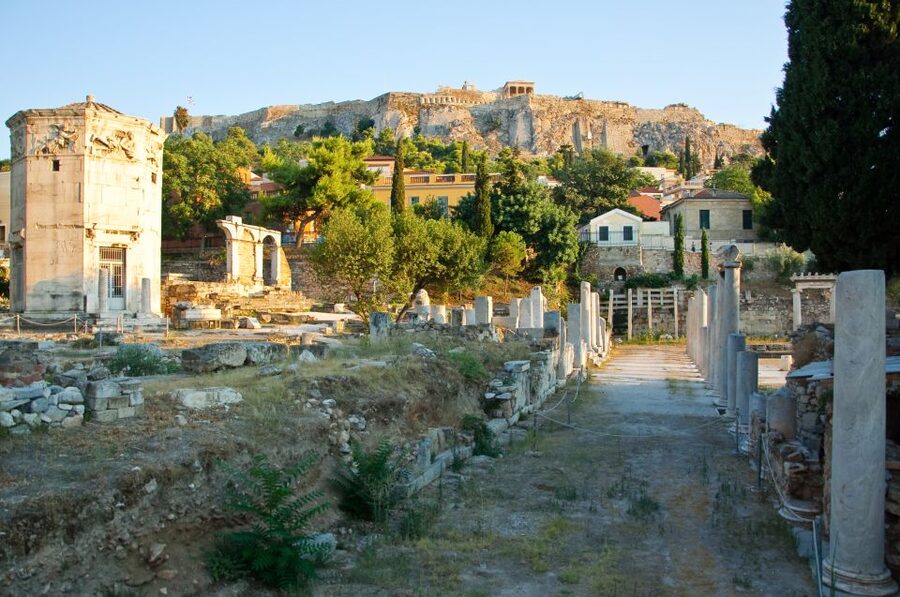
The Roman Agora is likely to appeal most if you enjoy architectural fragments, surviving gateways, and the way later cultures reused an older city. It offers strong photo opportunities, especially around the Gate of Athena Archegetis and the Tower of the Winds.
It may disappoint you if you expect a large archaeological park filled with standing buildings. One Spanish-language review found the Roman Agora disappointing compared with the Ancient Agora. That reaction is easy to understand. The Roman site is smaller, and its impact depends more on imagination and context than on the number of preserved structures.
This is where the audio tour can earn its cost. Without explanation, a compact ruin can become a quick photo stop. With narration, the gate, tower, and later structures have a clearer place in the story of Athens.
Still, the audio is not a guaranteed strength. One recent booking described the commentary as sounding like an AI voice, with weak pronunciation and not enough time to move between points. The tour provider should also update directions when works alter a site. If the narration feels stiff, pause it and read the text or use the map instead. You are not required to follow every spoken instruction at the exact pace suggested.
Reaching the Ancient Agora through the temporary entrance
The Ancient Agora currently requires extra attention. Construction has closed the main entrance, so you must use the temporary entrance on Apostolou Pavlou Street, at the level of Akamantos Street.
The only stated approach is on foot from Thissio Station. That means you should not rely on the route you may find in an older guidebook or on an outdated app map. Check the entrance details before leaving the Roman Agora, and leave enough time for the walk.
This entrance change is one of the most important practical details in the whole experience. A timed ticket is only useful if you reach the correct gate. The audio route may explain former construction work while failing to reflect current changes, so treat the on-site signs and staff instructions as the final authority.
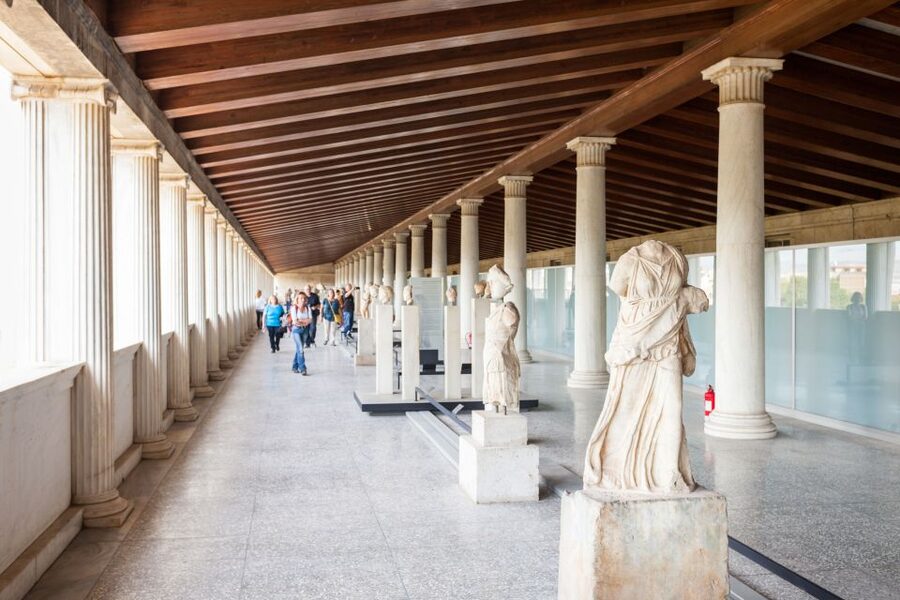
The Ancient Agora audio tour ends at the Stoa of Attalos, inside the archaeological site and not far from the entrance. This is a useful endpoint because the Stoa contains the site museum. You can finish the narration, continue looking around, and then spend time with the exhibits rather than rushing out.
More History Audio Tours in Greece
- Ancient Agora Self-Guided Tour with 3D & Audio (No Ticket)
★ 3.9 · 59 reviews - Athens National Archaeological Museum E-Ticket with Audio Guide
★ 3.0 · 57 reviews - Athens: Archaeological & Acropolis Museum Entry & Audio Tour
★ 4.3 · 21 reviews - Ancient Agora of Athens E-Ticket and Audio Tour
★ 3.5 · 5 reviews
Why the Ancient Agora is the main event
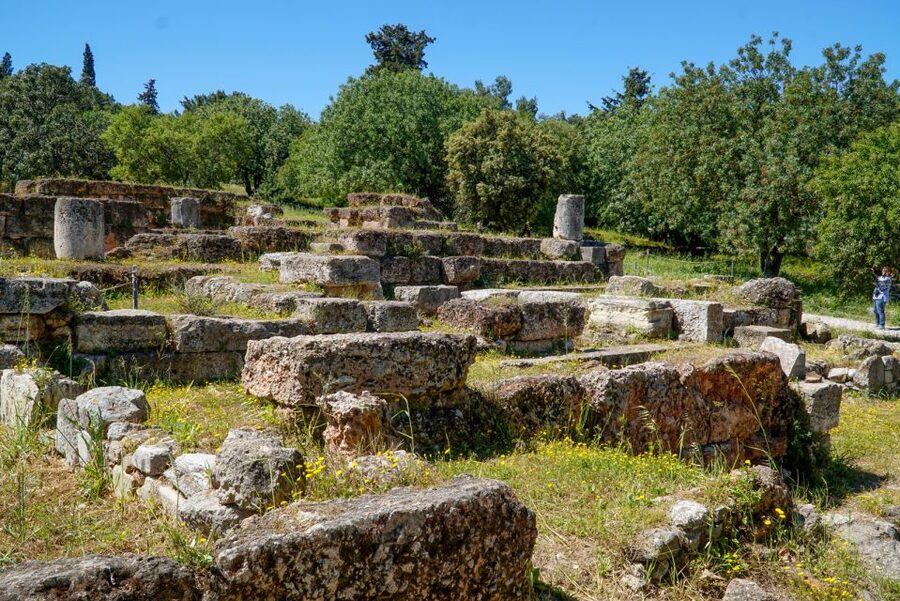
The Ancient Agora is the stronger half of this pair for most people. It covers a wider area and offers more varied remains, historical associations, and indoor material. The museum in the Stoa of Attalos is especially valuable because it gives you objects and displays to study after seeing the open-air ruins.
I like the way this second stop adds substance to the day. The Roman Agora helps you understand the city’s later development, while the Ancient Agora brings you closer to the Athens associated with democracy and the classical period. The audio tour is designed to connect those fragments with researched storytelling rather than leaving you to guess what each stone once did.
Allow the full two-hour gap for this visit rather than treating it as a quick add-on. The suggested combinations are:
- 8 am Roman Agora, 10 am Ancient Agora
- 10 am Roman Agora, noon Ancient Agora
- 1 pm Roman Agora, 3 pm Ancient Agora
- 2 pm Roman Agora, 4 pm Ancient Agora
The early option gives you more time in the day, while the later options may suit a slower morning. The supplied details do not promise that every part of the site will be open beyond your selected entry time, so follow the ticket instructions and site rules closely.
The Ancient Agora also offers viewpoints for city photographs. Bring sunglasses, a sun hat, and sunscreen. Athens can be hard on you when you are walking across exposed archaeological ground, and comfortable shoes matter more here than stylish footwear.
How the smartphone audio tours work
After receiving the ticket by email, download the app and activate both audio tours before you visit. The content includes audio narration, written text, and maps, all available offline. That is a real benefit if you do not want to depend on mobile data or a reliable signal among stone walls.
You need an Android phone version 5.0 or later, or an iPhone running a supported iOS version. The tours do not work with Windows Phones, iPhone 5 or 5C, the fifth-generation iPod Touch, iPad 4, iPad Mini 1, or older versions. Leave 200 to 300 MB of storage space on your phone.
You also need your own smartphone and headphones. Neither is included. A charged phone is essential, since the ticket, map, and narration all depend on it. Downloading at home or at your hotel is wiser than trying to prepare at the entrance.
The audio is offered in English, Spanish, German, French, and Italian. You can replay the tour before or after your visit, which is useful if you want to review the story later. The language choice and offline access make this more flexible than a fixed live talk, but the tradeoff is that you cannot ask questions.
A self-guided tour also lets you stop for photographs, skip a section, or listen again. That freedom is valuable at archaeological sites, where your pace may change from room to room. The weak point is delivery. The critical review of the commentary mentioned artificial-sounding narration, poor pronunciation, and insufficient time to move between stops. Consider the audio a helpful layer, not the sole reason to buy the ticket.
Is $51 per person good value?
The price is $51 per person. That is a serious amount for two archaeological admissions and app-based narration, so value depends on how much you use the package.
I see three benefits in the price. You get entry to both sites, the convenience of arranging them together, and two tours with offline maps and text. If you were already planning to visit both Agoras and want historical context without hiring a private guide, the package can save planning time.
The value drops if you only want the Ancient Agora. The Ancient Agora is the more substantial visit, and the Roman Agora may feel brief. It also drops for anyone eligible for free or reduced admission. Those tickets can only be obtained at the on-site ticket booth, and they do not receive skip-the-line privileges through this arrangement.
Be especially careful when booking for a family. The purchase is made per device used, not per participant, and the supplied information says that free or reduced tickets cannot be handled through this booking. One family booking described a 16-year-old who should have entered free, but the company would not refund the unused adult ticket. That makes it vital to check each person’s admission category before paying.
The activity is non-refundable. If your plans are uncertain, that policy matters more than the convenience of receiving a ready-made digital package.
Who will enjoy this setup most?
This experience suits independent sightseers who like to set their own pace and already feel comfortable using a phone for directions and audio. It is also a good match if you want the two sites in one day and prefer several languages to a live English-only guide.
It works well for a visitor who values background information but does not need conversation. You can pause the narration, replay sections, and use the written material when the spoken track moves too quickly.
It is less suitable if you want a human guide, personal recommendations, or help finding a changed entrance. It is also a poor fit if your phone is old, your battery is unreliable, or you dislike wearing headphones at archaeological sites.
The sites are only partially accessible for people with disabilities or reduced mobility. Check current conditions before booking, especially because construction is affecting the Ancient Agora entrance.
My practical plan for using the ticket
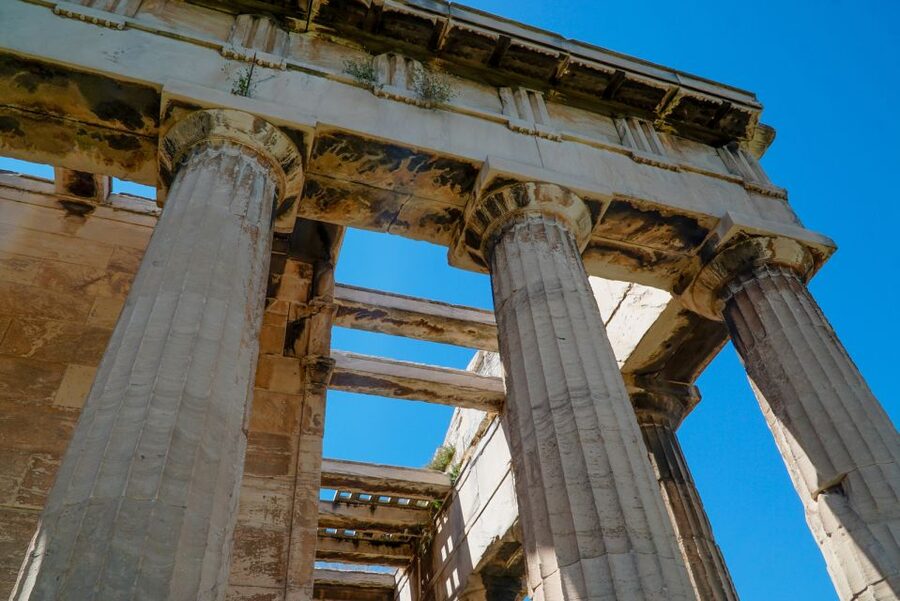
I would download both tours the night before and confirm that the maps open offline. I would also save the temporary Ancient Agora entrance details separately, since an old route could send you to the closed main gate.
For a first visit, I would choose the 8 am Roman Agora and 10 am Ancient Agora schedule if available. The smaller site works well as an opening stop, and the Ancient Agora deserves the greater share of your attention.
At the Roman Agora, I would focus on the Gate of Athena Archegetis and Tower of the Winds, then follow the commentary toward the Mosque of the Conqueror. At the Ancient Agora, I would save time for the Stoa of Attalos museum and the city views rather than listening while rushing from one marker to the next.
Wear shoes with good support. Carry water, sunglasses, a hat, and sunscreen. Keep your phone charged, use headphones, and obey any new instructions from site staff. Archaeological sites can alter routes, and official directions take priority over a prerecorded route.
Should you book it?
Book this if you want both Agoras, like self-guided touring, and will use the offline audio, maps, and text. The Ancient Agora is the stronger stop, while the Roman Agora makes a useful and compact introduction. The two-hour schedule is practical when you arrive prepared.
Skip it if you qualify for free or reduced admission, want a live guide, or are unsure of your schedule. The non-refundable price and discount limitation can create poor value, especially for families. If you do book, check your phone compatibility, download everything early, and plan for the temporary Ancient Agora entrance.
FAQ
How long is the experience valid?
The ticket is valid for one day. You select available starting times when booking.
What entry times are suggested?
The suggested combinations are 8 am Roman Agora followed by 10 am Ancient Agora, 10 am followed by noon, 1 pm followed by 3 pm, or 2 pm followed by 4 pm.
Is there a meeting point?
No. You go directly to each archaeological site using the ticket and tour instructions.
How do I reach the Roman Agora?
Take the metro to Monastiraki Station on lines 1 or 3, then walk along Areos Street for about 230 meters toward the Roman Agora entrance on Epaminonda 6 to 22.
How do I reach the Ancient Agora?
Because construction has closed the main entrance, use the temporary entrance on Apostolou Pavlou Street at the level of Akamantos Street. The stated access is on foot from Thissio Station.
What languages are available for the audio tours?
The audio tours are available in English, Spanish, German, French, and Italian.
Do the audio tours work without mobile data?
Yes. The package includes offline text, audio narration, and maps. Download the content before visiting.
What phone do I need?
You need an Android phone version 5.0 or later, or a supported iOS smartphone. The tour requires about 200 to 300 MB of storage and is not compatible with several older Apple devices or Windows Phones.
Are free or reduced admission tickets included?
No. Free and reduced admission tickets must be obtained at the on-site ticket booth and do not receive skip-the-line privileges through this booking.
More Smartphone Audio Tours in Greece
- Athens Audioguide – TravelMate app for your smartphone
★ 4.1 · 11 reviews - Athens: Kerameikos E-Ticket & Audio Tour
★ 4.1 · 10 reviews - Temple of Olympian Zeus: Self-Guided Audio Tour on your Phone (without ticket)
★ 4.0 · 8 reviews - E-ticket for Kerameikos with Audio Tour on Your Phone
★ 5.0 · 4 reviews
More Smartphone Audio Tours in Athens
- Acropolis Self-Guided Smartphone Tour w/Audio & 3D(No entry)
★ 3.9 · 62 reviews - Acropolis Museum E-Ticket and Multilingual Audio Guide
★ 4.0 · 42 reviews - Athens: Roman Agora E-Ticket and Audio Guide
★ 3.9 · 41 reviews - Acropolis E-Ticket with Audio Guide & Athens City Audio Tour
★ 3.5 · 28 reviews
Just added around Athens
- Temple of Olympian Zeus: Self-Guided Audio Tour on your Phone (without ticket)★ 4.0 · 8 reviews
- Athens Ticket Pass: Acropolis & 6 Sites with 5 Audio Guides★ 3.5 · 84 reviews
- Ancient Agora of Athens: A Self-Guided Audio Tour★ 3.5 · 3 reviews
- Self Guided Tour In Athens With 100 Captivating Audio Stories★ 4.0 · 4 reviews
- Athens Hop-On Hop Off w/ Acropolis & Acr.Museum tickets & 3 audio★ 3.0 · 5 reviews
- E-ticket for Kerameikos with Audio Tour on Your Phone★ 5.0 · 4 reviews
- Athens Acropolis Museum Reserved Entry Ticket and Audio Tour★ 3.0 · 2 reviews
- Audioguided tour of Athens’ alternative neighbourhood of Exarchia★ 5.0 · 2 reviews
Smartphone Audio Tours, compared.

Colosseum & Forum with Audio Guide App -Optional Arena
Read our review →
Timed Entry to Michelangelo’s David + Audio App
Read our review →
Cathedral & Brunelleschi’s Dome Ticket & Audio App
Read our review →
Michelangelo’s David Priority Ticket & Audio App
Read our review →
Uffizi Priority Ticket & Masterpieces Audio App
Read our review →
Castel Sant’Angelo Entry Ticket & Digital Audioguide
Read our review →