
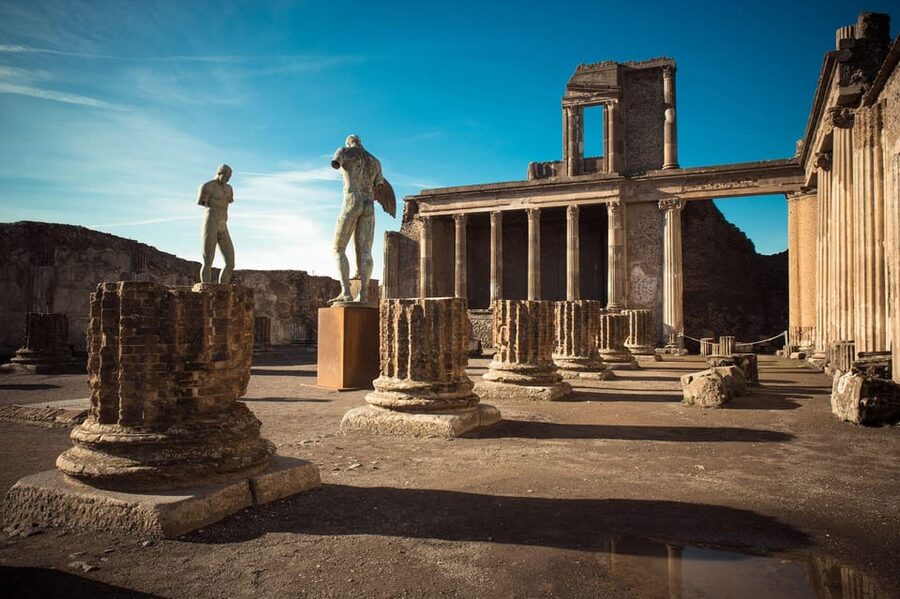
REVIEW · POMPEII AUDIO TOURS
Pompei: Audio guide of the archeological site
Pompeii comes alive through your headphones. This $5 audio guide gives you a focused way to read the ancient streets, villas, markets, temples, and bathhouses, rather than wandering past them without context. I especially like the clear map and the option to use the file offline, both useful in a sprawling archaeological site.
The 50-minute narration also gives your visit a sensible shape, with stories about daily life and Pompeii’s tragic fate. The main drawback is that the entrance ticket and earphones cost extra, and the mixed 3.4 rating shows that the navigation may not work equally well for everyone.
Key points about the Pompeii audio guide

- A 50-minute route through ancient Pompeii: The recording focuses on streets, homes, public buildings, markets, temples, bathhouses, and household frescoes.
- A map helps you follow along: This matters in a large site where it is easy to lose your sense of direction.
- Offline listening is included: You receive a link to a digital file that can be used without an internet connection.
- The $5 price is modest: It is an inexpensive way to add historical context, but it does not cover admission or earphones.
- Italian and English are available: The audio guide and host or greeter support are offered in both languages.
- Feedback is mixed: Several recent ratings praise its usefulness and map, while one low rating specifically calls the route misleading.
What this Pompeii audio guide actually gives you

This is not a guided walk with a large group, a live historian, or a person leading you from one corner of the site to the next. It is a downloadable audio experience designed to accompany your visit to the archaeological site.
You receive a digital file, map, photo, and documentation. The main feature is the roughly 50-minute narration, which explains what you are seeing as you move through Pompeii. The guide is available in Italian and English.
That format gives you control. You can listen at your own pace, pause when you want to examine a building, and return to a section later. Since the file remains available offline, you can download it before entering the site and avoid relying on a mobile signal while walking among the ruins.
The guide is valid for two days. That is useful because you do not have to rush through the entire archaeological area in a single visit. You can listen to the main 50-minute program on one day, then revisit parts of the site or replay sections on the next.
A few more audio tours around Pompei Campania worth a look
- Pompeii: Skip-the-line Entry Ticket with Audio Guide & Map
★ 3.9 · 3,153 reviews - Pompeii: Skip-the-Line Entry Ticket with Digital Guide App
★ 4.1 · 770 reviews - Pompeii: Skip-the-Line Entry & Audioguide
★ 3.8 · 225 reviews
Following Pompeii’s streets with the included map
The map is one of the most useful parts of this experience. Pompeii is not a single monument with one obvious viewing path. It is an ancient city, and its streets lead toward different kinds of remains, from public buildings to private homes.
A good map helps you match the narration to the ruins in front of you. The strongest practical feedback about this audio guide centers on that point. One five-star comment specifically praised having a map to follow the path, and another described the guide as very useful.
I would download the file and look over the map before you begin. Get familiar with the broad route, then use the audio as a companion rather than blindly following every instruction. That small bit of preparation can save you from stopping in the wrong place.
There is one caution here. A one-star rating described the guide as misleading. Since the exact route details are not provided, I would not assume that every direction will be perfectly clear at every turn. Treat the map as an aid, keep your bearings, and compare the narration with the names or signs you see on site.
The opening story: a city preserved by volcanic ash
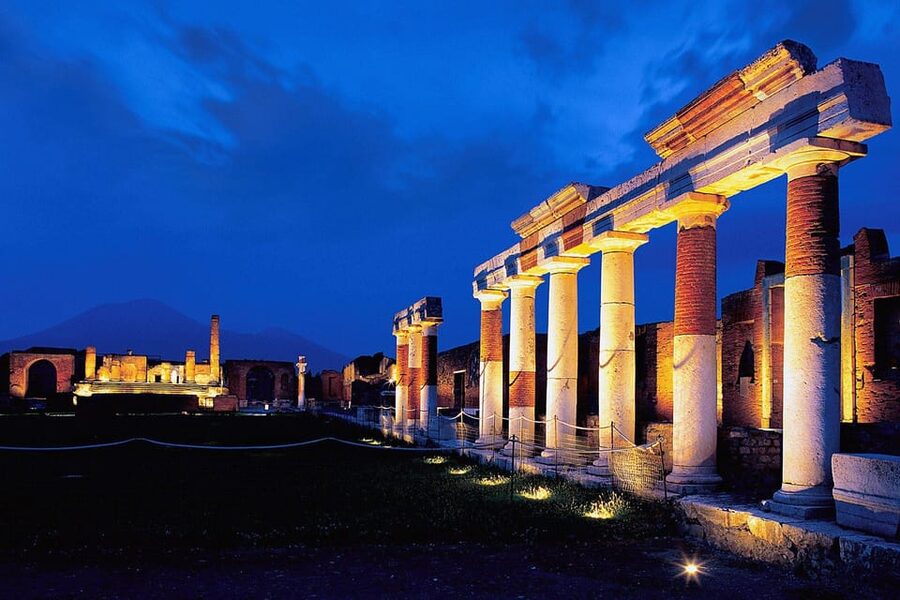
The guide introduces Pompeii as a once-thriving Roman city preserved for centuries by volcanic ash. That framing gives the rest of the walk its emotional weight.
You are not simply looking at old walls. You are being asked to picture a functioning city, with people moving through streets, working in markets, visiting public buildings, and living inside decorated homes. The narration connects physical remains with daily routines, which is especially helpful when a building is reduced to foundations, columns, or fragments of painted plaster.
This is where an audio guide earns its modest price. Without explanation, a ruin can look like a pile of stones or a half-readable wall. With a clear story, you can begin to understand how the pieces fit together.
The guide also covers Pompeii’s tragic fate. It does not treat the site only as a collection of beautiful ruins. It links the city’s ordinary life with the disaster that preserved it, giving the walk a stronger sense of place and loss.
Markets, streets, and the daily life of Pompeii
The market areas offer a useful change from grand monuments. They bring the guide down to street level, where you can think about buying food, meeting people, and moving through a working town.
The supplied description does not identify individual market buildings or promise a fixed stop-by-stop route, so you should not expect a detailed shop-by-shop tour. Instead, the audio provides broader context about how city life functioned.
I like this part of the experience because it keeps Pompeii from becoming only a story about wealthy villas and temples. Markets help show the ordinary side of the city. The guide’s focus on daily life should appeal to you if you prefer human stories to a long list of construction dates.
The narration is also useful for first-time visitors who do not know what deserves attention. You may notice an open space, a wall, or a row of rooms without understanding its role. The audio gives you a reason to stop and look more closely.
Same place, a different route to walk:
- Pompeii: Skip-the-Line Ticket with Audio Guide and Map
★ 4.0 · 117 reviews - From Pompeii: Vesuvius Entry with Transfer and Audioguide
★ 4.2 · 74 reviews - Pompeii & Herculaneum: Skip-the-line & Digital Guide App
★ 4.0 · 35 reviews - Herculaneum and Pompeii in one day: Audioguides + Tkts (art)
★ 3.7 · 22 reviews
Villas and household frescoes
The private homes are among the most intimate subjects in the recording. The guide discusses villas and household frescoes, helping you connect painted decoration with the people who lived in these rooms.
The material is not presented only as grand architecture. It also points toward domestic life and personal spaces. That balance matters. Public monuments can show how a city presented itself, but homes reveal how people lived behind closed doors.
You should allow yourself time to pause the recording here. A 50-minute guide does not mean you must listen without interruption for exactly 50 minutes. If a fresco or interior catches your eye, stop the audio, study the room, and resume when you are ready.
The main limit is that the information supplied does not identify particular villas or guarantee that every major house is included. I would view this as a selected introduction, not a complete catalog of Pompeii’s private architecture.
Temples and bathhouses: public life in stone
The audio guide also addresses temples and grand bathhouses. These buildings help explain the public side of Pompeii, where religion, social life, and civic identity met.
The temples offer a chance to think about the beliefs and rituals that shaped the city. The bathhouses show another part of communal life, with architecture designed for shared use rather than one household.
Here again, the narration matters because the remains may not explain themselves. Columns and walls can be impressive, but the guide gives you a reason to ask what the building was for and how it fit into the city.
Do not expect a live guide to answer follow-up questions. You will hear the prepared narration, but there is no promise of personal conversation or on-the-spot interpretation. The listed host or greeter languages are Italian and English, yet the central product remains the audio file.
What the 50-minute length means for your visit
Fifty minutes is long enough to give you a useful introduction without taking over the entire day. You can listen to the complete program, then continue exploring on your own.
That length is also a signal about the product. This is a concise overview, not an all-day study course. If you want detailed architectural analysis of every major structure, you may find the coverage too brief.
I see the timing as a strength for several kinds of visits:
- You have limited time and want a guided introduction.
- You prefer to explore independently rather than join a group.
- You want historical context but do not want to wear out your attention.
- You are visiting Pompeii with family or friends and need the freedom to pause.
- You plan to spend two days at the site and want a starting point before exploring further.
The two-day validity makes the short format more flexible. You can complete the audio in one sitting or spread it across your visit. Since offline access is included, download it before you begin and keep the file available for replay.
The $5 price and what you still need to pay
At $5 per person, this is a low-cost addition to a Pompeii visit. The price is easy to justify if you want basic orientation, clear storytelling, and the freedom to walk independently.
It is not a complete visit package. Your archaeological site entrance ticket is not included, and neither are earphones. You will need to arrange both separately.
The earphone detail is easy to overlook. If you want to listen without holding your phone to your ear, bring your own pair. The provided information does not say that earphones are supplied, so do not count on receiving them at the site.
The digital file, map, photo, and documentation add practical value, but the map is the real workhorse. The most positive comments focus on usefulness and navigation, especially the help it provides in following the route.
At this price, I would not book it expecting a specialist lecture. I would book it as an inexpensive layer of context that makes the ruins easier to understand.
Language choices and ease of use
The audio guide is available in Italian and English. That makes it suitable for English-speaking visitors who want more than a printed label, as well as Italian speakers looking for a guided explanation.
The file format also keeps things simple. You receive a link, then have unlimited access, including offline use. Downloading in advance is the sensible move, especially if you do not want to deal with internet access once you begin walking.
The guide includes documentation, which should help you understand how to use the material. Still, I would give yourself a few minutes before entering the site to open the link, save the file, and check the map.
The experience is offered with a host or greeter in Italian and English, but the available details do not explain how long that in-person contact lasts or whether the greeter walks with you. Plan around the audio guide itself, not around a full live tour.
What the ratings suggest about quality
The overall rating is 3.4 from 13 reviews, so I would approach this with reasonable expectations rather than assuming it is flawless.
Several five-star ratings praise the guide as interesting, useful, and easy to appreciate. A five-star comment in Italian says it was very useful, while another positive note thanks the presence of the map for helping with the route. These points line up with the strongest features of the product: simple access, practical navigation, and enough historical material to improve a self-guided visit.
There is also a one-star rating that calls the route misleading. That criticism matters because directions are central to an audio walk. If you lose track of the route, even good narration becomes harder to use.
My advice is straightforward: use the map, check your position often, and do not feel obliged to follow the audio in a rigid sequence. The guide should support your visit, not make you ignore the ruins in front of you.
Who should book this experience
I would recommend this audio guide to independent visitors who want a little structure without joining a group. It is a good fit if you enjoy stopping for photos, setting your own pace, and replaying explanations when a place catches your attention.
It also suits history-minded visitors who want context about markets, villas, temples, bathhouses, household frescoes, and daily life. Families may appreciate the flexibility, since not everyone needs to listen at the same speed.
You may want something else if you need precise personal guidance, detailed answers to questions, or a full-day examination of Pompeii. The 50-minute recording is an introduction and companion, not a private expert tour.
Cancellation and booking flexibility
You can cancel up to 24 hours in advance for a full refund. The reserve-now-and-pay-later option also lets you keep your plans flexible, which is useful when your Campania schedule is still changing.
The experience is valid for two days, though you should check availability for starting times. Those details matter less than the practical point: you have some room to adjust your visit instead of treating the audio as a fixed, one-time appointment.
Should you book the Pompeii audio guide?
Book it if you want a cheap, flexible way to understand Pompeii while walking at your own pace. The offline file, included map, English and Italian narration, and 50-minute format give it real practical value for a self-guided visit.
I would be cautious if navigation frustrates you or if you want a live expert beside you. The mixed 3.4 rating and one complaint about misleading directions mean you should use the map actively and keep expectations modest.
For $5, this is best seen as a helpful companion, not the entire Pompeii experience. Bring your own earphones, arrange your admission separately, download the file ahead of time, and let the narration add meaning to the streets and buildings you are about to see.
FAQ
How long is the Pompeii audio guide?
The audio guide lasts approximately 50 minutes.
How long is the audio guide valid?
The experience is valid for two days. You should check availability for the available starting times.
Is the entrance ticket to Pompeii included?
No. The entrance ticket to the archaeological site is not included.
Are earphones included?
No. Earphones are not included, so you should bring your own.
Can I use the audio guide offline?
Yes. You receive a link to the audio file with unlimited access, including offline use.
Which languages are available?
The audio guide is available in Italian and English. Host or greeter support is also listed in Italian and English.
Just added around Pompei Campania
- Pompeii: Pre-reserved ticket with audio guide★ 3.2 · 15 reviews
- Pompeii: Skip-the-Line Ticket with Audio Guide and Map★ 4.0 · 14 reviews
- Pompeii Tour_Skip the line ticket + audioguide★ 4.7 · 17 reviews
- Pompeii: Skip-the-Line Ticket with Audio Guide and Map★ 3.9 · 5 reviews
- Pompeii: Skip the Line Ticket + Audioguide★ 3.3 · 13 reviews
- Pompeii, skip-the-line ticket with smartphone audio guide on App★ 3.0 · 4 reviews
- Pompeii & Herculaneum: Skip-the-line & Digital Guide App★ 4.0 · 35 reviews
- Pompeii Skip-the-Line Ticket and Audioguide★ 4.2 · 7 reviews
Pompeii Audio Tours, compared.

Skip-the-line Entry Ticket with Audio Guide & Map
Read our review →
Skip-the-Line Entry Ticket with Digital Guide App
Read our review →




Pompeii & Herculaneum: Skip-the-line & Digital Guide App
Read our review →
Herculaneum and Pompeii in one day: Audioguides + Tkts (art)
Read our review →Browse the lists this tour appears in