
REVIEW · POMPEII AUDIO TOURS
Pompeii: Skip-the-Line Ticket with Audio Guide and Map
Pompeii rewards curious walkers. This flexible ticket lets you enter between 9:00 am and 3:00 pm, then explore the ancient city at your own pace with an audio guide and updated map. I like the freedom to linger at a frescoed house or move quickly through a temple without being tied to a group. I also like the early entry option, since a February visit showed how much calmer the site can feel in the morning. The main drawback is practical: Pompeii has unreliable internet, and collecting the audio device can mean a 20-minute walk from the train station.
You will see far more than a few ruined walls. The route can include thermopolia, Roman fast-food counters, spas, shops, theaters, temples, brothels, the amphitheater, and the casts of people caught in the eruption. Bring comfortable shoes, travel light, and carry valid identification if you need to rent the audio guide.
Key points to know before you go

- Enter anytime from 9:00 am to 3:00 pm: Your ticket is valid for one day, so you can choose a start time that suits your schedule.
- Use the map to shape your visit: Pompeii is large and easy to approach in sections, making the map useful for finding major sights.
- See the best-preserved Roman amphitheater: This is one of the most memorable stops included in the visit.
- Expect a self-guided experience: The audio guide explains the ruins, but you decide how long to stay at each site.
- Plan for weak internet: Downloading the guide may not work reliably inside Pompeii, so the physical audio device can matter.
- Pack light and wear solid shoes: Large bags are not allowed, and the ancient streets call for comfort rather than style.
Why this Pompeii ticket works well for independent sightseers
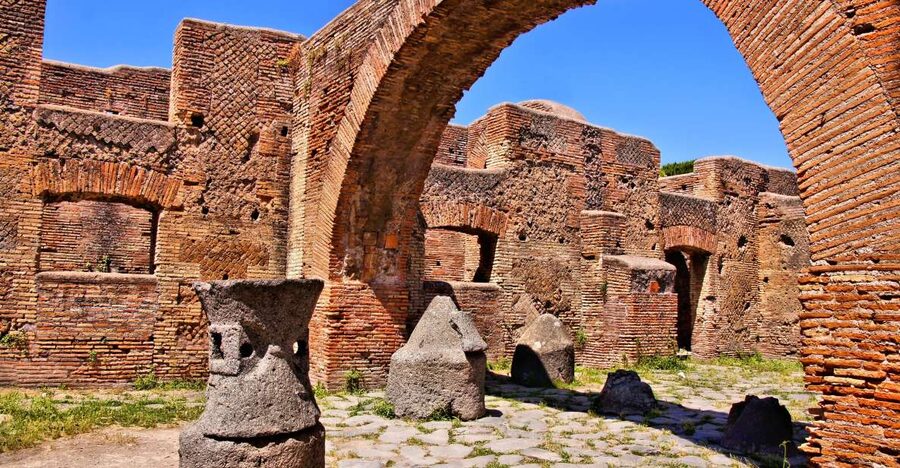
Pompeii is not a single monument. It is an entire buried city, with streets, homes, public buildings, shops, entertainment spaces, and religious sites spread across a broad archaeological area. That makes a self-guided ticket a sensible choice if you prefer to set your own rhythm.
You can enter during the stated window, from 9:00 am until 3:00 pm, and spend the day exploring the ruins. The ticket is valid for one day, not a timed guided walk. I like that flexibility because Pompeii can reward a slow visit, but it can also become tiring if you try to see every corner.
The skip-the-line feature saves time at the ticket entrance. It does not turn Pompeii into a quick attraction. Once inside, you still need to walk between the sights and use the map to decide where to go next.
The experience includes a Pompeii entry ticket listed at €20 and an audio guide. At a total price of about $44 per person, the value depends on how much you use the commentary and how useful the flexible entry is to you. If you only want basic admission, the added cost may feel high. If you want help understanding what you are seeing without joining a fixed group, the package makes more sense.
More Skip-the-Line Tickets in Pompei Campania:
- Pompeii: Skip-the-line Entry Ticket with Audio Guide & Map
★ 3.9 · 3,153 reviews - Pompeii: Skip-the-Line Entry Ticket with Digital Guide App
★ 4.1 · 770 reviews - Pompeii: Skip-the-Line Entry & Audioguide
★ 3.8 · 225 reviews
Finding the office beside Pasticceria De Vivo
The meeting point is outside the provider’s office, directly next to Pasticceria De Vivo. Staff are usually easy to identify by blue and yellow jackets. This is an important detail because the experience begins at the office, not simply at any Pompeii gate.
Give yourself time to find the meeting point. One practical issue is the audio-guide handoff. If you are arriving by train, collecting or returning the physical device may involve a walk of about 20 minutes from the station. That extra distance matters if you have luggage, limited time, or a tight onward connection.
The audio guide also requires a valid identification document for rental. Put your passport or another accepted ID somewhere easy to reach, rather than buried in a large bag. Without it, you may not be able to take the device.
The available staff languages are English, Italian, Spanish, and French. The audio guide itself is offered in English, Italian, French, German, Hebrew, Russian, Chinese, Portuguese, and Spanish. That broad language choice is one of the stronger features of the package.
Entering Pompeii and getting your bearings
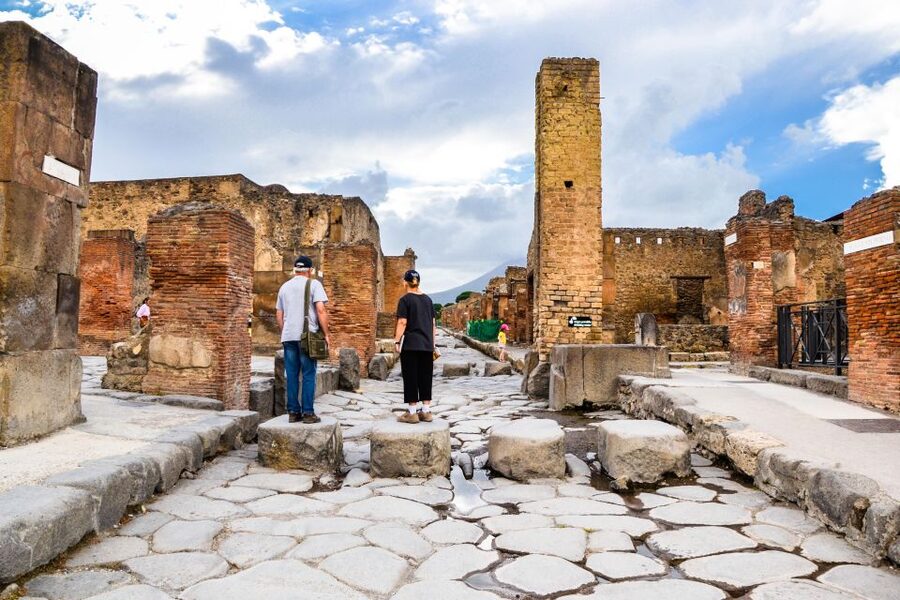
After using the skip-the-line entry, start with the map before walking too far. Pompeii can feel confusing at first because the ancient streets do not follow a modern visitor route, and the most interesting buildings are spread across the site.
The updated map helps you connect nearby sights and avoid wasting energy backtracking. I would use it to create a loose plan rather than follow every suggested point in order. Pick a few priorities, then allow time for unplanned discoveries.
The first impression is the scale of the city. You are walking through streets that once connected homes, shops, public spaces, and entertainment buildings. The value of the audio guide is not just naming each ruin. It can help explain how these pieces fit together as a working Roman city.
Do not expect every building to be open or equally preserved. Pompeii is an archaeological site, and access can vary. The map and audio guide give you a framework, but you should be ready to adjust your route.
Frescoed houses and everyday Roman life
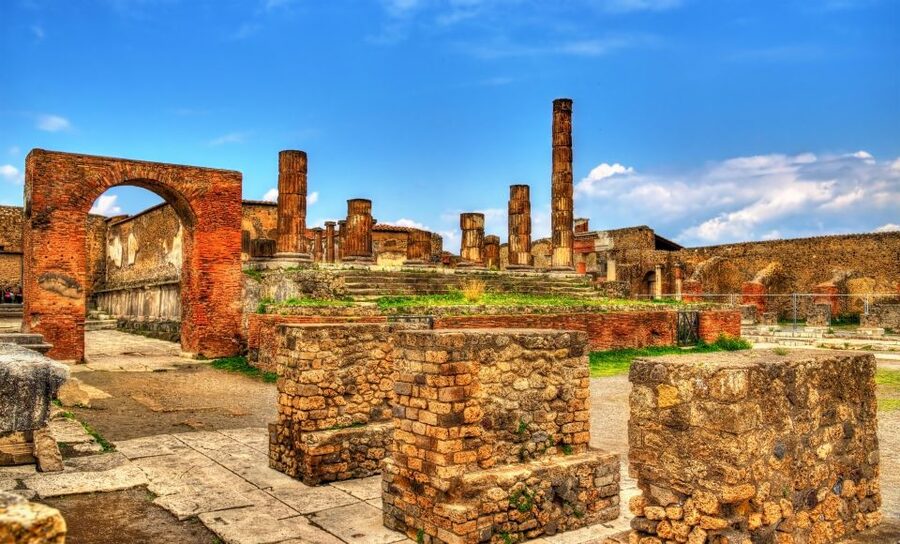
The private homes are among the most rewarding places to slow down. Frescoed walls give you a direct look at Roman decoration, taste, and household life. The paint and design can make these rooms feel far more personal than an empty foundation.
I would not rush through the houses simply because the larger public buildings seem more impressive. A small room with surviving decoration can tell you plenty about status and daily life. Use the audio guide to learn why the room mattered, then take a moment to look closely at the walls and layout.
The city also preserves ordinary commercial spaces. Shops and thermopolia show how food and goods were sold along the streets. These thermopolia functioned as quick food counters in the ancient city, a useful reminder that fast meals are not a new idea.
These details make Pompeii easier to understand. You are not only looking at grand temples and theaters. You are seeing a city built around work, food, religion, bathing, shopping, and entertainment.
A few more audio tours around Pompei Campania worth a look
- From Pompeii: Vesuvius Entry with Transfer and Audioguide
★ 4.2 · 74 reviews - Pompeii & Herculaneum: Skip-the-line & Digital Guide App
★ 4.0 · 35 reviews - Herculaneum and Pompeii in one day: Audioguides + Tkts (art)
★ 3.7 · 22 reviews - Pompeii Tour_Skip the line ticket + audioguide
★ 4.7 · 17 reviews
Spas, temples, shops, and theaters
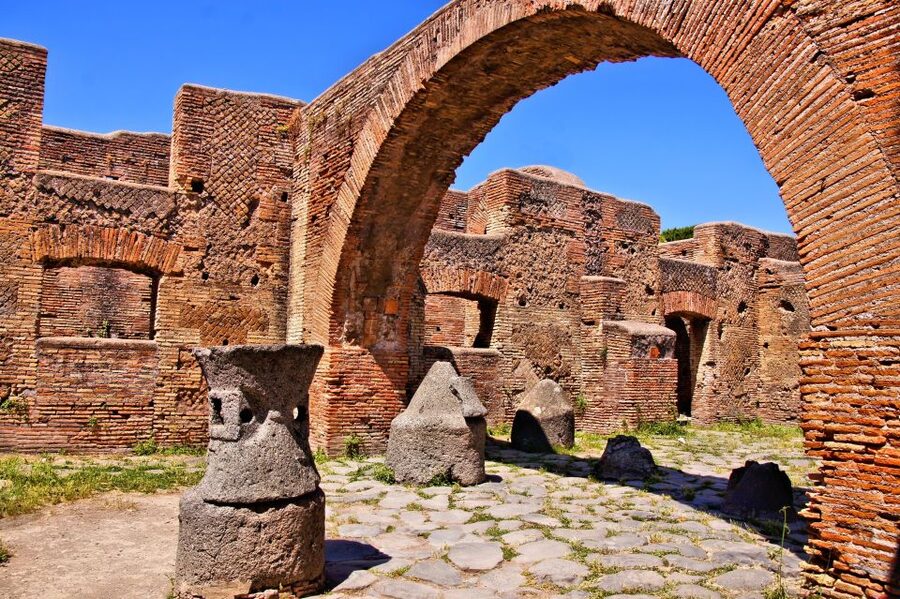
Pompeii’s public buildings reveal how much social life took place outside the home. The spas, temples, shops, and theaters each show a different part of the city’s routine.
The spas are worth attention because they were not simply places to wash. They were part of the public life of the city, and their rooms and structure show the care Romans gave to communal bathing. The audio guide can help you distinguish a public complex from an ordinary house.
Temples give the city a religious dimension. Even when walls are incomplete, the setting and remaining architectural details help you understand how sacred buildings fit into the streetscape.
The theaters and amphitheater bring a different energy. They show the role of performance and public spectacle in Roman culture. I would place at least one theater and the amphitheater high on your list, especially if you have limited time.
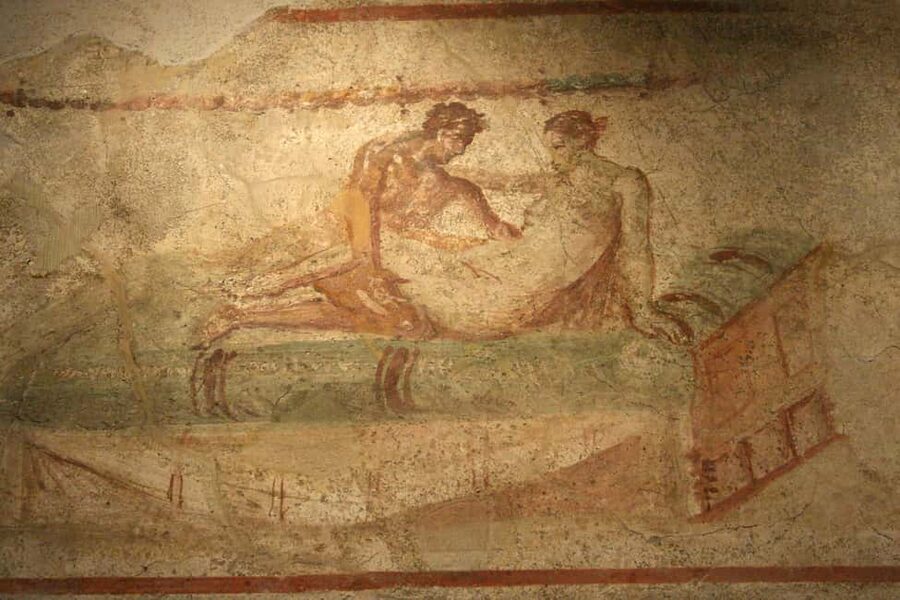
The brothels are another frequently noted part of the route. They are historically useful because they show a less polished side of city life. Their presence also keeps your visit grounded in the routines and businesses of ordinary Pompeii, rather than presenting the city as only a collection of elite homes and monuments.
The amphitheater and the casts of the victims
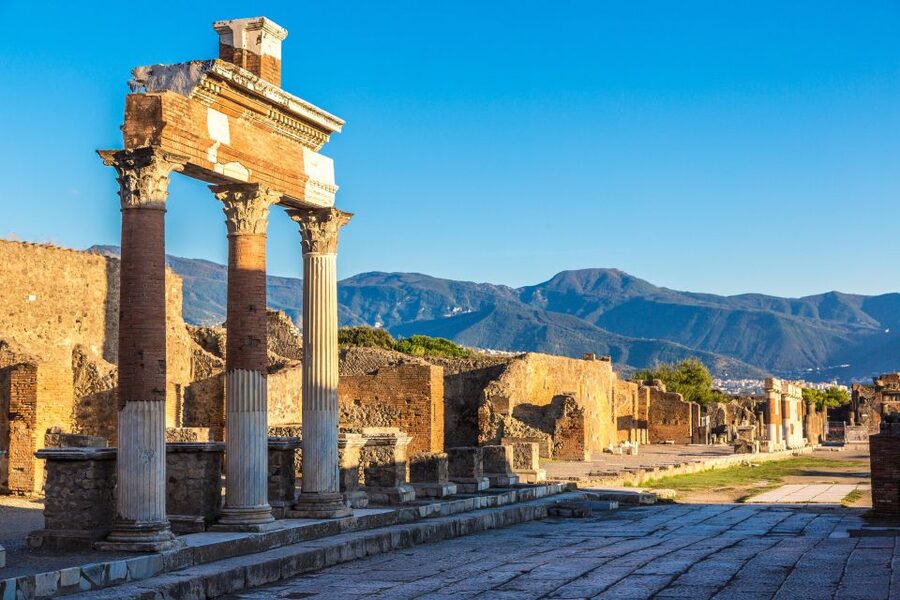
The Roman amphitheater is one of the strongest reasons to make time for the far-reaching parts of the site. It is among the best-preserved examples included in this visit, and its size gives you a clear sense of how public events shaped city life.
The amphitheater is also a reminder that Pompeii was a functioning community, not a frozen museum display. People came here for entertainment, gathered in large numbers, and moved through the city as part of everyday life.
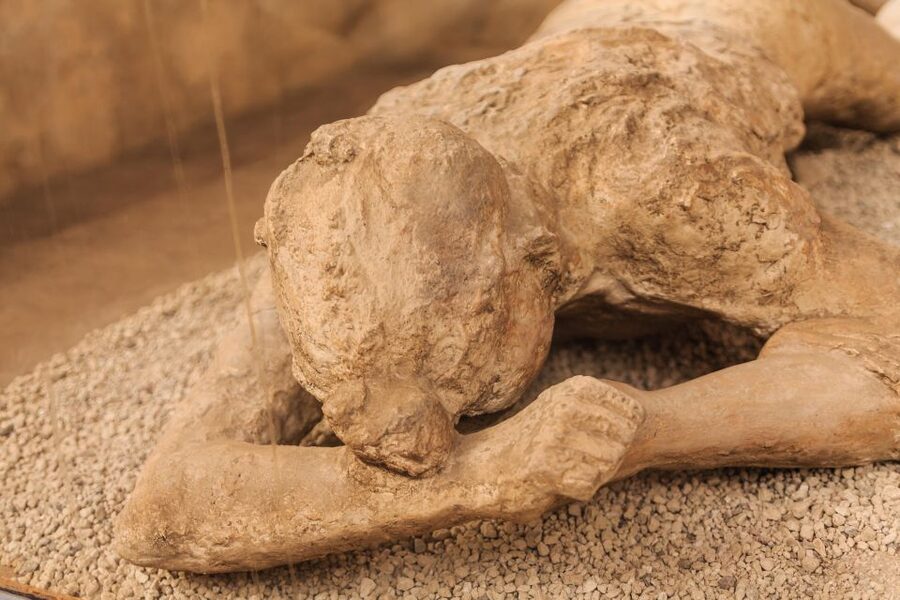
The casts of the victims are emotionally heavier. They give the eruption a human scale that walls and streets alone cannot provide. Approach this area thoughtfully. The audio guide may offer useful context, but no commentary can make the subject feel light.
Mount Vesuvius and the eruption are central to understanding Pompeii. The guide helps connect the buildings you see with the disaster that preserved them. I find that this context changes the way you look at everything else. A bakery, house, shop, or theater becomes part of a city interrupted rather than simply a ruin.
How to handle the audio guide
The audio guide is a major part of the ticket’s value, but you should plan around its technical limits. Internet connectivity inside Pompeii can be unpredictable. Downloading the guide may fail, so do not assume your phone will solve the problem once you arrive.
The physical audio device is the safer option if available. Remember to bring valid identification to rent it. Also pay attention to the return arrangement, since the handoff location may be about 20 minutes from the train station.
The recorded commentary is useful for independent exploration, though it may feel less engaging than a live guide. You can pause, skip, or listen only to the places that interest you. That control suits visitors who dislike being hurried.
The key is to treat the audio guide as support, not as the whole experience. Look up from the device. Read the buildings, notice the street layout, and use the map to connect one area to the next.
Timing, walking, and what to carry
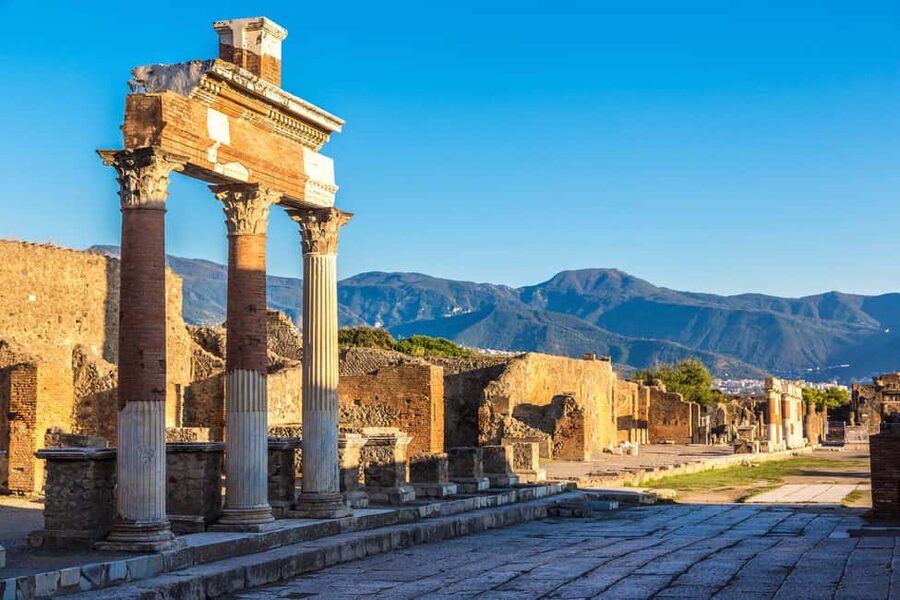
A morning start is a smart choice. An early visit can mean fewer people around and more time to examine the ruins without feeling pressed. The stated entry window begins at 9:00 am, so use that flexibility if you want a quieter start.
You can enter as late as 3:00 pm, but a late arrival gives you less time to explore. The activity is valid for one day, yet the site contains enough to make an unhurried visit worthwhile. If your schedule allows, avoid treating the ticket as a quick stop between trains.
Wear comfortable shoes and comfortable clothes. The experience involves walking through an ancient city, and uneven or demanding surfaces may make unsuitable footwear a real nuisance. Large bags and oversize luggage are not allowed, so pack only what you need.
This experience is not suitable for people with mobility impairments, heart problems, or altitude sickness, according to the stated restrictions. If any of those concerns apply to you, check the suitability carefully before booking.
The value of the $44 price

At about $44 per person, this is more than a basic entry ticket. The listed Pompeii admission is €20, with the remaining price covering the audio guide arrangement and booking service. The skip-the-line access and flexible entry window add convenience, but the value depends on your priorities.
I think the price is easier to justify if you want historical context and prefer independent sightseeing. A live guide may offer more interaction, but this option lets you stop for photos, linger in a house, or skip a building without holding up a group.
The package is less compelling if you already know Pompeii well, plan only a short visit, or do not care for recorded commentary. It is also worth remembering that the audio system may require an ID and may be affected by poor internet, so the guide is not entirely friction-free.
Free cancellation up to 24 hours in advance adds useful flexibility. You can also reserve now and pay later, which helps if your Campania schedule is still changing.
Who should book this Pompeii experience
I would choose this for independent sightseers who want a clear introduction to Pompeii without committing to a live group tour. It suits couples, families with older children, and solo visitors who like deciding how long to spend in each building.
It is especially useful if you want the amphitheater, frescoed homes, public baths, temples, thermopolia, theaters, brothels, and victim casts in one broad visit. The map helps you find these areas, while the audio guide supplies background as you go.
I would think twice if you need step-free access, have health concerns related to walking, or are carrying large luggage. I would also avoid relying on a last-minute phone download for the audio commentary.
Should you book it?
Book this Pompeii ticket if you value flexible entry, independent pacing, and broad language support. The early morning option can make the site more comfortable, and the map helps turn a huge archaeological area into a manageable day.
Skip it if you want a personal guide, have only a very short window, or need an accessible experience. For most independent visitors who plan ahead, travel light, bring ID, and start early, the combination of skip-the-line admission, map, and audio guide offers a practical way to meet Pompeii on your own terms.
FAQ
When can I enter Pompeii with this ticket?
You can enter during the stated time window from 9:00 am until 3:00 pm. The ticket is valid for one day.
Is the Pompeii ticket skip-the-line?
Yes. The package includes skip-the-line entry to Pompeii.
Where is the meeting point?
Meet the staff outside their office, directly next to Pasticceria De Vivo. Staff are usually wearing blue and yellow jackets.
What languages are available for the audio guide?
The audio guide is available in English, Italian, French, German, Hebrew, Russian, Chinese, Portuguese, and Spanish.
Do I need identification for the audio guide?
Yes. You must bring a valid ID document to rent the audio guide.
Can I bring a large suitcase or oversized bag?
No. Oversize luggage and large bags are not allowed.
Can I cancel the booking?
Yes. You can cancel up to 24 hours in advance for a full refund. You can also reserve now and pay later.
Just added around Pompei Campania
- Pompeii: Pre-reserved ticket with audio guide★ 3.2 · 15 reviews
- Pompeii: Skip-the-Line Ticket with Audio Guide and Map★ 4.0 · 14 reviews
- Pompeii Tour_Skip the line ticket + audioguide★ 4.7 · 17 reviews
- Pompeii: Skip-the-Line Ticket with Audio Guide and Map★ 3.9 · 5 reviews
- Pompeii: Skip the Line Ticket + Audioguide★ 3.3 · 13 reviews
- Pompeii, skip-the-line ticket with smartphone audio guide on App★ 3.0 · 4 reviews
- Pompeii & Herculaneum: Skip-the-line & Digital Guide App★ 4.0 · 35 reviews
- Pompeii Skip-the-Line Ticket and Audioguide★ 4.2 · 7 reviews
Skip the Line, compared.

Topkapi Palace and Harem Skip-the-Line-Tickets & Audio Guide
Read our review →
Pantheon Reserved Entry Ticket with Audio Guide
Read our review →
Borghese Gallery Skip-the-Line Ticket & Audioguide
Read our review →
Skip the Line: Vatican & Sistine Chapel Ticket with Audio Guide
Read our review →
Skip-the-line Entry Ticket with Audio Guide & Map
Read our review →
Mount Vesuvius: Skip-the-Line Ticket and Smart Digital Guide
Read our review →
Borghese Gallery Skip-the-Line Tickets with Audioguide
Read our review →
Taormina: Ancient Theater Skip-the-Line Ticket & Audio Guide
Read our review →Browse the lists this tour appears in