
REVIEW · ITALY AUDIO TOURS
Pompeii: Entry Ticket with Audio Guide
Pompeii makes ordinary streets feel extraordinary. This self-guided visit lets you walk Roman roads, enter homes, and see everyday details preserved by volcanic ash. I especially like the freedom to set your own pace and the audio guide’s clear explanations of Roman life. The main drawback is the sheer size of the site: two hours is not enough, and even six hours may leave large sections unseen.
The Pompei+ ticket adds the Villa of the Mysteries, Villa of Diomedes, and Villa Regina in Boscoreale, making it a better choice if you have a full day. I also like that you can use a digital guide on your phone or choose a physical audio guide, though collecting the device requires an ID deposit and returning it to the same desk can be inconvenient.
Key points to know before you go
- Pompeii is much larger than it looks: Plan at least three hours, and use a full day if you want to cover a substantial part of the city.
- Choose the ticket carefully: Pompei Express covers only the ancient city. Pompei+ includes three suburban villa sites.
- The audio guide helps with orientation: It provides commentary and a map, but the number of audio clips can feel hard to manage at first.
- Collect tickets at the right place: Show your voucher at the Porta Marina Superiore or Piazza Esedra office, and check the signs before joining a long queue.
- Bring practical gear: Comfortable shoes, water, a hat, and sun protection matter on the uneven, exposed streets.
- Keep your ID handy: You need it to collect the physical audio guide, and Bluetooth headphones do not work with that device.
Why Pompeii is worth a full day
Pompeii is not a single monument. It is an entire Roman city, with streets, homes, shops, temples, theaters, baths, gardens, public buildings, and open spaces spread over a huge archaeological area.
That scale is what makes the visit so powerful. You are not simply looking at a ruin from behind a barrier. You can walk along the same broad streets Romans used, step into houses, peer at painted walls, and see the raised stepping stones that helped people cross the roads.
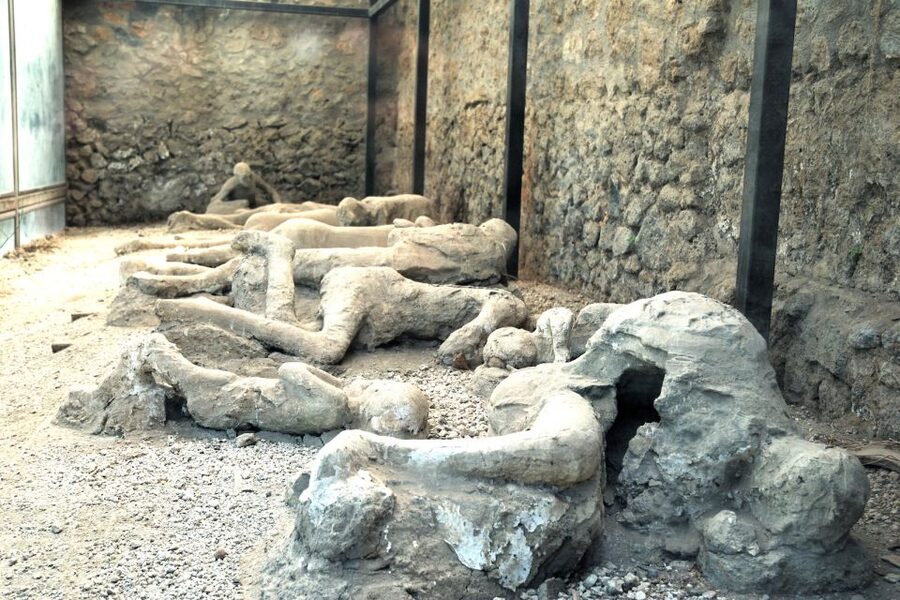
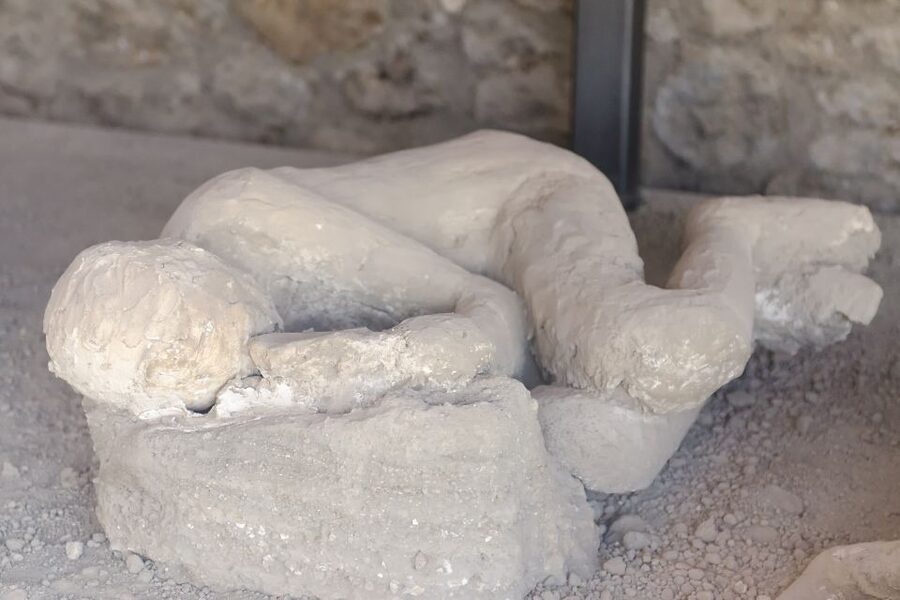
The eruption of Mount Vesuvius on August 24, AD 79 buried the city under ash and pumice. Pompeii’s 11,000 residents had little warning. The catastrophe was tragic, but the burial also preserved details that would usually vanish: food shops, mosaics, household rooms, painted decoration, public baths, and the layout of daily life.
I recommend treating this as a major sightseeing day, not a quick stop between Naples and the Amalfi Coast. Several people have managed only a quarter or two thirds of the site, even after spending most of the day there. One visitor arrived at 10 a.m. and stayed until 6 p.m. without seeing everything.
A few more audio tours around Italy worth a look
- Rome: Pantheon Fast-Track Ticket and Official Audioguide
★ 4.5 · 27,353 reviews - Rome: Colosseum & Forum with Audio Guide App -Optional Arena
★ 4.2 · 24,770 reviews - Florence: Timed Entry to Michelangelo’s David + Audio App
★ 4.6 · 19,496 reviews
Picking between Pompei Express and Pompei+
The Pompei Express ticket covers the ancient city of Pompeii. This is the main attraction and includes the streets, temples, theaters, villas, baths, market areas, and amphitheater that most people come to see.
Choose this option if you have limited time or want to focus on the central archaeological site. It is also the simpler choice for a first visit lasting two to four hours, though you will still need to be selective.
Pompei+ includes the ancient city plus three suburban locations:
- Villa of the Mysteries
- Villa of Diomedes
- Villa Regina in Boscoreale, with its Antiquarium
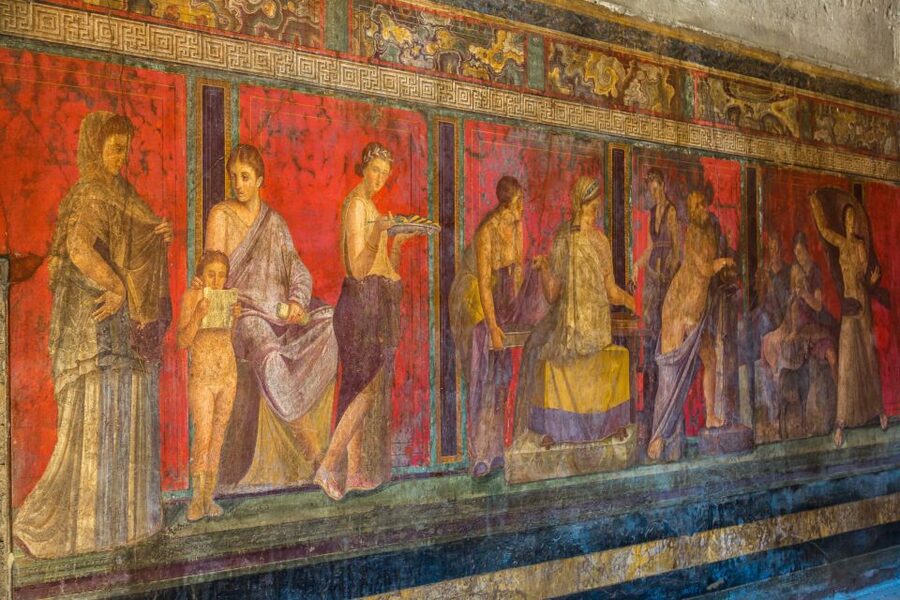
The Villa of the Mysteries is the big reason to pay extra. Its frescoes are among Pompeii’s most memorable works, and the setting gives you a better sense of how wealthy Romans lived outside the city center. One visitor specifically found the Plus option worthwhile for this villa alone.
The suburban sites add time and planning. You should choose Pompei+ only if your schedule allows it. The last entry is 3:30 p.m. from November 1 through March 31, and 5:30 p.m. from April 1 through October 31. Arriving late can turn the extra ticket into wasted money.
At $40 per person, the ticket is not cheap compared with a basic archaeological admission. Still, the price can make sense if you value reserved entry, flexible self-guided sightseeing, and the chance to spend much of the day at the site. Pompei+ offers better value for visitors who have enough time to use the added villas.
Getting inside without losing your morning
Your phone voucher is used to collect the entry ticket at the Porta Marina Superiore or Piazza Esedra ticket office. The meeting instructions can feel confusing because Pompeii has several entrances and separate queues.
The most useful practical tip is to look for the audio guide desk near the ticket office at Porta Marina Superiore. Some visitors have found that the voucher and audio guide were handled at the audio kiosk, rather than at the longest general ticket queue. Others were sent between offices or waited at the box office before finding the right desk.
So, do not automatically join the biggest line. Show your voucher to staff and ask where prepaid vouchers are being processed. The voucher helps, but it does not guarantee that you will walk straight through without waiting.
The official audio guide desk is at Via Villa dei Misteri n. 2, by Porta Marina Superiore. If you rent the physical device, bring a passport, identity card, or other valid ID. Your ID is held as a deposit, so do not leave it in your hotel safe.
Free luggage storage is available, which helps if you are coming from Naples, Sorrento, or another stop with bags. There is also a café on site. It has been useful for a cold drink and a meal break, though you should still carry water and snacks for such a large visit.
Walking the ancient streets

Once inside, start by getting a map and a rough plan. The audio guide’s map helps, but several people wished the experience included clearer mapping or better signs. Pompeii can feel like a maze of similar stone walls if you simply turn down every open street.
The streets themselves are part of the attraction. Look down at the worn paving, then up at the facades and doorways. You can imagine the city as a working place rather than a silent collection of ruins.
The market area helps bring daily life into focus. You can see where Romans bought food and picture the city as a place of quick meals, errands, trade, and gossip. These small details often make Pompeii more memorable than a grand temple viewed in isolation.
The public baths are another highlight. Their mosaics and rooms show how much effort Romans put into communal bathing. The audio guide explains what you are seeing, which is useful because many rooms otherwise look like bare stone chambers.
Pompeii’s temples include those dedicated to Venus, Apollo, and Jupiter. The temples are important, but do not rush past the nearby houses and shops. The city’s appeal comes from the way public religion, private homes, business, and entertainment sit close together.
Same place, a different route to walk:
- Rome: City Sightseeing Hop-on Hop-off Bus with Audioguide
★ 4.0 · 16,045 reviews - Venice: La Fenice Opera House Entry Ticket with Audio Guide
★ 4.6 · 11,742 reviews - Rome: Colosseum, Forum, Palatine Hill Entry & Audioguide App
★ 4.4 · 10,957 reviews - Rome: St. Peter’s Basilica & Dome Entry Ticket & Audio Tour
★ 4.2 · 7,537 reviews
Houses, frescoes, and Roman comfort
The House of the Faun is one of the key homes to seek out. It is a Hellenistic-style residence with a grand plan and decorative details that hint at the wealth of its owner.
The Villa of the Mysteries is more visually rewarding if it is open and included in your ticket. Its frescoes offer a rare look at Roman painting in place, rather than in a museum display. The added suburban villas also help you see that Pompeii was not limited to crowded city streets. Wealthy homes and agricultural properties spread beyond the core.
Some buildings may be closed during restoration or maintenance. That can be frustrating, especially when the audio guide describes rooms you cannot enter. Pompeii remains an active preservation project, so access can change from one visit to another.
The audio guide is most useful here. It gives you context about the function of a room and the people who used it. Without guidance, it is easy to walk through an elegant villa and notice only walls, columns, and fragments of paint.
Theaters and the amphitheater

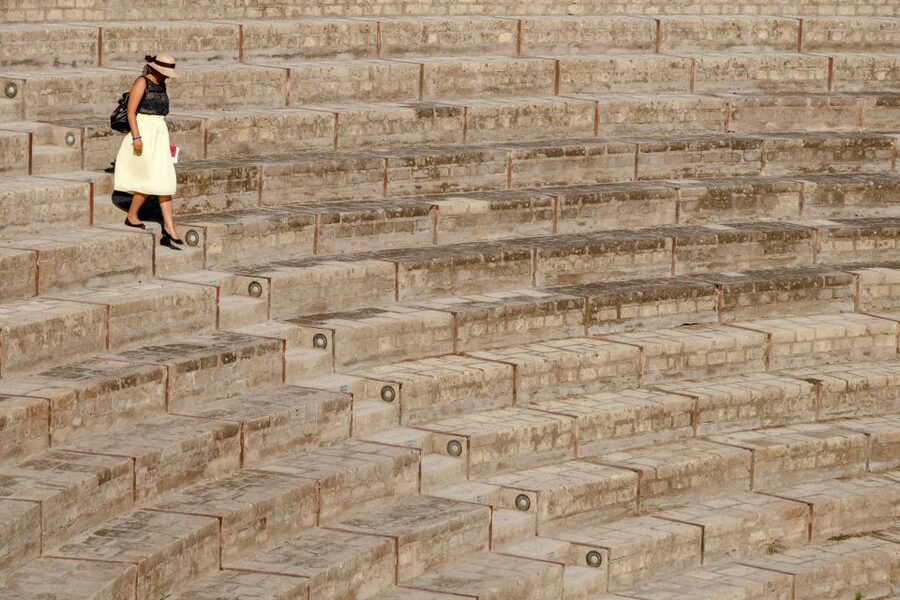
Pompeii’s theaters show how entertainment fitted into Roman public life. Picture the audience arriving, finding a place, and watching performances in a setting that still has a clear shape today.
The amphitheater is another major stop. Its scale makes it easy to imagine a large crowd gathering for public spectacles. Even if you are not interested in every archaeological detail, the open arena gives the city a strong sense of place.
These stops are spread among many other buildings, so use them as anchors on your map. Mark off areas as you go. That simple habit prevents you from circling back and wasting energy.
You will also want to leave time for the city’s views. In open areas, Mount Vesuvius rises in the distance. The sight connects the preserved streets with the force that ended Pompeii’s life.
Choosing between the physical and digital audio guides

The digital audio guide is available in English, German, French, Italian, Spanish, Chinese, Japanese, Portuguese, and Russian. Instructions arrive with your booking confirmation, so check your phone before entering.
The digital version is convenient and includes written information for people who prefer reading. The drawback is battery use, especially if you rely on your phone for tickets, maps, photographs, and translation.
The physical guide is useful when your phone battery is low. It includes a map and commentary, but you must collect it at the official desk, show ID, and return it to that same desk after your visit. Bluetooth headphones do not work with the rented device, so plan to use the supplied setup.
The content is generally clear and informative, but the device can contain many separate clips. You may need to scroll through several entries, and the numbering does not always feel intuitive. Audio explanations can also get ahead of the building you are viewing.
I would download the digital guide before arrival, even if you plan to rent the physical unit. That gives you a backup. One visitor used both options after a phone battery problem and found that arrangement especially helpful.
Heat, walking, and access
Pompeii is hard on your feet. The paths can be uneven, and the site exposes you to the sun for long stretches. Wear supportive walking shoes, not fashionable footwear that becomes painful after a few hours.
A hat, water, and light clothing are sensible. A small umbrella can provide shade, and the café offers a welcome break. Visitors have covered more than 22,000 steps in a six-hour visit, so plan your energy as carefully as your sightseeing route.
Toilets are available in several places. Free luggage storage reduces the burden if you arrive with bags. The archaeological site is wheelchair accessible, although uneven ancient paving may still require care in some areas.
Families can make this work, but young children may tire before the main highlights are finished. For a shorter family visit, choose a few major areas and let the rest go. You do not need to conquer every street to have a meaningful day.
Who should book this experience

I would choose this ticket if you want independence and do not need a live guide. You can pause, skip rooms, return to a favorite house, or stop for lunch without keeping up with a group.
It suits history fans, photographers, families who prefer flexibility, and anyone staying in Naples, Sorrento, or along the Amalfi Coast. The train connection from Sorrento has been described as easy, and you can arrange your own transport rather than joining a full excursion.
A live guide may be better if you want a clear route and continuous explanation. The self-guided format requires you to make decisions, handle the map, and accept that some buildings may be closed.
Should you book Pompeii with the audio guide?
Yes, if you can give Pompeii at least three hours and preferably most of a day. The ruins are extraordinary, but their size makes advance planning and comfortable clothing more important than fancy extras.
Choose Pompei Express for a focused visit to the ancient city. Choose Pompei+ if the Villa of the Mysteries and the suburban sites matter to you, and your arrival time leaves room for them.
The best practical plan is simple: download the digital guide, carry ID, ask staff where prepaid vouchers are being handled, get a map, and start early. At $40, this is best value when you use the freedom to explore slowly rather than squeeze Pompeii into a rushed two-hour stop.
FAQ
How long is the Pompeii ticket valid?
The ticket is valid for one day.
What does the Pompei Express ticket include?
It includes entry to the ancient city of Pompeii. It does not include the suburban villas, including the Villa of the Mysteries.
What does the Pompei+ ticket include?
Pompei+ includes the ancient city and the Villa of the Mysteries, Villa of Diomedes, and Villa Regina in Boscoreale with its Antiquarium.
Where do I collect my entry ticket?
Show your voucher at the Porta Marina Superiore or Piazza Esedra ticket office.
Where do I collect the physical audio guide?
Collect it at the official audio guide desk near the ticket office at Porta Marina Superiore, at Via Villa dei Misteri n. 2.
Do I need identification for the physical audio guide?
Yes. A valid ID is required as a deposit when you collect the audio guide device.
Can I use Bluetooth headphones with the audio guide?
No. Bluetooth headphones do not work with the physical audio guide device.
What languages are available for the audio guide?
The audio guide is available in English, Italian, Chinese, Japanese, Portuguese, Russian, German, and French.
Is Pompeii wheelchair accessible?
Yes, the archaeological site is wheelchair accessible, although some ancient paths are uneven.
Just added around Italy
- Torino Walking Tour with Audio and Written Guide by a Local★ 4.5 · 35 reviews
- Medieval Canals and Fountains: A Treviso Self-Guided Audio Tour★ 4.5 · 4 reviews
- Trapani Walking Tour with Audio and Written Guide by a Local★ 4.0 · 8 reviews
- Trento Walking Tour with Audio and Written Guide★ 4.5 · 11 reviews
- Sicily: Selinunte Park Entry Ticket & Sicily Digital Audio Guide★ 4.5 · 4 reviews
- Taormina Walking Tour with Audio and Written Guide by a Local★ 4.5 · 41 reviews
- Taranto Walking Tour with Audio and Written Guide by a Local★ 5.0 · 5 reviews
- Siracusa Walking Tour with Audio and Written Guide by a Local★ 5.0 · 59 reviews
Italy Audio Tours, compared.

Pantheon Fast-Track Ticket and Official Audioguide
Read our review →
Colosseum & Forum with Audio Guide App -Optional Arena
Read our review →
Timed Entry to Michelangelo’s David + Audio App
Read our review →
La Fenice Opera House Entry Ticket with Audio Guide
Read our review →
Colosseum, Forum, Palatine Hill Entry & Audioguide App
Read our review →
St. Peter’s Basilica & Dome Entry Ticket & Audio Tour
Read our review →
Cathedral & Brunelleschi’s Dome Ticket & Audio App
Read our review →