
REVIEW · SPAIN AUDIO TOURS
Tarragona Cathedral Entrance + Audio Guide (WebApp)
Tarragona’s past is carved in stone. This visit brings you into Tarragona Cathedral, its cloister, and the Diocesan Museum, with a smartphone audio guide that helps connect Roman Tarraco, medieval worship, and later art. I like the broad access to several parts of the cathedral, and I like that the visit fits into a flexible 45 to 90 minutes. The main drawback is that ticket validation can take an extra 5 to 10 minutes, especially if the cashier needs a manager.
The cathedral sits in the center of the ancient Roman city and makes a worthwhile stop on the Costa Dorada or a day trip from Barcelona. You should bring earphones and a charged smartphone, since the guide uses a QR code rather than a separate audio device.
Key points to know before you go
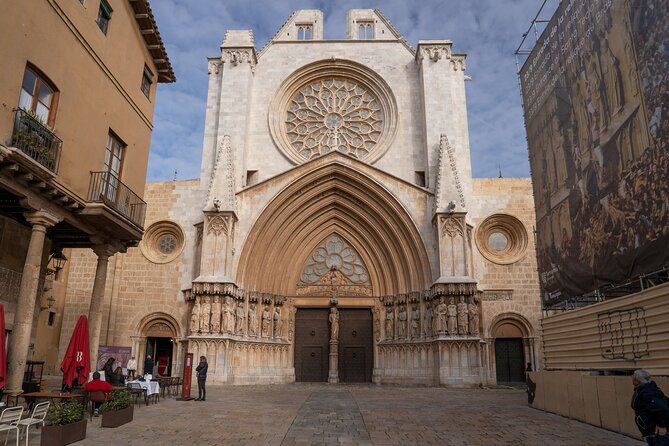
- Three sights in one visit: Your ticket covers Tarragona Cathedral, the cloister, and the Diocesan Museum.
- A 2,000-year setting: The visit places the cathedral inside the former Roman city of Tarraco, a UNESCO World Heritage setting.
- Smartphone audio guide: Scan the QR code and listen in English using your own phone and earphones.
- Allow 45 to 90 minutes: You can make this a quick cultural stop or take more time with the architecture and displays.
- The bell tower costs extra: Admission does not include the Bell Tower or the Roman Temenos.
- Sunday morning restriction: Because of Mass, visits are available only in the afternoon on Sundays during high season.
Why Tarragona Cathedral deserves your time
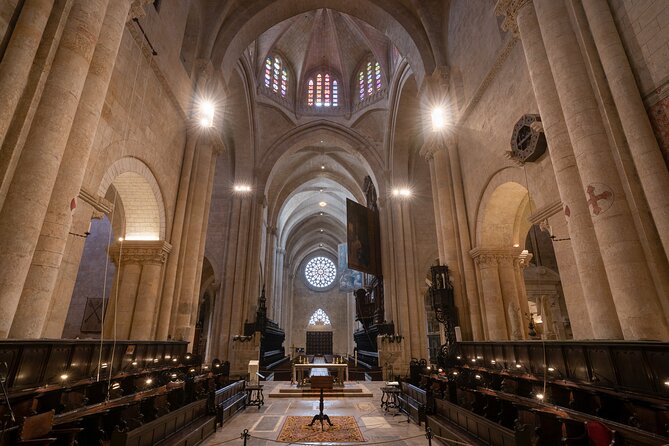
Tarragona Cathedral is not simply a church visit. It is a compact way to read the city’s past through architecture, religious art, and the remains of a Roman urban setting. The cathedral occupies a central place in ancient Tarraco, so you are seeing the building in the same broad historic area that shaped Tarragona for centuries.
The attraction is especially useful if you want more than a quick look at the outside. Your admission includes the cathedral itself, the cloister, and the Diocesan Museum. That gives you several different settings in one ticket, with changes in scale and mood as you move through the visit.
I like this format for a day in Tarragona because it does not demand a full morning or afternoon. The stated visit time is about 45 minutes to 1 hour 30 minutes. You can move through it at a moderate pace, then continue to other parts of the old city, or slow down if a particular chapel, object, or architectural detail catches your eye.
The cathedral is also a good choice if you are staying along the Costa Dorada. It adds cultural weight to a beach-centered trip without requiring a separate full-day plan. From Barcelona, it can work as part of a day trip, though you will want to leave enough time for the wider city rather than treating the cathedral as the only stop.
More Church Audio Tours in Spain
- Cordoba: Mosque-Cathedral E-Ticket with Audio Guide
★ 4.1 · 2,895 reviews - Cathedral and Giralda Entry Ticket with Audio Guide
★ 4.1 · 505 reviews - Granada: Basilica of San Juan de Dios Ticket & Audio Guide
★ 4.6 · 336 reviews
Inside the largest cathedral in Catalonia
The cathedral is described as the largest in Catalonia, and its scale becomes part of the appeal. The building gives you a chance to see how a major religious center uses space, height, decoration, and layers of construction to express its importance.
The audio guide helps give structure to what could otherwise be a quiet walk through a large old building. A cathedral can be beautiful but difficult to read without context. The QR-based guide is designed to add that context through your phone, letting you pause and continue at your own pace.
The English option is useful for international visitors who do not speak Spanish or Catalan. You are not tied to a live guide’s schedule, and you can spend longer in the areas that interest you most. The tradeoff is that the quality of your visit depends partly on your phone, your connection to the audio, and whether you remember your earphones.
Bring earphones rather than relying on the phone speaker. One account specifically points out that the audio guide works through a QR code on a smartphone and uses earphones. That small preparation can make the difference between a calm visit and a slightly awkward one.
The cloister offers a quieter change of pace
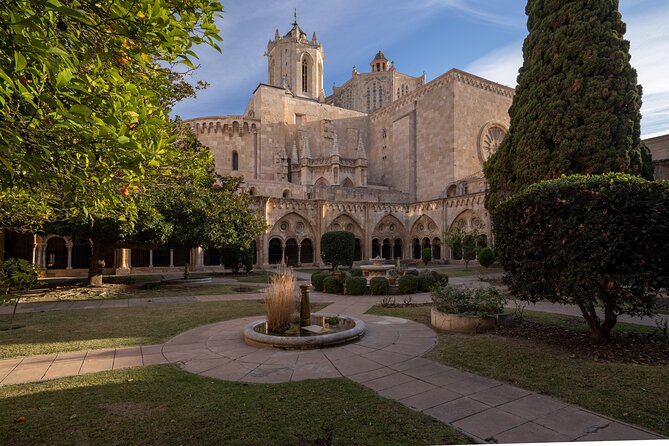
The cloister is one of the most appealing parts of the admission because it changes the experience from grand interior to enclosed architectural space. Cloisters reward slow looking. Columns, arches, stone surfaces, and small decorative details often tell you as much about a religious complex as the main church does.
You should not rush through this section simply because it is included with the cathedral ticket. The cloister gives your eyes a rest from the scale of the main building and helps you understand how the cathedral functioned as part of a wider religious community.
The exact length of time you spend here will depend on your interest in medieval architecture and sculpture. If you are making a quick 45-minute visit, give the cloister enough time for a full circuit. If you have closer to 90 minutes, pause over details that the audio guide identifies and compare the more open cloister space with the cathedral interior.
One of the strongest points of the visit is that several parts of the cathedral complex are open to you. You are not paying only to enter the main nave and leave. The cloister adds substance to the ticket and makes the visit feel more like a look at a working historic complex than a single-room museum stop.
The Diocesan Museum adds art and context
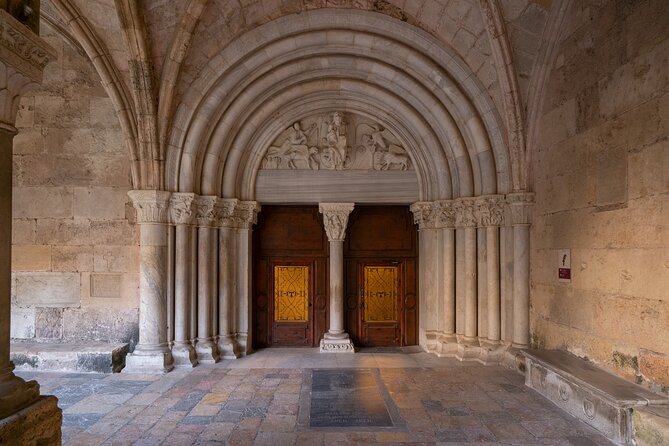
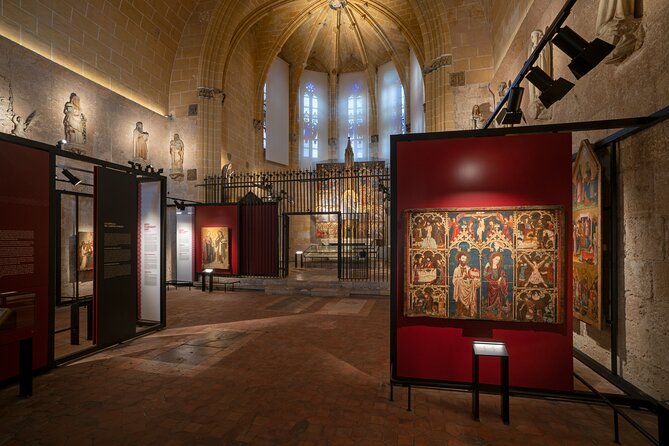
The Diocesan Museum rounds out the visit with religious art and objects connected to the cathedral and its diocese. This is where the experience shifts from architecture to collections. You can use the audio guide to help place the objects within Tarragona’s long religious and artistic story.
A museum can also help you notice things in the cathedral that you might otherwise overlook. After seeing paintings, sculpture, or other pieces in a display setting, you may look back at the building with more attention to materials, decoration, and the purpose of individual spaces.
The museum is an important reason to allow more than the shortest visit time. At 45 minutes, you can see the main parts without lingering. At 90 minutes, you have room to listen to more of the guide and give the museum a proper look.
You should keep your expectations sensible. The supplied information does not give a full collection list or identify individual works, so I would not book this specifically for one named painting or artifact. Instead, treat the museum as part of a wider cathedral visit, one that adds context and variety.
Same place, a different route to walk:
- Barcelona: Sagrada Familia Entry Ticket with Audio Guide
★ 4.6 · 105,312 reviews - Barcelona: Casa Batlló Entry with Self-Audioguide Tour
★ 4.7 · 25,359 reviews - Granada: Alhambra Entry Ticket with Audio Guide
★ 4.1 · 5,950 reviews - Casa Batllo Admission Ticket with Intelligent Audio Guide
★ 4.5 · 3,168 reviews
A 2,000-year story in one central setting
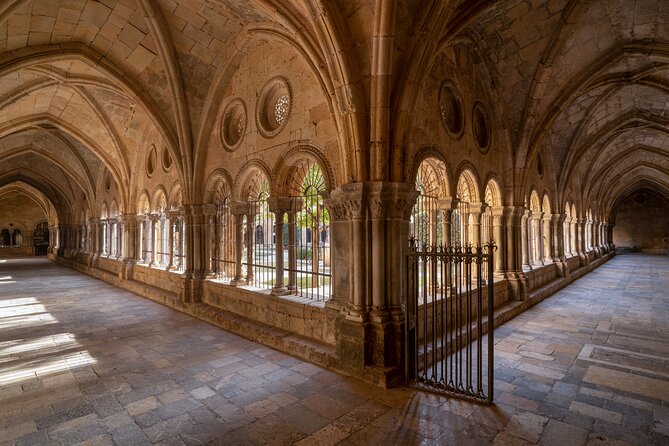
The site’s main strength is its historical range. You are visiting a cathedral in the center of ancient Roman Tarraco, with the broader setting recognized as part of a UNESCO World Heritage site. That does not mean every feature you see is Roman, but it does show why Tarragona matters beyond its beaches.
The visit connects several periods without requiring you to travel between distant sites. Roman Tarragona forms the setting. The cathedral represents a later religious and architectural chapter. The museum preserves art and objects tied to that religious center. The result is a compact history lesson, but one delivered through real buildings rather than a textbook.
I find that kind of setting useful because it gives the city more depth. Tarragona is easy to approach as a pleasant coastal destination with a beach and friendly local atmosphere. The cathedral reminds you that the city has been important for a very long time.
If you are interested in architecture, religious art, Roman history, or the development of European cities, this visit gives you several entry points. If you mainly want a fast photo stop, the cathedral may feel less rewarding, since the audio guide and museum work best when you give the complex some attention.
The audio guide is convenient, with a few practical limits
The audio guide is included through a QR scan on your smartphone. That keeps the ticket simple and avoids collecting or returning a separate device. You can listen in English and set your own pace, which is helpful if you are traveling with people who move at different speeds.
The system is not as effortless as a traditional handset. You need a functioning phone, enough battery, and earphones. You may also need to pause the audio while moving between spaces or when handling the QR code. For most people, those are small concerns, but they are worth planning for.
The small maximum group size of six is another positive detail. The visit is not presented as a large guided group, and the self-guided format means you are not waiting for a crowd to gather before moving on. The information does not promise a live guide, so you should book this for independent exploration rather than personal storytelling or a question-and-answer tour.
The phone-based format also makes it easier to control the length of your visit. You can listen closely to selected sections and move faster through areas that matter less to you. That flexibility is one of the better reasons to choose this ticket instead of a fixed group tour.
What the $15.02 price really gets you
At $15.02 per person, the ticket offers reasonable value if you plan to see all three included areas. You are paying for entry to the cathedral, cloister, and Diocesan Museum, plus the English audio guide. The visit can fill 45 to 90 minutes, which is a useful amount of time for a central attraction.
The value is weaker if you only want to step inside the cathedral for a few minutes. In that case, the museum and cloister become important parts of the decision. I would plan to see the entire complex so the admission feels worthwhile.
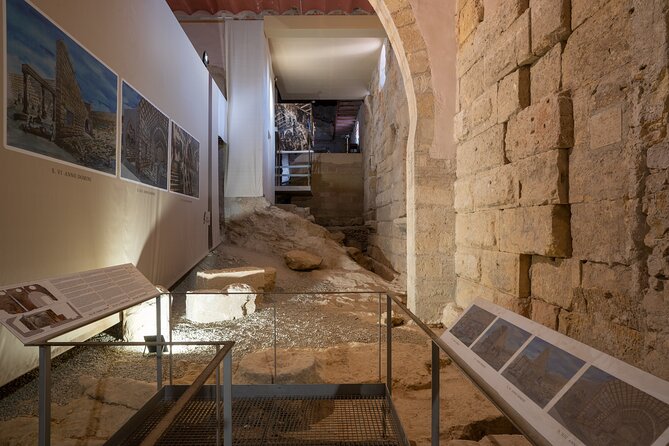
Remember that the Bell Tower and Roman Temenos are not included. That matters if you are building a full archaeological and cathedral itinerary. You may need separate admission or another arrangement for those areas, so do not assume this ticket covers every historic feature connected with the cathedral.
The ticket can still work well for a day trip from Barcelona because it gives you a clear cultural anchor in Tarragona. Just keep the total day in mind. The cathedral is one stop, not the whole city, and the best value comes when you pair it with time elsewhere in Tarragona.
Ticket validation and Sunday timing
The booking confirmation is issued at the time of booking, and the ticket is mobile. At the entrance, allow a little extra time for validation rather than arriving at the last minute. One account describes a queue and a 5 to 10 minute wait while the cashier’s manager confirmed the tickets.
That delay does not appear to define the entire visit, but it is a useful warning. Have the mobile ticket ready, keep your QR code easy to reach, and avoid scheduling another timed activity immediately afterward.
Sunday morning requires special care during high season. Because of Mass, the visit is available only in the afternoon. If Sunday is your only option, check the local start time and build your day around an afternoon entry.
Public transportation is nearby, and the cathedral is in the center of Tarragona. The provided details do not specify a particular bus or train route, so you should confirm your own connection before setting out from Barcelona or another Costa Dorada town.
Access and who will enjoy this most
Most people can take part, and service animals are allowed. The site has baby-changing facilities and disabled-access toilets, which can make the stop easier for families and people who need accessible restroom facilities.
The information does not describe every surface, stairway, or route inside the cathedral complex. If you have specific mobility needs, contact the provider, Catedral de Tarragona, before booking so you can confirm the route that will work for you.
I would recommend this experience to:
- You if you enjoy architecture, religious art, or Roman-era city history.
- You if you prefer a self-guided visit instead of a fixed group tour.
- You if you have 45 to 90 minutes in Tarragona.
- You if you are planning a Costa Dorada trip and want more than beach time.
- You if you are making a Barcelona day trip and can give Tarragona enough time.
I would think twice if you want a live guide, a bell tower visit, or a ticket that covers every nearby Roman feature. The audio guide is practical, but it cannot respond to questions or tailor the explanation to your interests.
Should you book Tarragona Cathedral?
Yes, if you want a short, flexible cultural visit with real historical range. The strongest reasons are the combination of cathedral, cloister, and museum, the central location in ancient Tarraco, and the included English audio guide.
Book it as a focused part of a wider Tarragona day, not as a complete city tour. Bring earphones, allow extra time for ticket validation, avoid Sunday morning in high season, and remember that the Bell Tower and Roman Temenos are separate. With those details in mind, the $15.02 price is fair for the access provided.
Free cancellation is available if you cancel at least 24 hours before the local start time. Changes or cancellations made within 24 hours are not accepted for a refund.
FAQ
How much does the Tarragona Cathedral experience cost?
The listed price is $15.02 per person.
How long does the visit take?
The visit takes approximately 45 minutes to 1 hour 30 minutes.
What does the ticket include?
It includes entrance to Tarragona Cathedral, the cloister, and the Diocesan Museum, along with an audio guide accessed by scanning a QR code on your smartphone.
Is the audio guide available in English?
Yes. The experience is offered in English.
Do I need to bring my own smartphone and earphones?
Yes. The audio guide is accessed through your smartphone by scanning a QR code, and earphones are recommended for listening.
Are the Bell Tower and Roman Temenos included?
No. Entrance to the Bell Tower and Roman Temenos is not included.
Can I visit on Sunday morning?
During high season, Sunday morning visits are not available because of Mass. The visit is available on Sunday afternoon.
Just added around Spain
- Tenerife Scavenger Hunt and Highlights Self Guided Audio Tour★ 3.5 · 3 reviews
- Tarragona Scavenger Hunt and Highlights Self Guided Audio Tour★ 4.5 · 15 reviews
- Seville Maestranza Bullring Tour with Audio Guide★ 3.5 · 6 reviews
- Royal Alcazar of Seville Entry Ticket with Audio Guide★ 4.0 · 42 reviews
- Sevilla Centre: City Walk Audioguide in 7 Languages on your Phone★ 3.0 · 2 reviews
- Seville Cathedral and La Giralda Entry Ticket with Audio Guide★ 3.0 · 9 reviews
- Essential Seville’s Ancient History: An Audio Tour★ 5.0 · 9 reviews
- Seville Audio guided walking tour 3h20 and 28 audio commentaries★ 5.0 · 2 reviews
Church & Cathedral Audio Tours, compared.

St. Peter’s Basilica & Dome Entry Ticket & Audio Tour
Read our review →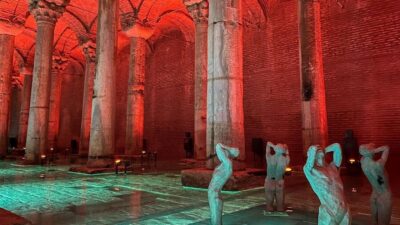
Basilica Cistern Fast-Track Entry and Audio Guide
Read our review →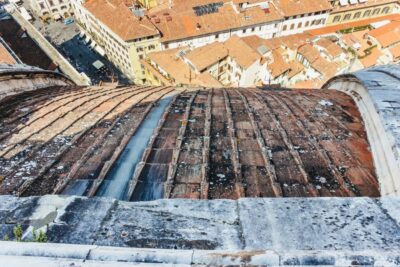
Cathedral & Brunelleschi’s Dome Ticket & Audio App
Read our review →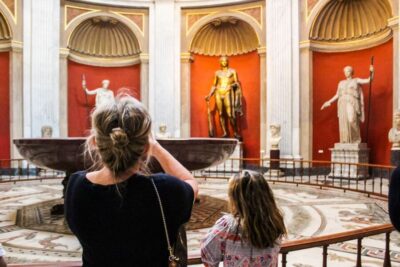
Vatican & Sistine Chapel Ticket with Optional Audio Guide
Read our review →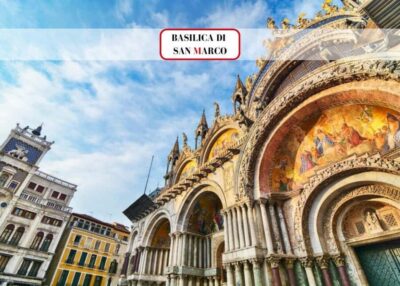
St. Mark Basilica Ticket, Audioguide+History Gallery
Read our review →
Skip the Line: Vatican & Sistine Chapel Ticket with Audio Guide
Read our review →
St. Peter’s Basilica with Optional Dome Ticket & Audioguide
Read our review →
Browse the lists this tour appears in