
REVIEW · SWEDEN AUDIO TOURS
Stockholm Walking Tour with Audioguide on Your Smartphone
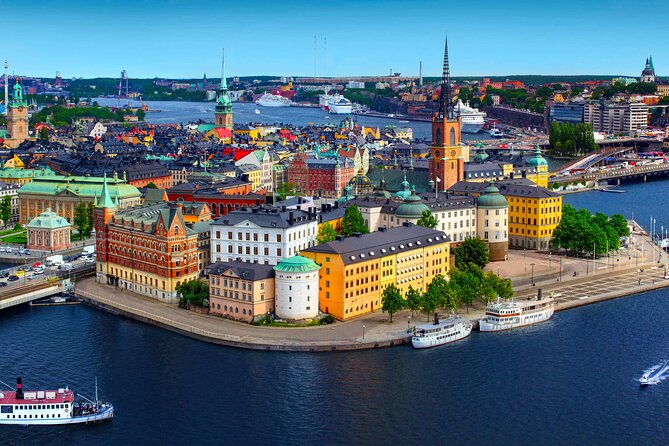
Small statues tell big stories. This self-guided Stockholm walk takes you from City Hall through Riddarholmen and Gamla Stan, then onward to the modern city center, using 25 audio recordings narrated by a professional historian. I like the low $6.73 price and the freedom to pause, replay, or spread the route across several days. I also like that the route includes easy-to-miss places such as Iron Boy and Kreditbanken, not just Stockholm’s headline sights.
The main drawback is navigation. You get an offline map and GPS support, but the map can feel confusing in Gamla Stan’s crooked lanes, and you must download and activate the app yourself. Bring headphones, charge your phone fully, and allow more than two hours if you plan to stop for photos, museums, coffee, or lunch.
Key points before you buy
- 25 recorded stories: A professional historian provides commentary on landmarks, statues, palaces, streets, and major events.
- A very low price: At $6.73 per person, this costs less than many museum admissions and works well for a first look at Stockholm.
- A long central-city route: The walk links City Hall, Riddarholmen, Gamla Stan, Norrmalmstorg, Sergel’s Square, Drottninggatan, and Hötorget.
- Use it on your schedule: Access lasts one year, and the audio guide can be used at any date and time.
- Bring your own gear: Your smartphone and headphones are not supplied, and GPS audio can drain a battery quickly.
- No human guide: You follow the route on the app, so this suits independent walkers more than people seeking conversation or personal recommendations.
What you actually get for $6.73
The price is the first pleasant surprise. For less than the cost of many short guided walks, you receive an app for iPhone or Android, 25 audio recordings, landmark illustrations, and a route map that can work offline after you download the material.
That makes this a useful orientation tool. On a first day in Stockholm, you can get a sense of how City Hall, the Old Town, the palace district, and the modern shopping center fit together. The recordings also point out small details you could easily pass without noticing, including the tiny Iron Boy statue.
The value depends on how you use it. If you rush from one point to the next, the two-hour estimate is possible. If you listen carefully and stop at museums, squares, cafés, or viewpoints, plan on three to four hours. You can also break the walk into sections. One person used it over three days, which is a sensible approach if you want time inside the Royal Palace, Nobel Prize Museum, Hallwyl Museum, or City Hall.
You do not receive admission to any attraction. The cost covers the audio content and app only. Entry tickets, transportation, a phone, and headphones are extra.
More Smartphone Audio Tours in the world:
- Rome: Colosseum & Forum with Audio Guide App -Optional Arena
★ 4.2 · 24,770 reviews - Florence: Timed Entry to Michelangelo’s David + Audio App
★ 4.6 · 19,496 reviews - Florence: Cathedral & Brunelleschi’s Dome Ticket & Audio App
★ 4.4 · 6,973 reviews
Starting at Klara Mälarstrand and finding your bearings
The walk begins at Klara Mälarstrand, near public transportation and within a short walk of Stockholm Central Station. One useful detail is that the first point is also close to the Arlanda Express arrival area, so you can use the tour soon after reaching the city.
Download the app and activate your purchase before you begin. This matters. The audio guide is designed to work offline, but the content must be downloaded first. If you wait until you are standing outside without a reliable connection, you may have trouble loading the route.
The app includes GPS navigation, but do not expect a live walking guide who tells you every turn. Street names are shown on the maps, although they may be hard to read when you zoom out. In Gamla Stan, narrow lanes and irregular blocks make a printed sense of direction useful. Keep the map open, zoom in often, and carry a portable charger.
The audio guide is flexible rather than formal. You can pause it while crossing streets, replay a section, or skip a stop that does not interest you. That freedom is one of the strongest reasons to choose this format.
City Hall and the waterfront opening
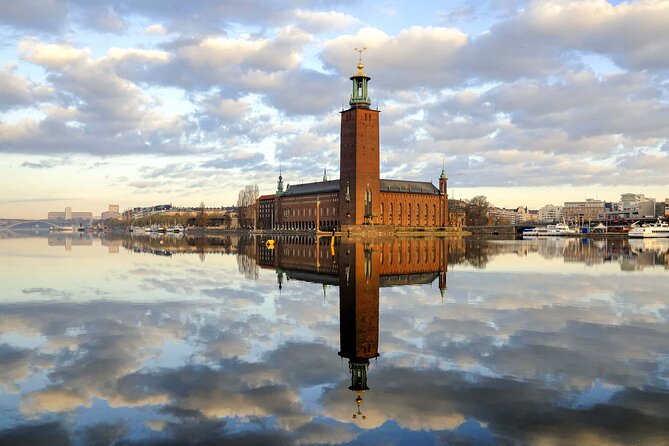
Stockholm City Hall is the grand opening subject. Completed in 1923, it is known for its red-brick exterior, tall tower, and important role in the city’s public identity. The audio story explains the building’s artistic and political importance, including the Blue Hall, where the Nobel Prize Banquet takes place, and the Golden Hall, decorated with 18 million mosaic pieces.
The practical catch is that a self-guided phone tour does not include a guided interior visit. City Hall access and tours are separate, so treat this stop as an introduction unless you arrange admission independently. You can still appreciate the exterior and waterfront setting before continuing.
This first section gives the walk a strong sense of place. Stockholm is built across islands and waterways, and the route soon moves toward Riddarholmen, where medieval, royal, and legal history sit close together.
Riddarholmen: publishers, palaces, and royal tombs
Norstedt Publishers is an unusual stop. Founded in 1823, it is Sweden’s oldest publishing house and occupies an elegant building on Riddarholmen. The audio recording connects the site with Swedish literature and the work of Scandinavian authors.
You will likely appreciate this stop most if you enjoy books, architecture, or cultural institutions that are easy to overlook. It is a brief ten-minute point, and admission is listed as free, but do not assume that a private interior tour is included. The useful part here is the background and the view of the building.
Next comes Birger Jarl’s Tower, a stout historic structure connected with Stockholm’s early defenses. The supplied description dates the present tower to the 16th century and links its name with Birger Jarl, the city’s founder. The audio explains why this part of Stockholm mattered before the city grew into the capital you see today.
Wrangel Palace adds a royal note. Originally built in the 16th century and expanded later, it served as a royal residence in the 17th century. Today it houses the Svea Court of Appeal. You can admire the exterior and waterfront position, but interior access is not part of the audio ticket.
The statue of Birger Jarl, erected in 1854, gives the district a human figure. It shows the medieval statesman with sword and shield and faces the surrounding historic buildings and water. This is a short stop, but it helps connect the city’s founding story with the streets beneath your feet.
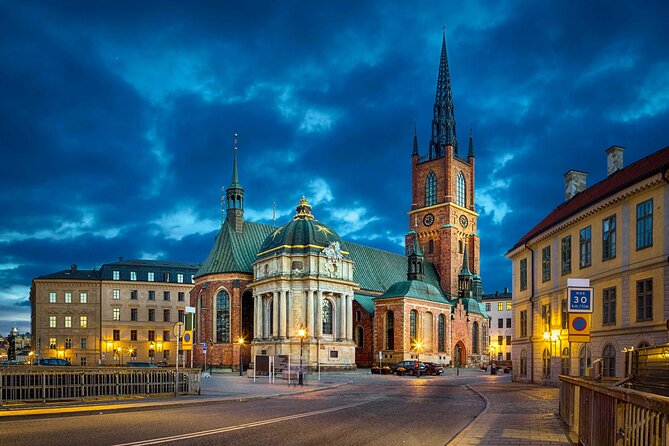
Riddarholmen Church is one of the most atmospheric points on the route. Its origins reach back to the late 13th century, and Swedish monarchs are buried here. Look for the distinctive cast-iron spire, Gothic details, royal tombs, and coats of arms. Again, check opening arrangements separately if you want to enter. The audio can explain what you are seeing, but it cannot replace access to the interior.
More Audio Walking Tours in the world:
- Sofia: City Monuments Guided Walking Tour with Audio Guide
★ 4.5 · 825 reviews - Florence: 2.5 hour Audio Guided Walking Tour led by Host
★ 4.6 · 293 reviews - Self Guided Classic Freedom Trail Location Aware (GPS) Walking Audio Tour
★ 4.5 · 258 reviews - Valletta: Self-Guided Historical Walking Tour (Audio Guide)
★ 3.7 · 251 reviews
Gamla Stan, from Västerlånggatan to Stortorget
From Riddarholmen, the route enters Gamla Stan, Stockholm’s Old Town. Västerlånggatan is the busy medieval street, lined with shops, cafés, and old buildings. It is one of the places where the route may feel crowded and the map may require patience. Keep your phone close, but look up often. The point of walking here is the street itself, not simply reaching the next audio marker.
Aifur Restaurant provides a colorful historical aside. Named after a legendary Viking longship, it uses candles, period-style décor, medieval music, communal tables, and traditional Scandinavian dishes such as mead, roast meat, and hearty stews. The restaurant is not included, but it offers a natural place to pause if you want a meal connected with the route’s historical theme.
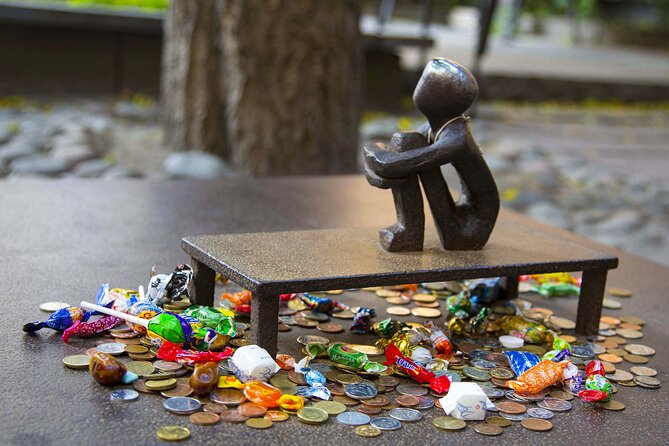
Then comes Iron Boy, also called Järnpojke, in the courtyard of the Finnish Church. At only 15 centimeters tall, it is described as Stockholm’s smallest statue. Artist Liss Eriksson created it in 1967, showing a seated boy looking at the moon. People dress him in small hats and scarves in winter and leave coins for luck.
This is exactly the kind of detail that makes the tour worthwhile. A grand palace is easy to spot. A tiny boy in a quiet courtyard is not.
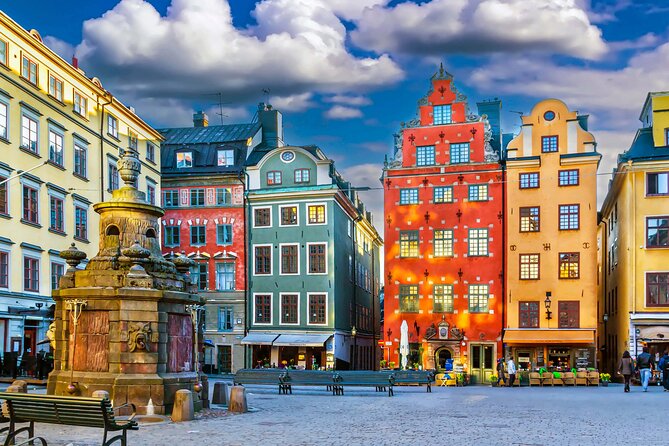
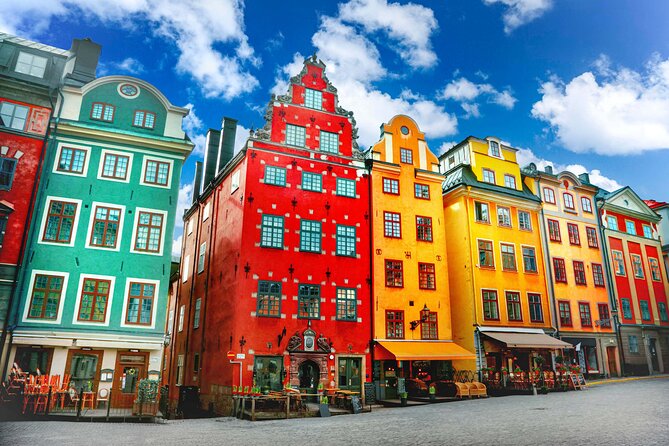
Stortorget is Gamla Stan’s oldest public square and one of Stockholm’s most recognizable settings, with colorful historic buildings around the edges. It is also where the Stockholm Bloodbath of 1520 took place. Today, the square is a place for coffee, photographs, the Christmas Market, and the Nobel Prize Museum.
The contrast between the cheerful square and its painful past gives the audio commentary some weight. It does not simply point out pretty buildings. It explains why the place matters.
Nobel Prize Museum and the Royal Palace
The Nobel Prize Museum is one of the route’s strongest cultural stops. It presents the work and personal stories of Nobel laureates in peace, literature, science, and other fields, along with objects and displays tied to their achievements. Alfred Nobel’s ideas and legacy provide the central theme.
The museum requires separate admission, so you should decide in advance if it deserves time on your visit. If you enter, the two-hour estimate becomes unrealistic. That is not a problem, since the app remains available for a full year and can be used later.
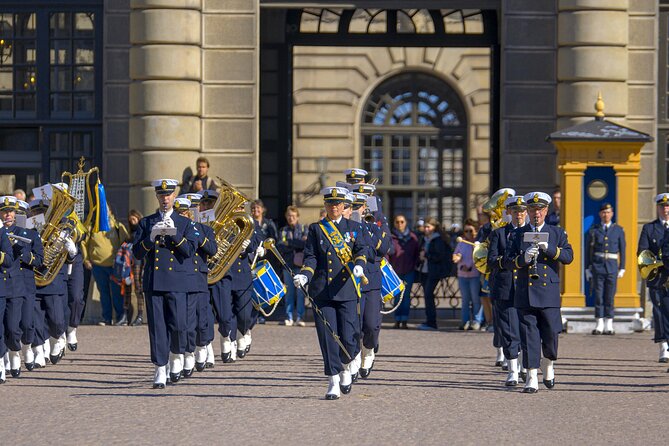
The Royal Palace is another major stop where the audio introduction can help you plan. This is one of Europe’s largest palaces and the official residence of the Swedish monarch. The State Apartments, Royal Chapel, Treasury, and crown jewels are the main attractions, and the changing of the guard is an additional reason to check the daily schedule.
The palace is not included in the $6.73 cost. Think of the audio stop as a preview that gives context before you buy admission. If royal history is a priority, set aside substantial time here rather than trying to squeeze it into a fast walk.
Parliament, opera, and Kungsträdgården

The route then moves past the Riksdag, Sweden’s parliament, on Helgeandsholmen. The building was completed in 1905 and combines neoclassical and Baroque Revival elements. The recording explains the Swedish political system and the building’s role in national decision-making.
Public access and guided tours are separate matters, so the app should be treated as an exterior and context stop unless you arrange a visit. It is valuable for anyone who wants more than royal sights. Stockholm’s identity is also tied to modern democracy and public institutions.
The Royal Opera House follows, beside the Norrström river. King Gustav III founded the opera in 1773, and the present building dates from a reconstruction completed in 1898. Opera, ballet, and concerts still take place here. Even if you do not attend a performance, the audio gives you a reason to notice the building’s ornate design and long place in Stockholm’s cultural life.
Kungsträdgården offers a change of pace. This central park, known as the King’s Garden, dates back to the 15th century. Cherry trees, fountains, concerts, and winter ice skating make it a useful pause in the route. The suggested stop is only five minutes, but I would give it longer if the season and weather are pleasant.
Hallwyl Museum and the story behind Stockholm Syndrome
The Hallwyl Museum is one of the best choices for a longer stop. It occupies the late 19th-century home of Countess Wilhelmina von Hallwyl and preserves more than 50 rooms, including salons, private quarters, furnishings, art, and collectibles.
The appeal is its original domestic setting. Instead of viewing isolated objects in a bare gallery, you get a picture of how an aristocratic family lived in the early 20th century. Admission is separate, and the museum can easily add an hour or more to your day.
At Norrmalmstorg, the route points out Kreditbanken, the bank involved in the 1973 robbery that gave the world the term Stockholm Syndrome. The event involved hostages forming an emotional bond with their captors, influencing later thinking about hostage situations.
This is a short but memorable piece of modern social history. It also shows the range of the audio guide. The route is not limited to royal buildings and medieval churches. It includes a bank, a psychology term, and a difficult episode from recent history.
Sergel’s Square, Drottninggatan, and Hötorget
Sergel’s Square marks the shift from old Stockholm to the modern city. Named after 18th-century sculptor Johan Tobias Sergel, the square is known for its patterned pavement, obelisk, public events, nearby Kulturhuset, and shopping streets.
The suggested stop is only five minutes, but you may want to pause and watch city life unfold. It is a useful counterpoint to Gamla Stan’s narrow lanes and old façades.
Drottninggatan is Stockholm’s main pedestrian shopping street, stretching from the Old Town toward the modern center. Boutiques, cafés, high-street shops, and landmarks such as the statue of King Charles XII give the walk a more everyday feel.
Hötorget is the final listed stop. On weekdays, the market offers produce, flowers, and local food. On Sundays, a flea market brings antiques and vintage goods. The nearby blue Concert Hall adds a strong architectural finish.
These final stops are less about grand monuments and more about how Stockholm functions now. If you have time, this is a good place to end slowly, with a market browse or coffee rather than treating the last audio point as a finish line.
How long should you allow?
The stated duration is about two hours, but I would not plan the route that tightly. Some sections are listed at five or ten minutes, yet the full route covers a large portion of central Stockholm and includes many possible indoor stops.
Use these estimates:
- Two hours: Fast walk, exterior sights, limited pauses.
- Three to four hours: Comfortable pace with photos and short breaks.
- One to three days: Best if you want to enter museums, City Hall, or the Royal Palace.
The app’s one-year access makes the last option possible. You can use the Old Town section one day, the central-city section another day, and return to a museum when you have more time.
Who should choose this walk?
I would choose it if you want a cheap first orientation, prefer walking alone, or dislike being tied to a group schedule. It also suits repeat visitors who want small stories and lesser-noticed details rather than another standard overview.
It is less suitable if you want a human guide, constant turn-by-turn instructions, or help with tickets and local restaurant choices. The route is long, and a phone-based guide requires more attention than a guide holding a flag.
The main practical advice is simple: download everything first, bring headphones, start with a full battery, and carry a portable charger. If the map feels unclear, zoom in and use the GPS function. The commentary itself is generally easy to listen to, informative, and occasionally light enough to make the history feel friendly rather than heavy.
Should you book it?
At $6.73, this is an easy purchase for an independent walker who wants broad coverage at very little cost. The strongest parts are the clear historical storytelling, flexible timing, and unusual stops such as Iron Boy, Norstedt Publishers, and Kreditbanken.
Book it if you are comfortable managing an app and choosing your own pace. Skip it if you expect a personal guide or a fully escorted walk. For most visitors, the best plan is to use it as a first-day framework, then return to the Royal Palace, City Hall, Nobel Prize Museum, or Hallwyl Museum when you have time to go inside.
Free cancellation is available up to 24 hours before the scheduled start time. The date and time selected at checkout are approximate because you can activate the audio guide when convenient.
FAQ
Is this a guided walking tour with a human guide?
No. This is a self-guided experience delivered through an iPhone or Android app. You follow the route, map, and audio recordings independently.
What is included in the price?
The price includes 25 audio recordings narrated by a professional historian, the mobile app, landmark illustrations, an offline route map, and one year of access in your chosen language.
Are entrance tickets included?
No. Admission to City Hall, the Nobel Prize Museum, the Royal Palace, the Riksdag, the Hallwyl Museum, and other attractions is not included. Transportation is also not included.
Do I need my own smartphone and headphones?
Yes. You must provide your own smartphone and headphones. Download the audio content before starting, and consider bringing a portable charger because GPS and audio playback can use battery quickly.
Can I take the tour at any time?
Yes. The audio guide can be activated and used at a date and time of your choice. The time selected during checkout is approximate, and access lasts one year.
Where does the walk start and finish?
The walk starts at Klara Mälarstrand in Stockholm and ends back at the meeting point. The starting area is near public transportation and a short walk from Stockholm Central Station.
Just added around the world
- Coba Ruins: Self-Guided Walking Audio Tour in Mexico★ 3.5 · 2 reviews
- Self Guided Driving Audio Tour of Saguaro National Park★ 3.0 · 4 reviews
- Torino Walking Tour with Audio and Written Guide by a Local★ 4.5 · 35 reviews
- Self-Guided Audio Driving Tour of Mount Lemmon★ 5.0 · 4 reviews
- Trondheim’s Inner Circle: A Self-Guided Audio Tour★ 4.0 · 15 reviews
- A Tromsø Introduction: A Self-Guided Audio Tour★ 3.5 · 19 reviews
- Panorama Bus Tour with Audio Guide★ 4.0 · 3 reviews
- Saguaro National Park Self-Guided Audio Tour★ 3.5 · 11 reviews
Smartphone Audio Tours, compared.

Colosseum & Forum with Audio Guide App -Optional Arena
Read our review →
Timed Entry to Michelangelo’s David + Audio App
Read our review →
Cathedral & Brunelleschi’s Dome Ticket & Audio App
Read our review →
Michelangelo’s David Priority Ticket & Audio App
Read our review →
Uffizi Priority Ticket & Masterpieces Audio App
Read our review →
Castel Sant’Angelo Entry Ticket & Digital Audioguide
Read our review →
Pantheon Priority Entry Ticket & Audio Guide App
Read our review →Browse the lists this tour appears in