
REVIEW · SPAIN AUDIO TOURS
Fortaleza de la Mota Entrance Ticket with Audio Guide
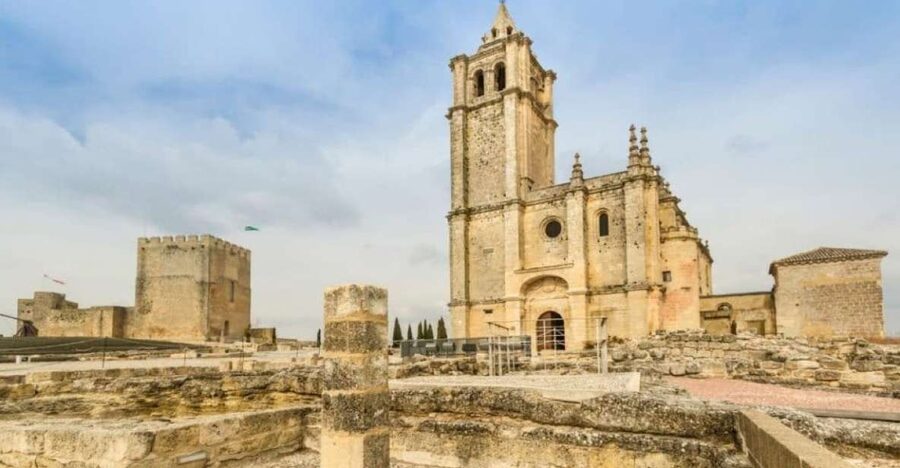
Walls here tell the story. La Fortaleza de la Mota gives you a close look at a fortified medieval city in Alcalá la Real, where Castile guarded a difficult border. I like the freedom to explore at your own pace, and I like that the ticket includes both a map and an audio guide in five languages. The main drawback is practical: accessing the audio guide requires downloading an app, which can delay the visit if your phone is short on space, battery, or data.
The visit covers far more than a single castle tower. You can pass through strategic gates, follow old streets, enter the Alcazaba, see the Iglesia Mayor Abacial, and visit the wineries and Torre de la Cárcel. It is a strong choice for anyone who enjoys heritage sites, though people with mobility impairments may find the complex difficult.
Key points before you go
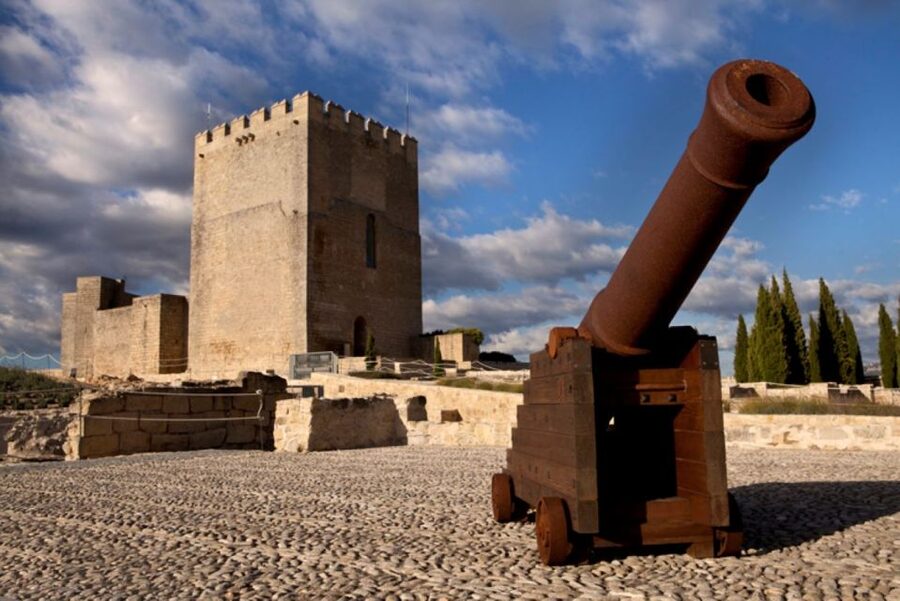
- A medieval city inside the walls: The visit includes streets, houses, defensive structures, religious buildings, and working spaces rather than just one isolated fortress.
- Five audio-guide languages: Commentary is available in English, Spanish, French, German, and Italian, with a special version for children.
- A map helps you find your way: The printed descriptive map gives you a useful guide through the large monumental complex.
- The church includes a historical film: An audiovisual presentation in the Iglesia Mayor Abacial recreates the story of the city at set times.
- Allow about 1.5 hours: That is enough for a purposeful visit, though the amount of time you need depends on how closely you listen and explore.
- Good value at $9: The ticket includes entry, the map, and the audio guide, making it a modest-cost way to see Alcalá la Real’s main monument.
Why La Fortaleza de la Mota matters
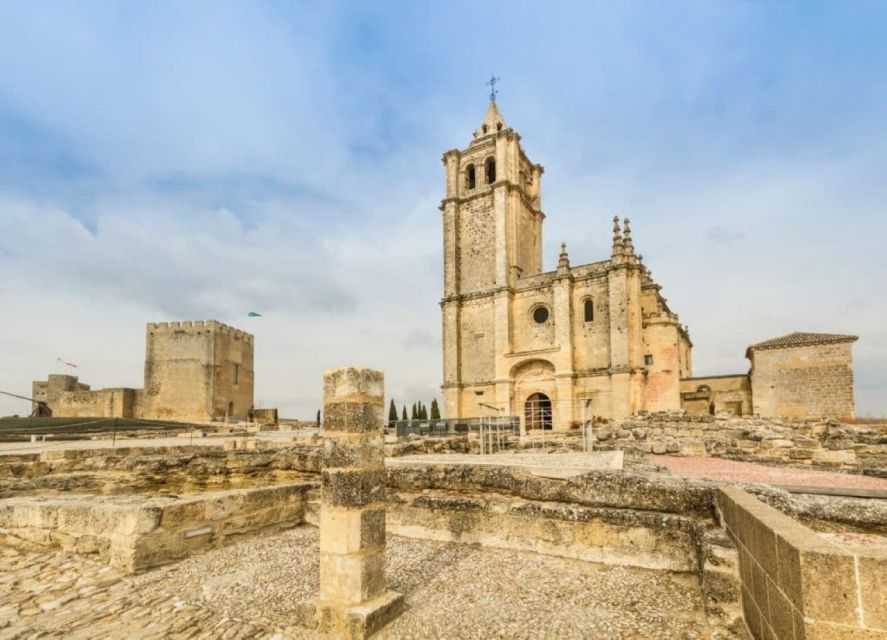
La Mota was not built simply to look grand. Its role was strategic. The fortified city helped guard and defend the kingdoms of Castile because this area had a border character.
That context changes how you read the site. The gates are not just picturesque entrances. They controlled movement. The walls were not decoration. They formed a defensive system. The Alcazaba was part of a larger urban settlement, not merely a royal residence separated from ordinary life.
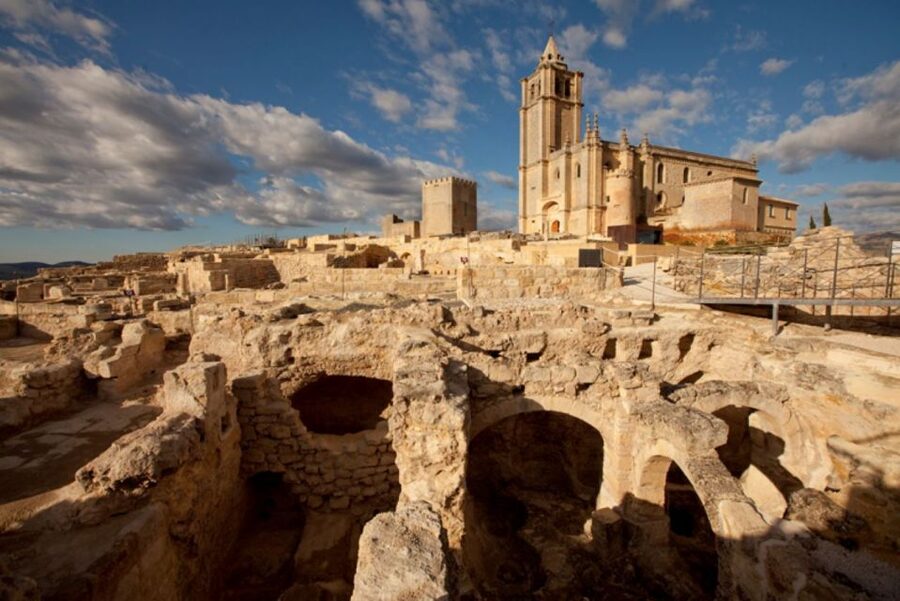
I find that this is the best reason to choose the experience. You are not walking through a restored room with a few labels and then leaving. You are tracing the shape of a medieval community, with its religious center, streets, houses, storage areas, prison tower, and defenses all within the same complex.
The audio guide helps connect these pieces. Without some explanation, a fortress can become a line of stone walls and unfamiliar doorways. With the commentary, you have a better chance of understanding how each area fitted into the life and defense of the city.
A few more audio tours around Spain worth a look
- Barcelona: Sagrada Familia Entry Ticket with Audio Guide
★ 4.6 · 105,312 reviews - Barcelona: Casa Batlló Entry with Self-Audioguide Tour
★ 4.7 · 25,359 reviews - Granada: Alhambra Entry Ticket with Audio Guide
★ 4.1 · 5,950 reviews
Entering the fortified medieval city
Your ticket provides access to the Monumental Complex of the Fortress of La Mota. A descriptive map is supplied, which matters here because the attraction contains several connected areas rather than one simple indoor route.
I would begin by taking a moment to study the map before moving on. Mark the major places you want to see: the strategic doors, the Alcazaba, the church, the wineries, the Torre de la Cárcel, the adarve, streets, and houses. The map is not just a souvenir. It helps you keep the visit organized.
The first part of the experience is about orientation. You move through the fortified setting and begin to understand its scale. The strategic doors show how access was controlled, while the streets and houses make clear that this was once a lived-in city.
That distinction is important. Many castle visits focus on one impressive residence. La Mota asks you to picture a whole settlement protected by walls. I like that broader approach because it gives you a more useful idea of medieval life and defense.
The gates, streets, and houses
The strategic doors are among the most meaningful parts of the route. They explain the practical side of the fortress. A city on a defended border needed controlled entry, and these passages were part of that system.
The streets offer another change of scale. Instead of looking only at fortifications from the outside, you can move through the urban framework within them. The houses help you picture daily life behind the defenses.
The supplied audio guide is especially useful in this section. A map can show where you are, but it cannot fully explain why the street plan mattered or how the different structures related to one another. The narration gives the site a clearer sense of purpose.
You can listen in English, Spanish, French, German, or Italian. Families also have access to a special version for children, which may help younger visitors stay focused. Food is not allowed, so plan to finish snacks before entering or wait until after the visit.
One small point deserves attention. A published Italian comment praised the beauty of the visit but objected to the required app download for the audio guide. That is a fair warning. If you want the commentary, prepare your phone before you arrive and make sure it has enough battery. The audio guide is a useful part of the ticket, but the setup should not be treated as instant.
The Alcazaba and the defensive side
The Alcazaba is the strongest reminder that La Mota was a defended center, not just a town surrounded by a wall. It forms part of the military heart of the complex and gives the visit a more focused look at protection and control.
I would listen carefully to the audio guide here rather than rushing from one structure to the next. The value of the Alcazaba lies in understanding its role within the whole fortress. It connects with the gates, walls, adarve, and other defensive areas.
The adarve is also part of the route. This wall walkway lets you follow the defensive edge of the complex and understand how the fortification worked as a continuous system. The supplied information does not promise a particular view or a specific route length, so I would avoid expecting a fixed scenic walk. Its main value is historical and structural.
The Torre de la Cárcel adds another layer. A prison tower tells you that the fortress was not only about keeping enemies out. It also helped control people inside the settlement. When you visit, listen for the explanation of how this space fitted into the city’s wider functions.
Same place, a different route to walk:
- Casa Batllo Admission Ticket with Intelligent Audio Guide
★ 4.5 · 3,168 reviews - Madrid: Las Ventas Bullring Tour with Audio Guide
★ 4.6 · 3,154 reviews - Cordoba: Mosque-Cathedral E-Ticket with Audio Guide
★ 4.1 · 2,895 reviews - Nerja: Caves of Nerja Entry Ticket with Audio Guide
★ 4.6 · 1,616 reviews
The Iglesia Mayor Abacial and the audiovisual presentation
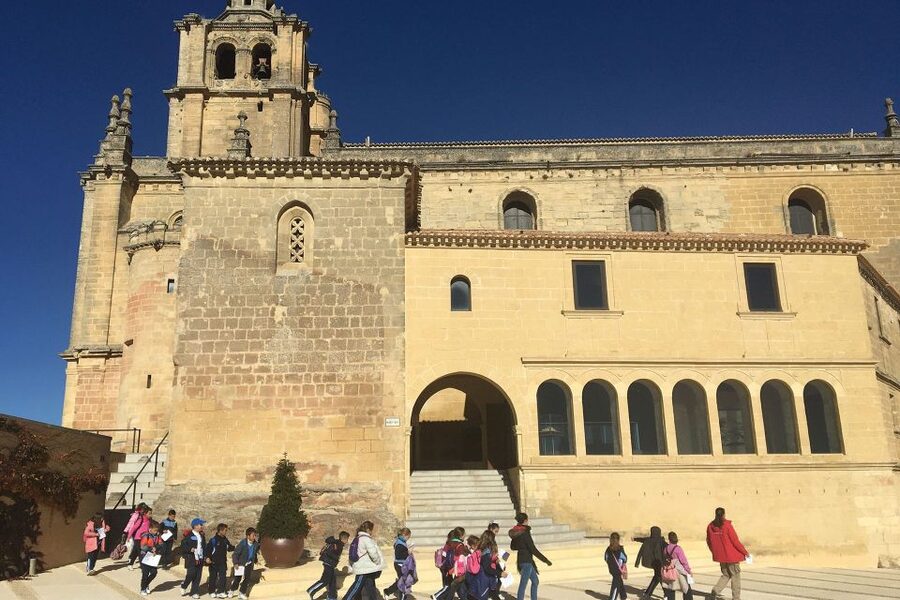
The Iglesia Mayor Abacial is one of the central stops. Its importance is religious, architectural, and historical, and it also hosts an audiovisual presentation that recreates the story of the city.
The presentation runs at set times rather than continuously. Check the schedule when you arrive so you can plan around it. If you skip it, you miss one of the clearest ways to see the city’s story presented as a whole.
I like this addition because it gives the visit a change of pace. After moving through walls, streets, towers, and underground spaces, you can pause for a visual explanation of the site. The film is described as didactic, so expect an educational presentation rather than a theatrical production.
The church also helps show that La Mota was a full community with a religious center. It is not simply a military monument. The combination of church, houses, streets, storage spaces, and defenses gives you a more complete picture of the medieval city.
Timing matters here. With only 1.5 hours, you should avoid wandering without a plan if the audiovisual presentation is important to you. Use the map first, then fit the church presentation into your route.
Wineries, storage areas, and everyday life
The wineries are easy to overlook if you focus only on the towers and walls. They are valuable because they point to ordinary life and storage within the fortified settlement.
Military monuments can feel abstract when you see only battlements and gates. Spaces such as wineries make the place more practical. People had to store food and supplies, manage daily work, and support life inside the walls.
The same applies to the houses. Their presence reminds you that defense protected a population, not just a military garrison. I would give these less obvious spaces proper attention, especially if you have already seen many castles in Spain.
The audio guide should help explain what you are seeing. This is where the combination of commentary and map earns its keep. You can match the numbered or identified locations to the route and avoid treating every stone room as interchangeable.
Is the $9 ticket good value?
At $9 per person, I consider this a good-value heritage visit. The price includes entry to the full monumental complex, a descriptive map, and an audio guide in five languages. You also receive access to the audiovisual presentation at the Iglesia Mayor Abacial.
The value depends on how you use the site. If you rush through the gates, take a quick look at the church, and leave, the ticket will feel less rewarding. If you follow the map, listen to the commentary, and examine the different parts of the city, the modest price covers a substantial amount.
It is also useful for independent sightseeing. You do not need to commit to a long guided group format. A host or greeter may be available in English, Spanish, German, or French, while the audio guide adds Italian as another option.
The advertised duration is 1.5 hours. That gives you enough time for a focused visit, but you should pay attention to the presentation schedule and avoid spending too long at the first few stops. The complex has enough separate elements to reward a steady pace.
Free cancellation is available up to 24 hours before the visit, and you can reserve now while paying later. Those terms are helpful if your plans for Andalusia are still shifting.
Who will enjoy this visit most?
This experience suits you if you like medieval fortifications, historic urban layouts, churches, and heritage sites that require some imagination. It is particularly useful for history-minded visitors who want more than a photo stop.
Families may appreciate the special children’s audio-guide version. The different spaces also give younger visitors more variety than a single museum room, though the amount of walking and the site’s physical nature may not suit every child.
Independent visitors will find the map and audio guide practical. You can control the pace and spend more time on the parts that interest you, instead of following a fixed group schedule.
People with mobility impairments should think carefully before booking. The complex is not considered suitable for those with mobility difficulties, and the medieval setting includes walls, streets, towers, and uneven historic areas. The available information does not provide a detailed accessibility route, so you should not assume that every section is easy to reach.
Pets are not allowed, and food is also prohibited. That makes the visit less convenient if you are traveling with an animal or planned to eat on site.
What to prepare before arrival
I would prepare the audio guide before entering. Download the required app if possible, check that your phone is charged, and select your language in advance. This avoids losing time at the entrance and addresses the one specific weakness noted in the feedback.
Bring a little patience for the route. The monument is not presented as a single straight corridor, so the map deserves a quick look before you start. If the audiovisual presentation matters to you, ask about its set times immediately.
You should also set realistic expectations. This is an educational heritage visit, not an entertainment attraction built around special effects. The audiovisual film adds interest, but most of the experience comes from walking through the medieval city and making sense of its structures.
Should you book the Fortaleza de la Mota ticket?
I would book it if you want to understand Alcalá la Real through its main historic monument. The combination of a fortified city, Alcazaba, church, prison tower, wineries, streets, houses, and wall route gives you more substance than a basic castle entrance.
At $9, the ticket is easy to justify, especially because the map, multilingual audio guide, and church presentation are included. Just prepare for the app download, avoid bringing food or pets, and allow the full 1.5 hours.
Skip it only if mobility limitations make the complex unsuitable or if you prefer a short, highly polished attraction with little walking. For history and heritage enthusiasts, La Mota is a worthwhile stop with enough variety to make the visit feel substantial.
FAQ
Where is La Fortaleza de la Mota?
La Fortaleza de la Mota is in Alcalá la Real, in Andalusia, Spain.
How much does the entrance ticket cost?
The ticket costs $9 per person.
How long does the visit last?
The stated duration is 1.5 hours. Starting times depend on availability.
What does the ticket include?
The ticket includes entrance to the Monumental Complex of the Fortress of La Mota, a descriptive map, and an audio guide.
Which languages are available for the audio guide?
The audio guide is available in English, Spanish, French, German, and Italian.
Is there an audio guide for children?
Yes. A special version of the audio guide is available for children.
Is the audiovisual presentation included?
Yes. The visit includes an audiovisual presentation in the Iglesia Mayor Abacial. It is shown at set times.
Are pets or food allowed?
No. Pets and food are not allowed inside the site.
Is the fortress suitable for people with mobility impairments?
The experience is not considered suitable for people with mobility impairments.
Just added around Spain
- Tenerife Scavenger Hunt and Highlights Self Guided Audio Tour★ 3.5 · 3 reviews
- Tarragona Scavenger Hunt and Highlights Self Guided Audio Tour★ 4.5 · 15 reviews
- Tarragona Cathedral Entrance + Audio Guide (WebApp)★ 4.5 · 36 reviews
- Seville Maestranza Bullring Tour with Audio Guide★ 3.5 · 6 reviews
- Royal Alcazar of Seville Entry Ticket with Audio Guide★ 4.0 · 42 reviews
- Sevilla Centre: City Walk Audioguide in 7 Languages on your Phone★ 3.0 · 2 reviews
- Seville Cathedral and La Giralda Entry Ticket with Audio Guide★ 3.0 · 9 reviews
- Essential Seville’s Ancient History: An Audio Tour★ 5.0 · 9 reviews
Spain Audio Tours, compared.
Sagrada Familia Entry Ticket with Audio Guide
Read our review →

Casa Batllo Admission Ticket with Intelligent Audio Guide
Read our review →
Nerja: Caves of Nerja Entry Ticket with Audio Guide
Read our review →

La Pedrera-Casa Mila Admission Ticket with Audioguide
Read our review →Browse the lists this tour appears in