
REVIEW · ROME AUDIO TOURS
The Colosseum’s Attic with 3rd, 4th & 5th Levels with Audio Guide
The best Colosseum views are above the crowds. This self-guided experience takes you through the third, fourth, and fifth levels, where you can look down into the arena and across Rome. I especially like the rare access to the attic and the quiet, open views from the top. The main drawback is that the audio guide is not always tied clearly to each location, and finding the correct attic lift can take some effort.
At $71.89 per person, this is not a cheap Colosseum ticket. It is easier than trying to secure the limited attic access yourself, though you are paying a premium for that convenience. You also receive entry to the Roman Forum, Palatine Hill, Imperial Fora, S.U.P.E.R. Sites, and any current exhibitions, making this a full ancient-Rome visit rather than a quick stop at the amphitheater.
Key points at a glance
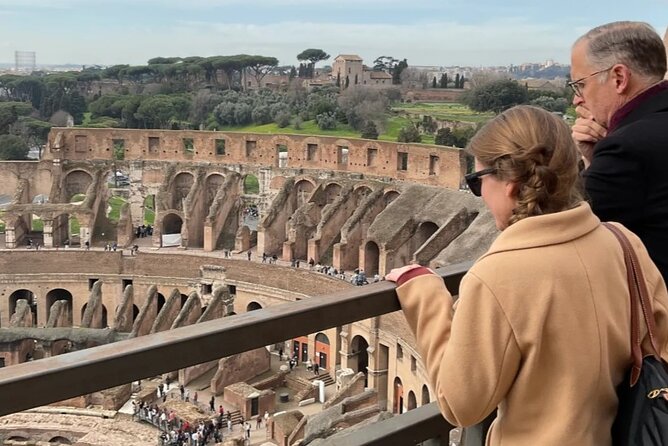
- The fifth level is the star: Reach the highest open tier for broad views over the arena, Arch of Titus, and Rome.
- A panoramic lift reaches the third level: This helps visitors with mobility concerns avoid some of the climb.
- The upper tiers are quieter: Capacity is controlled, so the attic feels far less crowded than the lower floors.
- You still need to queue at the main entrance: This is not a fast-track ticket, so arrive with time to spare.
- The tour is self-guided in English: The audio guide adds context, but its instructions are not always location-specific.
- The ticket covers more than the Colosseum: Roman Forum, Palatine Hill, Imperial Fora, S.U.P.E.R. Sites, and exhibitions are included.
Why the Colosseum attic is worth seeing
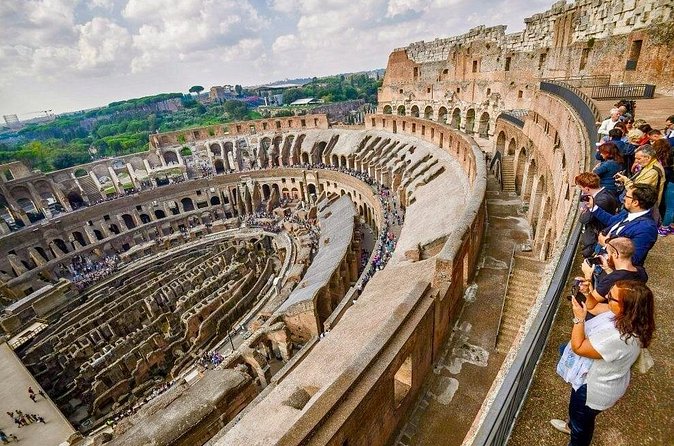
Most people visit the Colosseum from the first and second levels. Those floors put you close to the massive stone arches and arena floor, but they can also feel packed. The attic gives you a different experience. From the upper tiers, the building makes more sense as a giant stadium designed to hold an enormous crowd.
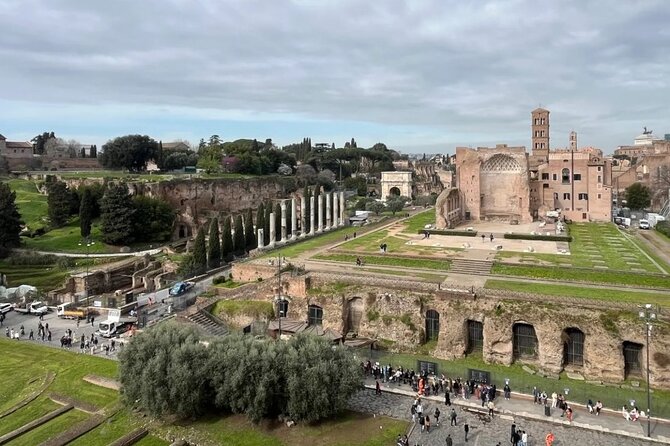
The top level once served ordinary Roman spectators, often called plebeians. From here, you can see the full oval shape of the arena and understand how sightlines worked for people seated high above the action. You also get views outward toward the Forum, Palatine Hill, and nearby monuments.
The upper levels are not just a place for photographs. They show how the Colosseum was organized vertically, with corridors, stairs, seating areas, and access routes layered one above another. I like that this visit lets you see the building as architecture rather than only as a famous ruin.
The limited capacity makes a real difference. The lower levels can feel compressed by large groups, while the attic usually has more breathing room. The result is a calmer visit, with time to pause at the railings and look both inward and outward.
A few more audio tours around Rome worth a look
- Rome: Colosseum & Forum with Audio Guide App -Optional Arena
★ 4.2 · 24,770 reviews - Rome: City Sightseeing Hop-on Hop-off Bus with Audioguide
★ 4.0 · 16,045 reviews - Rome: St. Peter’s Basilica & Dome Entry Ticket & Audio Tour
★ 4.2 · 7,537 reviews
Entering the Colosseum and finding the attic lift
The meeting point is Piazza del Colosseo, 1, directly at the Colosseum. Your ticket is confirmed at booking, and the experience is offered in English. The maximum group size is six, but this is not a traditional guided tour with a guide leading you through every room. It is a self-guided visit supported by an audio guide.
One practical detail matters: the attic ticket does not provide fast-track entry. You use the main Colosseum queue, so do not arrive at the last minute. Some visitors have missed their scheduled time after joining the wrong line or underestimating the wait.
After entering, you need to locate the special lift for the upper levels. The directions may not be as clear as they should be, so ask staff where to find the attic elevator if the route is not obvious. The lift is glass and panoramic, carrying you toward the third tier. It is a useful feature for anyone who finds long stair climbs difficult.
The lift does not remove every physical challenge. The fourth and fifth levels are reached by steep staircases. You should have a moderate level of fitness, and anyone uneasy with heights should think carefully before booking. The higher walkways offer excellent views, but the height is part of the experience.
The first and second floors: getting close to the monument
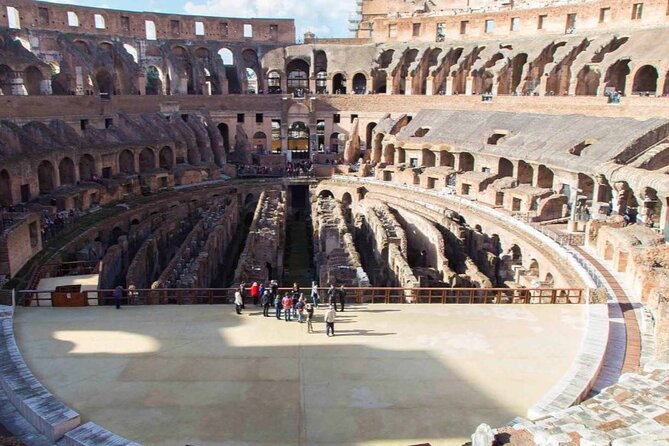
The first two levels provide the familiar Colosseum visit. Here, you are close to the heavy arches, worn stone, and open arena area. These lower floors help you appreciate the scale of the structure from inside its main public spaces.
You can look across the seating levels and down toward the arena. From below, the upper tiers seem impossibly high. That perspective makes the lift and staircase journey worthwhile because you later see the same building from the other direction.
The first and second floors are also where crowd levels may be most noticeable. The attic offers controlled access, but the lower areas are part of the regular Colosseum route. If you want quiet photographs, save your patience for the upper levels.
The admission portion of the Colosseum visit is planned for about 1 hour and 30 minutes. That is enough time to see the lower floors, use the lift, inspect the intermediate gallery, and visit the top tiers without treating the place like a race.
The intermediate gallery and its ancient markings
Between the second and third levels is an intermediate gallery with original white plaster. Traces of inscriptions and drawings remain on its walls. These modest marks can be more affecting than the grand ruins because they show the human side of the building.
Look closely rather than simply walking through. The plaster gives you a sense of the Colosseum as a working public place, not only an arena built for imperial spectacle. Ancient visitors passed through these corridors, waited, moved toward their seats, and left their own small marks behind.
The audio guide can add useful background here, but it may not always tell you exactly when to stop or what wall to inspect. I suggest listening in short sections and matching the descriptions with what you see around you. You may need to do a little detective work.
Same place, a different route to walk:
- Colosseum, Roman Forum & Palatine Hill with Audioguide App
★ 4.4 · 6,291 reviews - Vatican & Sistine Chapel Ticket with Optional Audio Guide
★ 4.1 · 5,405 reviews - Rome: Castel Sant’Angelo Entry Ticket & Digital Audioguide
★ 4.7 · 5,347 reviews - Rome: Castel Sant’Angelo Entry Ticket & Audio App
★ 4.3 · 4,952 reviews
The fourth and fifth tiers: Rome from above
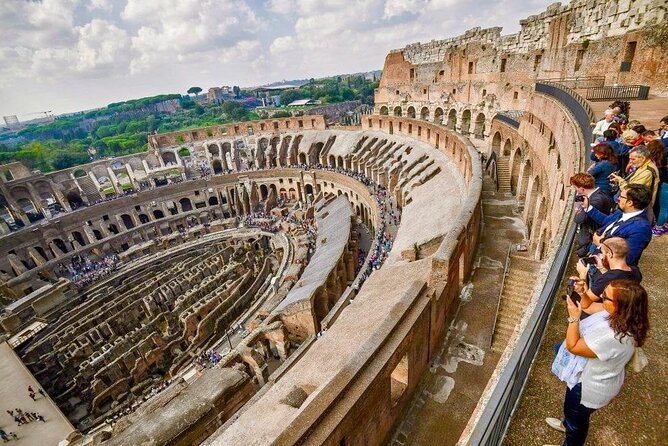
The fourth and fifth levels are the main reason to choose this ticket. The stairs are steep, but the reward comes quickly. At the top, you can look down into the arena and across the internal rings of the Colosseum.
The fifth level is the highest point included in this experience. It was once associated with the least privileged seating, far from the arena floor. Today, it gives you some of the best views inside the monument.
From here, you can photograph the Colosseum’s curves, the Arch of Titus, and the surrounding city. Several people have found the upper level especially good for pictures because the space is less crowded and the sightlines are wide. The capacity is controlled, so you are not constantly trying to edge around a large group.
You should still expect height. If you dislike exposed upper walkways or steep stairs, the lower levels may be enough. For most people who are comfortable with the climb, this is the portion that turns a standard Colosseum visit into something more memorable.
Plan on about 30 minutes in the attic itself. That may sound brief, but it is enough for photographs, views, and a careful look at the structure. The entire Colosseum portion lasts around 90 minutes.
Palatine Hill in 45 minutes
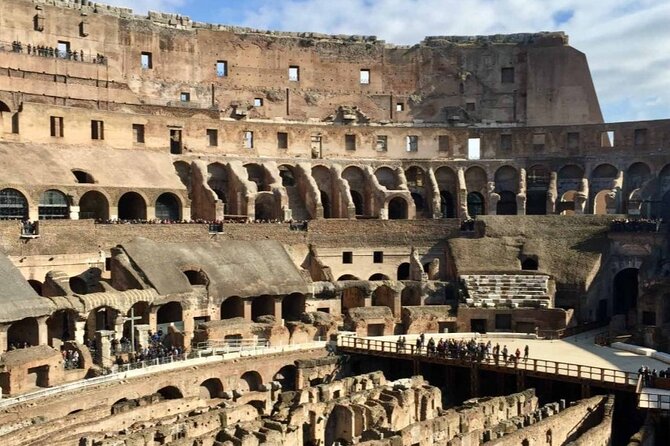
After the Colosseum, the experience continues to Palatine Hill. The visit here is scheduled for about 45 minutes and includes access to the hill, its gardens, and the ruins of the Imperial Palace.
Palatine Hill is important because it combines Roman power with wide views. The palace ruins show the scale and ambition of imperial life, while the gardens give you a softer setting after the hard stone of the amphitheater.
The time is useful but limited. I would focus on the major palace remains and viewpoints rather than trying to inspect every path. The hill is not a single building with a simple route. It is an open archaeological area, and you will get more from it if you keep your bearings and avoid wandering too far from the main sights.
The views from Palatine Hill also help connect the three parts of the day. From the Colosseum, you look toward the hill. From the hill, you can look back toward the amphitheater and understand how closely these ancient centers were linked.
The Roman Forum and its major temples
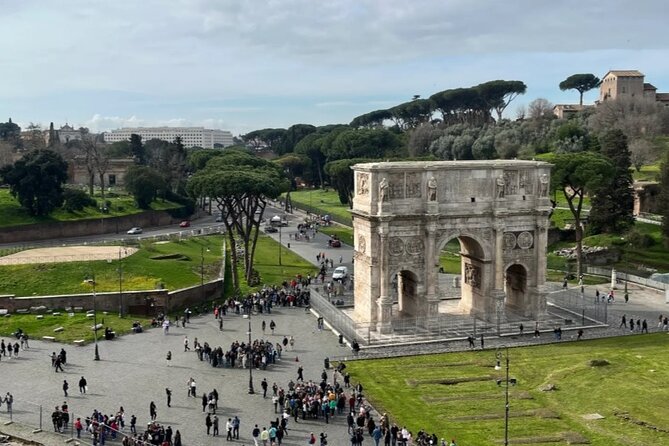
The Roman Forum is the final listed stop, with about 45 minutes for exploration. This was the civic center of ancient Rome, and its remains are spread along the Via Sacra.
Key places include the Temple of Julius Caesar, Temple of Saturn, Temple of Vesta, Temple of Romulus, and Temple of Antoninus. Each ruin is easy to pass without context, so use the audio guide and any available information to connect the columns and foundations with their former roles.
The Via Sacra is especially useful as a route through the Forum. Walking along it gives you a sense of movement through the old civic center, from one temple and public building to the next.
Forty-five minutes will not cover every corner. That is fine. The Colosseum attic is the special feature here, while the Forum and Palatine Hill add broad archaeological context. If you have a full day for ancient Rome, you may want to return to the Forum and spend longer. The included access lets you do so within the ticket terms, but the scheduled visit itself is built around a shorter stop.
What the audio guide does well, and where it falls short
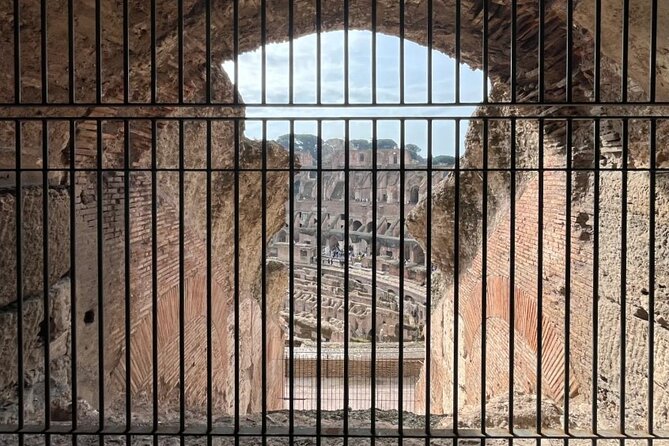
The audio guide is included and offered in English. It gives you a way to explore independently, which suits people who prefer to move at their own pace. You are not tied to a guide’s walking speed or a fixed speech.
Its weak point is location guidance. The information may not always tell you clearly which corridor, tier, or monument you are standing beside. That can make it harder to match the explanation with the object in front of you.
I would use the audio guide as a companion, not as your only source of direction. Read your ticket details carefully, ask staff about the attic lift, and keep an eye on the route. The experience works best when you combine the audio commentary with your own attention to the building.
Price, included sites, and overall value
The price is $71.89 per person. The standard Colosseum admission is listed as €18, with a €2 reservation fee, so the extra cost is mainly for the attic access, booking convenience, audio guide, and bundled archaeological sites.
That premium makes sense for a few types of visitors. If you have struggled to find the attic ticket through the official booking system, this option offers a simpler way to secure it. If you care most about the highest views and less crowded spaces, the extra money may feel justified.
It is less appealing if you only want a basic Colosseum visit. The first and second floors give you a strong introduction, and the Roman Forum and Palatine Hill can be visited with other ticket options. You are paying for the rare upper-level access, so choose this experience only if that feature matters to you.
The ticket also includes Imperial Fora access, S.U.P.E.R. Sites, current exhibitions in the Colosseum or Forum-Palatine area, taxes, and fees. Food and drinks are not included. The activity ends back at the Colosseum meeting point.
Who should book this experience?
I would recommend it to you if you want unusual views, enjoy ancient architecture, and do not mind exploring without a live guide. It is also a good choice if you prefer a small, quiet upper-level visit rather than spending the entire time among crowds on the lower floors.
The panoramic lift makes the third level easier to reach, but the fourth and fifth levels still require steep stairs. Anyone with serious mobility limits should confirm that this portion is suitable before booking.
This is not the best match if you need a fully managed tour with clear spoken directions at every turn. The audio guide can be helpful, but you will need to handle the route yourself. It is also not suitable for someone who fears heights or dislikes strict entry times.
Should you book the Colosseum attic experience?
Book it if the fifth level is high on your Rome wish list. The open views, small capacity, and chance to look down over the entire arena make this more than a standard Colosseum ticket.
Arrive early enough for the main queue, ask where the attic lift is located, and leave room in your plans for the Forum and Palatine Hill. At $71.89, it carries a clear premium, but the upper tiers are the part of the Colosseum most ordinary tickets do not provide.
Skip it if you want the cheapest entry or a live guide who explains each location in sequence. For everyone else, especially photographers, repeat visitors, and people who dislike packed sightseeing routes, this is one of the strongest ways to see the Colosseum from above.
FAQ
Where does the experience start?
It starts at the Colosseum, Piazza del Colosseo, 1, 00184 Rome, Italy.
Where does the experience end?
The activity ends back at the meeting point.
How long does the experience last?
The total duration is about three hours. The Colosseum portion takes around 1 hour and 30 minutes, followed by about 45 minutes at Palatine Hill and 45 minutes in the Roman Forum.
Is the tour guided?
It is a self-guided experience with an English audio guide. It does not include a live guide.
Is the audio guide available in English?
Yes. The experience is offered in English.
Does the ticket include the Colosseum attic?
Yes. It includes access to the exclusive attic area on the fifth level, along with the third and fourth tiers.
Is the panoramic lift included?
Yes. A glass panoramic lift transports you to the third tier.
Are the upper levels suitable for people with mobility challenges?
The lift makes the third level more accessible, but the fourth and fifth levels require steep staircases. A moderate level of physical fitness is recommended.
Does this ticket provide fast-track entry?
No. You should join the main Colosseum queue and allow extra time before your scheduled entry.
Are the Roman Forum and Palatine Hill included?
Yes. Entry to the Roman Forum, Palatine Hill, Imperial Fora, S.U.P.E.R. Sites, and ongoing exhibitions in the Colosseum or Forum-Palatine area is included.
Just added around Rome
- Pantheon Skip the Line Entry Tickets with Digital Audio Guide★ 3.5 · 52 reviews
- St. Peter’s Basilica: Dome Climb with Lift & Audioguide★ 4.5 · 13 reviews
- Audio guide in Vatican Museums and Sistine Chapel★ 4.5 · 12 reviews
- Trastevere: A Self-guided Audio Tour of Rome’s Medieval Village★ 4.5 · 3 reviews
- Navova square underground with audioguide★ 4.5 · 17 reviews
- The Roman Jewish Ghetto: A Self-Guided Audio Tour★ 4.0 · 8 reviews
- Experience: The Pantheon Audio Tour★ 4.5 · 4 reviews
- St. Mary’s Basilica, Pope Francis Tomb Audio Tour with Crypt★ 4.0 · 3 reviews
Rome Audio Tours, compared.
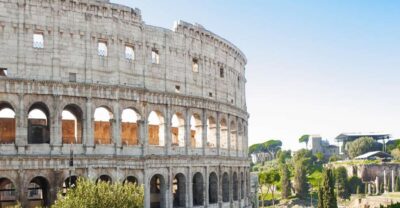
Colosseum & Forum with Audio Guide App -Optional Arena
Read our review →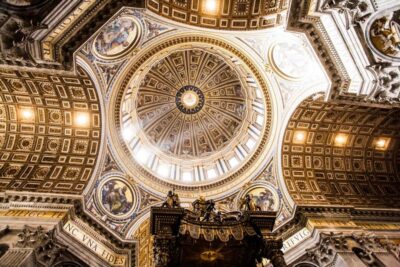
St. Peter’s Basilica & Dome Entry Ticket & Audio Tour
Read our review →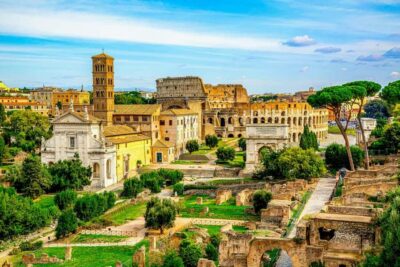
Colosseum, Roman Forum & Palatine Hill with Audioguide App
Read our review →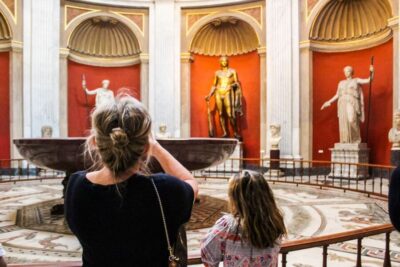
Vatican & Sistine Chapel Ticket with Optional Audio Guide
Read our review →
Castel Sant’Angelo Entry Ticket & Digital Audioguide
Read our review →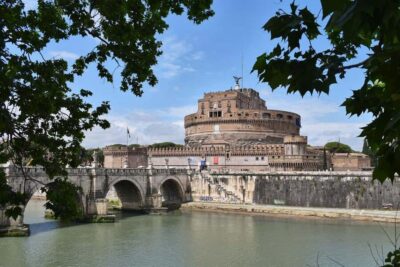
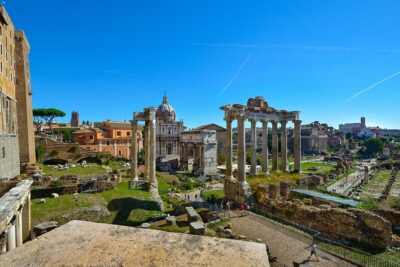
Colosseum, Forum, & Palatine Hill with Audio Guide
Read our review →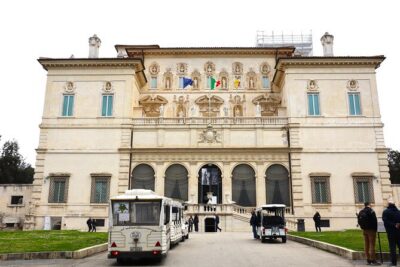
Borghese Gallery Skip-the-Line Ticket & Audioguide
Read our review →Browse the lists this tour appears in