

REVIEW · ROME AUDIO TOURS
Piazza Navona and Trevi District Underground Pass with Audioguide
Ancient Rome is still under your feet. This two-hour experience connects two small but unusual archaeological sites: Domitian’s Stadium beneath Piazza Navona and the waterworks beneath the Trevi district. I like the chance to see Rome from below, and I like that reserved admission covers both stops. The main drawback is that this is a self-guided visit, not a walking tour with a live guide.
The two locations are separate, with roughly a 15 to 20 minute walk between them. I also like the freedom to move at your own speed, but you need to plan the timing carefully. A rushed transfer, unclear meeting instructions, or an audio device that works poorly can take some shine off an otherwise worthwhile idea.
Key points at a glance
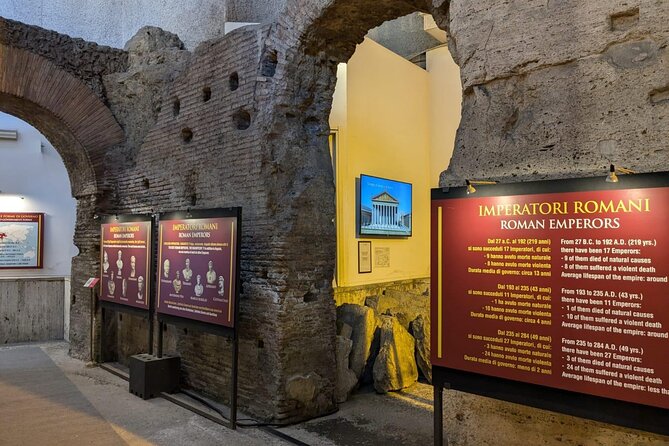
- Roman sports beneath Piazza Navona: Walk through the remains of the Stadio di Domiziano, built in AD 85 to 86 for athletic contests.
- Water beneath Trevi: See an ancient water tank connected to the Vergine aqueduct at Vicus Caprarius.
- Two separate sites: Allow time to walk between the Navona office and the Trevi District site.
- Audioguide format: You explore independently, with recorded commentary rather than a live guide.
- Useful on a hot or rainy day: Both stops are indoors, offering a cool break from Rome’s streets.
- Best for repeat Rome visitors: The sites are compact and niche, so they work better after you have seen the major sights.
What this two-hour Rome experience actually includes
The advertised price is about $54.07 per person. That is not a small add-on, especially since both archaeological sites are fairly compact. The price pays for reserved admission to the underground area beneath Piazza Navona, reserved admission to the Trevi District site, and an audioguide for each.
That makes the pass most useful if you value convenience and want both places in one booking. If you are already near either site, you may want to compare the cost of buying entry directly. One visitor found the package felt like an expensive overlay because the sites could also be visited separately. That is a fair concern.
I would think of this as a specialist history stop, not a headline Roman attraction. You will not get the scale of the Colosseum or the spectacle of the Trevi Fountain itself. You will get a closer look at fragments of the city that normally remain out of sight.
The experience begins at 10:00 a.m. You must report to the Touristation Navona office to redeem your voucher. That detail matters. Do not assume you can walk straight into the first archaeological site with your booking confirmation.
A few more audio tours around Rome worth a look
- Rome: Colosseum & Forum with Audio Guide App -Optional Arena
★ 4.2 · 24,770 reviews - Rome: City Sightseeing Hop-on Hop-off Bus with Audioguide
★ 4.0 · 16,045 reviews - Rome: St. Peter’s Basilica & Dome Entry Ticket & Audio Tour
★ 4.2 · 7,537 reviews
Beneath Piazza Navona: the Stadio di Domiziano
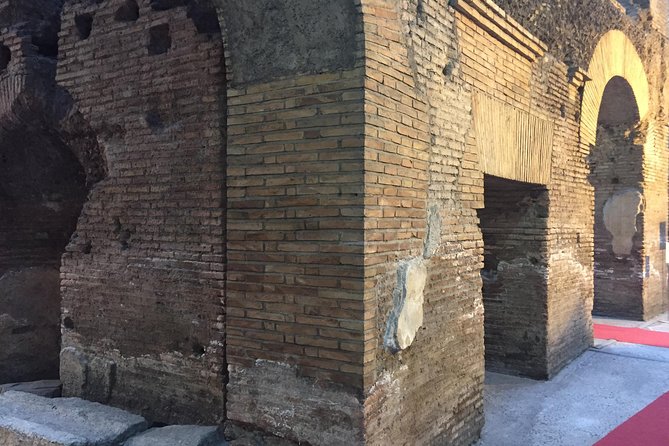
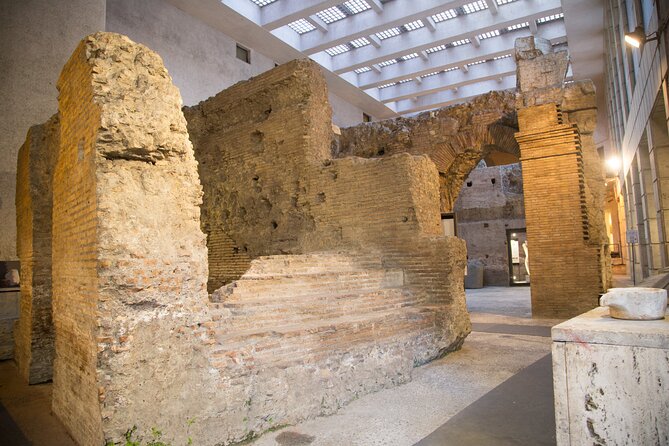
The first stop is the Stadio di Domiziano, or Stadium of Domitian, below Piazza Navona. This was a masonry stadium built in Campo Marzio between AD 85 and 86. It was created for the Certamen Capitolino Iovi, a five-year competition established in AD 86 to imitate the Olympic contests.
The modern piazza above is long and elegant, filled with fountains, churches, restaurants, and street life. Below it, the shape of the old stadium explains why Piazza Navona has its unusual oval form. You are not simply looking at disconnected ruins. You are seeing the remains of a large Roman sports venue beneath the later city.
The underground route includes ancient structural remains, displays, images, artifacts, and explanatory panels. The audio commentary helps connect these pieces to the original stadium. I especially like the way the exhibits cover the contests held there, since some ancient sporting events still feel familiar while others seem strange by modern standards.
The display also includes facts about Roman emperors. Some are presented with a dry sense of humor, including statistics about the short average reign of emperors during violent periods. That light touch can make a museum-style visit easier to follow, especially for children and adults who do not want a long, solemn lecture.
Plan on about 40 minutes here. That is enough time to listen to the main commentary and view the remains without lingering over every panel. If Roman architecture and public spectacles interest you, you may want longer. If you are mainly curious about what lies under the piazza, 40 minutes should feel manageable.
This is the stronger half of the experience for many people. The site has a clear story, and the audio tour is easier to follow. You can understand the relationship between the modern square and the Roman stadium without needing a live guide to point out every feature.
Walking from Navona to Trevi
The two stops are not in one connected underground complex. After the Navona visit, you make your own way to the Trevi District site. The walk takes roughly 15 to 20 minutes, depending on crowds and conditions.
This is easy enough on a normal day, but it creates a timing issue. Heavy rain, busy streets, or a slow start at the first meeting point can make the transfer feel hurried. One family arrived after spending about 20 minutes in a queue and then found the second location created extra pressure.
I would build in spare time rather than treating the schedule as a tight chain of appointments. Keep your voucher details available, and pay attention to the instructions given at the Navona office. The package is simpler when you understand from the beginning that you are visiting two separate sites.
Rome’s streets can also be tiring in summer. The walk is not long, but after a morning of sightseeing, a cool underground stop can be welcome. On a rainy day, the indoor setting is especially useful, though the transfer itself remains outdoors.
Beneath Trevi: Vicus Caprarius, the City of Water
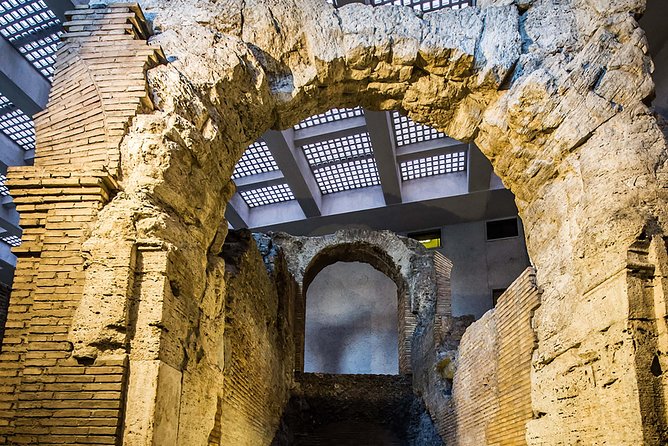
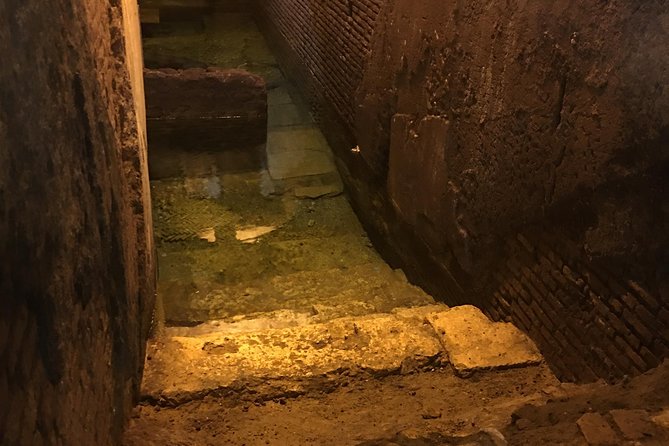
The second stop is Vicus Caprarius, known as the City of Water. It was discovered in 1999 in the basement of a cinema, a reminder that Rome’s archaeological layers often appear in places no one expects.
The site includes underground remains and a water tank connected to the Vergine aqueduct. The aqueduct still supplies water to the Trevi Fountain, which gives this visit a direct link to one of Rome’s most famous landmarks.
This is a smaller and more compact stop than the Stadium of Domitian. The main appeal is not a grand underground hall. It is the chance to see part of the water system beneath the Trevi area and understand that the fountain above depends on infrastructure with ancient roots.
Allow about 40 minutes. You can listen at your own speed and spend more or less time with the displays. The site layout is not perfectly straightforward. The walkways do not all connect in a simple loop, so you may reach the end of one section and need to turn back past people still making their way through.
The Trevi audio equipment has also received mixed marks. One visitor found the device worked only about 40 percent of the time. That is not a small annoyance in a self-guided visit, since the commentary carries much of the explanation. Check the device before you move too far into the site and ask staff for help if it is not functioning properly.
The Trevi section is best treated as a supplement to your visit to the fountain, not a replacement for it. You will not get a better view of the fountain from underground. You will get context about the water supply and a look at archaeology beneath the modern district.
Same place, a different route to walk:
- Colosseum, Roman Forum & Palatine Hill with Audioguide App
★ 4.4 · 6,291 reviews - Vatican & Sistine Chapel Ticket with Optional Audio Guide
★ 4.1 · 5,405 reviews - Rome: Castel Sant’Angelo Entry Ticket & Digital Audioguide
★ 4.7 · 5,347 reviews - Rome: Castel Sant’Angelo Entry Ticket & Audio App
★ 4.3 · 4,952 reviews
Audioguide rather than a live guide

The wording can make this sound like a guided tour, but it is not guided in the usual sense. No live guide accompanies you through both locations. You receive audio commentary and explore independently.
That arrangement has real advantages. You can pause, replay information, move quickly through sections that interest you less, and spend extra time with a display that catches your attention. Families and independent visitors often prefer this flexibility.
The drawback is that no one is there to explain a confusing layout or answer a question. At the Navona site, the audio program is generally easier to follow. At the Trevi site, the equipment and route may require more patience.
The information says the Navona audio tour is available in six languages, while this booking is offered in English. Confirm the language options when you book if English is not your preferred choice. Do not assume a live English-speaking guide is included.
Families should also check how many audio devices are issued for children. One family had difficulty when the nine-year-old in their group did not receive a separate system, leaving an adult to share or give up a device. That may not happen every time, but it is worth confirming at the office before entering.
Is the $54.07 price fair?
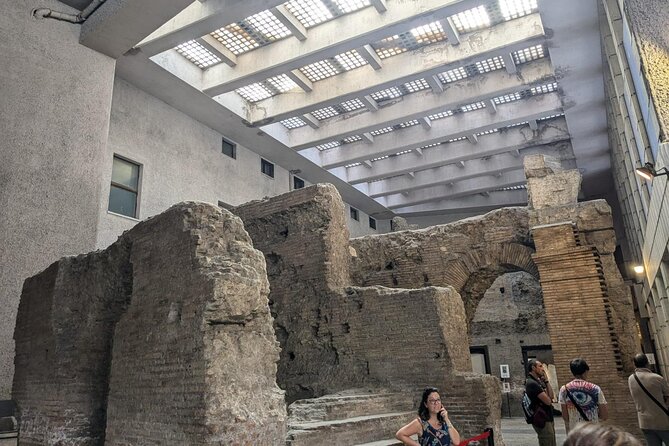
The value depends on how you use the package. At about $54.07 per person, this is expensive if you see it as two short indoor exhibits that could be purchased separately. The total visit is around two hours, and each stop takes roughly 40 minutes, plus the walk between them.
The price makes more sense if reserved entry is important to you, if you want both underground sites in one plan, or if you prefer audio commentary to reading displays alone. It also offers a practical break from Rome’s heat. Several people liked being able to get out of the sun and continue learning at their own pace.
I would not buy this as a first priority on a short Rome visit. Spend your limited time on the major ancient sites first. But if you have already visited the Colosseum, Roman Forum, Pantheon, and the main fountains, these smaller locations add another layer to the city.
For repeat visitors, the package can be a good way to find something different without committing to a full-day excursion. For first-time visitors with only one or two days, it may feel like time and money better spent elsewhere.
Who should book this underground visit?
I would recommend it most strongly to people who enjoy archaeology, ancient engineering, and the less famous corners of Rome. It suits visitors who prefer a self-guided format and do not need a guide to keep the group moving.
It can also work well for families with older children who enjoy Roman history. The sports displays beneath Piazza Navona offer a clear subject, and the emperor facts add some humor. Still, confirm audio equipment for every child before you begin.
The experience is a sensible rainy-day option because both archaeological areas are indoors. It also provides relief from the sun. Just remember that the walk between them is outside, so weather does not disappear from the plan entirely.
I would be cautious about booking it for anyone who dislikes enclosed spaces. The underground routes are not presented as a good choice for people with claustrophobia. The sites are short visits, but narrow or below-ground settings can still feel uncomfortable.
Practical tips for a smoother visit
Arrive with enough time to find the Touristation Navona office and redeem your voucher. The meeting point is not the same thing as simply walking up to the archaeological remains.
Keep the two-site structure in mind. You are not entering one attraction and following a continuous route beneath Rome. You visit Navona first, then walk to the Trevi District site.
Allow extra time if rain or heavy crowds are possible. A 15 to 20 minute walk can take longer when streets are packed or umbrellas slow everyone down.
Test the audio device before starting. At the Trevi site especially, report a problem promptly rather than carrying on with faulty commentary.
Use the audio guide selectively. You do not need to listen to every second. At Navona, focus on the stadium’s construction, sporting events, and relationship to the piazza above. At Trevi, concentrate on the aqueduct and water tank.
Consider visiting Piazza Navona and the Trevi Fountain themselves on the same day. The underground sites make more sense when you can look above ground and connect the ancient remains to the modern squares.
Free cancellation is available if you cancel at least 24 hours before the scheduled start time. Changes or cancellations within 24 hours are not accepted for a refund. Confirmation is provided at booking, and the sites are near public transportation.
Should you book it?
Book this if you have already covered Rome’s major sights and want a compact look at what lies beneath two famous districts. The Stadium of Domitian is the stronger stop, with a clearer story, better displays, and a more satisfying link to the shape of Piazza Navona.
I would book the package for the convenience of reserved admission and the chance to see both sites in one morning. I would skip it if you expect a live guide, a large archaeological complex, or a dramatic view beneath the Trevi Fountain.
The safest choice is to treat this as a niche history experience. It is not essential Rome, but it offers a clever reminder that the city is built in layers, with arenas, aqueducts, homes, and water systems still waiting below the streets.
FAQ
How long does the experience take?
The total duration is approximately two hours. Each underground stop takes about 40 minutes, with additional time needed to walk between the Navona and Trevi locations.
What time does the experience start?
The listed start time is 10:00 a.m.
Where do I begin?
You must report to the Touristation Navona office to redeem your voucher before visiting the sites.
Is this a live guided tour?
No. The experience includes audioguides and reserved entrance tickets, but it does not include a live guided tour.
What sites are included?
The package includes the Stadio di Domiziano beneath Piazza Navona and Vicus Caprarius, the City of Water, in the Trevi District.
Is the audio guide available in English?
The experience is offered in English. The Navona audio tour is also described as available in six languages, so confirm the available language when booking if you need another option.
Is transportation to the sites included?
No. Hotel pickup and drop-off are not included. The locations are near public transportation, and you walk between the two sites.
Can I cancel for a full refund?
Yes, if you cancel at least 24 hours before the scheduled start time. Cancellations or changes made less than 24 hours before the start are not eligible for a refund.
Just added around Rome
- Pantheon Skip the Line Entry Tickets with Digital Audio Guide★ 3.5 · 52 reviews
- Trastevere: A Self-guided Audio Tour of Rome’s Medieval Village★ 4.5 · 3 reviews
- St. Peter’s Basilica: Dome Climb with Lift & Audioguide★ 4.5 · 13 reviews
- Audio guide in Vatican Museums and Sistine Chapel★ 4.5 · 12 reviews
- The Roman Jewish Ghetto: A Self-Guided Audio Tour★ 4.0 · 8 reviews
- Experience: The Pantheon Audio Tour★ 4.5 · 4 reviews
- Navova square underground with audioguide★ 4.5 · 17 reviews
- St. Mary’s Basilica, Pope Francis Tomb Audio Tour with Crypt★ 4.0 · 3 reviews
Rome Audio Tours, compared.
Colosseum & Forum with Audio Guide App -Optional Arena
Read our review →
St. Peter’s Basilica & Dome Entry Ticket & Audio Tour
Read our review →
Colosseum, Roman Forum & Palatine Hill with Audioguide App
Read our review →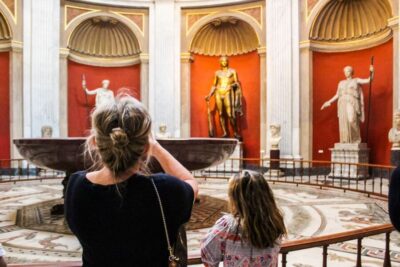
Vatican & Sistine Chapel Ticket with Optional Audio Guide
Read our review →
Castel Sant’Angelo Entry Ticket & Digital Audioguide
Read our review →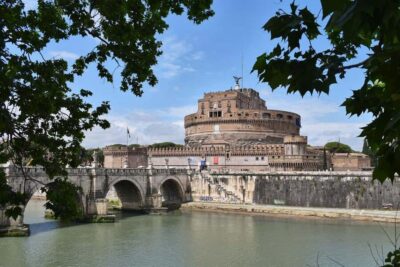
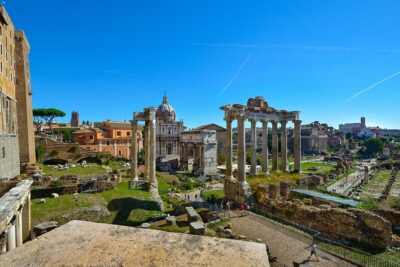
Colosseum, Forum, & Palatine Hill with Audio Guide
Read our review →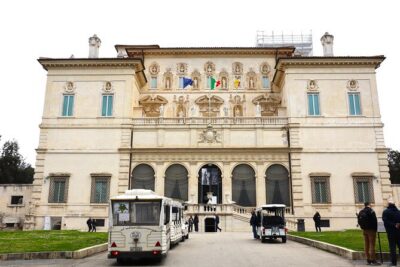
Borghese Gallery Skip-the-Line Ticket & Audioguide
Read our review →Browse the lists this tour appears in