
REVIEW · ROME AUDIO TOURS
Rome: Castel Sant’Angelo Audio Tour with Tickets
Rome keeps its best stories behind thick walls. Castel Sant’Angelo packs nearly 2,000 years of Roman history into one dramatic fortress, and this self-guided visit gives you the freedom to explore it at your own pace. You can move from imperial tomb to papal refuge, military stronghold, art museum, and panoramic viewpoint without being tied to a live group.
I like the skip-the-line entry and the flexible start times, especially if you are building a busy Rome day around St. Peter’s Basilica or the Vatican. I also like the downloadable audio guide, which explains the art, weapons, architecture, and changing role of the castle while you walk. The main drawback is simple: there is no live guide, so you must manage the route and pace yourself.
The visit can take anywhere from about 20 minutes to two hours. That wide range makes it suitable for a quick look or a serious exploration, but you will get more from it if you allow enough time for the rooms, corridors, museum displays, and rooftop terrace.
Key points to know before you book
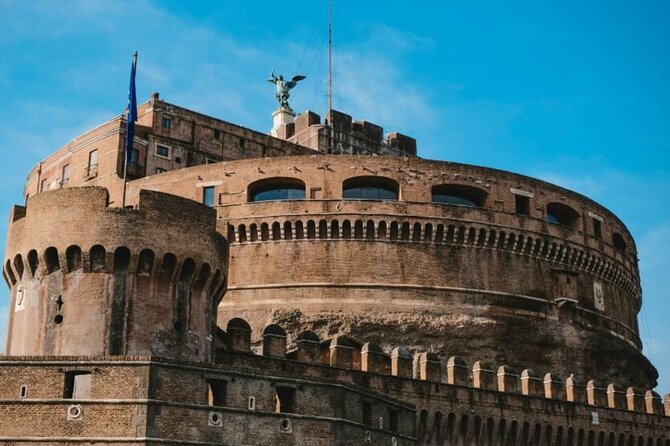
- The castle began as Emperor Hadrian’s mausoleum, then became a papal residence and military fortress.
- Skip-the-line admission is included, helping you spend more time inside and less time waiting.
- The panoramic terrace is the visual payoff, with views toward the Tiber River, St. Peter’s Basilica, and the Vatican.
- The audio guide is downloadable for offline use, so you can listen without relying on a live connection during the visit.
- This is a self-guided experience, with no live guide or included transportation.
- You can plan around your Rome schedule, thanks to a wide choice of start times and a visit length ranging from 20 minutes to two hours.
Why Castel Sant’Angelo is more than a fortress
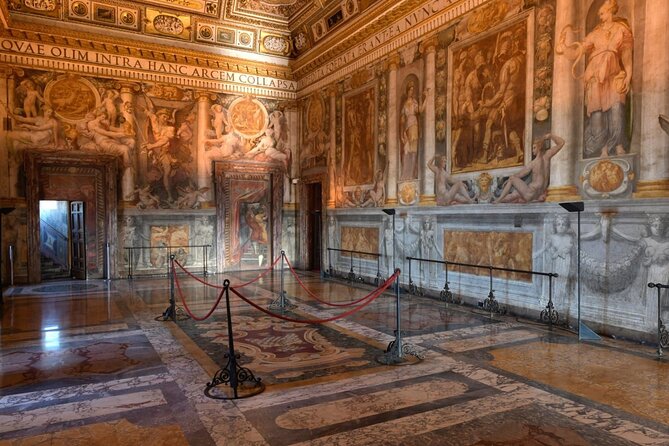
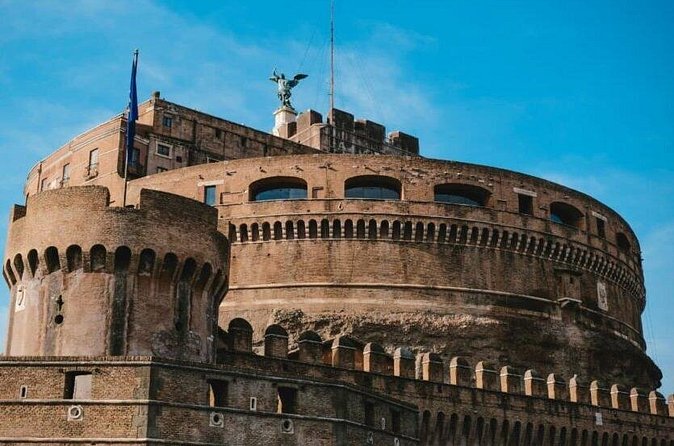
Castel Sant’Angelo is easy to recognize from the outside. Its huge circular form rises beside the Tiber, topped by a statue of the Archangel Michael. But the shape makes more sense once you know the building’s first purpose.
It began as a mausoleum for Emperor Hadrian. Later, Rome turned it into a fortress, a papal residence, and a military stronghold. Each use left a mark on the building, so your visit is not just a walk through a museum. You are moving through several versions of Rome layered in one place.
I find that this makes the audio guide particularly useful. A bare walk through the castle can leave you wondering why one room looks ceremonial, another defensive, and another almost domestic. The commentary helps connect those changes and gives the building a clear story.
The castle also offers a nice contrast with Rome’s open-air ruins. At the Colosseum or Roman Forum, the past is spread across a wide site. Here, the past is stacked inside one structure. You move through enclosed rooms, ancient corridors, display areas, and viewpoints, with the city constantly appearing through windows and openings.
A few more audio tours around Rome worth a look
- Rome: Colosseum & Forum with Audio Guide App -Optional Arena
★ 4.2 · 24,770 reviews - Rome: City Sightseeing Hop-on Hop-off Bus with Audioguide
★ 4.0 · 16,045 reviews - Rome: St. Peter’s Basilica & Dome Entry Ticket & Audio Tour
★ 4.2 · 7,537 reviews
Entering Castel Sant’Angelo with skip-the-line access
The included skip-the-line ticket is one of the strongest practical features. Rome’s major monuments can consume a surprising amount of time in queues, so direct entry matters when you have only a few days in the city.
This is also a useful stop if your day includes the Vatican area. Castel Sant’Angelo sits close to St. Peter’s Basilica and the Vatican, and the castle’s upper terrace gives you a different angle on those famous sights. The experience does not include transportation, so you will need to make your own way there using Rome’s public transport or by walking.
The available start times give you room to fit the visit around lunch, a church visit, or another timed attraction. That flexibility is more valuable than it may sound. A fixed guided tour can force you to rush through another sight, while a self-guided ticket lets you shape the day around your own interests.
Once inside, you use the audio guide app to set your pace. The guide is described as available in multiple languages, while the experience itself is offered in English. Check the language selection carefully when booking if that detail matters to you.
Moving from Hadrian’s tomb to papal refuge
The first major pleasure is simply understanding the building’s original scale and shape. Hadrian’s mausoleum was designed as a grand imperial monument, and its circular design still gives the castle a powerful presence.
As you move through the interior, the audio commentary covers the castle’s history, art, and architecture. You can pause when a room catches your attention, replay information, or keep moving if you are short on time. That control is a good match for visitors who prefer to read a room in silence instead of staying with a guide’s fixed schedule.
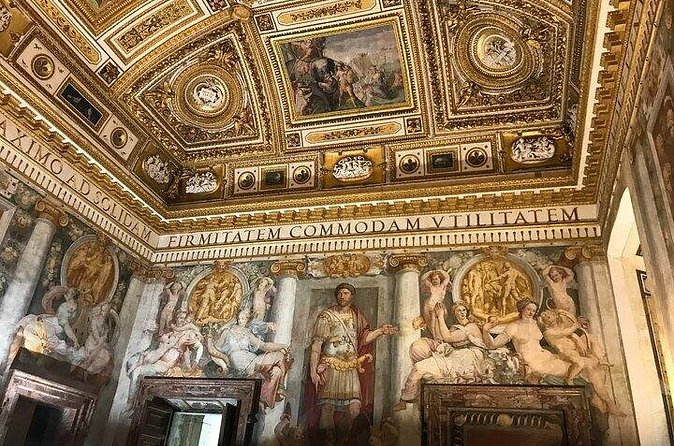
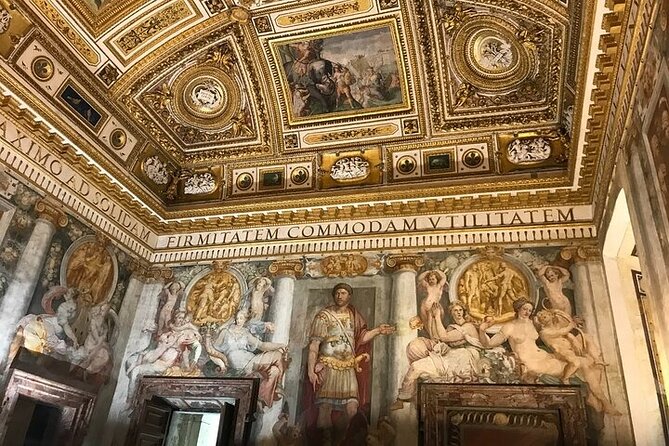
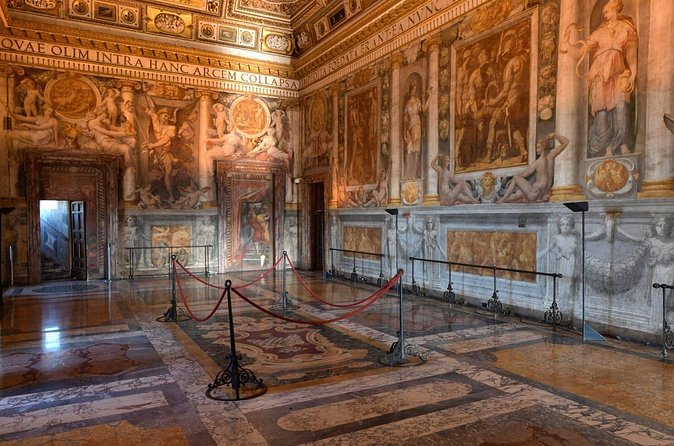
The castle’s later role as a papal residence adds another layer. The building was not only a defensive shell. It also served as a place of power and protection. The mix of ceremonial spaces, art, and military features helps explain how the castle worked as both a residence and a fortress.
You should not expect every part of the building to feel polished or decorative. Its interest comes from the contrast between grand rooms, functional defenses, ancient passageways, and museum displays. The changing atmosphere is part of the appeal.
Art, weapons, and the castle’s working past
The museum displays bring the building’s story into sharper focus. You can see art and weaponry, along with material connected to the castle’s long use as a military site.
The weapons are especially helpful for understanding that Castel Sant’Angelo was not just an old monument preserved for sightseeing. It was built and adapted for protection. Its thick walls, restricted corridors, and defensive character make more sense when you consider the threats facing Rome over the centuries.
The art and architectural details offer a different mood. They show how the building was reshaped for papal and ceremonial use. The audio guide can help you connect these displays to the rooms around you, rather than treating each object as an isolated museum piece.
I would give yourself more than 20 minutes if you want to appreciate this part of the visit. A very short stop can cover the headline sights, but it leaves little time for the exhibits or the historical transitions. The full two-hour window is better for anyone who enjoys reading displays, listening carefully, and taking pauses.
Same place, a different route to walk:
- Colosseum, Roman Forum & Palatine Hill with Audioguide App
★ 4.4 · 6,291 reviews - Vatican & Sistine Chapel Ticket with Optional Audio Guide
★ 4.1 · 5,405 reviews - Rome: Castel Sant’Angelo Entry Ticket & Digital Audioguide
★ 4.7 · 5,347 reviews - Rome: Castel Sant’Angelo Entry Ticket & Audio App
★ 4.3 · 4,952 reviews
Ancient corridors and the Passetto di Borgo
The corridors are among the most atmospheric parts of the experience. They show the castle as a place of movement and escape, not simply a monument viewed from a distance.
The route includes ancient passageways, including the Passetto di Borgo, the secret passage that connected the castle with the Vatican. This link explains why the fortress mattered so much to the papacy. In a dangerous city, a protected route to a fortified refuge could be a matter of survival.
The passage also adds a human scale to the visit. Statues and grand rooms tell you about emperors and popes, but a concealed route suggests fear, urgency, and practical planning. You can picture people moving through the castle for reasons far less ceremonial than a museum visit.
Access can depend on the public areas open during your visit, so treat the Passetto as part of the castle’s historical story and corridor network rather than assuming every restricted section is available. The included admission covers the public areas of the museum and castle, but the information does not promise access to every normally closed space.
The panoramic terrace and Rome from above
The panoramic terrace is the natural high point of the visit. From here, you can look toward the Tiber River, St. Peter’s Basilica, and the Vatican.
This viewpoint gives you a useful sense of Rome’s layout. The river, the castle, and the Vatican are no longer separate points on a map. They become part of one connected urban story. The terrace also gives you a break after moving through enclosed rooms and corridors.
Allow time here rather than treating it as a quick photo stop. The view is one of the main reasons to include Castel Sant’Angelo in a Rome itinerary, especially if you want something different from the standard church and ancient-ruin circuit.
The terrace can also help you decide how much longer to stay. If you are on a tight schedule, the viewpoint and a few key interiors may be enough. If you have room, return to the exhibits and corridors after listening to the audio commentary.
How the audio guide changes the experience
A self-guided audio tour works best when you want information without a fixed group. You can stop for photos, spend longer in a room, or skip material that does not interest you.
The downloadable format is useful because you can use the guide offline. That reduces one common source of travel friction. You do not need to depend on a live connection every time you want the next piece of commentary.
The written feedback on this experience describes the audio tour as interesting and easy to follow. That is important praise for this format. A self-guided visit only works well when the instructions are clear and the commentary does not make the route feel like homework.
Still, you should know what you are giving up. A live guide can answer questions, point out details you miss, and adjust the explanation to the group. This ticket does not provide that personal contact. If you want a conversation or detailed questions answered on the spot, choose a live guided tour instead.
Is $38.13 a fair price?
At $38.13 per person, this is not the cheapest way to see a Roman monument. The value depends on how you use it.
The price includes admission, skip-the-line entry, the audio guide, offline access, and the public museum and castle areas. If you take close to two hours and listen to the commentary, the cost is easier to justify. You are paying for both the ticket and a structured way to understand what you see.
The value is weaker if you plan to rush through in 20 minutes. In that case, the audio guide and museum access may not have enough time to make a real difference. A quick visit can still work if the terrace is your main goal, but you should be clear about that before booking.
The flexible start times also add practical value. You can fit the castle into a day that already includes nearby sights, rather than losing half a day to a fixed excursion. For many people, that flexibility is worth more than a small price difference.
Who will enjoy this experience most?
I would recommend it to independent visitors who like to set their own pace and want more context than a standard admission ticket provides. It suits people interested in Roman imperial history, papal Rome, military architecture, art, and city views.
It also works well for first-time visitors who want a landmark near the Vatican without committing to a long guided tour. Families and mixed-interest groups may appreciate the freedom to move at different speeds, though everyone will need to use the audio guide independently.
You may want a different format if you prefer a live storyteller or need personal help throughout the visit. The experience is self-guided, and the maximum group size of 30 does not turn it into a small private tour. It simply sets the maximum number connected with the activity.
Most people can participate, and the site is near public transportation. The information provided does not give detailed accessibility notes, so anyone with specific mobility needs should confirm current conditions before booking.
Timing, cancellation, and practical planning
The stated duration ranges from about 20 minutes to two hours. I would plan for at least enough time to see the terrace, a selection of rooms, the museum displays, and the ancient corridors without rushing.
There is no transportation included, so build travel time into your day. The castle is near public transportation, making it practical to combine with other central Rome sights.
You receive confirmation at booking. Free cancellation is available if you cancel at least 24 hours before the experience start time. Cancellations or changes made less than 24 hours before the start are not accepted for a refund, and the cut-off follows local Rome time.
Should you book Castel Sant’Angelo with an audio guide?
Book this experience if you want flexible entry, historical context, and one of Rome’s best city views without joining a live group. The castle rewards a slower visit, so the $38.13 price makes the most sense when you plan to stay well beyond a quick photo stop.
Skip it if you only want a short exterior view or if a live guide is essential to you. For everyone else, the combination of Hadrian’s mausoleum, papal rooms, weapons, ancient corridors, the Passetto di Borgo, and the panoramic terrace makes this a strong addition to a Rome itinerary.
FAQ
Where does this audio tour take place?
The experience takes place at Castel Sant’Angelo in Rome, Italy.
How much does the experience cost?
The listed price is $38.13 per person.
How long does the visit last?
The visit takes approximately 20 minutes to two hours, depending on how much time you spend inside.
Is the audio guide included?
Yes. An audio guide is included, with multilingual options and downloadable offline use.
Is the experience offered in English?
The experience is offered in English. The audio guide app is also described as having a choice of languages.
What does the admission ticket include?
The ticket includes skip-the-line entry to Castel Sant’Angelo and access to the public areas, including the museum and panoramic terrace.
Is a live guide included?
No. This is a self-guided audio experience and does not include a live guide.
Is transportation included?
No. Transportation to and from Castel Sant’Angelo is not included, though the site is near public transportation.
Can I cancel for a full refund?
Yes, if you cancel at least 24 hours before the experience start time. Cancellations or changes made less than 24 hours in advance are not accepted for a refund.
Just added around Rome
- Pantheon Skip the Line Entry Tickets with Digital Audio Guide★ 3.5 · 52 reviews
- Trastevere: A Self-guided Audio Tour of Rome’s Medieval Village★ 4.5 · 3 reviews
- St. Peter’s Basilica: Dome Climb with Lift & Audioguide★ 4.5 · 13 reviews
- Audio guide in Vatican Museums and Sistine Chapel★ 4.5 · 12 reviews
- Navova square underground with audioguide★ 4.5 · 17 reviews
- The Roman Jewish Ghetto: A Self-Guided Audio Tour★ 4.0 · 8 reviews
- Experience: The Pantheon Audio Tour★ 4.5 · 4 reviews
- St. Mary’s Basilica, Pope Francis Tomb Audio Tour with Crypt★ 4.0 · 3 reviews
Rome Audio Tours, compared.
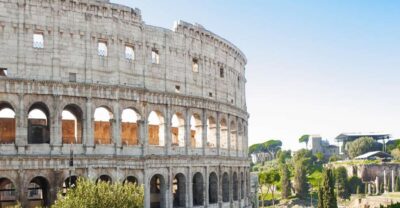
Colosseum & Forum with Audio Guide App -Optional Arena
Read our review →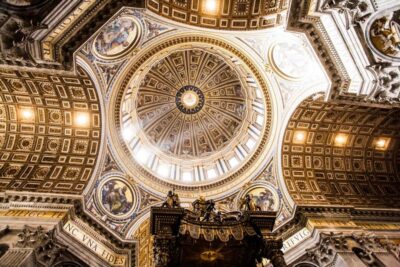
St. Peter’s Basilica & Dome Entry Ticket & Audio Tour
Read our review →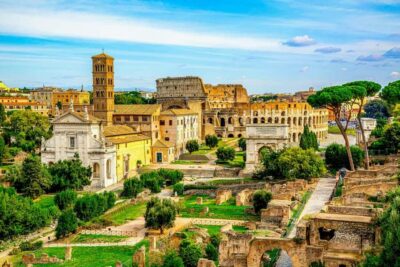
Colosseum, Roman Forum & Palatine Hill with Audioguide App
Read our review →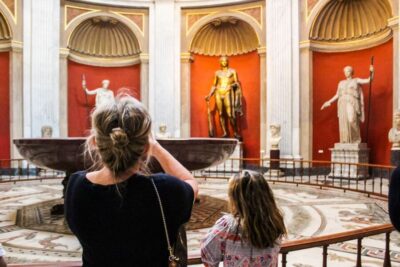
Vatican & Sistine Chapel Ticket with Optional Audio Guide
Read our review →
Castel Sant’Angelo Entry Ticket & Digital Audioguide
Read our review →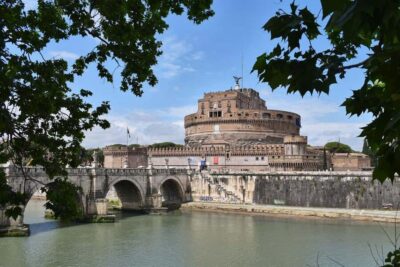
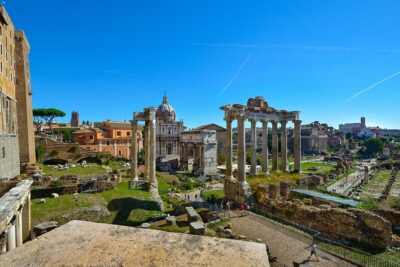
Colosseum, Forum, & Palatine Hill with Audio Guide
Read our review →
Borghese Gallery Skip-the-Line Ticket & Audioguide
Read our review →Browse the lists this tour appears in