
REVIEW · BARCELONA AUDIO TOURS
Colonia Guell & Gaudi’s Crypt Admission Ticket with Audioguide
Gaudí’s strangest church begins with a quiet village. This self-guided visit takes you beyond central Barcelona to Colònia Güell, a 19th-century workers’ settlement built for a textile mill, then into Gaudí’s UNESCO-listed Crypt. I like the freedom to explore at my own pace, and I like the unusual chance to see where Gaudí tested ideas later used at the Sagrada Família.
The visit also gives you more than a single monument. You can wander past workers’ homes, a school, gardens, the old factory, cooperative buildings, and Joan Rubió’s elegant Ca L’Espinal while the audioguide explains how the village worked. The main drawback is the location: Colònia Güell lies outside Barcelona’s city limits, so you need a train rather than the Barcelona Metro.
Key things to know before you go
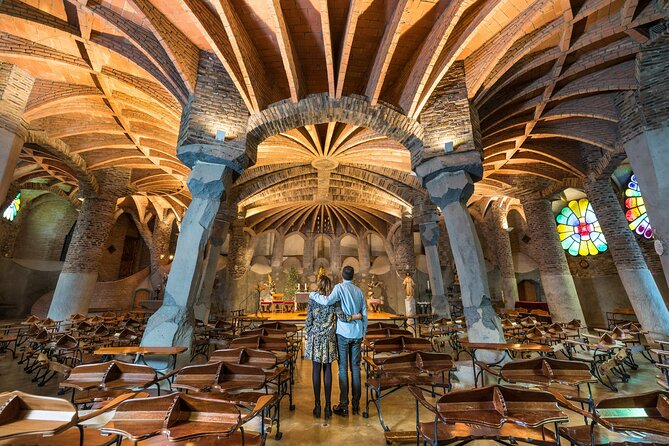
- Gaudí’s Crypt is the main event: See sloping arches, spiraling columns, mosaics, and two naves built at different levels.
- The village gives the crypt context: Colònia Güell was planned to house workers from Eusebi Güell’s nearby textile mill.
- This is a self-guided visit: Pick up the audioguide and map at the information center, then set your own pace.
- Allow about two hours: The audio portion ends after roughly two hours, but you may remain in the area longer.
- The train matters: This is outside Barcelona proper, and the practical transport detail is easy to miss.
- The price is modest: At about $12.07 per person, the ticket offers good value for visitors interested in Gaudí and Catalan modernism.
Why Colònia Güell is worth the trip from Barcelona
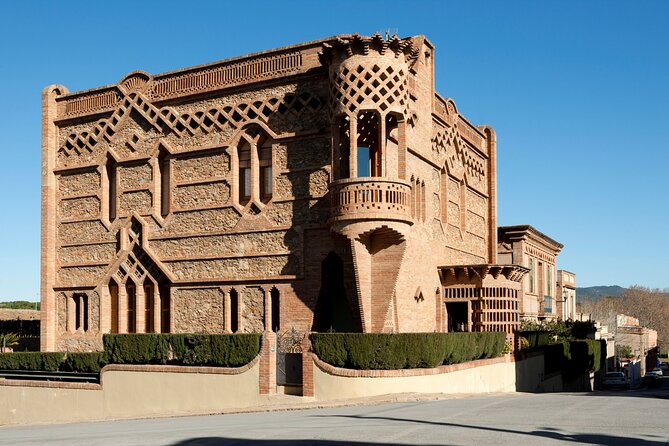
Colònia Güell was not built as a sightseeing attraction. Eusebi Güell created it to house workers from his nearby textile factory, and he commissioned modernist architects to shape the estate. That practical purpose gives the place a different feel from Barcelona’s grand urban monuments.
Here, architecture is tied to daily life. You see terraced worker housing, gardens, a school, shops, cooperative buildings, administrative spaces, and the old factory area. The village helps you picture how a planned industrial community functioned, rather than showing you only a polished façade.
I find that setting especially useful if you already plan to visit the Sagrada Família. Gaudí’s Crypt lets you look at ideas in an earlier, more experimental form. The visit is not simply another Gaudí stop. It shows how he worked with structure, light, stone, and unusual shapes before applying related ideas to his larger Barcelona project.
The village itself is low-key. You will not be rushed from one stop to another, and there is no large guided group controlling the pace. That makes the outing appealing if you prefer to pause for photographs, read the map, or listen to selected parts of the audio rather than follow a fixed speech.
The trade-off is time. Getting outside the city requires extra effort, and the village does not offer the same concentration of attractions as central Barcelona. If your schedule is tight, the visit makes most sense when you have a clear interest in Gaudí, industrial architecture, or Catalan modernism.
A few more audio tours around Barcelona worth a look
- Barcelona: Sagrada Familia Entry Ticket with Audio Guide
★ 4.6 · 105,312 reviews - Barcelona: Casa Batlló Entry with Self-Audioguide Tour
★ 4.7 · 25,359 reviews - Casa Batllo Admission Ticket with Intelligent Audio Guide
★ 4.5 · 3,168 reviews
Arriving at the Colònia Güell information center
You make your own way to the Colònia Güell information and visitor center. There, you pick up the audioguide, a map of the town, and a keepsake guidebook before beginning the walk.
The mobile ticket helps with entry, but the experience still begins in person at the information center. Do not treat it like a fully digital attraction where you walk straight through a gate and start listening on your own. The center is where you get the material that makes the self-guided route easier to follow.
The audioguide is offered in English. A children’s audioguide is not included, so families should keep that in mind when deciding if the format will suit younger children. Most people can take part, but comfortable shoes are important because the experience involves walking between several parts of the village.
The instructions also ask you to wear formal clothes. That is an unusual detail for a sightseeing visit, so it is worth noting before you set out. At the same time, comfortable footwear remains a sensible choice for the walk.
Walking through the workers’ village
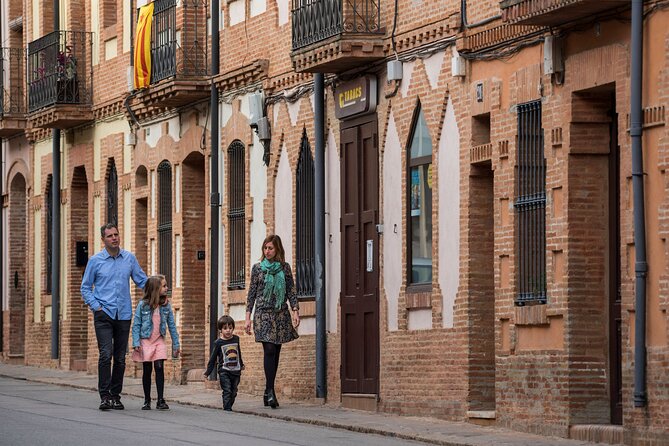
Once you have the map and audio device, you can explore Colònia Güell independently. The route takes you past the historic mill, school, shops, gardens, cooperative headquarters, administrative buildings, and terraced homes built for workers.
The value here lies in the variety. You are not looking at one isolated modernist structure. You are seeing how an entire community was arranged around employment, housing, education, and shared services. That wider view makes the architecture easier to understand.
Look for the way Catalan folk design blends with modernist details. Turrets, decorative forms, and trencadís mosaic tiling give ordinary civic and residential buildings a more inventive appearance. Trencadís uses broken ceramic pieces to create irregular mosaic surfaces, a style strongly associated with Catalan modernism.
The houses and gardens are worth taking slowly. They are less theatrical than Gaudí’s Crypt, but they show how design shaped everyday surroundings. You can also visit the school and cooperative buildings, which help explain that this was intended as a functioning settlement rather than a simple row of factory homes.
The audio commentary is useful here because the buildings do not always explain themselves. Without background, you might see a pleasant collection of façades and move on. With the village’s purpose in mind, the details become more meaningful: this was a planned place for workers connected to a specific industrial enterprise.
Ca L’Espinal deserves special attention. It is described as the masterpiece of Joan Rubió, one of the modernist architects involved in the estate. The building adds another voice to the experience, showing that Colònia Güell was not shaped by Gaudí alone.
This section is also where the outing may feel slow for some people. If your only goal is to see Gaudí, the village walk can seem like a long lead-in. I would not rush it, though. The settlement explains the social and architectural setting that gives the Crypt its weight.
Entering Gaudí’s Crypt
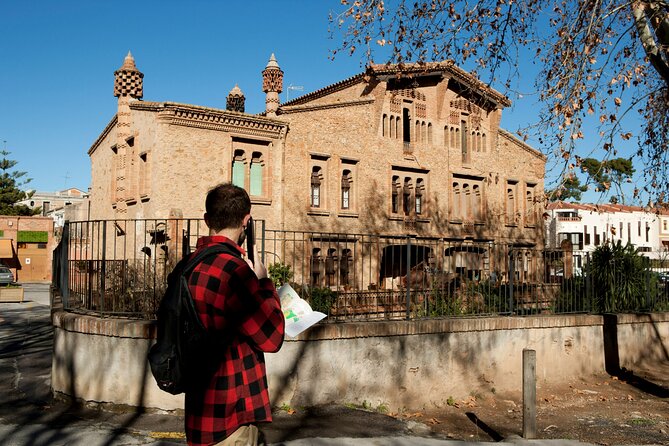
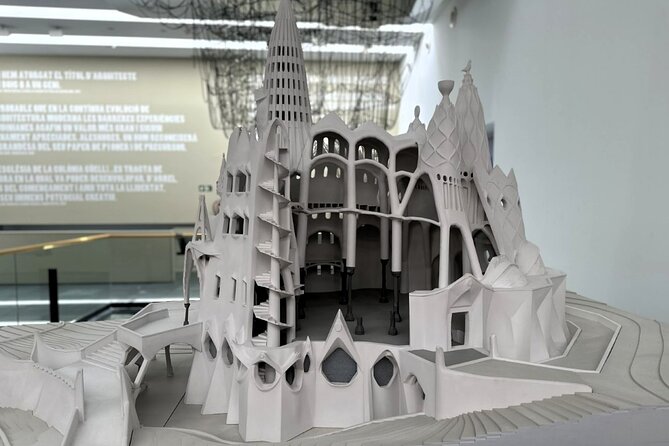
After exploring the village, you make your way to the Crypt, the highlight of the visit. Gaudí designed the church in 1882, and he used the project to test architectural ideas later connected with the Sagrada Família.
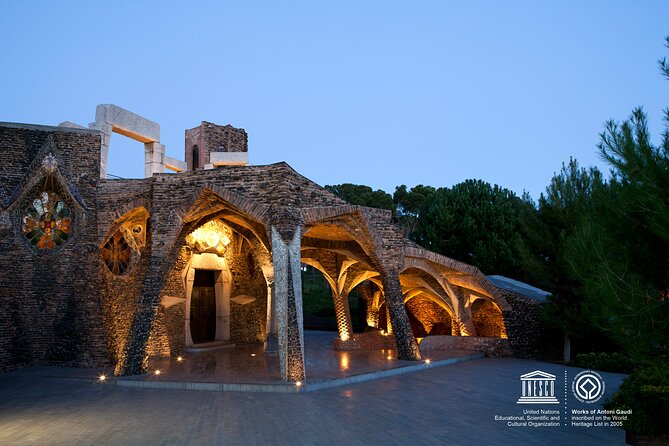
From the outside, the building already looks unusual. Its form responds to the surrounding hillside rather than sitting as a separate object on a flat urban site. The design feels tied to the ground, which is one reason the interior can seem so different from a conventional church.
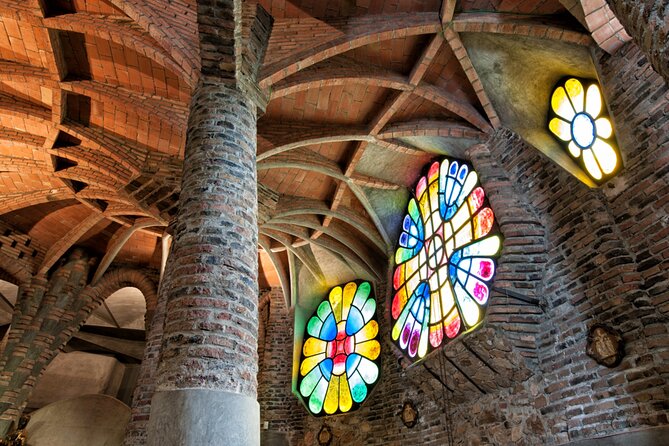
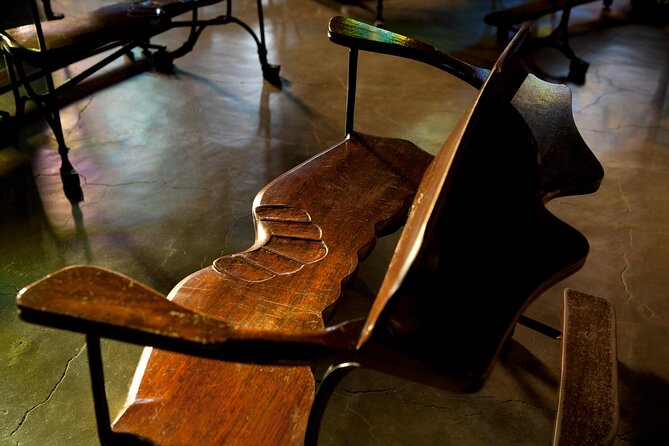
Inside, the main details are structural as well as decorative. You will see flowing arches, spiraling columns, mosaics, and two naves built on different levels. These elements are not just surface decoration. They show Gaudí working out ways to carry weight, shape space, and blend a building into its setting.
The Crypt has a strong atmosphere, even if you are not an architecture specialist. The interior is more intimate than the vast Sagrada Família, and the unusual columns and arches are close enough to study without being swallowed by scale. I would give yourself time to look upward, then step back and examine how the supports guide your eye through the room.
The audioguide explains the connection between this church and Gaudí’s later work. That connection is the strongest reason to make the journey. You are seeing a place where he could test forms and construction ideas before taking on the Sagrada Família, his great unfinished project in Barcelona.
The Crypt was declared a UNESCO World Heritage site in 2005. That designation confirms its architectural importance, but you do not need to be interested in official heritage labels to appreciate the room. The columns, arches, and changing levels make the building memorable on their own.
One point of context matters: Gaudí did not return to finish the project after moving on to major work in Barcelona. That unfinished story adds a slightly bittersweet note. You see an important experiment, but not a completed church in the full form originally imagined.
Same place, a different route to walk:
- La Pedrera-Casa Mila Admission Ticket with Audioguide
★ 4.5 · 1,032 reviews - Gaudi´s Casa Vicens Skip the Line Ticket with Audioguide
★ 4.5 · 685 reviews - Erotic Museum Admission Ticket with Audioguide
★ 5.0 · 527 reviews - Barcelona: Mies van der Rohe Pavilion Ticket and Audio Guide
★ 4.6 · 380 reviews
How the two-hour audioguide works
The audio portion lasts about two hours. It covers both the village and the Crypt, helping you move from the wider settlement to the central architectural attraction.
This format works best for independent visitors. You choose how long to pause, which buildings deserve more attention, and when to move on. If you prefer a guide leading a group, offering live explanations, and answering questions, this experience may feel too quiet.
I like that the audio tour does not force the entire outing into a rigid timetable. The selected departure time gives you a starting point, but the visit remains flexible once you begin. After the audio concludes, you are free to spend more time in the area.
The self-guided format also makes it easier to match the visit to your interests. Architecture enthusiasts can linger over the Crypt’s columns and arches. Visitors more interested in social history can focus on the factory, school, homes, and cooperative buildings.
The drawback is that you are responsible for keeping yourself oriented. The map helps, and the information center provides the basic materials, but there is no guide physically pointing out every detail. Pay attention at the start so you understand how the route fits together.
Is the $12.07 price good value?
At around $12.07 per person, this is a reasonably priced way to see a UNESCO-listed Gaudí site and a complete historic village. The ticket includes admission to Colònia Güell, entry to the Crypt, the town map, the audioguide, and a keepsake guidebook.
The value depends on what you want from the outing. If you are looking for a quick, central Barcelona attraction, transport time can make the low ticket price less important. The journey outside the city adds a practical cost in time and transport, even though that cost is not part of the admission price.
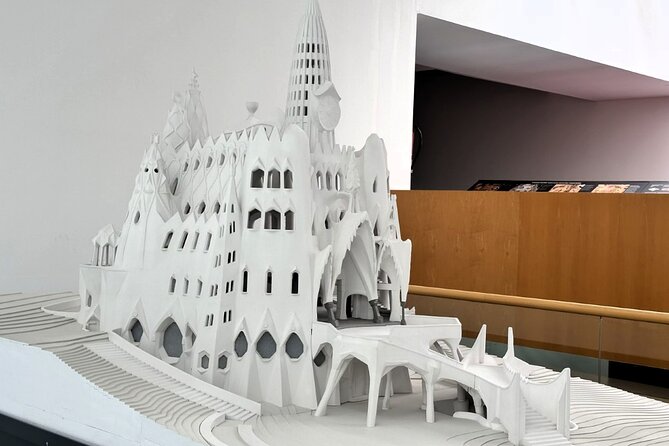
For someone who already plans to see the Sagrada Família, the connection is valuable. The Crypt provides a smaller setting where you can consider Gaudí’s working methods and architectural experiments. You get both a major site and the village that explains its original purpose.
For a casual visitor with only a few hours in Barcelona, the calculation is less clear. The Crypt has real appeal, but the village section may not hold your attention if you are not interested in how workers lived and how industrial communities were planned.
The overall rating of 4.4 from 151 ratings fits the experience well. The Crypt earns the strongest praise, while the self-guided village walk divides attention more. I would treat the ticket as good value for a Gaudí-focused visit, not as a must-see for every first-time Barcelona itinerary.
Transport and timing advice
Plan the transport before you book. Colònia Güell is outside Barcelona’s city limits, and the practical advice is to use the Barcelona train rather than the Barcelona Metro. The distinction matters because assuming the Metro reaches the site can lead to a frustrating start.
Choose from the available departure times when booking, then allow enough room for the train journey and the approximately two-hour visit. Since the audio portion concludes after two hours, you can add extra time if you want to examine the village more carefully.
The visit is best for people who enjoy walking at an easy pace and stopping often. Wear comfortable shoes, even though formal clothes are requested. The site includes several types of buildings and outdoor areas, so the experience is not a single indoor admission followed by a quick exit.
Because this is self-guided, you can also avoid the pressure of matching a group. That flexibility is helpful if you want to take photographs, listen carefully, or spend longer inside the Crypt.
Who should book this experience?
I would recommend it most strongly to:
- Gaudí enthusiasts who want to see an important early project connected to the Sagrada Família.
- Architecture fans interested in columns, arches, mosaics, and buildings shaped by a hillside.
- Visitors with extra time in Barcelona who are willing to travel beyond the central sights.
- Independent sightseers who prefer an audioguide and a map to a scheduled group tour.
- People interested in industrial communities and the way housing, work, school, and public buildings fit together.
I would be more cautious if you have only one short day in Barcelona, dislike self-guided sightseeing, or want a busy schedule packed with famous central attractions. The Crypt is compelling, but reaching it takes planning, and the village is intentionally quieter than the city’s main monuments.
Final booking advice
Book this ticket if the idea of seeing Gaudí’s early architectural experiments appeals to you, especially if you have already planned the Sagrada Família. The Crypt is the clear prize, while Colònia Güell adds the human and industrial setting that makes the visit more than a quick church stop.
Skip it if your Barcelona schedule is already crowded or if you want a live guide to explain every building. At $12.07, the admission is affordable, but the real investment is your time getting outside the city.
FAQ
Where is Colònia Güell located?
Colònia Güell is just outside Barcelona, Spain, beyond the city limits.
Is the Gaudí Crypt included in the ticket?
Yes. Admission to both Colònia Güell and Gaudí’s Crypt is included.
How long does the experience last?
The audioguide concludes after about two hours. You may remain in the area longer if you wish.
Is this a guided group tour?
No. It is a self-guided experience using an audioguide, map, and guidebook.
What language is the audioguide offered in?
The experience is offered in English.
Where do I collect the audioguide?
You collect it at the Colònia Güell information and visitor center.
Is public transportation available?
Yes. The site is near public transportation, and the practical transport detail is that you need the Barcelona train rather than the Barcelona Metro.
What buildings can I see in Colònia Güell?
The visit includes the historic mill, school, shops, gardens, cooperative buildings, administrative areas, terraced worker homes, and Ca L’Espinal.
Is a children’s audioguide included?
No. A children’s audioguide is not included.
Can I cancel for a full refund?
Yes. You can cancel at least 24 hours before the experience start time for a full refund. Cancellations or changes made within 24 hours are not accepted for a refund.
Just added around Barcelona
- Self-Guided Audio Tour – Legends of the Gothic Quarter★ 4.5 · 6 reviews
- Self-Guided Audio Tour-The Surrealist Barcelona of Dalí and Gaudí★ 3.5 · 8 reviews
- Self-Guided Audio Tour of Barcelona City★ 3.0 · 2 reviews
- Montjuic Park Walking Tour with Audioguide on Your Smartphone★ 3.0 · 4 reviews
- Barcelona Self-Guided Audio Tour★ 3.0 · 6 reviews
- Montjuïc Cable Car Entry Voucher with Audio Tour on Your Phone★ 3.5 · 37 reviews
- Self-Guided Tours Barcelona: 150+ Captivating Audio Stories★ 5.0 · 4 reviews
- Gothic Quarter Barcelona Tour with Audioguide★ 4.5 · 5 reviews
Barcelona Audio Tours, compared.
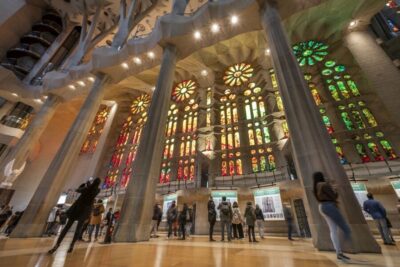
Sagrada Familia Entry Ticket with Audio Guide
Read our review →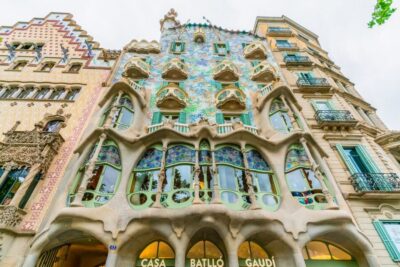
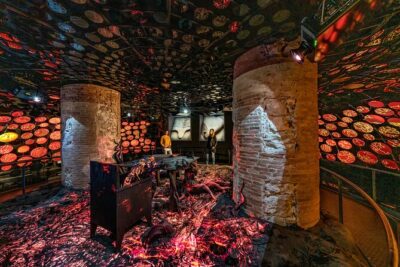
Casa Batllo Admission Ticket with Intelligent Audio Guide
Read our review →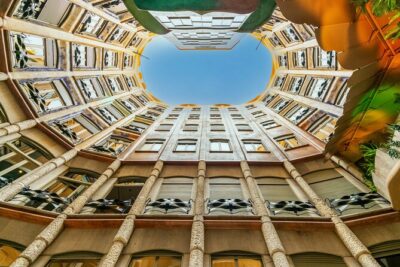
La Pedrera-Casa Mila Admission Ticket with Audioguide
Read our review →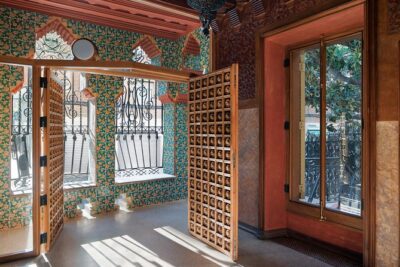
Gaudi´s Casa Vicens Skip the Line Ticket with Audioguide
Read our review →
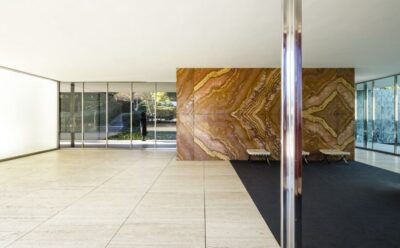
Mies van der Rohe Pavilion Ticket and Audio Guide
Read our review →
Browse the lists this tour appears in