
REVIEW · BARCELONA AUDIO TOURS
Barcelona: Mies van der Rohe Pavilion Ticket and Audio Guide
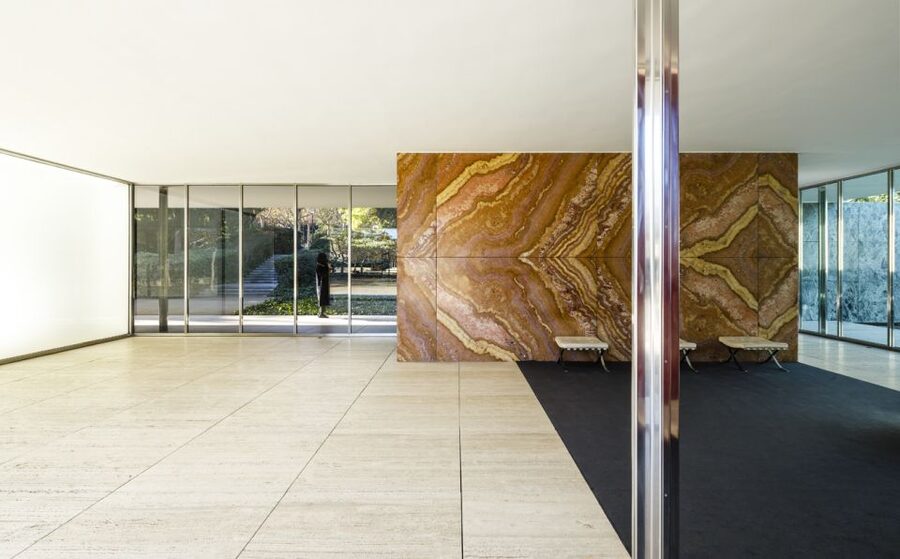
Barcelona’s quietest masterpiece may be its smallest. The Mies van der Rohe Pavilion offers a focused look at modern architecture, where stone, glass, water, and open space do nearly all the talking. I like its calm atmosphere and the way its simple design rewards slow looking. The audio guide, available in five languages, adds useful context without turning the visit into a lecture.
I also like the Pavilion’s unusual story. Built for the 1929 Barcelona International Exhibition, it was dismantled afterward and rebuilt on its original site in 1986. The main drawback is value: at $10, the ticket is affordable, but the visit is brief and the building’s minimal design may feel too spare if you prefer busy museums or grand decoration.
Key points to know before visiting
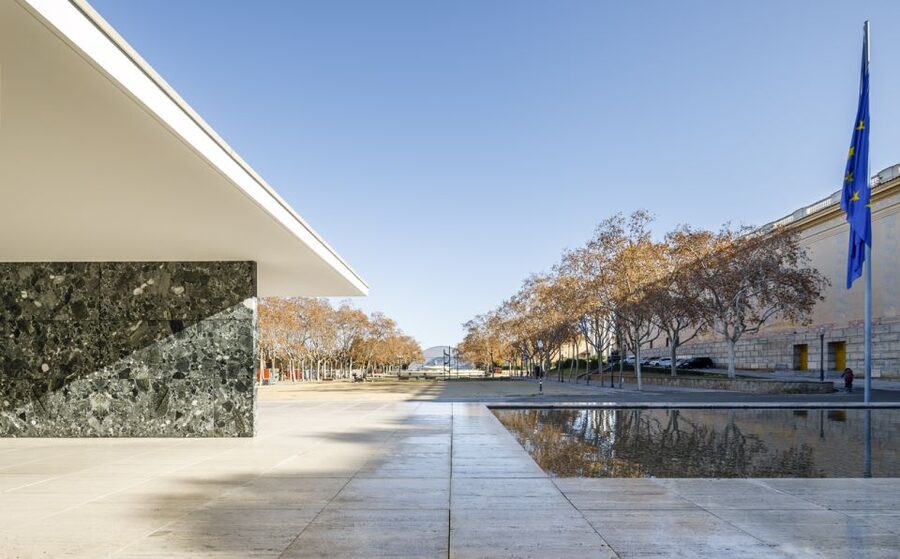
- A 1929 exhibition building rebuilt in 1986: The Pavilion you see today is a careful reconstruction of Mies van der Rohe and Lily Reich’s original design.
- A small site with major architectural influence: Its clean lines, open plan, and precise materials helped shape modern architecture.
- Five audio-guide languages: Choose from Spanish, Catalan, English, French, or German.
- A calm stop in Barcelona: The visit is relatively quiet, though photographers and models may sometimes use the space.
- A $10 decision: The price is fair for architecture enthusiasts, but less compelling if you want a long attraction with many rooms and exhibits.
- Easy planning: The ticket is valid for one day, offers skip-the-ticket-line entry, and is wheelchair accessible.
Why the Pavilion matters in Barcelona
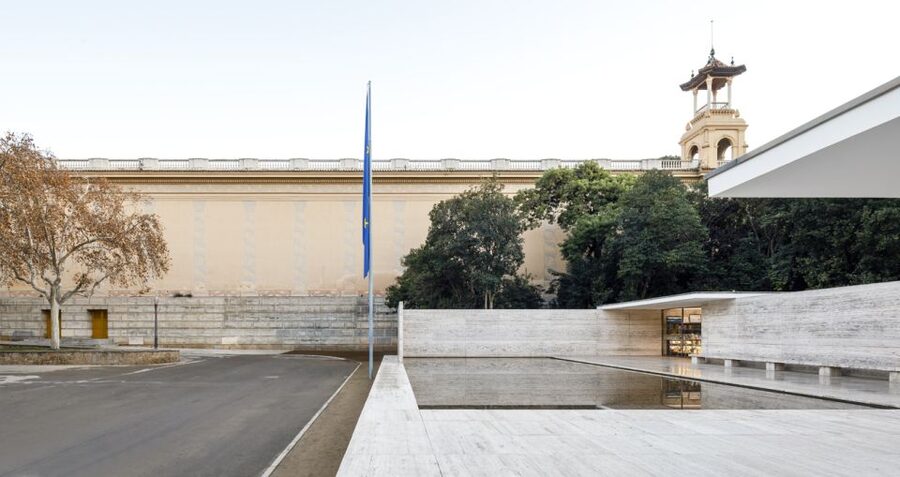
The Mies van der Rohe Pavilion is not a palace, church, or museum packed with objects. It is a building designed to be experienced as an object in itself. That distinction matters before you go.
Mies van der Rohe and Lily Reich created the Pavilion as the German national pavilion for the 1929 Barcelona International Exhibition. Its purpose was not to house a large collection or explain a national story through displays. Instead, the building presented a modern idea of space, with a design stripped down to structure, materials, light, and proportion.
I find the Pavilion most interesting when I treat it as a short architectural study rather than a conventional sightseeing stop. You move through a carefully arranged composition of planes and surfaces. Interior and exterior areas connect in a way that makes the building feel open, even when walls guide your view.
The original Pavilion disappeared after the exhibition. It was dismantled, then reconstructed on its original site and reopened in 1986. That history gives the visit an extra layer. You are not simply looking at a preserved 1929 building. You are looking at a later reconstruction of a work considered important enough to bring back.
A few more audio tours around Barcelona worth a look
- Barcelona: Sagrada Familia Entry Ticket with Audio Guide
★ 4.6 · 105,312 reviews - Barcelona: Casa Batlló Entry with Self-Audioguide Tour
★ 4.7 · 25,359 reviews - Casa Batllo Admission Ticket with Intelligent Audio Guide
★ 4.5 · 3,168 reviews
Entering a building made from almost nothing
The first impression is restraint. The Pavilion does not try to impress you with size, ornament, or a long procession of rooms. Its effect comes from how carefully each element has been placed.
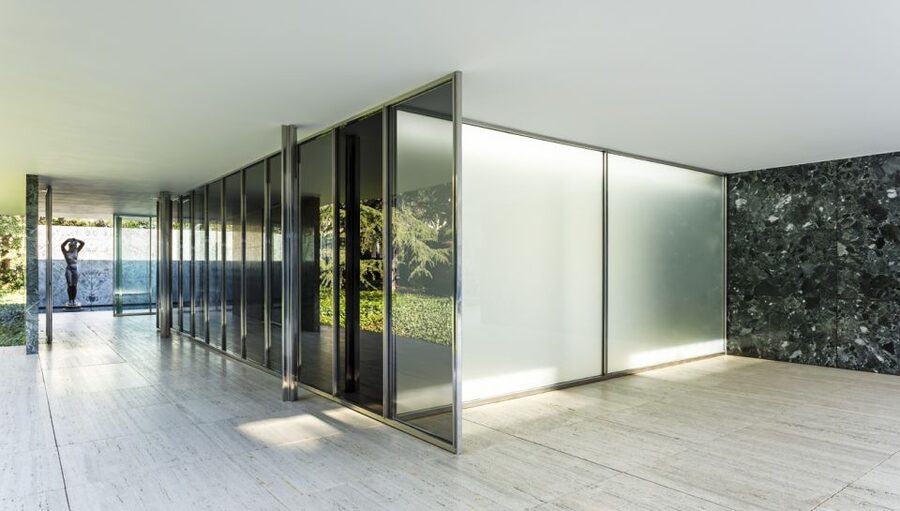
The design uses a small palette of materials brought from several places, including the Alps, Tivoli, Atlas, and Tinos. Those surfaces are not background decoration. They form much of the building’s visual character, with contrasts between stone, glass, water, and polished finishes.
I like the fact that the materials ask you to pay attention. A wall can look solid from one angle and reflective from another. Glass lets you see through the building, while stone panels interrupt the view and create new divisions. The result is simple, but not plain.
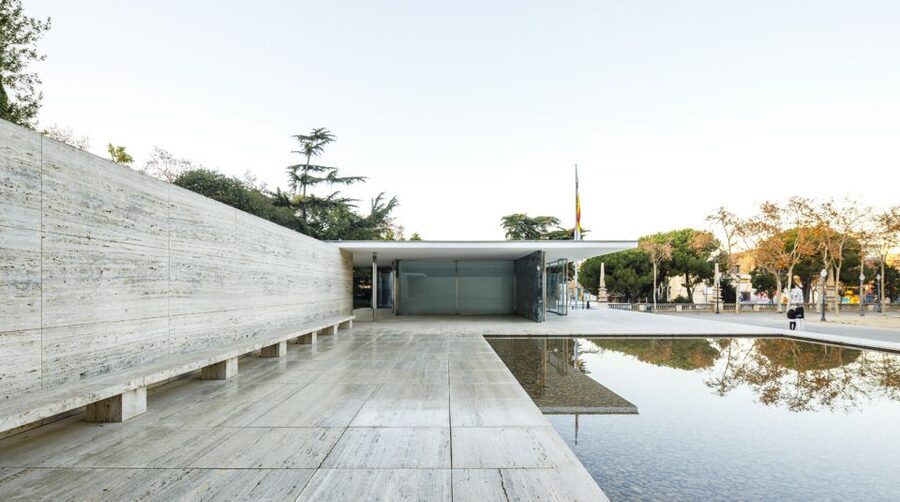
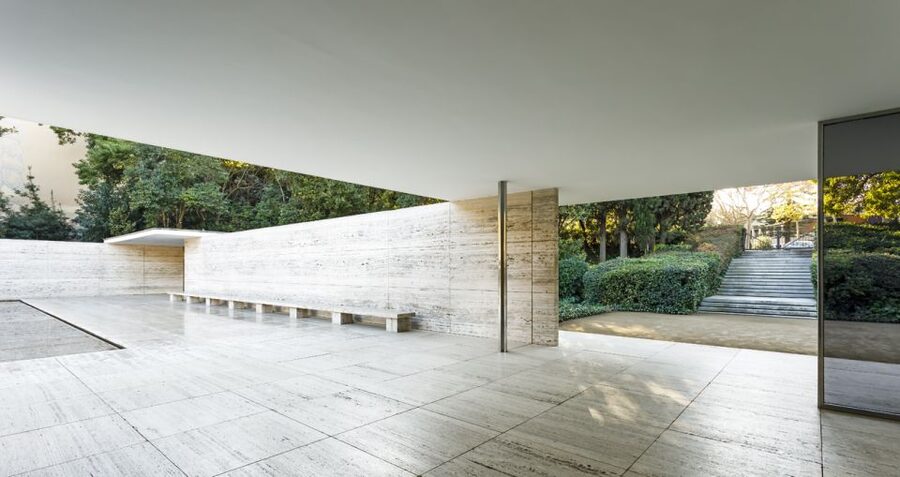
The linear relationship between inside and outside is one of the Pavilion’s strongest features. You do not experience the interior as a sealed box. Instead, views and reflections connect the spaces. Water and open areas help extend the building beyond its walls.
This is where the Pavilion can surprise you. At first, you might think there is not much to see. Then you notice that a change in position alters the entire composition. A wall frames one view, a reflective surface doubles another, and the building’s balance becomes clearer as you move around it.
The audio guide adds context without slowing you down
Your ticket includes an audio guide in Spanish, Catalan, English, French, or German. I consider it worthwhile because the Pavilion’s appearance alone does not explain why it became so influential.
Without context, you may simply see a polished modern building with open rooms and expensive-looking materials. The guide helps connect those choices to the ideas behind the Modern Movement. It can also explain the Pavilion’s role at the 1929 exhibition and the decision to reconstruct it in 1986.
The audio guide is especially useful if you do not already know Mies van der Rohe or Lily Reich. It gives you a framework for noticing details rather than leaving you to guess what makes the structure important.
One practical point deserves attention: an individual booking reported not receiving the audio guide and feeling confused. I would check at entry that the guide is available before beginning your visit. The supplied languages are Spanish, Catalan, English, French, and German, so make sure your preferred option is ready.
The guide should support your visit, not control it. I would listen to a section, pause, and look again at the part of the building it describes. This approach suits the Pavilion better than rushing from one audio track to the next.
A short visit that rewards patience
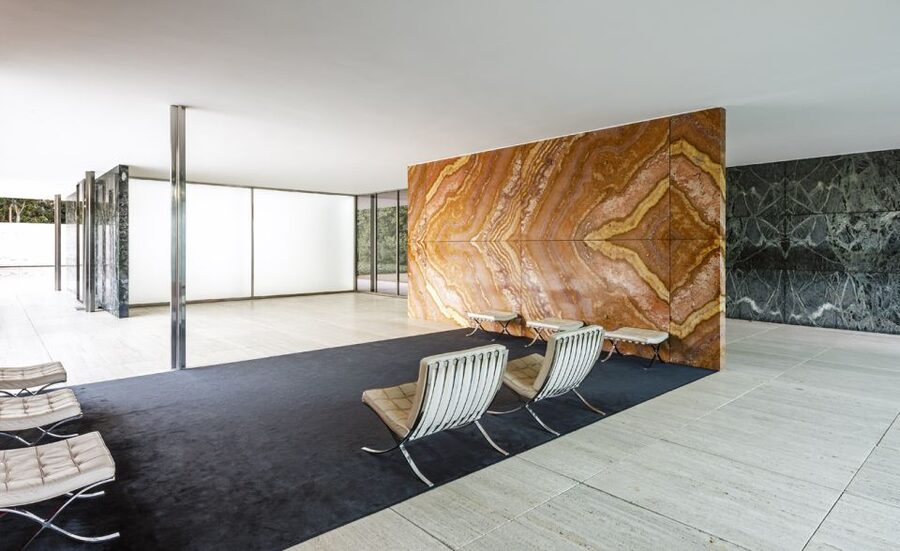
The experience is valid for one day, and the ticket provides skip-the-ticket-line entry. The available starting times can vary, so you need to check the schedule when booking. Opening hours may also change.
The site itself is compact. That is good news if you are fitting it between other Barcelona sights, but it also explains why some people question the entrance fee. You are paying for access to one carefully designed building, not for a full museum complex.
I would allow enough time to walk through the Pavilion slowly, listen to the audio guide, and return to areas that caught your eye. The exact time needed will depend on your interest in architecture. Someone who wants a quick look can finish fairly fast. Someone who enjoys materials, geometry, and reflections may want to stay longer.
The calm atmosphere is part of the appeal. One recent visit was described as relatively low in public traffic, which suits the Pavilion’s quiet character. Still, the space is sometimes used by professional photographers and models. Their work can become part of the scene, adding activity but also making it harder to experience the building in complete quiet.
I would not treat this as a major problem. It is simply worth knowing that a modern architectural site can also function as a photography location. If you want the most peaceful visit possible, check the current conditions at entry and be ready to spend a few minutes looking from a different angle.
Same place, a different route to walk:
- La Pedrera-Casa Mila Admission Ticket with Audioguide
★ 4.5 · 1,032 reviews - Gaudi´s Casa Vicens Skip the Line Ticket with Audioguide
★ 4.5 · 685 reviews - Erotic Museum Admission Ticket with Audioguide
★ 5.0 · 527 reviews - Barcelona: Montjuïc Cable Car Ticket with Audio Guide
★ 3.9 · 270 reviews
What the reconstruction means for your visit
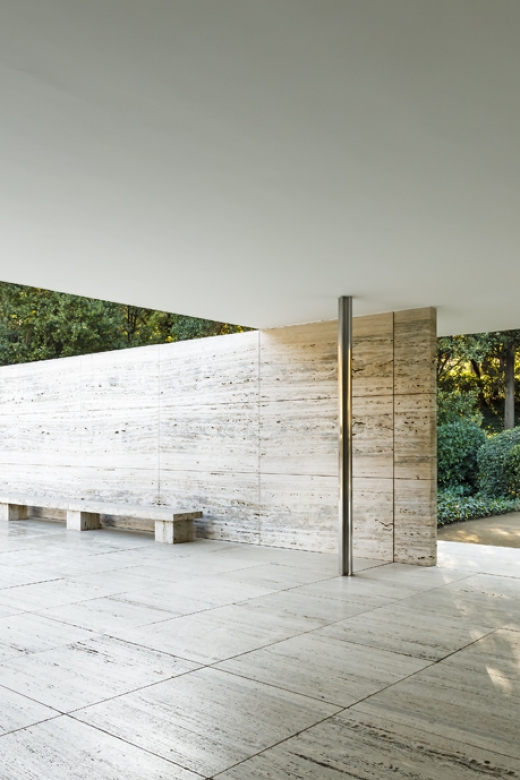
The 1986 reconstruction is central to the Pavilion’s identity. The original building was created for a temporary exhibition and dismantled afterward. Its return shows how strongly architects and artists valued the design.
That reconstruction also gives you a useful reason to visit even if you are not an architecture specialist. The Pavilion offers a clear example of how a building can gain importance beyond its original purpose. It began as an exhibition pavilion, but its ideas continued to influence later work.
I find the rebuilding story more meaningful when paired with the physical experience. The building does not rely on age, decoration, or a collection of historic objects to create interest. Its importance comes from its design and from the fact that its design was considered worth restoring decades later.
This is also why the Pavilion may feel different from other Barcelona landmarks. Many famous sites here are visually crowded with detail. The Pavilion asks you to notice proportion and empty space. It is a good counterpoint to the city’s more elaborate architecture.
Stone, glass, water, and the art of restraint
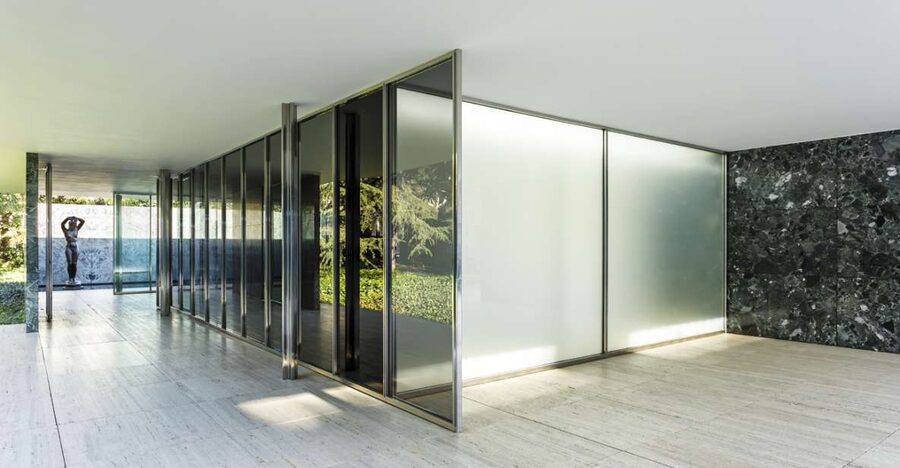
The Pavilion’s appeal depends on details that can be easy to miss if you walk through too quickly. Its materials create a controlled contrast, while the open arrangement keeps changing as you move.
The stone from the Alps, Tivoli, Atlas, and Tinos gives the building a broad visual range without making it feel cluttered. Each surface contributes color, pattern, or texture. The design is pared down, but the materials prevent it from becoming cold or featureless.
Glass plays a different role. It connects spaces and reflects them at the same time. You may see parts of the Pavilion repeated in the glass, while the surrounding setting remains visible beyond it. This creates a layered view that makes the small site feel more complex than its footprint suggests.
Water adds another visual pause. It reinforces the Pavilion’s measured rhythm and helps separate areas without closing them off completely. The overall effect is controlled rather than dramatic.
I would encourage you to slow down near transitions between interior and exterior spaces. Those points show the design at its best. You can see how a wall, surface, or opening changes the way the next space appears.
The nearby nature trail and the wider setting
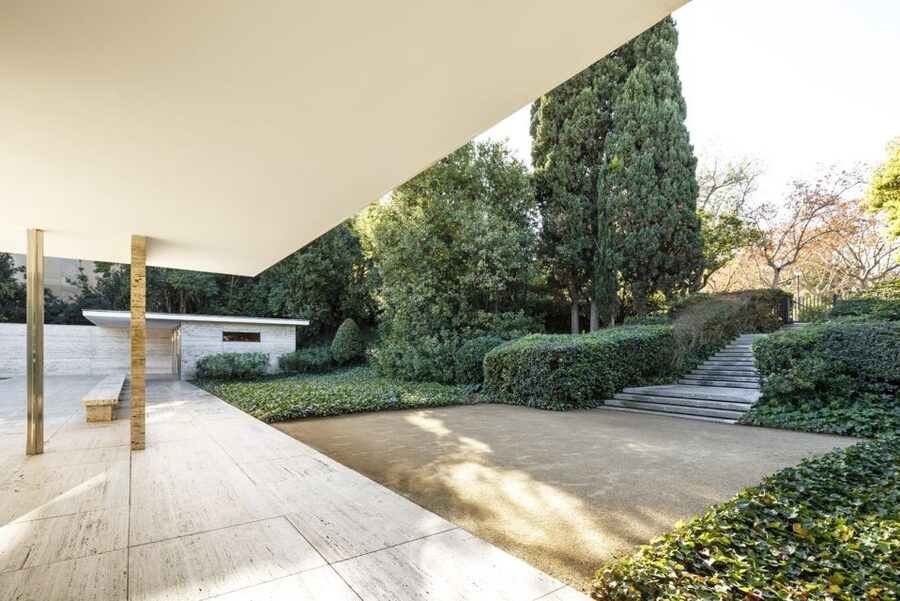
One visitor particularly enjoyed a short nature trail near the site. The available information does not provide its length, route, or formal relationship to the Pavilion, so I would treat it as a possible extra rather than a guaranteed part of the ticketed experience.
Still, that detail is useful for planning. If you finish the Pavilion quickly, you might find a nearby walk gives the visit a more relaxed ending. It also provides a change of pace after concentrating on geometry and materials.
The Pavilion itself is the main reason to come. Do not book the ticket expecting a guided city tour, a long nature outing, or a large cultural program. You are coming for one architectural work and the setting around it.
Occasionally, artistic interventions alter the Pavilion’s appearance. That can add a new way to see the space, but it may also mean the building does not look exactly as expected from photographs. If a pure architectural view is important to you, check whether an intervention is taking place before you go.
Is $10 good value?
At $10 per person, the Pavilion is not an expensive Barcelona attraction. The included audio guide and skip-the-ticket-line entry improve the value, especially if you want context in your own language.
The question is not simply whether $10 is affordable. It is whether this type of visit suits you. I think the price works well for:
- Architecture students and professionals
- People interested in modern design
- Visitors who enjoy quiet, focused sights
- Anyone looking for a short cultural stop
- Visitors who want to compare modern architecture with Barcelona’s more decorative landmarks
I would be more hesitant if you want a long attraction with many exhibits, extensive indoor space, or lots of activities. The Pavilion is intentionally minimal. You should appreciate the building’s restraint before paying for entry.
Some people feel the site should be free because the visit is short and the building is small. That is a fair criticism. My view is that $10 is reasonable if you use the audio guide, take time with the materials, and care about the Pavilion’s influence. It is less convincing as a casual stop squeezed into an already crowded day.
Access, rules, and practical planning
The Pavilion is wheelchair accessible. Food and drinks are not allowed, and smoking is prohibited. Pets cannot enter, although assistance dogs are allowed. Tripods are also prohibited, which matters if you are planning a formal photography setup.
You can cancel up to 24 hours in advance for a full refund, and the reserve-now, pay-later option gives you some flexibility while planning your Barcelona schedule. The ticket is valid for one day, not an unlimited period.
I would check the opening hours and available starting times close to your visit because both can change. Arriving at the scheduled time is sensible, especially since one visitor specifically advised punctuality.
Bring a phone or another way to listen to the audio guide if the entry process requires it, but do not assume everything will be ready without checking. Confirm your language choice and audio access at the beginning.
Who should book the Pavilion?
I would recommend this experience to anyone who enjoys looking closely at buildings. You do not need professional training, but you should be willing to spend time with details that are easy to overlook.
It also suits a visitor who wants a calm break from Barcelona’s busiest sights. The Pavilion’s relatively low public traffic can make it feel restful, although photographers, models, or artistic interventions may change the atmosphere on a particular day.
Families can visit, but the building may be more rewarding for older children who can engage with the idea of space, materials, and design. If your group wants interactive displays or a long list of rooms, you may hear the word minimal and mean too little.
The Pavilion is also useful for repeat visitors to Barcelona. You may have already seen the city’s major historic attractions, and this offers a different kind of cultural experience. It is compact, focused, and easy to combine with other plans.
Should you book the Mies van der Rohe Pavilion?
Book it if you like modern architecture, thoughtful design, or quiet cultural sights. For $10, the audio guide and access to one of the Modern Movement’s most influential buildings make this a fair purchase, particularly when you take time to study the materials and the relationship between inside and outside.
Skip it if you want a grand spectacle, a lengthy museum visit, or a packed program of activities. The Pavilion makes its point through simplicity, and that simplicity can feel either refreshing or underwhelming.
My best advice is to visit with the right expectation. Do not rush in, take one photograph, and leave. Listen to the guide, move through the spaces slowly, and notice how glass, water, stone, and open air alter your view. That is where the $10 begins to feel worthwhile.
FAQ
Where is the Mies van der Rohe Pavilion?
The Pavilion is in Barcelona, in Catalonia, Spain.
How much does the entrance ticket cost?
The listed price is $10 per person.
How long is the ticket valid?
The ticket is valid for one day.
Is an audio guide included?
Yes. An audio guide is included with the entrance ticket.
Which languages are available for the audio guide?
The audio guide is available in Spanish, Catalan, English, French, and German.
Is the Pavilion wheelchair accessible?
Yes. The Pavilion is wheelchair accessible.
Can I cancel the booking?
Yes. You can cancel up to 24 hours in advance for a full refund.
What items are not allowed inside?
Smoking, food, drinks, pets, and tripods are not allowed. Assistance dogs are permitted.
Just added around Barcelona
- Self-Guided Audio Tour-The Surrealist Barcelona of Dalí and Gaudí★ 3.5 · 8 reviews
- Self-Guided Audio Tour – Legends of the Gothic Quarter★ 4.5 · 6 reviews
- Self-Guided Audio Tour of Barcelona City★ 3.0 · 2 reviews
- Montjuic Park Walking Tour with Audioguide on Your Smartphone★ 3.0 · 4 reviews
- Barcelona Self-Guided Audio Tour★ 3.0 · 6 reviews
- Montjuïc Cable Car Entry Voucher with Audio Tour on Your Phone★ 3.5 · 37 reviews
- Self-Guided Tours Barcelona: 150+ Captivating Audio Stories★ 5.0 · 4 reviews
- Gothic Quarter Barcelona Tour with Audioguide★ 4.5 · 5 reviews
Barcelona Audio Tours, compared.
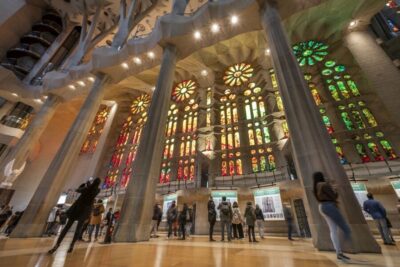
Sagrada Familia Entry Ticket with Audio Guide
Read our review →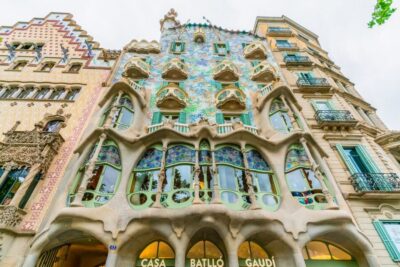
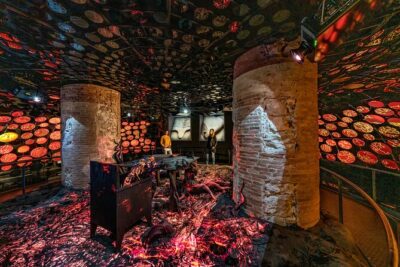
Casa Batllo Admission Ticket with Intelligent Audio Guide
Read our review →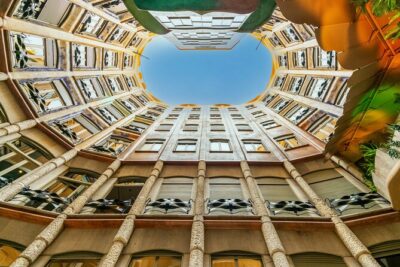
La Pedrera-Casa Mila Admission Ticket with Audioguide
Read our review →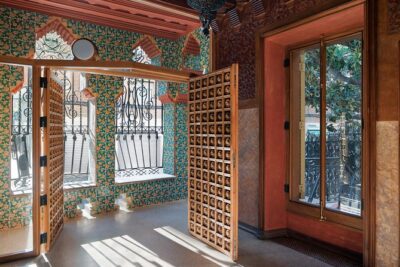
Gaudi´s Casa Vicens Skip the Line Ticket with Audioguide
Read our review →

Palau de la Musica Catalana Admission Ticket with Audioguide
Read our review →Browse the lists this tour appears in