
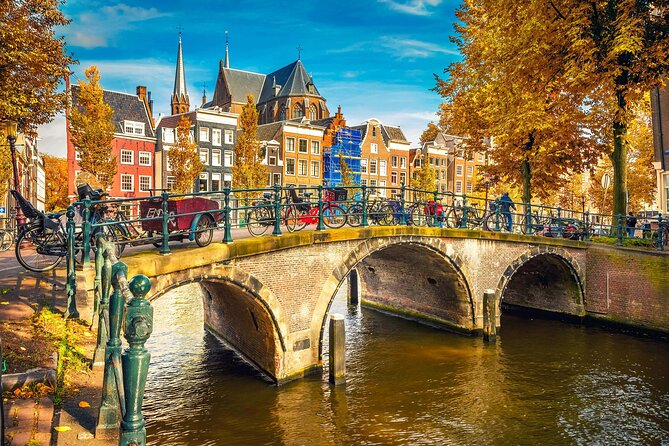
REVIEW · AMSTERDAM AUDIO TOURS
Amsterdam Walking Tour with Audioguide on Your Smartphone
Amsterdam rewards a slow, curious walk. I like the GPS route that works offline and the lively storytelling, which ranges from medieval houses to coffee shops, art, and local freedoms. The price is also easy to swallow at $8.37, especially since you receive one year of access.
The trade-off is simple: this is an app, not a person. You must bring your own phone and headphones, download and activate the tour, and manage the route yourself. The two-and-a-half-hour estimate may also feel tight if you stop at every point or enter a museum.
Key details before you set out
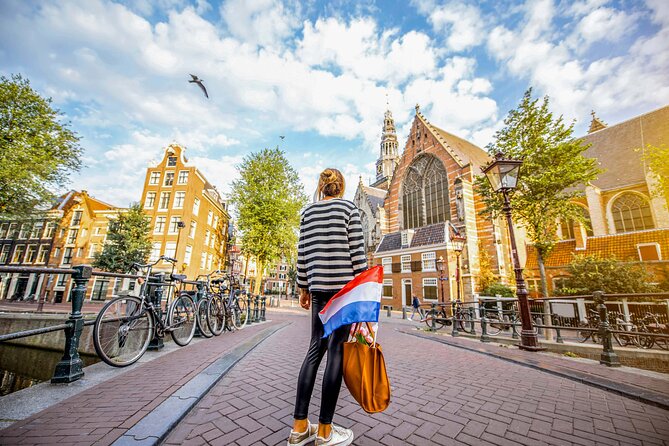
- 31 audio recordings cover major sights and less obvious corners of central Amsterdam.
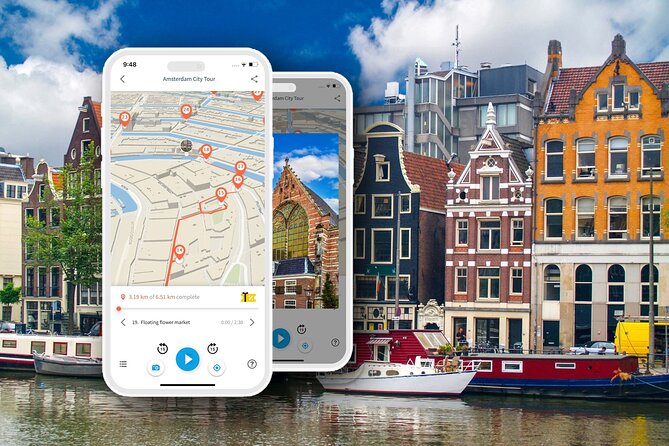
- Offline GPS navigation helps you follow the route without relying on mobile data.
- Centraal Station to Museum Quarter gives you a useful cross-section of the city in about 2 hours and 30 minutes.
- Stories come from a professional historian, with illustrations to help you recognize each landmark.
- Museum admission is not included, so treat the route as a city orientation rather than a ticketed sightseeing package.
- One-year access lets you use the guide at a flexible time, not only on the date selected at checkout.
Starting under the roof of Amsterdam Centraal
Your walk begins outside Amsterdam Centraal, at Stationsplein. This is a practical meeting point because the station is easy to reach by public transport and gives you a clear place to get your bearings.
The first recording explains why the station was built in its present location over what was once part of the harbor. That opening is useful because Amsterdam’s relationship with water shapes nearly everything you see afterward: canals, trade, warehouses, bridges, and reclaimed land.
Give yourself a few minutes to get the app working before you leave. You need the TouringBee app on an iPhone or Android phone, along with your own headphones. Since there is no in-person guide, this small setup step matters. You do not want to be standing beside the station trying to activate the purchase while the city starts moving around you.
More Audio Walking Tours in the Netherlands
- Amsterdam Red Light District: City Walk Audio Guide on your Phone
★ 3.0 · 2 reviews - Cultural and Historical Audio guided walking tour Tour of Haarlem
★ 3.5 · 13 reviews - Nijmegen: City Walk with Audio Guide in 7 Languages on your Phone
★ 4.0 · 7 reviews
Old Amsterdam around the Weeping Tower and Houten Huys
From Centraal Station, the route moves toward the Weeping Tower. Its name suggests a sad monument, but the explanation tells you why the tower does not actually cry. The story also introduces the Dutch East India Company and the enormous scale of Amsterdam’s trading power.
This is one of the better early stops because it gives context before you reach the older streets. You are not simply looking at a tower. You are hearing how trade helped shape the city and why Amsterdam became such an important port.
The Houten Huys offers a very different kind of history. Built around 1425, it is Amsterdam’s oldest surviving house and a rare glimpse of the city before its grand canal houses took over. Its timber construction makes it especially memorable in a city better known for tall brick buildings.
The house sits in the Red Light District, which means the setting can feel busy and distracting. The audio guide helps by directing your attention to the building itself, but you should still expect crowds, narrow streets, and plenty of visual noise.
De Wallen, Oude Kerk, and the secret church
The route includes De Wallen, Amsterdam’s Red Light District. The useful point here is that the area is presented as more than neon signs and red curtains. Its location near the old port connects it to commerce, sailors, religion, and the city’s long working life.
The nearby Oude Kerk adds another layer. This ancient church is tied to the story of a miraculous healing that helped turn Amsterdam into a pilgrimage destination. The contrast is striking: the oldest church in the city sits in the middle of one of its most controversial modern districts.
You also hear about Museum Ons’ Lieve Heer op Solder, a Catholic church hidden inside a 17th-century canal house. It reflects a period when Catholics could worship only in private. The stop is valuable even if you do not buy admission, because it explains how religious life continued behind ordinary domestic walls.
Entry tickets are not part of the tour. If you want to visit the church museum or Oude Kerk interiors, you must purchase tickets separately, in advance according to the supplied information. The app can help you decide what deserves a return visit, but it does not replace an admission ticket.
The Waag and Amsterdam’s practical science
At the Waag, the audio guide turns toward anatomy and Rembrandt. You learn about anatomical theaters, places where public dissections were held and where Rembrandt found artistic inspiration.
This is a good example of the tour’s wider approach. It does not focus only on famous paintings or royal buildings. It connects architecture, science, art, and public life. The Waag also gives you a reminder that Amsterdam’s past was not all canals and commerce. It included medical study, spectacle, and sometimes uncomfortable public entertainment.
The guide suggests stopping for about 10 minutes at each major point. That timing is enough to listen and look around, but not enough for a long visit inside a museum or church. You can pause, rewind, or stay longer, which makes the timing more of a framework than a strict schedule.
More Smartphone Audio Tours in the Netherlands
- Amsterdam: Red Light District 1-hour Smartphone Audio Tour
★ 4.3 · 13 reviews - Amsterdam Audioguide – TravelMate app for your smartphone
★ 4.6 · 7 reviews - Drive it yourself electric Dune and Beach GPS audio tour
★ 5.0 · 129 reviews - Lisse: Self-Guided Tulip Fields GPS Audio Tour
★ 4.6 · 83 reviews
Dam Square and the royal center
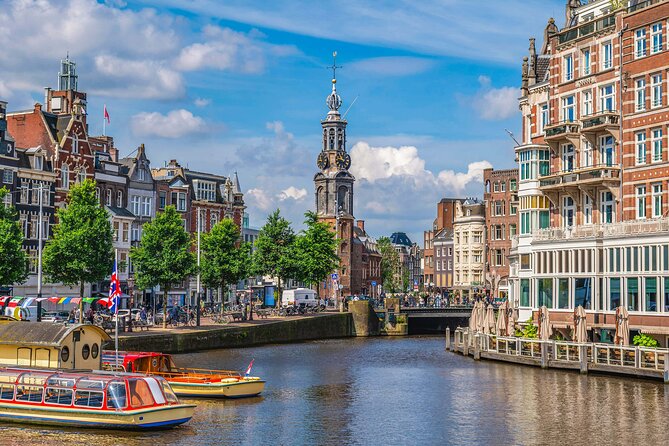
Dam Square brings you into Amsterdam’s main civic space. The route points out the Royal Palace, the New Church, and the story of how the Netherlands developed into a kingdom.
The Royal Palace began as a 17th-century city hall, built during the Dutch Golden Age. That original purpose matters. Before it became a royal residence, it represented the power of Amsterdam’s city government and the wealth generated by trade.
The New Church dates from the 15th century and has hosted royal ceremonies. Its presence beside the palace gives Dam Square a strong political and religious character, even though the square itself can be crowded and commercial.
Madame Tussauds is also here. The guide treats it as an optional point of interest rather than part of the tour price. You can use the commentary to decide if the wax museum fits your plans, but admission is separate.
This section is best taken at a calm pace. Dam Square has several major sights packed close together, and rushing from one audio point to the next would make the area feel like a checklist.
De Papegaai and Amsterdam’s less obvious religious history

The route continues to H.H. Petrus en Pauluskerk, commonly known as De Papegaai. This 19th-century neo-Gothic church is known for its tall spire and detailed stonework.
The stop adds variety after the medieval buildings and commercial streets. You also receive background to help decide if the Amsterdam History Museum belongs on your list. That kind of guidance is one of the app’s practical strengths. It does not try to make every attraction sound essential. Instead, it gives you enough context to choose.
The Begijnhof offers another quiet change of mood. You look into the courtyard of the former Beguine community and hear about the women who lived there. The stop connects Amsterdam with early forms of female independence and communal religious life.
Because the route includes both De Papegaai and the Begijnhof, you get more than a standard parade of postcard sights. You see how churches, charitable communities, and private households shaped the city.
Singel and the floating flower market
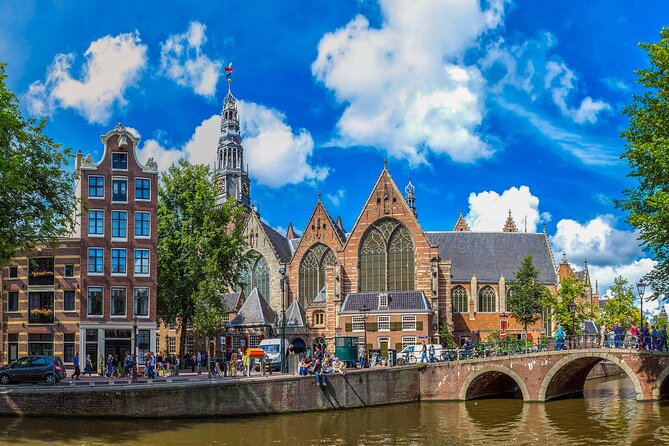
The Singel is Amsterdam’s oldest canal, and the recording explains both the number of canals and the reasons the city developed such an extensive water system.
This section is especially helpful if you are still trying to make sense of Amsterdam’s layout. The canals are not random decorations. They reflect defense, transport, trade, drainage, and urban expansion.
The Bloemenmarkt follows. Amsterdam’s famous floating flower market has operated along the Singel since the 19th century and began as a place for flower trade. It is colorful and easy to recognize, but it can also feel commercial. I would treat it as a short stop rather than the main reason to visit this part of town.
The app’s illustrations should help you identify each point, which is useful around the canal streets where signs and storefronts can compete for your attention. You can listen while walking, then pause beside the water when you want to take a closer look.
The Mint Tower, Tuschinski, and Rembrandtplein

The Munttoren, or Mint Tower, is linked to Amsterdam’s old defensive walls. Its location at a busy intersection makes it easy to pass without noticing the historical meaning, so the audio explanation adds real value.
Next comes the Pathé Tuschinski theater. Opened in 1921, it combines cinema history with ornate Art Deco design. This is a pleasing change from churches and canal houses. You are reminded that Amsterdam’s identity also includes popular entertainment and grand 20th-century architecture.
Rembrandtplein shifts the focus back to art and public life. The square is named for Rembrandt, and his statue anchors the space. The area is lively, but the audio guide gives you a reason to look beyond the restaurants and nightlife.
The app also points toward the Stadsarchief Amsterdam, or City Archive. Its collections include documents, photographs, and maps that record the city’s development. You might want to save this as a separate museum visit if you enjoy old plans, images, and original records.
Heineken, Paradiso, and Amsterdam’s modern character
The route passes the Heineken Experience, located in the company’s former brewery. The attraction explains the brewing process and the history of the famous beer brand through interactive displays. Admission is not included, so this is another optional stop rather than a built-in museum visit.
Paradiso offers a sharper contrast. The music venue occupies a former 19th-century church and retains its stained-glass windows and dramatic interior. Its presence shows how Amsterdam often gives old buildings new uses without erasing their original character.
These stops are useful because they prevent the walk from becoming a history lesson limited to the 1600s. You move from trade and religion to beer, music, cinema, and nightlife. The audio guide’s praised mix of topics is most apparent here.
One listener described the experience as feeling like a walk with a funny, smart friend. That description fits the guide’s broad subject range. You get art, museums, coffee shops, freedoms, and unusual local facts instead of a stream of dates and building names.
Museum Quarter and the final stretch
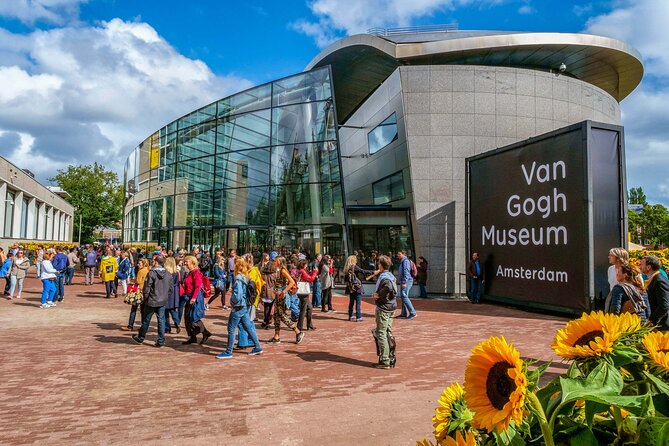
The final main area is Museumplein, Amsterdam’s Museum Quarter. Here you are near the Rijksmuseum, Van Gogh Museum, Stedelijk Museum, and Diamond Museum.
The Rijksmuseum covers Dutch art and history, including major works by Rembrandt and Vermeer. The Van Gogh Museum focuses on Vincent van Gogh and holds the largest collection of his paintings, drawings, and related works. The Diamond Museum looks at Amsterdam’s diamond trade and craftsmanship.
None of those museum tickets is included. That is important when you compare the tour with a guided museum package. This experience is an outdoor route with commentary, not an admission bundle.
The Museum Quarter is a logical place to finish because you can continue with a museum visit, take public transport, or pause the tour and return another day. The activity information says the tour ends back at the meeting point, so confirm the route display in the app as you approach the final stop. The listed itinerary ends at Museumplein, while the stated end point is Amsterdam Centraal, and the app’s map should be your practical guide.
What the $8.37 price really buys
At $8.37 per person, this is inexpensive by Amsterdam sightseeing standards. You are paying for a self-guided route, 31 narrated recordings, landmark illustrations, offline GPS, and one year of access in your chosen language.
The value is strongest if you want orientation on your first day. A human guide would provide conversation and live answers, but it would also impose a fixed pace and a meeting schedule. Here, you can stop for lunch, enter a church, take photographs, or skip a point without losing the rest of the route.
The price is less attractive if you expect a fully guided experience or personal recommendations tailored to your interests. You must supply the phone, headphones, transport, food, and attraction tickets. Those costs can quickly exceed the app price.
The stated duration is about 2 hours and 30 minutes. With 31 recordings and several major attractions nearby, that estimate is best treated as a brisk route. If you want to enter the Royal Palace, a church, the Rijksmuseum, or another museum, plan additional time.
Who will get the most from this audio walk
I would choose this tour for you if you like independence and want a strong first look at central Amsterdam. It suits solo visitors, couples, and families who do not want to keep up with a group.
It is also useful if you have limited time and want a route connecting Centraal Station with Museumplein. The offline map matters if you want to avoid using mobile data or if you prefer not to stop constantly to check a separate map.
You may want something else if you need detailed museum interpretation, wheelchair-specific route information, or a guide who can answer questions on the spot. Those features are not provided in the supplied details.
Confirmation arrives at booking, and free cancellation is available until 24 hours before the experience start time. The date and time selected at checkout are approximate because the guide can be accessed at any time.
FAQ
Is this a guided walking tour with a person?
No. It is a self-guided audio tour delivered through a mobile app. You follow the route yourself using the app’s map and GPS.
How long does the Amsterdam audio tour take?
The estimated duration is about 2 hours and 30 minutes. You can pause, rewind, or spend longer at any stop.
Where does the tour begin?
It begins at Amsterdam Centraal, at Stationsplein, 1012 AB Amsterdam, Netherlands.
Where does the tour end?
The activity information says it ends back at the meeting point. The route also includes Museum Quarter as its final main sightseeing area, so use the app’s map to follow the return route.
Does the price include museum admission?
No. Entry tickets are not included. You must purchase admission separately for museums and other ticketed attractions.
Do I need my own phone and headphones?
Yes. Smartphones and headphones are not included. The app is available for iPhone and Android.
How long can I access the audio guide?
You receive one year of access in your preferred language.
Should you book this Amsterdam audio guide?
Book it if you want a low-cost, flexible introduction to Amsterdam, especially if you appreciate stories that go beyond the most famous sights. The mix of the Weeping Tower, Houten Huys, De Wallen, hidden Catholic worship, the Begijnhof, the Tuschinski theater, and Museumplein gives you a useful sense of how varied the city can be.
Skip it if you want a human guide, included attraction tickets, or a carefully paced museum tour. For independent explorers, $8.37 is a fair price for a reusable route and a year of access. Just download the app before you start, bring charged headphones, and allow extra time if you plan to enter any museum or historic building.
More Audio Walking Tours in Amsterdam
- Sofia: City Monuments Guided Walking Tour with Audio Guide
★ 4.5 · 825 reviews - Florence: 2.5 hour Audio Guided Walking Tour led by Host
★ 4.6 · 293 reviews - Self Guided Classic Freedom Trail Location Aware (GPS) Walking Audio Tour
★ 4.5 · 258 reviews - Valletta: Self-Guided Historical Walking Tour (Audio Guide)
★ 3.7 · 251 reviews
More Smartphone Audio Tours in Amsterdam
- Rome: Colosseum & Forum with Audio Guide App -Optional Arena
★ 4.2 · 24,770 reviews - Florence: Timed Entry to Michelangelo’s David + Audio App
★ 4.6 · 19,496 reviews - Florence: Cathedral & Brunelleschi’s Dome Ticket & Audio App
★ 4.4 · 6,973 reviews - Florence: Michelangelo’s David Priority Ticket & Audio App
★ 4.4 · 6,812 reviews
Just added around Amsterdam
- Van Gogh Museum Ticket with Audio Guide and Unlimited Access Time★ 5.0 · 25 reviews
- Van Gogh Museum with Audio Guide★ 3.5 · 80 reviews
- Self Guided Tours Amsterdam With 100 Captivating Audio Stories★ 4.5 · 3 reviews
- Combo Ticket: Rijksmuseum Amsterdam & 1h Cruise with Audio Guide★ 3.0 · 83 reviews
- Self-Guided Audio Tour of The Red Light District★ 5.0 · 5 reviews
- Houseboat Museum Amsterdam Self Guided Audio Tour★ 5.0 · 3 reviews
- Self-Guided Audio Tour Holocaust Series: The Jewish Quarter★ 5.0 · 5 reviews
- Rijksmuseum Amsterdam Audio guide Tour with Unlimited access time★ 5.0 · 32 reviews
Smartphone Audio Tours, compared.

Colosseum & Forum with Audio Guide App -Optional Arena
Read our review →
Timed Entry to Michelangelo’s David + Audio App
Read our review →
Cathedral & Brunelleschi’s Dome Ticket & Audio App
Read our review →
Michelangelo’s David Priority Ticket & Audio App
Read our review →
Uffizi Priority Ticket & Masterpieces Audio App
Read our review →
Castel Sant’Angelo Entry Ticket & Digital Audioguide
Read our review →
Pantheon Priority Entry Ticket & Audio Guide App
Read our review →Browse the lists this tour appears in