
REVIEW · SEVILLE AUDIO TOURS
Seville: Hospital de los Venerables Ticket with Audio Guide
Seville keeps a few treasures behind plain doors. The Hospital de los Venerables gives you a compact look at 17th-century Seville, with a graceful courtyard, a richly decorated Baroque church, the Velázquez Art Center, and a new VR360º experience. I especially like the mix of architecture and painting, and the included audio guide helps explain what you are seeing without forcing you into a group schedule. The main drawback is that the site now feels more like an art center than a museum about the hospital itself.
I also like the low $14 price, especially if you care about Velázquez, Murillo, or Andalusian Baroque art. The visit is valid for one day, and the skip-the-ticket-line entry makes it easy to fit between larger Seville sights. Just know that the audio guide is currently listed in Spanish, French, German, and Italian, with no English option specified.
Key points at a glance
- A 17th-century priestly hospital: See the former charitable institution founded by Canon Justino de Neve for elderly priests.
- Velázquez and Murillo in one stop: The Centro Velázquez displays works connected with two major Sevillian painters.
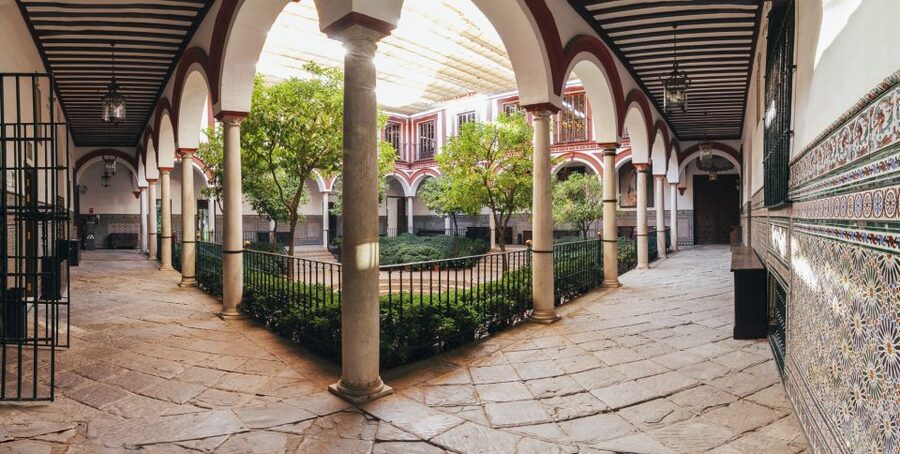
- A beautiful orange-tree courtyard: The traditional patio has old wooden gates and once hosted plays by Miguel de Cervantes and others.
- A theatrical Baroque church: Look for painted scenes by the Valdés family, sculptures by Pedro Roldán, and the adjoining sacristy.
- VR360º adds a modern layer: The virtual experience offers a different view of the building beyond the normal walk-through.
- Good value at $14: Entry includes the church, sacristy, courtyard, art center, audio guide, and virtual experience.
What the Hospital of the Venerables Was Built For
The Hospital de los Venerables Sacerdotes was founded by Canon Justino de Neve to care for elderly priests. That purpose matters because the building was not designed as a palace or a grand public monument. It was a working charitable institution, later transformed into one of Seville’s most appealing small cultural stops.
You will not spend hours here. That is part of the appeal. The visit gives you a focused dose of Seville’s religious art and Baroque design without requiring the stamina needed for the cathedral or the Alcázar.
The setting also gives you a different angle on the city. Seville is often presented through royal buildings, flamenco, and busy plazas. Inside these walls, you get a quieter world of priests, devotional art, courtyards, and religious theater.
The audio guide adds useful context as you move through the rooms. One particularly well-regarded guide named Alvaro has also led visits here, but this ticket is built around an audio guide rather than a standard guided tour. That distinction matters if you prefer to move at your own pace.
A few more audio tours around Spain worth a look
- Barcelona: Sagrada Familia Entry Ticket with Audio Guide
★ 4.6 · 105,312 reviews - Barcelona: Casa Batlló Entry with Self-Audioguide Tour
★ 4.7 · 25,359 reviews - Granada: Alhambra Entry Ticket with Audio Guide
★ 4.1 · 5,950 reviews
Entering the Courtyard with Orange Trees and Wooden Gates
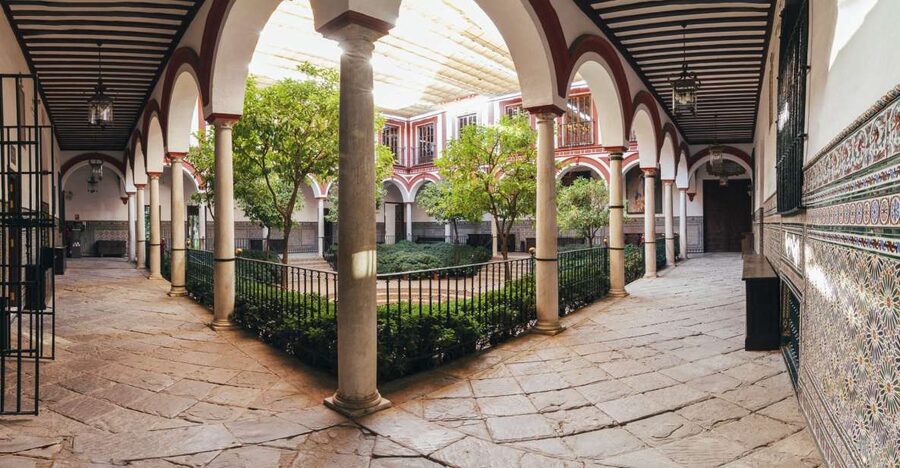
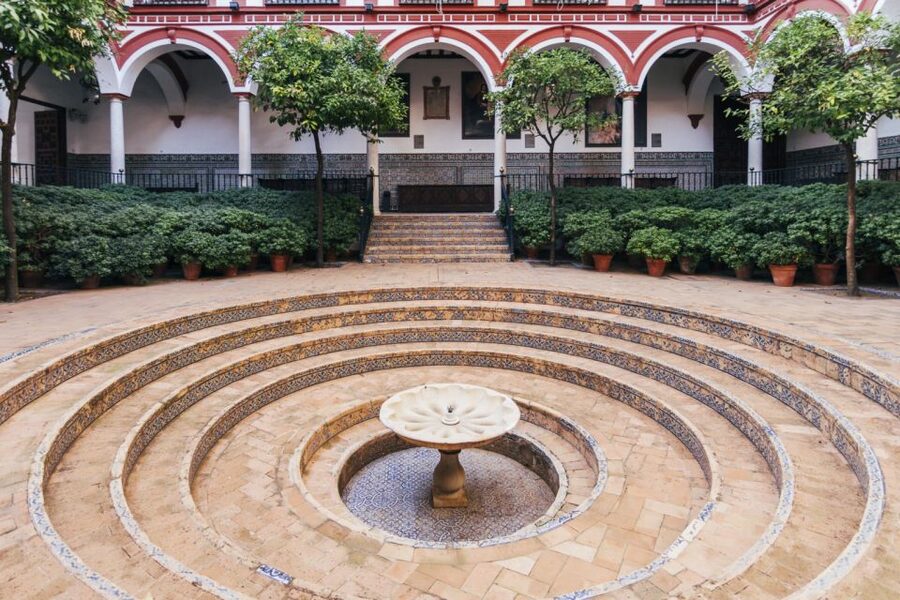
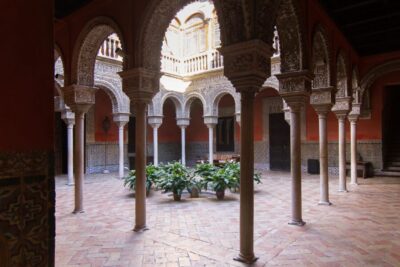
The traditional Sevillian patio is one of the first details likely to catch your eye. Its arches, orange trees, and carefully built wooden gates create the sort of calm interior that makes Seville’s old buildings so pleasant.
The courtyard is not merely a passage between rooms. It shows how architecture handled daily life in Andalusia. The open central space brings light and air into the building, while the surrounding arches give the interior a steady rhythm.
Look closely at the old wooden doors. They are easy to rush past, especially when the church and paintings are waiting nearby, but they help the building feel lived-in rather than staged. The craftsmanship gives you a small sense of the care that went into even practical parts of the hospital.
The patio also has a theatrical connection. It was once used for major plays by Miguel de Cervantes and others. Today, its shape still makes sense as a setting for theater events and musical performances. You can see why: the enclosed space offers a natural stage, with the architecture forming the backdrop.
I would pause here before starting the audio guide. Take in the proportions, the orange trees, and the way the arches frame the surrounding rooms. This is one of those places where a minute of quiet observation adds more than another hurried photograph.
The Church, Where Frescoes Fill the Walls
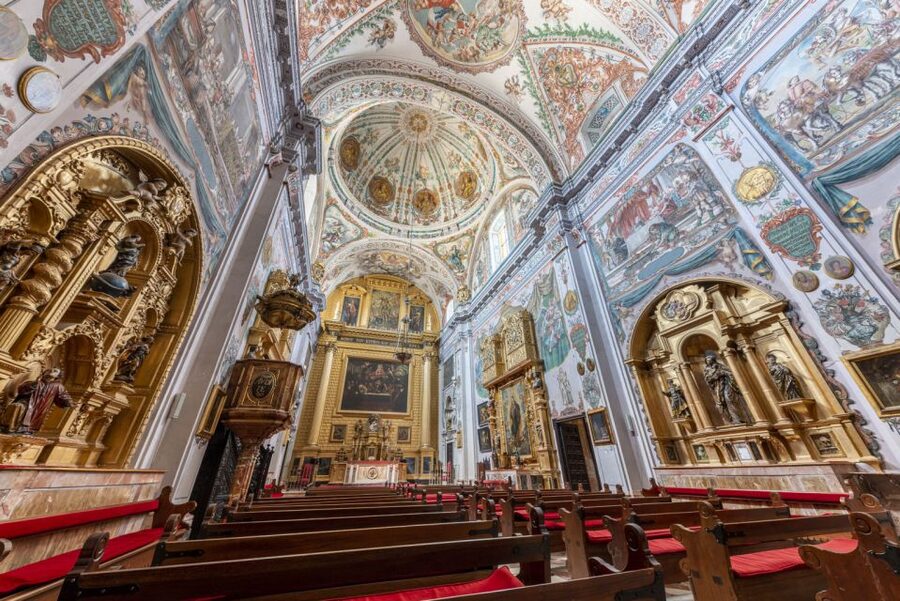
The church dates from the end of the 17th century and is the visual center of the visit. Its Baroque design uses arches, painted walls, sculpture, and decorative detail to create a strong sense of movement.
The frescoes were designed and made by the Valdés family. They show beautiful scenes across the walls, and the audio guide can help you understand how the paintings fit into the church’s religious purpose. Without that explanation, it is easy to see only color and ornament. With context, the decoration becomes more deliberate.
The church is a good place to slow down. Look from the floor toward the arches, then follow the painted scenes along the walls. Baroque churches often reward this upward gaze, since much of the visual effect is placed above eye level.
Works by sculptor Pedro Roldán are also displayed in the church. His presence adds three-dimensional form to a room already full of painted surfaces. The contrast between sculpture, fresco, and architecture keeps the interior from feeling flat.
The church will appeal most to you if you enjoy religious art and ornate interiors. If you prefer buildings with bare stone, simple lines, or a strong archaeological story, you may find the decoration heavy. That is not a flaw so much as a matter of taste. This is Seville’s Baroque side, and it does not whisper.
The Sacristy and the Details Beyond the Main Room
The sacristy is included with admission and deserves more than a quick glance. It continues the building’s architectural language, but on a smaller scale. You can see how the design carries through from the church into a more functional religious space.
This is where the building’s age becomes especially noticeable. The sacristy has survived centuries of changing use, yet its architecture still has enough force to hold your attention. The details are not presented as isolated objects. They remain part of a complete religious setting.
I recommend listening to the audio guide here rather than treating the sacristy as an appendix. The church may provide the biggest visual impact, but the sacristy helps complete your understanding of how the institution operated.
The visit does not give you an extensive hospital exhibit. You should not expect room after room explaining medical care, priestly life, or the institution’s administration. The building’s purpose is explained, but the focus is clearly art and architecture.
That is the most important expectation to set before you arrive. One visitor found the Baroque church attractive but felt the site was mostly an art museum rather than a presentation about the hospital. I think that is a fair description. Come for the building and its art first, then treat the hospital story as added context.
Same place, a different route to walk:
- Casa Batllo Admission Ticket with Intelligent Audio Guide
★ 4.5 · 3,168 reviews - Madrid: Las Ventas Bullring Tour with Audio Guide
★ 4.6 · 3,154 reviews - Cordoba: Mosque-Cathedral E-Ticket with Audio Guide
★ 4.1 · 2,895 reviews - Nerja: Caves of Nerja Entry Ticket with Audio Guide
★ 4.6 · 1,616 reviews
The Centro Velázquez and Seville’s Great Painters
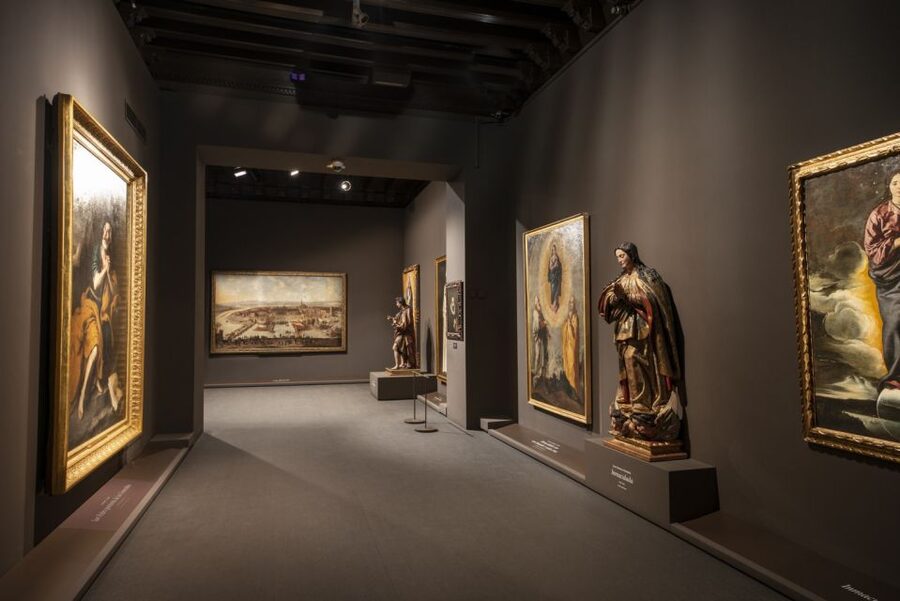
The Centro Velázquez is the other major reason to buy this ticket. It displays works by famous Sevillian painters, including Diego de Silva y Velázquez and Bartolomé Esteban Murillo.
For many people, the chance to see Velázquez in person will be the strongest reason to visit. Reproductions can show composition and color, but they cannot fully replace the experience of seeing an original work in a real gallery. The scale, surface, and handling of light become easier to appreciate.
Murillo gives the art center a broader Sevillian connection. His work belongs to the city’s own artistic story, so the collection helps link the building to local culture rather than treating the paintings as unrelated masterpieces.
The art center is not enormous, and that can work in your favor. You can give the paintings proper attention without facing an exhausting list of rooms. At $14, the entry cost is modest for anyone who would otherwise pay to see a major painting by Velázquez or Murillo.
Still, keep your expectations measured. This is not a full-scale museum devoted to Velázquez, and the number of works is not specified. If you are planning your entire Seville visit around a large collection, you will need another museum as well.
For a short art stop, though, the Centro Velázquez works very well. The building gives the paintings a strong setting, and the church nearby lets you compare easel painting with large-scale fresco and sculpture.
How the VR360º Experience Changes the Visit
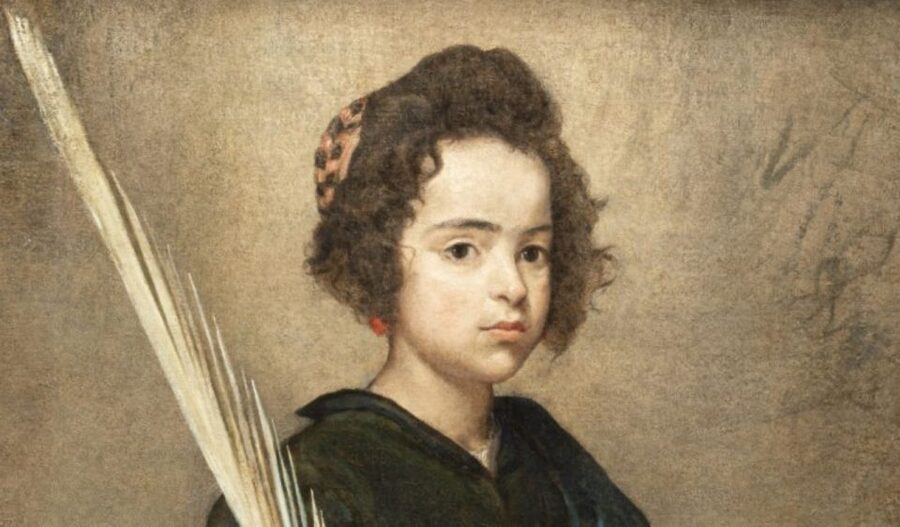
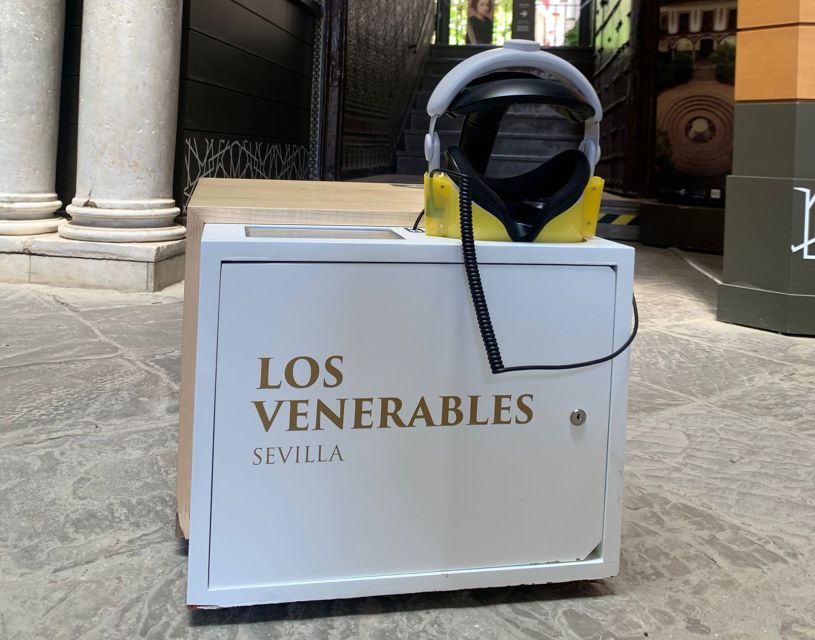
The new VR360º virtual experience adds a modern element to a historic building. It is included with your ticket, so you do not need to choose between the old-fashioned visit and the digital feature.
Its value is simple: you see the Hospital de los Venerables from a different viewpoint. The normal route gives you the physical spaces at eye level. The virtual experience can help you appreciate the building as a whole, including viewpoints that may be difficult to get while walking through the courtyard and church.
I would treat VR360º as an extra, not the main reason to come. The real appeal remains the courtyard, the church, the sacristy, and the art center. But the virtual feature gives the visit a more current feel and may be especially useful if you like seeing how historic spaces are presented through technology.
Because the experience is new, the exact length and format are not provided. Plan to try it during your visit, but do not build a strict schedule around a precise duration.
How Long You Need and How to Plan the Visit
Your ticket is valid for one day, with starting times depending on availability. You should check the available time before booking, especially if you are linking this visit with the cathedral, the Alcázar, or a flamenco performance.
The skip-the-ticket-line entry is practical. It will not make the building larger or the church quieter, but it removes one small obstacle from a day of sightseeing. Seville rewards flexible plans, and this attraction is easier to fit into your schedule than a large timed monument.
The audio guide means you can set your own pace. Move quickly through the parts that interest you less, then pause in front of the works or architectural details that catch your attention. That freedom is useful in the church, where you may want time to look upward and compare several decorative elements.
The listed audio languages are Spanish, French, German, and Italian. English is not specified, so English-speaking visitors should confirm the current language options before paying. This is the main practical issue in an otherwise simple visit.
The building is wheelchair accessible, according to the available information. Entry includes the courtyard, church, sacristy, Centro Velázquez, audio guide, and VR360º experience.
Is $14 Good Value in Seville?
At $14 per person, this is a reasonably priced cultural stop. You are not paying only to enter a church. The ticket covers several connected experiences: a historic building, an art center, a decorated church, a sacristy, a courtyard, an audio guide, and a virtual feature.
The value is strongest for three types of visitors. Art lovers get Velázquez, Murillo, and the local Baroque setting. Architecture fans get the arches, frescoes, wooden gates, and courtyard. First-time visitors who want a quieter stop between major sights get a manageable visit with plenty to see.
The value is weaker if your main interest is the hospital as a social institution. The building’s original purpose is important, but the visit does not appear to focus on a large collection of hospital records or detailed institutional displays.
Free cancellation up to 24 hours ahead and the option to reserve now and pay later make the booking less restrictive. Those policies are useful if your Seville schedule is still moving around, though the central question remains whether the art and architecture match your interests.
Who Should Visit Hospital de los Venerables?
I would recommend this experience to you if you enjoy small museums, church interiors, Spanish painting, or historic courtyards. It is also a good choice when you want a break from Seville’s biggest sights without leaving the city’s cultural center.
The visit suits independent sightseers because the audio guide lets you control the pace. It also works for people who want a focused art stop rather than a full-day museum visit.
You may want to skip it if you have no interest in religious art or Baroque decoration. The church is ornate, and the visit places art at the center. Likewise, if you want a detailed account of how the hospital served elderly priests, this may leave you wanting more.
Families may appreciate the short format and VR360º feature, but the available information does not specify child-focused activities. The same applies to tour group size, so I would not assume a special family program or small-group format.
Should You Book This Seville Ticket?
Book it if you want to see Velázquez and Murillo in an intimate setting, admire a handsome Baroque church, and spend time in a traditional Sevillian patio. At $14, the package offers solid value, especially because the audio guide and VR360º experience are included.
Skip it if you are expecting a museum devoted mainly to the hospital’s daily work and charitable mission. The building provides that context, but the art center, church, and architecture receive most of your attention.
For many visitors, this is an excellent half-day-sized addition to Seville rather than a headline attraction. Give it time for the courtyard, listen carefully in the church, and check the audio language before booking. If those details suit you, Hospital de los Venerables is an easy and worthwhile way to see a more refined, quieter side of the city.
FAQ
How much does the Hospital de los Venerables ticket cost?
The listed price is $14 per person.
How long is the ticket valid?
The ticket is valid for one day. Available starting times depend on the date you choose.
What does the ticket include?
Admission includes the church, sacristy, traditional courtyard, Centro Velázquez, audio guide, and VR360º virtual experience.
Which languages are available for the audio guide?
The audio guide is listed in Spanish, French, German, and Italian. English is not specified in the available information.
Can I skip the ticket line?
Yes. The ticket includes skip-the-ticket-line entry.
Is the Hospital de los Venerables wheelchair accessible?
Yes, the experience is listed as wheelchair accessible.
Can I cancel the booking?
You can cancel up to 24 hours in advance for a full refund. A reserve-now, pay-later option is also available.
Just added around Spain
- Tenerife Scavenger Hunt and Highlights Self Guided Audio Tour★ 3.5 · 3 reviews
- Tarragona Scavenger Hunt and Highlights Self Guided Audio Tour★ 4.5 · 15 reviews
- Tarragona Cathedral Entrance + Audio Guide (WebApp)★ 4.5 · 36 reviews
- Seville Maestranza Bullring Tour with Audio Guide★ 3.5 · 6 reviews
- Royal Alcazar of Seville Entry Ticket with Audio Guide★ 4.0 · 42 reviews
- Sevilla Centre: City Walk Audioguide in 7 Languages on your Phone★ 3.0 · 2 reviews
- Seville Cathedral and La Giralda Entry Ticket with Audio Guide★ 3.0 · 9 reviews
- Essential Seville’s Ancient History: An Audio Tour★ 5.0 · 9 reviews
Seville Audio Tours, compared.
Cathedral and Giralda Entry Ticket with Audio Guide
Read our review →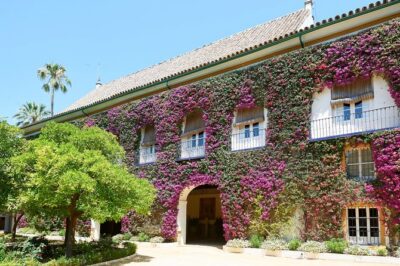
Seville Cathedral and Giralda Entry Tickets with Audio Guide
Read our review →
Royal Alcazar of Seville Entry Ticket with Audio Guide
Read our review →
Essential Seville’s Ancient History: An Audio Tour
Read our review →
Seville Cathedral and La Giralda Entry Ticket with Audio Guide
Read our review →
Seville Maestranza Bullring Tour with Audio Guide
Read our review →Browse the lists this tour appears in