
REVIEW · POMPEII AUDIO TOURS
Pompeii: Skip-the-Line Ticket with Audio Guide and Map
Pompeii still knows how to stop you cold. This self-guided ticket lets you enter the ancient city at your own pace, using a map and audio guide to find its frescoed homes, temples, theaters, shops, and amphitheater. I like the freedom to choose your route, and I like that the ticket covers a full day rather than forcing you through a short timed visit. The main concern is value: at $44, you may pay much more than the regular entrance price, while the audio equipment and map may not be strong enough to justify the difference.
The experience is best for independent visitors who want help getting oriented but do not want a live guide. I especially like the chance to focus on Pompeii’s everyday places, such as the thermopolia and bathhouses, rather than only racing to the famous plaster casts. Still, you should check the audio language carefully. Although many languages are advertised, the audio may be available only in English, with printed information supplied in other languages.
Key points to know before entering Pompeii

- The ticket covers one full day: You can take your time across Pompeii’s huge archaeological area instead of following a fixed group route.
- The voucher exchange is outside the ruins: Go to Via Roma 32, beside Pasticceria De Vivo, to change your voucher for the valid entrance ticket.
- The meeting point is near the amphitheater gate: It is about a five-minute walk from that entrance, but the office is not right beside the railway station or every site entrance.
- The map matters: Pompeii is easy to get turned around in, and the printed map is intended to help you plan a route.
- The audio guide has a language warning: English is reported to be the dependable audio option, while other languages may come as a booklet rather than spoken commentary.
- Pack light: Large backpacks are not allowed, and the site requires plenty of walking under the sun.
What this $44 Pompeii ticket actually gives you
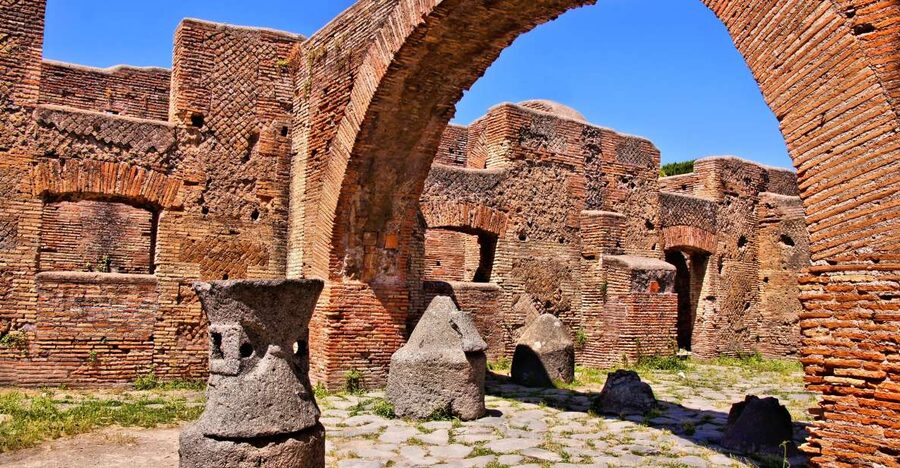
This is not a guided walking tour with a person leading you from house to house. It is a ticket package built around independence: you collect your entrance ticket, receive an audio guide and updated map, then explore the ruins during the day.
That format can work very well at Pompeii. The archaeological area is so large that one fixed route cannot suit everyone. You might want to spend extra time in a painted villa, move quickly through a closed street, or pause at the amphitheater without waiting for a group. With this ticket, you set the pace.
The map is meant to point you toward the main routes and notable buildings. That support is important because Pompeii is not a tidy museum with rooms arranged in a simple sequence. Streets, houses, temples, shops, and public buildings spread across a wide area, and access to individual sites can vary. A map helps you make sensible choices before your feet begin to complain.
The weak point is that the package may feel expensive for what it includes. The supplied price is $44 per person, while a direct entrance purchase has been reported at roughly 18 to 22 euros during a September visit. If the ticket office has no serious queue when you arrive, the convenience may not balance the extra cost. You are paying for the skip-the-line arrangement, the map, the audio service, and the ease of booking in advance.
More Skip-the-Line Tickets in Pompei Campania:
- Pompeii: Skip-the-line Entry Ticket with Audio Guide & Map
★ 3.9 · 3,153 reviews - Pompeii: Skip-the-Line Entry Ticket with Digital Guide App
★ 4.1 · 770 reviews - Pompeii: Skip-the-Line Entry & Audioguide
★ 3.8 · 225 reviews
Exchanging the voucher on Via Roma 32
Your first task is not at the ruins themselves. You need to exchange the voucher at Via Roma 32, next to Pasticceria De Vivo, for the valid entrance ticket.
The office is about five minutes on foot from the Amphitheatre Pompeii Ruins Gate. That is useful if you plan to begin with the amphitheater, but it can be awkward if you arrive by train and expect to collect everything right beside the station or main entrance. Give yourself time to find the office rather than arriving at the archaeological gate at the last minute.
This detail matters because skip the line does not mean skip every step before reaching the entrance. You still need to locate the voucher office, exchange the document, and walk to the appropriate gate. Keep the meeting point saved on your phone, and look for the pastry shop named in the instructions.
Once you have the ticket, you can enter the excavations and begin your own route. No hotel pickup, transport, meal, or drink is included, so you arrange your own way to Pompeii and manage the whole visit independently.
Start with Pompeii’s streets and public spaces
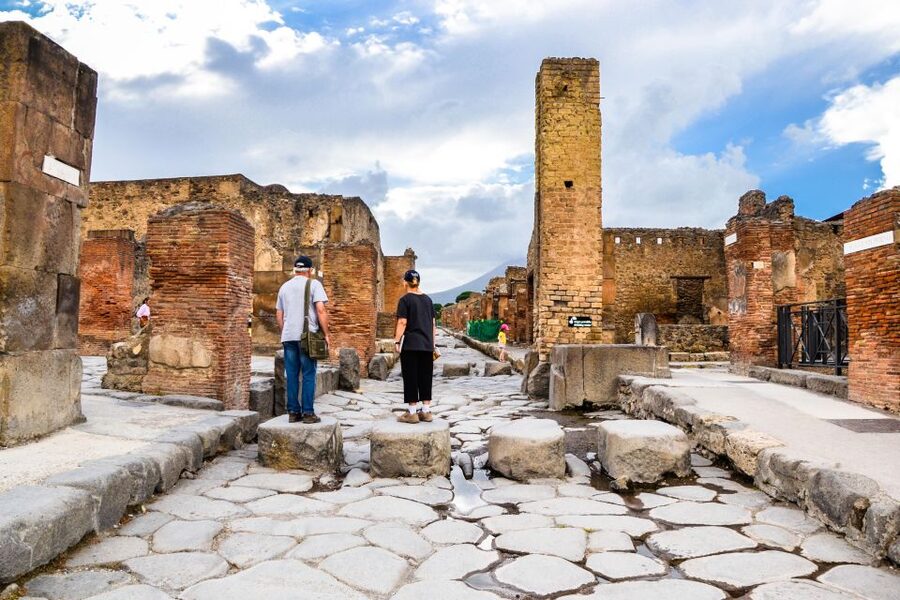
I would begin by using the map to establish a basic sense of direction. Pompeii can feel confusing at first, especially if you try to chase every highlighted building without a plan.
The streets are part of the experience. You are not simply looking at isolated ruins behind glass. You walk through the same urban setting that connected homes, businesses, religious buildings, baths, theaters, and food shops. The surviving layout helps you see Pompeii as a working city rather than a collection of scattered stones.
The audio guide should add the historical framework: how the city functioned, what daily life looked like, and how the eruption of Mount Vesuvius changed everything. That context is valuable because many walls and rooms need explanation before their purpose becomes clear.
Still, do not expect every building to receive equal attention. The audio material may leave out sites you want to understand, and the map may not always make navigation easy. I would treat it as a useful aid, not as a complete archaeological course.
Domus and frescoed rooms
The private houses, or domus, are among Pompeii’s most rewarding stops. Their painted walls, courtyards, rooms, and decorative details show how Roman homes could combine family life, status, business, and ceremony.
A good audio explanation can help you read these houses properly. Without context, a room may look like a bare rectangle with fragments of color. With a clear description, you can start to notice the relationship between the entrance, interior courtyard, wall paintings, and domestic spaces.
The condition of individual houses can differ, and not every room may be open when you visit. That is one reason the map is useful. Mark several houses instead of relying on a single must-see stop, then adjust your route according to what is accessible.
The downside is that a weak audio guide leaves you doing much of the interpretation yourself. If you care deeply about Roman architecture or painting, a specialist guide may offer more depth. This ticket is better suited to a visitor who wants basic explanation and the freedom to linger.
A few more audio tours around Pompei Campania worth a look
- Pompeii: Skip-the-Line Ticket with Audio Guide and Map
★ 4.0 · 117 reviews - From Pompeii: Vesuvius Entry with Transfer and Audioguide
★ 4.2 · 74 reviews - Pompeii & Herculaneum: Skip-the-line & Digital Guide App
★ 4.0 · 35 reviews - Herculaneum and Pompeii in one day: Audioguides + Tkts (art)
★ 3.7 · 22 reviews
Baths, temples, and the rhythm of city life
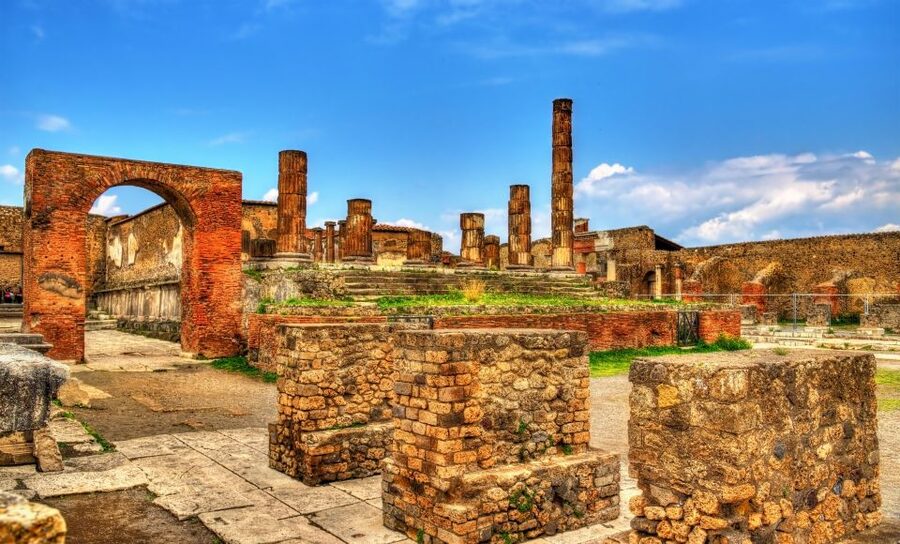
Pompeii’s baths and temples show two different sides of public life. The baths reveal how people spent time washing, exercising, meeting, and socializing. The temples point to religious practice and the role of belief in the city’s daily routine.
These buildings make the visit more than a parade of pretty frescoes. You begin to see how a Roman city operated, with public facilities placed among homes and businesses. The audio guide should help connect these sites to the wider story of Pompeii and the eruption.
The same is true of the shops and thermopolia. A thermopolium was a street food counter, a quick place to buy prepared food and drink. It is one of those details that makes ancient Pompeii feel surprisingly familiar. People still needed convenient meals, busy streets, and places to stop during the day.
I would give these practical buildings proper attention. They may not have the drama of the amphitheater, but they tell you more about ordinary routines. They also help break up the long walk between major monuments.
Theaters, brothels, and the amphitheater
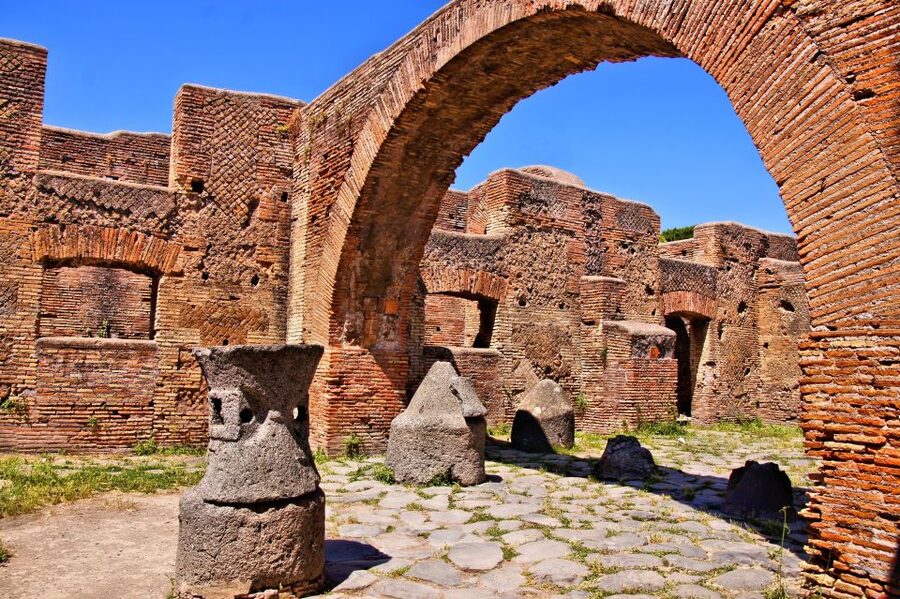
The theaters offer another view of Pompeii’s social life. Their scale and design help you picture performances and public gatherings, while the audio guide can explain how entertainment fit into Roman society.
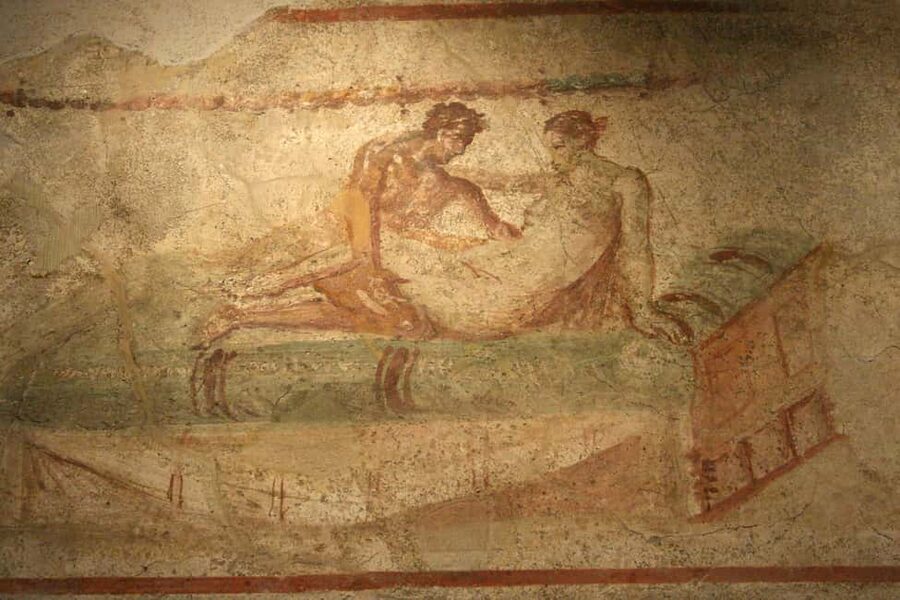
The brothels are also included among the places you can visit. Their presence is a reminder that Pompeii’s public life included subjects often left out of polished accounts of Roman culture. Access and condition can vary, so use the map and current site directions rather than assuming every location will be open.
The Roman amphitheater is one of the most impressive stops, and the meeting point’s closeness to the Amphitheatre Pompeii Ruins Gate makes it a practical starting or ending point. Its survival gives you a strong sense of the size and organization of Roman public entertainment.
You can visit the amphitheater at your own pace instead of being pushed onward with a group. Take time to look at the seating arrangement and the shape of the arena, then compare that public monument with the smaller domestic spaces elsewhere in the city.
The plaster casts and the eruption of Vesuvius
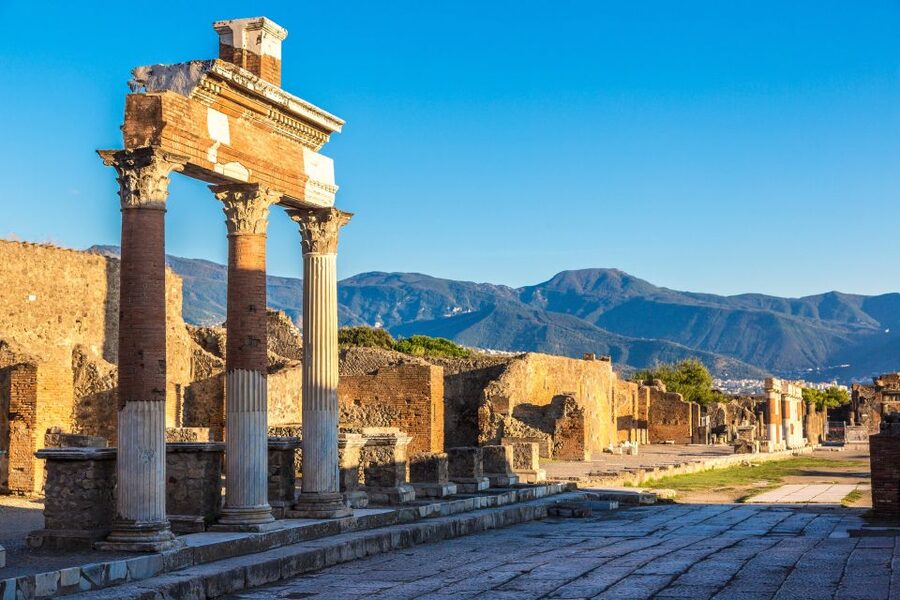
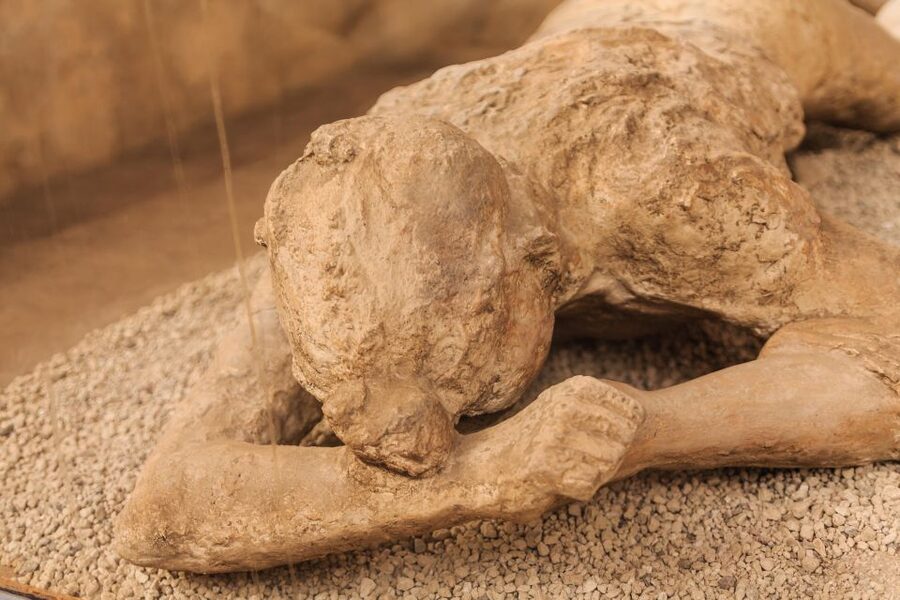
The casts of victims are among Pompeii’s most difficult sights. They are not simply archaeological objects. They give physical form to the human cost of the eruption, making the disaster feel personal in a way that walls and mosaics cannot.
The audio guide’s historical explanation is especially useful here. You need the sequence of the eruption to understand how ash and volcanic material covered the city, preserved its streets, and led to the excavation you see today.
Approach this section at your own speed. Some people want time to think quietly; others prefer to move on quickly. The self-guided format gives you that choice, which is one of the package’s genuine strengths.
The casts can also change the tone of your entire visit. After seeing them, the houses, shops, and public buildings feel less like an open-air collection of ruins and more like the remains of a real city whose residents were caught in a sudden catastrophe.
Audio guide quality and language limits
The language list includes English, French, Italian, German, Spanish, Russian, Polish, Hebrew, Chinese, Dutch, and Portuguese. That sounds generous, but you should confirm exactly what is spoken audio and what is supplied as written material.
The audio system has been described as working like a phone handset, with reports of weak operation. That can be frustrating in a noisy open site, especially if the commentary is brief or difficult to hear. Bring patience, and do not assume that every landmark will have a long explanation.
The biggest practical warning concerns non-English users. The English audio appears to be the safest expectation, while other languages may be represented by a map booklet rather than a spoken guide. If French, Polish, Spanish, or another language is essential to your visit, confirm the format before paying.
A strong map and clear audio could make Pompeii far easier to understand. Here, the system may do that only partly. You will get the most from it if you read about the main sights before arrival and use the guide as an extra layer, not your only source of information.
Walking, weather, bags, and access
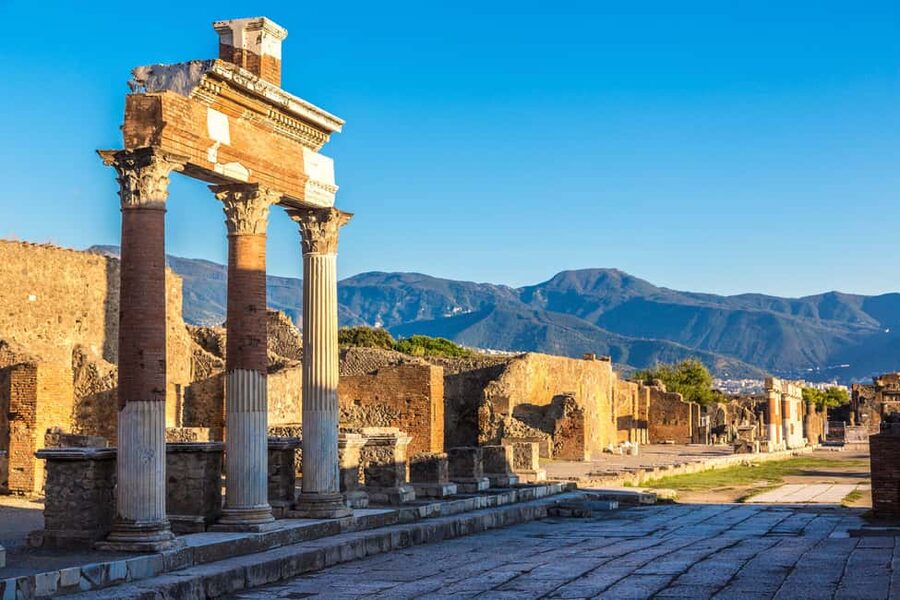
Pompeii requires a lot of walking. Wear shoes you can use comfortably for a full day, and bring water, sunscreen, and a hat. The site can expose you to strong sun, and the ancient streets are not designed for modern comfort.
Large backpacks are not allowed inside the excavations. Pack only what you need, and avoid bringing a bulky day bag that could slow you down at the entrance. Flash photography is also prohibited, so use ordinary camera settings.
This experience is not suitable for wheelchair users or people with mobility impairments. The ruins cover a broad area, and the walking conditions can make the visit demanding. If you need step-free access or regular seating, this is not the right format based on the stated restrictions.
The one-day validity gives you flexibility, but it does not remove the physical effort. Plan a sensible route and pause when needed. Pompeii rewards careful looking more than frantic box-ticking.
Is $44 good value?
At $44, I would call this a convenience purchase rather than a bargain. The best value comes from the skip-the-line arrangement, advance booking, map, audio support, and ability to explore alone for the day.
That value depends on how much you need those extras. If you dislike arranging tickets, want a ready-made orientation tool, or expect a busy entry period, the package may save hassle. If you are visiting in a quieter period and can buy a regular ticket easily, paying roughly twice the direct entrance price may be hard to defend.
The audio question is central. A strong multilingual guide could make the price reasonable. A handset that works poorly, omits many monuments, or offers only English audio makes the package less attractive.
You also do not receive transportation, food, drinks, or a live guide. Factor those costs and choices into your day. The experience gives you access and basic guidance, but you are responsible for getting to Pompeii and building your own visit.
Should you book this Pompeii experience?
Book it if you want a self-guided day, value skipping the ticket queue, and are comfortable using an English audio guide with a map. It suits independent visitors who want to stop at the amphitheater, domus, thermopolia, baths, temples, theaters, brothels, and plaster casts in their own order.
Think twice if price matters most, if you need a language other than English, or if you expect polished commentary for every major building. Before booking, confirm the audio format and compare the cost with direct entry at Pompeii.
My verdict is mixed but practical: the freedom and full-day access are useful, and Pompeii itself is extraordinary. The $44 price makes sense only if the skip-the-line service and independence matter more to you than getting the cheapest possible entrance.
FAQ
Where do I exchange the voucher?
Exchange it at Via Roma 32 in Pompeii, next to Pasticceria De Vivo.
How far is the meeting point from the amphitheater gate?
The meeting point is about a five-minute walk from the Amphitheatre Pompeii Ruins Gate.
How long is the ticket valid?
The ticket is valid for one day.
Is an audio guide included?
Yes, an audio guide and updated map are included with the ticket package.
Which languages are available?
The listed languages are English, French, Italian, German, Spanish, Russian, Polish, Hebrew, Chinese, Dutch, and Portuguese. Confirm whether your chosen language is spoken audio or printed information.
Are meals or hotel transfers included?
No. Hotel pickup and drop-off, meals, and beverages are not included.
Can wheelchair users book this experience?
The experience is not suitable for wheelchair users or people with mobility impairments.
Just added around Pompei Campania
- Pompeii: Pre-reserved ticket with audio guide★ 3.2 · 15 reviews
- Pompeii: Skip-the-Line Ticket with Audio Guide and Map★ 4.0 · 14 reviews
- Pompeii Tour_Skip the line ticket + audioguide★ 4.7 · 17 reviews
- Pompeii: Skip the Line Ticket + Audioguide★ 3.3 · 13 reviews
- Pompeii, skip-the-line ticket with smartphone audio guide on App★ 3.0 · 4 reviews
- Pompeii & Herculaneum: Skip-the-line & Digital Guide App★ 4.0 · 35 reviews
- Pompeii Skip-the-Line Ticket and Audioguide★ 4.2 · 7 reviews
- Pompeii: Skip The Line Entrance Tickets + Audioguides★ 3.2 · 4 reviews
Skip the Line, compared.

Topkapi Palace and Harem Skip-the-Line-Tickets & Audio Guide
Read our review →
Pantheon Reserved Entry Ticket with Audio Guide
Read our review →
Borghese Gallery Skip-the-Line Ticket & Audioguide
Read our review →
Skip the Line: Vatican & Sistine Chapel Ticket with Audio Guide
Read our review →
Skip-the-line Entry Ticket with Audio Guide & Map
Read our review →
Mount Vesuvius: Skip-the-Line Ticket and Smart Digital Guide
Read our review →
Borghese Gallery Skip-the-Line Tickets with Audioguide
Read our review →
Taormina: Ancient Theater Skip-the-Line Ticket & Audio Guide
Read our review →Browse the lists this tour appears in