REVIEW · VERONA AUDIO TOURS
Verona: Juliet’s House Fast-Track Entry Ticket & Audio Guide
Romeo and Juliet begin with a courtyard. Verona’s Juliet’s House gives you the famous balcony, a medieval home linked to the Cappelletti family, and a self-guided audio tour that lets you move at your own pace. I like the fast-track entry, especially when the line outside stretches through the heat. I also like the chance to step onto the balcony and see the house’s art, frescoes, and period costumes rather than stopping for a single photo.
The main catch is scale. The house is small, and some visitors finish in about an hour instead of using the full two-hour window. The courtyard can turn chaotic around the bronze Juliet statue, and the audio app needs advance preparation. At $28 per person, this is good value mainly when the regular queue is long or Juliet’s story is a real reason for your visit.
Key points to know before you go
- Pick up the official ticket at Via Stella 16: You must exchange your voucher at the Verona Luggage Room before entering Juliet’s House.
- Use the right-hand entrance: The fast-track ticket is for the house, balcony, and courtyard, not simply the open courtyard area where people gather around the statue.
- Download the audio guide before arrival: You use your own phone and headphones. There is no headset or mobile device supplied.
- Go early, especially around 10:30 a.m.: Morning visits can be calmer, while afternoon queues and courtyard crowds may grow large.
- The balcony is the star, but not the whole visit: The medieval rooms, frescoes, costumes, and displays give the house more substance than the famous photo spot alone.
- Allow up to two hours, but expect less inside: A relaxed visit may take around one hour, depending on queues, photography, and how closely you follow the audio tour.
What the $28 ticket actually gives you
For $28, you receive fast-track entry to Juliet’s House, access to the courtyard and balcony, and a multilingual audio guide in English, French, Italian, German, Spanish, or Mandarin Chinese. You do not receive transportation, a live guide, a headset, or a phone.
That last point matters. This is not a guided tour with someone leading you room by room. You are responsible for downloading the app, bringing your device, and supplying headphones if you want to listen privately. The audio commentary is designed for independent sightseeing, which is useful if you prefer to pause, skip sections, or take photos without keeping up with a group.
The price makes the most sense when you value time. The regular entrance line can be long, particularly in summer, and the courtyard may be crowded even when the interior is manageable. Paying extra to avoid standing in the heat can feel reasonable during a busy Verona day.
If you only want to touch or photograph the statue in the courtyard, paying $28 for house entry may feel excessive. If you want the balcony, the interior, and some background on the Shakespeare connection, the ticket is easier to justify.
A few more audio tours around Italy worth a look
- Rome: Pantheon Fast-Track Ticket and Official Audioguide
★ 4.5 · 27,353 reviews - Rome: Colosseum & Forum with Audio Guide App -Optional Arena
★ 4.2 · 24,770 reviews - Florence: Timed Entry to Michelangelo’s David + Audio App
★ 4.6 · 19,496 reviews
Finding the ticket office at Via Stella 16
The meeting point is the Verona Luggage Room at Via Stella 16. You exchange your voucher there for the official entry ticket. Do not head directly to the house assuming the booking voucher on your phone is enough. Official entry tickets are required at the door.
Finding the luggage room may take a little patience. The sign can be small, and a few visitors have found the office harder to spot than expected. I would allow extra time before your booked slot, especially if you are navigating Verona’s historic center for the first time.
The ticket office staff can explain how to access the audio guide. That help is useful, since the process involves scanning a QR code and downloading an app. Digital tickets would be simpler, but the exchange system is part of the current arrangement, so plan around it.
The safest routine is simple: arrive early, locate Via Stella 16, exchange the voucher, download the guide while you have a reliable connection, and then proceed to the house.
Entering Juliet’s Courtyard
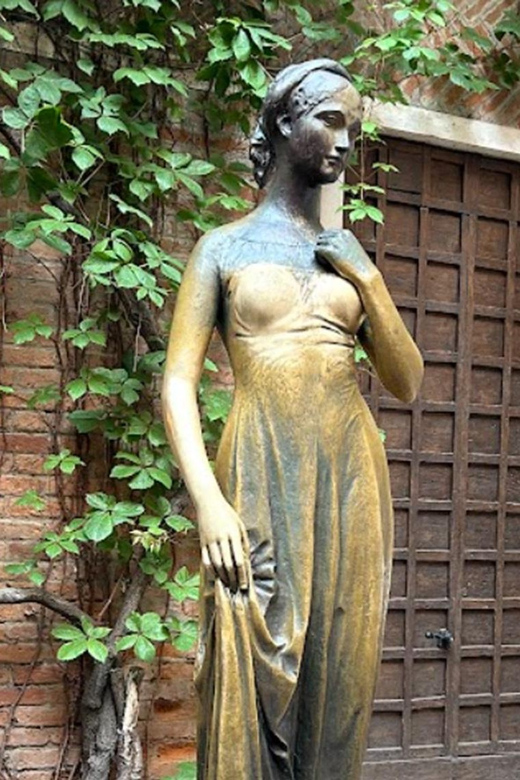
The courtyard is the emotional center of the visit, even though it is open and crowded. Here you see the bronze statue of Juliet, a familiar Verona photo stop. The balcony rises above the courtyard, and from below it looks exactly like the setting many visitors have pictured before arriving.
Crowd control varies. At quieter times, you can look around without much trouble. At busy times, people gather around the statue for photographs, and the informal line may be unclear. The lack of order can make this part feel more frantic than romantic.
Pay attention to the entrance you use. The right-hand gate is the helpful route for people with house tickets, while another queue may be for those visiting only the courtyard and statue. This distinction can save you from joining the wrong line.
The courtyard itself is not a silent place for reflection. It is a popular photo stop, and some people spend a long time arranging elaborate shots. Staff may ask visitors to be considerate, but you should still expect delays if several people are taking full photo sessions on the balcony.
Stepping onto the famous balcony
The balcony is the reason many people book this experience. You can step out above the courtyard, look down toward Juliet’s statue, and take a photograph with the building framing the scene. For couples, this can be a memorable moment, and one visitor even used the balcony for a marriage proposal.
You should keep your expectations practical. The balcony is small, so time there depends on the crowd. Some visitors have been unable to take their own photographs because others were staging long photo shoots. The best approach is to have your camera ready and keep your turn brief.
The balcony also works best when you visit early. A 10:30 a.m. time slot has been especially useful for avoiding the worst crowds. Morning does not guarantee an empty house, but it gives you a better chance of enjoying the space without a constant push toward the exit.
The view itself is not a grand city panorama. You are looking into the courtyard and at the surrounding medieval building. Its appeal comes from the story, the setting, and the act of standing in a place connected in the public imagination with Shakespeare’s tragedy.
Same place, a different route to walk:
- Rome: City Sightseeing Hop-on Hop-off Bus with Audioguide
★ 4.0 · 16,045 reviews - Pompeii: Entry Ticket with Audio Guide
★ 4.1 · 13,491 reviews - Venice: La Fenice Opera House Entry Ticket with Audio Guide
★ 4.6 · 11,742 reviews - Rome: Colosseum, Forum, Palatine Hill Entry & Audioguide App
★ 4.4 · 10,957 reviews
Exploring the medieval house beyond the photo
The house is more interesting than the balcony alone. Inside, you can see rooms decorated with art, frescoes, costumes, and displays connected with the Romeo and Juliet story. The building is associated with the Cappelletti family, who may have lived there centuries ago. Their reported conflict with the Montecchi family later helped inspire the world Shakespeare created.
The wording matters: the connection is part history, part literary tradition, and part Verona storytelling. Juliet was not a real person in the Shakespearean sense, and this is not presented as the confirmed home of a historical girl named Juliet. The house gains its meaning from the blend of medieval family history, local legend, and literature.
Some of the rooms are small, and the visit can feel brief. At certain times, parts of the house have been under renovation or temporarily closed. Conditions can change, so do not assume every floor or display will be available on your visit.
Still, the interior gives the attraction more weight. You are not simply checking off a balcony. You get a sense of the old residence, see decorative details, and hear stories through the audio guide that help connect the rooms with the famous play.
Using the audio guide without losing patience
The self-guided audio tour is one of the better features for independent visitors. It provides commentary in six languages and lets you listen at your own speed. You can stop for photographs, replay information, or move on when a display interests you less.
Bring your own headphones. The ticket does not include a headset, and listening from your phone speaker can be awkward in a crowded interior. A charged phone is also sensible, since the guide depends on your device.
Download the app and audio guide before you arrive. The QR code is provided for this purpose, but some visitors have found the link arrived too late or failed to load in the area. Weak or unavailable Wi-Fi can turn a simple download into a nuisance.
The audio guide is not essential for seeing the house, since some information also appears on displays. It does add context, though, especially if you want more than a quick photo. One useful extra reported with this experience is audio commentary for a walking tour of Verona at key city points. Check the app carefully to see what content is available to you, since the central promise is the house commentary.
Timing, crowds, and the two-hour window
The advertised duration is two hours, but that is best treated as the amount of time allowed rather than the time you must spend inside. Many people finish in about an hour without feeling rushed. Others will need longer if they wait for the balcony, listen to the full audio guide, and study the displays.
Your booking time matters. The timed entry helps control numbers inside, which can make the house more pleasant even when Verona itself is busy. Morning slots, particularly around 10:30 a.m., have been a smart choice for a quieter visit.
Afternoons can be much harder. Lines may stretch outside, and the courtyard can become crowded around the statue. In hot weather, fast-track entry is more than a small convenience. It keeps you from spending a large part of your Verona visit in a queue.
The attraction does not always feel crowded in the same way. The house may be controlled and comfortable while the courtyard remains disorganized. You may wait for a photograph outside, then move through the interior easily. Build some flexibility into your schedule rather than assuming every stage will move at the same speed.
What the experience is best for
I would recommend this for couples, Shakespeare fans, first-time visitors to Verona, and anyone who wants the classic Juliet photograph without gambling on a long queue. It is also a practical choice for a short city visit because you can see the main attraction in roughly an hour and still have time for other sights.
Families may enjoy the balcony and statue, though younger children may not care much about the audio history. The house is compact, so it does not offer the long, varied visit of a major palace or museum.
This is less suitable if you dislike staged literary attractions or expect a large historic residence filled with original furnishings. Some parts may be closed, the interior is brief, and the courtyard can feel more like a photo line than a romantic setting.
For couples marking a special occasion, the balcony can carry real emotional weight. For everyone else, the value comes from combining the famous image with a small but worthwhile look at Verona’s medieval architecture and Shakespearean connection.
Practical details that can make or break the visit
Keep the voucher ready when you reach Via Stella 16, but do not rely on it as the final admission ticket. Exchange it for the official ticket first.
Download the audio guide before setting off for the house. If the app does not load, the visit is still possible, but you lose a useful layer of explanation.
Bring headphones and make sure your phone is charged. No device or headset is included.
Arrive early for your timed entry. That gives you time to find the ticket office and may put you inside before the largest crowds arrive.
Use the fast-track entrance rather than joining the queue for casual courtyard access. Ask the ticket office staff if you are unsure which gate applies to your ticket.
Keep balcony photographs quick and courteous. You may have only a short turn, especially during a crowded afternoon.
The booking allows free cancellation up to 24 hours before the scheduled visit, and you can reserve now and pay later. That flexibility is useful if your Verona plans are still shifting.
Should you book Juliet’s House?
Book it if you want the balcony, prefer independent sightseeing, and expect Verona to be busy. The fast-track access is the strongest reason to pay, while the audio guide, medieval rooms, frescoes, and costumes give the visit more substance than a courtyard photograph.
Skip it if you are satisfied with seeing the courtyard from outside or if $28 feels high for a small house. You can finish quickly, the crowd around the statue may test your patience, and the audio guide requires your own phone and advance setup.
My practical choice would be a morning slot, ideally around 10:30 a.m. Pick up the ticket early, download the app before arrival, and treat the balcony as one part of a compact literary attraction, not the entire reason the house exists. Done that way, Juliet’s House is a pleasant and efficient Verona stop, with just enough history and atmosphere to earn its place on your itinerary.
FAQ
Where do I collect the ticket for Juliet’s House?
You must exchange your voucher for an official entry ticket at the Verona Luggage Room, Via Stella 16.
Can I enter with only the digital voucher?
No. Official entry tickets are required for admission, so exchange your voucher at the luggage room before going to Juliet’s House.
Does the ticket include fast-track entry?
Yes. The ticket includes fast-track entry to Juliet’s House.
Can I visit Juliet’s balcony?
Yes. Access to Juliet’s House Balcony is included.
Can I enter Juliet’s Courtyard?
Yes. Access to the courtyard is included with the ticket.
Is a guided tour included?
No. This is a self-guided audio tour, not a live guided tour.
Which languages are available for the audio guide?
The audio guide is available in English, French, Italian, German, Spanish, and Mandarin Chinese.
Do I receive headphones?
No. Headphones are not included, so bring your own if you want to listen privately.
Do I need a mobile device?
Yes. You need your own mobile device to download and use the audio guide.
How long should I allow for the visit?
The stated duration is two hours, but some people finish in about one hour. Your actual time will depend on the crowds, photography, and how much of the audio guide you use.
Just added around Italy
- Torino Walking Tour with Audio and Written Guide by a Local★ 4.5 · 35 reviews
- Medieval Canals and Fountains: A Treviso Self-Guided Audio Tour★ 4.5 · 4 reviews
- Trapani Walking Tour with Audio and Written Guide by a Local★ 4.0 · 8 reviews
- Trento Walking Tour with Audio and Written Guide★ 4.5 · 11 reviews
- Sicily: Selinunte Park Entry Ticket & Sicily Digital Audio Guide★ 4.5 · 4 reviews
- Taormina Walking Tour with Audio and Written Guide by a Local★ 4.5 · 41 reviews
- Taranto Walking Tour with Audio and Written Guide by a Local★ 5.0 · 5 reviews
- Siracusa Walking Tour with Audio and Written Guide by a Local★ 5.0 · 59 reviews
Italy Audio Tours, compared.
Pantheon Fast-Track Ticket and Official Audioguide
Read our review →
Colosseum & Forum with Audio Guide App -Optional Arena
Read our review →
Timed Entry to Michelangelo’s David + Audio App
Read our review →
La Fenice Opera House Entry Ticket with Audio Guide
Read our review →
Colosseum, Forum, Palatine Hill Entry & Audioguide App
Read our review →
St. Peter’s Basilica & Dome Entry Ticket & Audio Tour
Read our review →