REVIEW · ITALY AUDIO TOURS
Venice: Explore San Giorgio Island with Ticket & Audio Guide
San Giorgio offers Venice at a quieter pace. This one-hour visit takes you across the lagoon from San Marco to San Giorgio Maggiore, where a multimedia guide leads you through the Giorgio Cini Foundation or the Vatican Chapels. I like the calm setting and the chance to see grand courtyards, a remarkable library, and spaces that most first-time Venice itineraries skip. The small group of up to 25 people also keeps the visit manageable.
I especially like the Foundation route for its Palladian architecture and the Nuova Manica Lunga library, which recent visitors have praised as stunning. The audio guide is available in several languages, and a staff member helps escort your group through the complex. The main catch is simple: the boat ride to the island is not included, and one recent booking reported paying an additional €39.60 for transport.
At $17 per person, the admission is reasonable if you value architecture, art, and a quiet hour away from Venice’s busiest lanes. It is less convincing if you expect a long guided tour, access to every garden area, or a visit to the bell tower. The maze, campanile, and some other areas may belong to different tours or may be closed during events.
Key points to know before visiting
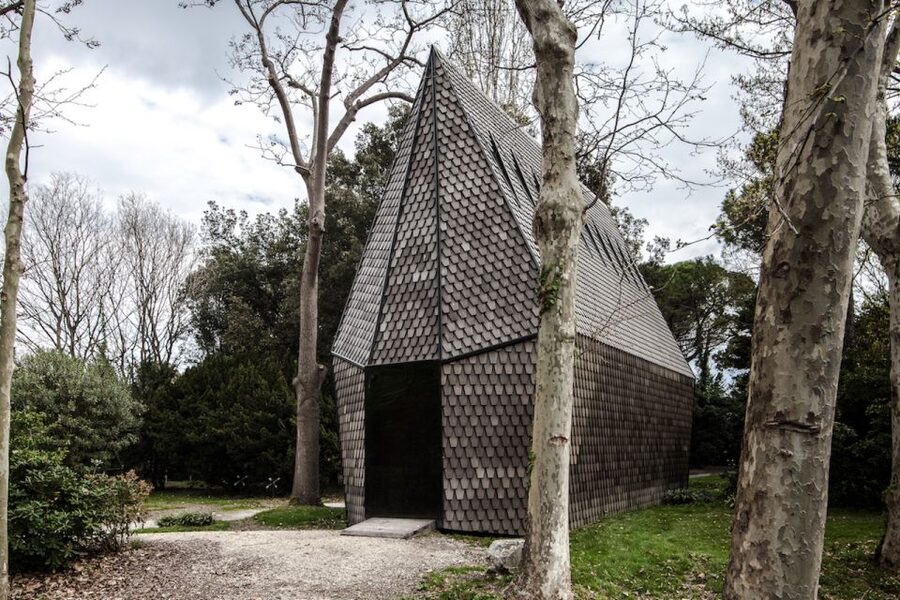
- Two distinct experiences: Choose the Giorgio Cini Foundation’s courtyards, refectory, staircase, and library, or visit the ten Vatican Chapels in the island’s wooded area.
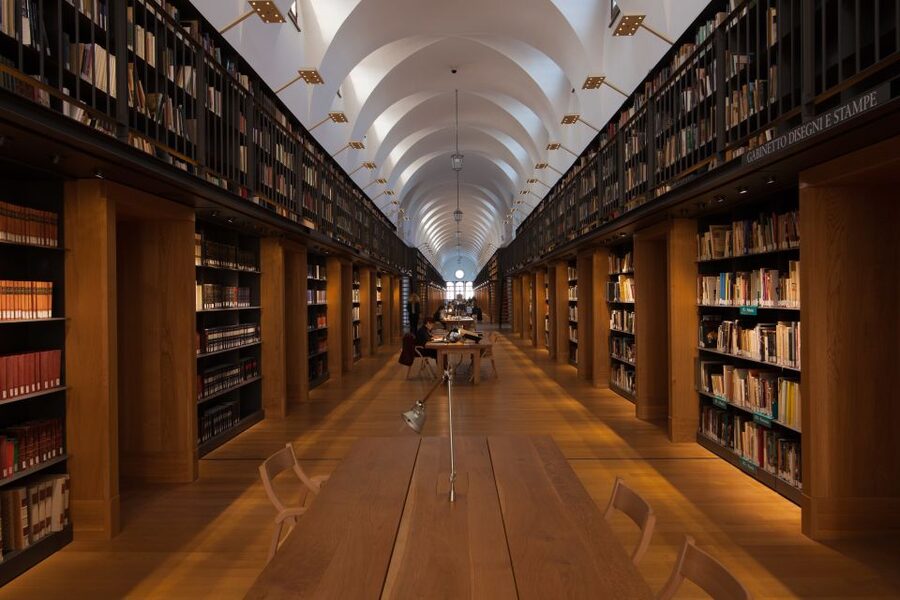
- The Nuova Manica Lunga is a highlight: The former Benedictine dormitory now holds a striking, light-filled library.
- The boat fare is separate: You must arrange and pay for transport to San Giorgio Maggiore independently.
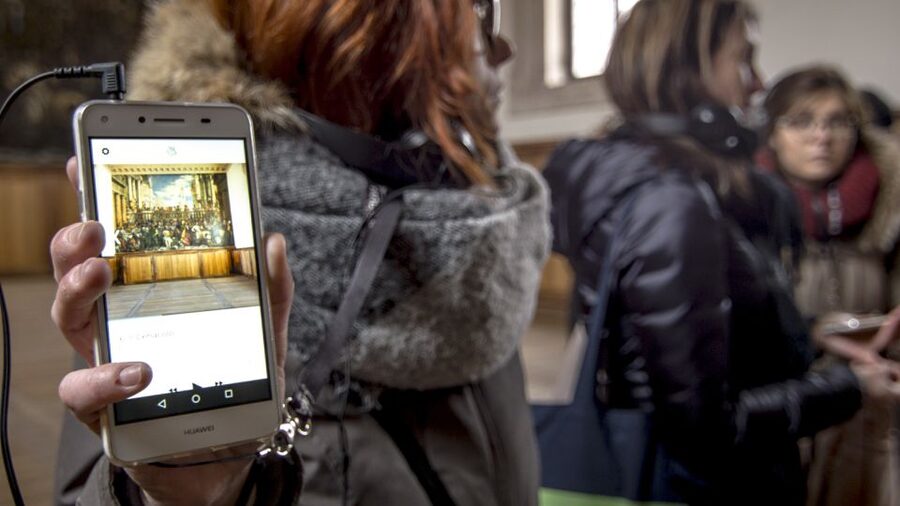
- A video guide adds context: The multimedia guide is available in English, French, German, Italian, Russian, and Spanish.
- The visit lasts one hour: That is enough for a focused introduction, but not for a slow, all-day exploration.
- Some areas may be closed: Concerts, cultural programs, or other events can change the route.
Crossing from San Marco to a quieter island
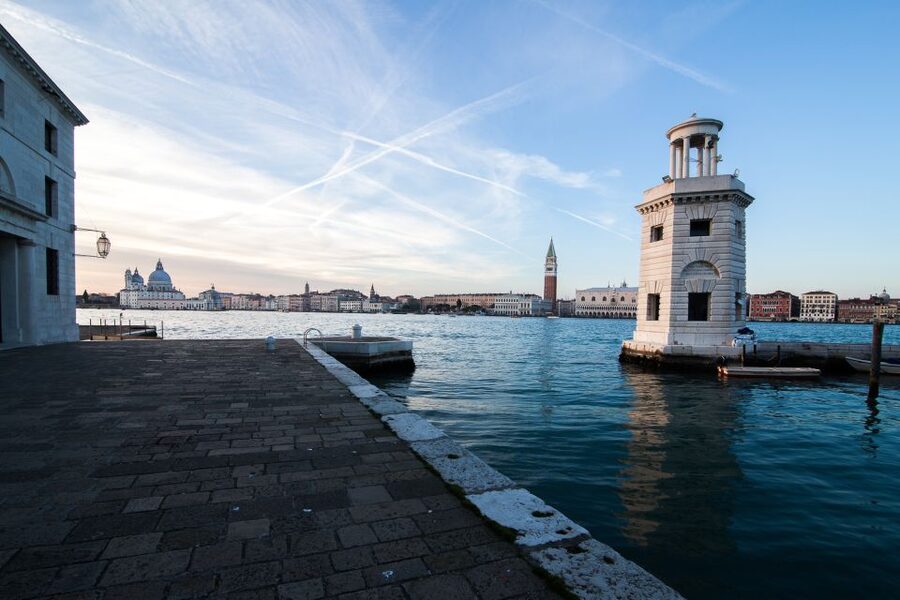
San Giorgio Maggiore sits only a short bus-boat ride from Piazza San Marco, yet the mood changes quickly. Instead of squeezing through Venice’s narrow lanes, you cross open water and arrive beside the monumental church and Foundation complex.
The boat ride is not part of the admission. This is the most important practical detail to settle before booking. The meeting point is the ticket office on the left side of the Basilica of San Giorgio Maggiore, so you should allow enough time to reach the island before your assigned slot.
The island gives you a useful pause from central Venice. The experience is not designed as a full sightseeing day, but it offers a focused hour in a place where architecture and art take center stage. You will not be wandering without direction. A multilingual staff member escorts the group, while the video guide supplies the explanation.
The group limit is 25 people. That is not a private tour, but it is small enough to move through the complex without the feel of a large crowd. The staff languages are English and Italian, while the audio guide offers a broader language choice.
A few more audio tours around Italy worth a look
- Rome: Pantheon Fast-Track Ticket and Official Audioguide
★ 4.5 · 27,353 reviews - Rome: Colosseum & Forum with Audio Guide App -Optional Arena
★ 4.2 · 24,770 reviews - Florence: Timed Entry to Michelangelo’s David + Audio App
★ 4.6 · 19,496 reviews
Choosing between the Foundation and the Vatican Chapels
Your most important decision comes at booking: select the Giorgio Cini Foundation or the Foundation’s Wood with the Vatican Chapels. These are not simply two versions of the same route.
The Giorgio Cini Foundation visit suits you if you enjoy historic interiors, Renaissance architecture, libraries, and the work of major Venetian architects. The Vatican Chapels route is better if you want a modern art project set among trees and prefer contemporary design.
The available choice may depend on the time slot, so read the option carefully when booking. The two routes have different personalities, and choosing the wrong one could leave you wishing you had seen the other.
The Giorgio Cini Foundation route
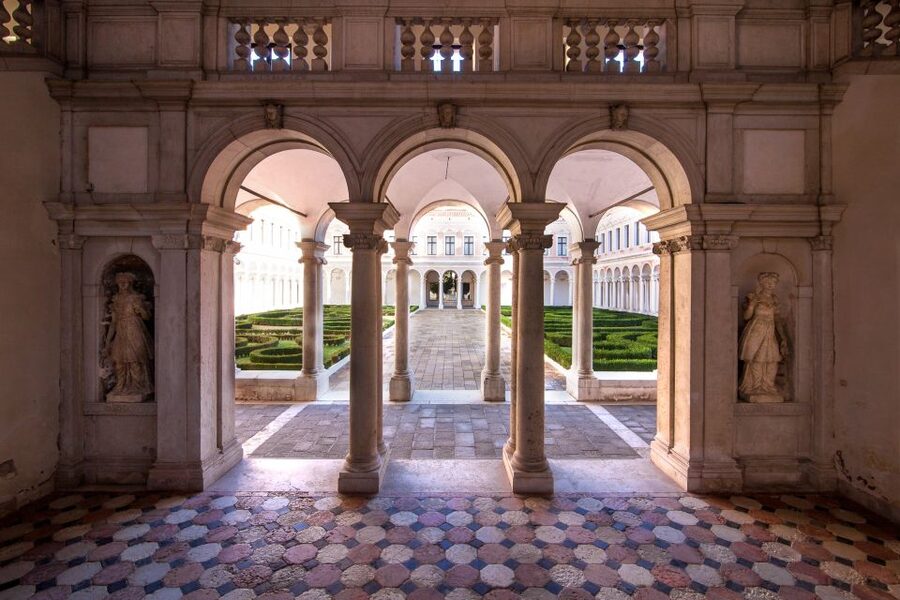
The Foundation occupies a former Benedictine complex, and the route brings together several layers of Venetian architectural history. Your guide does not simply point out a single church or painting. Instead, the visit links courtyards, stairways, a refectory, and a library.
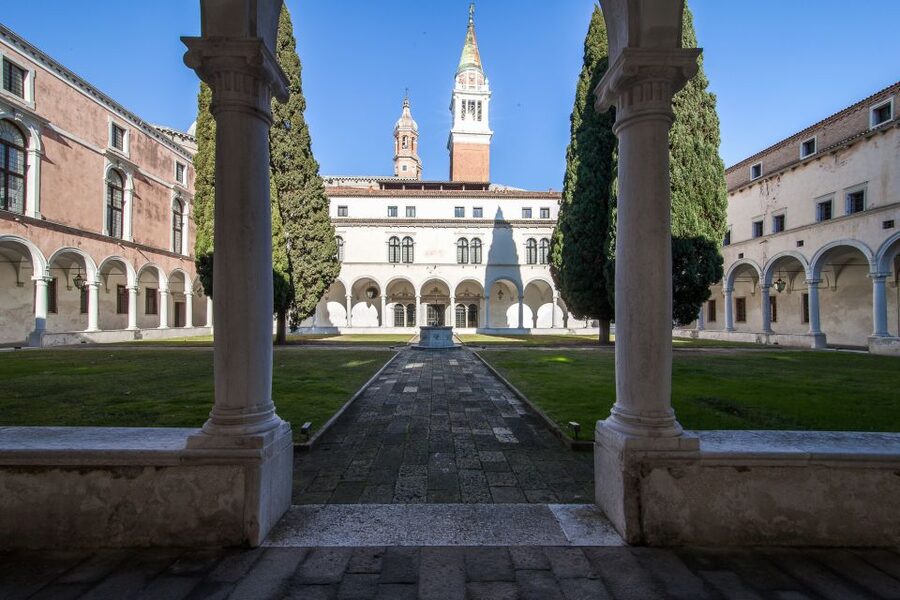
The Cloister of Palladio
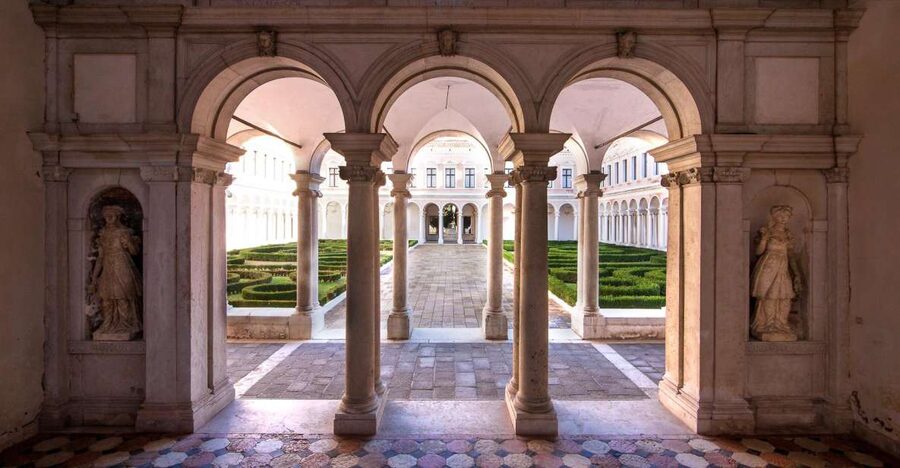
The Cloister of Palladio is one of the architectural prizes on this route. Andrea Palladio designed the project, but it was completed after his death in the seventeenth century.
Look for the calm rhythm of the columns and the balanced proportions. This is a place where the value comes from the whole space rather than one isolated object. Your video guide helps explain the design, which is useful because the beauty can otherwise be easy to admire without understanding.
The cloister also gives you a chance to slow down. Venice often rewards quick glances between churches, bridges, and canals. Here, you can pay attention to symmetry, light, and the way the surrounding buildings frame the courtyard.
Same place, a different route to walk:
- Rome: City Sightseeing Hop-on Hop-off Bus with Audioguide
★ 4.0 · 16,045 reviews - Pompeii: Entry Ticket with Audio Guide
★ 4.1 · 13,491 reviews - Venice: La Fenice Opera House Entry Ticket with Audio Guide
★ 4.6 · 11,742 reviews - Rome: Colosseum, Forum, Palatine Hill Entry & Audioguide App
★ 4.4 · 10,957 reviews
The Cloister of the Buora family
The Buora cloister provides a different architectural note. Giovanni and Andrea Buora designed it as an example of early Renaissance architecture.
Seeing both cloisters in the same visit makes the route more rewarding. You can compare the earlier Renaissance style with the later Palladian work instead of treating each courtyard as an unrelated stop. The audio guide is particularly useful here, since the distinction may not be obvious at first glance.
The courtyards are also among the best reasons to choose this route if you want a peaceful break from Venice’s more crowded monuments. The visit feels measured and architectural rather than rushed from one famous artwork to the next.
The Palladian cenacle and Veronese’s lost original
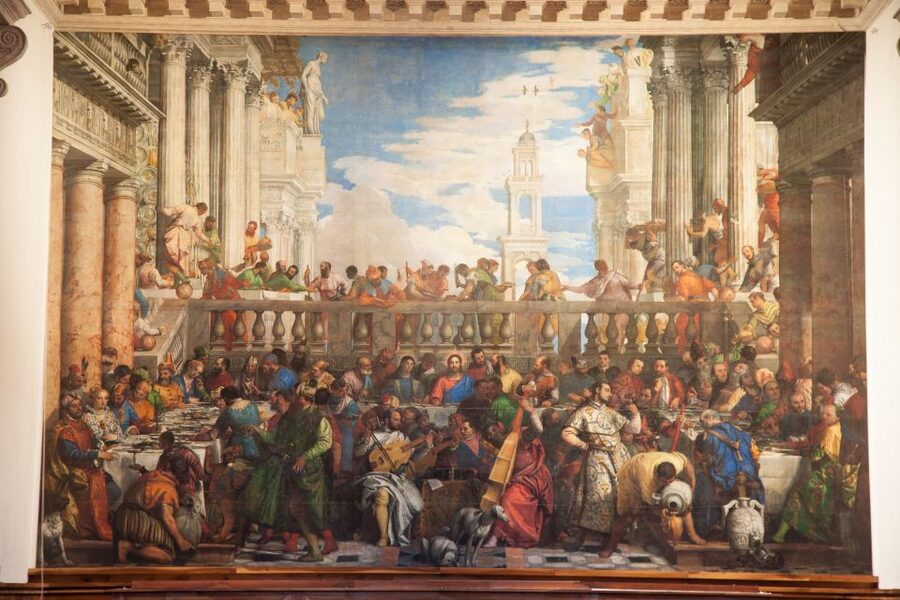
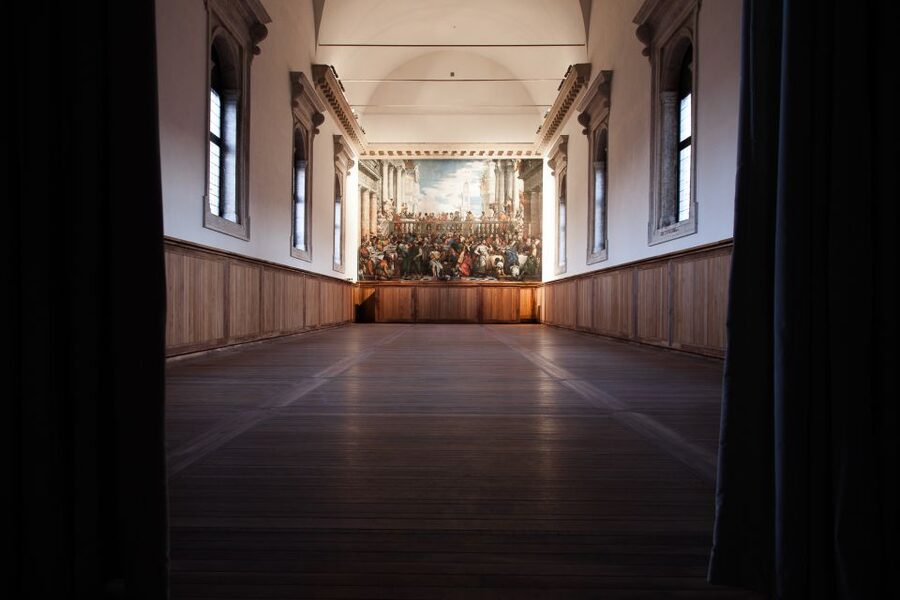
The Palladian cenacle was once a Benedictine refectory. Paolo Veronese painted the Wedding in Cana here, but the original painting is now in the Louvre.
You will not see the original work in its original setting, which is an important expectation to set. The room still matters because its scale and purpose help explain how the painting once functioned within the monastery. The building is not just a container for art. It was part of daily religious life.
If your main goal is to see the original Wedding in Cana, this visit cannot replace a trip to the Louvre. If you are interested in the connection between painting and architecture, the refectory remains a worthwhile stop.
Longhena’s Grand Staircase
The Grand Staircase was completed in 1671 by Baldassare Longhena. It links the two cloisters and once provided access to the library and the abbots’ apartments.
The staircase is more than a passage. It was designed to make movement through the complex feel ceremonial. Wooden bookcases by Franz Pauc add another layer of detail, so take time to look beyond the steps themselves.
This is the sort of stop that benefits from an audio explanation. Without context, you might walk through quickly. With the guide, you can understand why the staircase was placed between the cloisters and how it served the complex.
The Nuova Manica Lunga library
The former Benedictine dormitory is now the Nuova Manica Lunga, a large library filled with light. For many visitors, this is the strongest point of the Foundation route.
The library has a different mood from the cloisters and refectory. It feels open, ordered, and functional, while still carrying the presence of the former monastery. The wooden shelving and long interior make it easy to see why recent visitors singled out the libraries as stunning.
If you have a soft spot for historic libraries, this route offers strong value. If you are mainly interested in outdoor scenery or contemporary art, the Vatican Chapels may suit you better.
The Vatican Chapels and the Foundation’s Wood
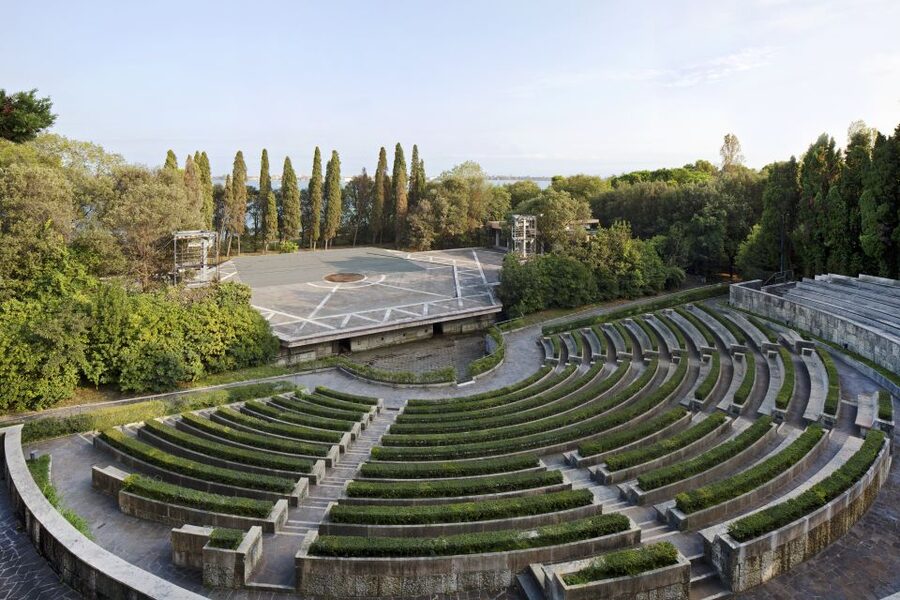
The alternative route leads into the Wood of the Foundation, where you see ten chapels designed by ten internationally known architects. This is a contemporary project rather than a traditional tour of Venetian interiors.
The multimedia guide introduces the concept with comments from His Eminence Gianfranco Ravasi and explains the designs, drawings, and models connected with the chapels. The Asplund chapel is part of that presentation, with its drawings and models helping you understand how the project developed.
The appeal here lies in comparison. Each architect faced the same broad challenge, creating a chapel in a wooded setting, yet the results differ in form and approach. You can use the guide to connect each structure with its architect instead of seeing the chapels as a series of anonymous buildings.
This route may be the better choice for you if you have already seen Venice’s main churches and want something less traditional. It may be less satisfying if your ideal Venice visit centers on Renaissance paintings, historic rooms, and old libraries.
Keep your expectations realistic. The experience is a one-hour introduction, not an extended architectural study. You will learn about all ten chapels, but the short format means you will not have unlimited time at each one.
How the video guide shapes the visit
This is not a tour led continuously by an art historian. The included product is a video guide, supported by a staff member who escorts the group through the complex.
That format works well if you like moving at a steady pace while receiving information through headphones or a handheld device. The guide is offered in English, French, German, Italian, Russian, and Spanish. You need a valid identity document to collect it, so do not leave your passport or other accepted ID behind.
The staff can assist in English and Italian. The audio guide gives you more language flexibility, but it is still worth understanding the distinction: you are not booking a personal English-speaking guide who will discuss every question in depth.
The format also helps keep the hour organized. You follow the route, listen to the explanation, and avoid wasting time trying to work out which doors or courtyards are open. The tradeoff is that the visit can feel less personal than a private guide.
What the $17 price really covers
At $17 per person, the price covers admission, the audio guide, the tour leader who escorts the group, and the booking fee. That makes it fair value for access to the Foundation or Vatican Chapels, especially if you choose the route that matches your interests.
The price does not cover the boat to San Giorgio Maggiore. This is where the total cost can rise. One recent booking reported an extra €39.60 for transport for their party, in addition to €30 for the activity. The exact fare depends on your transport arrangements, but the warning is clear: calculate the island crossing before deciding that this is a $17 outing from door to door.
The one-hour length cuts both ways. You can fit it into a busy Venice day without sacrificing half a day. On the other hand, some people will find the price high for a short visit with an audio guide, especially after adding transport.
I see the value most clearly if you already plan to be near Piazza San Marco and enjoy architecture. The cost is harder to justify if you are chasing famous paintings, expect a live guide, or want access to every part of the island.
Timing, access, and small practical issues
You must book a specific time slot. That protects the group size and ensures that the complex can receive you at the right time, but it means you should build your Venice schedule around the appointment.
A valid ID is required to collect the video guide. Discounted ticket holders must provide proof of eligibility, or the reduced ticket will not be valid. These rules are easy to overlook, so check your documents before leaving your hotel.
The experience is not suitable for people with mobility impairments. The route through historic buildings, courtyards, staircases, and wooded areas may present access problems. The supplied information does not promise step-free access, so ask the provider directly if you need specific arrangements.
Some sections can close during concerts, activities, or other events. This may affect the route, including areas you expected to see. The maze is a good example of an attraction that may not be part of this particular visit. One recent booking was disappointed not to enter it and was told it belonged to another tour.
You also should not assume that the bell tower is included. A separate comment wished the visit had included the campanile, but the advertised access covers the Foundation complex or the Wood and Vatican Chapels, not the tower.
Free cancellation is available up to 24 hours before the visit, and you can reserve now and pay later. Those terms help if your Venice schedule is still shifting, but they do not remove the need to reserve a time slot.
Who will enjoy San Giorgio most
I would recommend this experience to you if you enjoy:
- Palladian and Renaissance architecture
- Historic libraries and monastic interiors
- Contemporary chapel design
- Short, well-organized cultural visits
- A quieter setting away from central Venice
- Audio guides in languages other than English or Italian
It is also a good choice if you have already visited St. Mark’s Basilica and the Doge’s Palace and want a different side of Venice. San Giorgio gives you a change of pace without requiring a long journey across the lagoon.
I would hesitate if you want a fully live, conversational tour. The staff escort the group, but the main interpretation comes through the multimedia guide. I would also hesitate if you have limited mobility, need guaranteed access to every area, or are counting on seeing the maze and bell tower.
Should you book this San Giorgio Island visit?
Book it if the Giorgio Cini Foundation’s courtyards and library appeal to you, or if the ten Vatican Chapels sound more interesting than another crowded Venetian church. The Nuova Manica Lunga library, the Palladian spaces, and the quiet island setting give the hour real character.
Before paying, confirm which route you are selecting and add the separate boat cost to your budget. If you do that, accept the one-hour format, and bring valid ID for the video guide, this is a smart short excursion for architecture and art lovers.
Skip it if you want a personal guide, a long visit, or guaranteed access to the maze and campanile. The experience is focused rather than expansive, but for the right visitor, that focus is exactly what makes it work.
FAQ
Where does the experience meet?
The meeting point is the ticket office on the left side of the Basilica of San Giorgio Maggiore on San Giorgio Island in Venice.
Is transport to San Giorgio Island included?
No. The boat or bus-boat ride to the island is not included in the admission price.
How long does the visit last?
The experience lasts one hour.
What can I choose to visit?
You can choose between the monumental complex of the Giorgio Cini Foundation and the Foundation’s Wood, which includes the Vatican Chapels.
Is the audio guide included?
Yes. A multimedia audio or video guide is included in the admission cost.
Which languages are available for the audio guide?
The audio guide is available in English, French, German, Italian, Russian, and Spanish.
Which languages are available from the host or greeter?
The host or greeter service is available in English and Italian.
Do I need identification?
Yes. You need a valid identity document to collect the video guide.
Can I cancel the booking?
You can cancel up to 24 hours in advance for a full refund.
Is the experience suitable for people with mobility impairments?
No. The experience is listed as unsuitable for people with mobility impairments.
Just added around Italy
- Torino Walking Tour with Audio and Written Guide by a Local★ 4.5 · 35 reviews
- Medieval Canals and Fountains: A Treviso Self-Guided Audio Tour★ 4.5 · 4 reviews
- Trapani Walking Tour with Audio and Written Guide by a Local★ 4.0 · 8 reviews
- Trento Walking Tour with Audio and Written Guide★ 4.5 · 11 reviews
- Sicily: Selinunte Park Entry Ticket & Sicily Digital Audio Guide★ 4.5 · 4 reviews
- Taormina Walking Tour with Audio and Written Guide by a Local★ 4.5 · 41 reviews
- Taranto Walking Tour with Audio and Written Guide by a Local★ 5.0 · 5 reviews
- Siracusa Walking Tour with Audio and Written Guide by a Local★ 5.0 · 59 reviews
Italy Audio Tours, compared.
Pantheon Fast-Track Ticket and Official Audioguide
Read our review →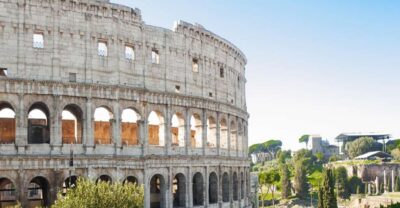
Colosseum & Forum with Audio Guide App -Optional Arena
Read our review →
Timed Entry to Michelangelo’s David + Audio App
Read our review →
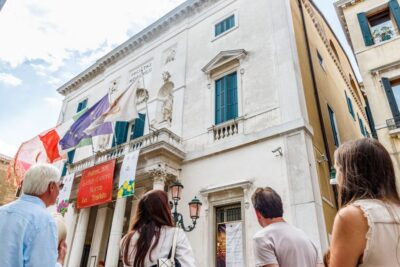
La Fenice Opera House Entry Ticket with Audio Guide
Read our review →
Colosseum, Forum, Palatine Hill Entry & Audioguide App
Read our review →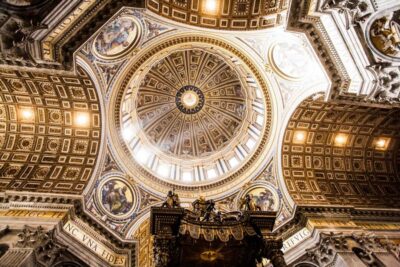
St. Peter’s Basilica & Dome Entry Ticket & Audio Tour
Read our review →