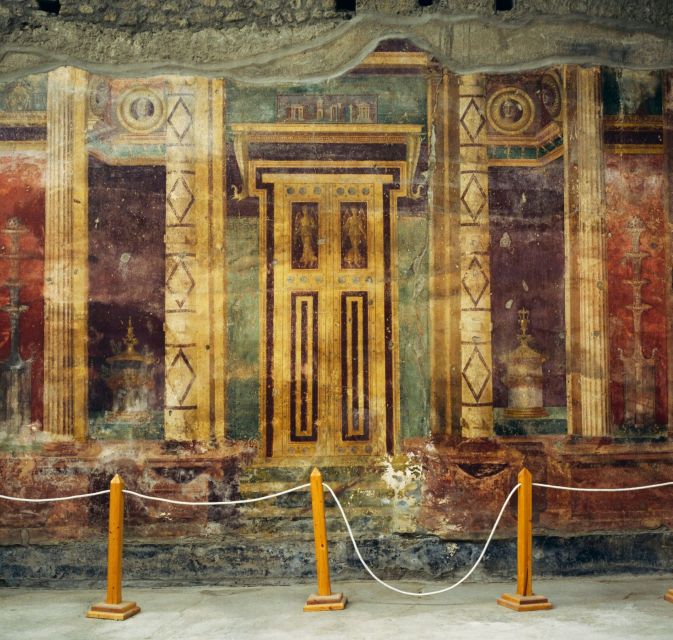
REVIEW · ITALY AUDIO TOURS
Torre Annunziata: Oplontis Entry Ticket with Digital Guide
Ancient luxury survives in Torre Annunziata. This self-guided visit takes you into Villa Poppaea, a remarkably preserved Roman residence with striking frescoes and a plan you can explore at your own pace. I like the freedom to set my own speed, and I like that priority entry keeps the visit simple. The main catch is the smart audio guide, which may not follow the site route in the same order as the room numbers.
This is a good choice if you want more independence than a group tour provides. You receive your ticket and guide instructions by WhatsApp or email before the visit, but you need to download every audio file before arriving. The ruins have no free Wi-Fi, and phone coverage can be unreliable.
For $24 per person, the visit offers fair value if you already plan to be in Torre Annunziata and want a focused archaeological stop. I would not choose it if you need transport, a live guide, or a fully polished audio tour with every stop arranged in walking order.
Key points to know before you go
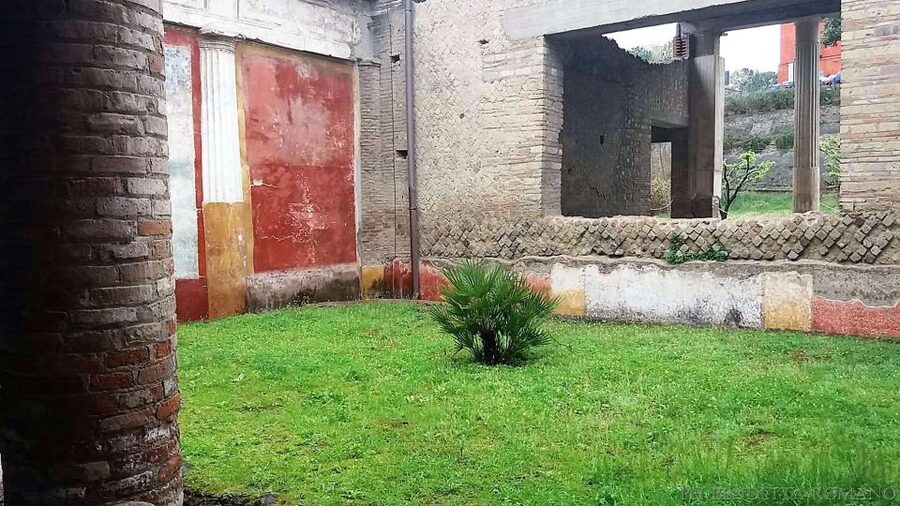
- Villa Poppaea is the main attraction: Oplontis refers to an ancient place recorded on the Tabula Peutingeriana, but Villa Poppaea is the only monument open to visitors here.
- The villa was linked to Nero’s family: Ownership is traditionally attributed to Poppaea Sabina, Nero’s second wife, or at least to the imperial family estate.
- Frescoes are the big reward: The villa contains decoration and architectural features that feel different from those at other Roman sites.
- You explore independently: There is no live guide, and the one-day ticket lets you visit at your own pace.
- Download the guide in advance: The audio content must be stored on your phone before you start.
- The route and audio numbering may differ: You may need to jump between sections of the guide instead of following it in a clean numerical sequence.
Why Oplontis deserves time beyond Pompeii
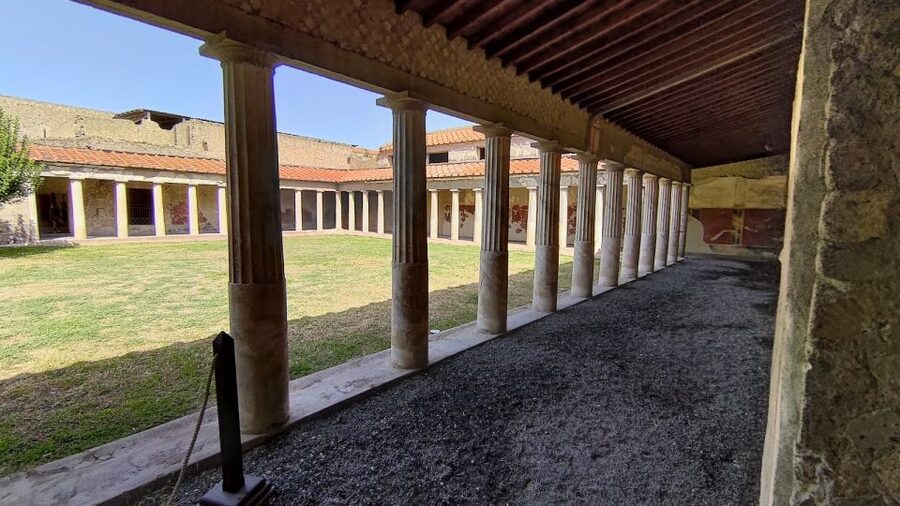
Oplontis sits in the center of modern Torre Annunziata, between the better-known archaeological sites of Pompeii and Herculaneum. The setting is useful to understand: you are not heading to an isolated ruin outside town. You are entering an ancient residential complex surrounded by present-day streets and buildings.
The name Oplontis appears only in the Tabula Peutingeriana, a medieval copy of an ancient Roman road map. On that map, Oplontis refers to structures in the area between Pompeii and Herculaneum. The surviving villa gives the name a physical presence, but the wider ancient settlement is not presented as a large collection of monuments open for a full-day exploration.
That distinction matters. This is not a replacement for Pompeii, where you can spend many hours walking through streets, shops, temples, and houses. It is a more contained visit centered on one grand residence. I see that as a strength if you prefer a manageable archaeological stop with a clear focus.
The villa itself was built in the mid-1st century B.C. It was later enlarged during the imperial period and was still being restored when the eruption occurred. That unfinished state adds an interesting layer to the visit. You are not looking at a building frozen at one perfect moment. You are seeing a residence that had changed over time and was still part of a living imperial world.
A few more audio tours around Italy worth a look
- Rome: Pantheon Fast-Track Ticket and Official Audioguide
★ 4.5 · 27,353 reviews - Rome: Colosseum & Forum with Audio Guide App -Optional Arena
★ 4.2 · 24,770 reviews - Florence: Timed Entry to Michelangelo’s David + Audio App
★ 4.6 · 19,496 reviews
Entering Villa Poppaea and understanding its status
Villa Poppaea is traditionally connected with Poppaea Sabina, the second wife of Emperor Nero. The exact ownership is presented with some care, since the property may have belonged more broadly to the imperial family estate. Either way, the villa was not a modest suburban home.
The name gives you a clue about the kind of place you are seeing. This was a large, refined residence built for comfort, display, and status. Its rooms, decorative work, and expansive layout help explain why Roman villas were more than simple country houses. They were places where wealth could be shown through architecture, art, and controlled movement from one space to another.
I recommend taking a few minutes at the entrance to get your bearings before pressing play on the audio guide. The site map and the audio content do not always line up perfectly. One recorded experience found that the room numbers mostly matched the map, but the suggested walking order did not follow those numbers. That means you may need to pause, look at the map, and select the next relevant section yourself.
This is not a serious problem if you are comfortable using your phone. It can become irritating if you expect the guide to lead you from one room to the next without any decisions on your part.
The frescoes are the main reason to visit
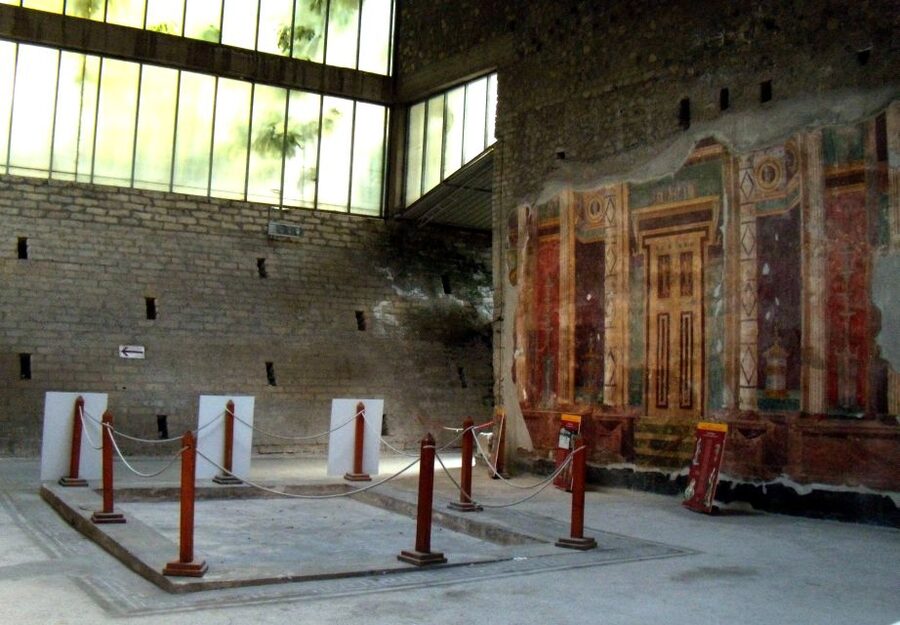
The strongest part of the experience is the villa’s decoration. The frescoes are repeatedly praised as impressive, and they offer features not always seen at other ancient sites. Even if you have already visited Pompeii, Villa Poppaea gives you a different view of Roman domestic design.
The appeal is not only the color on the walls. You can also study how the rooms were arranged and how decorative details supported the villa’s formal character. The site encourages you to slow down and look closely rather than simply ticking off famous buildings.
The ruins are described as very well preserved, which makes the visit rewarding for anyone interested in Roman art and architecture. You might find yourself spending longer in a room than the audio guide suggests, especially if you want to compare the painted decoration with the structure around it.
I would not rush this stop. The ticket is valid for one day, and the independent format gives you room to pause. You do not need to keep up with a group or wait for a guide to finish speaking. That flexibility is one of the clearest benefits of this experience.
How the digital guide works in practice
The smart guide is downloaded directly to your smartphone. A day before the visit, the provider sends the tickets and instructions by WhatsApp or email. You should treat that message as part of your preparation, not as something to handle while standing at the entrance.
Download all audio content before you leave for the site. The ruins and museums do not offer free Wi-Fi, and mobile coverage is not always reliable. A charged phone is required, and I would also make sure you have enough storage and that the audio files open before you travel.
The guide offers useful information, but it is not equally strong in every respect. One assessment found the information generally good, while another described it as limited and not arranged according to the route used by the museum. That combination gives you a fair picture: the guide can add useful context, but you should not expect the smooth structure of a live explanation.
You may need to jump around in the app to find the description for a particular room. If the numbers on the map and the audio menu are not in the same order as your walk, simply use the map as your main navigation tool and the audio guide as a reference.
Bring earphones if you want to listen comfortably. They are not included, so you need to supply your own. The ticket includes the downloadable smart guide, but not a live guide or any equipment for listening.
Same place, a different route to walk:
- Rome: City Sightseeing Hop-on Hop-off Bus with Audioguide
★ 4.0 · 16,045 reviews - Pompeii: Entry Ticket with Audio Guide
★ 4.1 · 13,491 reviews - Venice: La Fenice Opera House Entry Ticket with Audio Guide
★ 4.6 · 11,742 reviews - Rome: Colosseum, Forum, Palatine Hill Entry & Audioguide App
★ 4.4 · 10,957 reviews
A self-guided route with one important limitation
The visit is designed for independent exploration. You enter with your priority ticket, follow the paths through the ruins, and choose how long to spend at each section. The published highlights describe strolling through the alleys of the ruins, but the key point is that this is a site visit rather than a fixed walking tour with a guide setting the pace.
The route itself may feel less straightforward than the villa’s architecture. Because the audio guide does not always follow the museum’s order, you should expect a little back-and-forth between the map and your phone. This is the main practical weakness of the experience, and it explains why some people found the app cumbersome.
Still, the lack of a fixed route can work in your favor. You can linger over the frescoes, skip an audio section that does not interest you, or move ahead when another area catches your eye. If you prefer to make your own choices, the slight disorder may be a small price for having control of the visit.
I would give the villa enough time for a thoughtful walk rather than trying to squeeze it into a rushed gap. The ticket is valid for one day, so you have flexibility within the available opening times shown at booking. The supplied information does not give a fixed visit length, which is another reason to avoid building an overly tight schedule around it.
What the $24 price really covers
At $24 per person, you are paying for entry to the Oplontis ruins and a downloadable smart audio guide. You are not paying for transport from Naples, Pompeii, Herculaneum, or another base. You are also not receiving a live guide.
The value is strongest when you are already arranging your own way to Torre Annunziata. In that case, the ticket removes the need to sort out entry separately and gives you background information for the villa. Priority entry adds convenience, though the practical benefit will depend on how busy the site is when you arrive.
The value is weaker if you need a full-service experience. You must manage your own transport, phone, audio files, and route. You also need to bring earphones and a charged smartphone. Those tasks are easy for an organized visitor, but they are still part of what you are buying.
For someone who wants a short, focused stop at an important Roman villa, I consider the price reasonable. For a person who learns best through conversation and questions, a live guide would likely be worth seeking elsewhere, since the included audio guide can feel restricted.
Who will enjoy this visit most
I would recommend this experience to independent visitors who enjoy Roman archaeology and do not need a guide beside them. It suits people who like to read maps, choose their own pace, and spend extra time on art and architecture.
It also works well for anyone building a broader Campania itinerary. Since Oplontis is in Torre Annunziata and located between Pompeii and Herculaneum, it can add a more concentrated villa visit to a day or trip focused on ancient sites. The information provided does not include transfers, so you must plan that part yourself.
Families and groups with different interests may appreciate the flexible format. One person can listen to an explanation while another studies the ruins. On the other hand, the lack of a live guide means nobody is there to keep everyone together or answer questions on the spot.
The site is listed as wheelchair accessible, which is an important practical advantage. Pets are not allowed. Bring your passport or identity card, along with your charged smartphone.
Booking, messages, and timing details
The provider sends the ticket and guide instructions one day before the visit, through WhatsApp or email. Keep an eye on both, especially if your visit is early in the morning.
Reservations received after 6 p.m. are processed the following morning after 8 a.m. That timing matters if you make a late booking for the next day. I would not leave the purchase until the last minute if you need the ticket and audio files ready before arriving.
The meeting point can vary depending on the option booked. Check the exact instructions you receive rather than assuming the meeting point is the same for every reservation.
You can cancel up to 24 hours in advance for a full refund, and the reserve-now, pay-later option keeps your plans flexible. Those terms are useful when your Campania schedule includes several archaeological sites and transport connections.
My verdict on Villa Poppaea and Oplontis
Villa Poppaea offers a quieter, more focused way to see Roman luxury than a large archaeological city. The well-preserved rooms and notable frescoes are the real prize, and the independent format lets you study them at your own speed.
The smart guide is helpful but imperfect. Its content can add context, yet the route may not match the audio sequence, and some sections may feel too limited. Download everything ahead of time, use the site map actively, and bring your own earphones.
I would book this for an independent history lover who is already planning to reach Torre Annunziata and wants priority entry with basic audio support. I would skip it if you want transport, a live expert, or a completely effortless guided route. At $24, it is a fair buy for the villa itself, as long as you understand that you are handling the practical details.
FAQ
Where is Oplontis located?
The Oplontis ruins are in the center of modern Torre Annunziata in Campania, Italy.
What can I visit at Oplontis?
Villa Poppaea is the main monument and the only one available to visit at the site described here.
Is Villa Poppaea connected with Poppaea Sabina?
Ownership is attributed to Poppaea Sabina, Nero’s second wife, or more broadly to the imperial family estate.
Is a live guide included?
No. The experience includes a downloadable smart audio guide, but it does not include a live guide.
How do I receive the ticket and audio guide?
The provider contacts you by WhatsApp or email one day before the visit and sends the tickets plus instructions for downloading the guide.
Do I need internet access during the visit?
You should download all audio content before arriving. The ruins and museums do not have free Wi-Fi, and mobile network coverage is not always reliable.
What should I bring?
Bring your passport or identity card, a charged smartphone, and your own earphones if you want to listen privately. Pets are not allowed.
Just added around Italy
- Torino Walking Tour with Audio and Written Guide by a Local★ 4.5 · 35 reviews
- Medieval Canals and Fountains: A Treviso Self-Guided Audio Tour★ 4.5 · 4 reviews
- Trapani Walking Tour with Audio and Written Guide by a Local★ 4.0 · 8 reviews
- Trento Walking Tour with Audio and Written Guide★ 4.5 · 11 reviews
- Sicily: Selinunte Park Entry Ticket & Sicily Digital Audio Guide★ 4.5 · 4 reviews
- Taormina Walking Tour with Audio and Written Guide by a Local★ 4.5 · 41 reviews
- Taranto Walking Tour with Audio and Written Guide by a Local★ 5.0 · 5 reviews
- Siracusa Walking Tour with Audio and Written Guide by a Local★ 5.0 · 59 reviews
Italy Audio Tours, compared.

Pantheon Fast-Track Ticket and Official Audioguide
Read our review →
Colosseum & Forum with Audio Guide App -Optional Arena
Read our review →
Timed Entry to Michelangelo’s David + Audio App
Read our review →

La Fenice Opera House Entry Ticket with Audio Guide
Read our review →
Colosseum, Forum, Palatine Hill Entry & Audioguide App
Read our review →
St. Peter’s Basilica & Dome Entry Ticket & Audio Tour
Read our review →