
REVIEW · USA AUDIO TOURS
Theodore Roosevelt National Park Self-Guided Driving Audio Tour
Badlands scenery rewards a slow drive. This self-guided audio tour turns the North Unit’s 29-mile road into a moving storybook, with more than 40 audio stops covering geology, wildlife, Theodore Roosevelt, and North Dakota’s oil boom. You use your own car, follow GPS-triggered narration, and stop when you like.
I love the hands-free storytelling, which lets you watch the road instead of reading directions. I also like the per-car price: $24.99 covers a group of up to four, making it far cheaper than a private guide. The main concern is technical reliability. You must download the app and tour over strong Wi-Fi or cellular service before entering the park, and one failed setup can leave you without narration.
The full route is best treated as a two-to-three-hour outing, even though the general tour duration is listed as one to two hours. You can pause for hikes, wildlife, photos, or lunch, and the access does not expire, so there is no need to rush.
Key points to know before you go

- The route covers about 29 miles and more than 40 audio stories, mainly through Theodore Roosevelt National Park’s North Unit.
- The $24.99 price is per group of up to four, not per person, but the park’s $30 entrance fee is separate.
- Download everything before reaching the park, then connect your phone to the car by Bluetooth, USB, or AUX.
- Little Mo Nature Trail, River Bend Overlook, and Oxbow Overlook provide the strongest mix of short walks and classic North Unit scenery.
- Caprock Coulee and Buckhorn trails require much more time and effort than the driving tour itself.
- The tour works offline and has lifetime access, allowing you to split the route across several visits.
How this audio tour works inside the North Unit
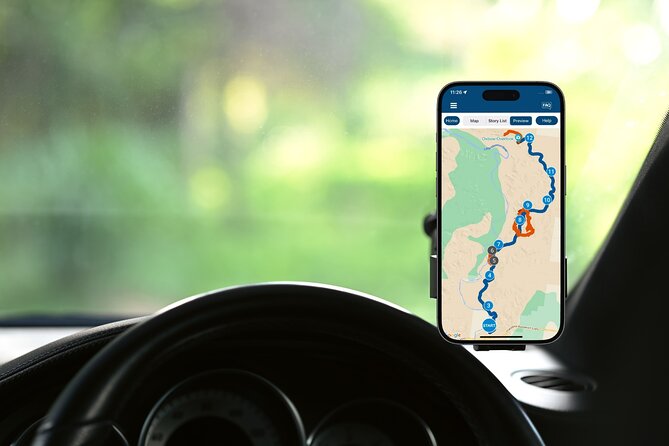
This is not a bus tour, ranger walk, or meeting-point activity. You drive your own vehicle to the first location, open the Action Tour Guide app, and let GPS trigger the narration as you move along the route.
The app supplies offline maps and audio stories that play automatically near each stop. That makes the experience easy to manage while driving. You can pause for a photo, stop for a trail, skip a story, or take a side excursion without losing the route.
For the best setup, download the tour while you still have a strong connection. The instructions arrive by email and text, along with a password. Search your messages for audio tour if the setup note is hard to find.
Your phone should run iOS 15 or later, Android 9 or later, or use an iPad or tablet with GPS and cellular capability. Apple CarPlay works for audio playback. Android Auto support is still listed as coming soon, so Android users should plan to connect by Bluetooth, USB, or AUX instead.
The tour is designed for the car, but headphones are useful when you leave the vehicle for a walking stop. Keep the app open and follow the planned route at the park speed limit. The audio depends on location, so driving too quickly can make it harder to catch each story.
More Self-Guided Audio Tours in the USA
- Gettysburg Battlefield Self-Guided Driving Audio Tour
★ 4.5 · 910 reviews - Joshua Tree National Park Self-Guided Driving Audio Tour
★ 4.5 · 762 reviews - Ultimate Acadia National Park Self-Guided Driving Audio Tour
★ 4.0 · 521 reviews
Start with Little Mo Nature Trail
Little Mo Nature Trail is a sensible opening stop. Park near Juniper Campground, leave the car, and take this easy loop to stretch your legs before settling into the scenic drive.
The trail helps you get your bearings in the North Unit. You are not committing to a long hike, and the walk gives you an early feel for the park’s mix of river country, grass, and sculpted badlands.
The tour assigns about 10 minutes to this stop, but you can take longer if you want a relaxed walk. It is also a useful place to test the app, your phone connection to the car, and the audio volume before continuing.
River Bend Overlook delivers the classic view
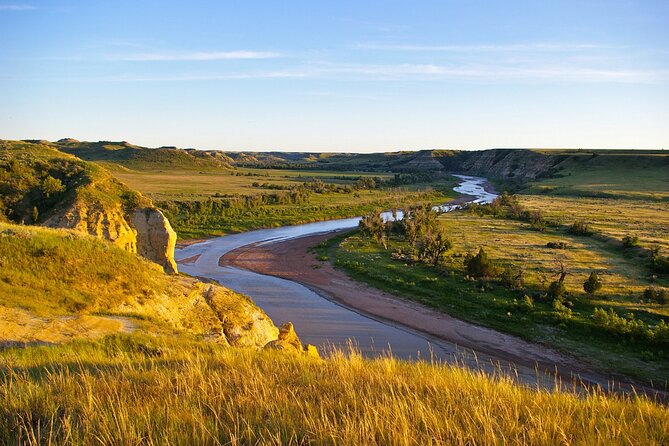
At River Bend Overlook, a short and easy path leads to a historic stone shelter on a butte. From there, the Little Missouri River curves through the rugged terrain below.
This is one of the tour’s most rewarding stops because it combines a quick walk, a bit of park history, and a broad view. The scenery explains why Theodore Roosevelt National Park is best experienced from several overlooks rather than from the car alone.
Give yourself time here for photos. The audio adds context, but the view needs no narration to make its point. If you are short on time, this is one of the stops I would keep.
Cannonball Concretions reveal strange geology
The Cannonball Concretions Pullout is a brief stop with an unusual payoff. Large, round stones sit in the badlands, formed when mineral-rich water cemented sediment into hard spheres.
The pullout is easy to reach and requires only a short walk from the parking area. It is a good example of how this tour adds variety to the drive. Instead of giving you overlook after overlook, it points out a small geological oddity that you might otherwise pass without noticing.
This stop will not fill an hour, and that is the point. It works well as a quick stretch and photo break between larger views.
More Driving Audio Tours in the USA:
- Ultimate Lake Tahoe Self-Guided Driving Audio Tour
★ 4.5 · 435 reviews - Scenic Newport, RI Self-Guided Driving Audio Tour
★ 4.5 · 325 reviews - Arches National Park Self-Guided Driving Audio Tour
★ 4.5 · 288 reviews - Yellowstone National Park Self-Guided Driving Audio Tour
★ 4.5 · 249 reviews
Stop at the North Unit Visitor Center first if you need planning help
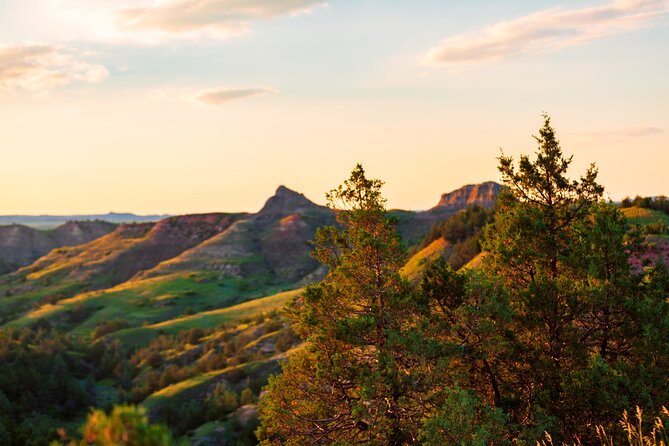
The North Unit Visitor Center offers a useful reset before or during the drive. Park rangers can help with trip planning and backcountry permits, and the building includes a bookstore and a film about the park’s story and natural features.
The center is especially helpful if you are considering one of the longer hikes on the route. Ask about current conditions before committing to Caprock Coulee, Buckhorn, or the road farther toward Oxbow Overlook.
The audio tour does not replace park staff. It gives you a steady narrative while driving, but rangers are the better source for current closures, permits, and conditions.
Caprock Coulee Loop is a serious add-on
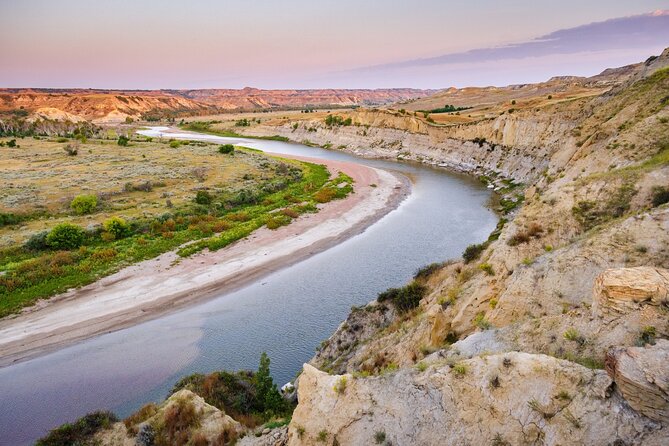
The Caprock Coulee Loop covers 4.4 miles and is rated moderate. It crosses badlands and grassy buttes, with views into the Little Missouri River Valley.
This is not a quick stop in the same way as River Bend Overlook. Bring water and wear sturdy shoes. If you are planning to hike it, treat the audio tour as part of a full day rather than a short drive.
The reward is a closer look at the park’s terrain. From the car, you see broad forms and distant ridges. On foot, you get a better sense of the changes in elevation and the mix of grass and exposed earth.
Do not feel pressured to complete every trail simply because the app mentions it. The tour gives you options, not a checklist.
Buckhorn Trail suits hikers with extra time
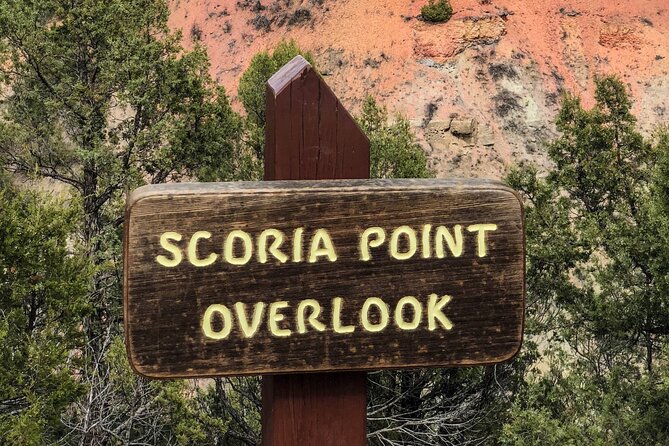
Buckhorn Trail is a 10.8-mile loop through grasslands, rock formations, and views toward the Little Missouri River. It is moderately challenging and much longer than the other walking stops.
The possibility of seeing bison adds interest, but you must keep a safe distance. The audio tour can point you toward the trail, yet it cannot turn a long hike into a short one. Carry water, allow plenty of time, and check with the visitor center before setting out.
For most people using this product as a driving tour, Buckhorn is a separate activity. It is a good choice for an active day, not a casual stop between overlooks.
Bentonitic Clay Overlook explains the park’s past
Bentonitic Clay Overlook adds science to the route. From here, you can see blue-black clay layers formed from volcanic ash, with the layers capping the plateau below.
This stop helps explain why the badlands look so unusual. Erosion has exposed different materials, colors, and shapes, giving the terrain its striped and sculpted appearance.
The tour allows roughly 10 minutes here. That is enough for a look and the accompanying audio, though you may want longer if you enjoy geology or photography.
Badlands Overlook brings bison into the story
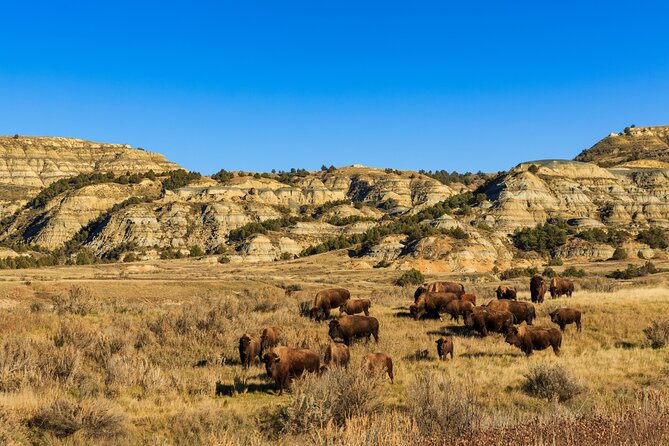
Badlands Overlook focuses on bison and their return to the Great Plains. The park’s reintroduction program created a place where these large animals can roam the grasslands.
Bison sightings are never guaranteed, so keep your eyes open and use patience. If you see them, stay well back. These animals look calm, but they are wild and powerful.
This stop works best as a reminder that the park is more than colored rock and river bends. The grasslands support a living system, and bison are one of its most memorable parts.
Elkhorn Ranch Site connects the park to Roosevelt
The Elkhorn Ranch Site Trail is an accessible 0.7-mile walk to the foundation of Theodore Roosevelt’s ranch cabin. It is a modest physical remnant, but the setting gives the stop its power.
Download the GPS map before arriving because cell service can be unreliable. That advice matters for any stop in the park, but especially for a location where you do not want to lose the route or app instructions.
This is a good place to slow down. The tour links the scenery to Roosevelt’s time in the Dakota Territory without requiring a long hike.
Oxbow Overlook is the North Unit finale
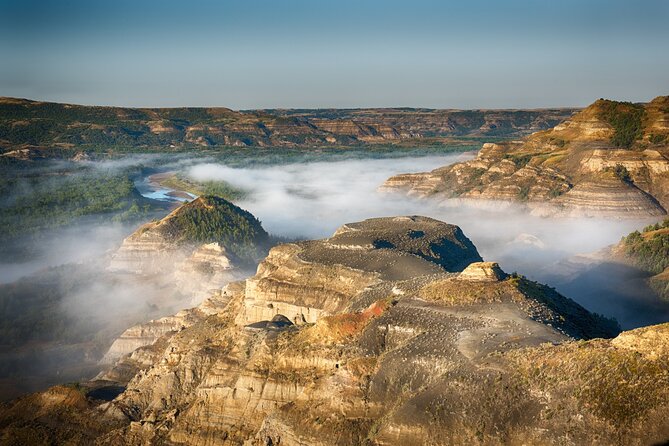
Oxbow Overlook marks the final stop on the North Unit Scenic Drive. The Little Missouri River makes a dramatic 180-degree bend below, cutting through the badlands.
Informational signs explain how the river’s course changes over time. The view is broad, quiet, and highly rewarding after the drive.
If you reach Oxbow near the end of the day, allow time to stand away from the car and take in the scale of the scene. This is not just a photo stop. It is the point where the route’s geology, river, grassland, and history come together.
Oil Well Road adds a modern North Dakota chapter
Oil Well Road shifts the subject from old ranches and ancient rock to recent economic change. The Bakken Formation discovery in 2006 helped turn North Dakota into a major oil-producing state.
Horizontal drilling and fracking opened large reserves, bringing jobs and revenue. The boom peaked around 2012 and left a visible mark on the state’s economy and surroundings.
This story gives the tour a wider frame. You are not only hearing about a national park frozen in the past. You are also seeing how modern industry has shaped the region beyond the park boundary.
Price, park fees, and overall value
The tour costs $24.99 per group of up to four. That is a strong price if you have a full car, since the cost is not multiplied by the number of people.
You must also pay the Theodore Roosevelt National Park entrance fee, listed as $30 per booking. Park passes are not included. That makes the total cost higher than the audio price alone, but the audio remains reasonable for a private, flexible experience.
A traditional guided tour usually follows a fixed schedule. Here, you control the pace and can use the product on multiple days or future trips. The access is listed as lifetime with no expiry, which gives the purchase more value if you plan to return.
The tradeoff is that you provide the vehicle, phone, data connection for setup, and technical patience. If you prefer a guide who handles navigation and equipment, this will feel more hands-on than a standard guided excursion.
What I like, and what needs care
The narration is the main strength. It gives the drive purpose without forcing you to stare at a screen. The automatic playback also helps you stay focused on the road and scenery.
The flexibility is just as useful. You can stop for food, pause the tour, skip an attraction, or spend half a day on a trail. One audio tour can also cover different members of your group with different interests.
The clearest weakness is app reliability. One person had the tour stop after the first trailhead, while the provider explained that offline setup should prevent this problem and offered troubleshooting, replacement, or a refund discussion. The practical lesson is simple: download the tour in advance, test it before entering the park, and keep the support contact available.
Road conditions can also affect your plans. A closure affected part of the South Unit route for one user, so check current National Park Service information before you go. The North Unit route described here should still be planned with current park updates in mind.
Who should book this tour?
I would choose this tour if you are driving your own car, want more context than roadside signs provide, and prefer to set your own schedule. It suits couples, families, and small groups because one purchase covers up to four people.
It is also a good fit if you want to visit both the North and South Units at your own pace, since the audio has been used for both areas. Just confirm which version and starting point you need in the app.
I would skip it if you do not want to manage a phone app or if you expect a live guide to answer questions along the way. Hikers should also treat the longer trails as separate outings, not quick additions to a two-hour drive.
Should you book the Theodore Roosevelt audio tour?
Book it if you want an affordable, private way to add stories to a beautiful North Dakota drive. The strongest value comes from the per-car price, offline maps, automatic narration, and no-expiry access.
Prepare properly. Download the tour on strong Wi-Fi, connect your phone before leaving town, bring water for the longer walks, and check park conditions before setting out. If you do those things, the audio tour gives you a useful structure without taking away the quiet, wind, wildlife, and open views that make this park special.
FAQ
How long does the Theodore Roosevelt National Park audio tour take?
The general duration is listed as one to two hours, but the full route is about 29 miles with more than 40 audio stories and is also described as taking two to three hours. Longer hikes and photo stops will add more time.
How much does the tour cost?
The audio tour costs $24.99 per group of up to four people. Theodore Roosevelt National Park admission is separate, and a $30 entrance fee is listed for the park.
Is the park entrance fee included?
No. You must purchase park admission separately, and park passes are not included with the audio tour.
Does the tour work without cell service?
Yes, after you download the tour in strong Wi-Fi or cellular service. The app includes offline maps and audio, but the initial download must happen before you reach an area with weak service.
How do I start the tour?
Download the separate Action Tour Guide app, enter the password sent by email and text, drive to the starting point, and open the tour in the app. The first story should begin automatically when you reach its location.
Can I use the tour more than once?
Yes. The tour is listed as lifetime access with no expiry, so you can pause it, use it over several days, or return to it on another trip.
More National Park Audio Tours in the USA
- Self-Guided GPS Audio E-Bike Tour Hawaii Volcanoes National Park
★ 4.5 · 131 reviews - Shenandoah National Park Self-Guided Driving Audio Tour
★ 4.5 · 109 reviews - Self-Guided Audio Driving Tour in Glacier National Park
★ 4.5 · 101 reviews - Rocky Mountain National Park Self-Guided Driving Audio Tour
★ 4.5 · 92 reviews
Just added around the USA
- Self Guided Driving Audio Tour of Saguaro National Park★ 3.0 · 4 reviews
- Self-Guided Audio Driving Tour of Mount Lemmon★ 5.0 · 4 reviews
- Saguaro National Park Self-Guided Audio Tour★ 3.5 · 11 reviews
- A Self Guided Audio Tour in Tombstone★ 4.0 · 11 reviews
- Catskills Scenic Byway Self-Guided Driving Audio Tour★ 4.0 · 9 reviews
- Big Bend National Park Self Guided Audio Tour Guide★ 5.0 · 12 reviews
- Self-Guided Audio Driving Tour in Catskills Scenic Byway★ 4.5 · 7 reviews
- Shiloh Battlefield Self-Guided Driving Audio Tour★ 4.0 · 9 reviews
Driving Audio Tours, compared.



Ultimate Acadia National Park Self-Guided Driving Audio Tour
Read our review →



Browse the lists this tour appears in