
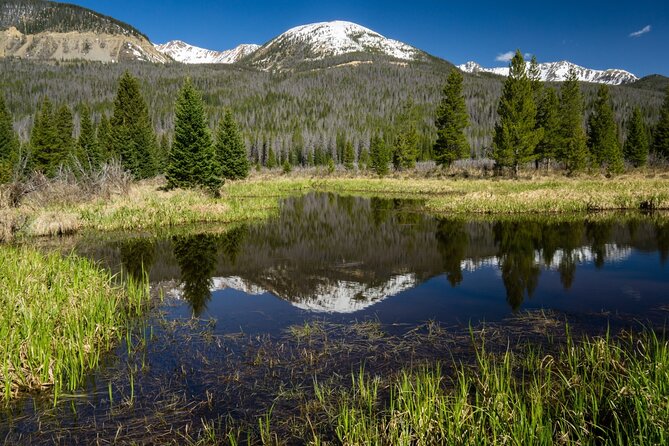
REVIEW · USA AUDIO TOURS
Rocky Mountain National Park Self-Guided Driving Audio Tour
Let the mountains tell their own story. This self-guided drive gives you a flexible way to cross Rocky Mountain National Park without joining a bus or keeping pace with a group. I like the location-triggered audio, which starts stories as you approach overlooks and trailheads, and I like the price: $16.99 covers everyone in a car of up to four people. The main catch is that you still do all the driving, and the tour works best only after you download it correctly.
I also like the offline map and audio, a real help in a park where cell service can vanish. You can stop for photos, hikes, snacks, or a picnic, then resume the route later. But you need to plan around road closures and timed-entry rules, and some people have found that GPS timing or audio playback can lag.
Key points to know before you go
- Over 40 miles and 60 audio stories: The route links major overlooks, trailheads, historic sites, and visitor centers.
- One purchase covers the car: At $16.99 per group of up to four, this can cost far less than a conventional tour.
- Works offline after setup: Download the app and tour while you still have strong Wi-Fi or cellular service.
- Grand Lake and Bear Lake options: The main drive ends near Grand Lake, with a Bear Lake detour covering several famous stops.
- Trail Ridge Road conditions matter: Closures can cut the drive short, especially outside the summer season.
- Park admission is separate: You still need the required park pass and any timed-entry permit.
What this Rocky Mountain audio tour actually does
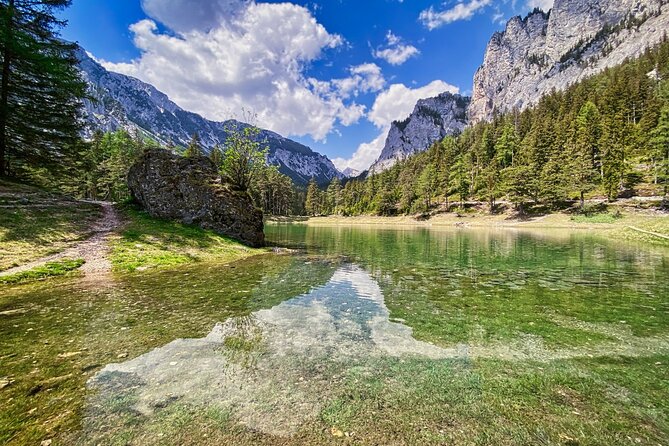
Think of this as a narrator riding in your car, not a guided hike or a ticket into the park. You drive your own vehicle, follow the route, and listen as the app uses your phone’s location to trigger stories.
The full route is more than 40 miles long and includes over 60 audio points. Most people should allow two to four hours for the drive itself, though stops, walks, food, traffic, and photographs can easily turn it into a longer outing. The supplied timing also describes roughly two to three hours for the core tour, so treat the duration as a guide, not a strict schedule.
The route begins and ends at Harbison Meadows Picnic Site near Grand Lake. That makes the tour especially useful if you enter from the west side. If you enter from Estes Park, the audio can also help you cross the park toward Grand Lake, but you need to choose the correct tour direction in the app.
No guide meets you at the starting point. You receive setup instructions and a password by email and text, then download Action’s Tour Guide app separately. Do this before reaching the park. A poor download, or a file saved only to cloud storage, can leave you without the tour once you lose service.
More Self-Guided Audio Tours in the USA
- Gettysburg Battlefield Self-Guided Driving Audio Tour
★ 4.5 · 910 reviews - Joshua Tree National Park Self-Guided Driving Audio Tour
★ 4.5 · 762 reviews - Ultimate Acadia National Park Self-Guided Driving Audio Tour
★ 4.0 · 521 reviews
The practical value of $16.99 per car
The price is the tour’s strongest selling point. One purchase covers a group of up to four people in the same car, so a family or group of friends can split the cost. At $16.99, it is a modest add-on to a national park day, especially compared with paying per person for a bus or private guide.
You are paying for narration, route guidance, offline maps, and the freedom to stop whenever you want. That last point matters in Rocky Mountain National Park. You may need extra time for a trailhead, a crowded parking area, a wildlife sighting, or a sudden weather change. The app does not force you to stay on a tour schedule.
The tradeoff is simple: the driver cannot study the phone while driving. Connect your phone to the car through Bluetooth, USB, or AUX, and let the audio play through the vehicle. Apple CarPlay is supported for audio playback. The app recommends an iPhone with iOS 15 or later, Android 9 or later, or an iPad or tablet with GPS and cellular capability.
Starting near Beaver Meadows and entering the high country
The route introduces Rocky Mountain National Park with an overview of its scenery, wildlife possibilities, and mountain roads. That opening orientation is useful if this is your first visit and you want some context before the big views begin.
Near the Beaver Meadows Visitor Center, you are at the park’s main administrative and visitor hub. This is a sensible place to get information, confirm conditions, and make sure you understand your route. The Deer Mountain Trailhead comes early as well. The trail climbs about 1,000 feet to mountain views, so it is more of a serious hiking option than a quick roadside stop.
The first named stop is Beaver Ponds, reached by an easy boardwalk through quiet wetlands. This is a good reminder that the park is not only about sharp peaks and high overlooks. The boardwalk offers a gentler walk and a chance to see a different type of habitat without committing to a long mountain hike.
Next comes Hidden Valley, a boreal forest area with plants that handle harsh conditions. The audio gives you a short introduction here, and the stop works well as a quick break before the road climbs higher.
Overlooks from Many Parks Curve to Poudre Lake
The middle part of the drive is the scenic heart of the experience. Many Parks Curve gives you views across three mountain meadows, while Rainbow Curve sits near the tree line, where the forest begins to thin out. These stops are easy to appreciate with an audio guide because the narration can point out why the views change as you gain altitude.
At the Ute Trailhead, the tour discusses the Ute people who lived in the Rocky Mountains. At Forest Canyon Overlook, the route rises to a viewpoint around 12,000 feet and introduces the Arapaho people as you look over the canyon and surrounding peaks. These cultural references add useful context, though you should not expect a long interpretive program at every stop.
Lava Cliffs Overlook brings a different subject. The cliffs are identified as about 28 million years old, giving you a quick geological angle on a mountain range that might otherwise seem to be only granite and snow. Gore Range Overlook adds a striking visual detail: the range can take on a deep red color at certain times of day.
The Alpine Visitor Center is one of the most practical stops. It offers snacks and restrooms, and it is identified as the highest-elevation visitor center in a United States national park. At this height, weather can change quickly, so a rest stop is more than a convenience.
Medicine Bow Curve provides another major viewpoint, with the possibility of seeing into Wyoming. Poudre Lake is an alpine lake that freezes completely through in winter. Fairview Curve then looks toward the Never Summer Mountains. You will want to leave time for photographs here, but remember that pull-offs can fill quickly during busy periods.
More Driving Audio Tours in the USA:
- Ultimate Lake Tahoe Self-Guided Driving Audio Tour
★ 4.5 · 435 reviews - Scenic Newport, RI Self-Guided Driving Audio Tour
★ 4.5 · 325 reviews - Arches National Park Self-Guided Driving Audio Tour
★ 4.5 · 288 reviews - Yellowstone National Park Self-Guided Driving Audio Tour
★ 4.5 · 249 reviews
Colorado River Trail and the road toward Grand Lake
The Colorado River Trail section shifts the focus from high overlooks to water and park history. The trail leads to views of the Colorado River, with narration about the river’s surprising past. It is a useful pause after a long sequence of roadside viewpoints.
The Timber Creek Road Camp Barn connects the scenery to the hard work behind the road itself. The route through the park was a major construction project, and this stop gives you a glimpse of that earlier effort.
At the Holzwarth Historic Site, the story moves to human settlement. The property began as a family home and later became one of the country’s early dude ranches, before the area was included in the national park. This is one of the route’s more unusual stops because it shows how tourism existed here before the park took its modern shape.
Hikers can note the Bowen and Baker Trailhead, the beginning of one of the park’s longer trails. The Coyote Valley Trail is a shorter, easier option and includes fishing opportunities. At Onahu Trailhead, the narration introduces the Onahu, adding another Indigenous connection to the Ute and Arapaho stories heard earlier.
The main route concludes in Grand Lake, a practical place to find food, rest, and other services after the drive. Grand Lake is not merely a finish-line marker. It gives you a chance to turn the park visit into a full day rather than a quick pass through.
The Bear Lake detour adds the park’s best-known stops
The Bear Lake detour is important because it covers some of the most familiar places in the park. It also requires careful planning. A timed-entry reservation for the Bear Lake Corridor may be separate from the permit needed for another part of the park, so check the current rules before you drive.
The detour includes Moraine Park Amphitheater, a site tied to the park’s early history. Moraine Park also offers scenic horseback riding, giving you another way to experience the open mountain setting.
Cub Lake Trailhead includes information about the long effects of wildfires. Fern Lake Trailhead is presented as a quieter hiking choice, useful if you want to step away from the busiest areas. These are not just drive-by photo points. The audio helps you understand what each trail offers before you decide how much time to spend.
Near the Odessa Lake and Flattop Mountain junction, Eagle Cliff Mountain gets its name from the golden eagles and bald eagles often seen in the area. Hollowell Park follows, with picnic tables and views toward Mill Creek Basin and Longs Peak. This is an especially good place to stop if you want lunch without leaving the route.
Sprague Lake is praised as a strong sunrise location, but reaching it early is the key. Bierstadt Lake offers another scenic lake and may feel quieter than Sprague Lake. Glacier Gorge Junction leads toward quaking aspens, a hardy tree associated with the park’s mountain environment.
The detour ends at Bear Lake, one of the most recognizable stops in Rocky Mountain National Park. It makes a fitting final photo stop, though it can also be one of the busiest areas. Give yourself time for parking and walking, rather than assuming you can pull in, take one picture, and leave.
How reliable is the automatic audio?
The best part of the app is the automatic triggering. When it works properly, you do not need to keep selecting stops. The narration begins as you approach a point, then guides you toward the next story. Several specific experiences with the tour found that the audio finished before the overlook or pull-off, which meant people could stop without needing to turn around.
That timing depends on following the planned route and driving at the suggested speed. GPS can lag behind your actual position, and some users have had stories start a few hundred feet after reaching a point. Detours may also confuse the sequence.
Audio playback has not been perfect for everyone. Problems have included sound that became distorted, audio that stopped, and stories that needed to be selected manually. The safest approach is to test the app before entering the park, connect it to your car, and confirm that the tour is stored directly on your phone rather than only in the cloud.
You can pause the tour, take a walk, and resume later. You can also skip a stop or replay information. That flexibility is a major advantage over a fixed bus tour, especially if you are traveling with children.
Road conditions and entry rules can change the whole day
This tour is only as useful as the road open in front of you. Trail Ridge Road and Old Fall River Road can close because of winter weather or other conditions. A temporary closure has previously stopped through travel at Rainbow Curve on the east side and the Colorado River Trailhead on the west side.
Check the park’s current conditions before you set out. A closure may leave you with only part of the planned route, but the tour has lifetime access and no expiry, so you can return to it on another trip.
Timed-entry permits are also essential during the stated 2025 peak-season dates. From May 23 through October 13, 2025, permits are required from 9 AM to 2 PM, while Bear Lake Corridor access requires a permit through October 19 from 5 AM to 6 PM. Rules and dates can change, so confirm the current system when booking.
Reservations open monthly on the first day of each month, and same-day spaces are released each evening at 7 PM Mountain time under the stated system. Book early during busy months. If you begin near Grand Lake and later want to use Bear Lake Road, do not assume one entry arrangement covers both sections.
Who will get the most from this tour?
I would choose this for a first-time visitor who wants context but does not want a formal group. It is also a good fit for families, couples, and friends who prefer to stop often and make their own day.
It works particularly well for:
- People driving between Estes Park and Grand Lake
- Families who need flexible breaks
- Visitors who want offline maps in areas without service
- Groups sharing one car
- Drivers who enjoy history, trail information, and scenic viewpoints
I would be more cautious if you want detailed botany, geology, wildlife identification, or long explanations at every stop. The content is strongest as a practical introduction with historical notes and stop-by-stop guidance. One winter user found the narration too brief and wanted more discussion of mountain names, animals, geology, and local detail.
Cancellation is free if you cancel at least 24 hours before the experience start time. Inside that window, no refund is provided.
Should you buy the Rocky Mountain audio tour?
At $16.99 per car, I think this is a sensible buy for most first-time visitors, provided you download it correctly and check road and permit conditions first. The offline map, automatic stories, and freedom to stop give you more structure than driving alone without the cost or schedule of a group tour.
I would skip it only if you already know the park well, prefer to read signs and maps on your own, or expect a detailed naturalist lecture at every viewpoint. For everyone else, it is an inexpensive way to make a long mountain drive more meaningful. Just remember that the app is your guide, not your park pass, weather report, or substitute for checking the road ahead.
FAQ
How much does the Rocky Mountain National Park audio tour cost?
The tour costs $16.99 per group of up to four people. One purchase is enough for everyone riding in the same car.
How long does the tour take?
The drive is generally described as taking about two to four hours. The main route is over 40 miles and may take longer if you stop for walks, food, photos, or sightseeing.
Does the tour work without cell service?
Yes. You must download the app and tour while you have strong Wi-Fi or cellular service. After that, the maps and audio are designed to work offline.
Where does the tour start and end?
The listed start and end point is Harbison Meadows Picnic Site near Grand Lake, Colorado. No guide meets you there because this is a self-guided activity.
Is the park entrance fee included?
No. Park passes are not included. You are also responsible for any required timed-entry permit.
Do I need a timed-entry permit?
Timed-entry permits are required during the stated seasonal periods for parts of Rocky Mountain National Park. Bear Lake Corridor access may require a separate permit, so check current park rules before your visit.
Can I pause the tour during the day?
Yes. You can pause the audio, stop for hikes or meals, take side trips, and resume later. The tour has lifetime access and no expiry.
What phone and car connections are recommended?
The app recommends an iPhone with iOS 15 or later, an Android device with version 9 or later, or a GPS-enabled iPad or tablet with cellular capability. You can connect your phone to the car using Bluetooth, USB, or AUX.
More National Park Audio Tours in the USA
- Self-Guided GPS Audio E-Bike Tour Hawaii Volcanoes National Park
★ 4.5 · 131 reviews - Shenandoah National Park Self-Guided Driving Audio Tour
★ 4.5 · 109 reviews - Self-Guided Audio Driving Tour in Glacier National Park
★ 4.5 · 101 reviews - Self-Guided Audio Driving Tour in Mesa Verde National Park
★ 4.5 · 86 reviews
Just added around the USA
- Self Guided Driving Audio Tour of Saguaro National Park★ 3.0 · 4 reviews
- Self-Guided Audio Driving Tour of Mount Lemmon★ 5.0 · 4 reviews
- Saguaro National Park Self-Guided Audio Tour★ 3.5 · 11 reviews
- A Self Guided Audio Tour in Tombstone★ 4.0 · 11 reviews
- Catskills Scenic Byway Self-Guided Driving Audio Tour★ 4.0 · 9 reviews
- Big Bend National Park Self Guided Audio Tour Guide★ 5.0 · 12 reviews
- Self-Guided Audio Driving Tour in Catskills Scenic Byway★ 4.5 · 7 reviews
- Shiloh Battlefield Self-Guided Driving Audio Tour★ 4.0 · 9 reviews
Driving Audio Tours, compared.

Ultimate Acadia National Park Self-Guided Driving Audio Tour
Read our review →


Browse the lists this tour appears in