

REVIEW · PISA AUDIO TOURS
Pisa Walking Tour with Audio and Written Guide by a Local
Pisa rewards a slow walk. This self-guided route links the city’s station, churches, riverfront streets, university quarter, and famous Field of Miracles through one phone-based guide. I like the very low price of $7.81 and the freedom to pause, skip, or revisit stops at your own speed. I also like the mix of major sights and smaller places, especially Keith Haring’s Tuttomondo mural and the Church of Santa Maria della Spina. The main drawback is clear: you need a smartphone, internet access, and enough confidence to follow a digital map and audio guide without a person leading you.
Plan on four to five hours if you walk the full route and spend time at the paid sights. The Botanical Garden costs another €4, while the Leaning Tower, Baptistery, and Camposanto cost €27 in total. The guide comes with audio and written material in English, Spanish, Italian, German, and French, plus restaurant advice and notes on local history and curiosities.
Key points before you book
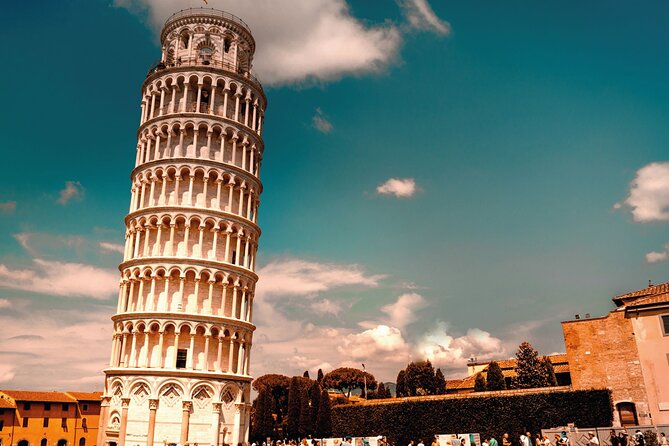
- A €7.81 route covers Pisa’s main sights: The walk starts at Pisa Centrale and finishes at Piazza dei Miracoli.
- Keith Haring’s Tuttomondo mural adds a modern surprise: It gives the route more variety than a standard tower-only visit.
- You control the pace: Stop for food, skip a church, or spend longer at the tower without keeping up with a group.
- Paid admissions are separate: The Botanical Garden costs €4, and the main monument package costs €27.
- A phone is essential: You need internet access to use the interactive map, audio, and written guide.
- It suits independent walkers best: It is less suitable if you want a live guide, personal storytelling, or help with every turn.
Starting at Pisa Centrale and finding your bearings
The route begins at Pisa Centrale, on Piazza della Stazione. This is a practical starting point because you can arrive by train and begin sightseeing without arranging a taxi or meeting a guide across town.
From the station, the route heads toward Piazza Vittorio Emanuele II. The square was reorganized in the 19th century, when older medieval walls and the San Gilio gate were removed. That change helps you see Pisa as a layered city, not just a place built around one famous tower.
The square itself is a short opening stop, about 10 minutes, and admission is free. I would use this point to check your phone battery, open the map, and make sure the audio works before moving on. The guide is delivered through your own device, so a portable charger would be sensible, although one is not specifically included.
Because this is a self-guided experience, you do not need to arrive at a precise tour departure time. The stated operating hours run from midnight to 11:30 p.m. daily during the available booking period. That gives you wide flexibility, though the best time to visit individual churches and museums depends on their own opening hours.
More Audio Walking Tours in Italy
- Florence: 2.5 hour Audio Guided Walking Tour led by Host
★ 4.6 · 293 reviews - Verona Walking Tour with Audio and Written Guide by a Local
★ 4.5 · 157 reviews - Bologna Walking Tour with Audio and Written Guide
★ 4.5 · 132 reviews
Keith Haring’s Tuttomondo mural and Santa Maria del Carmine
The next stop is one of Pisa’s most appealing surprises: Tuttomondo, a large mural by Keith Haring created in 1989. Haring came to Pisa after meeting a young Pisan named Piergiorgio Castellani in New York. Castellani invited him to create a work in the city, and the result is now one of Pisa’s most recognizable pieces of modern public art.
You only need about 10 minutes here, but the stop matters because it breaks up the steady stream of medieval and Romanesque buildings. The mural also gives the guide a local connection. It is not simply a famous artwork dropped into a sightseeing route. Its story is tied to a personal meeting between a Pisan and an American artist.
Next comes the Church of Santa Maria del Carmine, with about 15 minutes for a quick visit. Built between 1324 and 1326, it was one of the earliest Carmelite churches in Europe. The guide places the building within Pisa’s religious history without asking you to spend a long time inside.
This part of the route works well for visitors who want more than the usual tower photograph. You get a public artwork, a medieval church, and a sense of how Pisa’s streets change as you walk away from the station.
The Arno and the small Church of Santa Maria della Spina
The route then reaches the Arno and the small Church of Santa Maria della Spina. This church was built in 1230 beside the river, near the Ponte Novo, an important bridge that once connected Via Santa Maria and Via Sant’ Antonio.
The bridge was destroyed in the 15th century and never rebuilt. That detail makes the church’s setting easier to understand. You are looking at a building that once sat beside a key crossing, not an isolated monument placed along the water by chance.
The supplied route information does not give a precise visit time for Santa Maria della Spina, so you should treat it as a brief exterior or quick-stop visit unless the building is open when you pass. Its Pisan Gothic design is delicate compared with the grand buildings at Piazza dei Miracoli.
This is one of the walk’s quieter moments. The river offers a change of pace, and the church helps connect Pisa’s religious buildings with its old transport routes. If you are walking in warm weather, the river section can also provide a useful pause before the busier central streets.
Borgo Stretto, where Pisa feels more lived-in
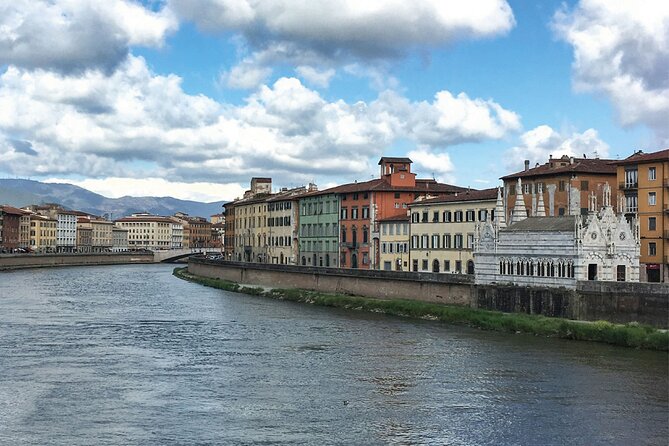
After the river, you enter Borgo Stretto, often shortened by locals to Borgo. Allow about 20 minutes here. This is one of Pisa’s busiest streets, lined with arcades, shops, and historic buildings.
Borgo Stretto is useful because it shows the city as a place where people live, shop, and meet. Piazza dei Miracoli is the great draw, but streets like this explain why Pisa is more than a monument complex. The arcades and street pattern give you a better sense of the old city center.
The route is still free at this stage, so you can spend your money on a coffee, snack, or meal rather than paying for every stop. The guide also includes suggestions for local restaurants serving authentic food. Since no restaurant names are provided, use those tips as a starting point and check the map and opening hours as you walk.
For a family, Borgo Stretto is a useful place to pause. You can choose what to eat, slow down, and decide how much energy you want to save for the tower. One family outing used the self-guided format to set its own pace and organize time around a scheduled tower visit. That is exactly where this format has an advantage over a fixed walking group.
Same place, a different route to walk:
- Rome: Pantheon Fast-Track Ticket and Official Audioguide
★ 4.5 · 27,353 reviews - Rome: Colosseum & Forum with Audio Guide App -Optional Arena
★ 4.2 · 24,770 reviews - Florence: Timed Entry to Michelangelo’s David + Audio App
★ 4.6 · 19,496 reviews - Rome: City Sightseeing Hop-on Hop-off Bus with Audioguide
★ 4.0 · 16,045 reviews
Piazza dei Cavalieri and Pisa’s university side
Piazza dei Cavalieri comes next, with about 20 minutes suggested. In the Middle Ages, it was called Piazza delle Sette Vie because seven streets met there. The square once held the Palazzo degli Anziani and the Torre della Muda, where eagles were kept during the moulting season.
Those older buildings, along with the former Palazzotto di Giustizia, now form the Palazzo dell’Orologio. The square gives you a compact lesson in how civic buildings change function over time.
I especially like this stop because it shifts attention away from the usual Pisa image. The square is associated with the city’s political and institutional past, and its architecture feels more formal than the shopping streets. It also prepares you for the university and scientific side of Pisa, which becomes clearer at the Botanical Garden.
The guide calls for 20 minutes, but you can linger if you enjoy architecture. Since the tour is not led by a person, you will need to decide how much detail you want. The written material is useful here because you can read at your own pace instead of trying to hear a guide while standing in an open square.
The University of Pisa Botanical Garden for €4
The Orto e Museo Botanico is the first optional paid stop. Admission costs €4, and the suggested visit lasts about 45 minutes.
The garden and museum belong to the University of Pisa’s university museum system and are described as the oldest university botanical garden in the world. That gives this stop real weight, but you should know what kind of visit it is. This is a didactic and scientific site, not simply a decorative park for a quick photo.
If you enjoy plants, science, university history, or quieter museums, the €4 fee is reasonable. It also gives the walking route a welcome change from churches and public squares. If your time in Pisa is short, though, this is the easiest paid stop to skip, especially if you already plan to pay for the main monuments.
The 45-minute estimate matters. Add the Botanical Garden and the full walk can reach five hours or more once you include food, photos, and waiting. If you are visiting Pisa during a cruise stop or a tight day trip, check your return schedule before going inside.
Piazza dei Miracoli and the Leaning Tower

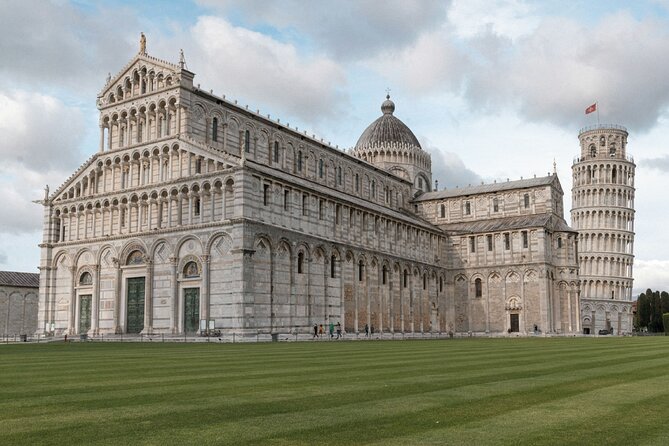
The route finishes in Piazza dei Miracoli, the Field of Miracles, a UNESCO World Heritage site since 1987. The name comes from poet Gabriele D’Annunzio, who used it for this remarkable group of buildings.
The suggested visit to the square itself is 20 minutes and free. That is enough for an introduction, but not enough for a relaxed visit to every monument. The square is the natural place to slow down and take stock of what you have seen across the city.
The Leaning Tower receives about 30 minutes in the route. Construction took 177 years in three phases, and the tower was designed as the bell tower for the nearby cathedral. The short audio explanation helps you see it as part of a larger religious complex rather than a separate novelty.
Entry to the tower costs €27 when purchased as part of the monument admission described here. That amount also covers the Baptistery and Camposanto. The tower ticket is not included in the $7.81 guide price.
A practical point matters here: the stairway is narrow, and bags are not allowed inside the tower. A locker is available with the tower ticket, so plan to store your bag before climbing. A family using this arrangement found it useful to schedule tower time and wait nearby at the restaurants around the square.
The guide itself does not replace the tower admission or guarantee a timed entry. You need to handle the monument ticket separately. If climbing is important to you, allow enough time for the scheduled visit and the bag-storage process.
Baptistery, Cathedral, and Camposanto
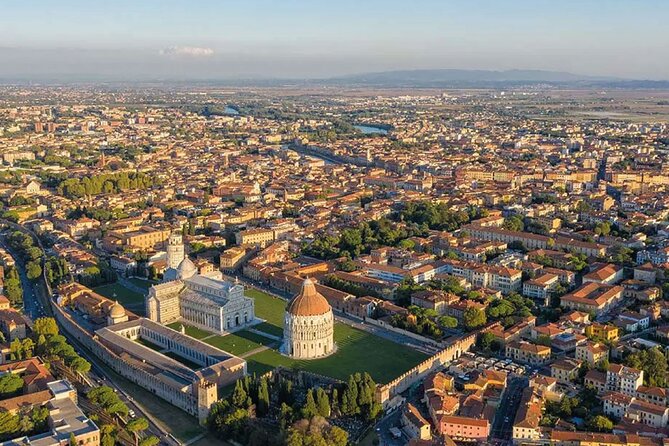
The Baptistery of San Giovanni is the largest baptistery in Italy, with construction beginning in 1152 under the architect Diotislavi. The route gives it about 25 minutes.
From the outside, its round form and detailed stonework make it an essential part of the square’s visual balance. The guide also points you toward the interior, which is described as worth seeing. Since the Baptistery shares the €27 monument cost with the tower and Camposanto, it is a good addition if you are already paying for the package.
Pisa Cathedral receives another 25 minutes. Designed by Buscheto in 1064, it is a key example of Pisan Romanesque architecture. The building reflects several cultural and artistic influences, which helps explain why the cathedral looks more varied than a single-style church.
The itinerary lists cathedral admission as free, while the €27 package includes the tower, Camposanto, and Baptistery. Check the current entry arrangement at the time of your visit, but you should not assume the basic walking tour pays for any monument entry.
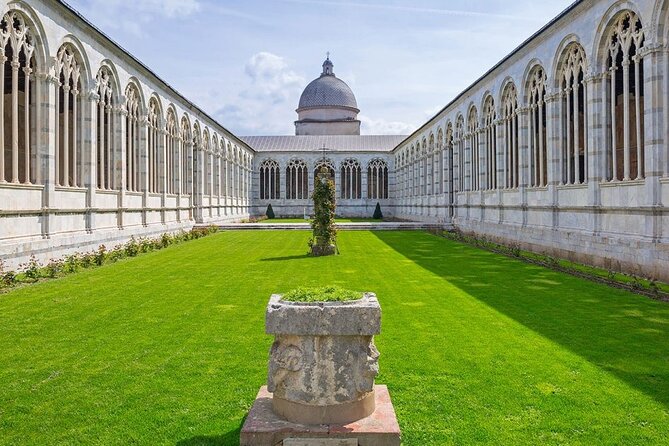
Finally, the Camposanto takes about 25 minutes. This monumental cemetery began in 1277 and is enclosed by marble walls around a cloister-like interior. It is a quieter and more reflective stop than the tower, and it rewards visitors who want to understand the full religious complex.
The three paid monuments together can add close to 80 minutes of visiting time, before lines or timed entry. If you want to see all of them carefully, the full four to five hour estimate is realistic only if you keep moving through the earlier stops.
What the phone-based format feels like
The guide includes audio, written explanations, an interactive map, photographs, monument advice, historical notes, curiosities, and food suggestions. Audio and text are available in English, Spanish, Italian, German, and French.
You can listen through the phone speaker or use headphones. Headphones are better if you want to hear clearly in a busy street, but you need to bring your own because they are not listed as included.
The interactive map is designed to make the route easy to follow, and the path is described as safe with accurate pictures. Still, one person needed Google Maps alongside the guide to locate some places. I would treat the built-in map as your main tool, but keep Google Maps available if you have trouble matching the street view to the instructions.
The format is easy to share among a group, which helps keep the cost low. You are not paying several times for a live guide, and the total price is modest even after adding the optional admissions. Customer support has also been described as prompt and clear when help with instructions was needed.
The limitation is just as important. This is not a person walking beside you, answering questions, adjusting the route, or helping an older family member with the technology. It works best if you are comfortable with apps and can walk independently.
Price, timing, and who gets the best value
At $7.81 per person, the guide offers good value for an independent visit. The price covers the digital route and its audio and written content, not entrance to the paid sights.
A realistic budget looks like this:
- Digital walking guide: $7.81 per person
- Botanical Garden: €4, optional
- Leaning Tower, Baptistery, and Camposanto: €27, optional package
- Cathedral: listed as free
The strongest value comes when you want structure but do not need a live guide. You get a planned path from the station to the square, useful context at each stop, and the freedom to set your own timing.
I would be more cautious if you are traveling with older relatives who dislike phone-based tours. One poor experience came from not realizing that the entire visit depended on a personal device. That is not a minor detail. Downloading or opening the guide, keeping your phone charged, and using headphones all become part of the sightseeing day.
The maximum group size is listed as 104, but that does not mean you will be placed in a traditional group of 104 people. The experience is self-guided, so the large number mainly reflects the product’s booking capacity rather than a live walking party.
Free cancellation is available up to 24 hours before the local start time. Inside that window, the payment is not refunded and changes are not accepted.
Should you book this Pisa walking tour?
Book it if you want a cheap, flexible route that covers far more than the Leaning Tower. It is especially useful for a train arrival, a family day with different interests, or a short visit when you want the city arranged into a sensible walking order.
I would choose it for the Tuttomondo mural, Borgo Stretto, Piazza dei Cavalieri, and the clear route to Piazza dei Miracoli. I would also choose it if you like stopping for food or deciding on the day whether to pay for the Botanical Garden and monument package.
Skip it if you want a live human guide, personal help with mobility, or a fully offline experience. You should also think twice if your phone connection is unreliable or if nobody in your group feels comfortable navigating with an app.
For independent visitors who can walk, listen, and read from a phone, this is a practical way to see Pisa at a small cost. Add the €27 monument package only if the tower, Baptistery, and Camposanto are priorities, and leave enough time for the scheduled tower visit and narrow stairway.
FAQ
How much does the Pisa self-guided tour cost?
The digital walking tour costs $7.81 per person. Admission to the optional sights is separate.
How long does the walking tour take?
The estimated duration is four to five hours. Your total time will be longer if you visit the Botanical Garden and all the paid monuments or stop for food.
Where does the tour start and finish?
It starts at Pisa Centrale on Piazza della Stazione and finishes at Piazza dei Miracoli. Since it is self-guided, you can also begin and end at the starting point.
What languages are available?
The audio guide and written guide are available in English, Spanish, Italian, German, and French.
Do I need a smartphone and internet access?
Yes. You need a smartphone with an internet connection to use the digital guide, map, audio, and written material. You can listen through the phone speaker or your own headphones.
Are entrance tickets included?
No. The Botanical Garden costs €4. The Leaning Tower, Baptistery, and Camposanto cost €27 in total. The route lists Pisa Cathedral as free, and the main Piazza dei Miracoli visit is also free.
Can I cancel for a refund?
Yes, if you cancel at least 24 hours before the experience start time. Cancellations or changes made within 24 hours are not refunded or accepted.
Just added around Italy
- Torino Walking Tour with Audio and Written Guide by a Local★ 4.5 · 35 reviews
- Medieval Canals and Fountains: A Treviso Self-Guided Audio Tour★ 4.5 · 4 reviews
- Trapani Walking Tour with Audio and Written Guide by a Local★ 4.0 · 8 reviews
- Trento Walking Tour with Audio and Written Guide★ 4.5 · 11 reviews
- Sicily: Selinunte Park Entry Ticket & Sicily Digital Audio Guide★ 4.5 · 4 reviews
- Taormina Walking Tour with Audio and Written Guide by a Local★ 4.5 · 41 reviews
- Taranto Walking Tour with Audio and Written Guide by a Local★ 5.0 · 5 reviews
- Siracusa Walking Tour with Audio and Written Guide by a Local★ 5.0 · 59 reviews
Walking Tours, compared.
City Monuments Guided Walking Tour with Audio Guide
Read our review →

Self Guided Classic Freedom Trail Location Aware (GPS) Walking Audio Tour
Read our review →
Self-Guided Historical Walking Tour (Audio Guide)
Read our review →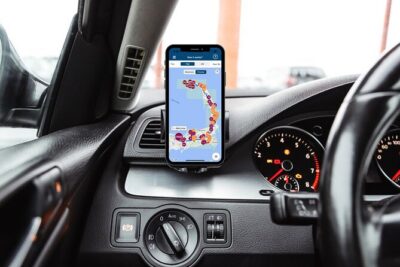
Cape Cod & Provincetown Self-Guided Driving & Walking Audio Tour
Read our review →
Verona Walking Tour with Audio and Written Guide by a Local
Read our review →
Royal Walking Tour and Buckingham Palace Audio Tour
Read our review →
Bologna Walking Tour with Audio and Written Guide
Read our review →Browse the lists this tour appears in