
REVIEW · USA AUDIO TOURS
Olympic National Park Self-Guided Driving Audio Tour
Olympic National Park rewards a slow road trip. This self-guided audio tour links Port Angeles, the Elwha Valley, Lake Crescent, Sol Duc, Hurricane Ridge, Rialto Beach, and the Hoh Rainforest with location-triggered stories. I like the hands-free GPS narration and the freedom to stop for photos, walks, or snacks without keeping up with a group. I also like the price: $16.99 covers up to four people in one car. The main catch is that the advertised route mixes the core drive with bonus sections, so seeing everything can take far longer than five hours.
The tour is at its best when you download it before leaving strong Wi-Fi, connect your phone to the car stereo, and treat it as a helpful companion rather than a full live guide. The narration has a pleasant voice and clear directions, but some stories are brief, and GPS-triggered stops may not always point out a turn or viewpoint as clearly as you want.
Key points to know before you go
- One price covers the car: At $16.99 for a group of up to four, this is far cheaper than hiring a private guide.
- The core route begins in Port Angeles: The main drive covers more than 43 miles and includes over 33 audio stories.
- Download before entering the park: The app is designed to work offline, but setup must happen while you have strong Wi-Fi or cellular service.
- The itinerary includes bonus areas: Hoh Rainforest, Rialto Beach, Ruby Beach, and Hurricane Ridge add major detours and should not be treated as quick side stops.
- The tour is flexible: You can pause, restart, skip stories, and use it over multiple days with lifetime access and no expiry.
- Expect a self-guided experience: No guide meets you at the Visitor Center, and no park employee will manage the route.
What this Olympic National Park audio tour really covers
Olympic National Park is not one compact park with a single scenic loop. It spreads across the Olympic Peninsula and includes Pacific shoreline, alpine country, temperate rainforest, subalpine meadows, and drier forests on the east side.
That geography matters. You cannot simply drive from one end to the other in a couple of hours and see it all. The main audio route focuses on the Port Angeles side, the Elwha Valley, Lake Sutherland, Lake Crescent, Marymere Falls, Meldrim Point, and Sol Duc Valley. Extra audio content reaches farther west and south, including Forks, the Hoh Rainforest, Rialto Beach, Ruby Beach, and Hurricane Ridge.
The advertised driving portion takes about two to three hours without counting extended stops. The overall experience is commonly estimated at five to six hours, but completing the main route plus the bonus areas can take much longer. One especially ambitious day can stretch to roughly 13 hours if you circle much of the peninsula by car.
I would plan this as a flexible park companion, not as a timed attraction. Give yourself room for traffic, short walks, weather changes, photo stops, and the possibility that one scenic area deserves more time than expected.
More Self-Guided Audio Tours in the USA
- Gettysburg Battlefield Self-Guided Driving Audio Tour
★ 4.5 · 910 reviews - Joshua Tree National Park Self-Guided Driving Audio Tour
★ 4.5 · 762 reviews - Ultimate Acadia National Park Self-Guided Driving Audio Tour
★ 4.0 · 521 reviews
Starting at the Olympic National Park Visitor Center
The tour begins at the Olympic National Park Visitor Center, at 3002 Mount Angeles Road in Port Angeles. This is a sensible starting point because it puts you close to the park’s eastern gateway and the route toward the Elwha Valley.
The opening stories introduce the park’s three major environments: alpine meadows and subalpine forest, temperate rainforest, and the rugged Pacific coast. That broad introduction helps you understand why Olympic feels less like one park and more like several different parks spread across a peninsula.
Allow about 30 minutes here, though the audio portion itself may not require that long. The Visitor Center is also the place to confirm your park plans and make sure your phone, car connection, and downloaded tour are ready.
The tour does not include park admission. You need a valid park pass separately, and that cost should be added to your trip budget.
Madison Falls and the Elwha Valley
The first major stop is Madison Falls Trailhead, near the Elwha River west of Port Angeles. The walk to the falls is less than 100 meters on a paved, wheelchair-accessible trail, making it one of the easiest stops on the route.
Madison Creek Falls drops about 50 feet in a narrow horsetail shape. A higher fall exists above it, but it is not accessible. You can visit this stop without committing to a strenuous hike, which makes it useful for families or anyone trying to fit several park areas into one day.
The suggested stop time is about 30 minutes. That is enough for the short walk, a look at the falls, and a quick listen to the nearby audio story.
From there, the route continues through the Elwha River area. The Elwha runs for about 45 miles from the Olympic Mountains to the Strait of Juan de Fuca, with much of its course inside the national park. The river is central to understanding this part of Olympic, and the audio commentary connects the scenery with the area’s environmental story.
Glines Canyon Dam Overlook and the Elwha story
The Glines Canyon Dam Overlook brings the Elwha’s human and natural history into sharper focus. The former dam, also known as the Upper Elwha Dam, was built in 1927 and rose 210 feet above the river.
You should allow about 45 minutes here. The stop is less about a quick photograph and more about seeing how a large structure once occupied this river corridor. The audio adds context as you move through the valley, giving the drive a clear sense of purpose.
This is one of the stronger parts of the tour for anyone who likes stories about conservation, engineering, and changing uses of public land. The commentary is not always lengthy, so I would use the stop as a prompt to look closely at the river corridor rather than waiting for a long lecture.
More Driving Audio Tours in the USA:
- Ultimate Lake Tahoe Self-Guided Driving Audio Tour
★ 4.5 · 435 reviews - Scenic Newport, RI Self-Guided Driving Audio Tour
★ 4.5 · 325 reviews - Arches National Park Self-Guided Driving Audio Tour
★ 4.5 · 288 reviews - Yellowstone National Park Self-Guided Driving Audio Tour
★ 4.5 · 249 reviews
Lake Sutherland, Lake Crescent, and Marymere Falls
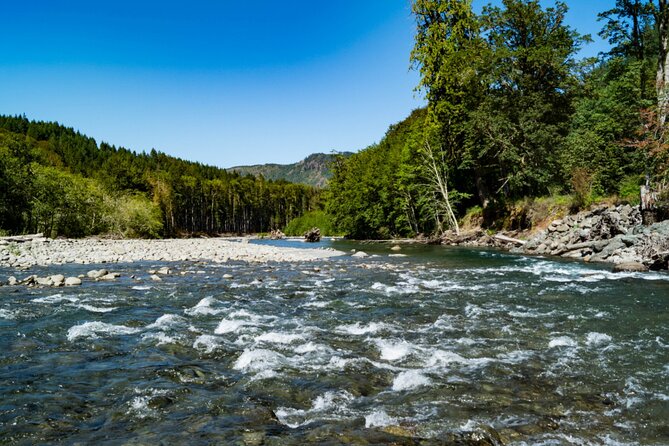
The drive then reaches Lake Sutherland, about 17 miles west of Port Angeles and just east of Lake Crescent. Lake Sutherland drains into Indian Creek, which joins the Elwha River.
The suggested time here is about 50 minutes. That gives you room for a scenic pause and a little breathing space between the Elwha Valley and Lake Crescent. The audio helps you notice the relationship between the lakes and the surrounding waterways rather than treating them as unrelated viewpoints.
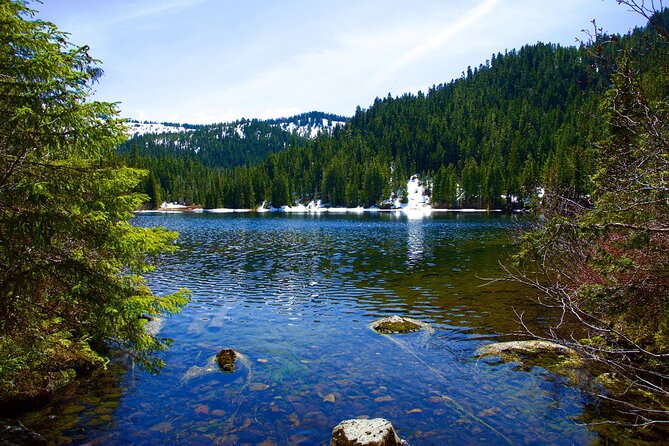
Lake Crescent is one of the key scenic sections of the route. It sits entirely within Olympic National Park, near U.S. 101 and the small community of Piedmont. The lake’s position makes it a natural base for short walks and longer excursions.
Marymere Falls Trailhead is next. The listed audio stop is brief, about 15 minutes, but that does not mean the area deserves only 15 minutes if you plan to walk. Marymere Falls is near Lake Crescent and gives you a chance to leave the car for a forest outing.
The app can be helpful here because it keeps the route moving without requiring you to handle the phone at every turn. Still, you need to watch road signs and parking conditions yourself. GPS audio is an aid, not a replacement for normal driving attention.
Meldrim Point and the turn toward Sol Duc
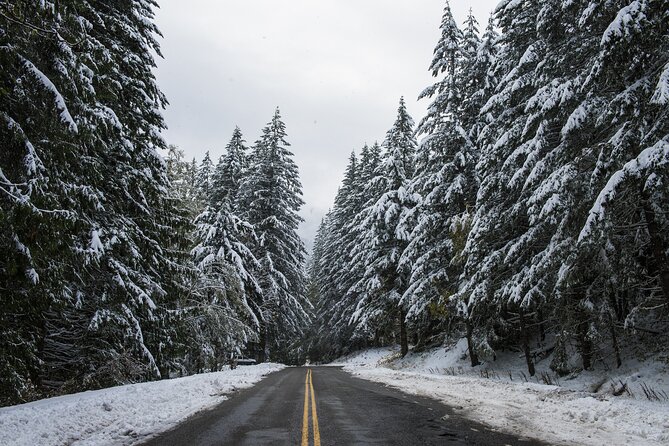
Meldrim Point is another short stop near Lake Crescent, close to Ovington. The suggested time is about 15 minutes, making it a quick viewpoint rather than a major hike.
After Lake Crescent, the tour continues toward Sol Duc Valley in the northwest part of the park. The listed Sol Duc audio stop is also about 15 minutes, but the valley can serve as a gateway to more walking and outdoor time.
This is where careful planning becomes important. Some of the extra audio content activates through the route, and skipping Sol Duc can make it harder to locate the Hoh Rainforest portion later. If you have limited time, decide in advance which sections matter most. Do not assume you can simply skip ahead and have every bonus route appear exactly where you want it.
The official meeting point is listed as Sol Duc Trailhead on Sol Duc Road, but this is a self-guided activity. Nobody meets you there. You open the Action Tour Guide app, choose the appropriate route, and let the GPS trigger the stories.
The western bonus route: Forks, Bogachiel, and the Hoh Rainforest
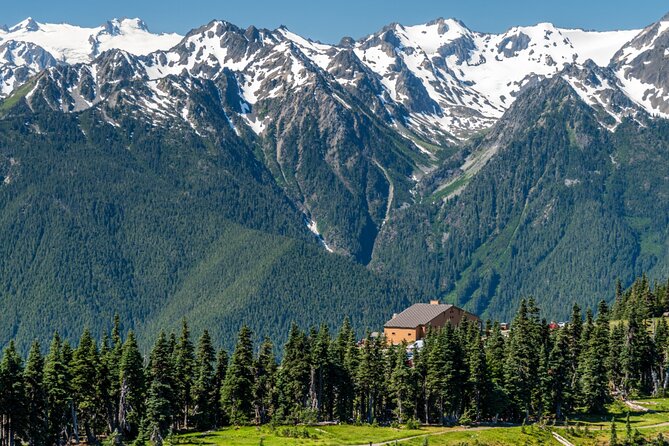
The western content takes you toward Forks and the Pacific side of the peninsula. It includes the Forks Timber Museum, a small museum devoted to regional forestry and located near the local tourist office.
Bogachiel State Park lies four miles south of Forks on Highway 101. The 127-acre recreation area follows the Bogachiel River and adds another possible pause for people who want time beside the water.
The Hoh Rainforest is the major draw in this section. It contains about 24 miles of low-elevation forest along the Hoh River, ranging from roughly 394 to 2,493 feet in elevation. Glaciers helped shape the Hoh River valley thousands of years ago.
The Hoh content is best treated as its own outing, not a quick audio stop during a busy loop. You will get more from it if you leave enough time for the forest trails and accept that this detour changes the shape of your day. The route includes repeated Hoh Rainforest material in the supplied stop information, so check the app carefully and avoid assuming each entry represents a separate major attraction.
This section also exposes one limitation of the product. The audio may give you a pleasant introduction, but it cannot answer every question or provide the amount of local detail a live guide might offer. If you want a full naturalist talk, you may find the short stories too light.
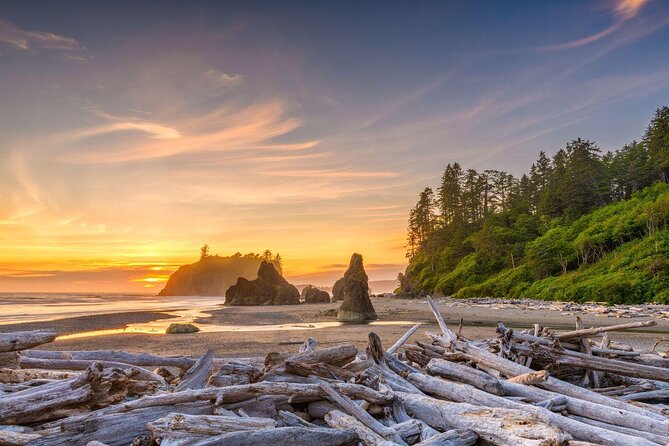
Rialto Beach and Ruby Beach
Rialto Beach is included in the western coastal content. It sits on the Pacific Ocean and gives you a very different view of Olympic from the lakes and forests.
The coastal section is especially useful because it reminds you that the park is not only about trees and mountains. Shoreline stops, changing weather, driftwood, and sea stacks create a more rugged setting. You should build in extra time for walking and photos rather than treating the beach as a drive-by viewpoint.
Ruby Beach is known for its large amount of driftwood and its many sea stacks. Those features make it visually distinctive, but they also mean you should allow time to move around on foot and choose a safe place to explore.
The coastal audio is described as less substantial than the main route. I would use it for orientation and context, then let the beach itself do most of the talking. The strongest part of these stops is the physical setting, not the length of the narration.
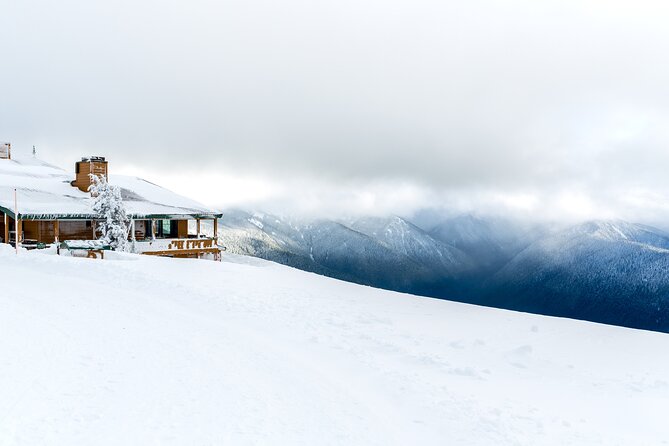
Hurricane Ridge and the alpine side of Olympic
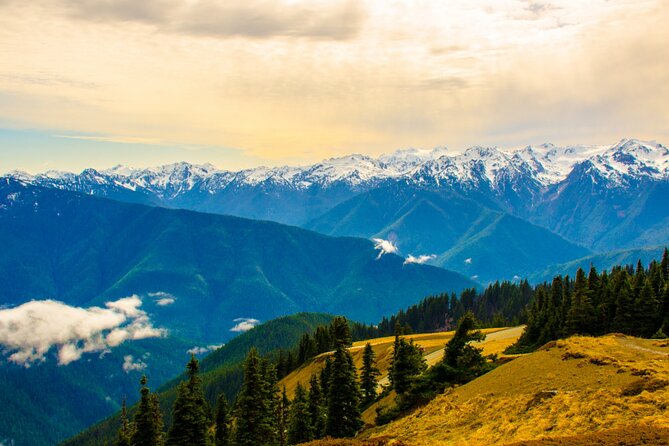
Hurricane Ridge offers the park’s high-country contrast. The area is mountainous and includes viewpoints, wildlife, wildflowers, and short alpine hikes.
Several bonus stories focus on walks with broad views and rewarding climbs. One is described as a vigorous hike, while another is a short family outing with expansive views of the Olympic Mountains. The exact time depends on which trail or viewpoint you choose, so do not squeeze Hurricane Ridge into the final hour of a packed peninsula loop.
Hurricane Ridge Road is also presented as an essential viewpoint drive. Some people may enjoy this portion enough to wish the road continued, which is a good reminder that the route works best when you choose a few highlights instead of chasing every audio marker.
The audio here appears to be one of the stronger bonus sections. It combines directions with scenery, wildlife, and wildflower context. Even so, check current road conditions and park access before setting out, because high-country routes can be more sensitive to conditions than the lower roads.
How the Action Tour Guide app works
After booking, you receive setup instructions and a password by email and text. Search for audio tour in both places if the message is not immediately obvious.
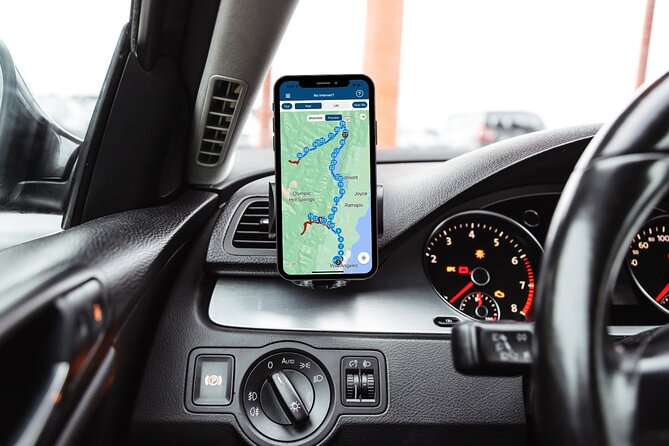
Download the separate Action Tour Guide app while you have strong Wi-Fi or cellular service. Once the tour is downloaded, it is designed to work without a signal. Several poor experiences came from setup, audio connection, or trying to rely on CarPlay, so I would test everything before reaching the park.
Connect your phone to the car stereo through Bluetooth, USB, or AUX. Apple CarPlay is compatible with the audio playback, but full CarPlay support has been limited, and Android Auto support is still forthcoming. A simple Bluetooth or USB connection may be less frustrating.
The recommended devices are an iPhone with iOS 15 or later, an Android device with version 9 or later, or an iPad or tablet with GPS and cellular connectivity. Keep the phone charged, and use headphones only when walking, never when you need to hear traffic.
Once you reach the first story point, the audio should begin automatically. As you drive, GPS triggers the next story. You can pause the tour for lunch, photos, or a side trip, then restart it later.
What the $16.99 price gets you
At $16.99 per group of up to four, the math is simple. A family of four pays less than $4.25 per person, before the separate park pass. That is excellent value if the app works correctly and you plan to use several sections.
The main benefit is not luxury. It is control. You can start at your own time, stop whenever you like, repeat the route on another trip, and skip stories that do not interest you. The purchase has lifetime access with no expiry, so you do not have to force every stop into one day.
The tradeoff is depth. Some stories are brief, and a few people may find the information too general or too focused on folklore instead of geology and park history. The app can make a long drive more meaningful, but it does not replace a live guide who can adapt to your questions.
Who should book this tour?
I would recommend it to independent drivers, families, couples, and anyone who wants light narration without paying for a private vehicle or group excursion. It is particularly useful if you prefer to stop for your own photos and choose your own hiking pace.
It is less suitable if you want a tightly managed sightseeing day with every viewpoint clearly marked. GPS can trigger audio at the wrong moment if you start away from the designated point, and some stopping places are not identified as clearly as they could be.
Start at the official first point whenever possible. Follow the suggested route and speed, download everything before leaving town, and decide ahead of time if your priority is the Elwha Valley, Lake Crescent, the Hoh Rainforest, the coast, or Hurricane Ridge.
Should you book it?
Book this Olympic National Park audio tour if you want affordable, flexible commentary for a self-drive day and you are comfortable handling the app yourself. The Elwha Valley, Lake Crescent, and Hurricane Ridge sections offer the best overall value, while the Hoh and Pacific coast content should be treated as separate add-ons.
Skip it if you expect a full substitute for a professional guide or if you are not willing to test the download and phone connection before arrival. For the right driver, $16.99 is a sensible buy. Just plan the geography honestly, because Olympic National Park is too large to experience properly by racing from one audio marker to the next.
FAQ
How much does the Olympic National Park audio tour cost?
The tour costs $16.99 per group of up to four people. The price is charged per car group, not per person.
How long does the tour take?
The core driving route covers more than 43 miles and takes about two to three hours to complete. With stops and the additional sections, plan for about five to six hours or longer.
Is a park pass included?
No. You need a separate pass to visit Olympic National Park.
Where does the tour start?
The listed starting point is Olympic National Park Visitor Center, 3002 Mt Angeles Road, Port Angeles, Washington.
Where does the tour end?
The listed end point is Sol Duc Trailhead on Sol Duc Road, Port Angeles, Washington.
Does the tour work without cell service?
Yes, after you download the tour correctly in advance. You must download it while you have strong Wi-Fi or cellular service.
Does anyone meet you at the starting point?
No. This is a private, self-guided activity. You open the Action Tour Guide app at the starting point, and the audio begins through GPS.
Can I use the tour on another day?
Yes. The tour offers lifetime access with no expiry, so you can pause it, use it over multiple days, or return to it on another trip.
More National Park Audio Tours in the USA
- Self-Guided GPS Audio E-Bike Tour Hawaii Volcanoes National Park
★ 4.5 · 131 reviews - Shenandoah National Park Self-Guided Driving Audio Tour
★ 4.5 · 109 reviews - Self-Guided Audio Driving Tour in Glacier National Park
★ 4.5 · 101 reviews - Rocky Mountain National Park Self-Guided Driving Audio Tour
★ 4.5 · 92 reviews
Just added around the USA
- Self Guided Driving Audio Tour of Saguaro National Park★ 3.0 · 4 reviews
- Self-Guided Audio Driving Tour of Mount Lemmon★ 5.0 · 4 reviews
- Saguaro National Park Self-Guided Audio Tour★ 3.5 · 11 reviews
- A Self Guided Audio Tour in Tombstone★ 4.0 · 11 reviews
- Catskills Scenic Byway Self-Guided Driving Audio Tour★ 4.0 · 9 reviews
- Big Bend National Park Self Guided Audio Tour Guide★ 5.0 · 12 reviews
- Self-Guided Audio Driving Tour in Catskills Scenic Byway★ 4.5 · 7 reviews
- Black Canyon of the Gunnison NP Self-Guided Driving Audio Tour★ 3.5 · 7 reviews
Driving Audio Tours, compared.

Ultimate Acadia National Park Self-Guided Driving Audio Tour
Read our review →



Browse the lists this tour appears in